Tag Archives: Eagle Lake

Eagle Lake Ice Caves

Ice Caves
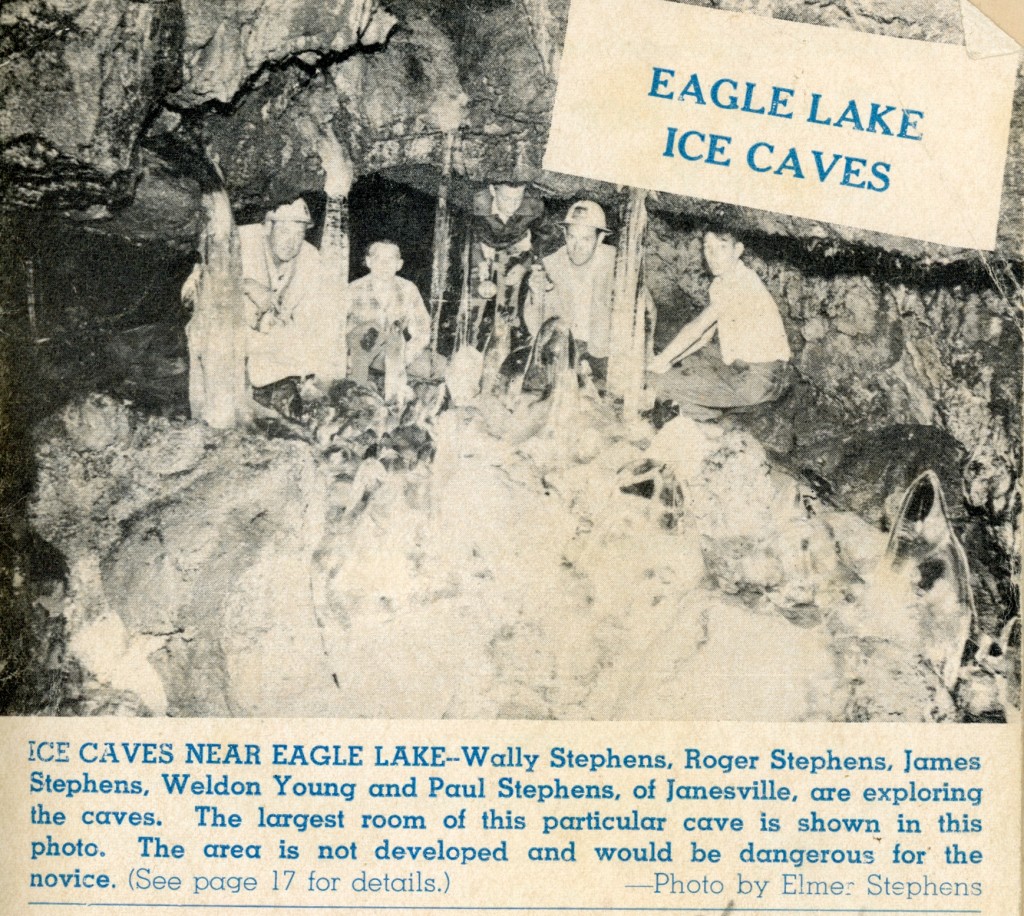
The ice caves was featured on the cover of Susanville’s weekly TV guide, August, 1965

Well, it is the middle of summer, and there have been a lot of searches about the ice caves at Eagle Lake. Without further ado, here is a prior post on that topic for your Tuesday Tidbit.

Exploring lava beds, which there is plenty around Northeastern California, there is no telling what a person might find. The Brockman Flat Lava Beds on the west side of Eagle Lake is no exception.

In the early 1950s the Chico State Biological field study set up operations at Spaulding Tract, Eagle Lake. It was in the summer of 1951, that several students explored the lava beds to the south of Spauldings and made their initial discovery of a ice/lava cave.

In 1954, John Wesley Noble penned an article in Collier’s Magazine, The Lake That Time Forgot. The article featured many peculiarities found at Eagle Lake. Noble wrote: A group of Chico graduate students were exploring a huge shore side cavern where Indian tribes hid from avenging white men. Suddenly the biologists’ flashlights flickered on a buff colored insect crawling over the icy black rocks. They captured it, but neither their biology professor nor local 0ld-timers could tell what it is.
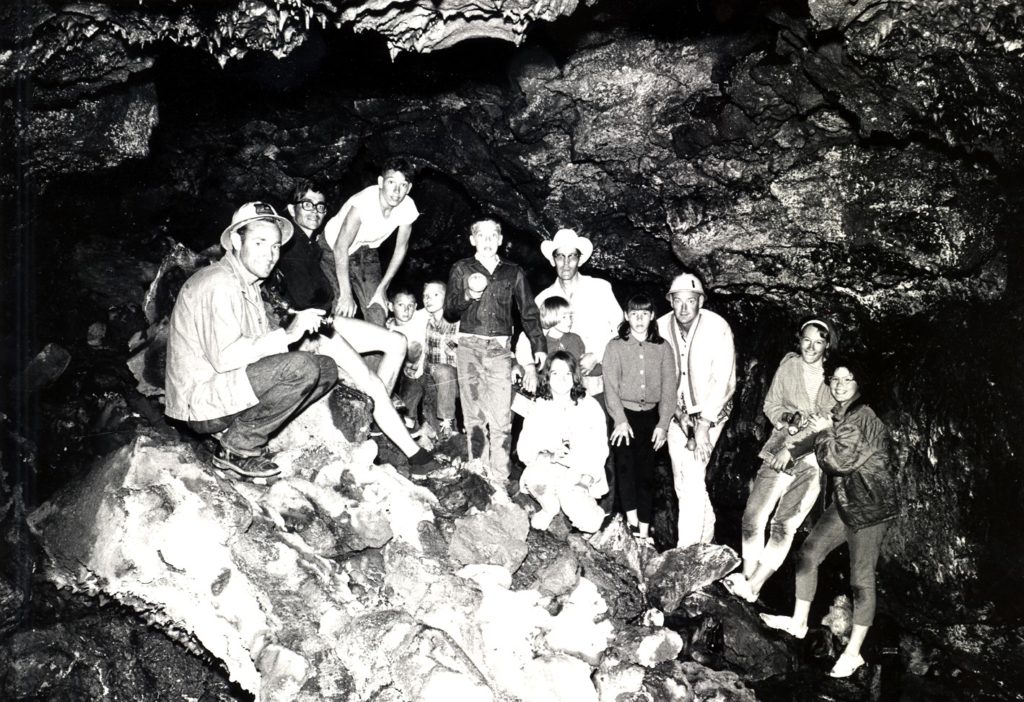
Interior view of an Eagle Lake ice cave, 1966.

“Weeks of research finally identified the insect a member of gryllobottoda, a rare ice age cricket-cockroach which lived in America when Pleistocene ice sheets covered more than half the continent. No one seems to know what the insects eat in the icy dark caverns. They should have been sensible and departed when the glaciers receded 20,000 years ago. But here they are, living their refrigerated lives in the caves near the lake.”

Tim
Albert Gallatin’s Good Fortune

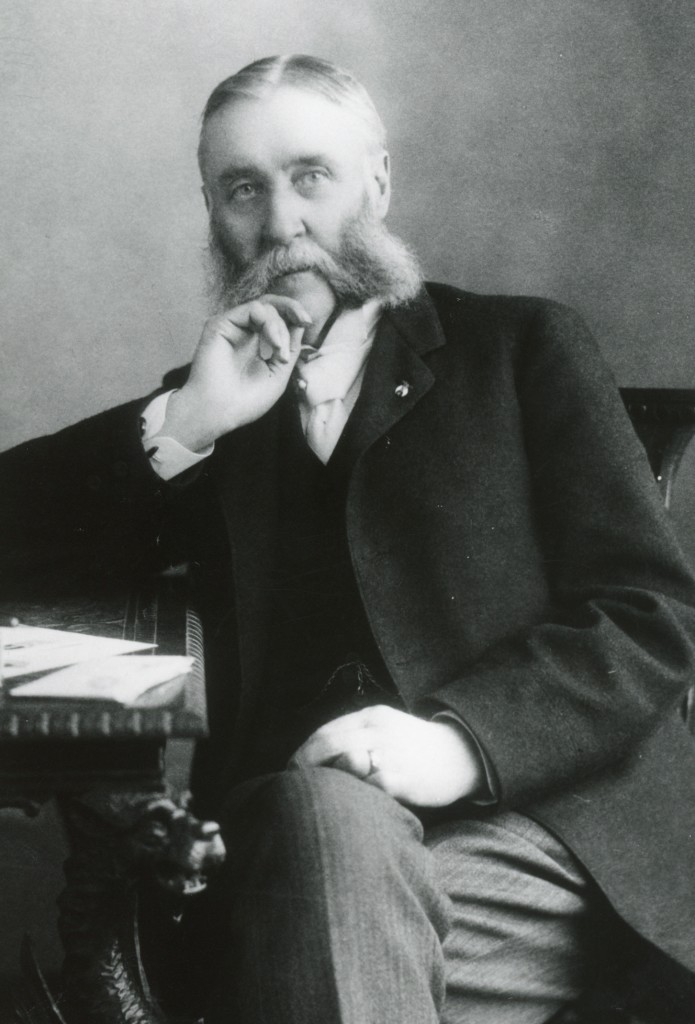
Albert Gallatin
Albert Gallatin courtesy of Wyn Wacchorst

Albert Gallatin is one of the many intriguing figures in California history. This native New Yorker arrived in California in 1860, and the following year located at Sacramento. It was fortunate timing on his part to land a job in hardware store owned by Huntington and Hopkins. At the same time, Huntington and Hopkins would join forces with Crocker and Stanford, to become the “Big Four” and establish the Central Pacific Railroad. Gallatin, as a junior partner in the hardware business, became quite lucrative providing materials for the railroad. In 1877, he built the Gallatin House and in 1903 it became the California Governor’s Mansion.

The prosperous Gallatin began branching out into numerous endeavors including the sheep business. Gallatin needed summer range for the sheep, and discovered Eagle Lake. In a two year period in the late 1880s he purchased nearly 5,000 acres of Eagle Lake properties for $9,000. The bulk of the purchases were timberlands, with the exception of Hall’s Papoose Meadows and William Dow’s ranch near present day Spaulding Tract.

With the exception of Gallatin being Eagle Lake’s largest property owner, his influence otherwise was minor. In 1905, he passed away and his second wife, Malvena, had the lasting impact on Eagle Lake. After all she introduced Leon Bly to Eagle Lake.

Support by subscribing.

An Eagle Lake Boat Dock

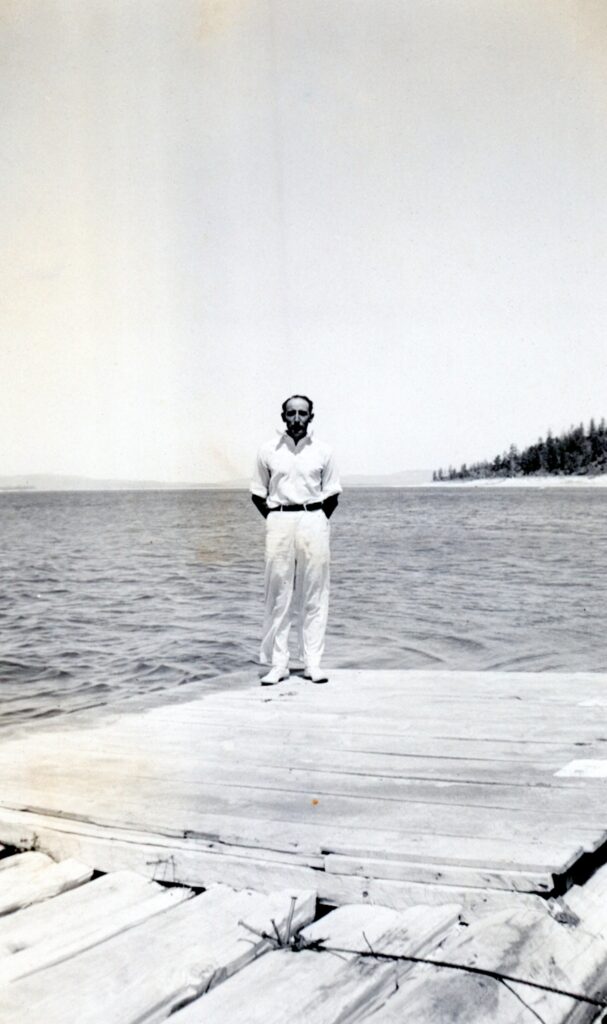
South shore Eagle Lake, July 4, 1936–C.H. Bennett Collection

A Tuesday tidbit for today. Unknown parties, at least to me, built an informal wooden platform at the south shore of Eagle Lake. This was in the mid-1930s when lake was about to reach its initial historic low. The dock, if you could call it such, was ideal for small boats, i.e. canoes.

Tim

Early Day Bly Tunnel Photograph

Initial work on the Bly Tunnel, Willow Creek side, December 1921—Lola L. Tanner

This being Memorial Day Weekend, it only seemed fitting for an Eagle Lake topic, since there is a lot of activity around the lake that weekend.

Leon Bly spent five years to put together a project to tap Eagle Lake to irrigate land in Honey Lake Valley. He had a lot of obstacles to contend with. First there was the initial study of lake to see if it was feasible. Then he had to convince the farmers of the Honey Lake Valley that it was indeed worthy. This was not an easy task since there had been attempts to tap the lake since 1875. Then public irrigation districts had to be formed to be able to put together a $1.25 million bond measure to finance it. Then there was all the detail work to obtain rights-of-way for the necessary canals and ditches, that would also have to be surveyed. One would of thought when the initial work began in the fall of 1921, there would be some kind of celebration, but it started off quietly with no fanfare.

Tim

Gallatin Beach, 1920s

Gallatin Beach, 1922
Gallatin Beach, 1922. Courtesy of Lydia Odette

Gallatin Beach has certainly evolved over the years. During the 1910s, the beach did not exist, due to the high water levels of Eagle Lake. By 1917, Eagle Lake reached its peak high water mark, and on the south shore, considerable timber was flooded, killing trees some hundreds of years old.  In the 1920s, the water level of lake began to recede, in part by Bly’s Tunnel and equally important the region was in the midst of a 20-year drought.

The result was what some referred to as a stub forest of dead trees that  were now a part of the beach’s landscape. Visitors to the area used them for photo ops.

In 1915, Professor S.T. Harding began studies of the water variations at Eagle Lake. Harding examined the stub forest to obtain data on the lake’s elevation.  Harding studied the tree rings and the elevation  of a number of trees. That provided him information concerning the levels of the lake dating back to 1420! By taking the lowest submerged trees (the oldest one was found to be a 245-year old stump at the elevation of 5,116, that was submerged in 1895), he determined the lake level had to be at 5,115 feet or less from 1650 until the time it was submerged. Another stump examined placed its initial growth between 1420 and 1520, and during that time period the lake had to be at an elevation below 5,099 continuously  from 1420 to 1520. In addition, Harding also examined trees at the 5,126 foot elevation that were found to be over 400 years old that substantiated the fact that the 1917 level of 5,125.2 was the lake’s highest level.

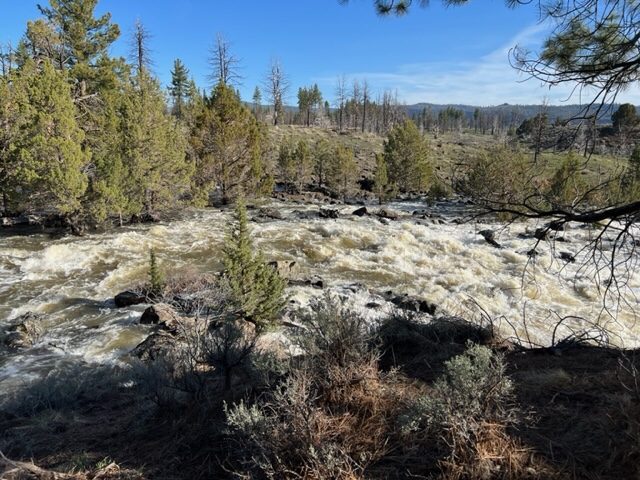
Pine Creek, April 28, 2023

As of May 1, 2023 the lake’s elevation was at 5093.62. At the time of that reading, Pine Creek was a raging torrent, so lake should see significant rise during the month of May.

Support by subscribing.

Where Are We—East Shore of Eagle Lake

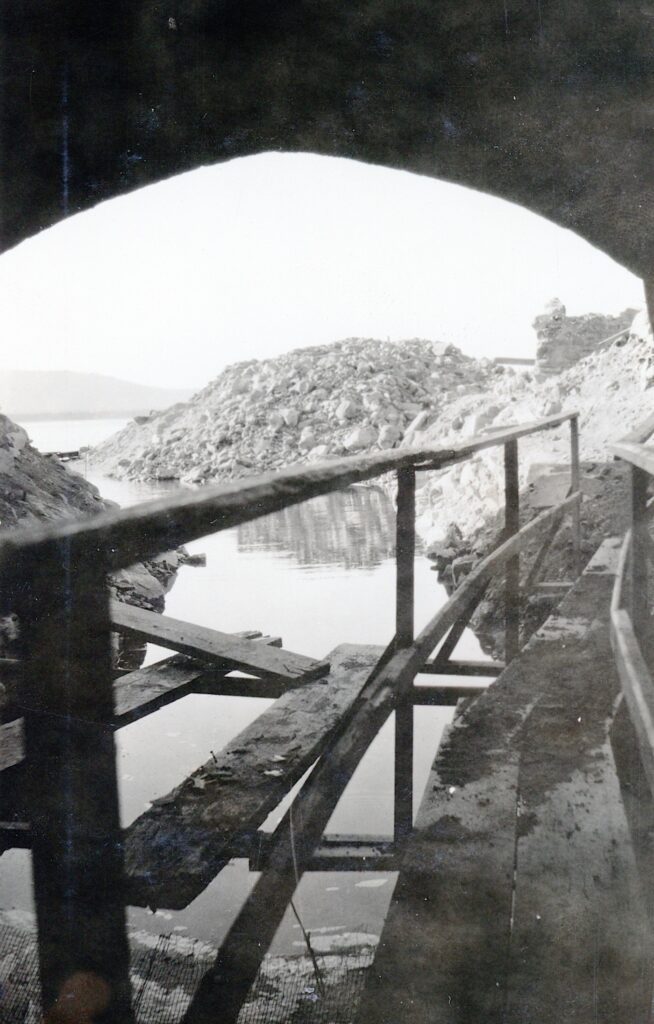
The initial set up for construction of the Bly Tunnel, Inlet December 1921–Lola L. Tanner

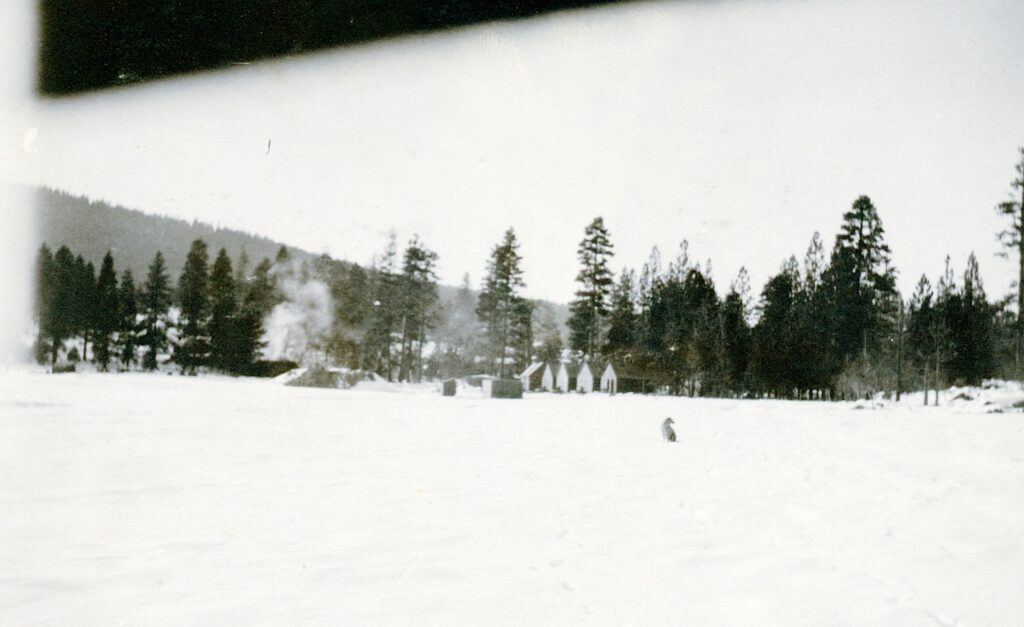
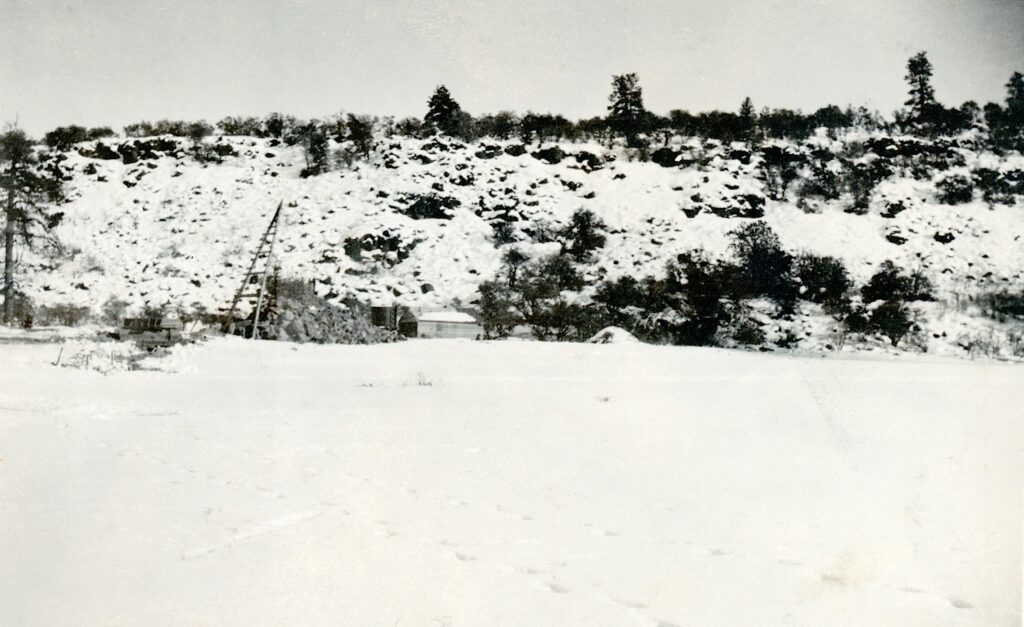
While the photograph does not look like much, what it depicts is the initial stages of construction work of the inlet of the Bly Tunnel at Eagle Lake. It would be another year, before major work on the tunnel was started from the lakeside.

In 1962, Lassen County received some BLM land just north of Bly Tunnel. Thus, was the humble beginning of the Lassen County Youth Camp, though it take years to construct the facilities, a lot done by donations and volunteer labor.

In 1964, the Eagle Lake Biological Field Station of California State University, Chico relocated on BLM property between the Lassen County Youth Camp and the Bly Tunnel.

Tim

It Flows Again!

Pine Creek Fish Trap, March 2017

I want to thank Larry Doss of Spaulding Tract to alert me that as of yesterday evening, Pine Creek has finally thawed out and is now flowing. For those not familiar, Pine Creek is the main tributary to Eagle Lake, California’s second largest natural lake. While Lake Tahoe is larger than Clear and Eagle, it spreads across the California and Nevada border. The spring thaw has finally begun.

Tim

Bly Tunnel & The RFC

Bly Tunnel Inlet, 1925—Lola L. Tanner

1935 was a pivotal year for the Tule & Baxter Creek Irrigation Districts concerning the Bly Tunnel. Not only had they exhausted what limited funds on the annual extension of the inlet, but the level of the lake continued to go lower. The district’s engineer, Harry S. Riddell came up with last minute plan.

In 1932, President Herbert Hoover’s administration established the Reconstruction Finance Corporation (RFC). This agency was designed to facilitate economic recovery during the Great Depression.  In 1935, Riddell, submitted an application on behalf of the districts for $1,465,000.

Riddell’s plan was two-fold. The bulk of the loan would be used to reach a settlement with the bondholders for fifty cents on the dollar.  The second portion was to get the irrigation system in operation.  Instead of proceeding with the costly work of continual digging to extend the intake channel, he proposed a pumping plant. Riddell estimated the cost of a plant at $45,000.

The application to the RFC was denied. With no solution at hand, Riddell resigned and moved to Sacramento. In the 1940s, W. Coburn Cook resurrected the project, but that is another story.

Support by subscribing.

Bly Tunnel Makeover—Mixed Results

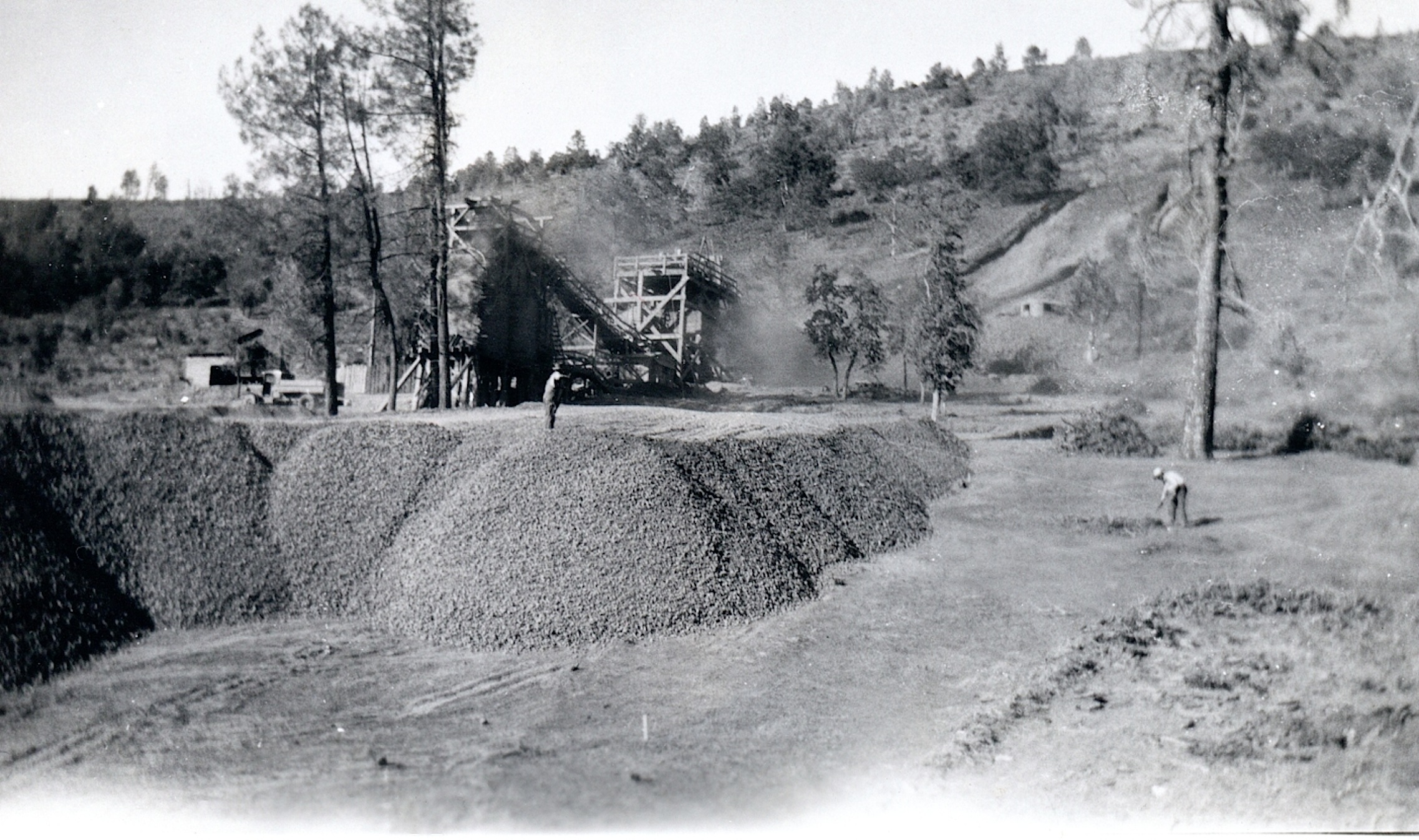
One of the many tailing piles of Bly Tunnel

With all the effort put in during 1928 with work on the Bly Tunnel inlet, it did not make that much difference during the 1929 irrigation season. As a matter of fact to make things worse the districts doubled their rates for water from $2 to $4 per acre-foot.

For the next few years, the districts hired C.F. Staheli, a contractor to deepen the cuts and extend the inlet. It was an exercise in futility.  Compounding matters was the lake in 1932, had dropped twenty-four feet since the tunnel had opened. Another tragic part of the story, the system was designed to irrigate 25,000 acres, when in reality in a good year only provided water for 5,000 acres. At the conclusion of 1934, that the project be abandoned. However, the districts engineer Harry Riddell came up with a last ditch effort to salvage the operation and account on that next week.

Support by subscribing.

Eagle Lake’s Water Analyzed

Notice the lime deposits on the rocks at Gallatin boat ramp, October 31, 2022–D. Willis

One of the interesting issues to surface in 1928 regarding the inlet problem of Bly Tunnel was the alkalinity effects of water used from Eagle Lake on lands in the Honey Lake Valley. There had been lots of speculation but no scientific proof. In the fall of 1928 Professor P.H. Hibbard of the University of California, Berkeley well versed in soil and water analysis arrived on the scene to examine the situation.

In Hibbard’s findings the Eagle Lake water was not a detriment to the irrigated lands in Honey Lake Valley. The lands affected there already had alkali in the soil, and the issue from irrigation was compounded by the fact of poor drainage on those lands. Hibbard noted that lakes without outlets tend to have a higher mineral content. He went on to state that the rocks along the shoreline at Eagle Lake that had a white layer on them when the lake receded were lime deposits.

Subscribe