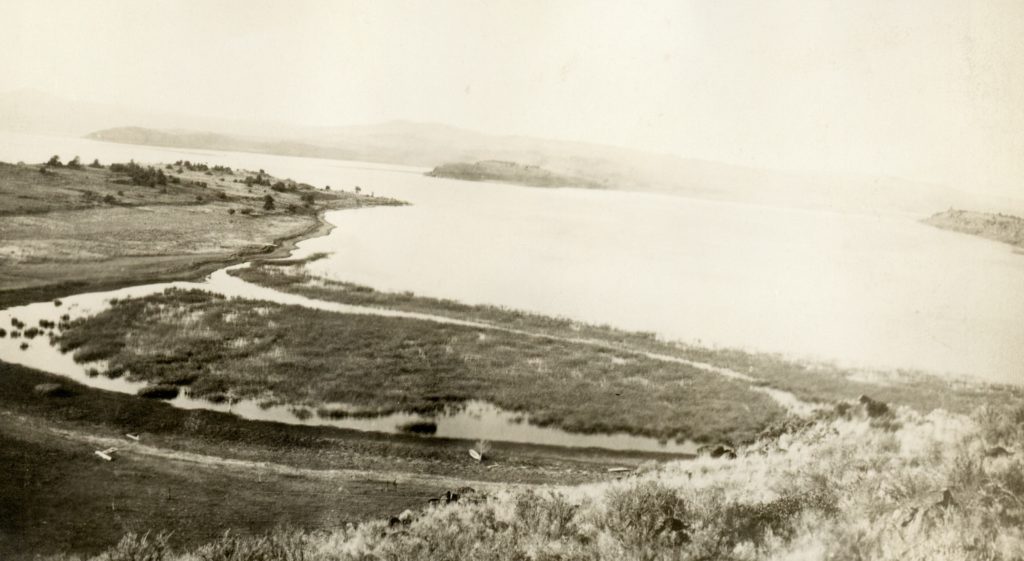
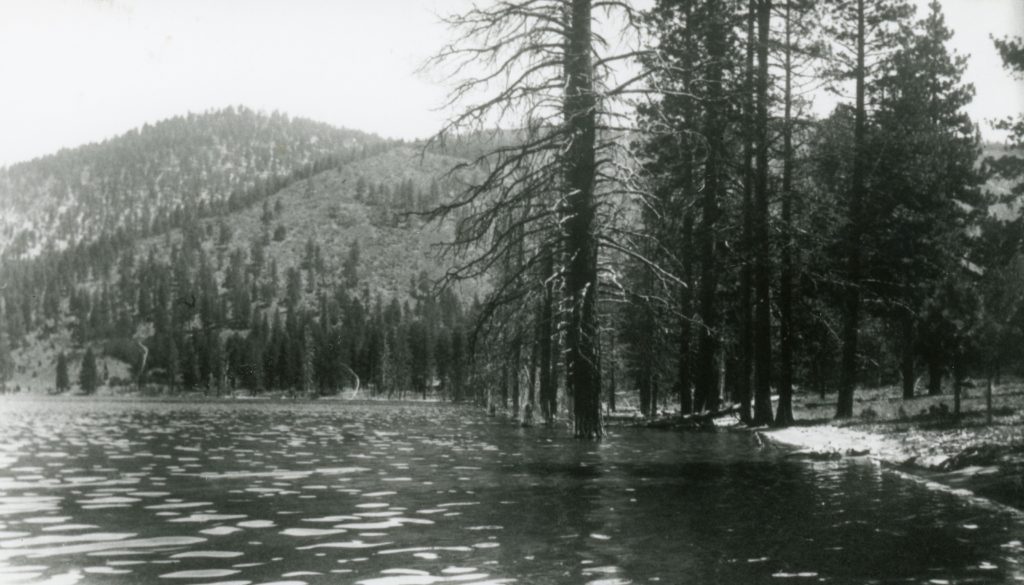
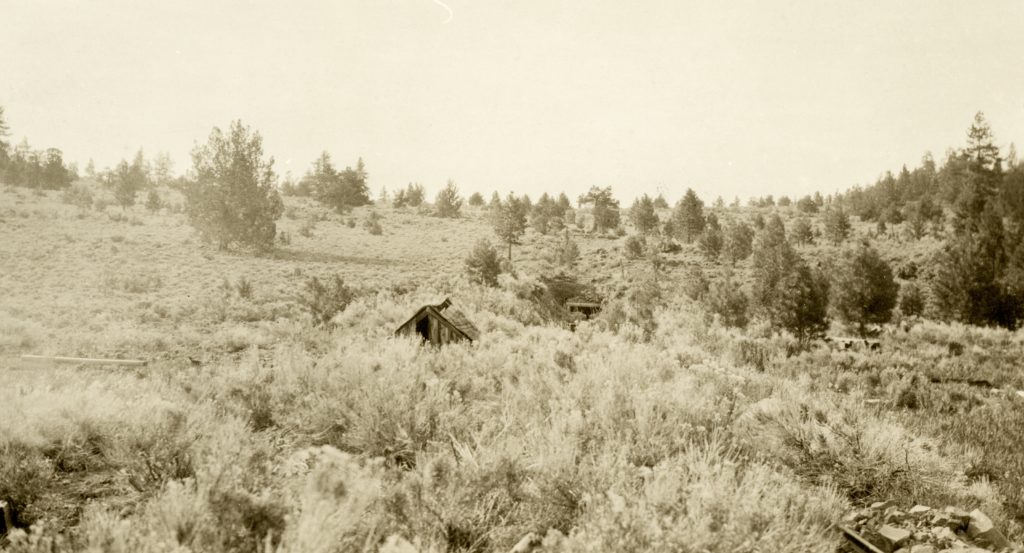
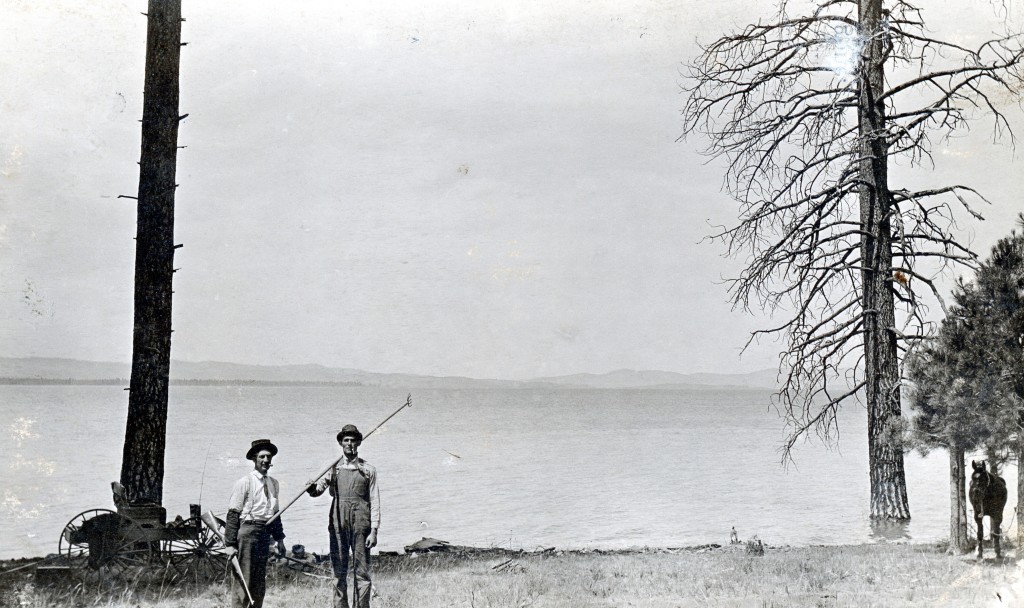
The north shore of Eagle Lake, 1920, where Udell proposed to build a dam. Courtesy of Lola L. Tanner
In 1910, San Francisco attorney Alva Udell came up with a novel approach to tap Eagle Lake without the aid of a tunnel. Udell proposed to tap the lake at the north end, only a mile from then Troxel’s residence (better known to many as Stones). The intention was to build a dam on the lake and a canal leading over to the Willow Creek springs. This route, it should be noted, is the lowest division separating Eagle Lake from the headwaters of Willow Creek. Continue reading Eagle Lake – The Udell Project→
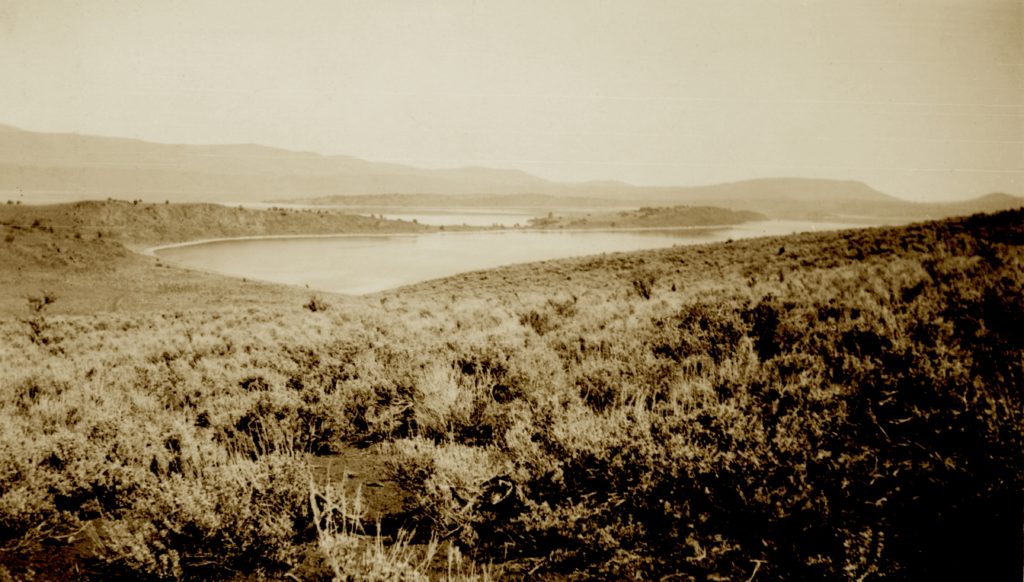
Bucks Bay, Eagle Lake, 1921. Courtesy of Lola L. Tanner
The Eagle Lake we know today was created by fault blocking, so its no wonder that earthquakes occur in the region. On June 19, 1889, a substantial earthquake was felt in the region, which was followed by twenty-eight aftershocks. Initially, it was believed that the quake originated from Mount Lassen, but upon further investigation it was determined the epicenter was at Eagle Lake.
The most remarkable finding of this earthquake was the lake dropped by two feet. Yet, the water flow of Bunnell, Cady and Willow Creek springs experienced increased water flows. The Lassen Advocate noted these springs: “had a soapy appearance, feeling oily to the touch.”
Thomas Ford, editor of Bieber’s Mountain Tribune newspaper traveled to Susanville at the time of the earthquake and wrote: “Arriving at Susanville at six o’clock in the evening, we found things pretty shaky; experienced four shocks that night, and was told that had not been a very good night earthquakes either. . . . Many were the accounts or what happened since the shaky season began–such as Eagle Lake sinking two feet, the waters of Willow Creek being higher than ever before.”
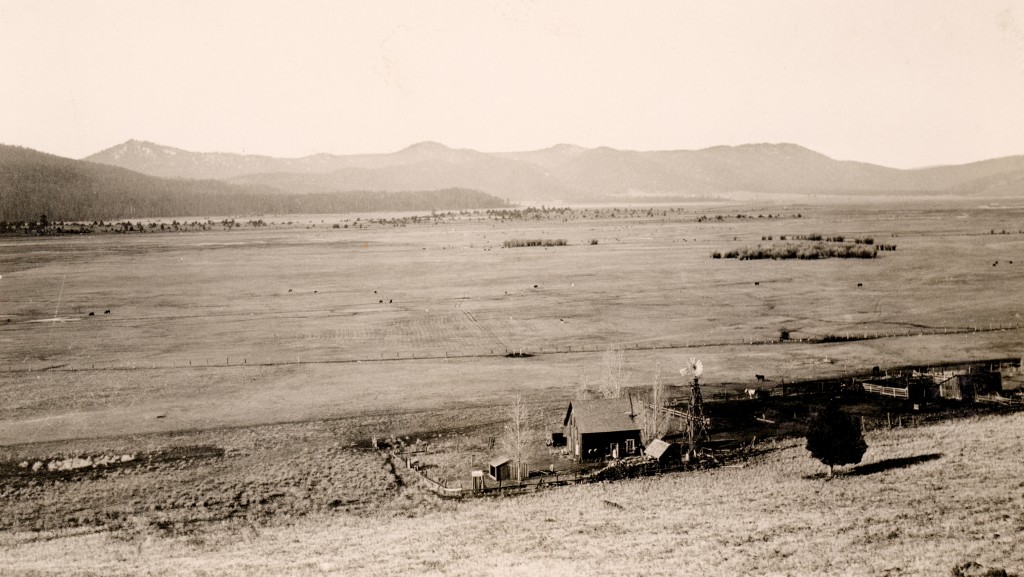
Lower portion of Willow Creek Valley (1926) , a portion would have been flooded by Dixon’s dam project.. The government said no, stating it was impractical, since the water supply was not adequate to fill the reservoir. Courtesy of Lola L. Tanner
A.F. “Frank” Dixon was the tenth person to tackle the tapping of Eagle Lake for irrigation in the Honey Lake Valley. Like those before and after him there were numerous obstacles to overcome. For every new enterprise, they had to become more creative, since the previous ones in many cases still had valid claims. Even so, it was not a deterrent.
One asset that Dixon possessed was during the 1890s he served as Register of the Government Land Office in Susanville. Thus, he knew the procedures for obtaining rights-of-way across government land. However, what caught Dixon off guard is when he filed for his tunnel right-of-way across government land, the government did something they had never requested any one prior–an environmental analysis. The government was concerned what damages would occur if the lake should be tapped.
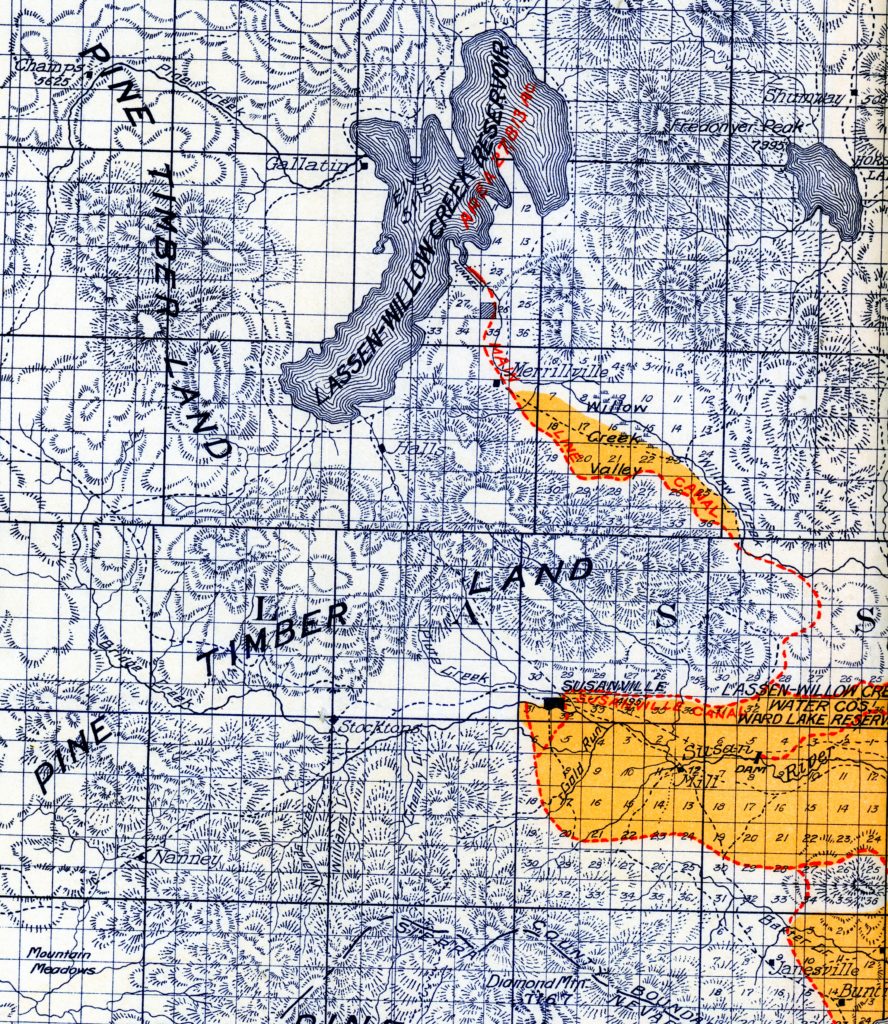
Partial map of Lassen-Willow Water Company’s proposed project. Courtesy of Betty Barry Deal
The other situation, was Dixon was not alone in his conquest. It should be noted that Dixon filed for his right-of-way in December 1904. In the summer of 1905, the newly formed Lassen-Willow Creek Water Company, filed for a tunnel right-of-way, that was identical to Dixon’s. Litigation ensued. In 1906, a gold discovery on the eastern edge of the Black Rock Desert lured Dixon away. Dixon would never learn of the outcome, he died in 1908. While Lassen-Willow Creek won in court, their enthusiasm fizzled and in 1910 sold their project to E.N. Prouty for $900.
Spread the word, and encourage a friend to subscribe.
Tunnel Bay, Eagle Lake, 1917. Courtesy of Lola L. Tanner
While a lot of folks are familiar with the Bly Tunnel, some of the earlier tunnel attempts were north of that one. What was deemed Tunnel Bay was Captain C.A. Merrill’s preferred tunnel location. However, in the early 1880s, Merrill focused on the Willow Creek side of Eagle Lake with his tunnel construction. In 1891-92, Susanville attorney and promoter, E. R. Dodge, formed the Eagle Lake Land & Irrigation Company and took over Merrill’s operation. Dodge had worked done at Eagle Lake with the construction of an inlet, and also limited tunnel excavation. Some people now referred to this as Dodge Bay. It was at this location, that a pumping plant was constructed. It was Dodge’s contention that this plant would provide water for irrigation in the Honey Lake Valley and in turn generate revenue until his tunnel was completed. Water was pumped from this location and transported by various ditches, along with Willow Creek being one of the conduits that Eagle Lake water flowed all the way to Amedee in the Honey Lake Valley in the fall of 1892, and a portion of 1893. However, the nation’s financial crisis of 1893, put a halt on everything at Eagle Lake, and eventually the pumping plant was sold off as part of a liquidation process.
Gallatin Peak, with an elevation just shy of 7,000 feet is one of the most prominent features at the south end of Eagle Lake. It is interesting that it is of granite composition, while the surrounding mountains are basalt. Actually, the peak’s original name was Granite, and it was not until the early 1900s that it began to be referred to as Gallatin, after the largest property owner at Eagle Lake.
For those who attended the Inspiration Point Tour, or received the narrative thereof, a geology lesson was given. Four major land masses converge in the Susanville region–Cascade, Great Basin, Modoc Plateau and the Sierra Nevada. This influence at the southeast corner of Eagle Lake is evident.
Because of granite and quartz composition of Gallatin Peak and extending over to nearby Round Valley, caught the interest of gold seekers. From the 1870s until 1942, when President Roosevelt by executive order halted gold mining during World War II, there was considerable gold mining in this isolated pocket.
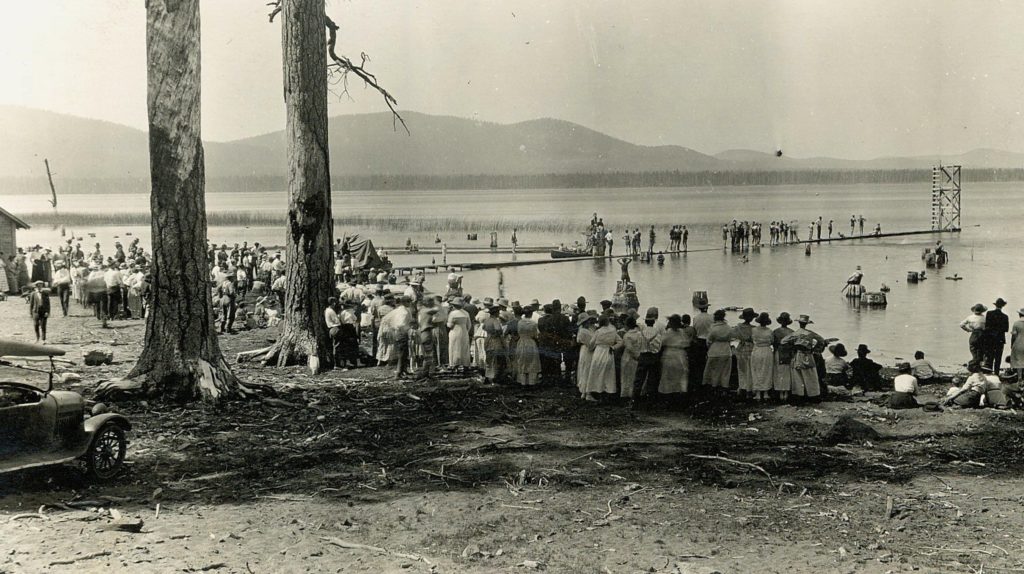
The water carnival at the Sunkist Lodge, 1921. Courtesy of Ed Standard
For two years, 1921 and 1922, the big three lumber companies, Fruit Growers Supply Company, Lassen Lumber & Box Company, and the Red River Lumber Company held a competitive swimming meet between their respective employees. Continue reading Eagle Lake’s Water Carnival→
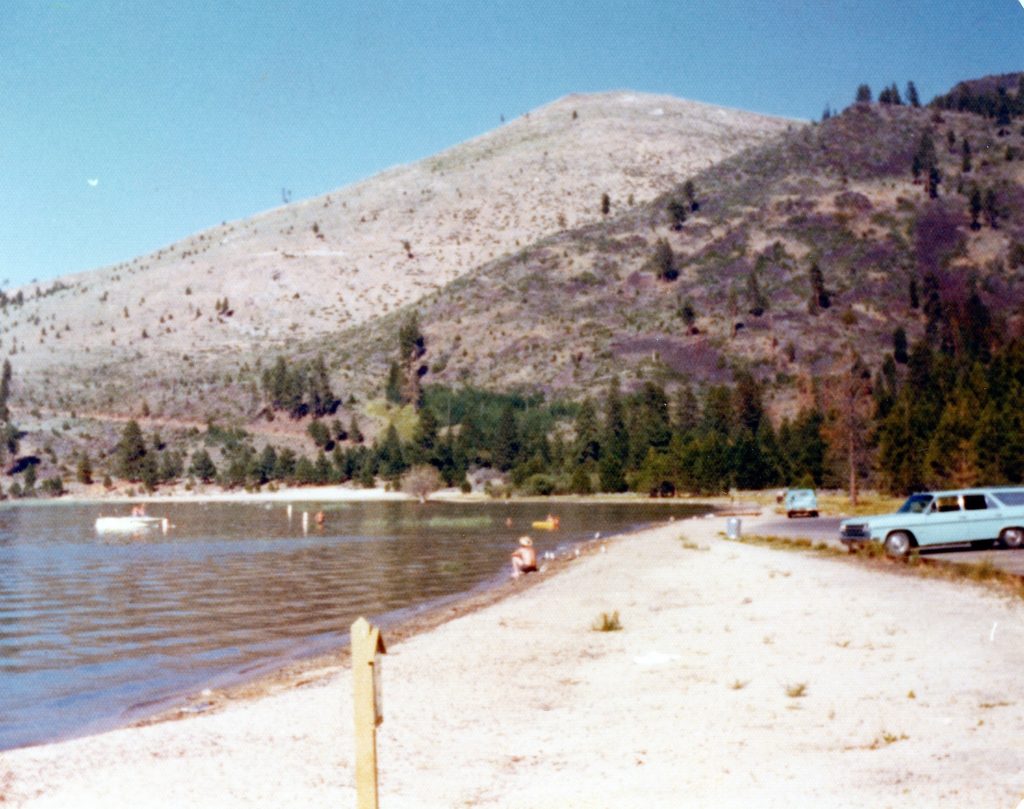
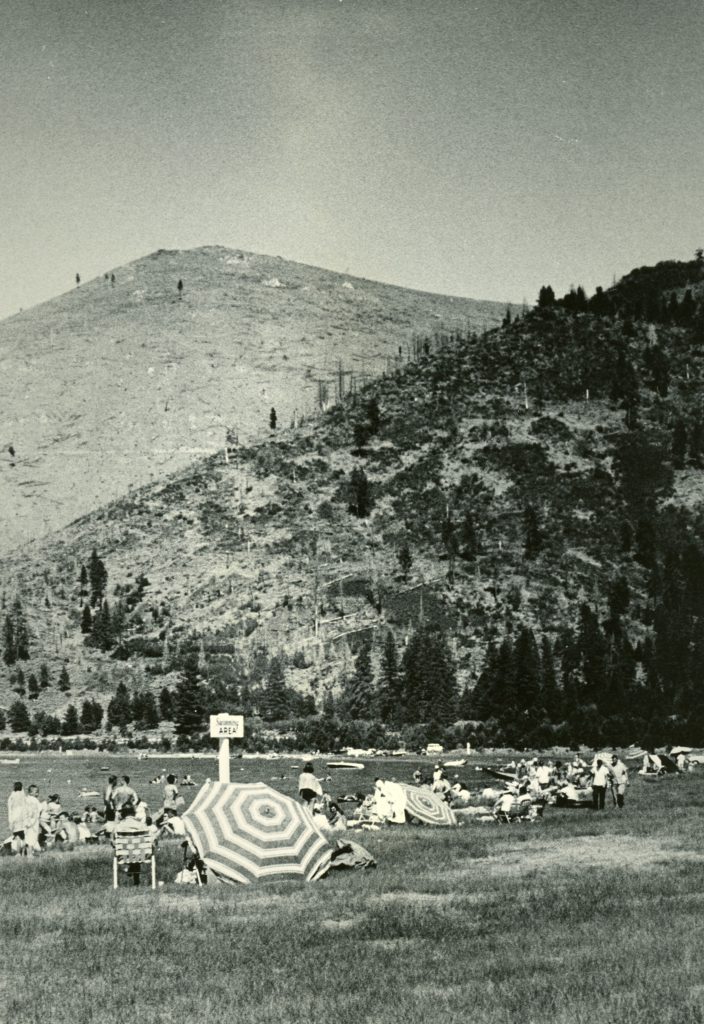
Gallatin Beach and Peak, 1916. Courtesy of Wyn Wachhorst
On Tuesday afternoon, July 17, 1951 residents of Susanville were alarmed with smoke billowing over the town. It was soon reported the smoke’s origin was from a forest fire on Gallatin Peak at Eagle Lake.
The fire started along the lake shore just past the Gallatin House. Over 400 men fought the fire, many from the logging crews of Fruit Growers and Paul Bunyan Lumber Company. It was believed the fire’s origin was that of a careless cigarette smoker. The fire was contained the next day and was stopped just 300 feet before it would have spread into virgin timber. Of the 760 acres burnt, most of it was owned by the former Red River Lumber Company, which the Shasta Forest managed those lands. The peak had been logged over two years earlier by the Paul Bunyan Lumber Company.
Merrill Tunnel, 1916. Courtesy of Betty Barry Deal
By 1875, Capt. C.A. Merrill began work in earnest to tap Eagle Lake for irrigation in the Honey Lake Valley. He first formed the Lassen County Land & Flume Company, but within four years that endeavor failed. Continue reading Where are we – Merrill Tunnel→
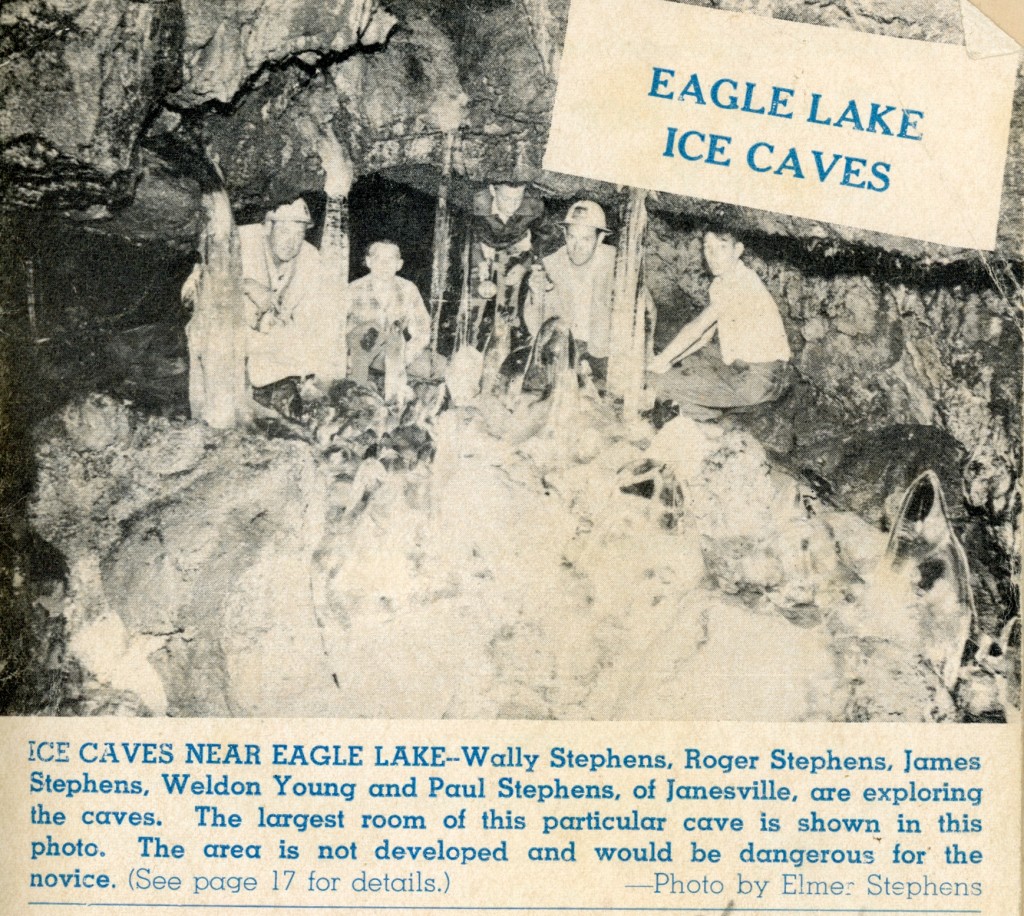
The ice caves was featured on the cover of Susanville’s weekly TV guide, August, 1965
Note: This brought back by popular demand. Remember at the upper right hand corner there is a search feature, where one can insert a topic.
Exploring lava beds, which there is plenty around Northeastern California, there is no telling what a person might find. The Brockman Flat Lava Beds on the west side of Eagle Lake is no exception. Continue reading Eagle Lake Ice Caves→
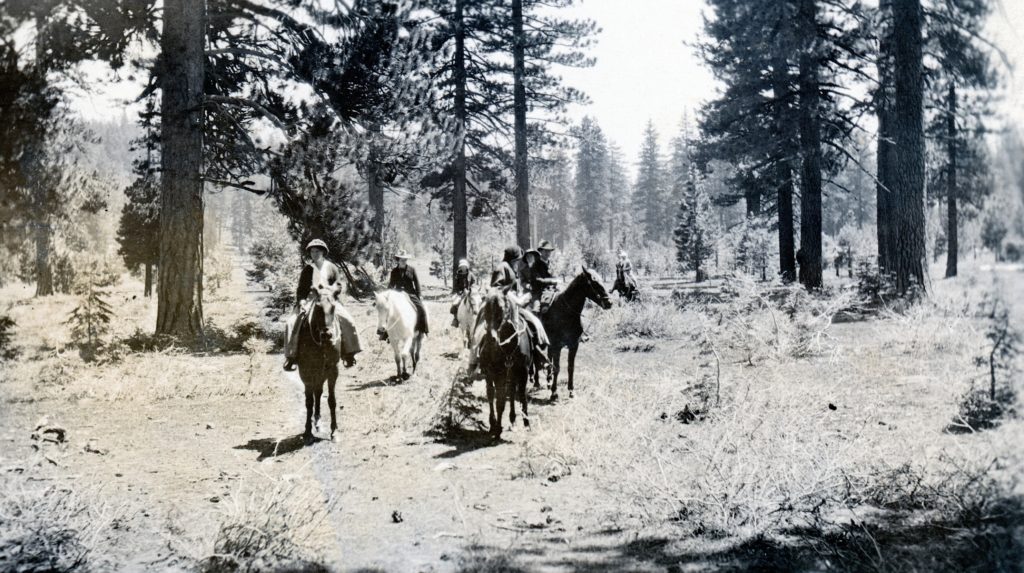
Eagle Lake trail to Gallatin Beach, 1914. Courtesy of Dolores Gasperoni
Gallatin Beach has been one of the lake’s popular spots. Visitors were fortunate in the aspect that Malvena Gallatin not only allowed public access, but there were no fees or any other restrictions. Another property owner, especially if it was a timber company, would not have been so gracious. After all, others would have been concerned about fire danger. Fortunately, no problems were encountered.
Bass fishermen at the south shore of Eagle Lake, 1914. Courtesy of Dolores Gasperoni
It should be noted that Malvena Gallatin owned over forty miles of Eagle Lake’s 100-mile shoreline. In 1944, Malvena’s only grandchild passed away and Eagle Lake lost its special appeal as a family summer retreat. In 1946, she sold all of her Eagle Lake property to the Lassen Lumber & Box Company for $100,000, though she retained a small parcel that contained the summer home. The future of public access looked bleak. Lassen Lumber was only interested in the timber. Later in 1946, the Lassen National Forest reached a deal with Lassen Lumber to exchange timberlands elsewhere in exchange for the Gallatin property. The two agreed, and that is how Gallatin Beach became a public beach on public property.
Never miss a story, click here to support and subscribe.