Tag Archives: Eagle Lake

1924’s Duck Season Runs Afowl

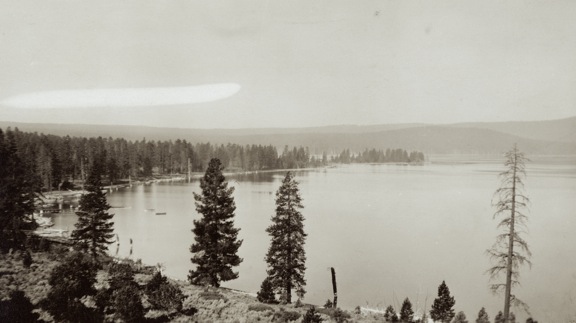
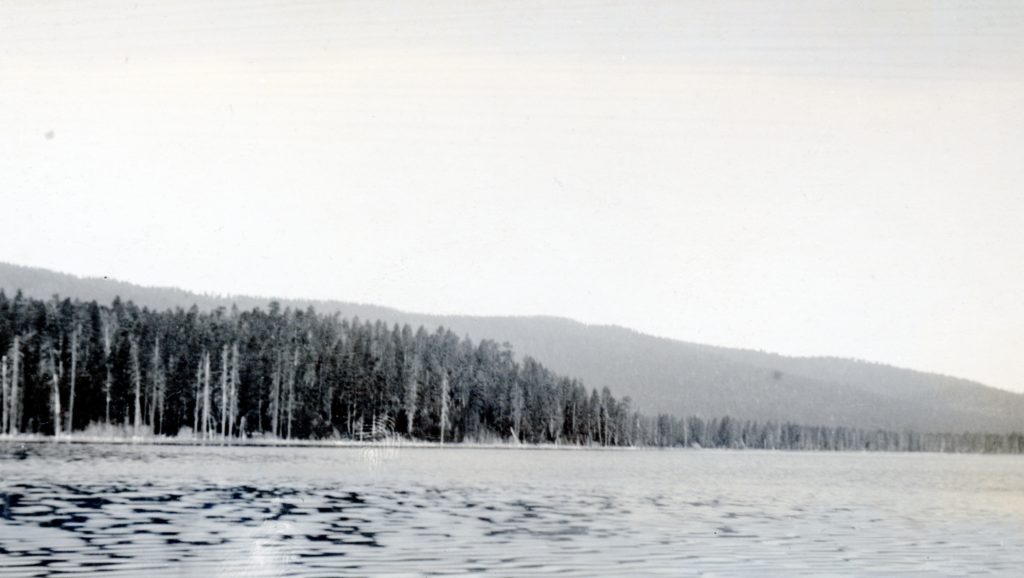
Eagle Lake, early 1920s—Wyn Wachhorst

The 1919 Federal Migratory Bird Treaty Act, allowed the California Department of Fish & Game to create a large number of game refuges. It should be noted, California led the nation in wildlife conservation. Many may not realize that in 1869, Lake Merritt in Oakland was declared a game refuge, a first in the nation.

By the early 1920s there was a proliferation of state game refuges. Locally, one of the best known was Blacks Mountain. Another was Skedaddle which extended from that mountain range north to Shinn Peaks. There was a quirk in these refuges because they included private property. One of the lesser known was the Brockman Flat Lava Beds region on the west side of Eagle Lake. In the fall of 1924, Fish and Game Warden, C.O. Fisher announced duck hunting along the west shore of Eagle Lake from Christie’s Eagle Lake Resort to Spaulding Tract was prohibited, it in essence being a part of the Eagle Lake Game Refuge.

Subscribe
The Fritter Funeral Bill

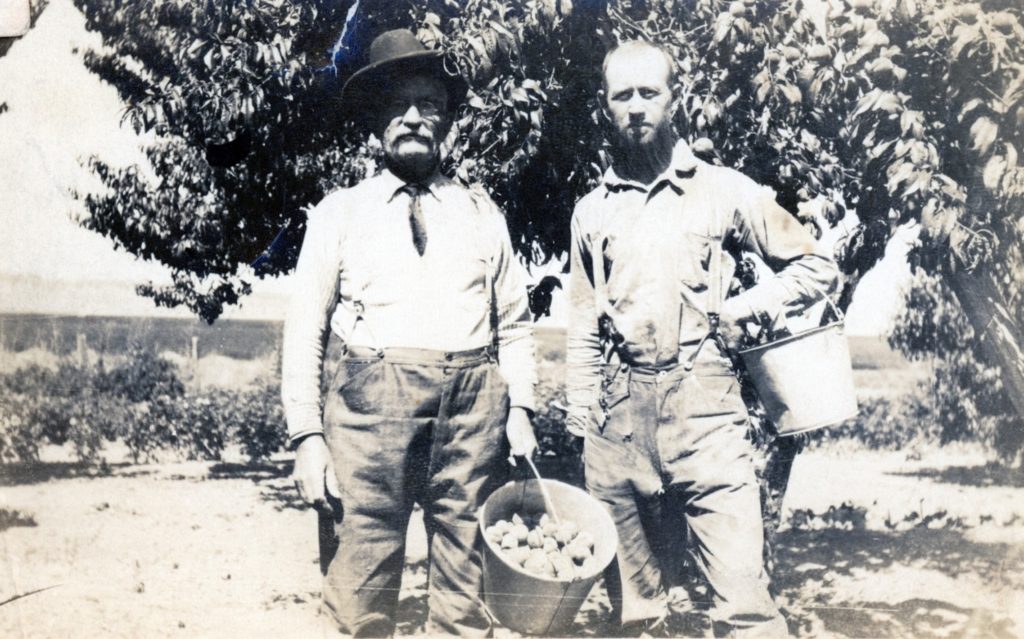
J.W. Fritter (left) and John Hamilton (right) at Fritter’s peach orchard, Eagle Lake—-Rev. C.R. Fritter

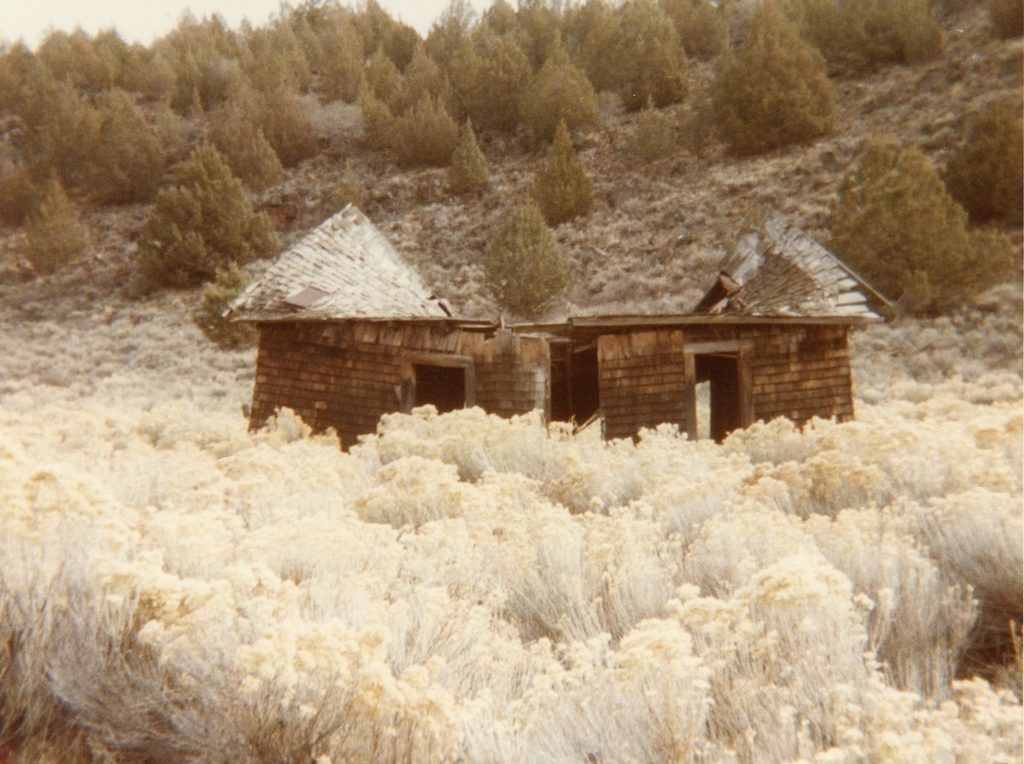
One never knows what I stumble across in my research. While reviewing the Lassen County Board of Supervisor’s minutes in regards to a topic on Westwood, I came across a rather unusual bill submitted to the county. Shortly after the death of her father, J.W. Fritter, Mrs. S. Pinola of 130 18th Street, Pacific Grove submitted a bill to the county to help defray her father’s funeral expenses. It should be noted that Fritter resided at Eagle Lake from 1884 to 1932, at which time he moved to Pacific Grove. Fritter did serve a term as a Lassen County Board of Supervisor from 1902-1906. The Board of Supervisors at their September 3, 1935 obliged and instructed the County Auditor to issue a warrant to Mrs. Pinola for $40. I have never come across a particular incident like this. What makes it even more bizarre was the Fritter and his daughter were not even Lassen County residents!

Remains of the Fritter ranch house at Eagle Lake, 1984

Spread the word, and encourage a friend to subscribe

Bly Tunnel outlet – Then & Now

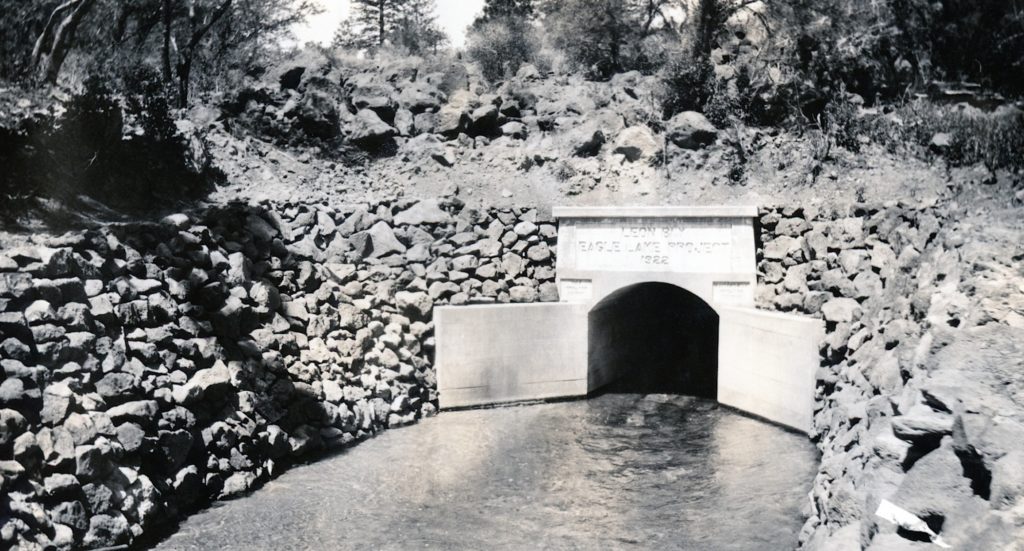
Outlet of the Bly Tunnel, 1924. Courtesy of Lola L. Tanner

In the fall of 1921, construction began on Leon Bly’s Eagle Lake Tunnel. The mile and a half long tunnel purpose was to convey water to Honey Lake Valley for irrigation. Water from the tunnel began flowing in the spring of 1923. The tunnel has a long complicated history. In 1986, the tunnel’s inlet was sealed. The outlet, in a somewhat remote location remains intact, but water no longer flows through the tunnel.

The outlet as it appeared in 2012. Courtesy of Barbara White

Support

The Gallatin Land Exchange

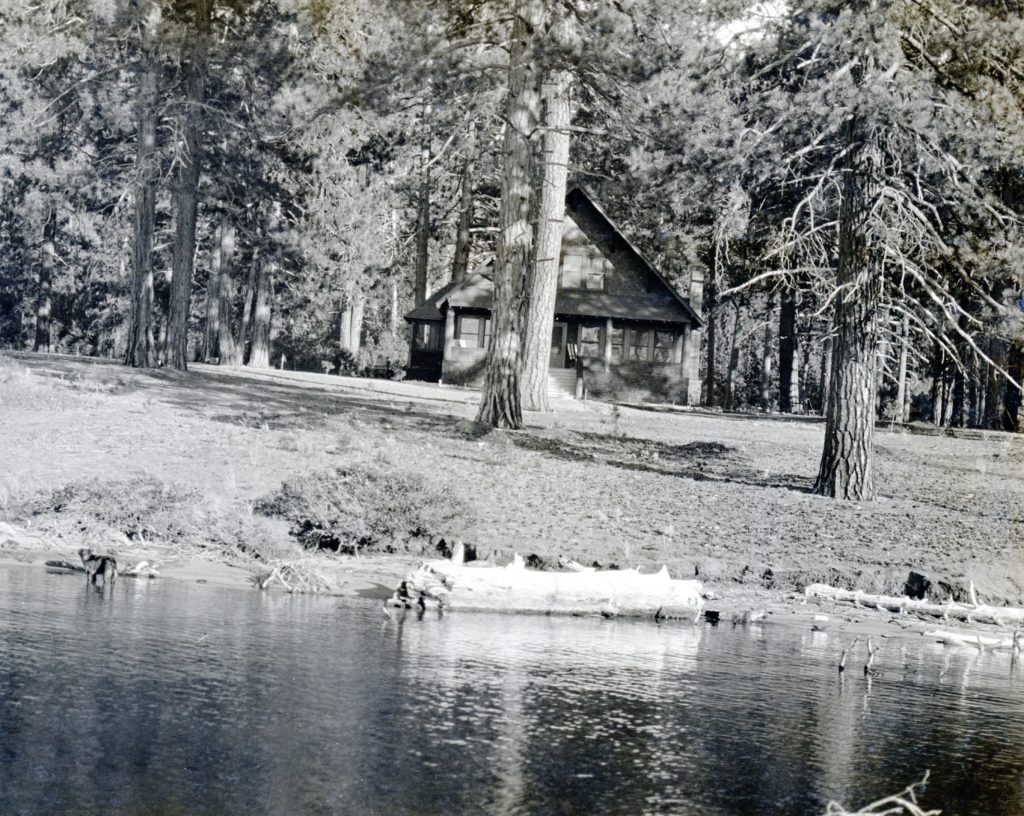
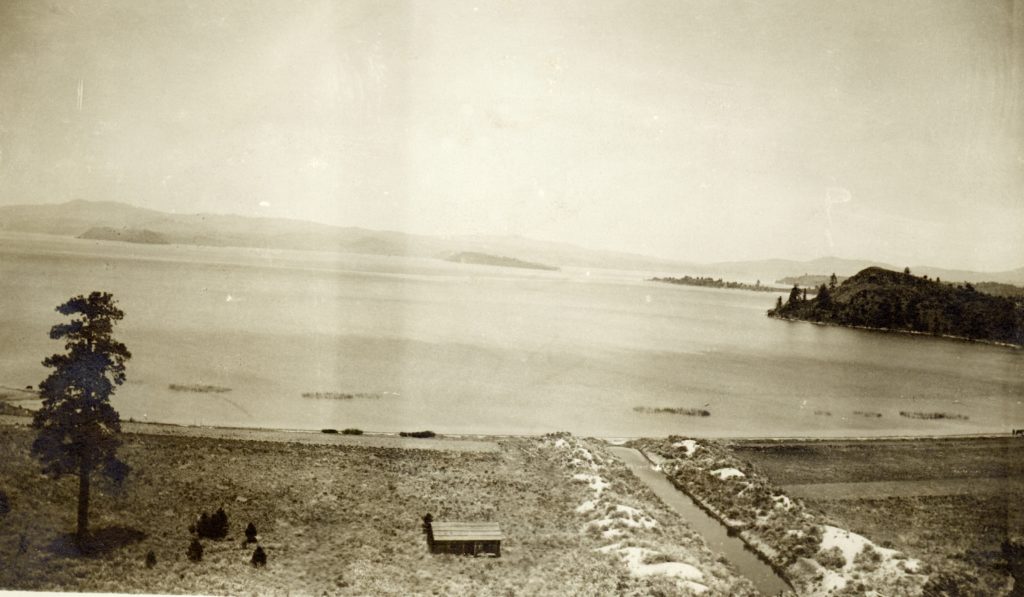
South shore of Eagle Lake, circa 1920—Wyn Wachhorst

By the late 1920s Malvena Gallatin rarely visited the lake and John and Alberta Christie, who operated the Eagle Lake Resort became caretakers of her summer home.

In 1944, Malvena’s only grandchild Norma Virginia Harvey Wacchorst passed away. Gallatin House, in essence was built for Norma and when she was growing up in the late 1910s would spend the summers at the lake with her grandmother. It was Christmas 1944 that Melvena returned to spend a lonely holiday at Gallatin House.

Then something unexpectedly happened. On February 1, 1946 Malvena sold all of her Eagle Lake property, except a 1.96 acre parcel that the Gallatin House was situated on to the Lassen Lumber & Box Company for an estimated $100,000. This alarmed Lassen National Forest officials. After all, who knew what the lumber company’s intention were. Would they log it, or even worse develop it in such a fashion the public would never have access to the lake. The forest service contacted Lassen Lumber & Box about a land exchange for the property. By summer an agreement had been reached and on August 27, 1946 a deed executed transferring the Gallatin property of the forest service. Lassen Lumber & Box were allowed to harvest nearly 14,000, 000 board feet, and the company, in addition received over $500,000 of timber in the deal.

Spread the word, and encourage a friend to subscribe

The Gallatin House Effect

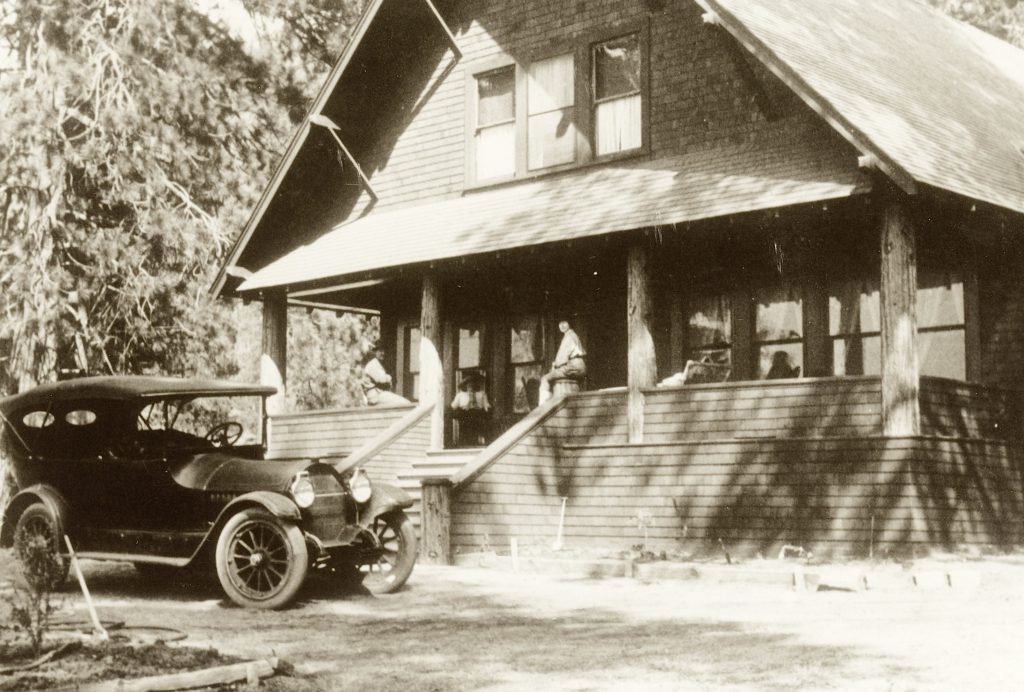
Gallatin House. Courtesy of Wyn Wachhorst

In August 1913 construction began on Malvena Gallatin’s summer home at the southeast corner of Eagle Lake. Who knew how such a humble event would have such a wide ranging impact for a large swath of Lassen County. It was also in that same year that Red Bluff resident Leon Bly was involved in a campaign for a highway to connect Red Bluff to Susanville. Malvena, of course, supported the project as it would make it easier for her to travel to Eagle Lake. The following year, Malvena invited Bly to her summer home. It should be noted Bly was a civil engineer.

Since the 1870s the water level of Eagle Lake steadily increased. Beginning at the same time, there were schemes to tap the lake for irrigation in the Honey Lake Valley. Malvena wanted Bly’s opinion if the project was feasible. Malvena’s concern was the lake level was now encroaching on her timber land, killing the trees. Bly would not only do an exhaustive study of the project, but would develop and implement an entire irrigation system. n 1923, Bly’s tunnel and irrigation system was completed and within five years it was a failure forcing many farmers who invested in it to bankruptcy and the Bank of America took over the Lassen Industrial Bank that was on verge of collapse from effects on the loans to those same farmers. Of course, the lake level dropped substantially that nearly ruined the lake. Thus, the legacy of the Gallatin House, Eagle Lake’s first summer home.

Gallatin House. Courtesy of Wyn Wachhorst

Spread the word, and encourage a friend to subscribe

Tomorrow how Gallatin Beach became public property.

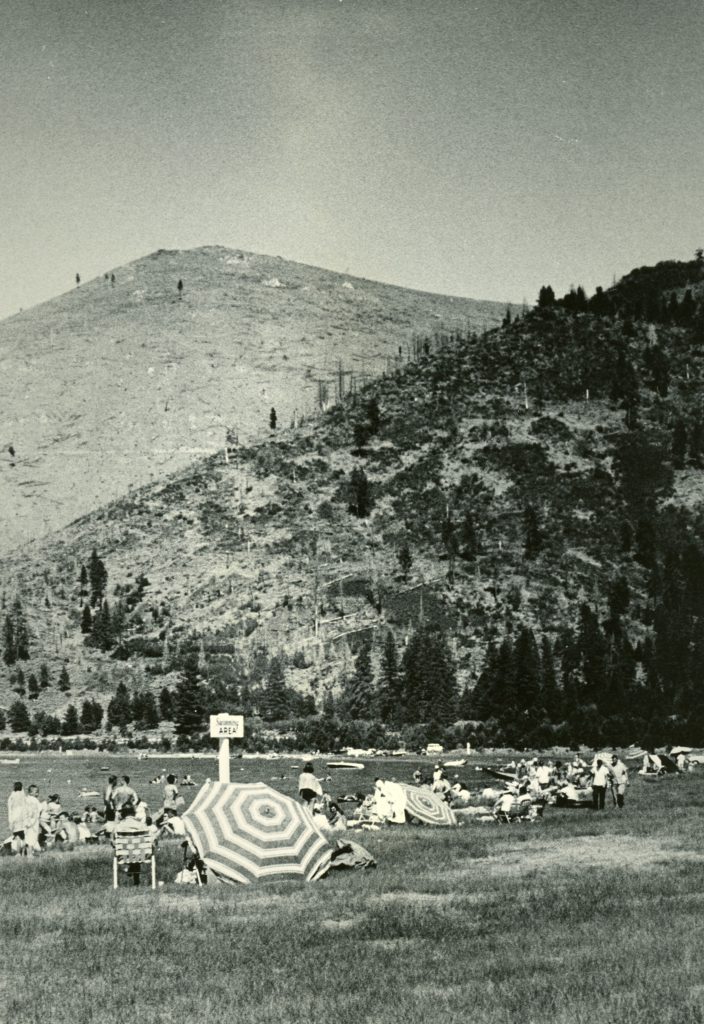
Gallatin Beach, Eagle Lake

Gallatin Beach and Peak, July 1960.

Long before Gallatins appeared on the scene the south shore of Eagle Lake was a popular gathering place during the summer. A perfect example appeared in the columns of the Lassen Advocate newspaper of July 11, 1874: “Quite a number of our citizens spent their fourth at Eagle Lake, where they had fine times, fishing, hunting, sailing, etc.”

On August 1, 1886, Sacramento businessman, Albert Gallatin purchased 165 acres on Eagle Lake’s south shore from George Nelson for $400. In the next two years Gallatin would purchase 4,962 acres in the Eagle Lake basin, owning not quite all the shoreline property what we refer to today as Eagle’s Nest to Bucks Point. The property was used for summer livestock grazing in-conjunction with a ranch he owned in Tehama County.

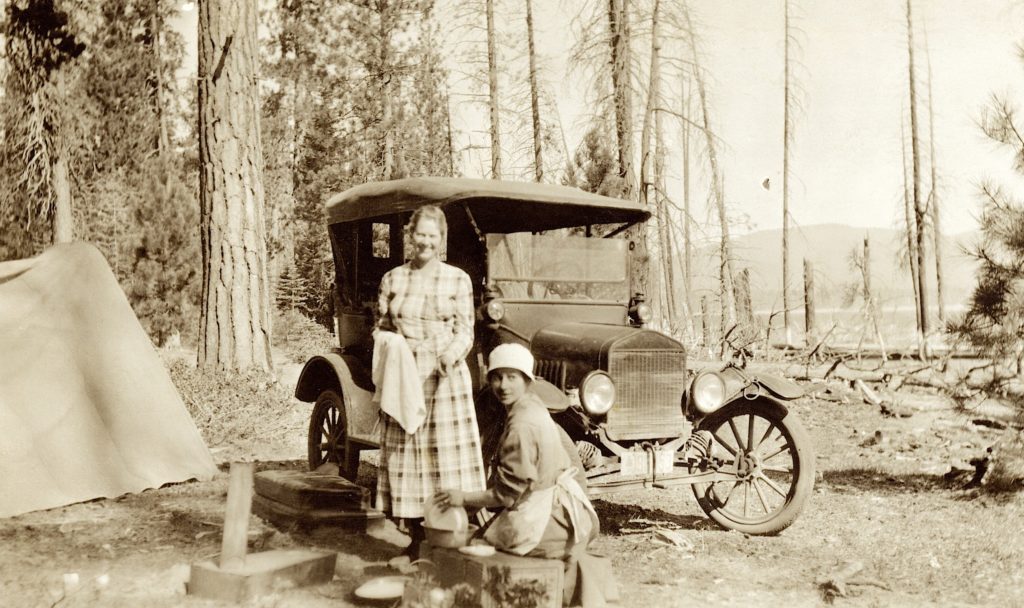
Eagle Lake Campers, circa 1916—D.M. Durst

Fast forward to 1913, Gallatin’s widow, Malvena built the first summer home at Eagle Lake, which is now part of Camp Ronald McDonald. Malvena had entertained from time to time either lease camp sites or other developments at the south shore, but never followed through. In July 1924 Malevna wrote to Lassen County officials to protest a proposed timber tax: “The public has been allowed access to these lands for camping, bathing, boating, and fishing at all times. The Gallatin Beach and a large part of the shoreline property has been used for years by the public. It might be called a public playground.”

Tomorrow the Gallatin House Effect

Support

Land Exchange Act of 1922

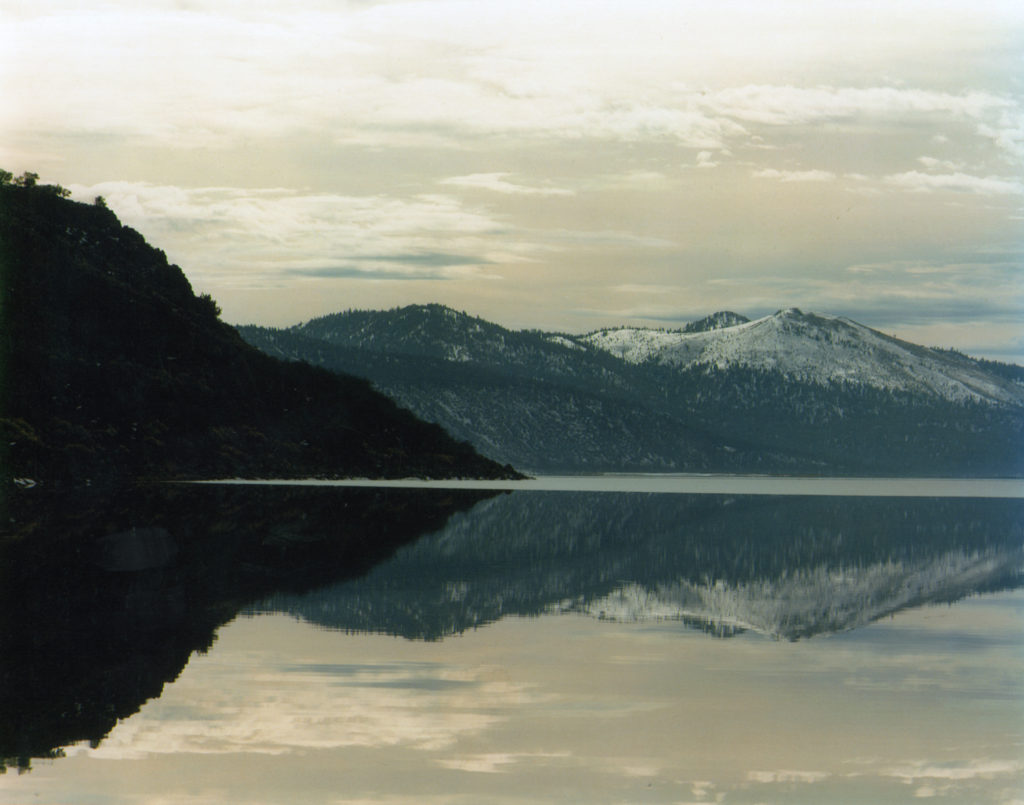
Eagle Lake, February 1985—“Matt” Mattinson

This was a unique piece of legislation, that in certain ways attempted to correct the problem of the Timber & Stone Act of 1878. It was designed specifically for the U.S. Forest Service to consolidate holdings due to the fact that many of the forest service lands were intermingled with private holdings, most of which were held by lumber companies. Once the timber was harvested by the lumber companies, those lands in their opinion, along with the county tax assessor were deemed worthless. To provide a way for the forest service to obtain them, they could offer timber land, and in many cases, rights to timber for a purportedly equal value. This process created the Lassen National Forest we know today. In the future, we will examine some interesting exchanges, one of which is why the south shore of Eagle Lake is public, not private land.

Spread the word, and encourage a friend to subscribe.

Timber & Stone Act, 1878

A Red River Lumber Company timber cruiser—Hank Martinez

Most of the timberlands in Lassen and Modoc Counties were acquired by a federal land patent known as the Timber & Stone Act of 1878. This Congressional Act allowed individuals to purchase up to 160 acres at a minimum of $2.50 per-acre without being subjected to preemption and homestead laws.It was designed to prevent timber companies and speculators from obtaining large tracts of timberlands, it had, in reality, exactly the opposite effect.

In 1902, the United States Government Land Office created a land rush when it offered Northern California timberlands for sale on the open market. Newspapers in Northern California featured stories how “timber grabbers get all they want.” As the Portland Oregonian wrote: “It is also evident to most people that the present methods of handling our timberland will soon result in putting them all in possession of the lumbering corporations or speculators.”

In 1903, 88,000 acres—primarily timberland—had been added to the Lassen County tax roll. In the spring of that year D.G. Curtis and T.D. Collins of Pennsylvania were buying individual 160-acre timber tracts west of Eagle Lake. By the end of May they owned 41,461 acres of timberland at a cost at $189,410. The property became known as the Collins Tract which was transferred to the Pennsylvania Lumber Company, which had no immediate plans for it, other than speculation.

Support

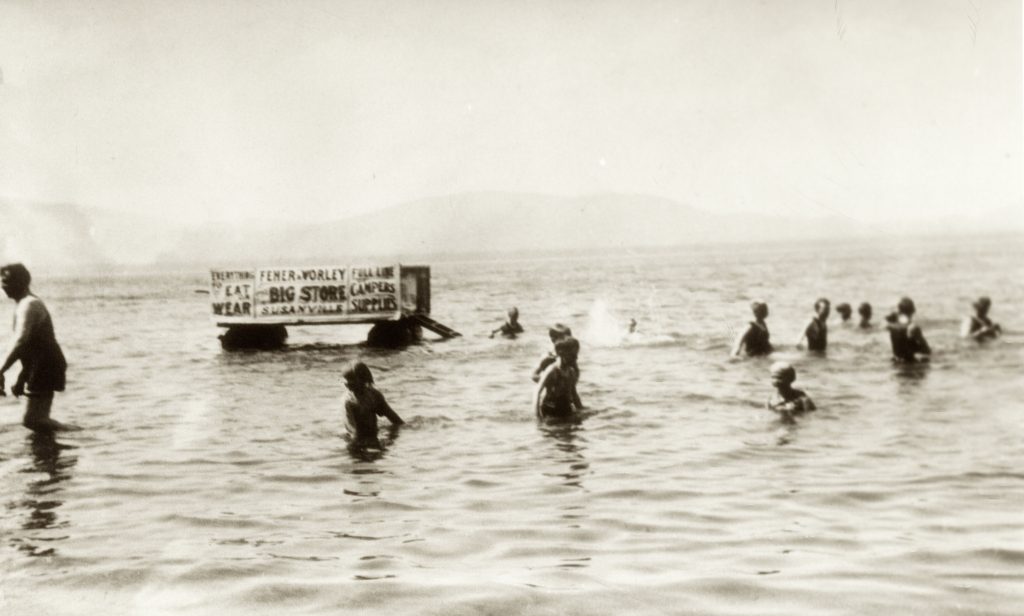
It’s Swim Time at Eagle Lake

Bathers at the south shore of Eagle Lake, 1920–Ardis B. Doyle

It is that time of year, and the south shore of Eagle Lake is quite popular these days since the only campgrounds open on the Lassen National Forest are located there.

In June 1916, Robert M. Cook of the Lassen Weekly Mail thought something should be done for the safety of bathers there. Cook wrote: “If the present warm weather continues it will only be a short time until the bathing season commences at Eagle Lake and we wish to call attention to certain conditions there that should be improved. Life lines, light rafts and bare bottom boats should be provided so that assistance can go quickly to the aid of the bather who gets into difficulty. The lack of those things means the loss of life sooner or later. While bathing at Eagle Lake is safer than at the average beach there is always danger that swimmers will be seized by cramps and a very few minutes while onlookers are confused and seeking means of assistance no loss of life.” While it was a admirable gesture no one heeded Cook’s advice.

Spread the word, and encourage a friend to subscribe

Tunnel Bay, Eagle Lake

Dodge’s Bay, Eagle Lake, 1916

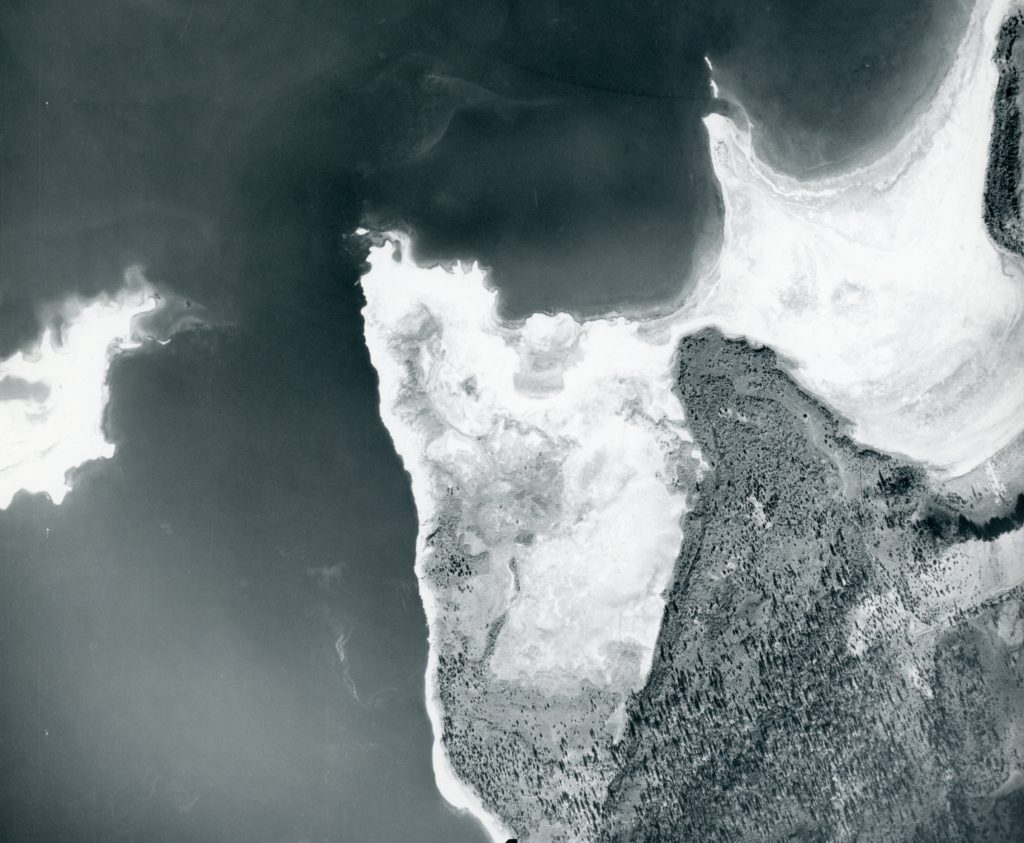
Dodge’s Bay or Tunnel Bay was located on the east side of Eagle Lake about a mile north of Bly Tunnel. This was to be the initial inlet to Capt. Merrill’s 1875 tunnel and work on it was focused on the Willow Creek side. In 1892, the Eagle Lake Land & Irrigation Company embarked on ambition plan to tap Eagle Lake. The began working on Merrill’s tunnel from both sides, as one can see the inlet in the above photograph. E.R. Dodge was one of the principal figures behind the company hence the name Dodge’s Bay.

No water in the bay when this was taken on November 8, 1941. One can barely see the intake canal. Photograph courtesy of Hank Martinez

Never miss a story, click here to subscribe.