Tag Archives: Eagle Lake

Eagle Lake Ice Caves

Ice Caves
The ice caves was featured on the cover of Susanville’s weekly TV guide, August, 1965

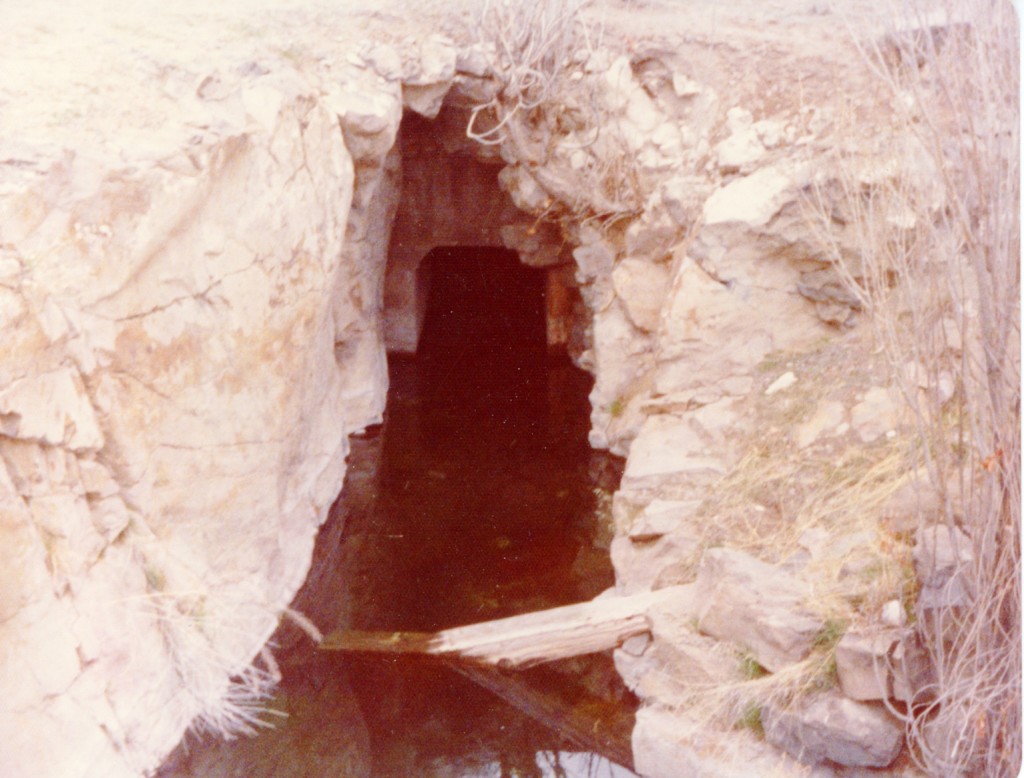
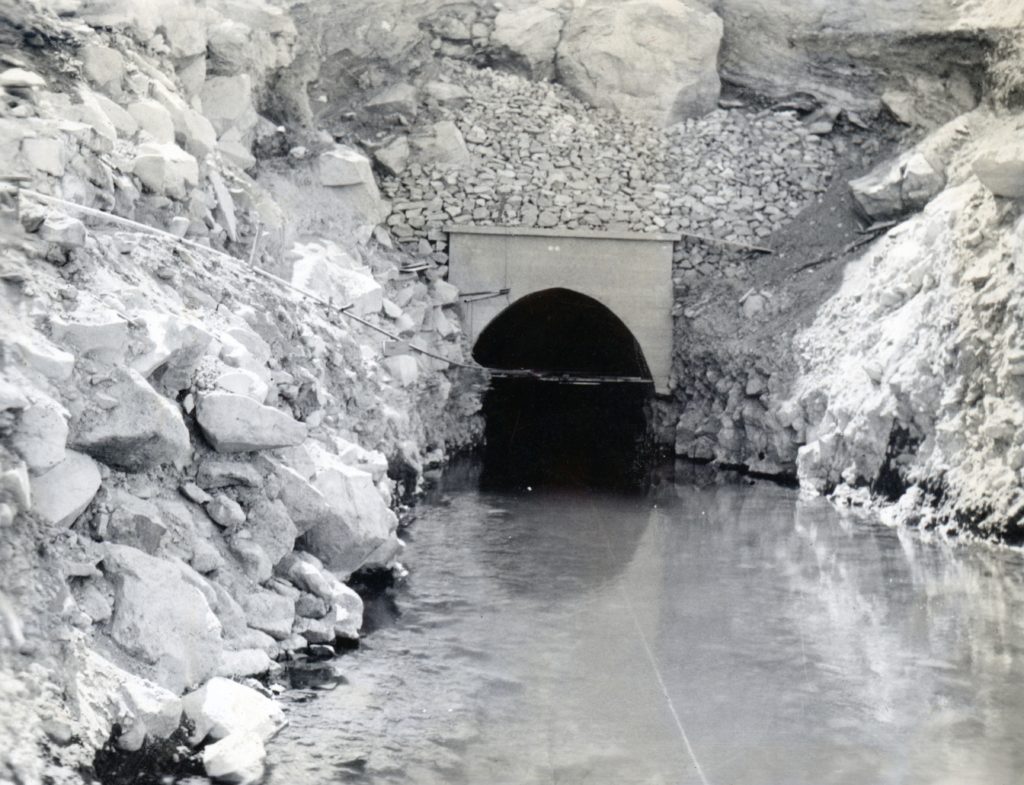
Exploring lava beds, which there is plenty around Northeastern California, there is no telling what a person might find. The Brockman Flat Lava Beds on the west side of Eagle Lake is no exception.

In the early 1950s the Chico State Biological field study set up operations at Spaulding Tract, Eagle Lake. It was in the summer of 1951, that several students explored the lava beds to the south of Spauldings and made their initial discovery of a ice/lava cave. Continue reading Eagle Lake Ice Caves

Susanville Shakes, 1889

Main Street, Susanville, 1885. Courtesy of Betty Barry Deal

On the night of June 19, 1889 a substantial earthquake was felt in the region, followed by twenty-eight aftershocks. Of course, most everyone assumed the culprit was Lassen Peak. However, upon further investigation the epicenter was Eagle Lake.

Thomas Ford, editor of Bieber’s Mountain Tribune traveled to Susanville during the earthquake. Ford wrote: “Arriving at Susanville at six o’clock in the evening, we found things pretty shaky; experienced four shocks that night and was told that it had not been a very good night for earthquakes either. The people did not appear much disturbed by them; were going right along with their business as if nothing had happened, and were philosophically disposed to take their chances on what might happen. Many were the accounts or what had happened since the shaky season began—such as Eagle Lake sinking two feet, the waters of Willow Creek being higher than ever before, water in the reservoir muddy, ashes found in wells, beer shooting up fifteen feet out of the tank of Frank Runge’s brewery, etc. Different theories as to the causes of earthquakes were advanced, and when asked our opinion we replied that we were not acquainted with earthquakes, and did not desire a more intimate acquaintance or further introduction.”

Support

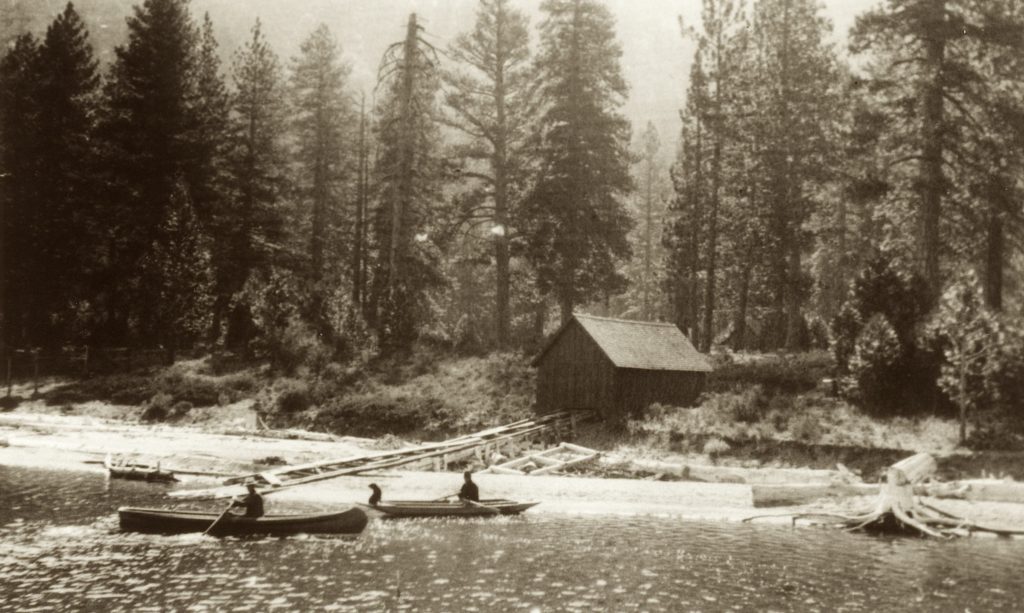
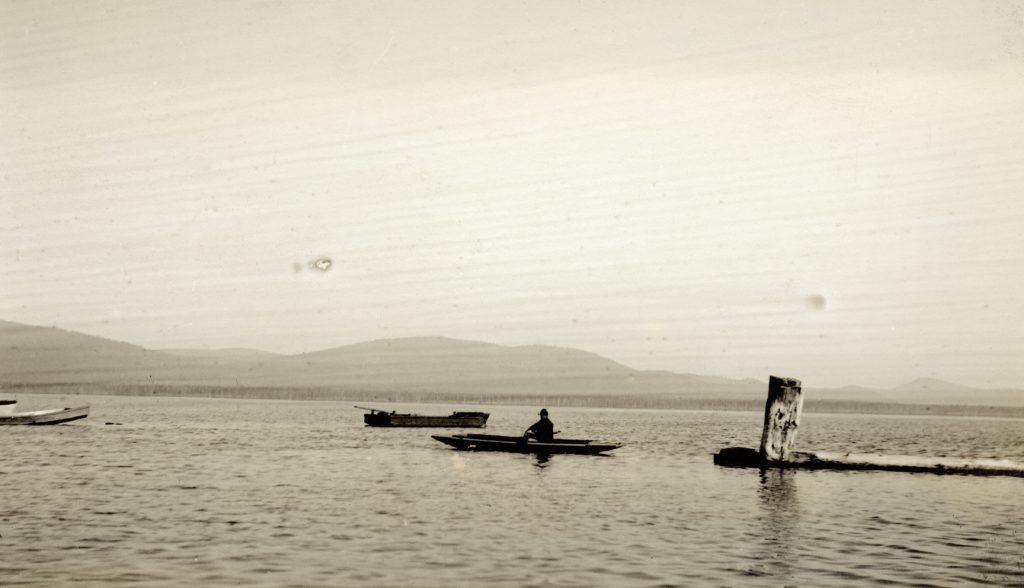
The Gallatin’s Armada on Eagle Lake

Gallatin Boat Dock—Wyn Wachhorst

With Memorial Day weekend approaching, Eagle Lake opening day of fishing season will be here in a few days. There will be, without a doubt, plenty of boating activity on the lake.

Gallatin Boat House—Wyn Wachhorst

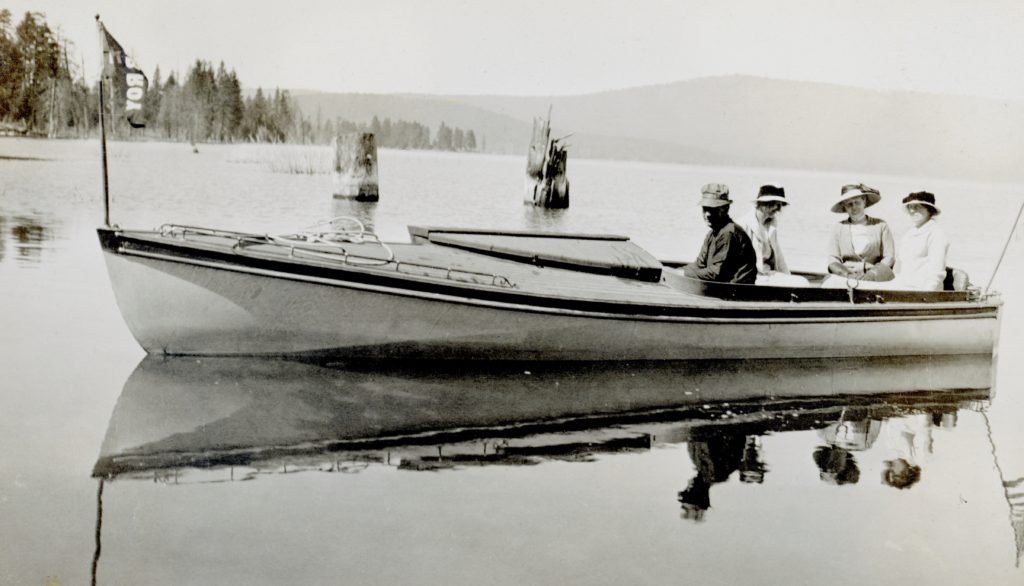
In the summer of 1913, Malvena Gallatin built a summer home on the southeast corner of Eagle Lake. For about the next nine years the extended Gallatin clan spent a lot of time recreating at the lake.

A Gallatin boating scene—Wyn Wachhorst

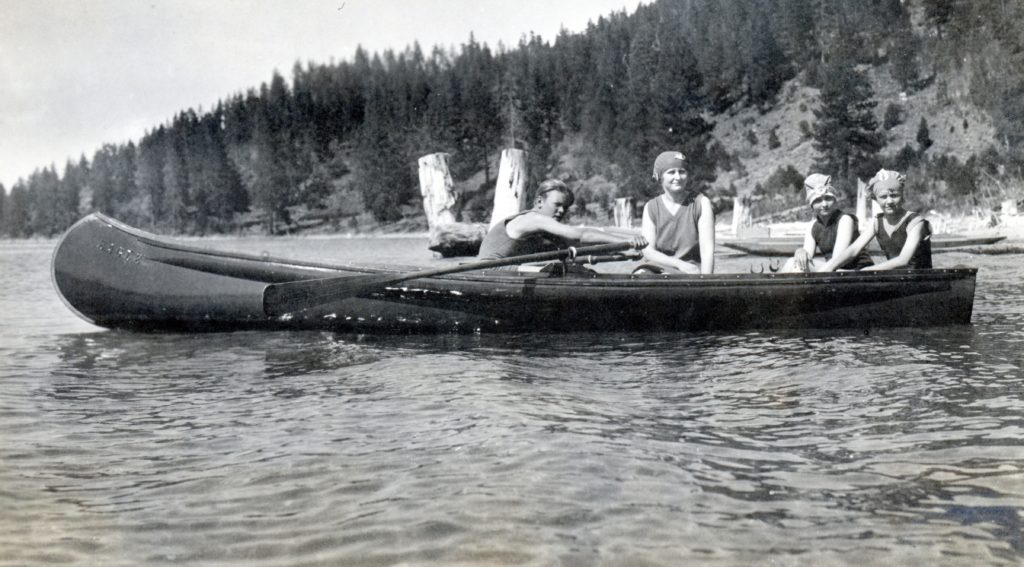
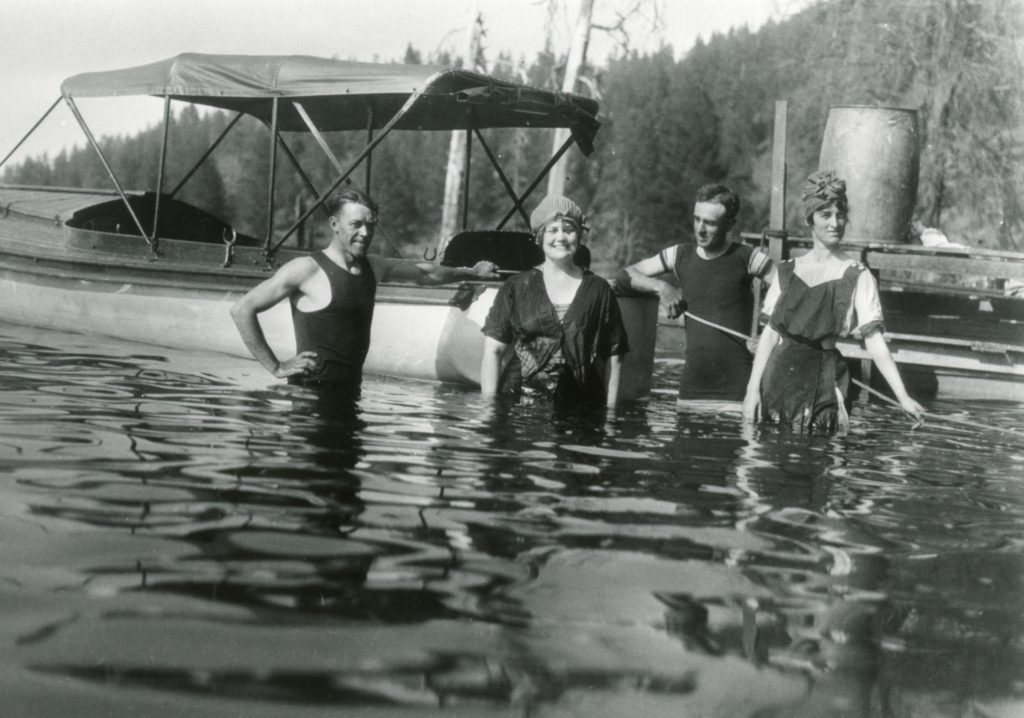
While there is not much written record about the Gallatin’s recreational activities at the lake, they did leave behind a photographic one. I am very thankful to Wyn Wachhorst, Melvana’s great grandson for sharing them.

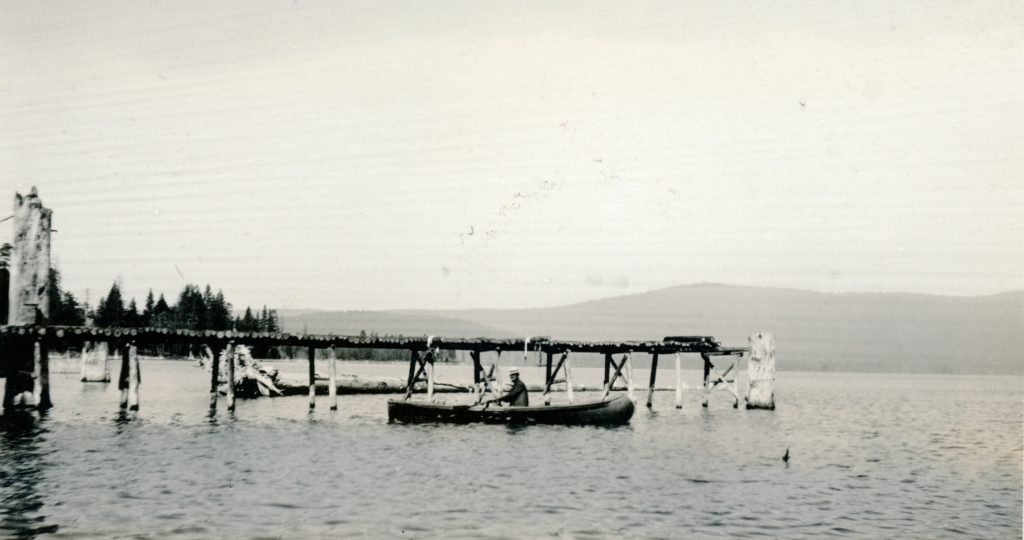
Part of the Gallatin boating fleet at Eagle Lake, 1918. Courtesy of Wyn Wachhorst

The person rowing the boat depicted above is Gallatin Powers. He would go on to establish a well known restaurant in Monterey named Gallatin’s.

Gallatin’s Boat at the south shore.

Enjoy the long holiday weekend and be careful out there. I will probably being staying close to home doing my usual cemetery routines.

A mighty fine Gallatin boat—Wyn Wachhorst

Tim

Eagle Lake Summit Open

Eagle Lake Summit, 1923. Courtesy of Dick & Helen Harrison

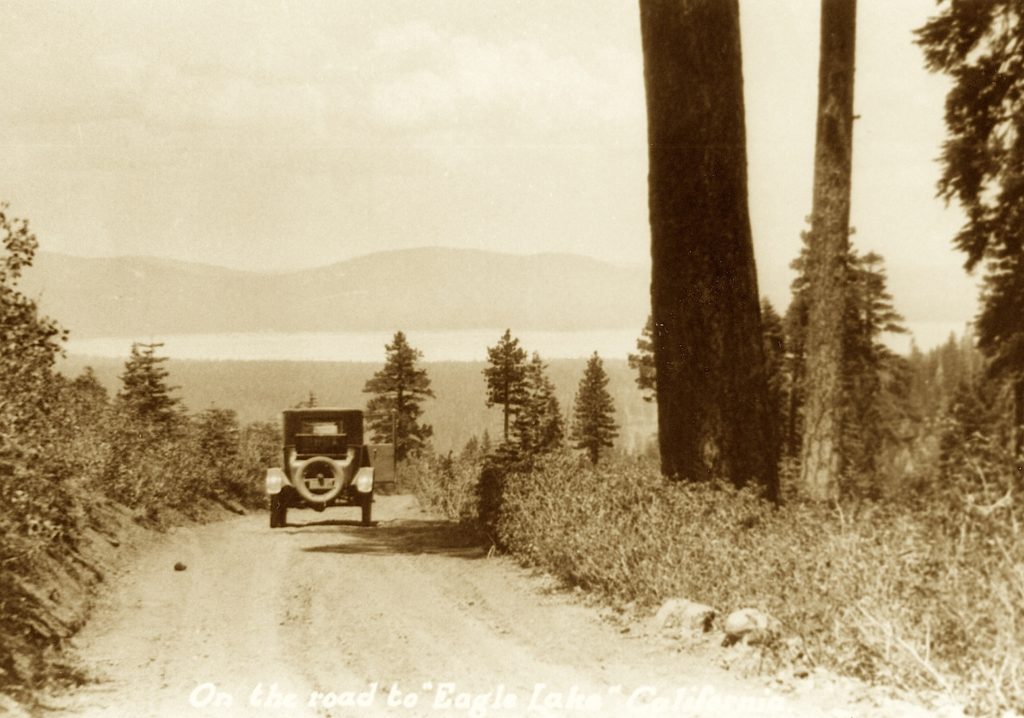
It may sound quaint in this day and age, but when mountain road  summit opened in the spring time it was big news. After all snow plows for road maintenance were non-existent. Regions like this were shut off from the rest of the world.

On Sunday, May 21, 1916 Lassen County Supervisor, L.R. Cady reported he had made the trek over the Eagle Lake Summit. Cady reported there were no serious difficulty encountered. This, of course, was good news for “Burt” Christie, owner and operator of the Eagle Lake Resort on the southwest corner of Eagle Lake. During the winter months, Christie would take his boat and go up to the northeast corner of the lake, and dock at the Fritter Ranch, where he kept his automobile. Christie would then make the journey to Susanville to obtain necessary supplies and take care of business affairs and return back in the same manner.

Donate

The Annual Eagle Lake Fish Harvest

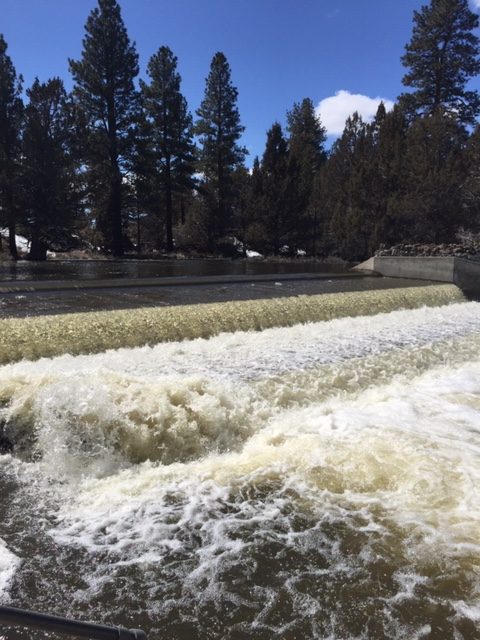
Pine Creek Fish Dam, April 4, 2019

During the late 1800s, there were a handful of individuals that each spring would go to Eagle Lake to harvest wagon loads of that lake’s famed trout, to bring back to Susanville to sale.

Susanville resident Med Arnold (1885-1967) provided an unusual account.  Med recalled an outing, either in 1895 or 1896, for their fishing expedition, they bypassed Eagle Lake and ventured to Pine Creek, near present day Bogard Rest Stop. It was in May and in several places they had to shovel through snow drifts.  Med stated, “We found literally thousands of those fine, big Eagle Lake trout all over the meadow. We scooped them out of the water with pitch forks. It was estimated that we caught around 800 pounds of fish. Upon arriving home the next day, we stopped in front of Hi Skadan’s livery stable (607 Main Street) and gave them nearly all way—two or three per person.”

What has puzzled me about these accounts, how did they keep the fish from spoiling?

Support

McClelland Ranch, Eagle Lake

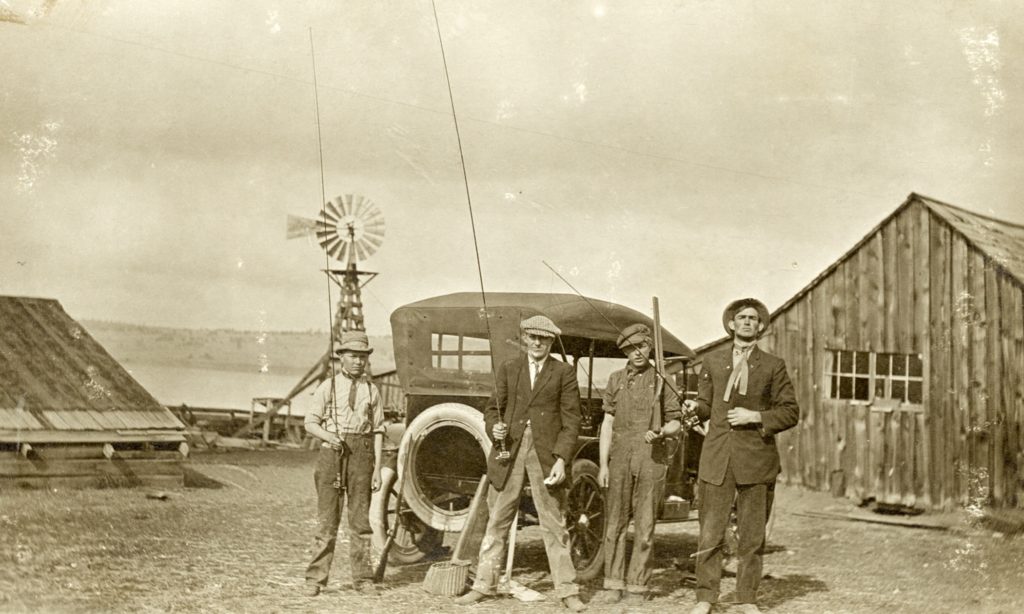
A group of bass fishermen at the McClelland Ranch, 1914.

This well known place on the north shore of Eagle Lake, happens to be first place settled there. On January4, 1870, Levi Button, a thirty-three old New Yorker, filed a land claim there for 160 acres.  Button’s main activity was prospecting and trapping. Button only remained there for a couple of years. Various individuals would lay claim to Button’s abandoned homestead, but it was not until the early 1880s when Adolph Schuler made a real go of it. After making numerous improvements he secured a federal land patent for the property. At first, it seemed he would quickly fade away when on  July 11, 1884, he sold out to James D. Byers for $1,000. Byers had an extensive livestock operation in the Honey Lake Valley and could utilize the Eagle Lake property for summer range. Schuler remained on the premises working for Byers. In 1902, Byers passed away and left a major portion of his estate to his nephew’s family, the McClellands, including the Eagle Lake property. It is still owned by the McClelland family.

Support

Eagle Lake, 1878

In  1888, Davis sold to W.H. Troxel and in 1926 Troxel sold it to Coit and Laura Stone.

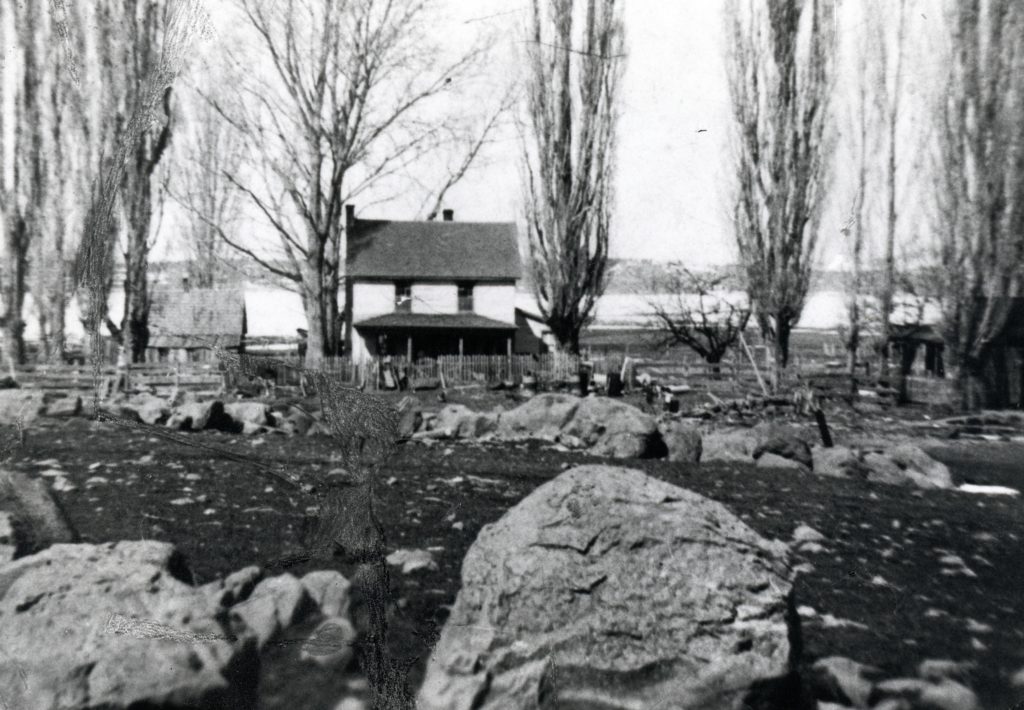
In 1876, William S. Davis purchased the Hazzard Webster place at the north end of Eagle Lake—known to many as the old Stone Ranch. Davis made numerous improvements to the property, including the construction of a two-story house, as the place served as stage stop for travelers along this route.

In 1878, his thirteen-year-old nephew, Frank Davis spent the summer at Eagle Lake. In his memoirs he wrote:  “I like to remember my first look at Eagle Lake when I went by stage to visit Uncle Will. As we came up out of the valley, the stage coach crossed a little ridge and started downgrade to the lake. There is suddenly was, all spread out before us! The lake was covered with whitecaps because it was in the afternoon, and there was a great white cloud covering the hillside from the top and drifting down to the edge of the lake. ‘See the goats are coming in for the night,’ said Uncle Will with a sweeping gesture.

“I looked again and discovered the great white cloud that blended the scene from the clouds in the sky above to the margin of the lake and seemed to blend with the white-capped surface of the water was actually about 2700 head of white Angora goats. Uncle was raising them for their silky hair, which was in much demand for the fine fur felt used in quality hats, and woven fabrics.”

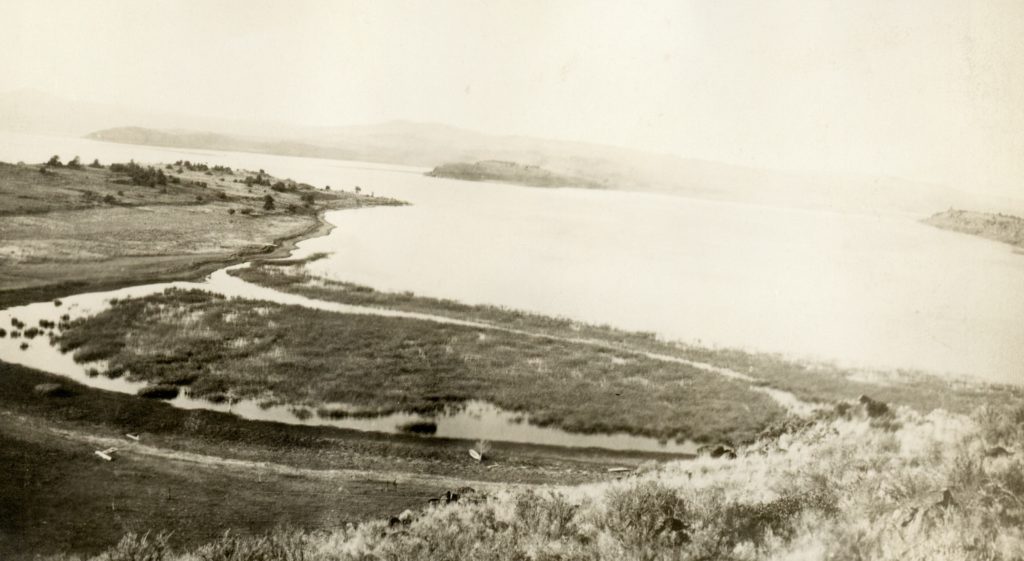
The north shore of Eagle Lake, 1920, where  Davis was located.  Courtesy of Lola L. Tanner

”The ranch house had originally been a log cabin when Uncle Will first bought it. He made it a complete two-story building, adding more rooms, plastering the interior rooms and covering the outside with bevelled siding. Made quite a pretty place by the time he finished it.”

After Davis sold he moved to Susanville. A for a time he was in charge of the bar and office of the Steward House. He remained in Susanville and died in 1908.

Donate


Stanford University & Lassen County

Map courtesy of Stanford University

One would not think that Stanford University and Lassen County would be associated in any way, but that was not case. Leland Stanford had many interests. In 1881 he purchased Rancho Bosquejo at Vina, Tehama County. It should be duly noted, that this was Peter Lassen’s original Spanish Land Grant.

On May 26, 1899, Stanford’s widow, Jane, purchased 2,114 acres west of Eagle Lake from Champlin and Boggs for $8,000. This allowed for additional summer pasture for the Vina property. Ten days after the purchase, Jane transferred the title to Stanford University. In February 1924, the University sold its Lassen County Summer Range to J.J. Flemining at $10 an acre.

Spread the word, and encourage a friend to subscribe

Lassen County Mines, 1892

Golden Eagle Mine, Hayden Hill, 1894. Courtesy of Del & Diane Poole

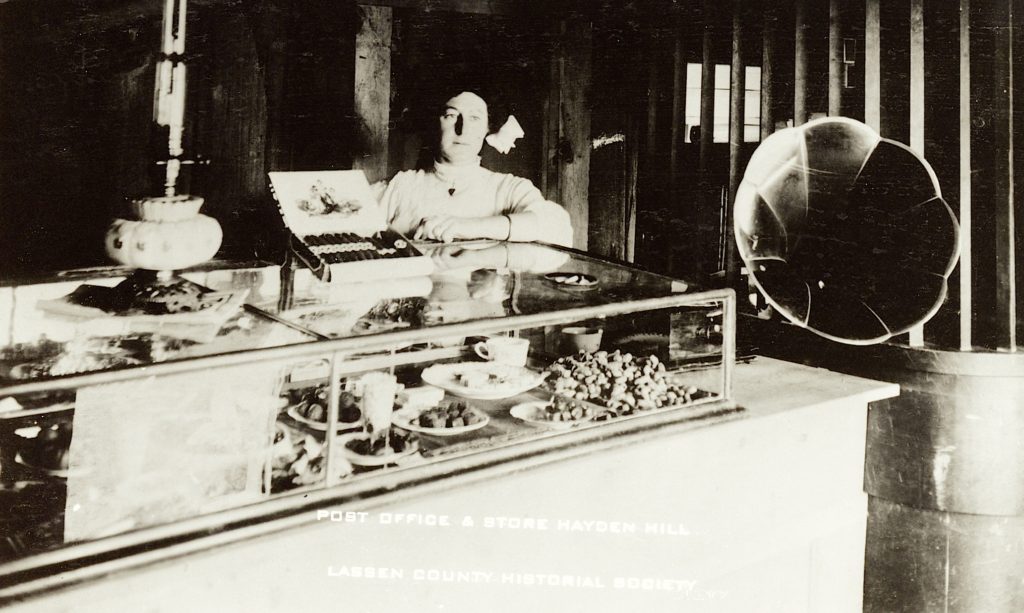
Just as you can not believe everything on the internet, its true with various published accounts in all forms—past and present. The following article about Lassen County mines appeared in the San Francisco Chronicle, May 24, 1892.  Two items struck me, one which is obvious the mines of Hayden Hill were located on a spur of the Sierra Nevada Mountain, which is not the case. The other which was unusual was the mining activity at Eagle Lake which usually is never mentioned.

”Lassen County, bordering on one of the best mining counties of California, being separated from Plumas county by a spur of the Sierra Nevada, has so far developed little mineral wealth, a few claims having been prospected on Diamond Mountain, near Susanville, the county seat, have yielded some gold. Veins of silver and gold ores have also been found on the southeast side of Eagle Lake, but mining as a regular business has only been prosecuted in the extreme north of the county, sixty miles north of Susanville and nine miles south of Modoc county line in what is known as the Hayden Hill Mining District. This hill, named after one of the first locators who is buried there, is one of the highest points of a spur running out of the Eastern slope of the Sierra Nevada; its altitude is given at 7500 feet. The mines were discovered nearly twenty years ago, since which time they have been more or less continuously worked yielding to the world’s gold supply. a little over $1,000,000.”

Subscribe

Where Are We — Dow Wells

Dow Flat & Wells, October 8, 2020

In 1875, William Dow located on the northwest side of Eagle Lake. He remained there until 1886 and the following year he sold 465 acres in that region to Albert Gallatin.

Dow Flat and Wells is located a short distance north of Spalding Tract. In the distance is Dow Butte. In 1994, the Dow Butte Lookout was removed and relocated next to the Eagle Lake Marina.

Spread the word, and encourage a friend to subscribe