Tag Archives: Agricultural

Those Pesky Coyotes & Rabbits

A coyote scalp receipt

In 1891, California passed a bounty on coyotes at five dollars each. During that decade, in the Lassen region, that bounty was nearly successful in eradicating the coyote population. In turn, that created another problem—jack rabbits. These critters flourished, since the coyote was its primary predator. For the farmers the jack rabbits created more problems than the coyotes.

In 1920, the residents of the Madeline Plains requested aid from their Congressman John E. Raker, to help them with the jack rabbit problem. A study sent to Raker reported: “As son as the crops are up and making good progress the rabbits begin work on them. The heaviest damage is done in August. One rancher reported losing 100 acres of wheat last summer. They take this crop in preference to oats and rye. It was reported that 70 tons of rabbit meat [to make tamales] had been shipped to the San Francisco market. It appears that the animals cannot be killed fast enough in this region to furnish relief to the ranches.”

One method deployed to eradicate the rabbits—were rabbit drives. As the name infers volunteers were either clubs or guns would work a large swath of area killing thousands of rabbits. Rabbit drives in the region were common during the 1920s and 1930s. Even after the coyote bounty law repealed it took years before a balance in nature was corrected.

Support
 

Bogard Buttes, Lassen County

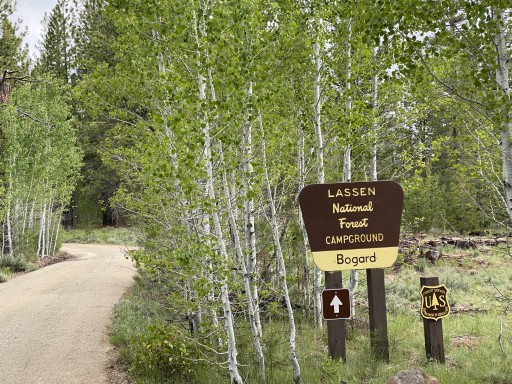
Bogard Campground

Traveling west on Highway 44, once you reached Pine Creek Valley, one cannot miss the Bogard Buttes. Located near the base is the Bogard Ranger Station and Rest Area. Nearby, is the hidden gem of the Bogard Campground.

So who was Bogard? Like so many natural features in western Lassen County, are named for Tehama County livestock operators, who used the region for summer grazing. John Jasper Bogard (1851-1895) was one of them. In the 1870s, Bogard had a camp at the base of the Buttes. On January 21, 1884 he sold this property to George Hoag for $600. On a final note, Bogard, while serving as Sheriff of Tehama County, died in a train robbery incident at Marysville, California in 1895.

Tim

Lassen Farm Bureau News

Sunflower demonstration on the A.F. Babcock Ranch, Bieber, 1923

During the 1920s, the Lassen Farm Bureau published weekly all the agricultural news of the county. All the rural communities had their own “Farm Center,” that held regular meetings to discuss a wide variety of topics. M.D. Collins who was the farm advisor then, kept very busy.  Here are two items, that some may find of interest.

May 1926 – J.H. McClure, assistant freight and passenger agent for the Southern Pacific with offices in Reno, spent two days in Lassen County this week. Mr. McClure states they are now giving Lassen County service in freight that has never been excelled. Freight leaving Reno in the evening arrives in Susanville the next morning. Mr. McClure states that an iced car is leaving Susanville twice a week to carry Lassen County products to the lower country markets. The service is being pushed to the highest possible degree of efficiency and the farmers will be able this season to ship out their products under better conditions than of former years. The rate on potatoes was reduced last fall.

May 1926 – Jack Menser, Arthur Kenyon and Peter Gerig, committeemen for the Big Valley flour mill, report that the money is being paid quite satisfactorily and it is hoped the larger portion will be collected in the near future. Alfred Jacks is ready to make the mill purchase as soon as the money is available.

August 1926 – The Big Valley flour committee has collected $2,450 of the $2,500 required to get the mill. The mill is being ordered by Alfred Jacks who is constructing the new building in which to house the machinery. Big Valley will have another flour mill for operation this fall.

September 1926 – The Red River Lumber Company has built a new hay barn near the dairy buildings which has a capacity  of 1000 tons of hay. The barn is practically full of hay at the present time. Other improvements have been made around the dairy barns and the market milk station. New  corrals for the dairy cows and feed racks are being installed.

Tim

An Interesting Observation

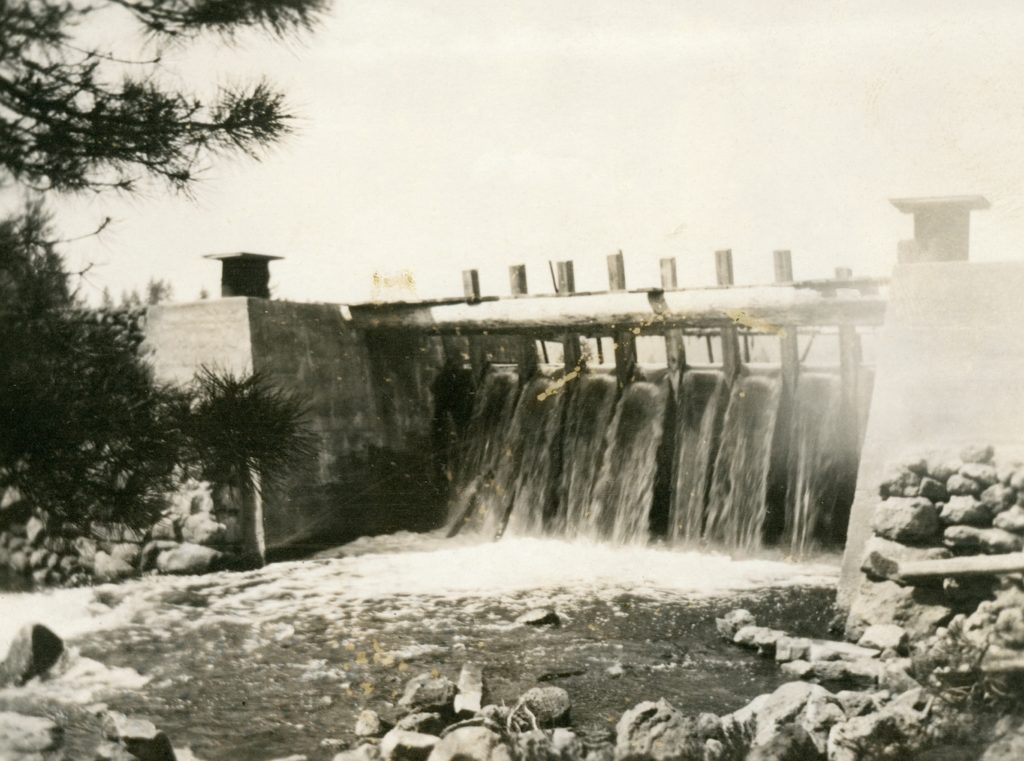
McCoy Flat Reservoir dam, 1915. Courtesy of Alphozene Terrill, granddaughter of Ben H. Leavitt

In 1965, Med Arnold penned an interesting Letter to the Editor of the Lassen Advocate. Arnold (1885-1967) is known for many things, whether a magistrate at Herlong, to high school coach, and also being a grandson of Isaac Roop, the founder of Susanville. The letter’s caption “What Lassen County Needs.” With the steady decline of the lumber industry, it was important in his opinion to focus on the future. While he acknowledged the opening of the prison, the California Correctional Center, that was beneficial, it was not the future.

A pastoral scene near Johnstonville.

Arnold wrote: “It is my opinion that the most important project is the water situation, especially now with a decline in the lumber industry, which is sure to become worse in the not to distant future. If that is the fact, and I believe that it is, then we must look to helping of our farmers. The raising of crops and livestock are sure in time to become the leading industries of the county. So with that in mind we should endeavor to secure for them and adequate water supply, not for their present farms and ranches now under cultivation, but for the hundreds of idle acres now in brush.”

Arnold pressed the need to construct dams on Susan River, Willow Creek and Long Valley Creek. Not only did he stress these newly created reservoirs would furnish badly needed water, but would provide for additional recreation for fishing and such, “adding to our future economy.”

In 1968, Lassen County’s first general plan was released. That document, too, stressed the importance of the dams that Arnold referred to. They never happened and now the California
Correctional Center is on the brink of closure.

Subscribe

Standish Water Company – Part II

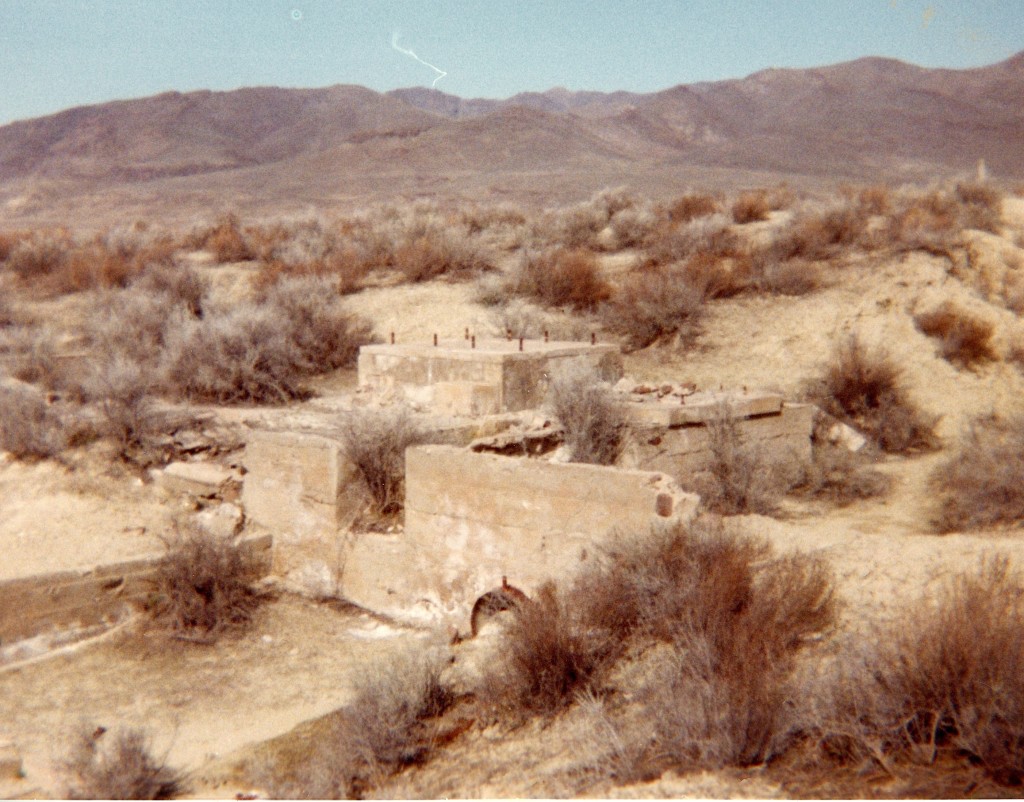
Foundation remains, 1984.

In 1913 the United States Government Land Office (GLO) intervened. California was on a major verge to overhaul water rights, yet that was of little concern to the GLO. At issue, at least with the GLO, was the State’s law was vague and failed to state whether water from a lake with no outlet could be appropriated. Until that issue was resolved, the GLO had no choice but to revoke Standish Water Company’s rights-of-way of its canals across federal lands. In essence the Company was forced to cease and desist, thereby forfieting revenue from water sales to recover its initial investment. This issue with the State was not to be resolved in a timely manner. In November 1914, the voters of California were presented with an initiative to overhaul the State’s water right system. It was approved and the Department of Water Resources was created. This new agency had complete control over the issuance of water appropriations, which previously was done at the county level. It was necessary reform, since the counties recorded water right claims but had no authority to determine concerning multiple applicants over a single water source. Continue reading Standish Water Company – Part II

Med Arnold Remembers the Old Time Fair

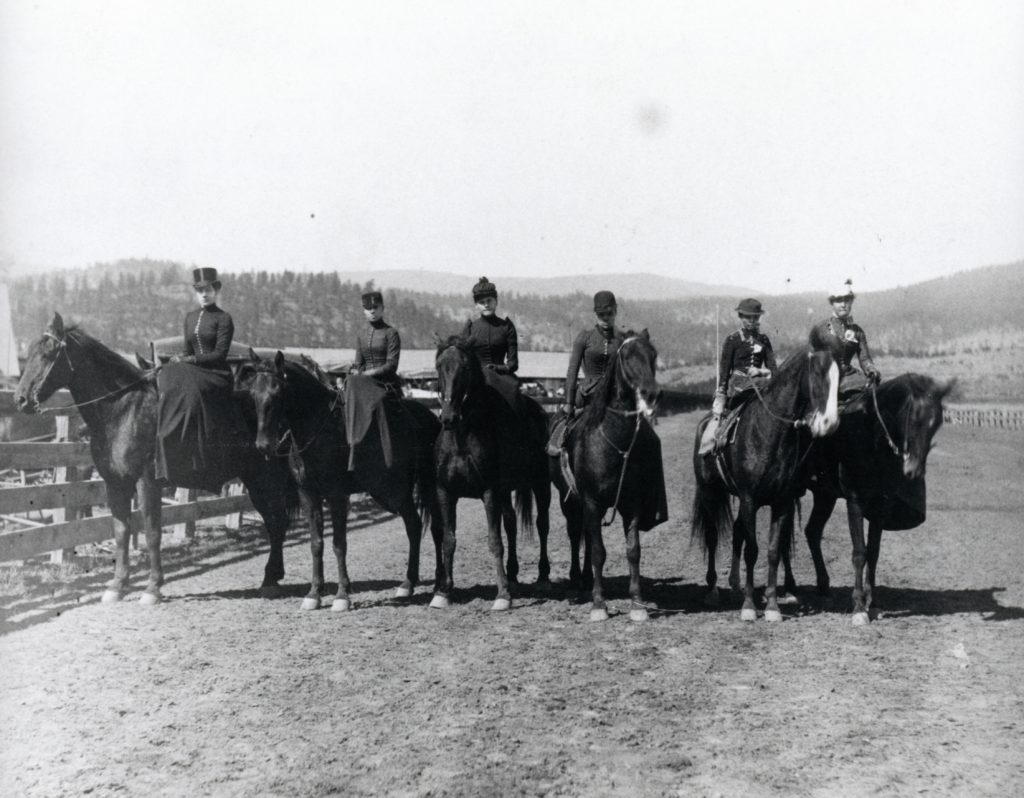
Lassen County Fair, 1891. Courtesy of Carl Illig

Susanville resident, Med Arnold (1885-1967) recalled the fairs of past, which we explore today. Med wrote: “Every fall we had  two-week fair consisting of races, a livestock show and exhibits of all kinds. Many of our local people owned race horses, both runners and harness horses. Other horses were brought in from all parts of the country. There was usually six running races and a couple of harness races each day.

”The mile-track was situated just east of our ranch, and not far from our orchards. The large grandstand, betting ring, restaurant, paddock and stables were on the south side of the track, and the judges stand was on the north side. All of these buildings were situated somewhere in the neighborhood of what is now North Street, but some distance below Memorial Park. I have seen hundreds of dollars in the betting ring, all in gold coins. The present day  crop of gamblers are pikers compared to the old-time bettors.”

Support


Hay Derricks

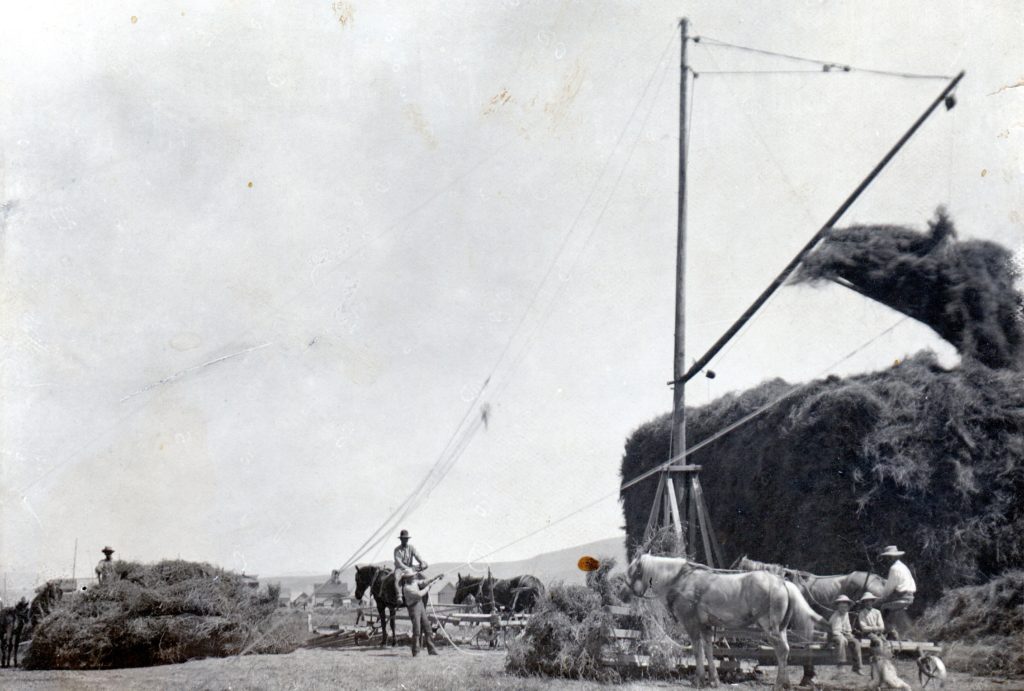
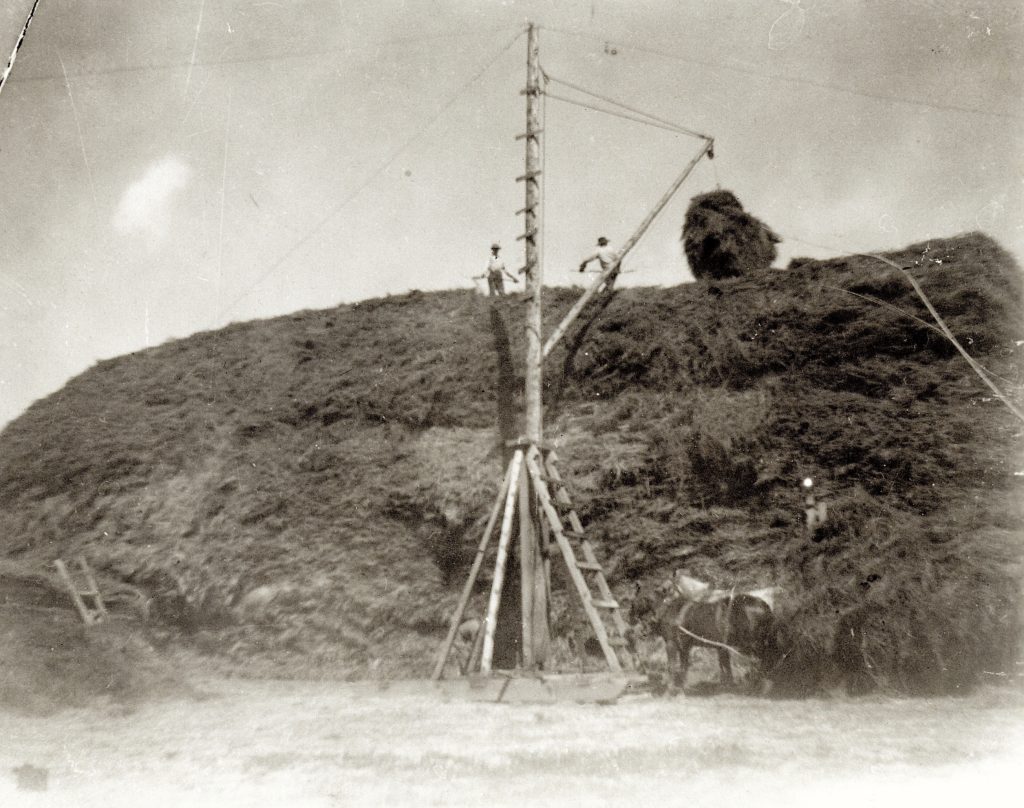
Haying at the Elledge Ranch, near Standish, 1900. Courtesy of Camilla Moody

One of the most unique and distinct pieces of agricultural equipment in the Intermountain West was the hay derrick. There were no standardized derrick. They were either hand made by the farmer’s or a neighbor. Besides the derrick, a buckrake, net settlers and derrick cart were utilized.

The stacker required talent, to make sure each corner was kept square. Keeping the hay stack uniformed was a must. If not, if one side became overloaded, the whole stack would collapse. Then there was the final touch. The top of the stock was rounded off to resemble a loaf of bread. This was an utmost necessity. The rounded top repelled rain and snow.

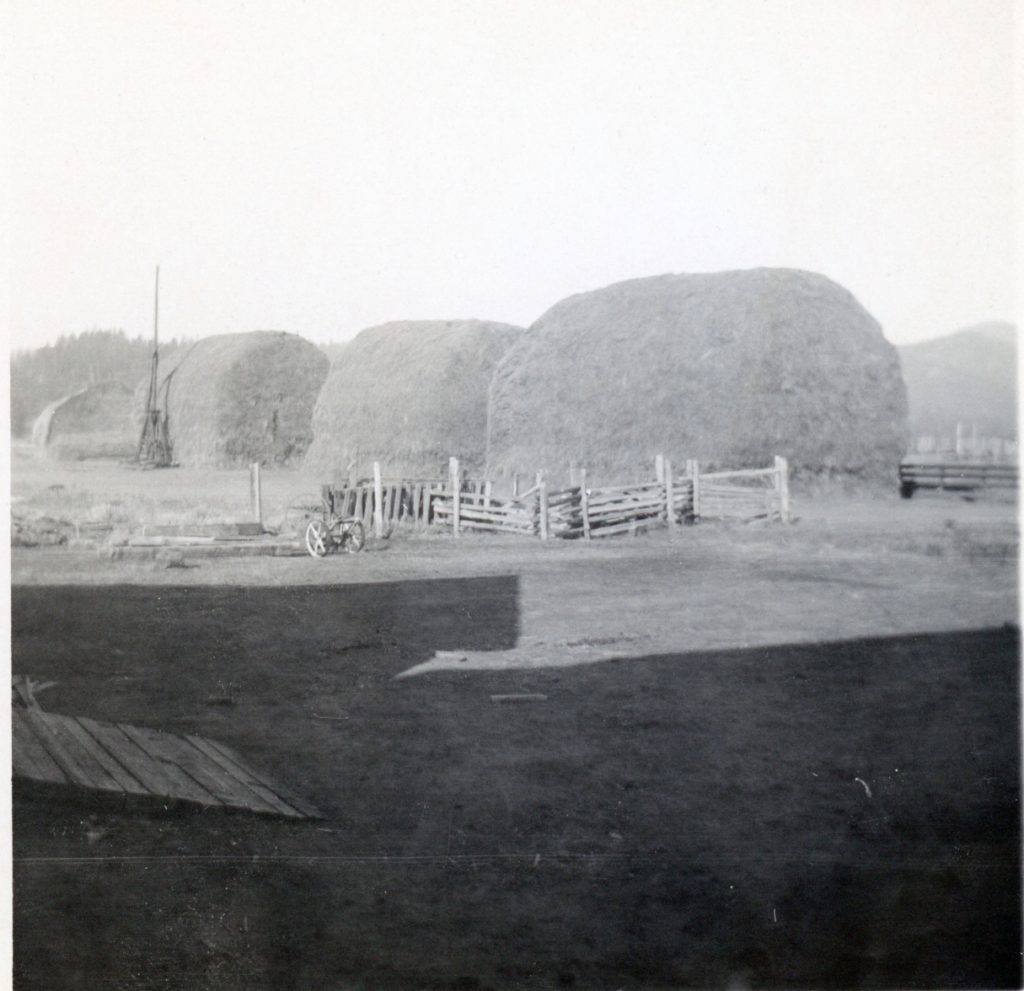
Hay stacks at the Lonkey Ranch, 1911. Today the ranch is known as Five Dot in the Willow Creek Valley.C.R. Caudle Collection

Support

Litchfield Depot Plea

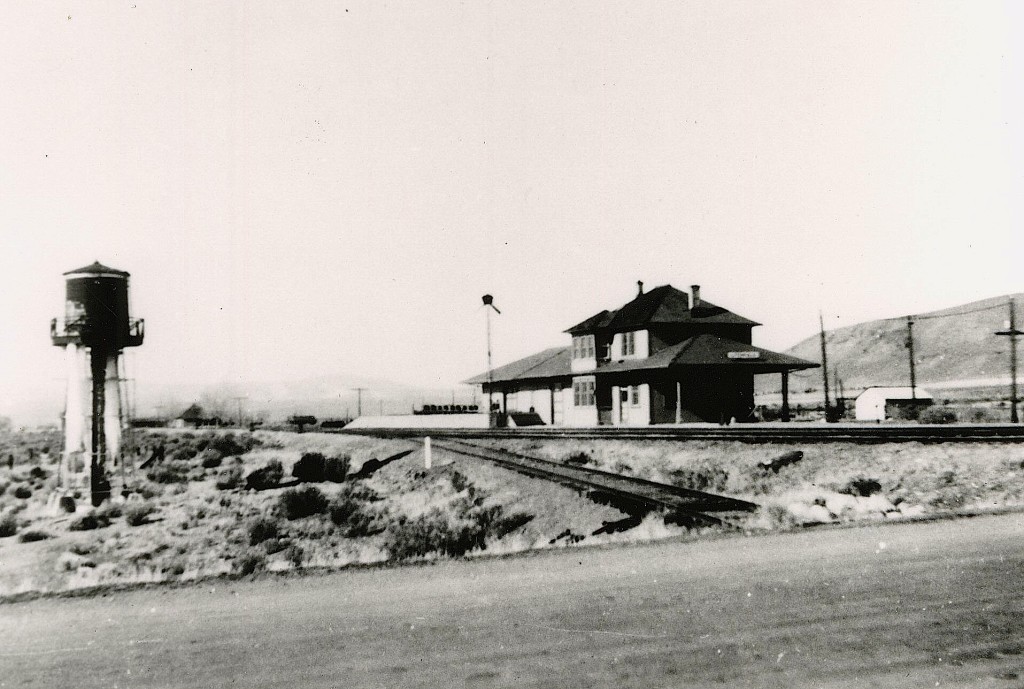
Litchfield Depot of the Fernley & Lassen Railroad, 1947. Courtesy of Camilla Moody

One never knows, until you ask. Thus, that is the case today. The Southern Pacific Depot at Litchfield is something I know hardly anything about. It was built 1913/14 and was the railroad’s Common Standard Plan #22. It is the same plan used for the depot at Fernley, Nevada.

Considering that it was a substantial structure for that region, the above photograph is one of only  two I have that I have come across.  For all the activity that took place there, information is nearly non-existant. I do not even have a clue as to when it was shut down and/or also dismantled. If anyone can enlighten me, that would truly be appreciated.

Support

Uniform Wage Set – $2.50 a Day

The Tule District, Honey Lake Valley was best known for many years it hay production. Titherington Ranch, 1906—Betty Gorbet

In June 1931 fifty-one farmers attended a meeting at Standish to discuss wages to be paid to workers during haying season. There was no uniform wage rate. Some paid $2.00 a day, others $3.00 day.  After considerable discussion it was agreed to pay $2.50 a day plus board. Another issue widely talked about, but there no consensus was reached was the amount of hours. However, just agreeing on a uniform wage was a major milestone.

Tim

Dairy History Tidbit

A view looking at the former Ridenour property with the Sella dairy in the foreground, which was located at the lower end of Gold Run, 1950s. Courtesy of Wendell V. Loughead

Of course, this was one of those scenarios where a week later after I posted about the dairy history, I came across an example of the material that can be found. It just takes a lot of sleuthing.

In a February 1926 Lassen Farm Bureau news report had this: “R.S. Raven of the cow testing association reports that the FGSCo had one cow this month that produced over 60 pounds of butterfat, another produced 50 pounds, five over 40 pounds and eight over 30 pounds for the month. Mr. O”Kelley states that these cows have been fed on silage and grain.”

In March 1926 Lassen Farm Bureau new report had this: “The Red River Lumber Company had 58 cows that produced over 30 pounds of butterfat this month. Fifteen of these produced over 40 pounds of fat, 5 produced over 50 and one cow 78 pounds. E.G. Scammon states the company is milking 175 cows at present.

Donate