Category Archives: History

Some Early Day Postal Problems

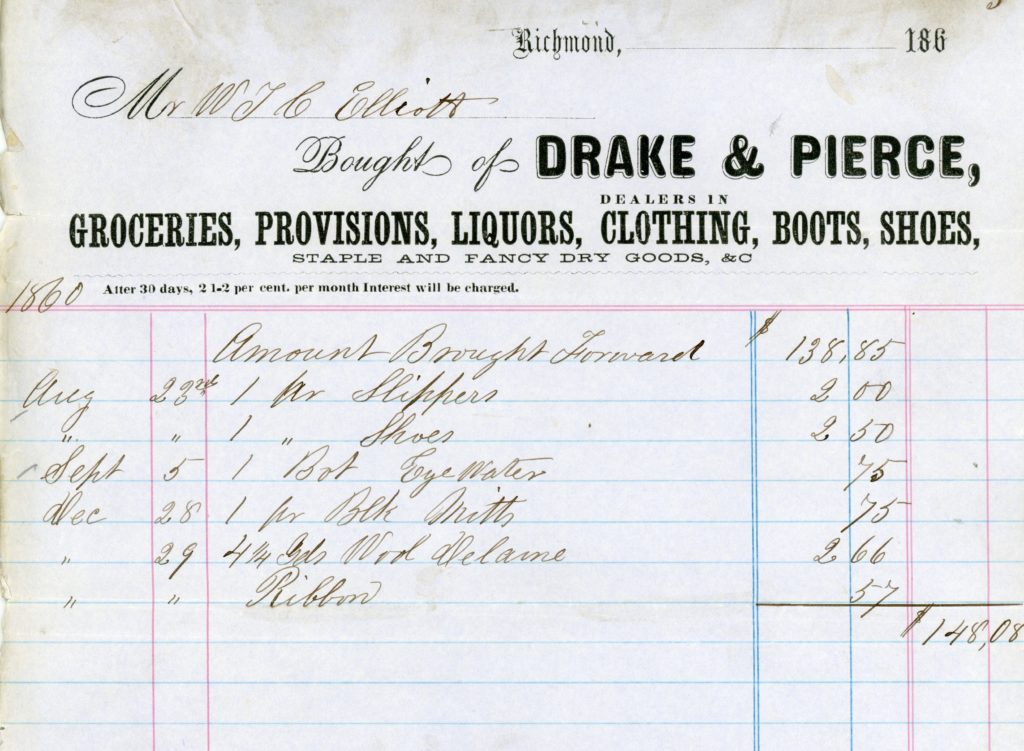
Drake & Pierce’s Richmond mercantile store, was for a time, the largest in the Honey Lake Valley.

In this day with the internet, some might think is quaint. However, the postal service provided a key role for people to communicate. Actually, there are several people that I still exchange letters the old the fashioned way. Personally, I think it is rather nice, to check the mailbox and there is a letter for me.

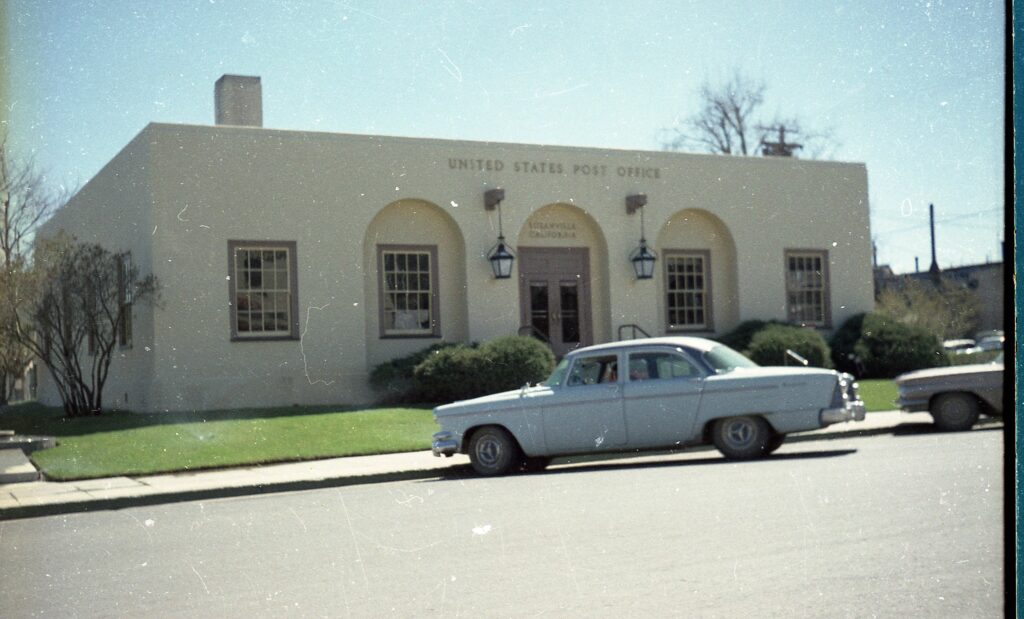
The Susanville Post Office was established in 1859. A little known fact, it carried the postal cancellation of Susanville, U.T., as in Utah Territory. Nevada had not yet been created and Utah’s western boundary was that of California.

The biggest problem for the new post office was receiving mail for distribution.  On March 3, 1860, Susanville resident wrote to Col. F.W. Lander in Washington, D.C. about the state of the postal affairs:  “There is an effort being made to have a daily mail established from Oroville from the first of June to the 30th of November, and semi-weekly for the balance of the year. Now Sir, if you could get the same service continued on through Indian Valley which needs a P.O. having about three hundred inhabitants through Richmond to Susanville with a P.O. at each place you would confer a great favor on the people here about five hundred in number and constantly increasing (There having been rich mines discovered here since your departure.)

“There was three routes established last year, one from Shasta, one from Oroville (the route you went down) and another from LaPorte all arriving at Susanville. There was however been no service on either of them and if we could get the above route from Quincy it would answer us better than all three of those which were recommended by Judge Crane without knowing the actual wishes of the people.”

During the 1860s witnessed improvements with the Idaho-California Stage Company that had the mail contract from Chico to Idaho via Susanville. In 1869, conditions for receiving mail was stabilized with the completion of the transcontinental railroad.
Support

A Centennial of Residential Mail Service

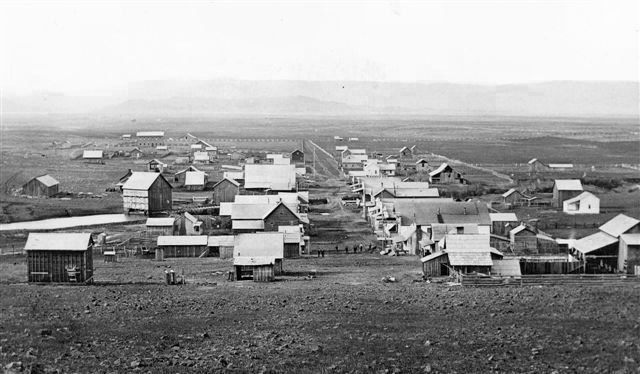
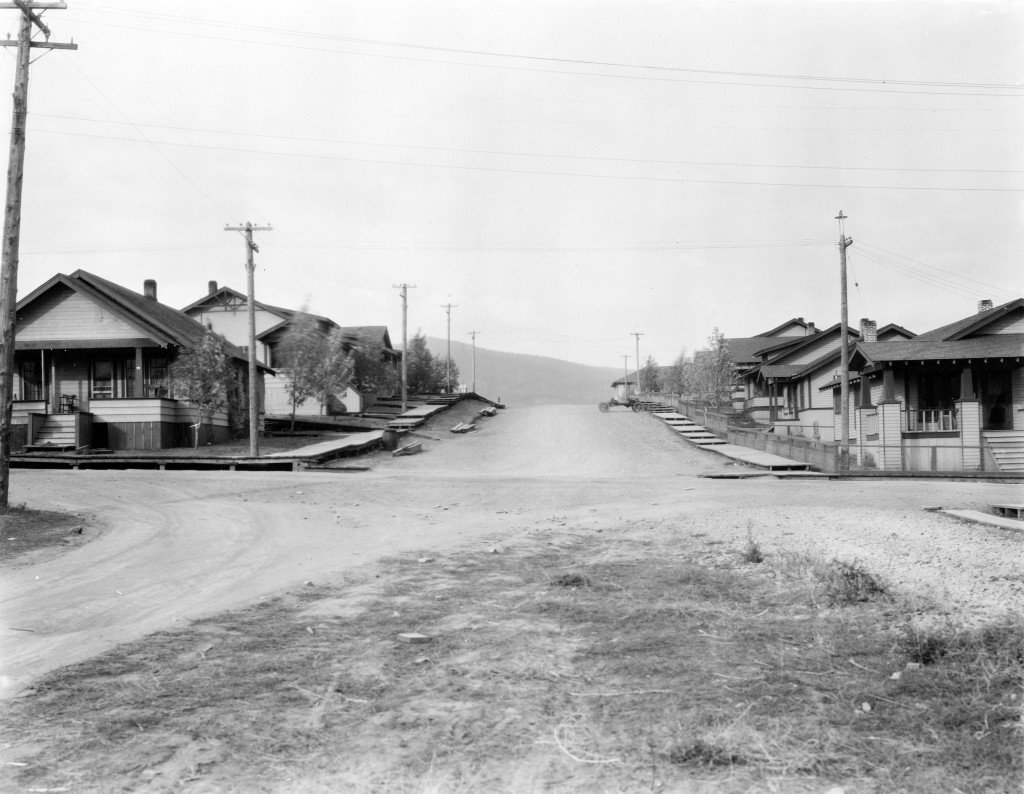
Shasta Street, Susanville, 1923

In July 1925, United States Postal Inspectors paid Susanville a visit. They deemed that residential mail service should be implemented.  There was work to be done. At least, in 1923, Susanville had implemented a housing number system. The postal service would provide residents free of charge mail boxes or the other option they would cut a mail slot in the front door. In November 1925, Postmaster C.D. Mathews ordered the installation of street signs.

On December 1, 1925 residential mail delivery was instituted. E.F. Unruh had the route that included the areas associated with the Fruit Growers Supply Company and Lassen Lumber & Box Company. He made his deliveries on a bicycle. R.C. Connor had the Halltown and Milwood districts and was provided an auto to make his deliveries. Herman Liidner had the incorporated city limits and he did his deliveries on foot.

Support


Red River’s Other California Mill

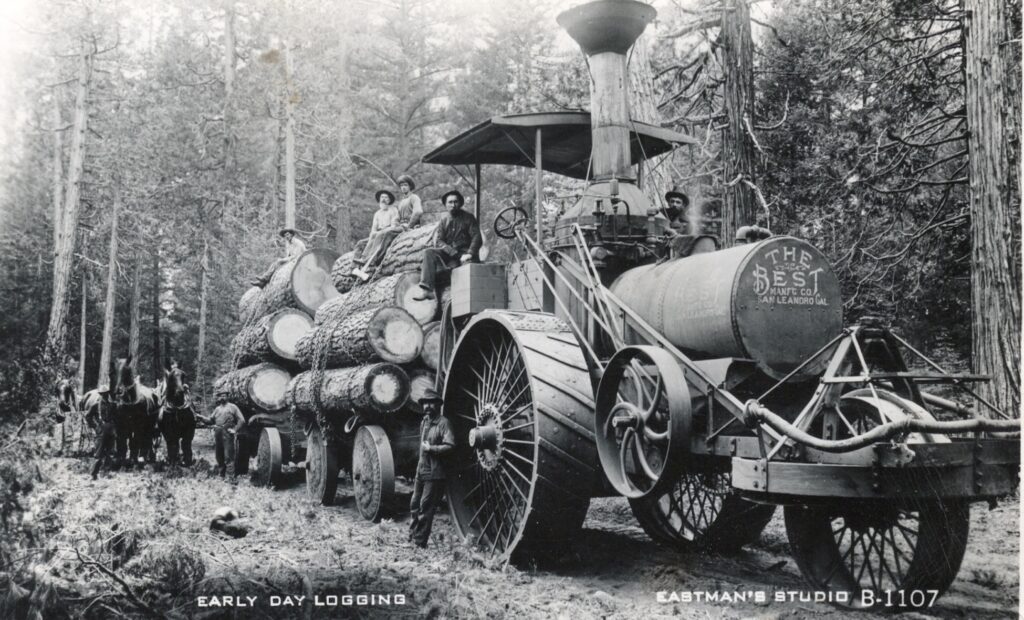
Best tractor engine, Terry Mill-Gleta Perry

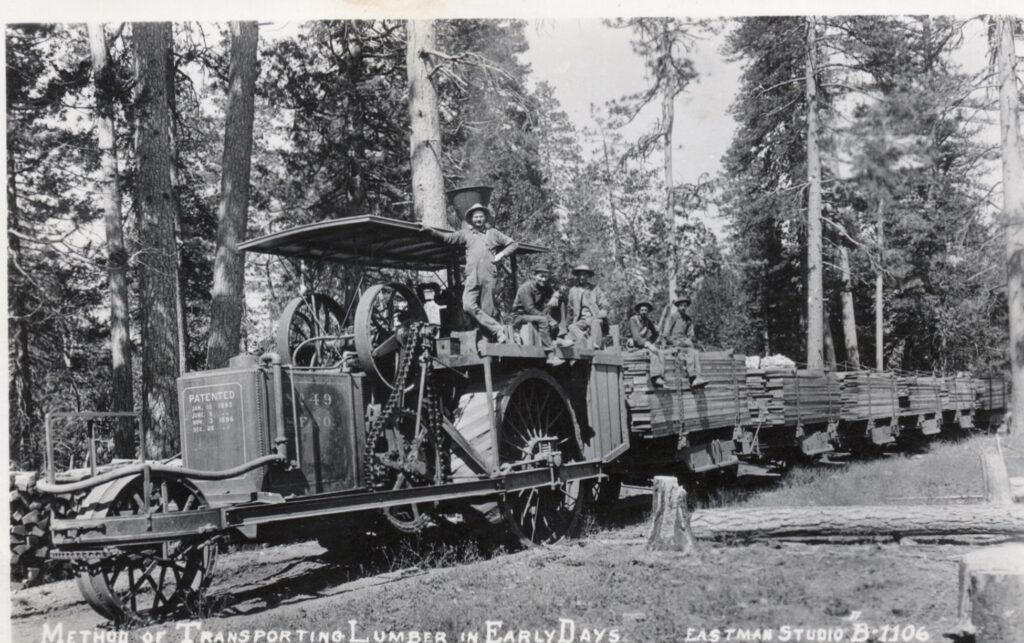
A subscriber, some months ago sent me some old logging postcards printed by Susanville’s Eastman Studios. Many assumed they were attributed to Red River Lumber Company’s logging/sawmill operations at Westwood. These photographs depict the operations of the Shasta Land & Timber Company east of Redding. In 1897, it became known as the Terry Mill. In 1917, the Terry Mill at Bella Vista suffered major fire damage and was a financial blow to that company. In 1920, the Red River Lumber Company acquired Terry. Red River only operated the mill for a couple of years. In 1925, the logging railroad at Round Mountain was pulled up and the rails were sent to Westwood.

Another relic of Terry, Courtesy of Gleta Perry

Tim


Herman Brince – A 1870s Photographer

Adin, 1879. Herman Brince Photographer. Courtesy of Nevada Historical Society

Herman Brince (1831-1882) was photographer of Lassen, Modoc and Plumas Counties during the late 1870s. He is a person of interest to me, I appreciate the  photographs he took, though I have only see about a half dozen.  Newspaper accounts stated he was quite active in taking local scenes.

For instance, Brince first arrived on the scene in the summer of 1878 to set up a studio at Prattville, now Lake Almanor. He took an expedition in what would later became Lassen Park. He set as a base camp at Malgin’s Sheep Camp, known today as Drakesbad. He created a portfolio on 25 images that trip. He sold those images at his studio at Prattville.  I have not been able to locate them. Of note, these were probably some of earliest photographs in the park.

In 1879, Brince relocated to Susanville. His photographic scenes were well documented in the newspaper, yet only a few are known to exist. This pattern repeats itself during his forays in Modoc County. In 1881, he pulled up stakes and went to Australia. He died in September 1882 at Dunedin, New Zealand.

Lassen Lodge #149 F.&A.M., 1879. A Brince photograph

In September 2025, a distant relative Dr. Ron Brinitzer sent this information: Herrman Brince was born as Heimann Brinitzer on 01. November 1831 to Samuel Brinitzer and Rosel Aufrichtig probably in Colonie Dupine or Paulsdorf close to Landsberg in Upper Silesia as oldest son into a Jewish family. He had three younger siblings: Caroline, Hirsch (or Herman) and Louis. In 1844 his mother died and his father remarried to Bertha Matzdorf with whom he had another 12 children (at least the ones I know of), among them Max (born in 1851) and Laura (born in 1861). Hirsch/Hermann is my direct ancestor. Louis emigrated to the US as well around 1869 with his wife Auguste and their daughter Rosalie where he worked as a tinsmith. He changed his name into Brince as well.

Support

Another Thanksgiving Ball

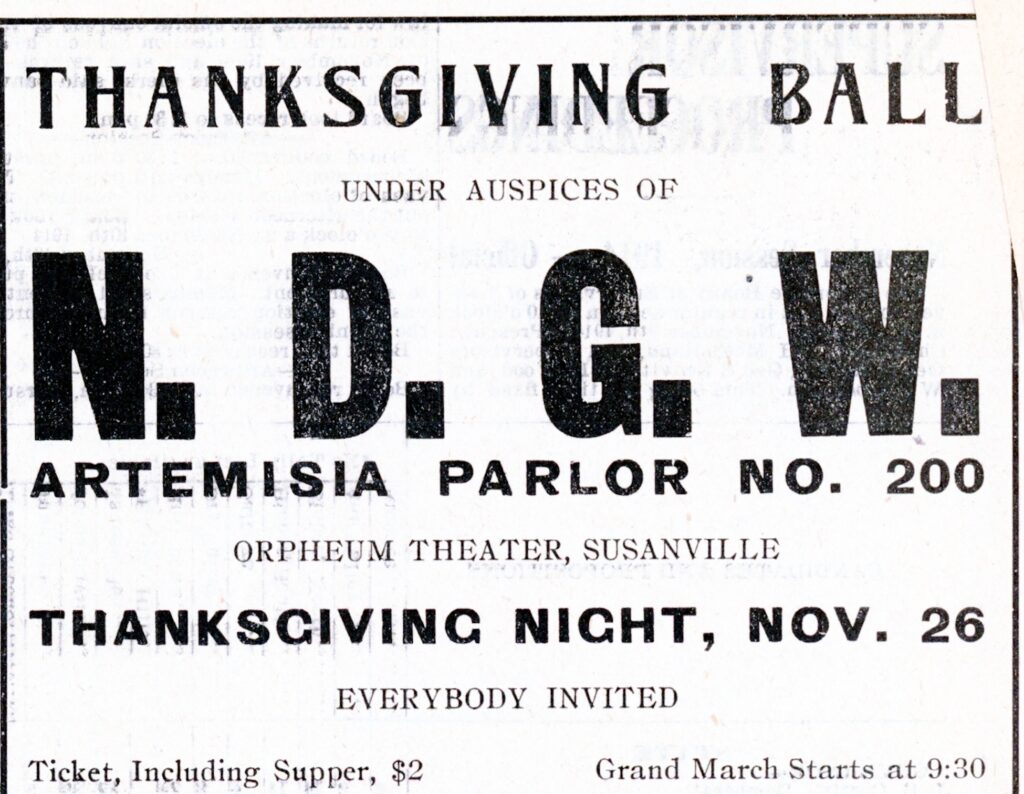
Lassen Advocate, November 20, 1914

In 1914 there two Thanksgiving Balls locally, I thought I would provide back-to-back articles. After all, during holiday weekends readership is down.

Those not familiar to the Native Daughters of the Golden West, is a fraternal organization dedicated to preserve the history of California and related goals. There is still local chapter of Native Daughters, the Nataqua Parlor.,which had its origins at Standish. The Artemisia Parlor of Susanville was short-lived and absorbed by Nataqua.

There was an organizational problem with this particular event.. The fliers had the wrong date. So a word of mouth campaign ensued. One has to remember this was in 1914, when few people even had a telephone. The attendance was slightly less than anticipated, but a good time was had by all.

The event took place at the Orpheum, on the 800 block of Main Street, Susanville. At midnight, the dancers sauntered down the street to the St. Francis Hotel for midnight chicken supper. Afterwards,they returned to the Orpheum to dance the light fantastic to the wee hours of the morning.

Tim

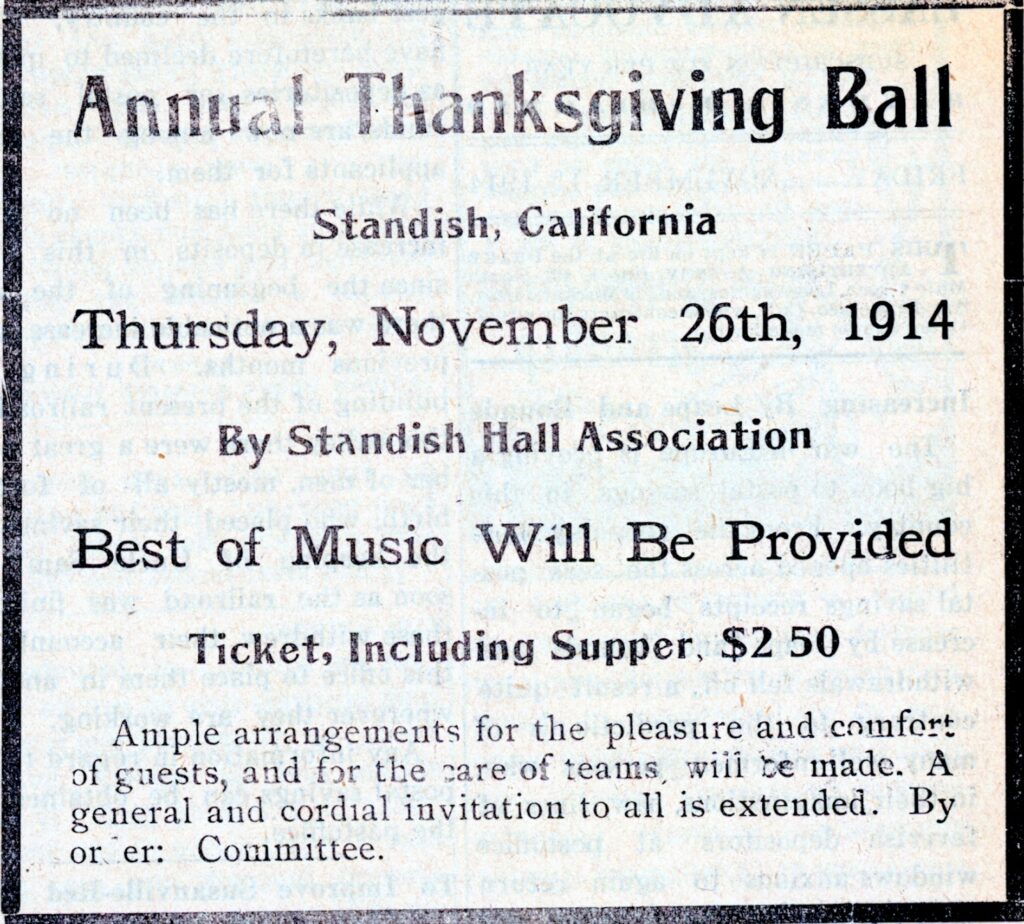
The Standish Thanksgiving Ball

Lassen Advocate, November 13, 1914

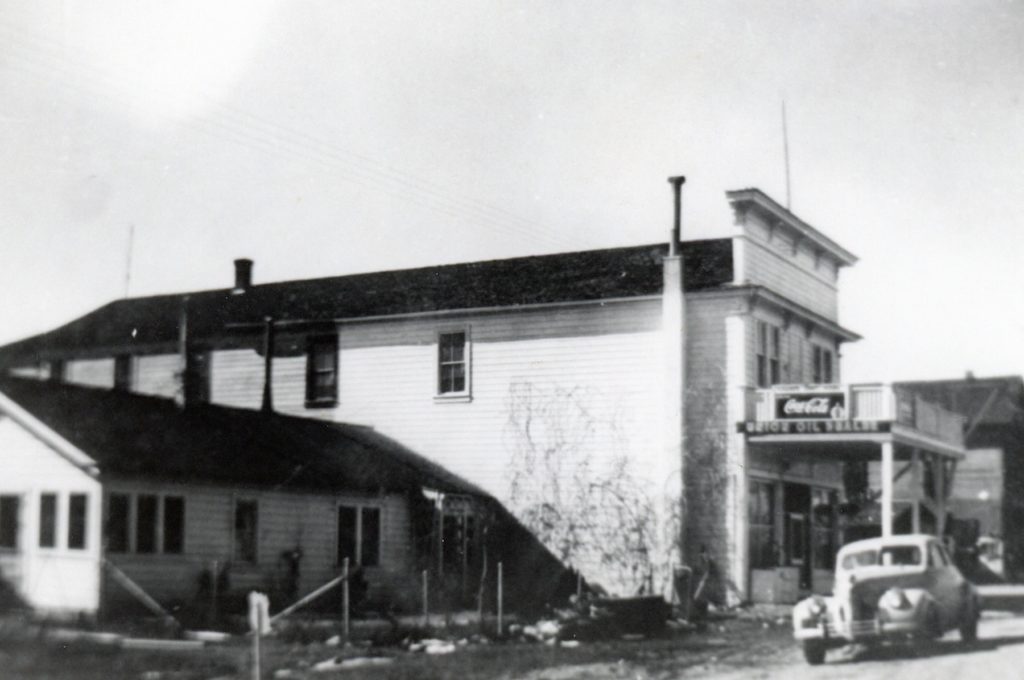
A major fundraiser for the Standish Hall Association was its annual Thanksgiving Ball. The Association owned a two-story building in that community, and a prominent one at that. Seasoned residents will remember as Niel’s Mercantile. Built in 1907, the second story was a hall that many organizations utilized. The first floor was rented to a commercial enterprise to assist with payment and upkeep of the building.

Niel’s Mercantile Standish,, no date. Courtesy of Camilla Moody.

The Association reported that the ball was a successful event, both in terms financially and socially. Standish was gaining notoriety for its social scene, as the Odd Fellows Lodge would be holding a Christmas Ball next month.

Tim

Willard Ski Hill, Lassen County

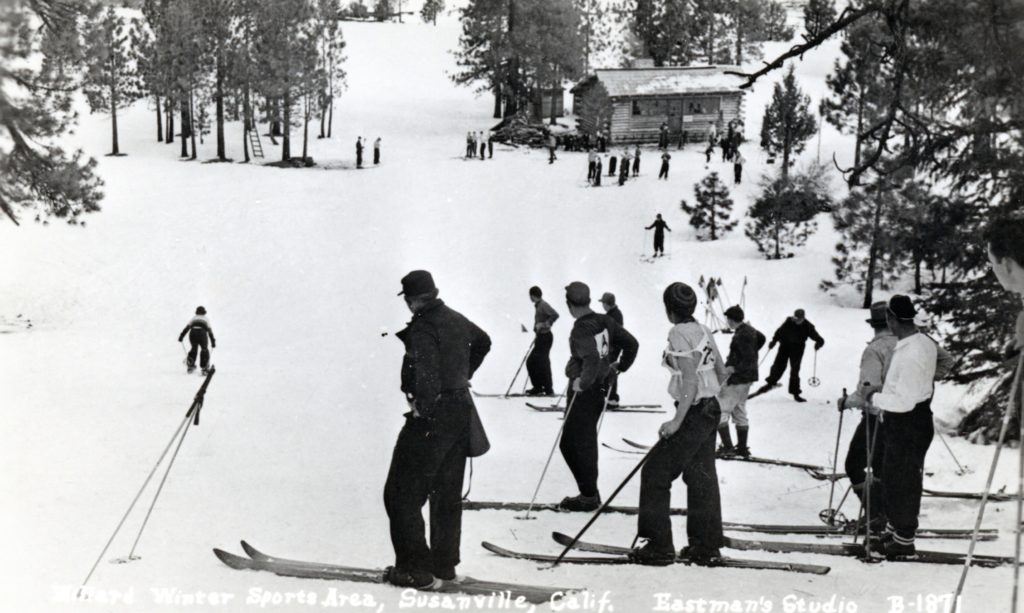
Willard Hill, 1940. Courtesy of Margaret A. Purdy

Note: While this repeat, I thought worthwhile since this Lassen College’s centennial year.

Willard Hill located some six miles west of Susanville was a popular winter sports venue. Its initial development came about through Lassen College’s Forestry Program inconjunction with the National Youth Administration. The latter provided each forestry student with not only academic training but to work in related forestry jobs. For their part-time work the students were paid $30 a month, however $20 a month was deducted for room and board in the converted Alpine Hotel dormitory. Continue reading Willard Ski Hill, Lassen County

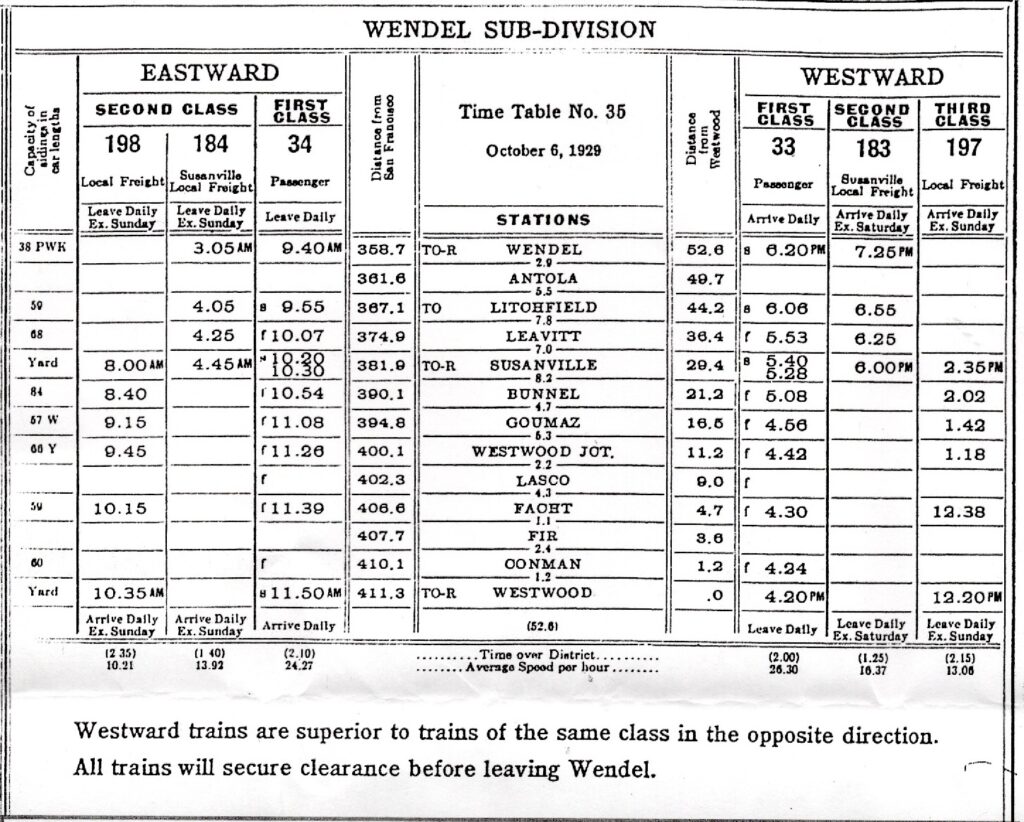
Wendel to Westwood Railroad Timetable

Dated October 26, 1929

This is your Tuesday Tidbit. It is Thanksgiving week and for many it is busy time for travelers. I thought some might be interested Southern Pacific’s railroad timetable between Wendel and Westwood.

Personally, as a youngster, we did not travel that far. The family gathering was at Murrer Ranch, Willow Creek Valley. Attendance is those years was mandatory! Times change, and my grandmother became ill, and the Murrer Thanksgiving tradition ended in 1971. Just remember whether you attend a family or friend gathering for Thanksgiving time is fleeting, enjoy the moment and a safe journey..

Tim


Those Quonset Huts

Lassen County Times, October 19, 1978

World War II ushered in a new architectural style, that after the War it was adopted by the civilian population–the quonset hut. They were prefabricated, and a ten men crew with hardly any skills could assemble one.

The two most notables quonset huts  was the old Naef Electric building in the 1800 block of Main Street. After it closed its doors circa 1977, it has been home to numerous enterprises. In the fall of 1978, it is where the Lassen County Times made its debut.

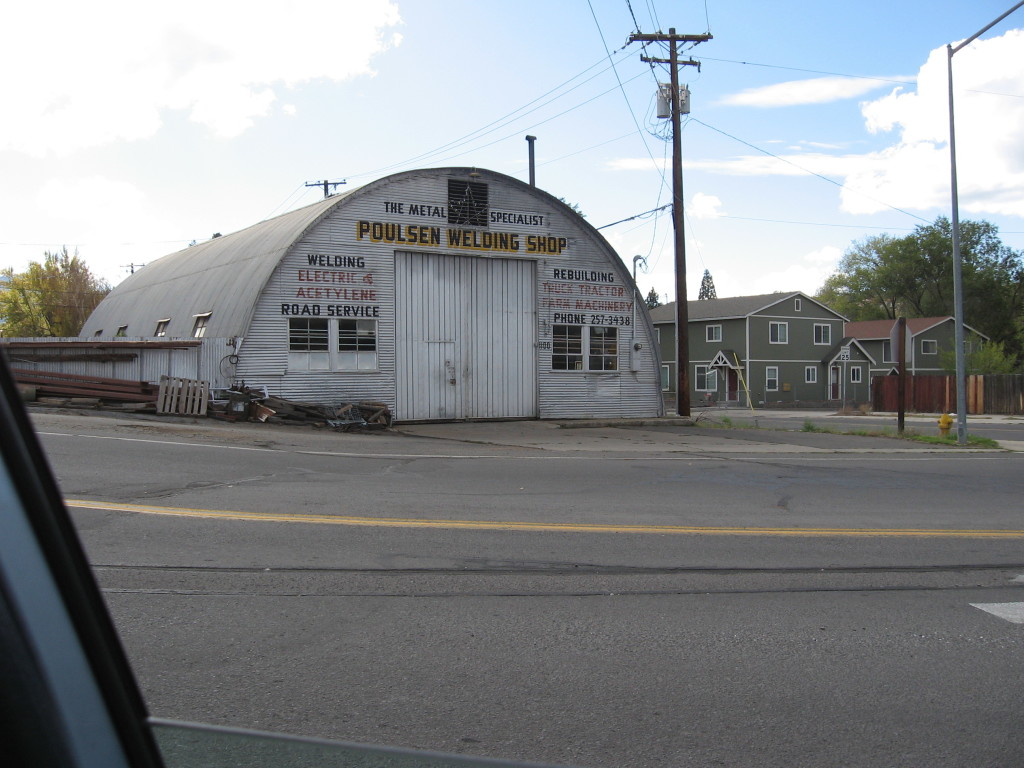
Paulsen Welding hop, October 18, 2015

The other is Poulsen Welding Shop located on Richmond Road and Riverside Drive, and carries with it, an important historic significance.

In the 1930s, Bigelow and Poulsen operated a blacksmith shop at this location, in which Poulsen would take over the business and branching out into welding. On July 11, 1946 a fire destroyed Poulsen’s shop and provided the catalyst for city annexation.  The City was unable to respond to the fire as the city limits stopped on the north side of the Susan River, while Poulsen’s was on the south side, and outside the City. Efforts over the years to annex areas to the east of Weatherlow and south of Susan River had failed. The Red River Lumber Company which owned the Milwood subdivision fought efforts for fear of property tax hikes.  Residents of the outlying areas wanted services such as fire protection.

Thus, the movement for “unification” was born.  On April 8, 1947 a special annexation was approved by the voters. Susanville’s Main Street now extended from Weatherlow to Fairfield Avenue.  The City’s land mass quadrupled in size.

Support