Category Archives: History

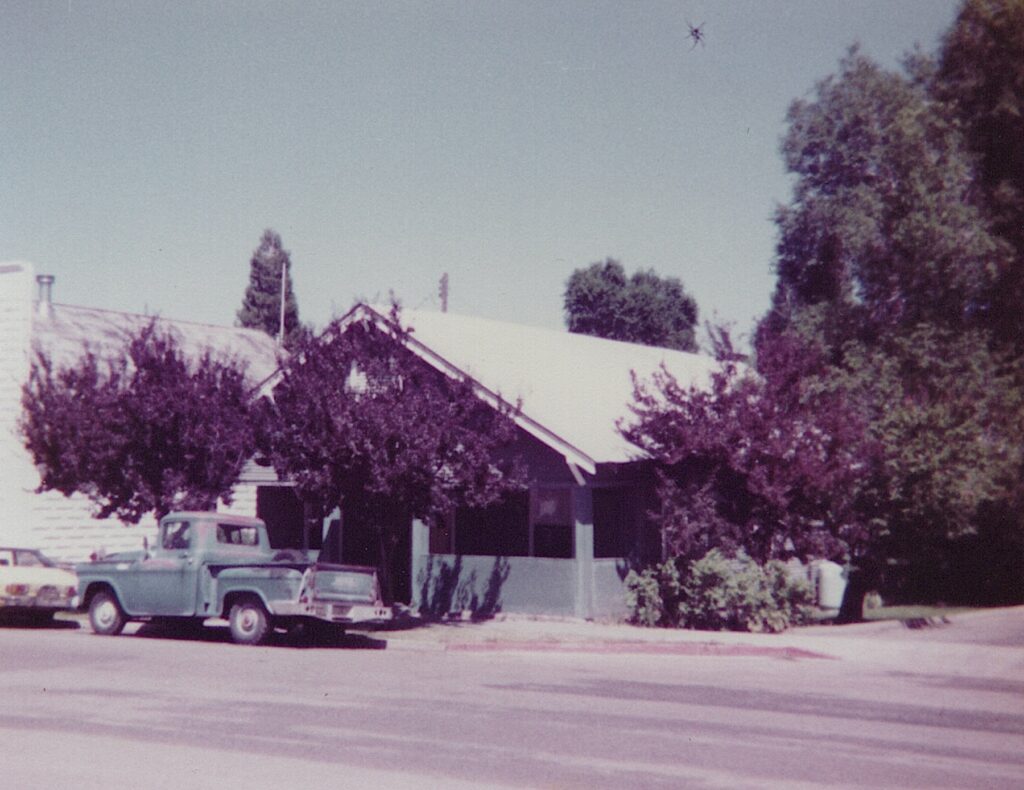
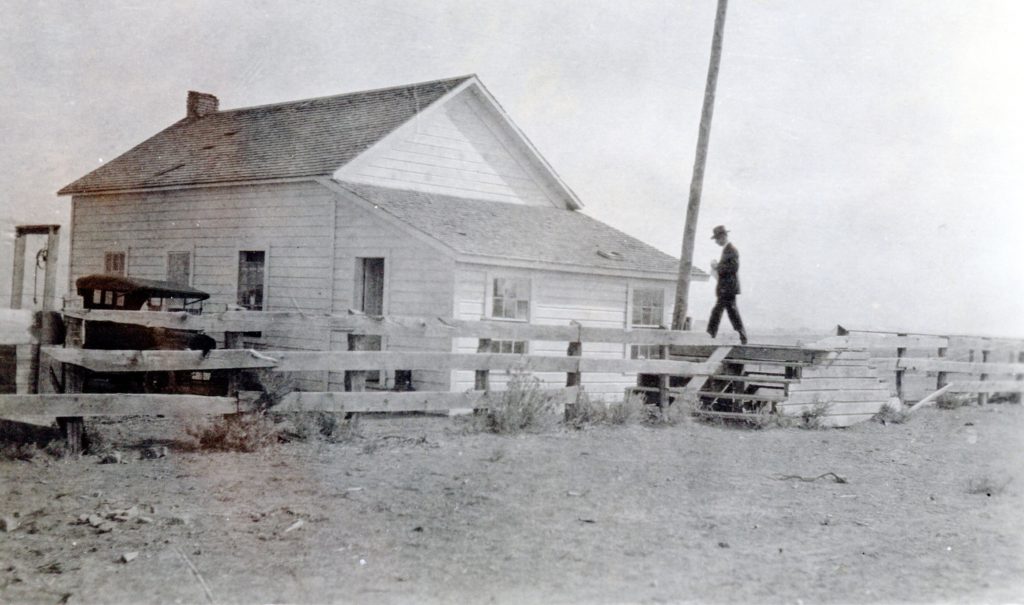
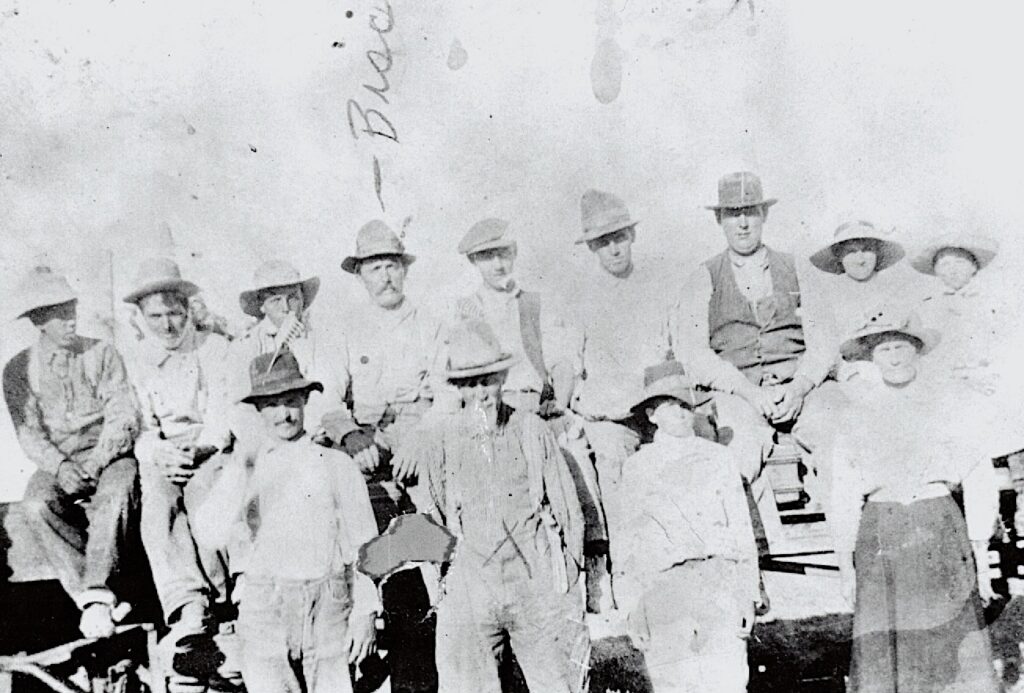
Gerlach, Nevada, 1910

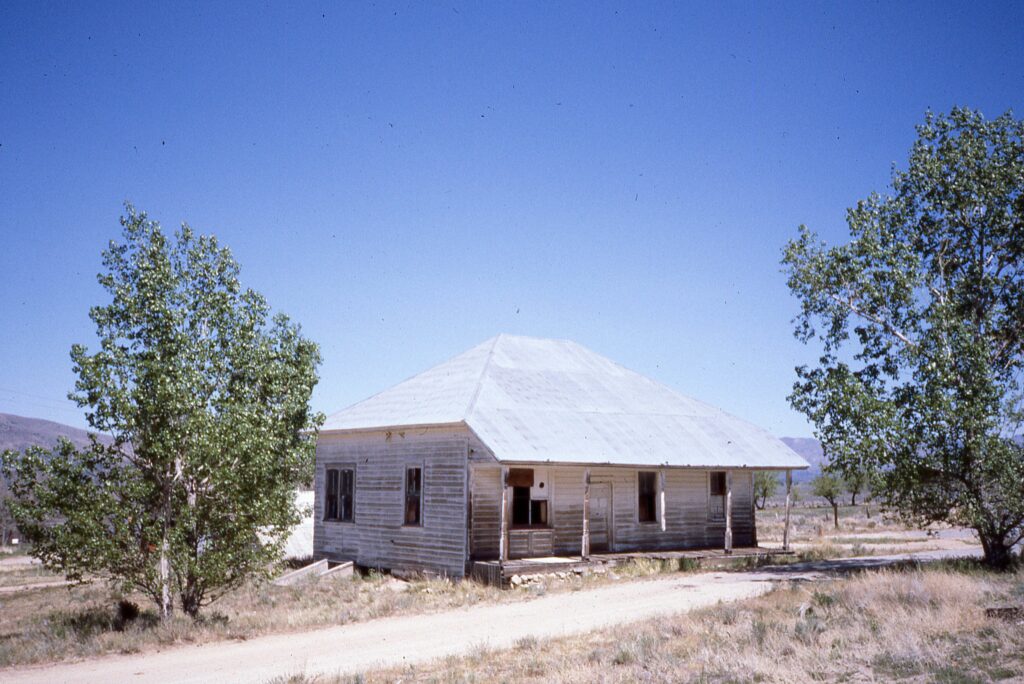
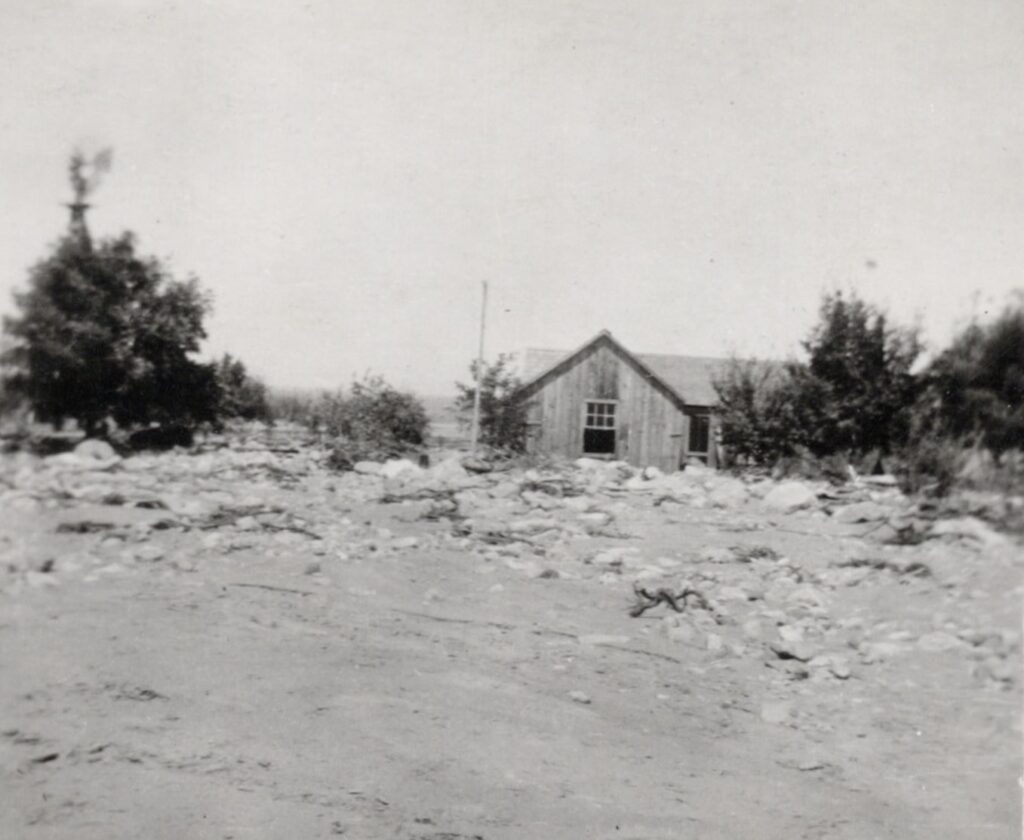
Gerlach, 1914

Gerlach which straddles the Black Rock and Smoke Creek Deserts is a unique community. Its latest notoriety is that it is the closet community of the annual Burning Man event. I thought some might be interested in this September 2, 1910 article about Gerlach that appeared in the Lassen Advocate.

 “Gerlach is Becoming a Metropolis. The town of Gerlach on the end of the Western Pacific is already the metropolis of northern Washoe County and is growing so rapidly that it will have a voting precinct of its own this fall.

“It will be the old Salt Marsh precinct, but a change will be made of the polling place to that point. The Buffalo Meadows farmers are kicking about the additional twenty mile drive to the polls, but as they previously had to go thirty-five miles, it is thought that the extra distance will not hurt them.

“There is a strong attraction possessed by Gerlach, which now boasts four saloons and more coming.

“Long Valley, some forty miles to the north, is also settlig up rapidly. There is a reclamation scheme in progress there and it is forecasted that the valley will be thickly settled and prosperous before many years pass.

“Gerlach is now the freight division point for the Western Pacific and is the shipping place for the southern end of Surprise Valley, California, to which place a county road was recently constructed.”

Tim

The Tax Man Cometh

Lassen County High School, circa 1908

In 1911 the Fall River Valley High School was formed in eastern Shasta County. However, that school’s boundary extended into Lassen County,  most notably the Pittville section. Prior to the Fall River school that area was in the jurisdiction of the Lassen County High School. Lassen County erroneously taxed those that served by the newly formed school. In 1912, Lassen County Auditor George Bailey addressed the Lassen County Board of Supervisors of the issue. He asked the board for permission to send out tax rebate checks to those affected-some 86 individuals. The total amount came to $483.01. The smallest amount was fourteen cents to Charlie Young and the largest was $112.00 to Thomas B. Walker.

Tim

Keep Susanville Clean

The citation to clean up the Lassen County Courthouse grounds

When the town was incorporated in 1900, the major impetus was for fire protection. One concern was that citizens would either pile up rubbish at the nearest vacant lot or in the alternative to avoid the city’s wrath and possible fine, one could easily find a convenient location outside the confines of the city limits.This in itself poised a fire risk, but also health hazard.

It was not until 1920 that a city dump was created. On March 20, 1921, the City awarded a franchise to Frank Gerig, who offered twice weekly garbage collection at a monthly fee of fifty cents per address.

Tim

Mineral’s Winter Carnival

Winter caravan to Mineral, 1932–Margaret A. Purdy

During the winter of 1930-31 a group of Mineral residents organized the Mt. Lassen Ski Club. The first officers were : L. Walker Collins, President; Art Holmes Secretary and H.K. “Husky” Beresford, Treasurer. Not only was club influential in bringing winter sports to the region, but they also brought skiing to Lassen Park. On October 23, 1931, Beresford had obtained a special use permit from the forest service to construct a fifty meter ski jump near Mineral.

The club was off  to a good start. On January 17, 1932, it sponsored its first ski tournament at Mineral .To attract crowds, it was necessary to showcase the talents of professional ski jumpers. The club was able to secure the attendance of the “Viking Caravan,” a renowned group of professional Norwegian skiers–Alf Engel, Lars Haugan, Halvor Halstad, Sig Ulland Steffan Trogstad, Sverre Engine and Einar Fredbo–plus an American Ted Rex, Rex was a Michigan native, won the the 1930 U.S. Professional Ski Jumping Championship.

Mt. Lassen Ski Club, 1930

While the professional ski jumpers served their purpose in drawing crowds to the event, this was not their only intention. It provided a golden opportunity to encourage spectators to to participate in skiing, many for the first time. At the Mineral event, the morning was devoted to the public and billed as a “snow folic” where one could ski, take skiing lessons, sled toboggan and to partake in the popular ashcan slide.

Subscribe

Highway 29

Highway 36 Fredonyer
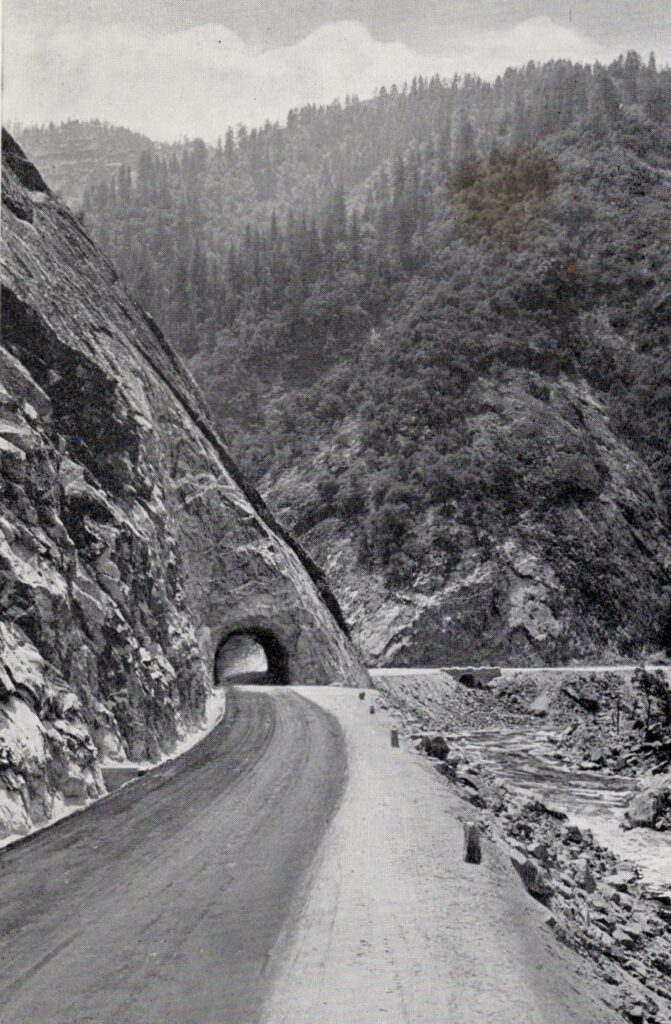
The road over Fredonyer as it appeared in 1914.

In the 1910s, the State of California had the daunting task of plotting out a highway system, and there were plenty of details to be dealt with. Among them, especially for the traveling public, was the designation of highway routes. In the early 1920s, the California Automobile Association led a campaign to give descriptive names of the mountain routes. Highway boosters of the region proclaimed the route between Red Bluff and Susanville, the Lassen Volcanic Highway, since the highway went by the southern entrance of the national park. In time, the State of California began to use a numbering system, and initially proclaimed this route as Number 29. In 1935, it was changed to State Highway Route 36. The change of the number was necessary to reflect the adoption of a uniform system, where even road numbers went to east-west direction and odd ones were for north-south routes.

Support

Amedee Snowstorm Gallery, 1911

Amedee, January1911,–Aldah Riesenman

The east side of Honey Lake Valley is known for its arid condition. Flanagan is the driest, some historical records have noted the annual average precipitation of three inches of rainfall, which is in the range of Death Valley.

Amedee School Children on the first day of the Big Snow, Tuesday, January 11, 1911. Left to Right: Thelma James, Tom Lally, Minnie Meeske, Fred Meeske, Rita Martin, Sadie Meeske, Norma Jeanne James, Frank Martin and Gregory Martin. Courtesy of Marie Herring Gould

It was the January 1911 snowstorm that caught Amedee residents by surprise. After six day storm  Amedee received six feet of snowfall, while Susanville had eight.

Amedee, January, 1911. The “x” indicates the town’s old dance hall. Courtesy of Madelyn Mapes Dahlstrom

Robert Trussell, a Johnstonville resident, who was thirteen years old at the time, stated there was a not fence post in sight in the Honey Lake Valley.

Thelma James, J.H. Pefley, Unknown and William Clayton, Amedee Depot, January 14, 1911

Marie Herring Gould who resided at Amedee during the big snow recalled the NCO Depot looked a like a giant white mound. By the end of the month the snow had melted at Amedee.

Tim


Sterno & Prohibition

Richmond Road store-keeper. A. Farris and his monthly report of sale of canned heat..

Sterno was developed around 1900 for use in catering to keep chafing dishes warm. The product sold in little cans received the nickname of “canned heat.” It was popular with soldiers during World War I to heat their meals.

Then came along Prohibition. One of the ingredients of canned heat is methyl alcohol, than can be deadly if ingested. This did not stop individuals straining canned heat with a cheesecloth to extract the alcohol. It was not only a nation wide crisis, but a local one as well. In March 1926 the deaths of John Murphy and Pete Nelson were attributed to the consumption of canned heat. It took local officials over a year to curb the usage of this product. In the fall of 1927 both the City of Susanville and the County of Lassen passed ordinances requiring that dealers of canned heat obtain a special license to sell it. The license cost dealers $50 per quarter. It was presumed that by making the special license so high, it would eliminate the product from the shelves. It worked and canned heat was no long a problem locally.

Subscribe

Camp Susan

Main Street, Susanville, 1864.

Today, we examine Camp Susan, the nearest appearance of a military encampment the town would experience and to say it was short-lived would be understatement.  In late August 1864, the 1st Nevada Territorial Infantry, a mobile military unit from Fort Churchill, under the command of Malachi R. Hassett, established a base camp near Susanville. Their mission was to scout the territory from Susanville, north to Surprise Valley and east to the Humboldt mines. In October 1864, the unit was ordered back to Fort Churchill.

There was a noteworthy at the camp. On September 12, 1864, Private Ebenezer Williams died at Camp Susan. Williams, a native of Wales, had just enlisted in February 1864. My records do not indicate a cause of death or burial.

Tim

An Interesting Document

Joe Morrison’s purchase a pistol, 1938.

At the moment, I am searching for the proverbial needle in the haystack. There  was the  retrieval of three Banker Boxes from storage that consisted of Lassen County archives that I retrieved in 1980 from going to the dumpster. The majority of the records are the original papers of the meetings of the Lassen County Board of Supervisors for the years 1911-1919. Of course, there are exceptions and there documents from the 1920s to 1940.

At the moment, I have two stacks of documents. The first, will be scanned and and I have the information surrounding them to share. They are quite interesting involving a variety of topics that are no longer  before the supervisors. The second is same, but those topics I have to research further.

Tim


The Round Valley Earthquakes

Round Valley Reservoir, 1958.

On Sunday, December 28, 2025 at 4:41 p.m. a 4.7 magnitude earthquake centered at Round Valley struck. For those not familiar with Round Valley, it is due north of Susanville, as the crow flies about nine miles and is privately owned.  Then on Tuesday night, December 30 at 9:49 p.m. a second 4.9 earthquake occurred there.

It should be noted that east side of Eagle Lake a consist of fault blocks namely Mahogany and Blacks Mountain. You can read about the 1889 Eagle Lake earthquake here. There was a notable quake in 1921, though not as strong.

Personally, I really felt the first one (2025) since, I was preparing dinner (garlic noodles) when it struck. My milk bottle collection rattled and my mantle clock stopped. The second one, I was in bed, but I heard things rattle.

Tim