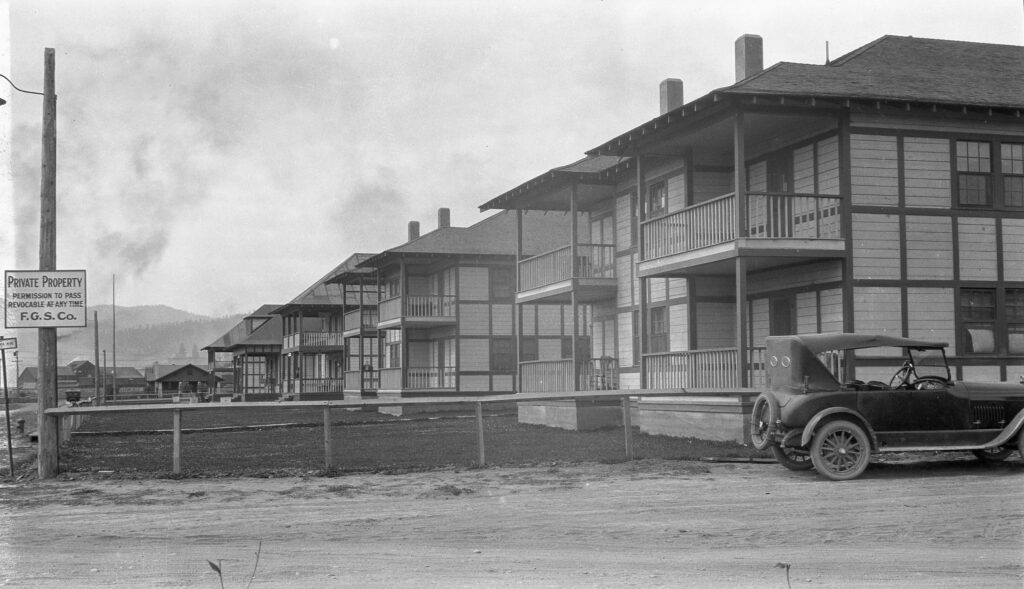
The truth be known the three big sawmills, Fruit Growers, Lassen Lumber and Red River could have never existed without immigrant labor. While it was fairly well known the mills hired Italians, Mexicans and Scandinavians there were also the Filipinos.
In the fall of 1922 Fruit Growers hired 125 Filipino men to work in the box factory. Fruit Growers found to them excellent workers. They were housed in the dormitories like everyone else. It should be noted that Lassen Lumber had a designated housing for the Italians. Red River housed the Italian and Mexican employees and their families in what became known as Old Town.
Tim
Note: At Hilt, Fruit Growers had a Italian section that had been established by the previous owner.
Glade is/was located in the southeast portion of the Madeline Plains. Its most prominent landmark is the old Horne Ranch that was established in 1870 and one the first places settled on the “plains.” The name, purported]ly, is from an old Germanic word for open space and there are lot of wide-open spaces on the Madeline Plains. The Glade post office operated from 1908 to 1918. The Glade School operated from 1916 to 1925 at which time it was annexed to Ravendale.
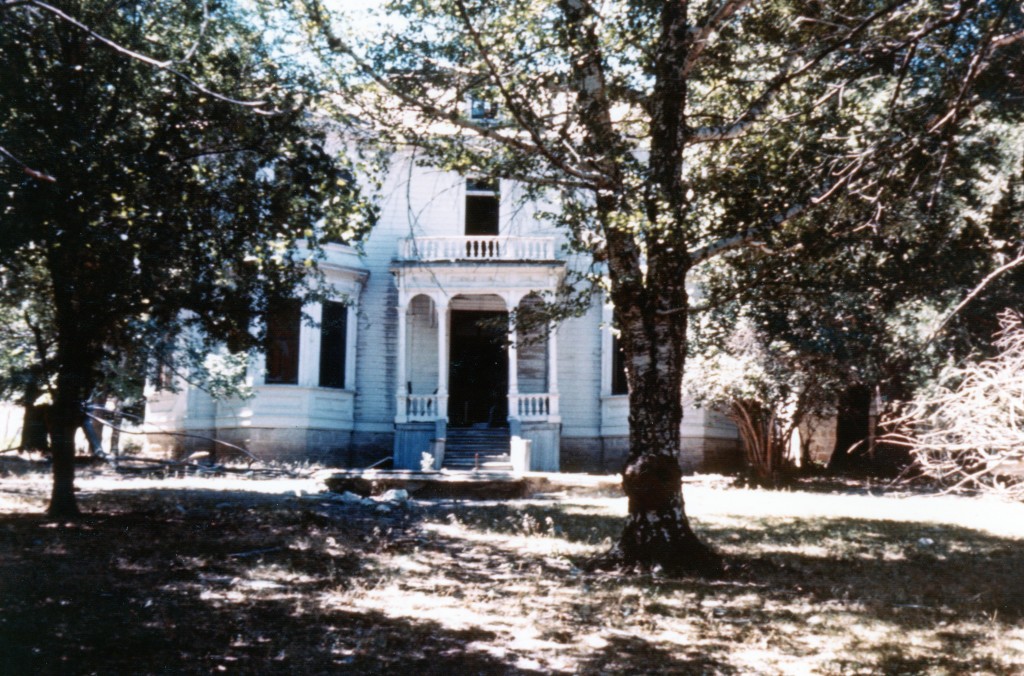
Constantia, located in Long Valley, was the creation Henry A. Butters (1850-1908) a capitalist and the president of the Northern Electric Railway Company. On March 10, 1898 he purchased Albert Ross ranch, that included a 17-room mansion that over the years referred to it as the White House. Butters transformed the ranch into small village complete with a general store, a Wells Fargo Office, dwellings for employees and a Catholic Church christened St. Mary’s Chapel. He named the place Constantia, after a city in South Africa noted for its vineyards. Butters boasted that he had 3,500 head of cattle and had an annual payroll of $10,000. It should be noted that Butters visited the property but did not take up residence there. In 1904, due to his divorce from his wife, Lucille, sold the ranch property for E.A. Jordan for an undisclosed amount.
The Shaw Historical Library’s recent Journal “All that Glitters is not Gold,” is now available. It describes mining operations in the High Desert area of NE California, NW Nevada, and SE Oregon. Articles cover the Hayden Hill Mining District, Gerlach gypsum mining, Herbert Hoover’s mining activity in northern Nevada, the High Grade District in Modoc County, Buffalo Salt Works on the Smoke Creek Desert, uranium mining north of Lakeview, and eleven other topics. The book is available for sale at Margie’s Book Nook in Susanville. It can also be ordered by calling the Shaw Library at 541-885-0222.
Tim
On personal note I look forward to purchasing a copy. My family was involved at Hayden Hill for decades. Buffalo Meadows Salt Works in a unique site.
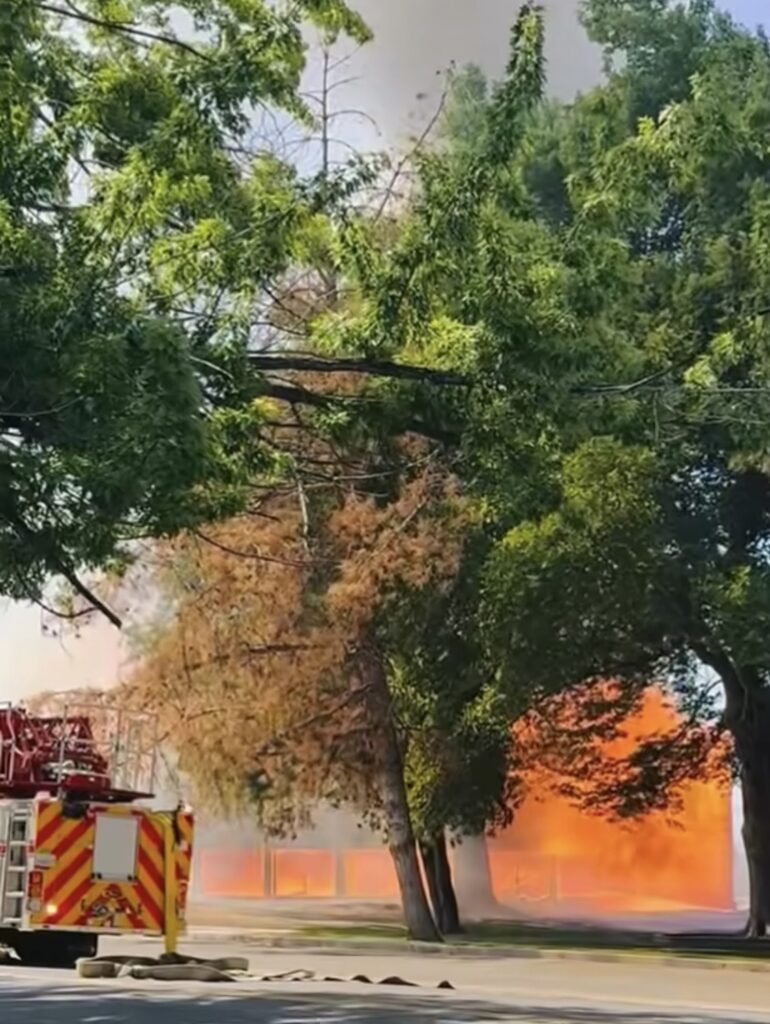
The Grandstand on fire, July 5, 2025[photograph submittedWhere does the time go? It was a year ago, on July 5, 2025 that the wooden grandstand at Susanville’s Memorial Park went up in flames,
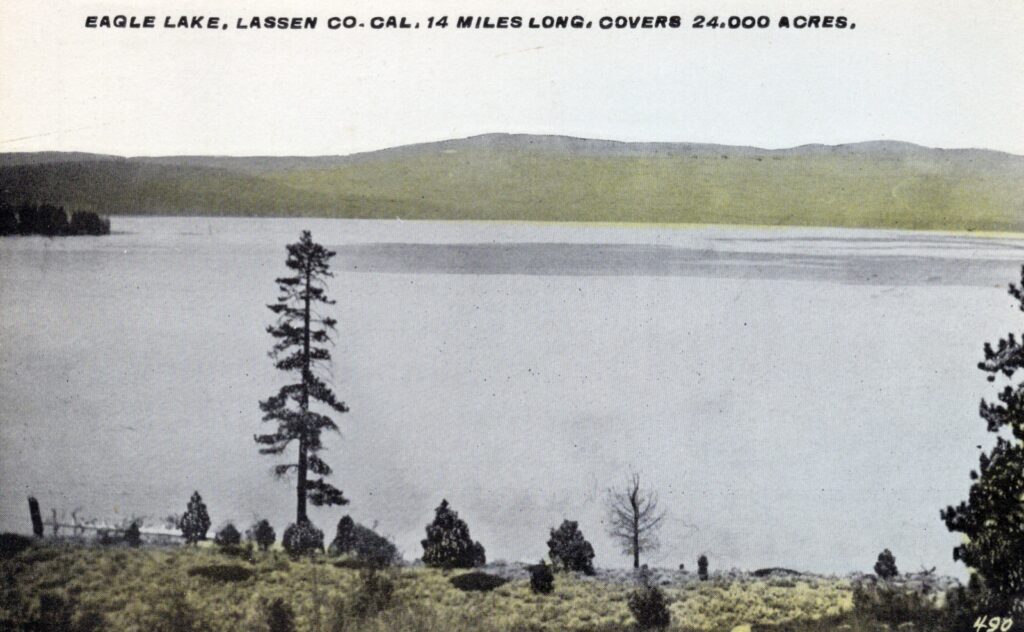
A.F. “Frank” Dixon was the tenth person to tackle the tapping of Eagle Lake for irrigation in the Honey Lake Valley. Like those before and after him there were numerous obstacles to overcome. For every new enterprise, they had to become more creative, since the previous ones in many cases still had valid claims. Even so, it was not a deterrent.
One asset that Dixon possessed was during the 1890s he served as Register of the Government Land Office in Susanville. Thus, he knew the procedures for obtaining rights-of-way across government land. However, what caught Dixon off guard is when he filed for his tunnel right-of-way across government land, the government did something they had never requested any one prior–an environmental analysis. The government was concerned what damages would occur if the lake should be tapped.
The other situation, was Dixon was not alone in his conquest. It should be noted that Dixon filed for his right-of-way in December 1904. In the summer of 1905, the newly formed Lassen-Willow Creek Water Company, filed for a tunnel right-of-way, that was identical to Dixon’s. Litigation ensued. In 1906, a gold discovery on the eastern edge of the Black Rock Desert lured Dixon away. Dixon would never learn of the outcome, he died in 1908. While Lassen-Willow Creek won in court, their enthusiasm fizzled and that was the end of their involvement.
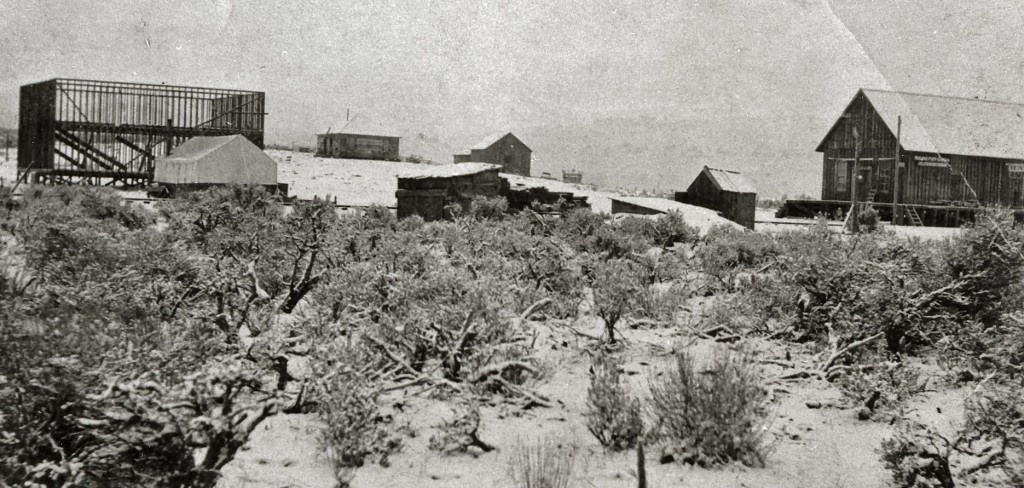
Early day Ravendale. Courtesy of Dorothy Capezzoli
This was an interesting tidbit that appeared in the Lassen Advocate of 4 March 1910. Madeline Matters appeared every week was from the local correspondent for the newspaper. “Dateline, February 28, 1910 –The new station of Ravendale on the eastern side the valley is rapidly being built and rumor has it will be a N-C-O division station. J.H. Williams and G. Horton are there at present writing surveying and plotting the townsite.”
It should be noted that the Ravendale post office was recently establish on February 2, 1910. Williams’s town plot of Ravendale would not be recorded with the County until November 15, 1913. What Williams’ qualifications to survey and plot is not known, but he served as the Justice of Peace for the Madeline Township.
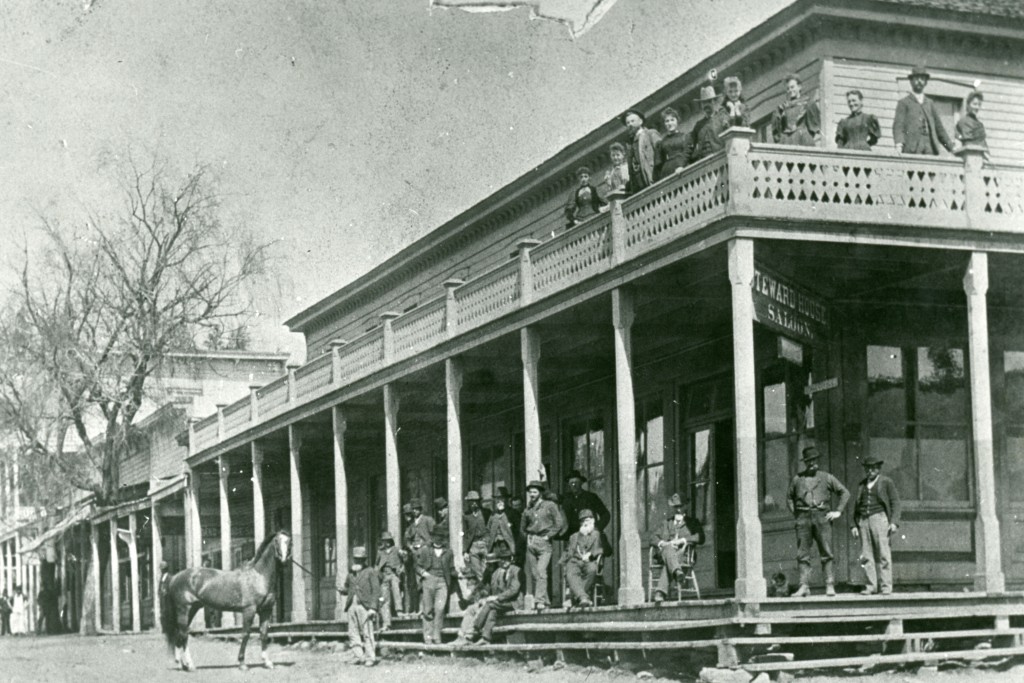
Susanville’s Steward House, 1881. Courtesy of Dallas & Joyce Snider
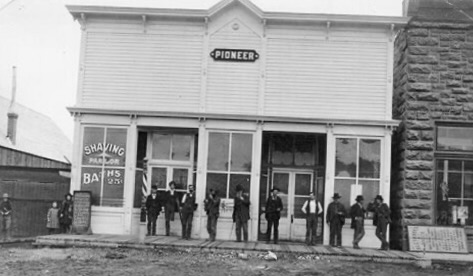
Susanville has an ambilavent attitude when observing the nation’s birthday. Did these two seperate early day observances set the stage?
In 1868 it was noted: “Susanville had a very dull Fourth. No preparations were made for celebrating the day and the only patriotic demonstrations that we had were generated by the young boys in town. It was a very orderly, as well as very quiet Fourth, and in this respect might be considered something of a success.”
The Pioneer, Susanville, 1901
How things quickly change and in 1871 the Sage Brush newspaper reported,: “The Glorious Fourth is the occasion of unrestrained indulgence of intoxicating liquors, and all the disgraceful scenes that naturally result there from. Some creatures in human shape inbruted and stupefied with whiskey, reeled about the street shocking the ears of all decent people with their frightful profanity and obscenity. Others who passed this stage only to reach another even more repulsive, sat about in barroom chairs limp and foul , unresisting prey to every blue bottle. Or with black and swollen faces turned up to the burning sun and reeking in their filth , they laid about the streets the most sorrowful, the most humiliating spectacle being could contemplate.”
Olsen’s Hotel, Chester. Courtesy of Margaret A. Purdy
As tomorrow is the 4th of July and Chester will be a hub of activity. However, it that was not the case for many years. Chester was slow to evolve, and would gain prominence when the Great Western Power Company created Lake Almanor in 1914. The initial Lake Almanor was smaller than it is today. It is another story for another time, but it should be noted that in the early 1900s, when Great Western began land acquisition in the basin. their goal was to acquire everything below the 4500 elevation contour line.
Many of the original families, once they sold to Great Western moved away. That was not the case for members of the Olsen family. In 1859, the patriarch, Peter Olsen, settled along the west bank of the Feather River . which would later become the community of Chester. Peter passed away in 1892, leaving his three sons, George, Nels and Edgar and carried on the family’s dairy operation. The sons sold the majority of the family property Great Western, retaining 110 acres above 4500 contour line.
Chester, California, 1914. Courtesy of Dolores Gasperoni
The dairy operation would slowly be phased out, so it was time to change occupations. The family became innkeepers. In 1913 construction began on their hotel. In early May 1914, the doors were open to the public, and timing could not have been better. By the end of the month, Lassen Peak began erupting, bringing throngs of people to see it. Olsen’s was one of the few nearby lodging establishments and business was off to a booming start.
For many years the hotel was operated by Nels and Eula Olsen. In 1948, it was time to retire and they sold the hotel to Earl McKenzie. McKenzie leased it for a time, and it finally shuttered. As to the building’s final demise, I do not know. It should be noted that the Olsen Barn has been perserved and graces Chester’s east entrance.
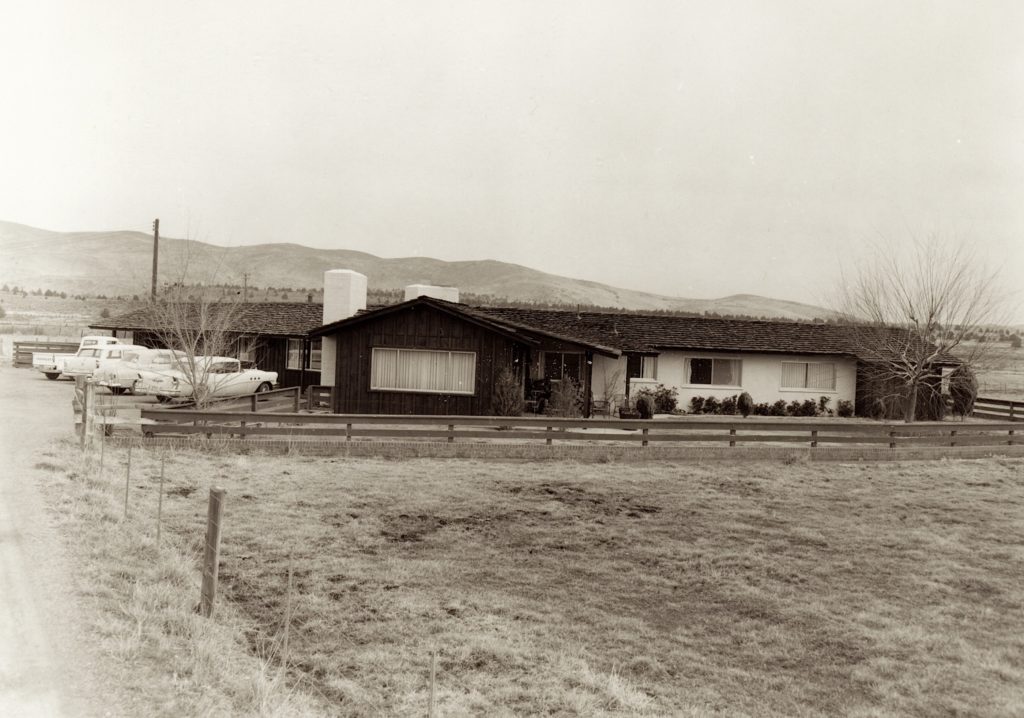
Susan River Ranch, 1958. Courtesy of Wendell V. Loughead
In the late 1970s, Elberta “Bertie” Fraley’s had at a lot of historical projects going on, whether it be Native Daughters or the Lassen County Cowbelles. For the latter it was gathering ranch histories.
The Susan River Ranch was located on Johnstonville Road a few miles east of Susanville. It was originally a part of the Bangham Ranch. In 1948 the property was acquired by Dale Soule. Construction of the house began in 1950 and over the course of time additional buildings were constructed. However, in time the property was too much for the Soules who had other business interests in Susanville to tend to. The next owner was Lawrence Holland and he owned it until his death in 1969.
In 1973, Ray and Elberta Fraley purchased the ranch, who had spent many years in the Standish district. It was ideal for Ray as it just the ideal size for a semi-retired rancher to raise his registered herd of Red Angus cattle. After Ray’s passing in 1979, Elberta sold the place. Its been through a number of owners over the years, though its no longer referred to as the Susan River Ranch.

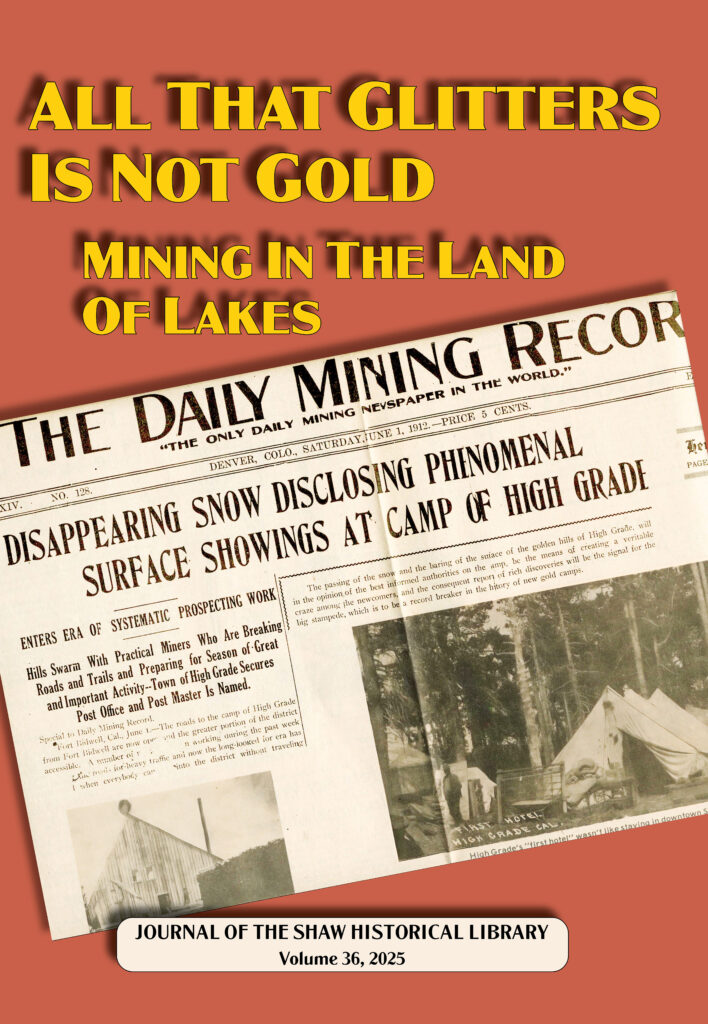 The Shaw Historical Library’s recent Journal “All that Glitters is not Gold,” is now available. It describes mining operations in the High Desert area of NE California, NW Nevada, and SE Oregon. Articles cover the Hayden Hill Mining District, Gerlach gypsum mining, Herbert Hoover’s mining activity in northern Nevada, the High Grade District in Modoc County, Buffalo Salt Works on the Smoke Creek Desert, uranium mining north of Lakeview, and eleven other topics. The book is available for sale at Margie’s Book Nook in Susanville. It can also be ordered by calling the Shaw Library at 541-885-0222.