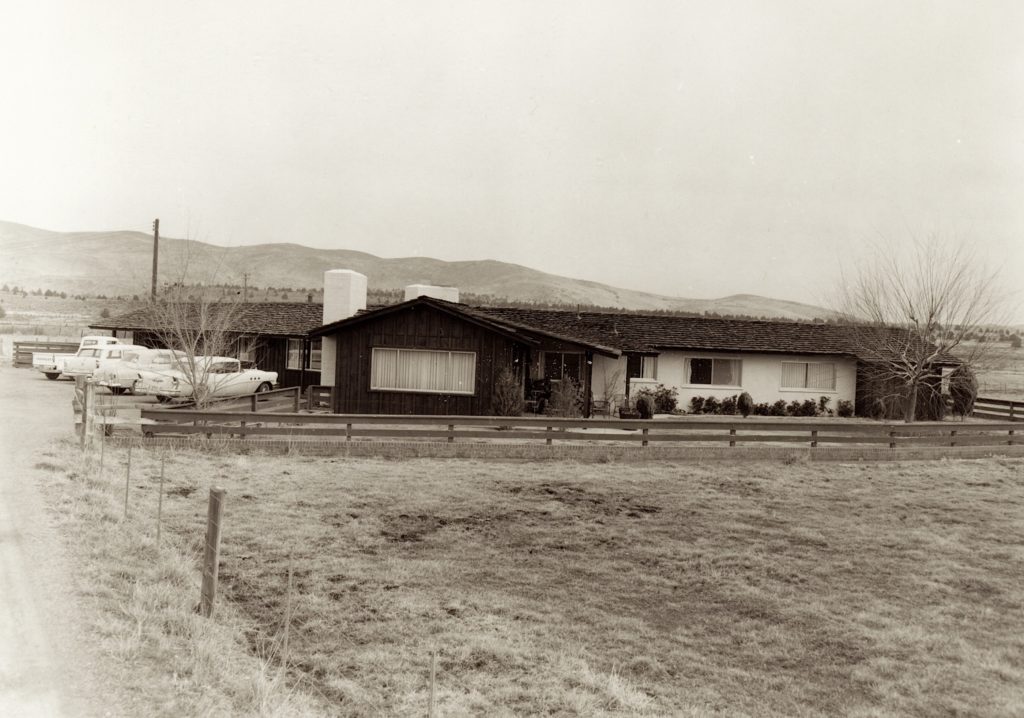
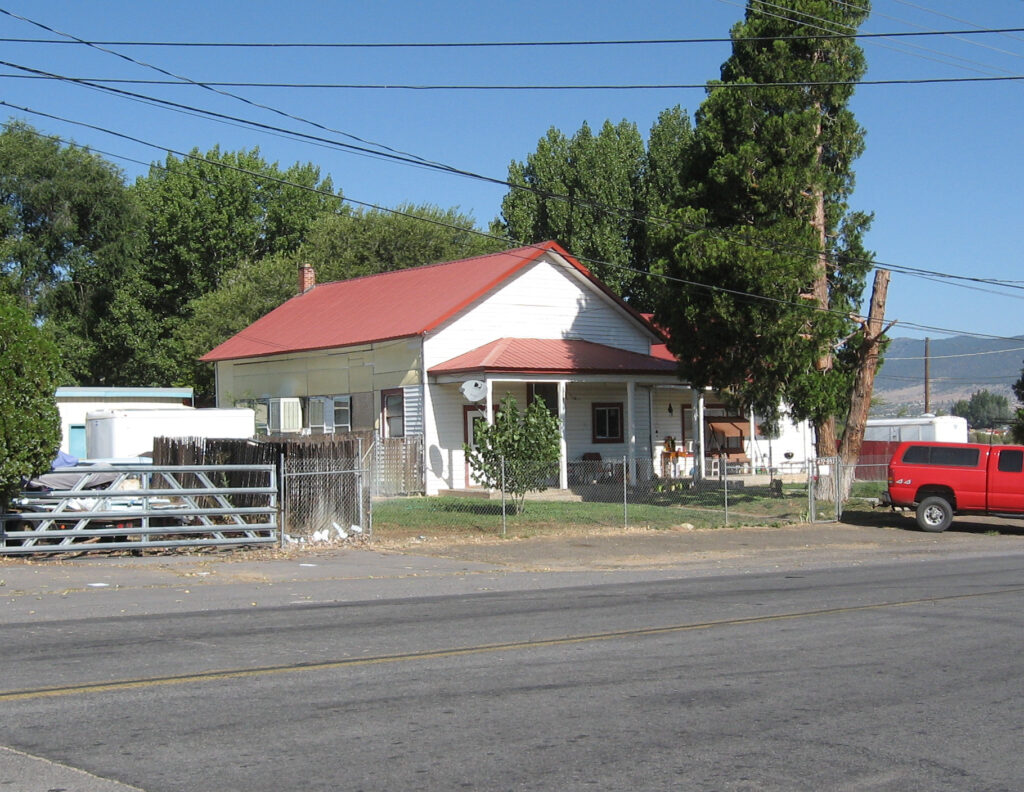
Susan River Ranch, 1958. Courtesy of Wendell V. Loughead
In the late 1970s, Elberta “Bertie” Fraley’s had at a lot of historical projects going on, whether it be Native Daughters or the Lassen County Cowbelles. For the latter it was gathering ranch histories.
The Susan River Ranch was located on Johnstonville Road a few miles east of Susanville. It was originally a part of the Bangham Ranch. In 1948 the property was acquired by Dale Soule. Construction of the house began in 1950 and over the course of time additional buildings were constructed. However, in time the property was too much for the Soules who had other business interests in Susanville to tend to. The next owner was Lawrence Holland and he owned it until his death in 1969.
In 1973, Ray and Elberta Fraley purchased the ranch, who had spent many years in the Standish district. It was ideal for Ray as it just the ideal size for a semi-retired rancher to raise his registered herd of Red Angus cattle. After Ray’s passing in 1979, Elberta sold the place. Its been through a number of owners over the years, though its no longer referred to as the Susan River Ranch.
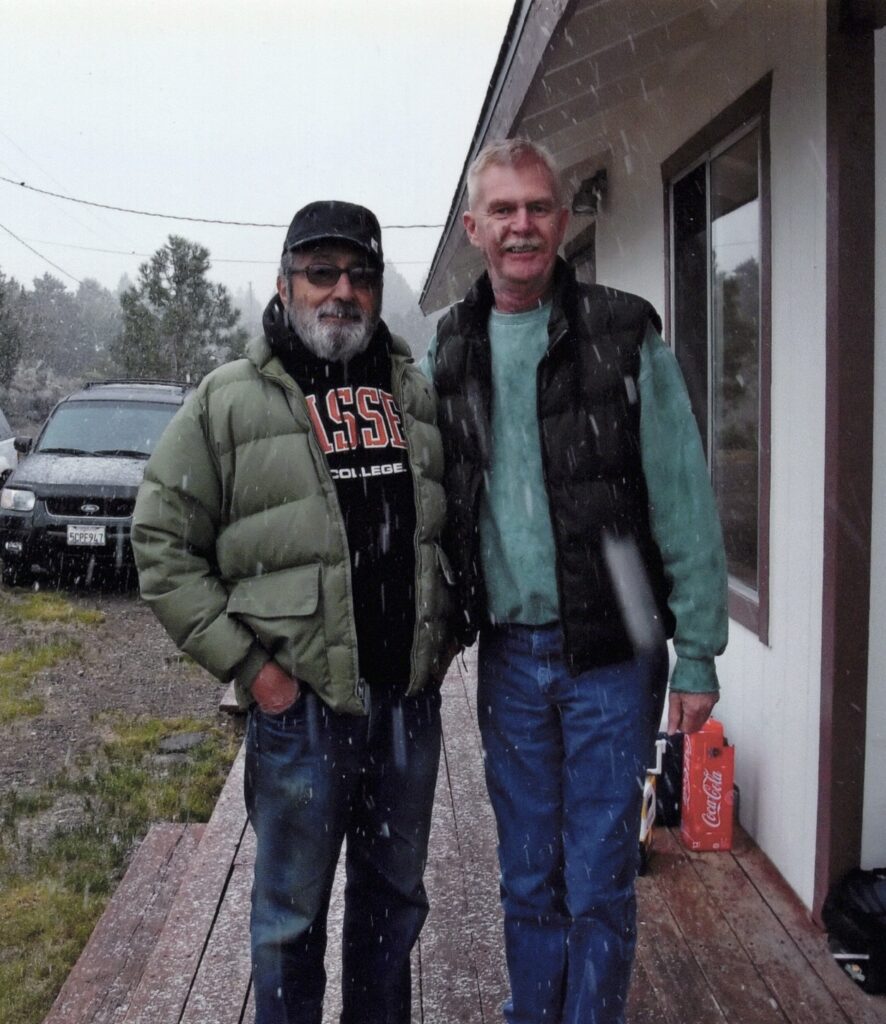
Hank Martinez & Tim Purdy, May 2011-Courtesy of Linda Kennedy
For some, its marks the half way point of the year, more about that on Thursday. For others involved in local and state government It is the end of the fiscal year.
Personally, there were two significant birthdays on that date-Ada Margaret Purdy (my grandmother) and Henry “Hank” Martinez, I first met Hank in the mid-1970s and for decades we celebrated all sorts of milestones Of course, there were many lively discussions, and the forever topic Westwood.
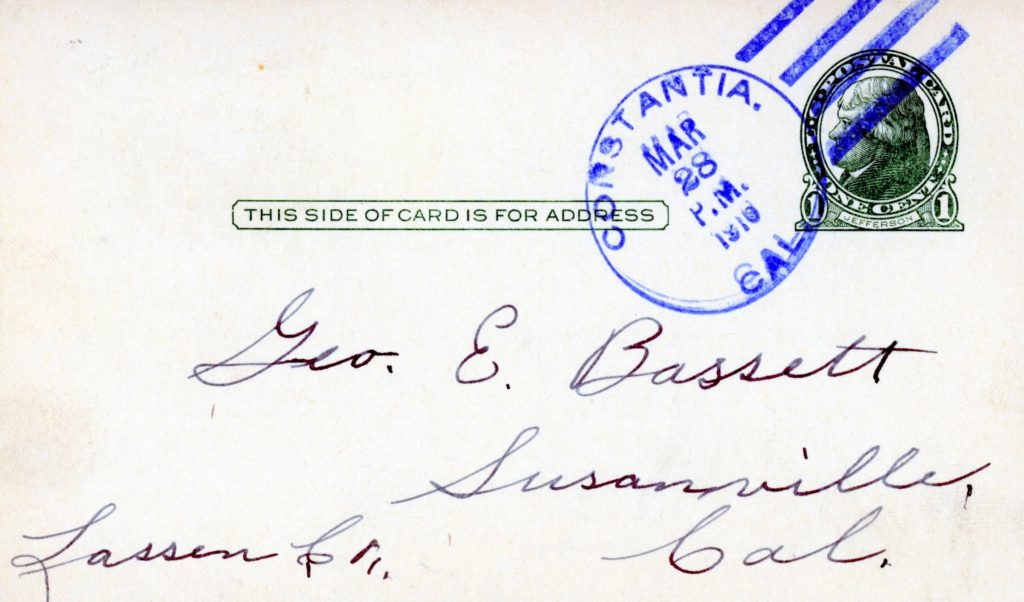
A Constantia Postal Cancel
It was on this date in 1927 the Constantia Post Office closed.
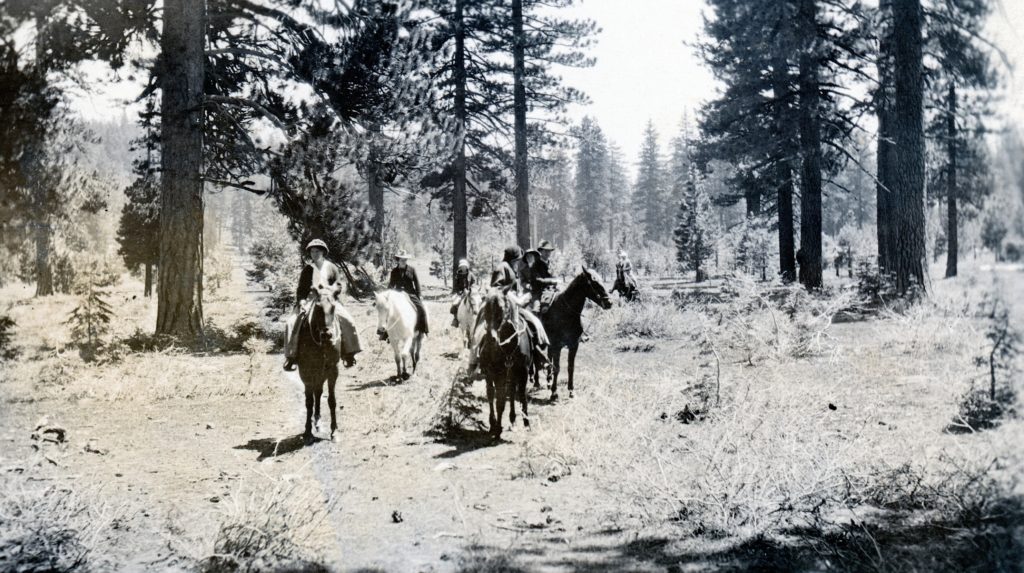
Eagle Lake trail to Gallatin Beach, 1914. Courtesy of Dolores Gasperoni
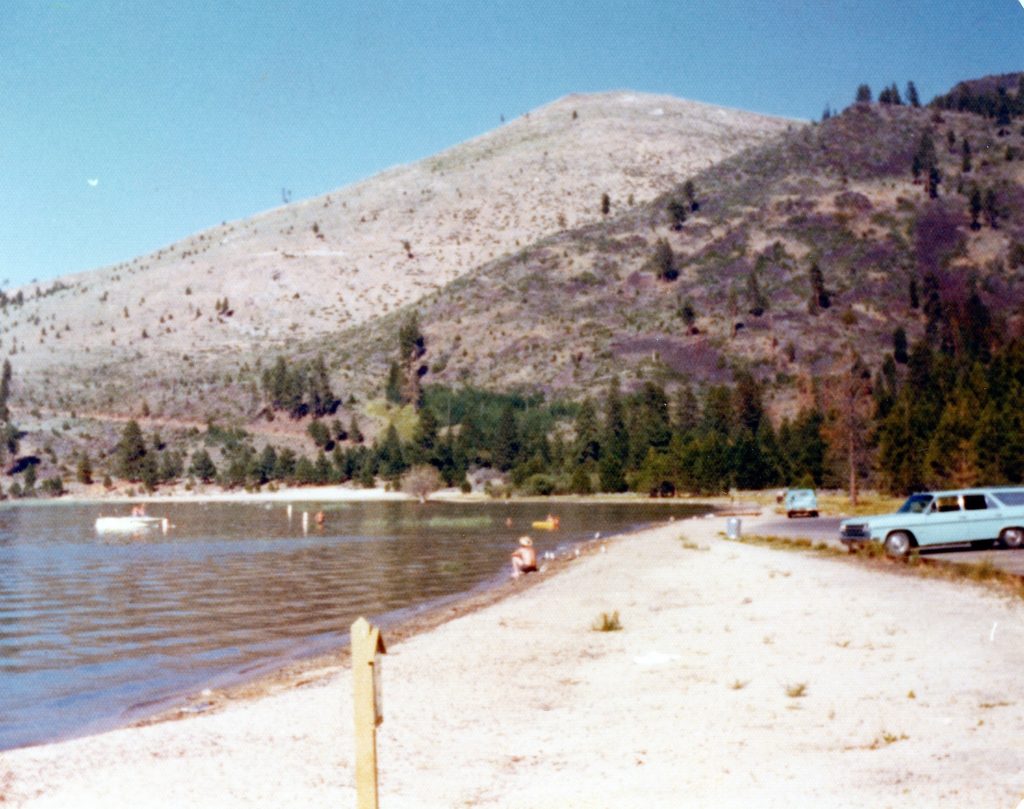
Since the 4th of July weekend will be soon upon us, a wee bit of history of Gallatin Beach that has been one of the lake’s popular spots. Visitors were fortunate in the aspect that Malvena Gallatin not only allowed public access, but there were no fees or any other restrictions. Another property owner, especially if it was a timber company, would not have been so gracious. After all, others would have been concerned about fire danger. Fortunately, no problems were encountered.
Gallatin Beach and Peak, July 22, 1974.
It should be noted that Malvena Gallatin owned over forty miles of Eagle Lake’s 100-mile shoreline. In 1944, Malvena’s only grandchild passed away and Eagle Lake lost its special appeal as her family’s summer retreat. In 1946, she sold all of her Eagle Lake property to the Lassen Lumber & Box Company for $100,000, though she retained a small parcel that contained the summer home. The future of public access looked bleak. Lassen Lumber was only interested in the timber. Later in 1946, the Lassen National Forest reached a deal with Lassen Lumber to exchange timberlands elsewhere in exchange for the Gallatin property. The two agreed, and that is how Gallatin Beach became a public beach on public property.
Never miss a story, click here to support and subscribe.
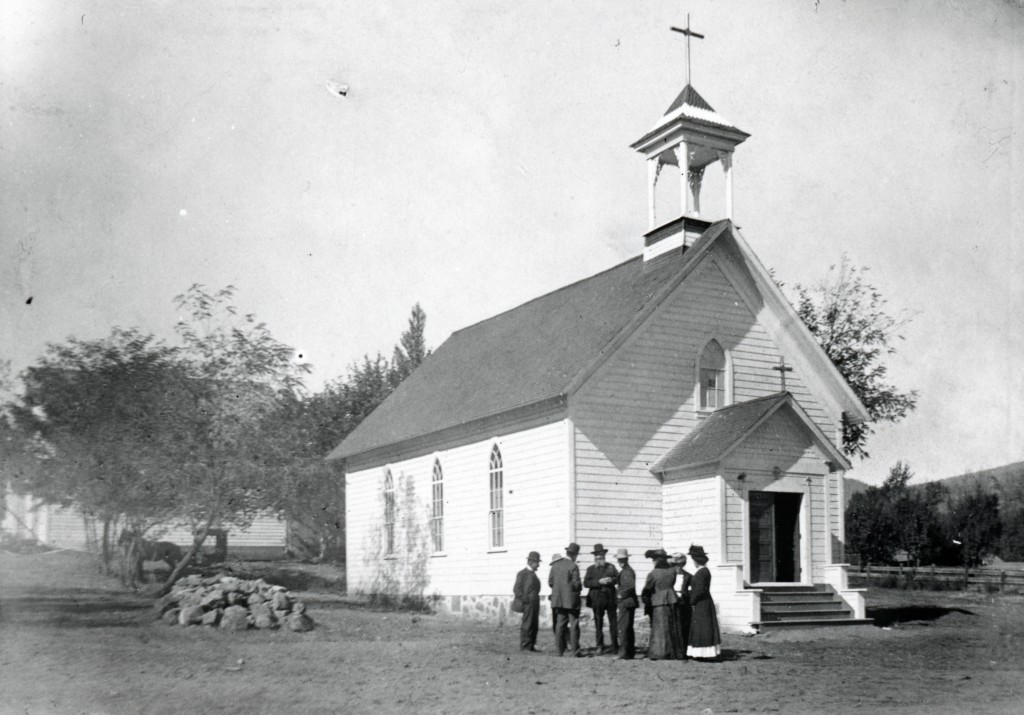
On April 9, 1939, Father Patrick J. Moran during his Easter Sunday service announced his intention that Sacred Heart Parish needed a new church. It was rather dramatic, since Moran had only been appointed to take care of the spiritual needs of Sacred Heart four months prior.
The wooden church was built in 1892, and it was originally located on Richmond Road, adjacent to the bridge over Susan River. In 1909, the church was moved to the corner of Union and Nevada Streets. However, the years had taken a toll on the wooden frame structure, and many parishioners complained that it was cold and drafty in the winter months, since the only heating was an ornate wood stove.
Moran, in his address, concluded that a new church would be built on the site of the current one. The following year, Moran received Bishop Robert Armstrong’s blessing. Shortly afterwards Sacramento architect Clarence C. Huff was awarded the contract to design the new church. However, progress was stalled due to the effects of World War II. Even that obstacle did not deter Father Moran who worked diligently behind the scenes with the ultimate goal of a new church.
Old stamp mill at Susanville, 1978. Courtesy of Tom Armstrong
Note: This was another photograph among “running loose.” Actually, I posted some years back. but original photograph some fifty yearslatert, still holds its own.
In the 1970s, I I was assisting South Lake Tahoe photographer, Tom Armstrong on his research of the NCO Railroad, and he told me about the “Other Susanville.” There is another Susanville, just up Highway 395 near John Day, Oregon. However, it has seen more livelier times.
It was a mining camp dating back to the mid-1860s, though its post office was established in 1901 in a dubious manner. Its biggest claim to fame was in 1913 and the discovery of the Armstrong nugget, that weighed 80.4 ounces and was believed to the largest of its kind found in Oregon. The nugget is on display at US Bank in Baker City, Oregon. After the 1930s, prosperity there dwindled and in 1952 the post office was closed. Today, its only inhabitants are prospectors during the summer, and a few curious seekers.
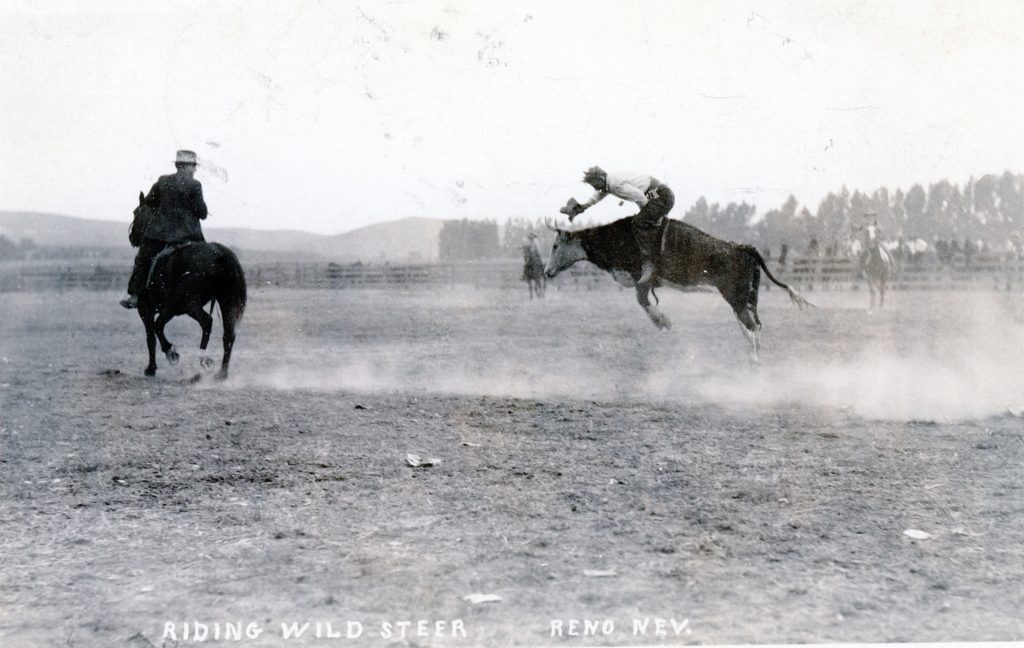
It was hundred years ago that in June 1926, my grandfather, Ira Purdy, briefly took in the Reno Rodeo. At that time, he was residing in Sacramento, but his mission was a visit to Susanville to seek employmemt. With the lumber mills in full swing at Susanville, there were a lot of opportunities. A mechanic by trade he found a job at Doyle & Hunsinger Ford, thereater became Doyle Motors. He sent this sent this post card to his wife, Margaret, and son, James, who was only a year old. He described the Reno Rodeo as a wild bunch of folks. In July, the Purdy family moved to Susanville, their second child, Leroy was born in 1927.
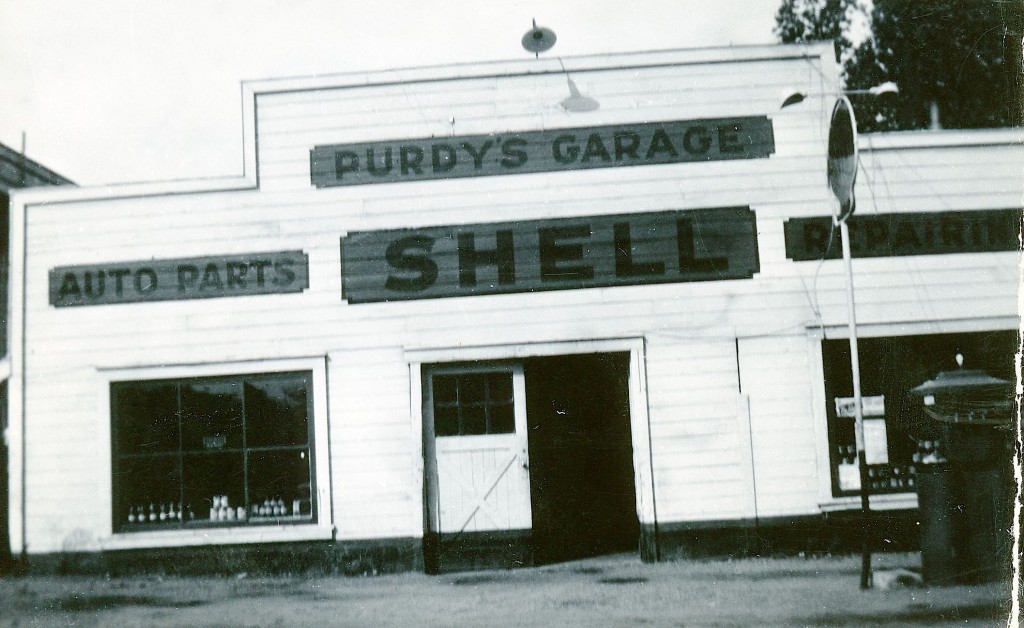
Purdy’s Garage, date unknown. Courtesy of Margaret Purdy
Thus,a new chapter for the Purdy family. In 1939, Ira struck out on his own, and opened the Purdy’s Garage at Main and Spring Streets. He passed away in Susanville in 1964.
Tim
P.S. I happen to be my grandfather’s namesake, my middle name is Ira.
Edward Thomas Purser was an interesting figure in the region’s history. Purser arrived in Lassen County in 1890, from his native Ireland where he had worked as a brewer for Guinness. Purser formed the Lassen Development Company, hoping to reclaim the sagebrush lands north and west of Wendel. Purser needed a water supply for his project. At the same time, numerous irrigation projects had been undertaken to bring water to these lands. The newly formed Eagle Lake Land & Irrigation Company had acquired rights to the Susan River watershed and to the waters of Eagle Lake. The Company needed financial capital to obtain their goals and Purser had the money and he needed the water. An agreement reached by the two and Purser loaned the Eagle Lake Land & Irrigation Company $36,000. In 1893, the Eagle Lake Land & Irrigation Company defaulted on Purser’s loan and Purser was awarded the Company’s Susan River Irrigation system and the water rights to Eagle Lake. Purser found a suitor for the irrigation system, namely the Associated Colonies of New York who had plans for a colony in the Honey Lake Valley that later became Standish. Purser still needed water for his Wendel property and he resurrected the Ward Lake project of the Balls Canyon Reservoir Company. By 1900, Purser had completely divested all his interest in the region and took up permanent residency in Sonoma County, California.
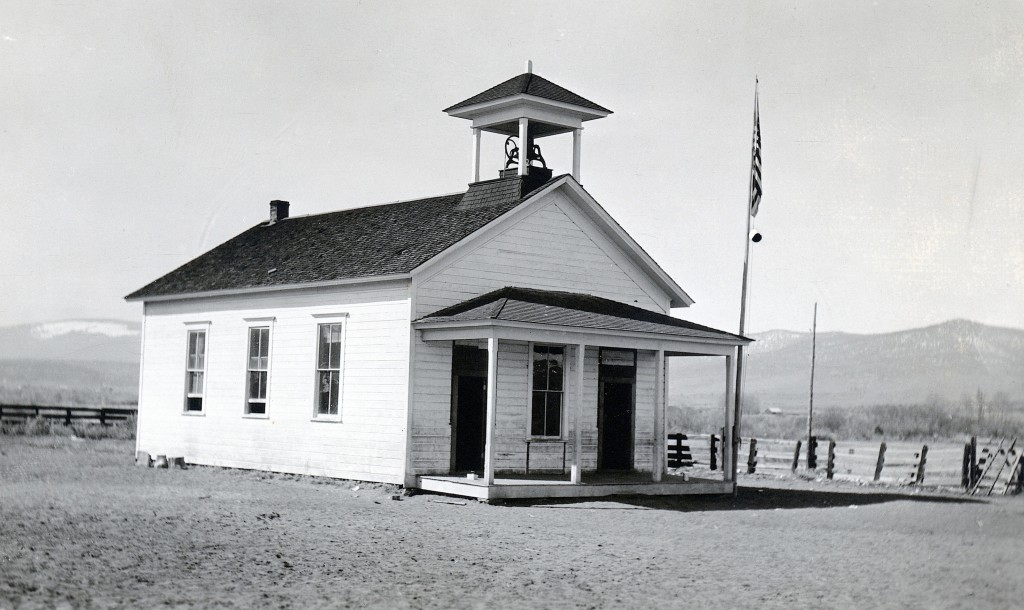
The old school as it now appears.. August 6, 2016.
Johnstonville School was one of the original Lassen County school districts established in 1864, but was originally named Susan River School District. In February 1878, the name was changed to Johnstonville. On January 20, 1961, a groundbreaking ceremony was held to build a new school to replace the old one. School board members, Harry Reuck, Mary Barr and Leroy Cramer, broke the ground for a new four-room schoolhouse which would cost the district $134,518.
Johnstonville School, 1916
In 1963, the school district deemed the old school surplus property. The school had. been remodeled over the years to include two rooms, kitchen and bathrooms. The property sat on eight tenths of an acre. On December 9, 1963 was the date set for a public auction. Minimum bid $5,000. No one was interested and the matter was referred to the State for guidance. On February 10, 1964, the district receive an offer of $4,300 from J.D. Leitaker.
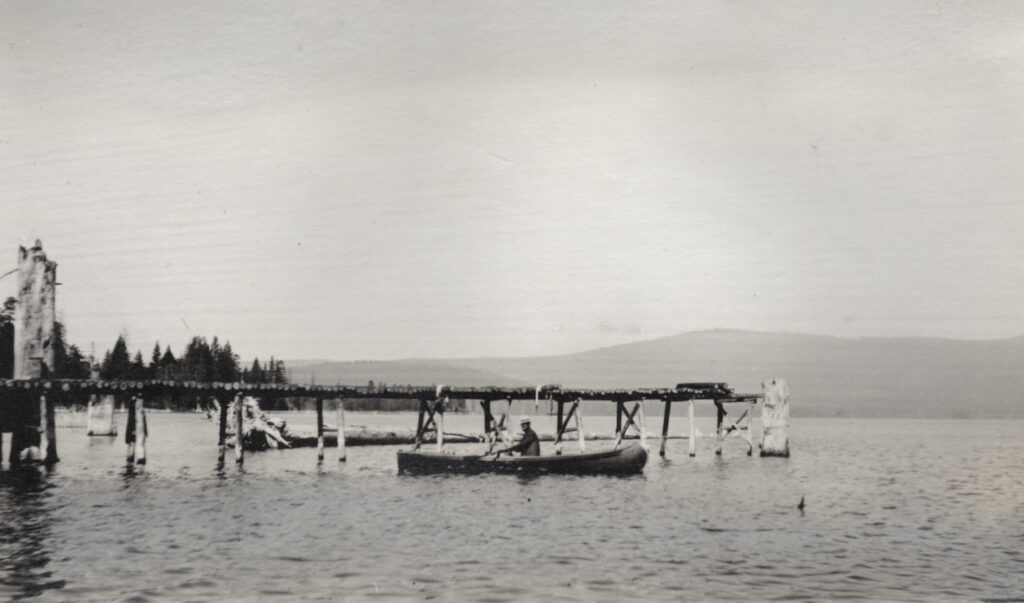
For those who have 2026 Calendar, the Gallatin Boat Dock at Eagle Lake is the featured photograph. The above was not included in the calendar. While I was aware of Gallatin Boathouse, I did not the know of the existence of the dock until I examined the Gallatin photograph collection. I consulted my letters and notes from Ardith Bronson Doyle. Ardith was granddaughter of Bert Christie, who caretaker of the Gallatin House and she spent her childhood summers there. Ardith, with her husband Forest Doyle, did provide mye with a sketch of the interior of Gallatin House, but there was no reference to a dock.
Note: This is a perennial post, because it has merit and in my opinion they should be banned permanently. The following appeared in the New York Times, July 3, 2024 “Fireworks sparked 916 wildfires in the state in 2021, the most recent year for which full data is available, and those fires caused more than $3.2 million in property damage, according to CalFire. The year before that, in the state’s worst fire season on record, fireworks caused more than 2,000 fires and $8 million in property damage, along with injuries to 11 people and one death. Lest, we do not forget the firestorms this January in Los Angeles.
It is not just a California phenomenon. A study published last year in the journal PLoS One found that more than 11,000 wildfires nationwide were caused by fireworks between 1980 and 2016 — and that two-thirds of those blazes occurred in the two-week period around July 4. “In fact, more fires began on July 4 than on any other day of the year, it found.”
In Susanville’s early years as an incorporated city, it was remarkable what the council did. One of their actions, I still support today, and that is the prohibition of fireworks. The first time they banned fireworks was in 1906, following the aftermath of the San Francisco earthquake and fire. It was also a nod to the insurance companies who suffered tremendous loss from that event. It was their belief, as well as many other communities, that this preventive measure would reduce the risk of fires.
In 1912, the City once again banned fireworks. The Lassen Advocate applauded the city and wrote: 21 June 1912 – “No Fireworks on the Fourth. We desire to congratulate our Board of Town Trustees on their action in placing the ban on all kinds of fireworks on July 2, 3, and 4. This action has been taken by large and progressive cities for years past, and we are greatly pleased to note that the smaller places are falling into line. Fireworks do no good and may do a world of harm. Fires may be started that will blot out blocks of cities or towns; little boys and girls all over the United States have lost fingers, hands, eyes and in many instances, their lives from the dangerous pinwheel and firecrackers. Let them yell all they will, let them spend their money for ice cream, candy—anything on earth but the fireworks.”
In 1916, the Monticola Club appeared before the Susanville City Council asking for a ban of fireworks for the 4th of July. The City said no. The council assured that the utmost care would be done, but they were not going to deprive children of the festivities.
In 1926, due to the tinder dry conditions, the City banned fireworks for fire, health and safety reasons.