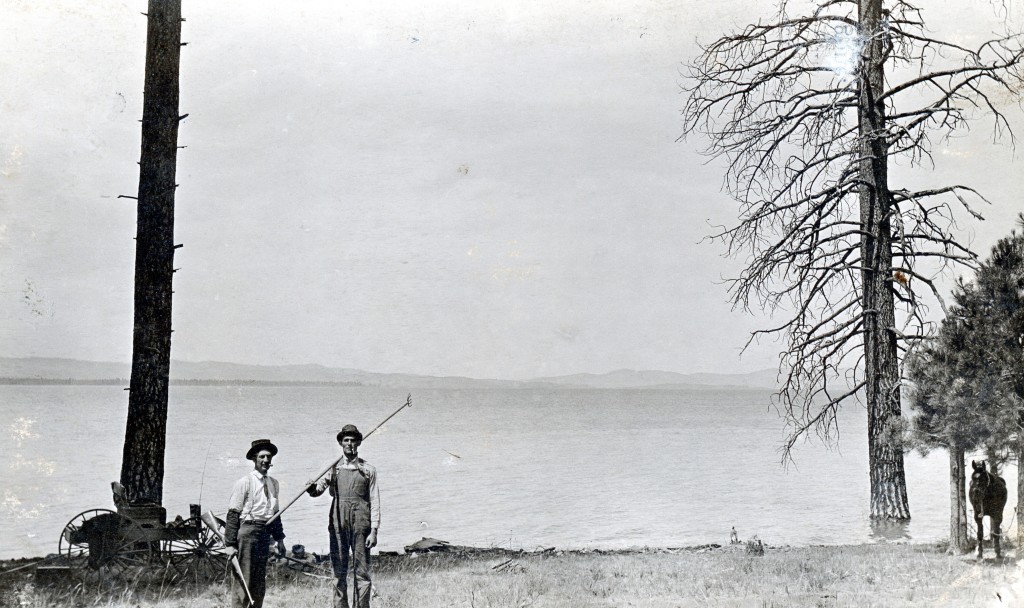
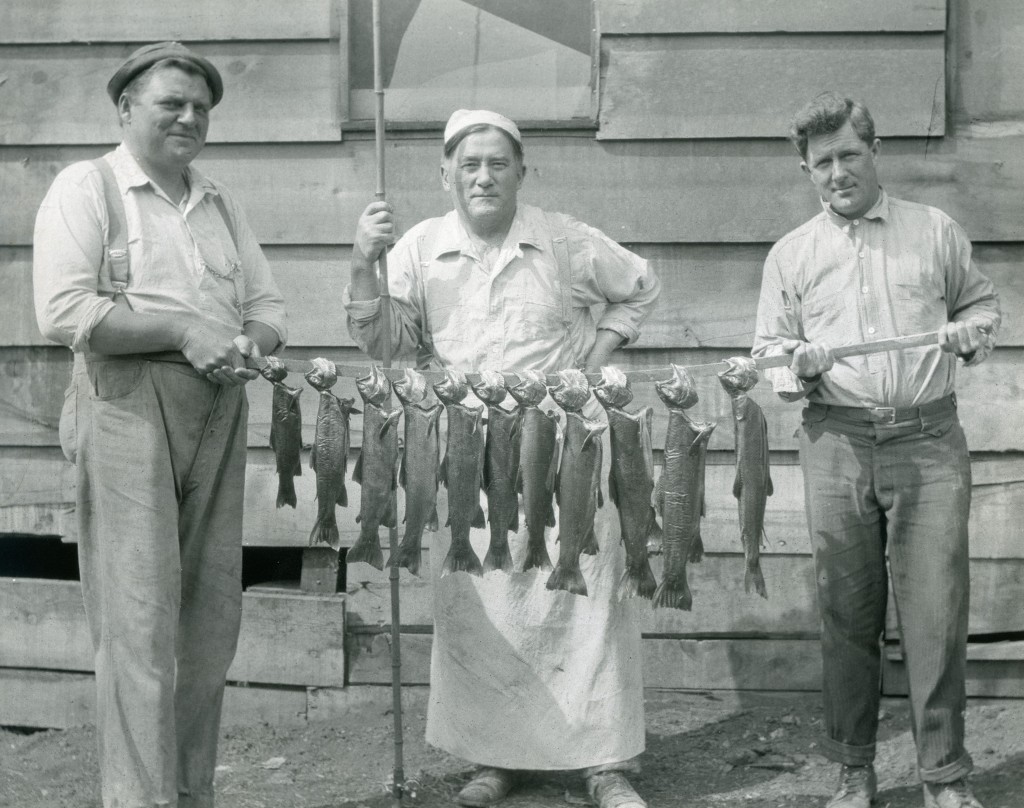
Bass fishermen at the south shore of Eagle Lake, 1914.
Having been a long time observer of local politics, I am past the stage of shock and awe. Every now and then in my research I come across some things that leave, well just plain dumfounded. Today’s topic is one them.
For unknown reasons on April 28, 1924 the Lassen County Board of Supervisors held a special session—the agenda item to ban fishing. The supervisors gave no rhyme or reason why such action was needed. It did not stop them from proceeding. They drafted an ordinance and they would adopt it at their regular meeting on May 5.
Camp 38, Red River Lumber Company at Lake Almanor circa 1925—Hank Martinez
The California Division of Fish and Wildlife was not amused. They informed the county supervisors the matter was unconstitutional. In addition, their local game wardens were told not to enforce it. The local nimrods were not pleased either and they let their voices heard. Needless to say when the board of supervisors held their regular meeting, the matter was tabled.
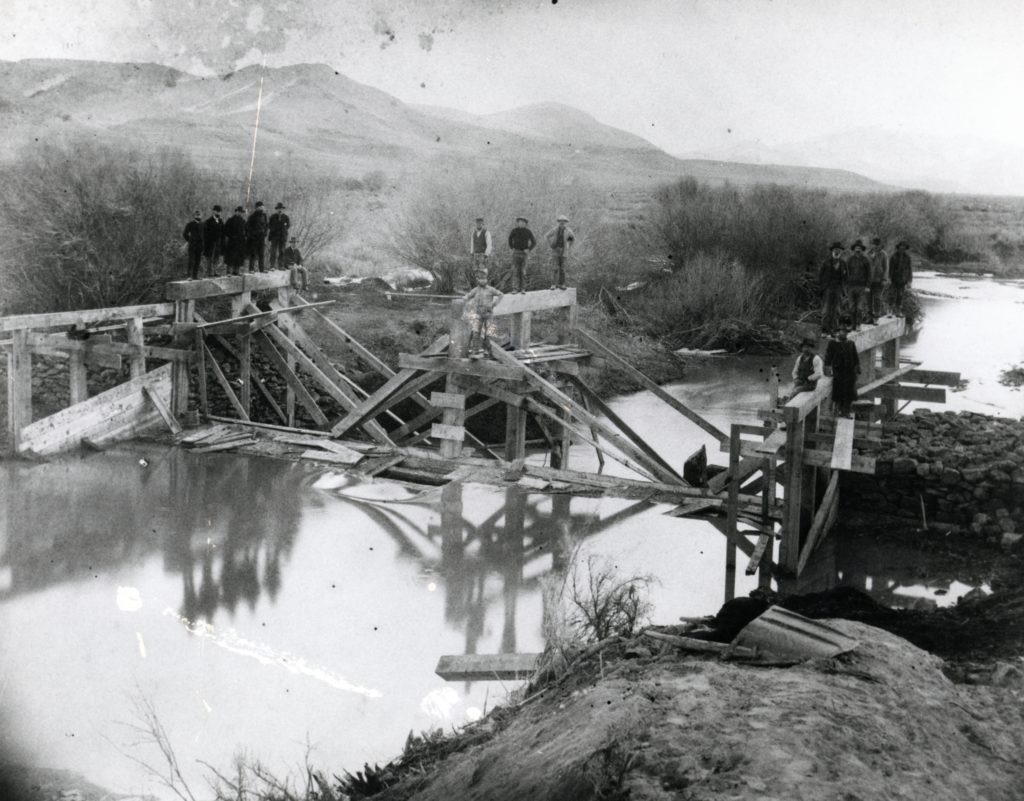
Goodrich crossing and reservoir in 1914. Minnesota Historical Society
While most reservoirs in the region were constructed for agricultural purposes, there is always an exception to the rule. The Goodrich Reservoir on Goodrich Creek near Westwood was constructed in 1912, by the Red River Lumber Company. Its main purpose was for a domestic water supply for the residents of Westwood and also as a water supply for Red River’s millpond. During the winter months, it found another use as it was a popular ice-skating spot.
During the drought of 1924, Goodrich Creek could not provide for a stable water supply for Westwood. A pipeline was constructed from Clear Creek to Westwood to correct the problem. In 1931, the State of California inspected the dam, deemed it a hazard and was removed.
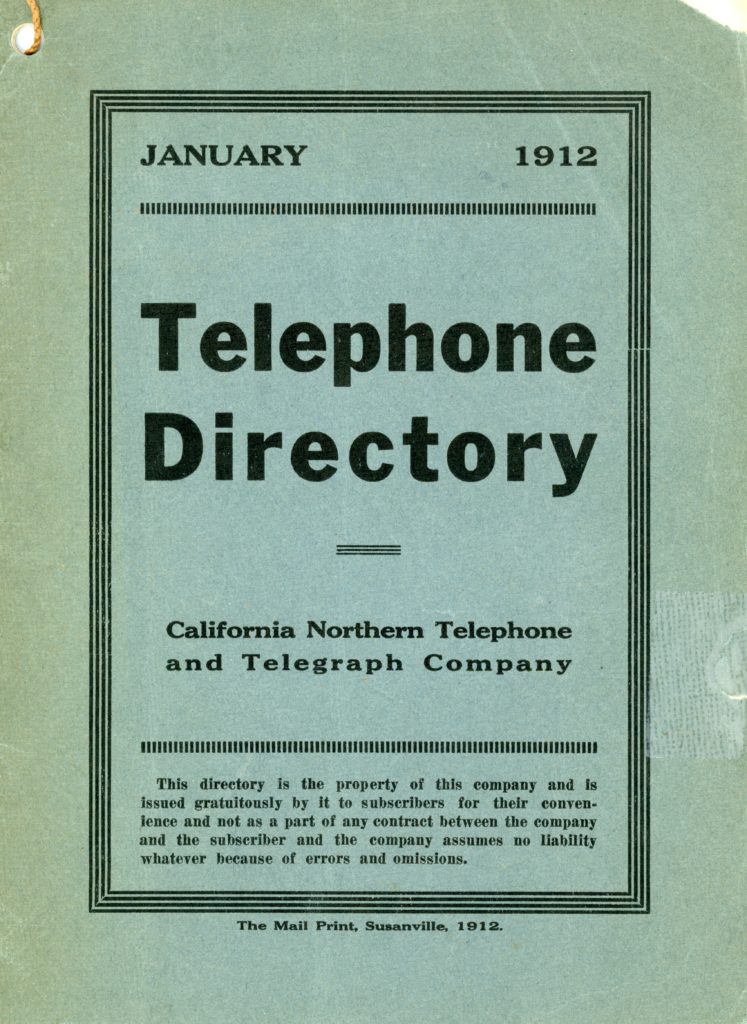
Cover of Susanville’s first telephone directory.—Mathews family
In the spring of 1910, a new telephone company for the region was established—the California Northern Telephone & Telegraph Company. The principal figures behind the company were W.E. Hills, Scott Hendricks and A.J. Mathews. Their mission was to provide for long distance telephone service for northeastern California. On October 4, 1910 the City of Susanville granted the company a fifty-year franchise. In return the City received free phone service for the fire hall, marshal’s office and two-percent of the gross annual receipts.
In the summer and fall of 1910, company invested $30,000 to construct a telephone line from Susanville to Big Meadows (today Lake Almanor) and onward to Quincy. On September 12, 1911, the entire sysrem was completed, with hookups throughout the Honey Lake Valley. On that date, Susanville residents could call long distance anywhere in California! At the Susanville office, three operators were hired. Such operators were generally known as “hello girls.” Those initial operators were Nina Turnbaugh, Lucille Pearce and Eva Lanigar. The first two worked the day shift and the latter the night shift. Telephone operators would be referred to as “hello girls” until the advent of World War II. In 1951, the operator’s job became easier with direct dialing, when rotary dial telephones were introduced in Susanville.
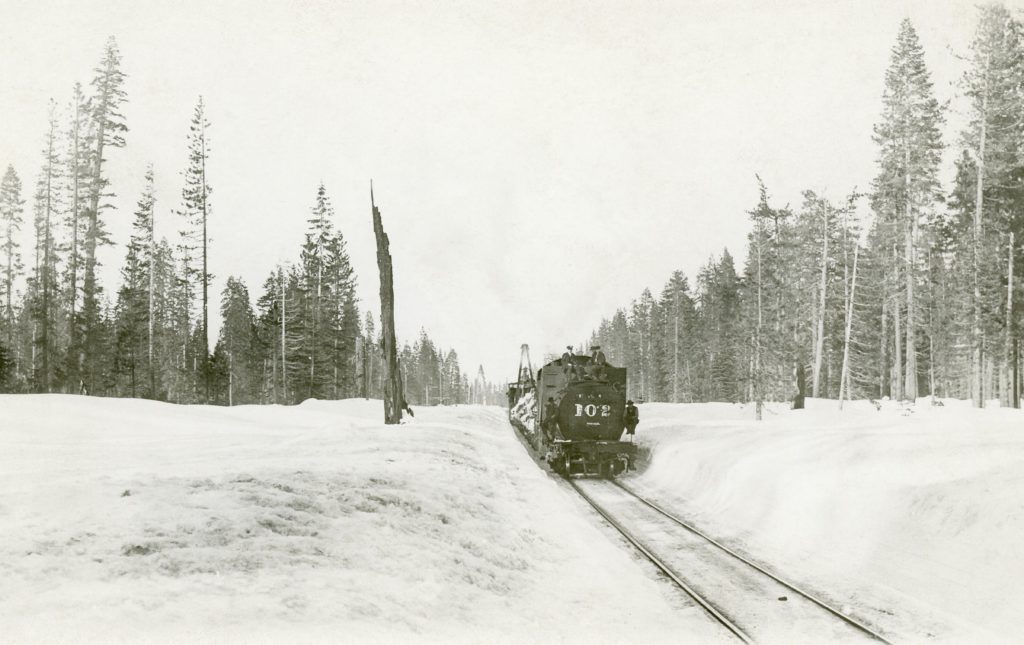
In 1914, Red River Lumber Company purchased three Baldwin locomotives from. the Tonopah Goldfield Railroad for its Westwood operation. Of course, Red River had quite a fleet of locomtives at Westwood.
The 102 remained in operation during Red River’s tenure there and the locomotive became the property of Fruit Growers Supply Company in 1944. When Fruit Growers closed the Westwood mill in 1956, the 102 was sold for scrap.
Note: In 2011, the first appearance of a gray wolf was reported in California. Prior to then, the last gray wolf in California was trapped in Lassen County in 1924.
At first I was going to do a condensed version of the account, but the Lassen Advocate had such a compelling story that I decided to transcribe it.
Lassen Advocate, Susanville, California, June 13, 1924 1;4 “Frank Koehler Gets Large Gray Wolf, June 12 – Frank W. Koehler, United States hunter and trapper had a thrilling experience yesterday afternoon when he encountered what is now almost an extinct species of animal in the United States, especially in this part of the country.
“June 2, Koehler had been called by G.E. Seeber at Litchfield to help him out as the coyotes had killed 50 of his young turkeys. That day Koehler set out seven settings of three traps each and returning to his settings on June 7 found that he had caught a coyote but he had broken away and escaped. He set his traps in the same place and yesterday afternoon returned to see what had been happening.
The Colony Dam, Susan River, November 1897. Courtesy of Betty Barry Deal
When proposed and built this dam on the lower Susan River just below where Willow Creek feeds into it was controversial. Nothing truly unusual about since water has and will be a heated issue.
When the Associated Colonies of New York proposed their puritan community of Standish in the Honey Lake Valley, they created the Colonial Irrigation Company to handle the complex water right issues of Susan River, the main water source for Standish. The community had a European design, wherein the residents resided in a clustered village, but tended to their farms/livestock that surrounded the village.
Whatever the case may be, in November 1897, the Colonial Irrigation Company began work on the controversial Colony Dam on the Susan River.. The construction of the dam outraged their neighbors downstream in the Tule District, who claimed it obstructed their water flow and riparian rights. The Tule folks took the matter to court and not only asked for an injunction, but demanded the $12,000 dam be removed as a nuisance.
The old Smith homestead, also known as the Brubeck field. November 19, 2015
Lewis Brubeck, who owned the Smith place in the Tules (now a part of the Fleming Unit of Fish & Game), also filed a separate lawsuit against the Company in 1898, as the waters of the river had been diverted, never reaching his property. The Brubeck verdict was important to the Tule people, for while Brubeck only received a damage award of $750, the court placed a restraining order against the Company, preventing them from irrigating any other lands until Brubeck’s lands were thoroughly irrigated. It was a major court ruling, that with future lawsuits would bring about the landmark adjudication of Fleming v Bennett filed in 1934.
In small communities, the lone country store was its social hub. They varied in size and offerings depending on the location. Many housed the local post office, and in some cases the back portion included the living quarters for the proprietors.
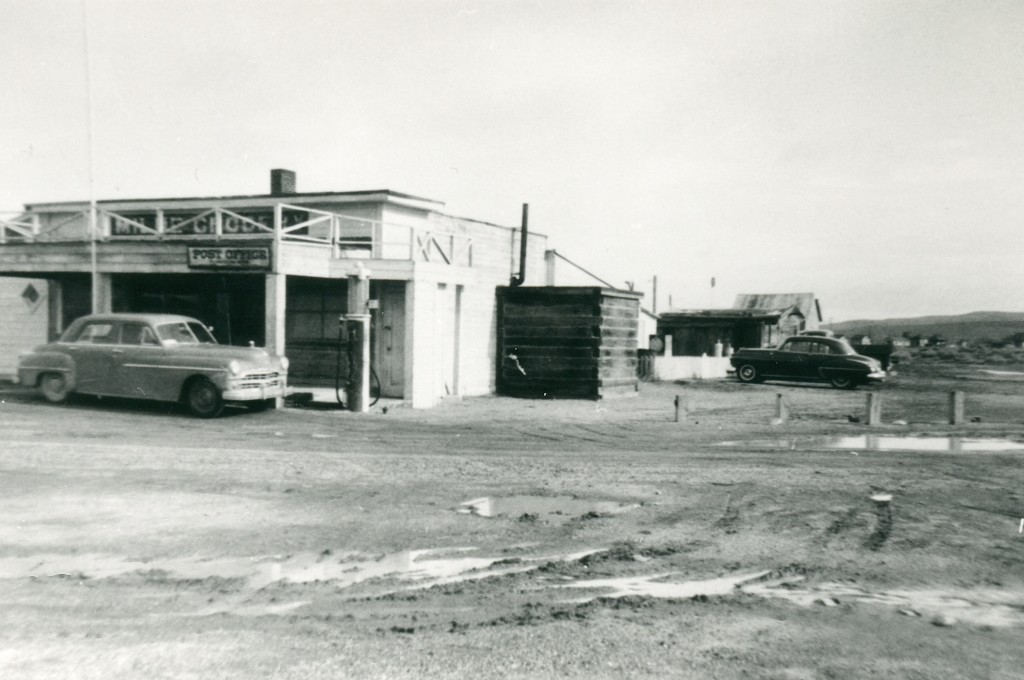
Flanigan, was a former railroad town in eastern Honey Lake Valley. Its country store—Milne Grocery—was a prime example. In 1915, the store was established as the Flanigan Mercantile Company.
In 1930, the one-room school at Flanigan, known as Bonham, was in need of a teacher. Gertrude Milne, who at the time was living in Yerington, applied and got the job. Her husband, William then packed up and moved to Flanigan. In 1934, Orlando and Victoria Gasperoni, owners of the Flanigan Mercantile Company, sold the store, the old hotel and some rental cabins to William and Gertrude Milner for $1,000. The Milne’s changed the name to Milne Grocery. William who not only took the operation of the store. but succeeded Victoria, to become the town’s postmaster.
In 1945. William Milne passed away. This left Gertrude to juggle her duties as school teacher, store operator and postmistress. Flanigan continued with its quiet existence until the late 1950s. In 1958, Gertrude retired from Bonham School, though when needed served as a substitute. In 1959, the Southern Pacific eliminated its section crew at Flanigan. Thus, with even less traffic, Gertrude decided to no longer stock the store. The store remained open to sell non-perishable food items, and equally important it was the town’s social hub since it also served as the post office.
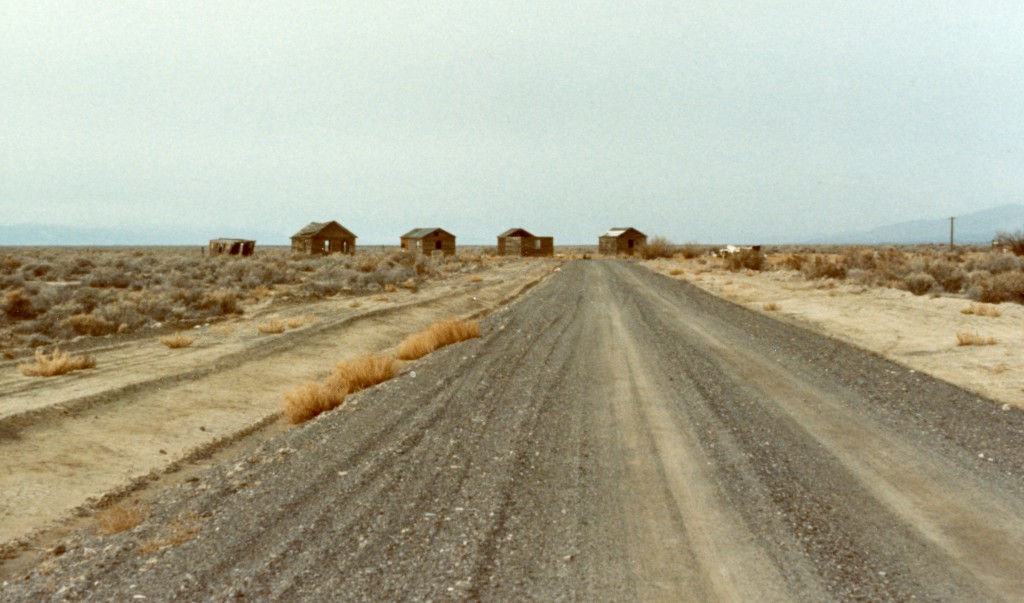
Flanigan, 1976, courtesy of Christopher Moody
In 1960, a reporter from the Reno Evening Gazette paid a visit to Flanigan. It was duly noted the town’s population consisted of one—Gertrude Milne. On March 31, 1961 activity at Milne Grocery more or less ceased to exist with the closure of the Flanigan Post Office. While many would have moved on Gertrude stayed. On January 2, 1969, Gertrude while on a social visit to Fish Springs Ranch, her beloved store and home burned down. Gertrude was bound and determined to stay in Flanigan. and moved into one of her own cabins. In June 1969, another tragedy for Gertrude, was the closure of Bonham School, where she spent four decades teaching. In 1971, the school was sold and moved to Standish.
Yet, Gertrude stubbornly clinged on and would not move. Finally, she conceded to her family’s urging, in 1973, and moved to nearby Sutcliffe where she passed away later that year at the age of eighty-four.
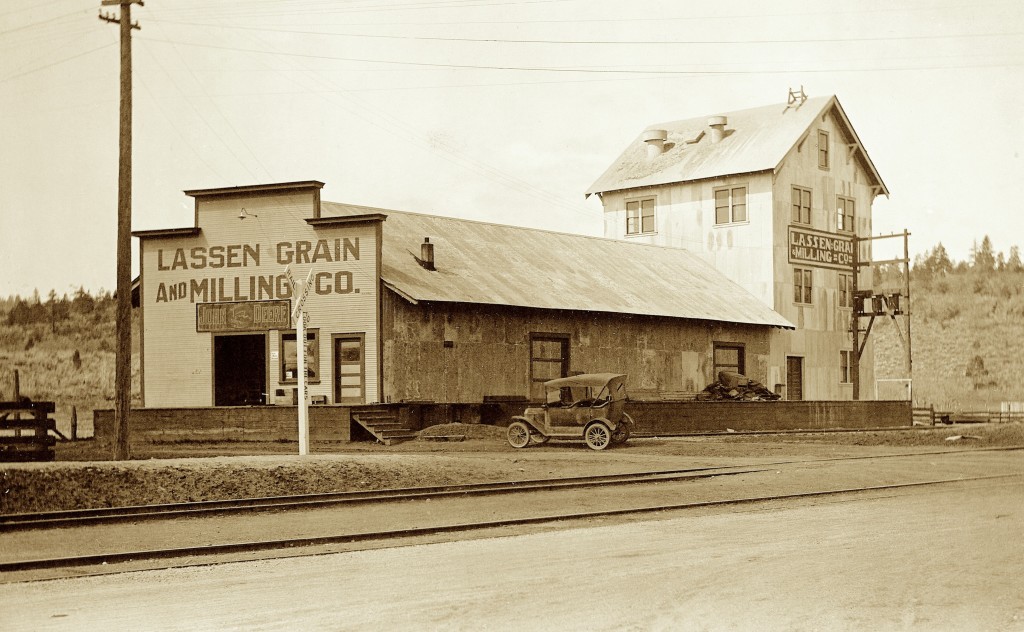
Lassen Grain & Milling Company, circa 1918. Courtesy of Dick & Helen Harrison
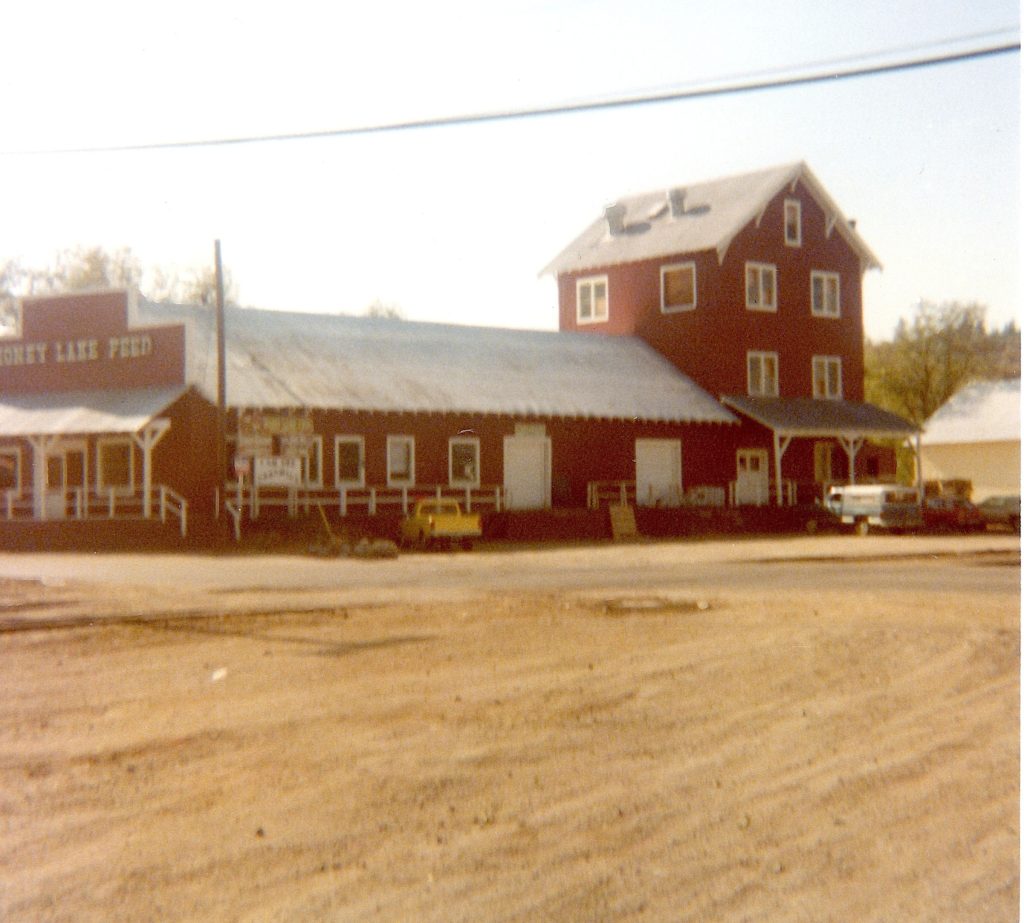
One of the inquiries received from the Ask Tim segment was for photographs of the old Honey Lake Feed Store on Richmond Road that was located across the Susanville Southern Pacific Depot.
Honey Lake Feed, 21 October 1978
It was built in 1917. At that time there was only one flour mill in operation, that was located at Janesville. It should be duly noted it was only in operation during harvest time. When Lassen Grain & Milling opened the Janesville Flour mill closed down permanently.
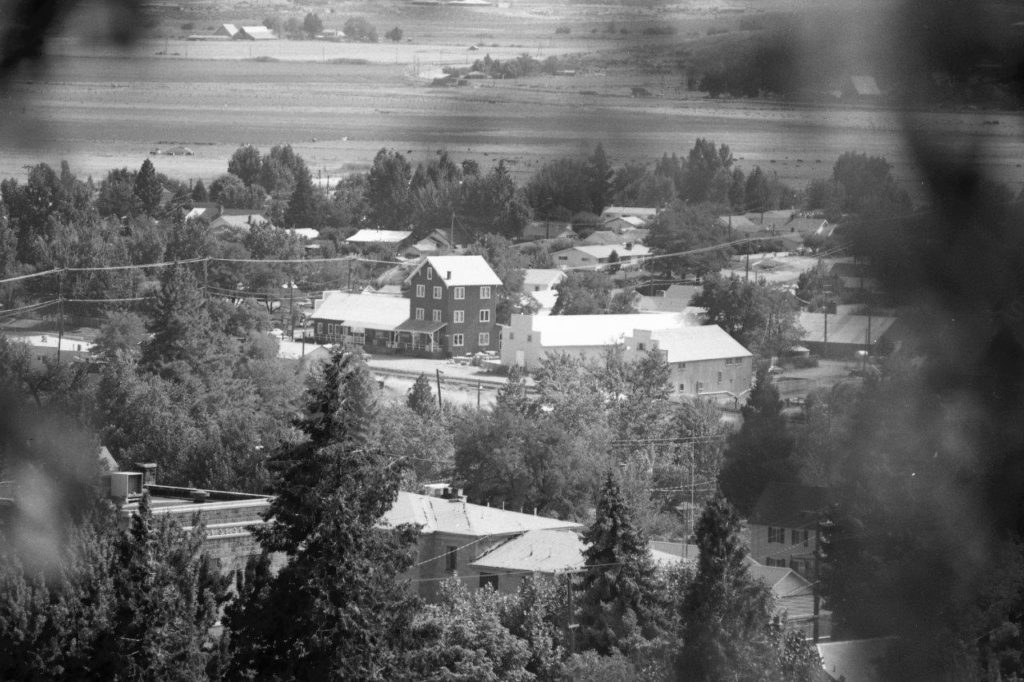
Honey Lake Feed building as seen from Inspiration Point, circa 1980–David Bricker
I do not have my notes handy, but if, and that is a big if, if memory serves me correctly Lassen Grain was acquired by Bronson &Doyle in 1929. In the 1940s, the flour mill portion ceased operation. The building was destroyed by fire in the early 1980s.
Flood waters from breached earthen fill trestle, April 1938. Courtesy of Betty B. Deal
Construction of the line was stalled during the early 1930s, while Red River went through its financial reorganization. Finally, in July 1933, construction began at the west end near Hog Flat. A station was established where the Piute line connected with the Southern Pacific, and named Blair, after Kenneth Walker’s wife. At Hog Flat, Red River established logging camp #2. That summer Red River logged eight million board feet of timber and sold it to Fruit Growers. The following year the line was extended further east to Big Springs, and Camp #8 was established.
The year 1935 was a pivotal one for the Piute. Early in the year it was announced Red River would complete the line to Susanville—a distance of twelve miles from its terminus at Worley Ranch to the Fruit Growers plant. Continue reading Piute Logging Railroad – Part II→
The completion of the Western Pacific’s highline in 1931 was not the only railroad development to make news. In the 1930s, Red River’s most unusual railroad logging line, the Piute, came to fruition—so named as it followed Piute Creek in its approach to Susanville.
Red River owned a large swath of timber west and north of Susanville. While they had already logged over its easily accessible timber in Mountain Meadows and Lake Almanor, the Piute line was not intended to service Westwood. The Piute was built to generate much needed revenue to sell timber to other parties, such as Fruit Growers and Lassen Lumber & Box. However, they had a back-up plan; should Red River’s timber sales fall flat, they could mill the timber at Westwood. Continue reading The Piute Logging Railroad→