Category Archives: History

A Strange Case Indeed

Weatherlow’s headstone, 1978

Over the years, I have sifted through all kinds of records conducting research. It is a slow, tedious process, but then one comes across those hidden gems, it makes it worth while.  Alas, it is also becoming a lost art. I have found that too many people rely upon the internet for their research.  Okay, enough of my opinion.

Prior to 1997’s California’s Trial Court Act, there was a justice and a superior court—and in more populated counties multiple courts—including municipal. Early day justice courts provides an interesting glimpse into ordinary affairs of the community—whether civil or criminal.

This brings to the 1865 case People of the State  vs. William Weatherlow that was filed in the Honey Lake Justice Court. This was just your typical delinquent property tax case. A unique situation occurred in this case when Constable E.R. Nicholls attempted to serve Weatherlow with a summons for $46.30 in back taxes  Nichols noted on the summons of his attempted service of February 7, 1865 that he was unable serve Weatherlow as he “. . .  cannot be found in the County.” If only Nichols, who doubled as County Surveyor, had toured the Susanville Cemetery, he would have located Weatherlow’s grave, as he died on July 22, 1864. and thereby a permanent resident of Lassen County. It wasn’t as though Nichols was unaware of who Weatherlow was—he being prominent in the affairs of the Honey Lake Valley—but Nichols had sued him in 1861 over a mining claim in the Black Rock Desert.

Donate

A Different Kind of Party

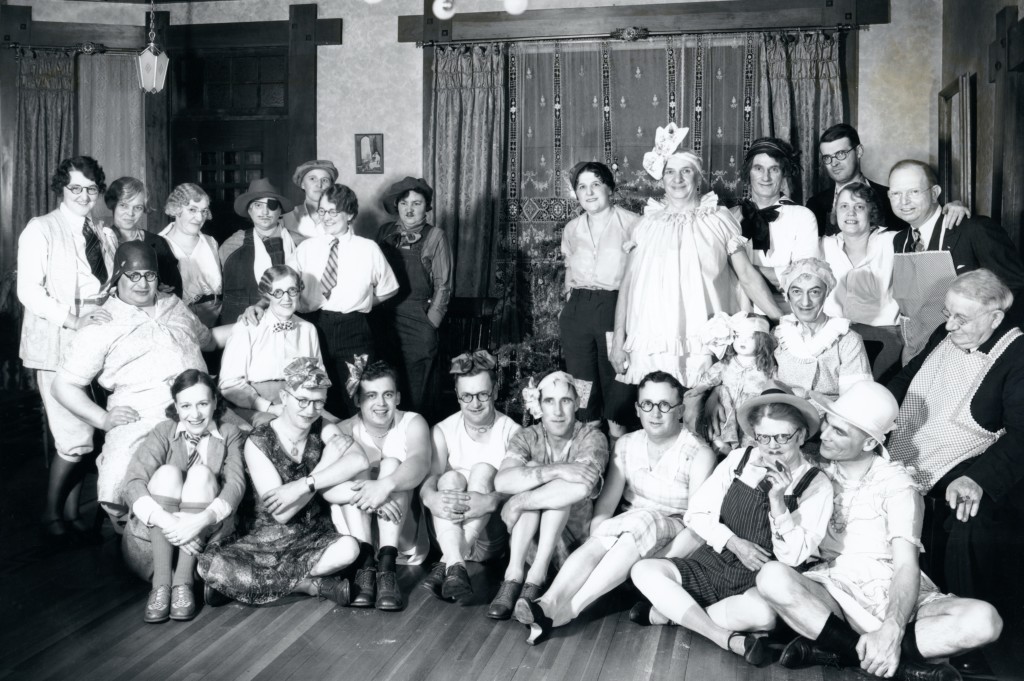
Who needs Halloween when you can have a freak party?—B.R. Zimmerman Collection

Note: Seasoned readers may recall this article from several years ago. However, it being Halloween, current readers might enjoy the same. These parties were popular in the teens and twenties of a century ago. They were held early in the year to break the winter doldrums.

Olga Wemple who wrote the Society page of the Lassen Weekly Mail reported on a special party that occurred on March 3, 1916. She wrote: “A freak party given by Mr. and Mrs. Jules Alexander (145 North Roop St., Susanville) proved to be the most unique and original that Susanville Society has seen for a long time. Every one was requested to come dressed in freakish costumes. Those who were invited responded with such enthusiasm in designing their queer attire that wide spread interest was caused not only among the lucky ones, but also among their friends who eagerly aided with their ideas. The home of the hosts was decorated in keeping with the plan of the evening. The living room was brightened with strings of oranges, lemons, apples with gayley colored balloons hung from the chandeliers and freakish pictures of all descriptions ornamated the walls. When every one had arrived each drew a caricature cleverly drawn by E.J. Feher to find “yourself” which table to be seated at.

This 1931 gathering was held at the home of Blanche & Ike Knoch, frequent hosts of such events. Courtesy of Hank Martinez

“At midnight all entered the dining room which was decorated with onions, turnips, and beets. The large table was bountifully laden with all kinds of goodies. At each place a card upon whichwas tied a minature knife, fork and spoon and also the initials F.W.M.B.F were painted. All were asked to guess the meaning of the initials and Mrs. C.M. (Maybelle) MacDonald proved the clever one and guessed the meaning which was “Fingers were made before forks.”

Donate


The Saga of Edward Laird

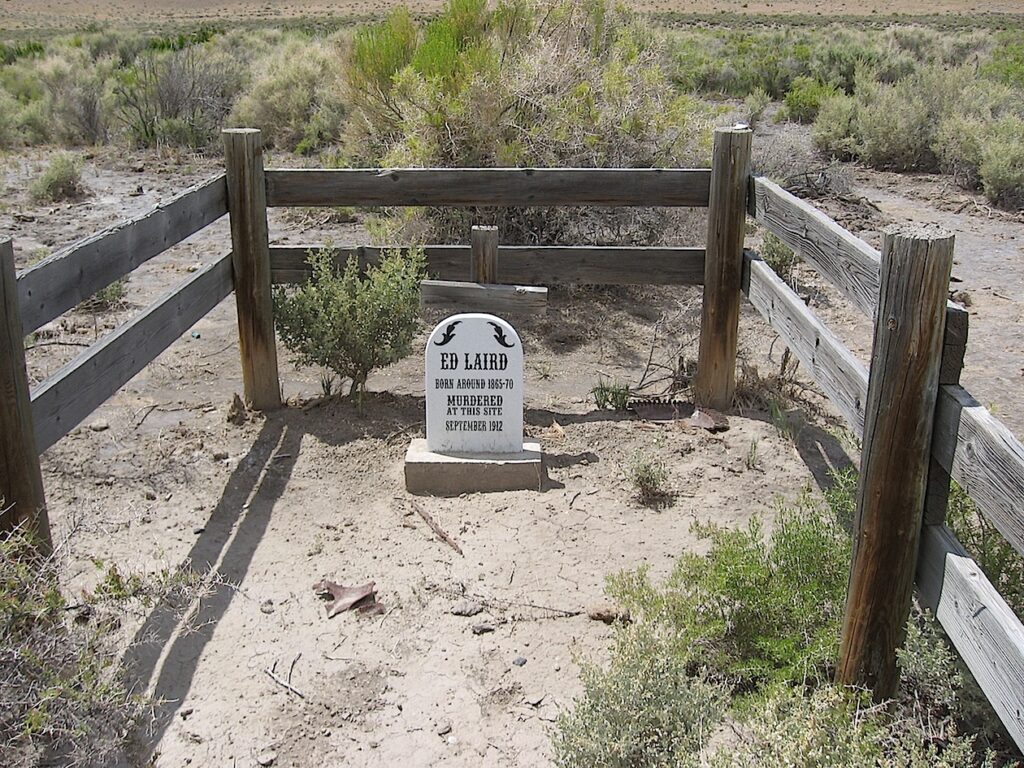
The grave of Edward Laird, Smoke Creek Desert, June 26, 2023

Last year, I wrote about Laird Spring and the spring’s namesake. It was my original intention to include a photograph of the grave, but good intentions did not occur. In 2004, was the last time I was there. Then, there was just a wooden enclosure and a wooden cross. Who placed the stone monument, I do not know, but as you will read below there are problems with dates on this marker.

Numerous springs in the Intermountain West are named for wranglers and itinerant sheepman. Laird Springs is one, that has an interesting story, and one of which is still an unsolved murder.

Edward Laird was born in 1862, the eldest of three children, his two siblings Margaret born 1863, and brother Warren in 1864. They were  orphaned at an early age and raised in an orphanage in Carson City, Nevada. As young men, Ed and Warren went to work on various ranches in Northeastern California. By the late 1890s, they had settled in the North Warner Valley, Lake County, Oregon. Warren would remain in Lake County for the rest of his life.

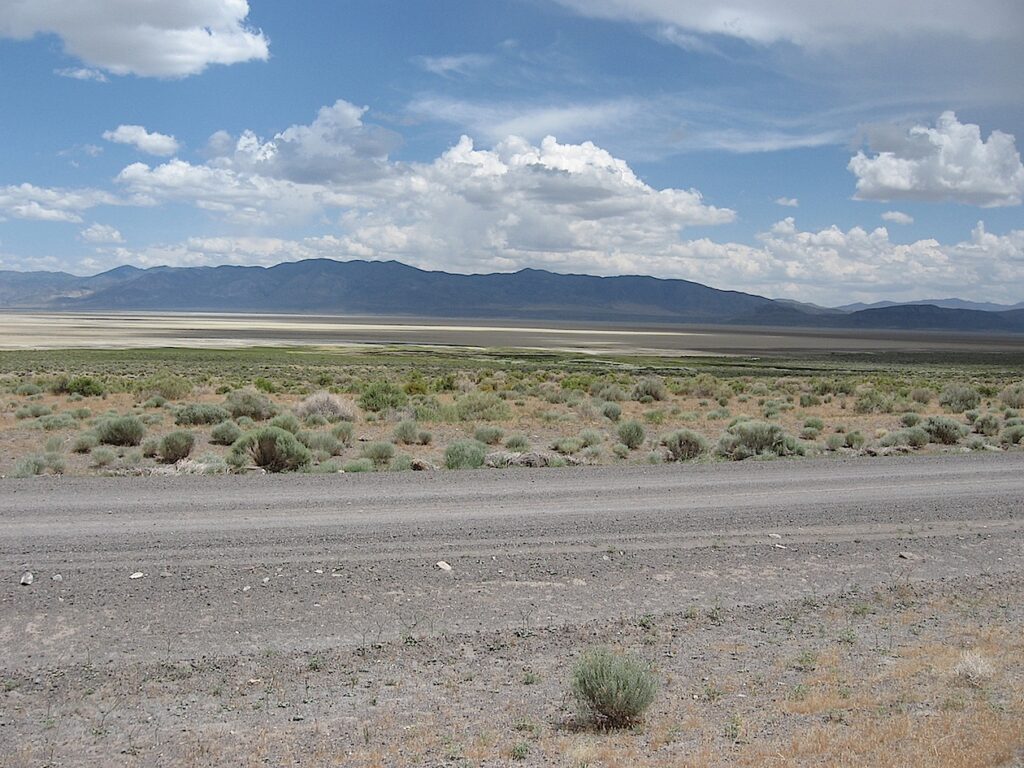
View of Laird’s old homestead site  from the Smoke Creek Road, June 26, 2023

In the early 1900s, Edward Laird worked as a ranch hand at Round Hole, Smoke Creek Desert, also known as Bonham Ranch. The owners William and Martha Bonham Ross, were in-laws to Laird’s sister, Margaret Sutcliffe.

Very little is known of Laird’s activities on the Smoke Creek Desert. Sometime after 1910, Laird filed a “squatter’s claim” to eighty acres, three miles north of Round Hole. There was a spring on the claim where he built a cabin. Edward Laird was murdered there on or about August 20, 1917. Details of his murder are sketchy. According to newspaper reports, his body was marked with two shot gun wounds and he was found dead in his cabin. On August 29, 1917 the Nevada State Journal had a caption, “Revenge Believed to Have Been the Cause of Killing With Shotgun near Round Hole.”  However, the newspaper did not provide any details. A week later area ranchers offered a $500 reward for information leading to the arrest and conviction of the party who murdered Laird. That was basically the end of the case. Cook Laird, Warren’s grandson, told me that Edward was a red head who was known to be hot headed with a mean temper.

Edward Laird was buried 50 yards east of where the spring bears his name, though there is another spring further east of his grave.

Support


An Ode To Secret Valley

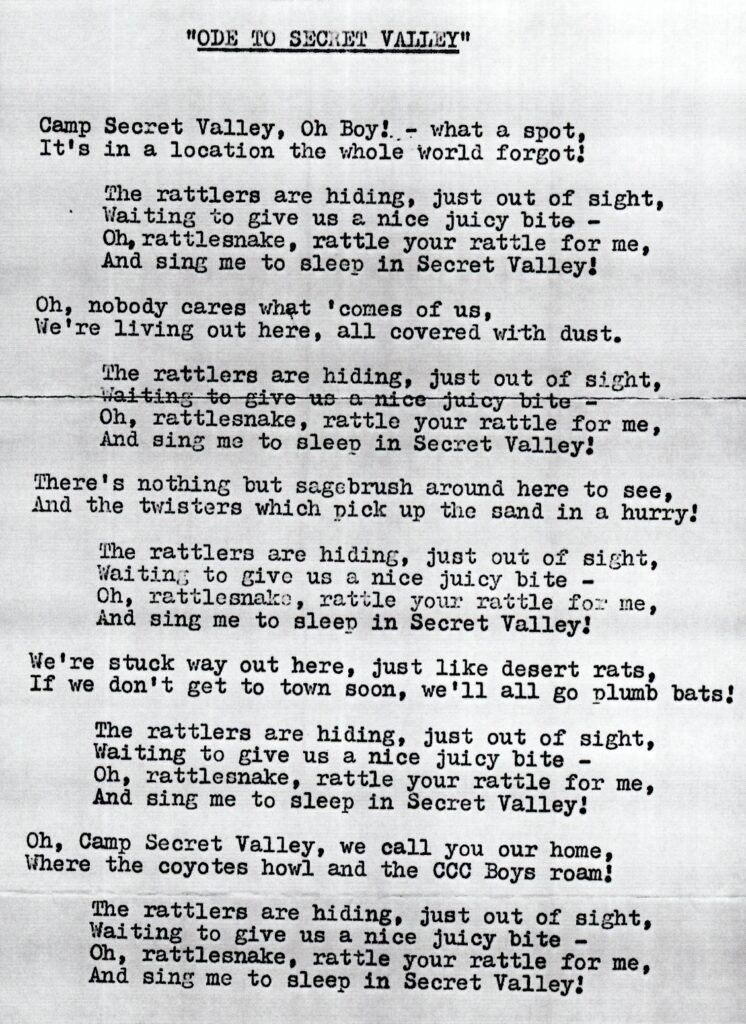
Ode to Secret Valley, Author unknown

Time flies, and it has been four months of weekly Secret Valley CCC camp tales. I hope everyone has enjoyed. There are a few scheduled in November since they are related to Veteran’s and Thanksgiving Days.

Fast, forward. The author of the balladeer above ditty is not known. However, we do know this. It was written by a CCC enrollee who was in Co. 1246, the first occupant of Camp Secret Valley, but his name no one could recall. The composer while in the rec. hall would play his guitar and. sing the melody and the entire company would sing the refrain—usually loud enough to scare away all of the rattlesnakes and coyotes.

Tim

No More Fish Plantings

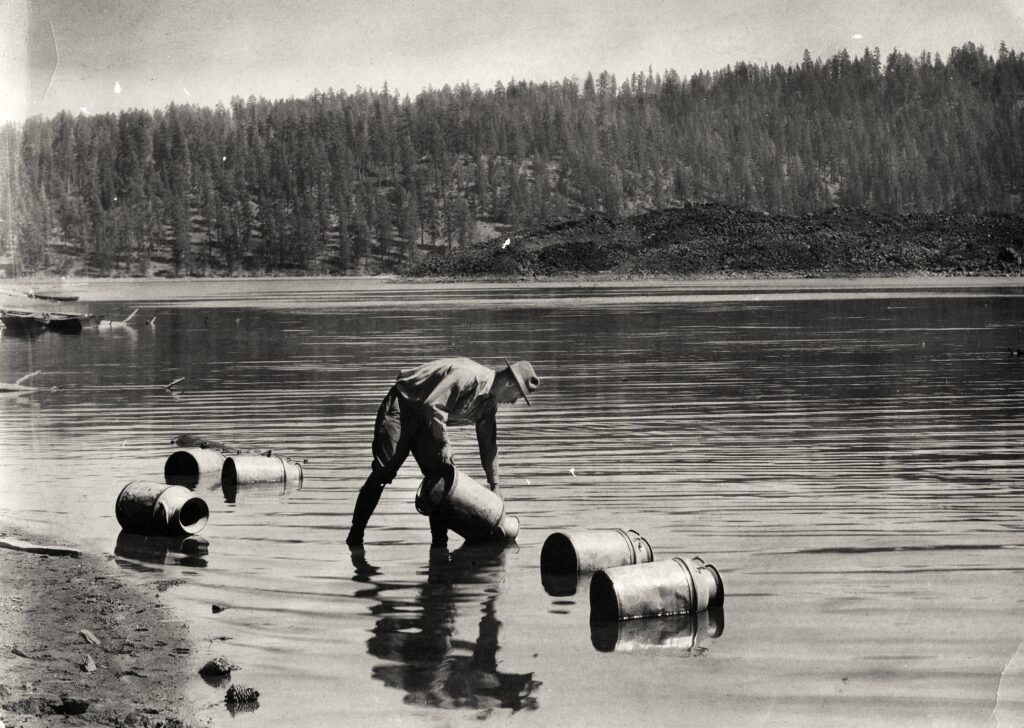
Fish planting at Lassen Park, 1930–National Park Service

One of the consequences when President Nixon signed the Lassen Volcanic Wilderness Act of1972 was the elimination of fish planting in two-thirds of the park. The area comprised the national park’s eastern section where the majority of the lakes are located.

One of the earliest known plantings was done prior to the creation of the park. In mid-July 1915, the first planting occurred through the efforts of San Francisco resident E.T. Niebling. The California Department of Fish and Game provided him with 5,000 small rainbow trout, which he planted in Juniper Lake. Beginning in 1927, the park, with the assistance of the Department of Fish and Game, began annual fish plantings in the majority of the lakes, that ceased at the conclusion of 1972.

Tim


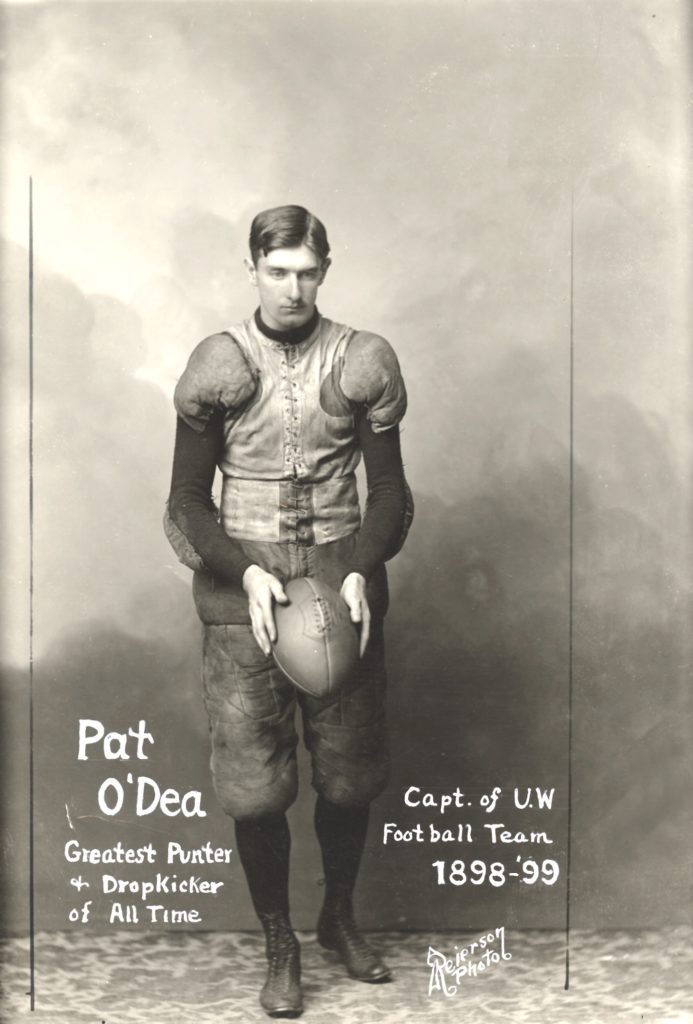
Pat O’Dea—The Kangaroo Kicker

Pat O’Dea, Courtesy of the University of Wisconsin

In 1919, Charles J. Mitchell arrived in Westwood like so many before and after him seeking employment. The Red River Lumber Company had high turnover in its workforce and always had openings. Little did Red River know their new hire was a famous football player. Then again, Mitchell used an alias. After all this was in an era, where few people carried any type of identification, and Social Security numbers were non-existent. Continue reading Pat O’Dea—The Kangaroo Kicker

Tuessday Tidbit—Aardvark Pizza

Mountain Miser Advertisement, October 1982

Very seasoned residents will remember this location as Borghi’s on Richmond Road. On one side was a grocery store and deli, the other a bar known as the S.P. Club. After the brutal murder of Jennie Borghi in 1973, the placed closed down.

In the early 1980s it was brought back to a new life as Aardvark Pizza and became a popular gathering place. When the business moved to  1535 Main Street, now the location of Mazatlan, it just did not have the same appeal as its original location and eventually closed.

Tim

The Railroad Passenger Debate

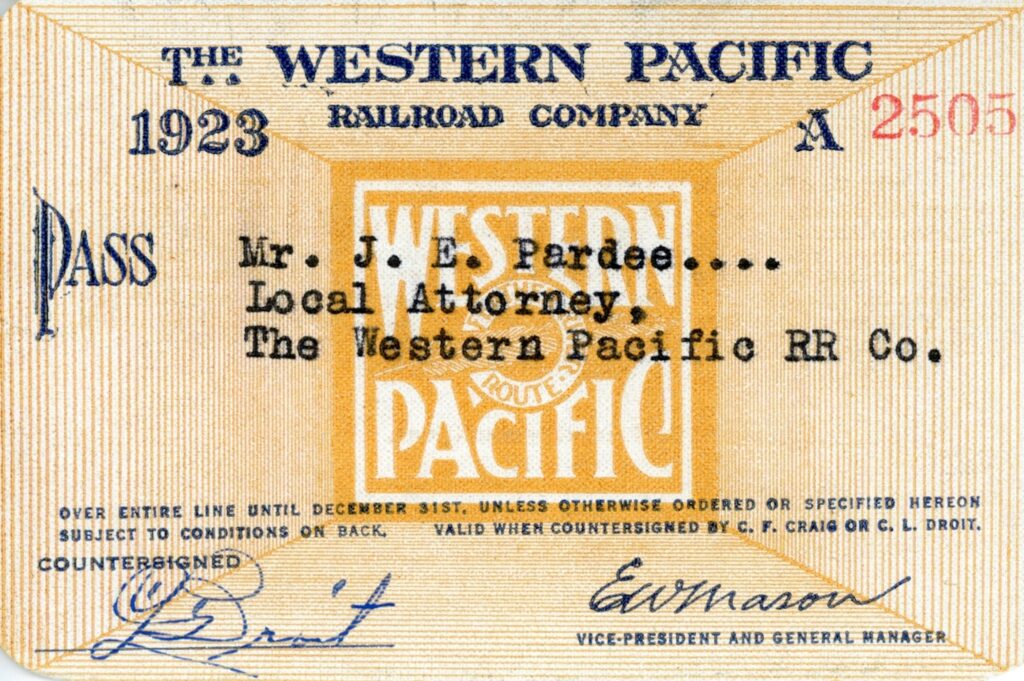
Susanville attorney, J.E. Pardee’s free Western Pacific rail pass

Yesterday’s post was about a 1934 special excursion train between Keddie and Klamath Falls. Two months prior to that event passenger service had been debated in Bieber. The following appeared in the Big Valley Gazette, which was penned by Aubrey Bieber, editor and publisher.

Dateline Bieber, Cal.—13 July1934: The Big Valley Lions Club have started a movement to induce the Great Northern and Western Pacific Railroads to inaugurate passenger service over their lines through Big Valley. The railroad companies do not seem to think that this section is ready for passenger service. Yet, they do admit that the Klamath Falls-Keddie connection has been a paying freight line.  They seem to have forgotten, however, when they asked for permission to build the line and asked all the individuals and organizations in this section to support them, that one of the chief arguments was the wonderful passenger and express service this section would enjoy by being served by the Empire Builder. The time is ripe for all organizations to cooperate with the Big Valley Lions Club and demand the service all were promised.

In September 1934, when the Plumas County Chamber of Commerce sponsored a special excursion train Keddie to Klamath Falls. the Oregon city chimed in about the lack of passenger service on the Great Northern and Western Pacific railroads. The Klamath County Chamber of Commerce formed a special committee to address this issue.

Donate

A Trip to Klamath Falls, 1934

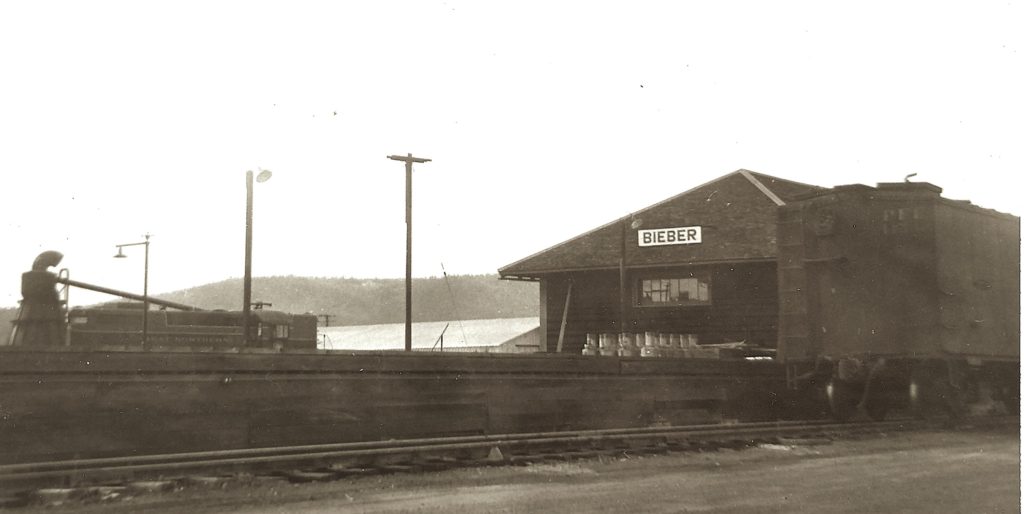
Great Northern’s Depot, Bieber.

While searching through files concerning railroad passenger service between Keddie and Klamath Falls, I came across the following account, that I thought some might find of interest

On September 22 and 23, 1934, a special excursion train sponsored by the Plumas County Chamber of Commerce went from Keddie to Klamath Falls. At Bieber, Lizzie Durfee and Ellen Elliott boarded the train to its final destination at Klamath Falls and the following is their published report.

Big Valley Gazette, Bieber, California — 4 October 1934: “This excursion was the first passenger train to leave Big Valley since the dedication of the railroad three years ago. Big Valley waited fifty years for the railroad, but there is no passenger service yet. Of course, there are better roads and the automobile, so we do not miss the train service too much.

“The excursion left Bieber about eleven o’clock Saturday morning. It was a little chilly but the cars were comfortable and the crowd was sociable and friendly.

”A stop was made at Merrill going up and the excursionists listened to a recital of the resources of Tule Lake section that seemed almost incredible. Space does not allow a detailed account but the crops and stock produced for disposal this year totals over $4,000,000. As a souvenir of the good will of the people of Merrill. each excursionist was presented with a ten pund box of potatoes of the best variety grown in that section.

”Klamath Falls was reached about 3 o’clock and courtesy cars took the visitors around the city and showed them the vantage points, and the growth and expected development of that busy bit little city.

”The banquet that evening was a pleasant affair where everybody visited with his neighbor on either side of him and across the table. Of course there were speakers of good will and friendliness and the banquet ended with everyone in the best of humor.

”The return home was uneventful and arrived back in Bieber six Sunday evening.”

It should be noted that nearly 200 people participated in the event.

Donate

CCC Company’s 740 Dwindling Numbers

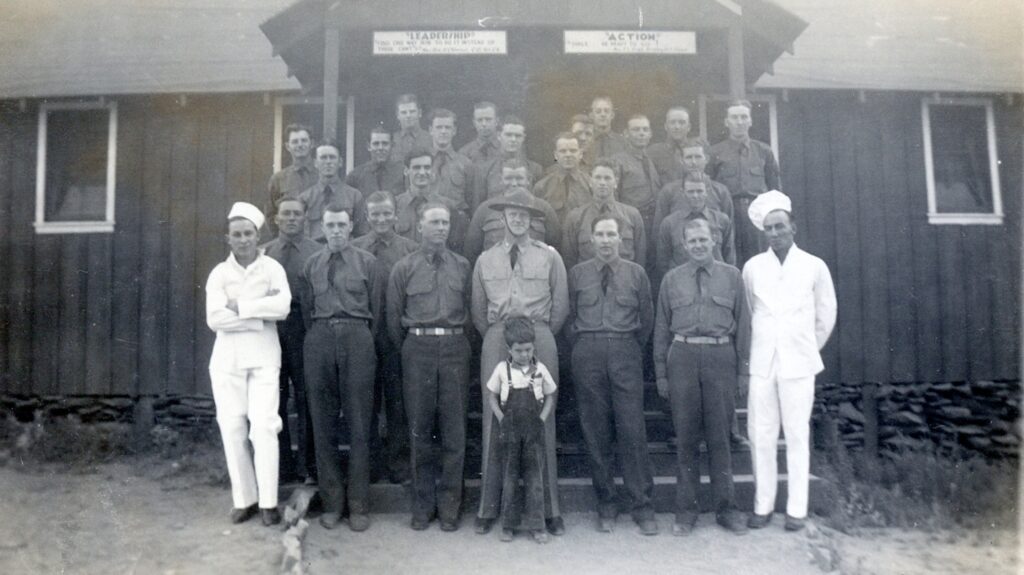
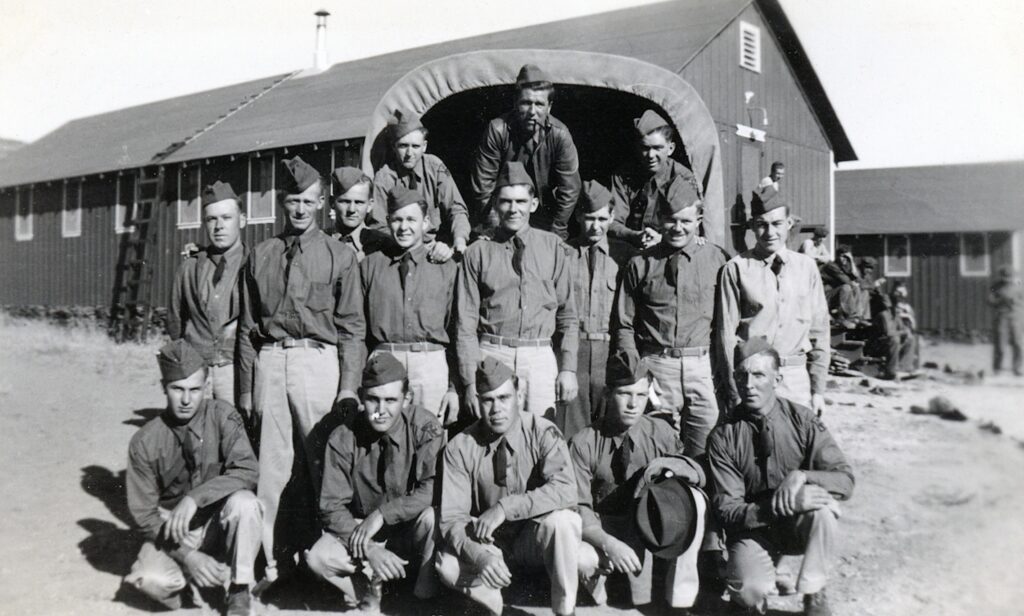
The reduced size of Camp 740—C.H. Bennett Collection

CCC Camp 740 started with an original crew of 178 men that came from Piedmont, Missouri, and then briefly to Spalding, Nebraska with its final destination of Secret Valley, California. Bennett’s caption of the above photograph, that after seventeen months, this was who remained. Enrollees had the option at every six months to either enlist for another six months or depart. Over the course of time, many departed.

A group of CCC’s leaving Secret Valley on September 30, 1936—C.H. Bennett Collection

By 1938 the Secret Valley camp days were numbered. Its mission had been completed with the work needed to be done. I have not been able to locate an exact date of closure, but I do not come across any references of its existence by 1939.

Tim