Category Archives: History

A Great Question

Skedaddle Dam, 1992. Courtesy of Ginger Martinez

In the Ask Tim segment earlier this month, this question was posed:

“My question to you would be what is the most interesting thing you have discovered in all your years of historical research and/or being a lifelong resident of the area.”

Before I elaborate any further, let me state one item. While we live dramatically different from our ancestors of 150 years ago, human behavior has not changed.

The salt works, January 1980.

At this time I will focus on  physical historical sites. That alone is a challenge. So here are some runner ups. The remnants of Skedaddle Dam is a sight to behold. It is impressive, considering the dam washed away in 1892. Buffalo Salt Works in the Smoke Creek Desert, that dates back to 1864, is unique. What give its special appeal is how the salt over the years transformed the foundation of the wooden vats into somewhat mystical gnarly forms. Very special.

Sunrise Chamber, 2015, Belfast

Then, of course, is the sunrise chamber on the summer solstice at Belfast.

The site I have in mind, is of course exceptional and had no idea what to expect, until I saw it. It is a combination prehistoric/historic site, with a unique water feature that is so obscure that it does not appear on USGS maps. I have never photographed it, so a spring expedition is in the works before the reveal, but not its location.

 Tim


Sierra Yacht Club

From High Sierra Magazine

While examining the 1972 summer issue of High Sierra magazine it had a short feature entitled “Sails on Eagle Lake.” Tom Boyer, Vice Commodore of the Sierra Yacht Club of Reno had visited Eagle Lake in 1971 and was impressed what he saw. The Sierra Yacht Club at that time had sixty members and they would normally race on Washoe Lake south of Reno. On June 24, 1972 six sail boats from the Sierra Yacht Club graced the waters of Eagle Lake. According to the High Sierra it was the first time an organized sailing unit was held at Eagle Lake. It certainly would not be last. A few years later, local residents formed the Eagle Lake Sailing Association also known as ELSA. For a time it was a very active group. In addition, for awhile Lassen Community College even sponsored summer sailing classes.

Tim

Susanville’s City Hall Centennial

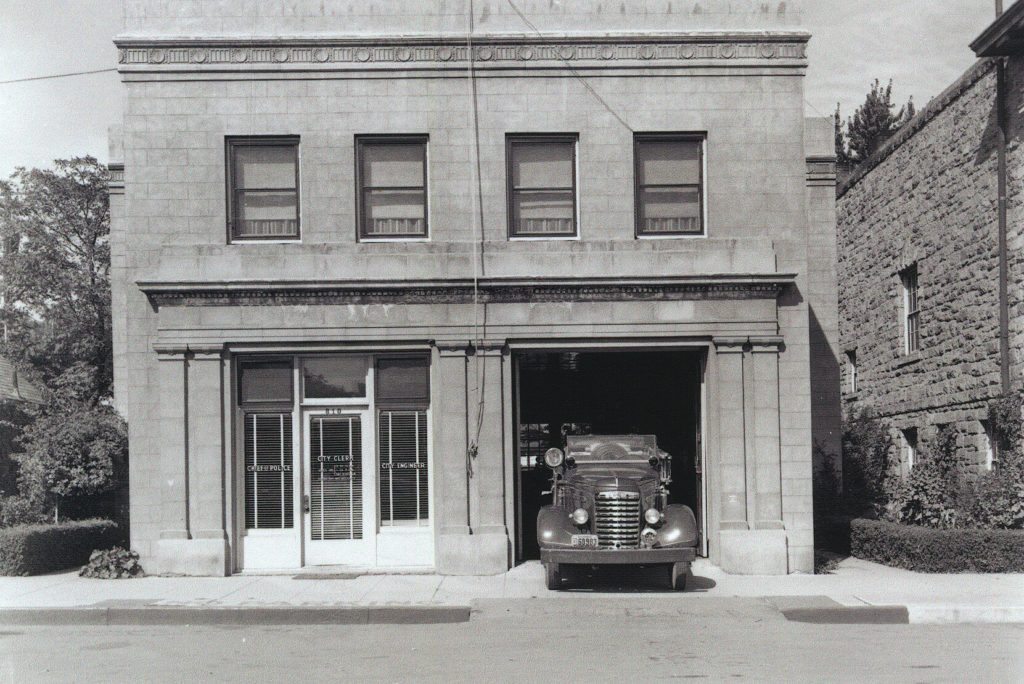
Susanville city/fire hall.

On January 6, 1924, Susanville’s new city hall was dedicated. It was estimated that nearly a quarter of the town’s population turned out for the occasion.

The original city/fire hall was destroyed by fire on November 7, 1921. More about the history of that structure later. The City Trustees (today referred to as Council) had many pressing issues to contend with and decided to take their time with the construction of a new city hall. In the spring of 1923, they hired noted Nevada architect Frederick DeLongchamps to design a new building. (Some local buildings designed by DeLongchamps include the Del Mar, St. Francis Hotel and the Lassen County Jail).

In October 1922, voter’s approved a $20,000 bond measure to pay for a new combination city/fire hall. Alas, DeLongchamps’ plan carried a $30,000 price tag, along with an additional $5,000 to furnish it. The Trustees’ were reluctant to go back to the voters to approve an additional $15,000 bond measure, but had no other choice. On June 26, 1923 voters approved the additional funding 146 to 14.  On August 18, 1923 Woodward & Grebe were awarded the contract to construct the two-story concrete building.

City hall has undergone numerous changes in the past 100 years. The most notable occurred in 2000., during the City’s Centennial. Not only did the building go through a complete retrofitting, but 3,250 square feet was added to the structure. The integrity of the historic facade was kept intact. It was an expensive proposition that cost $1,323,752.

On  a final footnote, in late January 1924, the City thanked the Lassen County Board of Supervisors for useage of the County Courthouse that allowed them to hold meetings for the last two years.

Subscribe


Lassen County Farmer

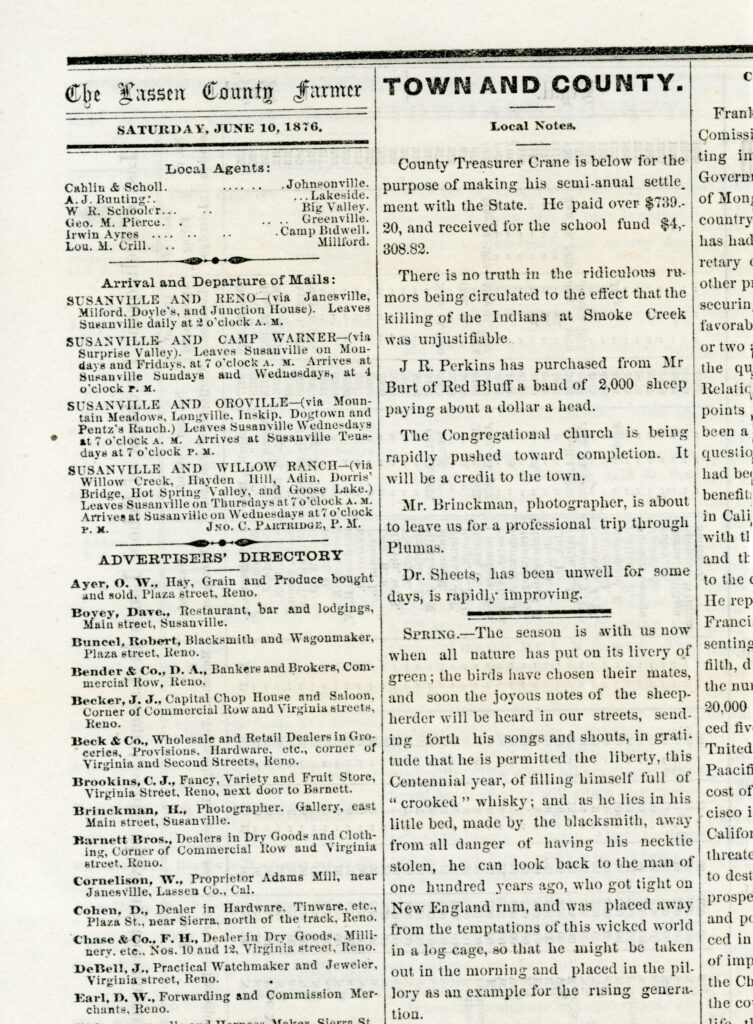
A partial copy of the Farmer, found in a long ago Lassen County Courthouse dumpster dive

In the mid-1870s, Susanville was still a one horse town with less than 300 inhabitants. Yet, for a time two newspapers were published there. The first to compete with the Lassen Advocate was the Lassen County Journal that operated from 1874-1875. It was succeeded by the Lassen County Farmer.

This newspaper made its debut on January 1, 1876. The Farmer was published by two experienced newspaper men from Reno—J.G. Law and William Lewis. The paper provided the best local news coverage the area had ever experienced. Making a living was another story. By December, Law had departed leaving Lewis behind. Lewis, too, would soon depart and return to Reno. He noted, “Running an opposition paper in one of these mountain counties is about as neat and easy a way to starve to death as can be imagined.”

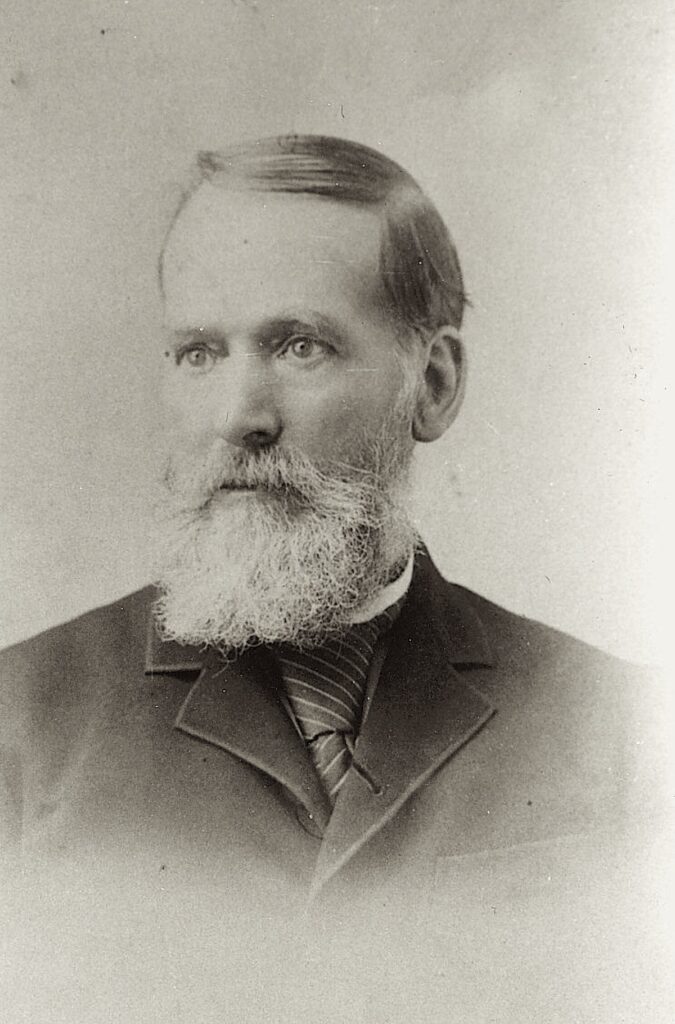
Thomas Henry Dawson—Marge Hansen

However, Lewis was able to find a successor in Susanville resident Thomas H. Dawson. However, Dawson would soon learn how difficult it was to make a living and after six months the newspaper folded. The Modoc Independent newspaper of Alturas relayed the fate of Dawson’s plight: “The editor’s wail is pitiful. He says that during the six months which he has run the paper only twelve subscribers paid their subscriptions.”

On a personal note, I can relate to the above. Some times I have pondered that I made it this long, but I manage some how to cover the costs.

Support

Moon Valley – 2024

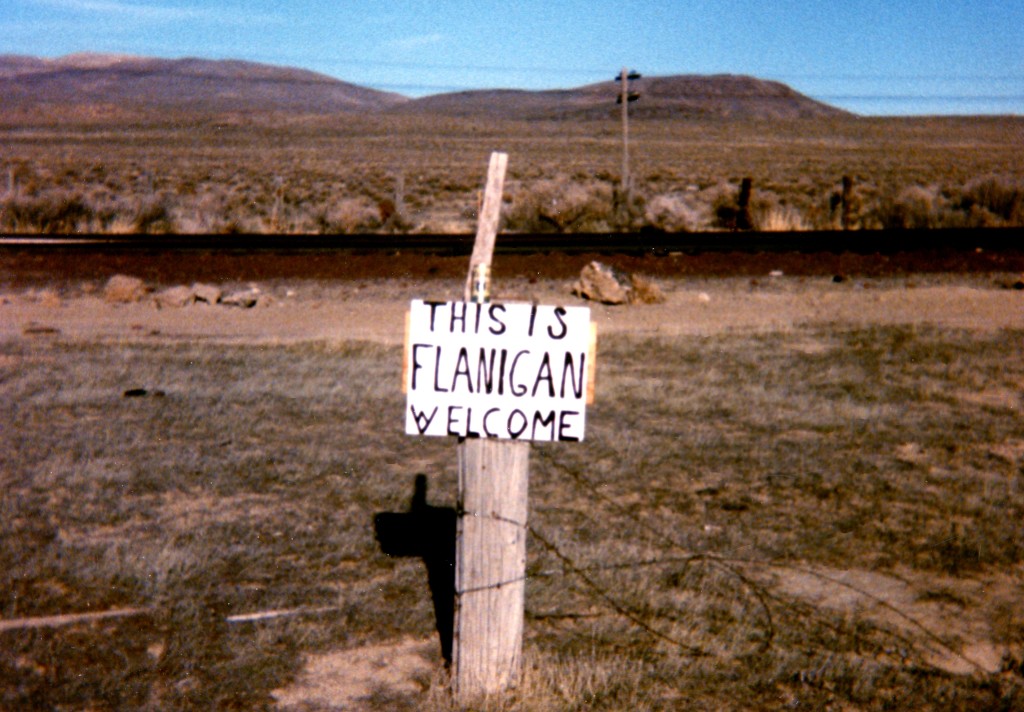
Flanigan, 1984
Flanigan Real Estate Promotion sign, 1984

Moon Valley Ranch was just one of many sudivisions throughout the State of California that forced the State to take preventive measures to prevent this type of future subdivision—namely the California Subdivision Act of 1971. Its a perfect example why there are disclosure laws in the real estate industry today. Numerous folks still invest in that property, purchasing parcels site unseen, only to realize that they bought a lot on a sagebrush plain or a rocky hillside covered with juniper trees. However, there are others that find its pristine setting magical, and buy a parcel as a special get away. Of course, Moon Valley, is a temporary home for illegal marijuana grows.

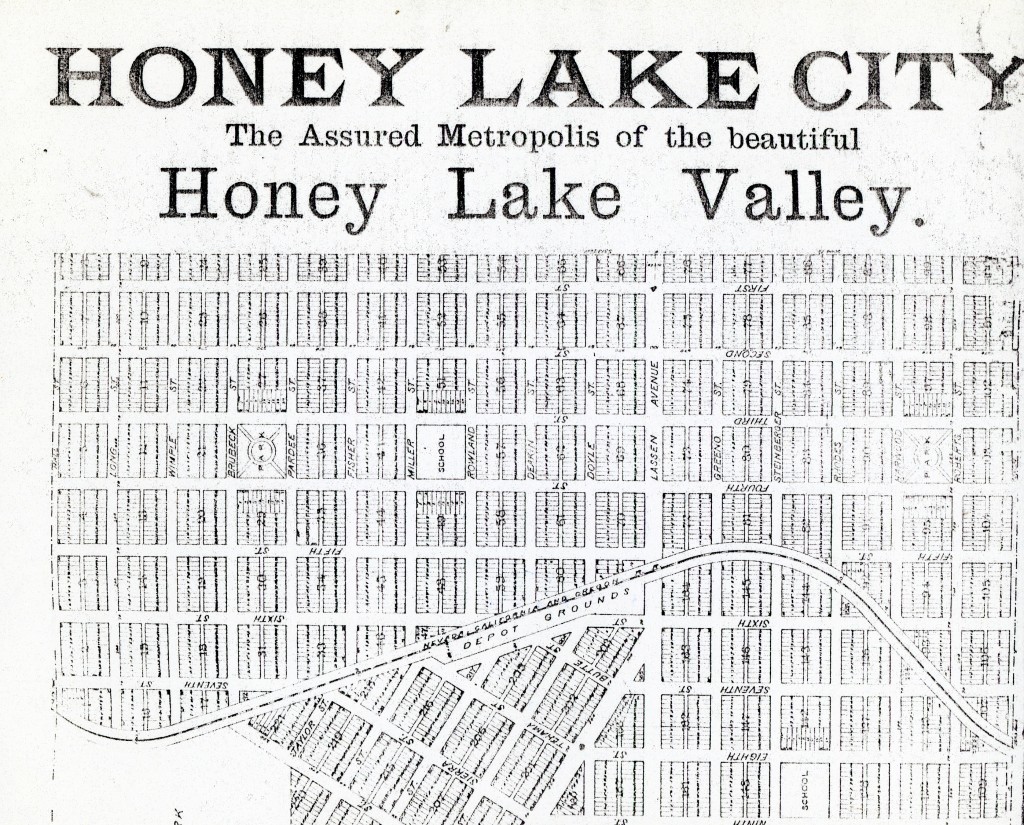
Abandoned townsites are a matter of there own. There have been speculators to revive the same to make a quick buck. The town of Flanigan, in eastern Honey Lake Valley, was a shining example. Some Reno realtors purchased the majority of the vacant town lots. This venture happened in the early 1980s, but never got quite off the ground. It was their intention to donate lots to such celebrities as John Wayne and Clint Eastwood. They would then advertise to prospective buyers, that could be neighbors to these famous personalities. These novelty lots would be priced at around $200 to $300. They had not anticipated a federal law that put an end of their enterprise. This was the Interstate Land Sales Full Disclosure Act of 1968. The law mandated improvements such water, streets, sewers, utilities, etc would be required for any lot sold for over $100, and that it meets the criteria of the Department of Housing and Urban Development. End of story.

Subscribe

Sunny California Snow Surprises

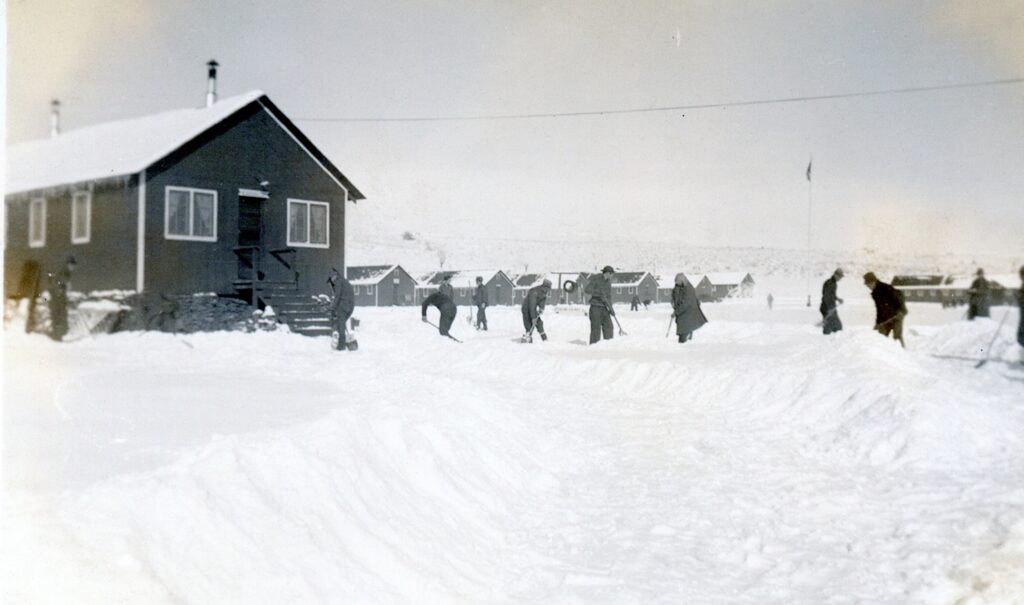
Secret Valley CCC Camp, January, 1937–C.H. Bennett Collection

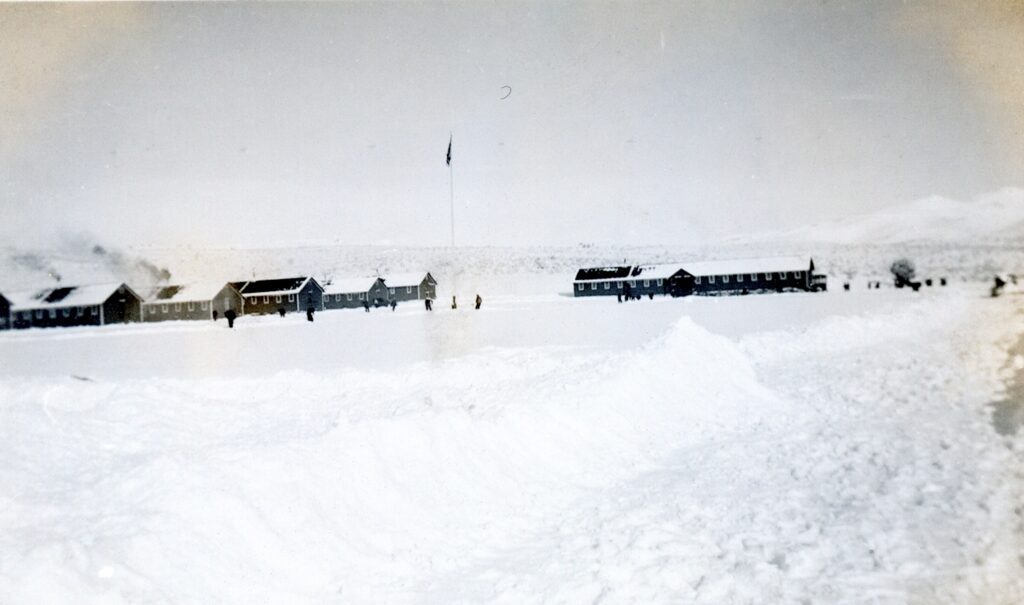
“If you have a yen to go to California, land of sunshine and flowers, take a look at these two pix of Co. 740, Litchfield, Calif., camp, and see that snow thrives there as well. Not a light snow that disappears beneath the sun’s first rays, but a heavy snow that lasts and has to be piled, shoveled and plowed. Men from Missouri were shown all this snow and now they are sorry that they were skeptical.—Charles Bennett reporting. Happy Days, January 23, 1937”  The reference to Company 740 was the CCC camp at Secret Valley, not known for heavy snowfall.

Secret Valley CCC Camp—C.H. Bennett Collection

Personally, I liked Bennett’s commentary. When I traveled to Minnesota to research the T.B. Walker papers, I also spent time visiting with my Dad’s numerous cousins. Of course, many of them, had this preconceived notion that since I am from California, in their mind it is all palm trees and sunny beaches and that it does not snow in California. With some cousins I stated I was from Susanville, Nevada not far from Reno, which then I endured a deluge of questions about gambling.

Another trait they shared, was they were clueless how large California is. One cousin mentioned that on some Sunday afternoon I should stop by and meet a cousin who resides in Ventura. I just politely nodded my head and was not going to attempt to explain how far that was from Susanville. This was after I made an excursion to Wilmar, Minnesota, about 45 miles distant from where I was staying, and some thought that was a major trip. I had tried to explain where I live 45 miles does not get you anywhere.

Donate

Chaos & Cooperatives

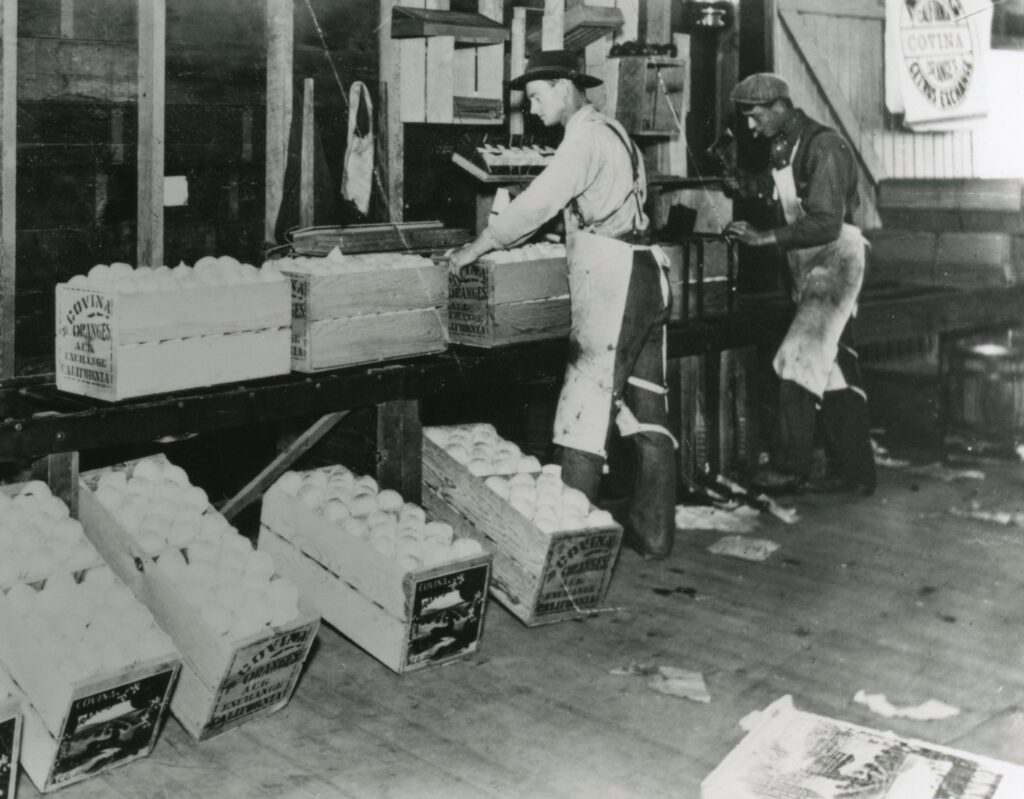
Covina orange packinghouse—Sunkist

Last week we delved into the Wolfskill family’s influence on the citrus industry. By the 1880s, in one way it was flourishing and in others floundering. The growers were producing great quantities of fruit. That fruit was in great demand back east. The development of additional transcontinental railroad lines provided access. Refrigerated railroad cars delivered the fruit in good condition. The problem was actually selling the fruit!

Haphazard distribution, unscrupulous agents and disastrous prices were threatening growers’ livelihoods. Brokers, upon whom the growers were dependent, worked on a commission basis with agents in the East. Growers paid a handling fee of fifty  cents a box—whether or not the oranges sold. They had no control over where the fruit was sent. As a result, some markets were flooded with citrus while others left waiting. It was a marketing nightmare.

Cooperatives provided the answer. Several small groups of growers banded together to market their fruit. Some, like Claremont Fruit Growers Association, did their own marketing. Others, like Pachappa Orange Growers Association, pooled their fruit instead of competing individually.

The financial depression of 1893 forced these growers’ associations to meet and discuss how they could work together to save their industry and to agree on a uniform marketing strategy. This was no easy task. They were, after all, competitors. Initially, they could not even agree on a meeting place, but finally settled on Los Angeles. In the the end it was successful.

The foundation was laid to stabilize the Southern California citrus industry. On August 29, 1893, a regional marketing cooperative was formed combining seven organizations into the Southern California Fruit Growers Exchange. It evolved to accept lemon growers, and citrus growers to the north to become the California Fruit Growers Exchange to reflect its broader membership.

In 1907, the Exchange created  a subsidiary cooperative, Fruit Growers Supply Company. Fruit Growers, is a purchasing  co-op to supply member growers to buy bulk supplies from fertilizers to nails, then needed for wooden boxes. Since only members of the Exchange   reaped the benefit of Fruit Growers, was an enticement for other growers to join the Exchange.

Next Week: One More Hurdle: A Brand New Name

Donate


Lassen County’s First Newspaper

The 1878 staff of the Lassen Advocate

The first bona fide newspaper the Sage Brush made its debut on the streets of Susanville on July 15, 1865. This was a substantial undertaking since Lassen County may have had barely a thousand residents. It should be noted that the County of Lassen subsidized the publication at $100 a month until it was able to sustain it on its own.

It was a typical rural press newspaper. It was four pages in size, published weekly. A Washington hand press was used, and the type set by hand.

The newspaper’s founder, A.C. Longmore remained at the helm until August 10, 1867 when he sold it to A.T. Bruce. Bruce’s ownership was short-lived and sold the paper in the fall to John C. Partridge.  Partridge changed the name to the Lassen Sage Brush. Yet, besides operating  the newspaper, he had many other interests. He spent five years as a U.S. Deputy Surveyor and did many of initial Government Land Office surveys of northern Lassen County, as well as Modoc County. Because his work as a surveyor required him to be away for long periods of time, he sold a half interest in the newspaper to George Pierce. It did not work out well, by June 3, 1871, Partridge was once again sole proprietor. In March 1872, he brought in another partner, D.C. Slater, who also happened to be his brother-in-law. More changes were on the horizon when on January 4, 1873,  displayed an entirely new format. Not only that, but a new name as well—The Lassen Advocate. The Advocate would chronicle the news of the region until 1987 when it closed due to bankruptcy.

Support