Category Archives: History

The Original Antelope Grade

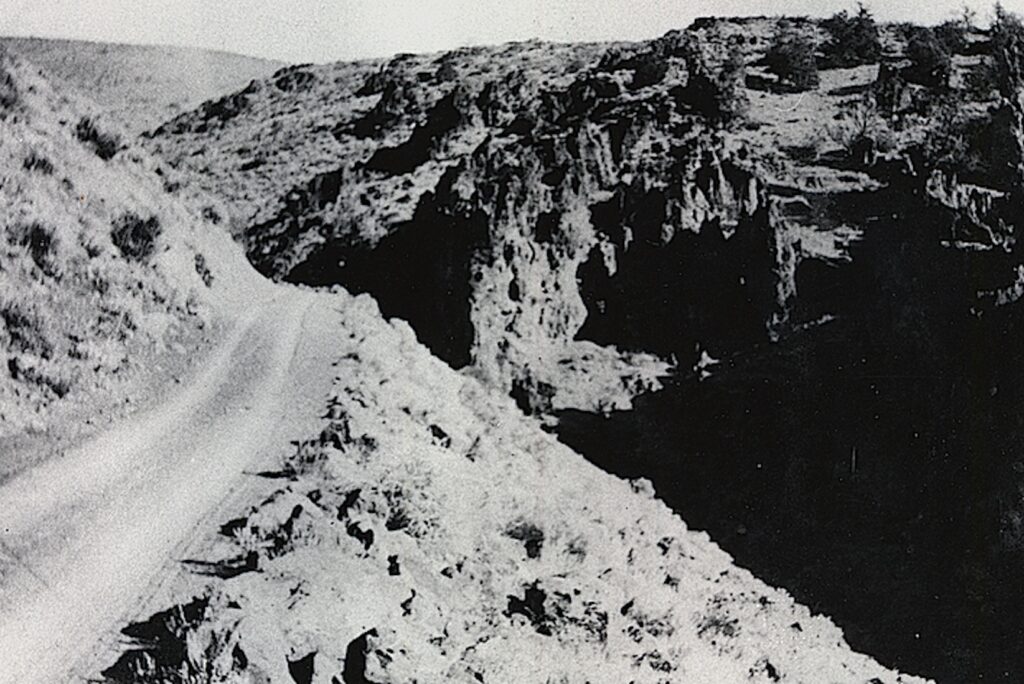
Antelope Grade, 1921–Lola Tanner

Confusion happens, Since, many topics,I know so well, I can omit information, not intentionally. During the Ask Tim segment  the issue of Antelope Grade was a prime example. What I wrote about last fall was the construction of the grade during the 1940s, the road we know today. What I neglected was information about the original grade. which I will now correct that matter.

In 1867, a crude wagon road was constructed over Antelope. It should be noted prior to then, and even afterwards the preferred route north was via Rice Canyon Road. With the discovery of gold at Hayden Hill and the increased settlement of Big Valley the travelling public clamored for improvements to the grade. In the fall of 1878, the Lassen County Board of Supervisors sent a survey crew to plot a new road over the mountain. The county estimated the cost of the new grade at $1,000. Of that amount individuals had already contributed $300 to the cause. The county budgeted $300. The county stated the balance would have to come from donations. A campaign to raise funds from Big Valley and Hayden Hill provided the balance. By the summer of 1879, most of the work was completed, with volunteer labor making up the workforce.

Tim
Tuesday Tidbit—Susanville, 1913

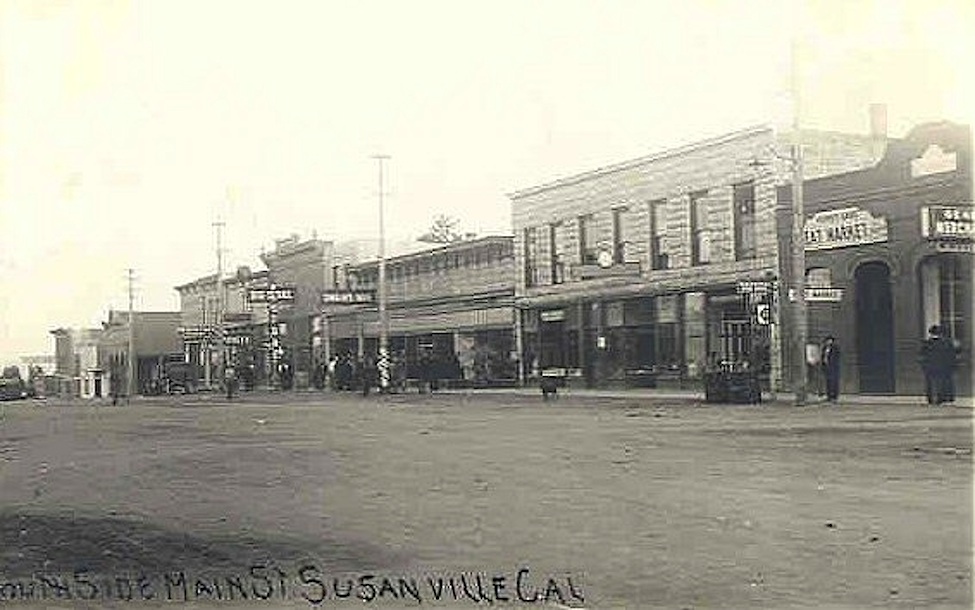
South Side, 700 Block, Main Street, Susanville

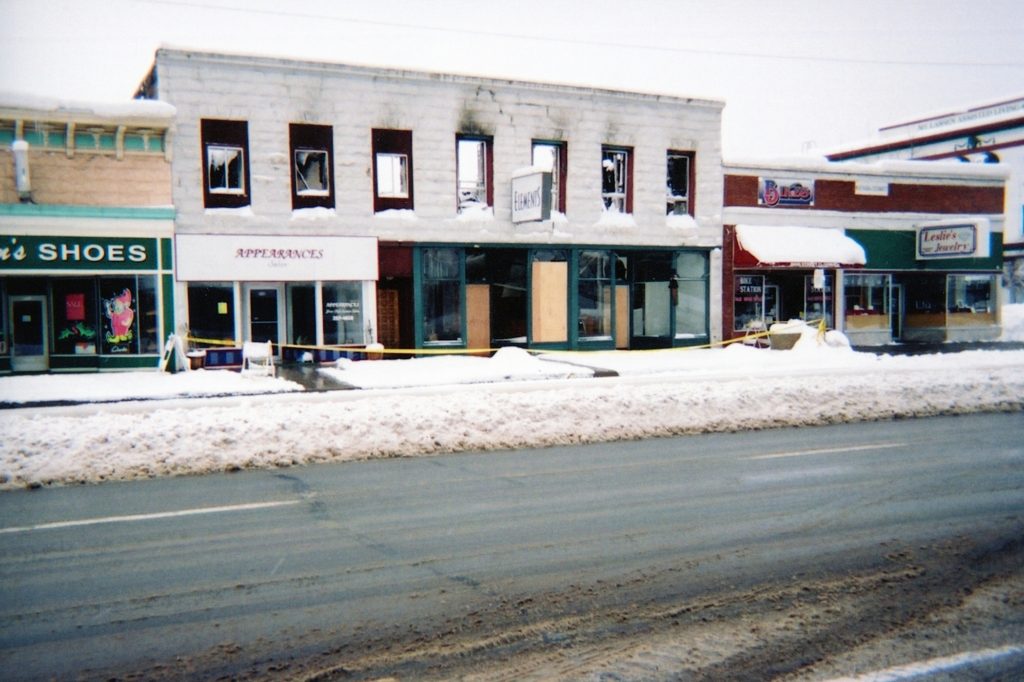
Last week, I went through the process to upload newly scanned photographs. I came across this particular one, of the south side of the 700 block Main Street, Susanville, which was not scheduled for any story. A lot of changes have occurred. The former Spalding Drug building was destroyed by fire in 2005. At the far end of the block, the Pioneer, Grand Cafe and what was formerly known as the State do not appear in this photograph since those changes occurred in 1920 and 1934.

The former Spalding Drug building, i.e, 710, 712 Main Street, Susanville, January 7, 2005.

Tim


The Johnston House Changes Hands

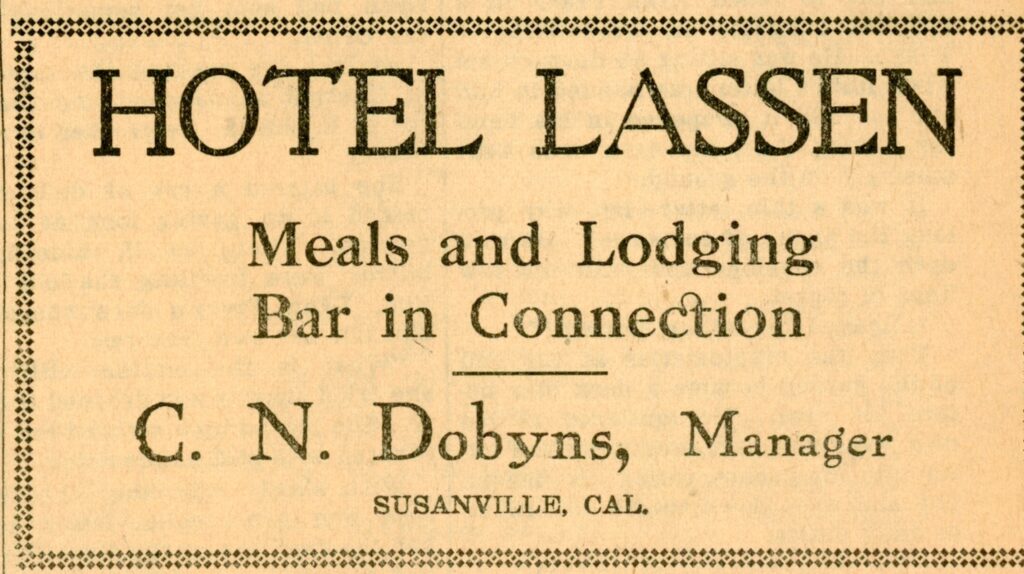
Hotel Lassen Advertisement Westwood Independent, 1918

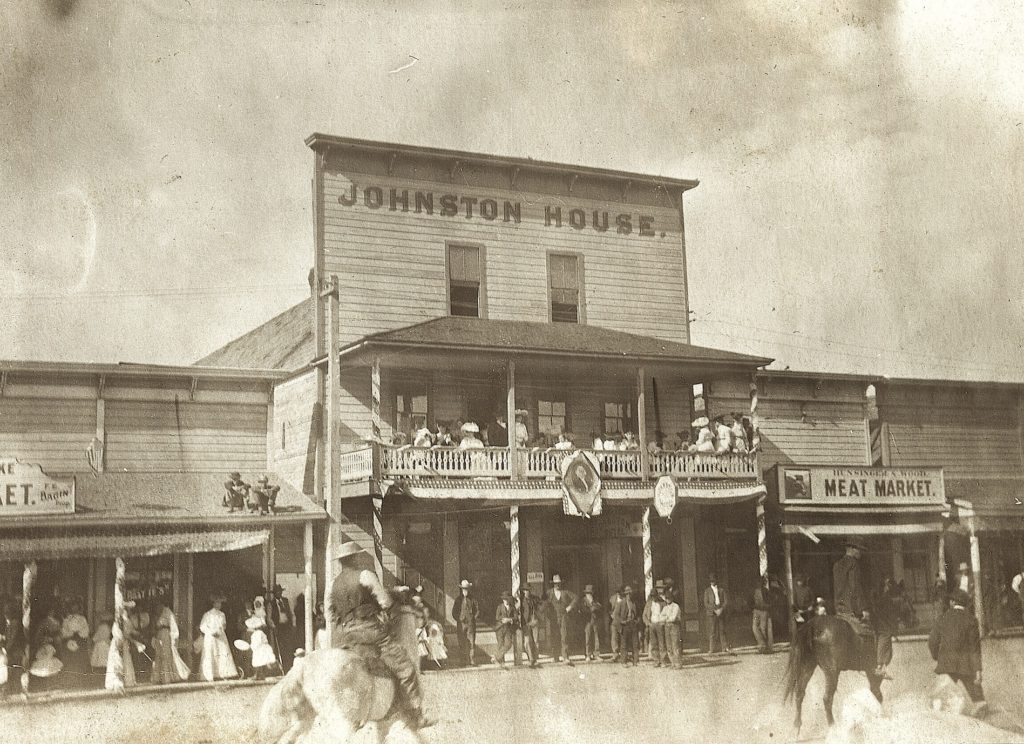
Before there was a Hotel Mt. Lassen there was the Hotel Lassen. It was originally known as the Johnston House. For a time, it was the town’s foremost hotel. On November 1, 1912, a change of ownership and name change occurred when long time Susanville resident Henry C. Dobyns acquired the property. At that time, he changed the name to Hotel Lassen. After he passed away in 1916, his son Charles took over the operation. The hotel was destroyed by fire in 1919.

Dobyns purchased the hotel from Thomas H. Long. In 1914, Long had a two-story stone building constructed as the Star Hotel at the corner of Main and North Gay Streets—only a half block away from his former establishment. For many years that structure was known as the “Telephone building” since the local telephone company was located there for many years.

The Johnston House, circa 1909. Courtesy of Betty Barry Deal

Tim

Early Day Hospital Funding

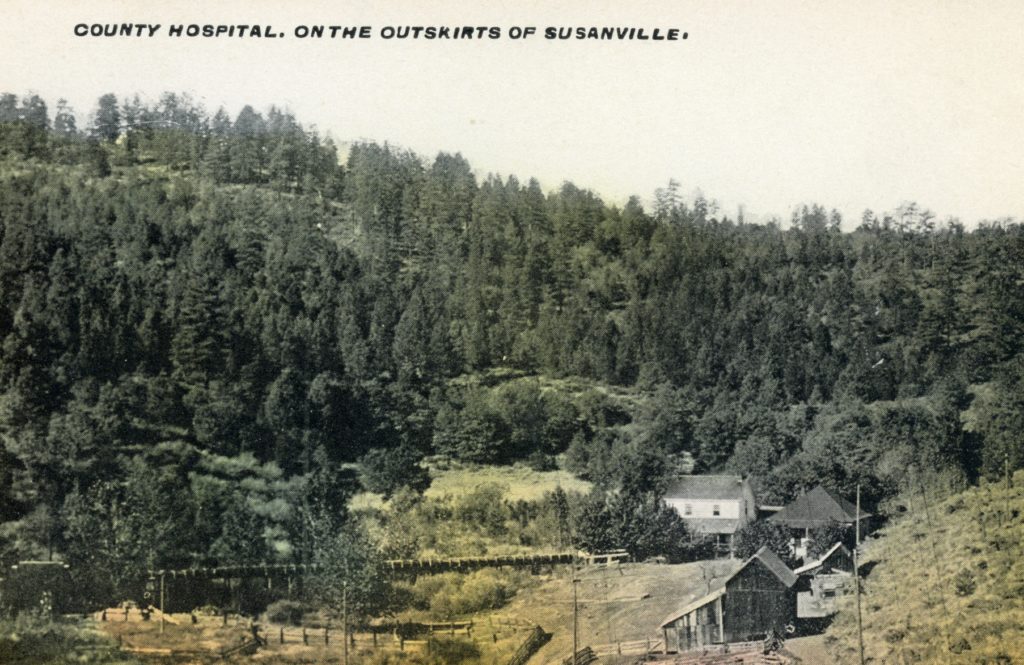
The original Lassen County Hospital.

In 1883, Lassen County built its first hospital, along the Susan River, just west of Susanville for $630. The next obstacle for the county to contend with, how to fund its operations. The county levied an annual poll tax. The ordinance quite simple.

“That there shall be levied and collected for the maintenance of the County Hospital for each male inhabitant of the County Of Lassen, over twenty-one and under sixty years of age, except pauper, insane persons and Indians not taxed, a Hospital poll tax of one dollar.”

It is interesting to note that the payment be made to the County Assessor. Those who were delinquent it was the duty of County Tax Collector to seek payment.

Tim

St. Francis Hotel Makeover

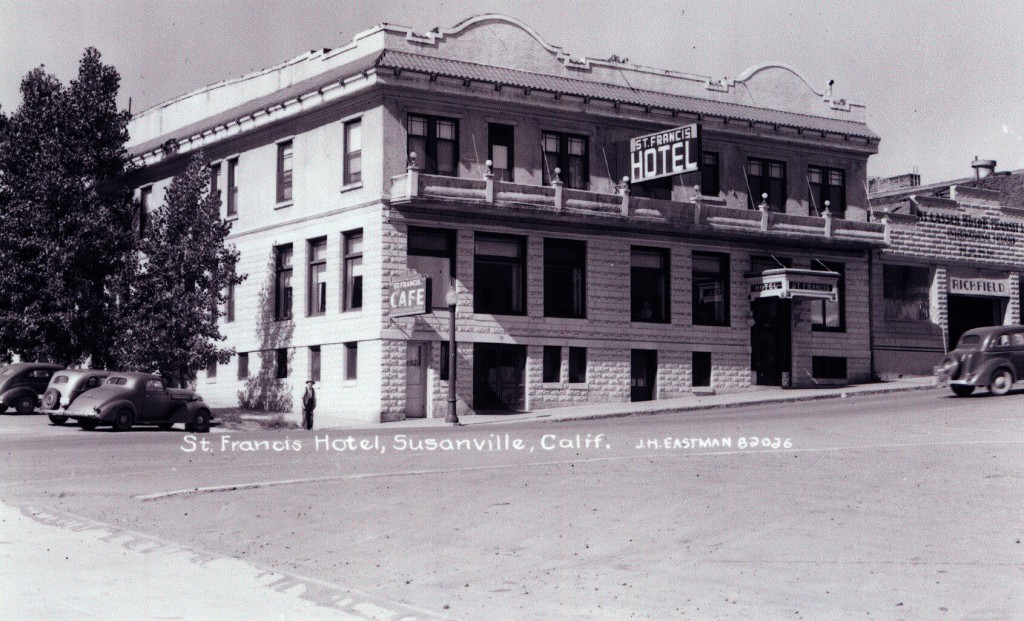
Saint Francis Hotel, circa 1940.

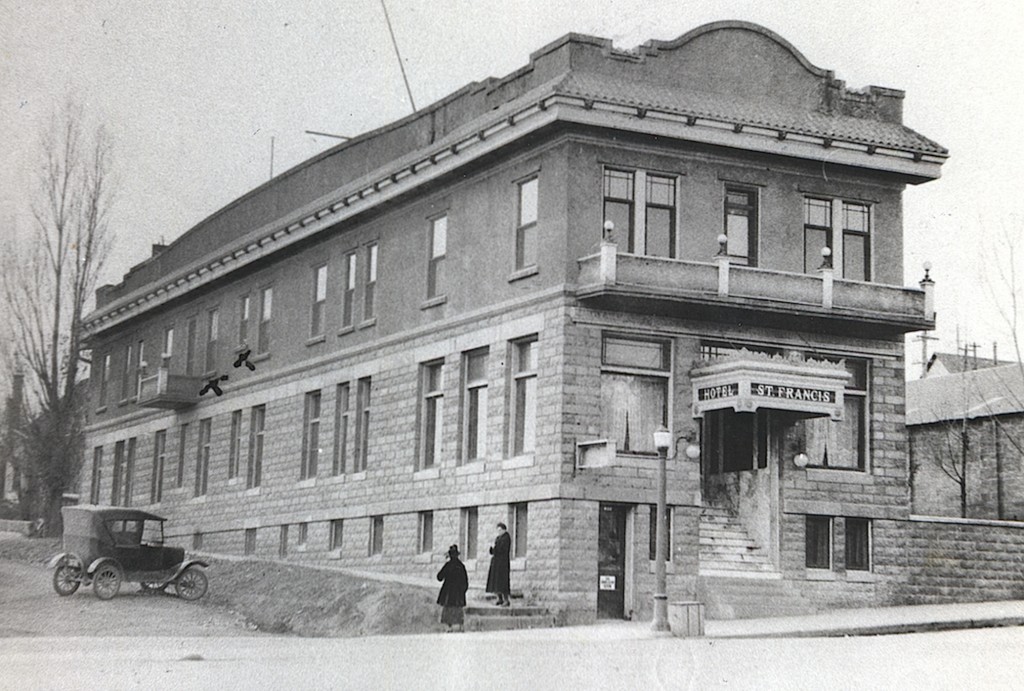
Yesterday’s post was about the early origins of the St. Francis Hotel. Some one wanted to know about the west addition. Here is that information below, as well as what the building originally looked like for comparison.

St. Francis Hotel, circa 1919. Courtesy of Art Almeda

During the 1920s, Susanville’s population nearly tripled. Hotel accommodations were scarce, especially after the Emerson Hotel was destroyed in a 1915. In August 1925, the St. Francis Hotel announced its intention to construct a three-story addition. While it added only an additional nine rooms, it allowed for the lobby to be enlarged, as well as the restaurant facilities. The $25,000 project was constructed by the firm Woodward & Grebe, It should be noted that noted Nevada architect, Frederick deLonghamps designed the original hotel, as well as the addition.

Never miss a story, click here

Susanville’s St. Francis Hotel

St. Francis Hotel, circa 1919. Courtesy of Art Almeda

Unfortunately, this historic hotel has been shuttered for a number of years. Who knows what its future fate may be. This about the origins of the hotel.

In 1907, Franceska Murrer Neuhaus, with her husband, Ben, retired from their Willow Creek Valley ranch and moved to Susanville. Not to be idle, she  kept busy investing in several commercial enterprises. In 1913, flush with money from the sale of the ranch, to her son, Edward Murrer, she had one more venture to undertake.  At this time, she hired Nevada architect Frederick deLongchamps to design a hotel at corner of Main and Union Streets.* She named her new enterprise the St. Francis Hotel.  Franceska was well versed in the innkeeping business. For years, the Neuhaus home in Willow Creek was well known for its hospitality to accommodate travelers. Her daughter, Rose Bagin, operated hotels at Hayden Hill and Susanville. Rose’s home in Susanville happened to be conveniently located behind the St. Francis, and her elaborate flower garden complimented the hotel. When the St. Francis opened its doors in 1914, Franceska’s son and daughter-in-law, Bill and Flora Neuhaus managed it.

*deLongchamps first Susanville building was the Lassen County Jail completed in 1911.

Subscribe

Susanville’s First City Hall

The July 4, 1906 parade with the city/fire hall in the background—Lola L. Tanner

In 1884, the Lassen County Board of Supervisors created the Susanville Fire District—it had authority to levy tax assessment for fire protection.  In the course of time, the district needed a home to not only store its various equipment—hose cart and hoses—but a place to meet and for the volunteers to train. In the fall of 1891 the district advertised for proposals for a fire hall and received three bids. On November 19, 1891, the district accepted James P. Keener’s offer of a lot and to build a hall on North Lassen Street. To adorn the fire hall, Keener constructed a 50-foot-bell tower. It was now the town’s tallest landmark. Keener specifically constructed it that way, so when the bell was rung it could be heard throughout the town.

In 1900, when the City of Susanville incorporated, it became the town’s combination city/fire hall. It is rather ironic the building was destroyed by fire in 1921. On a final note, I have never been able to locate a good photograph of the building.

Subscribe

The Sunkist Brand

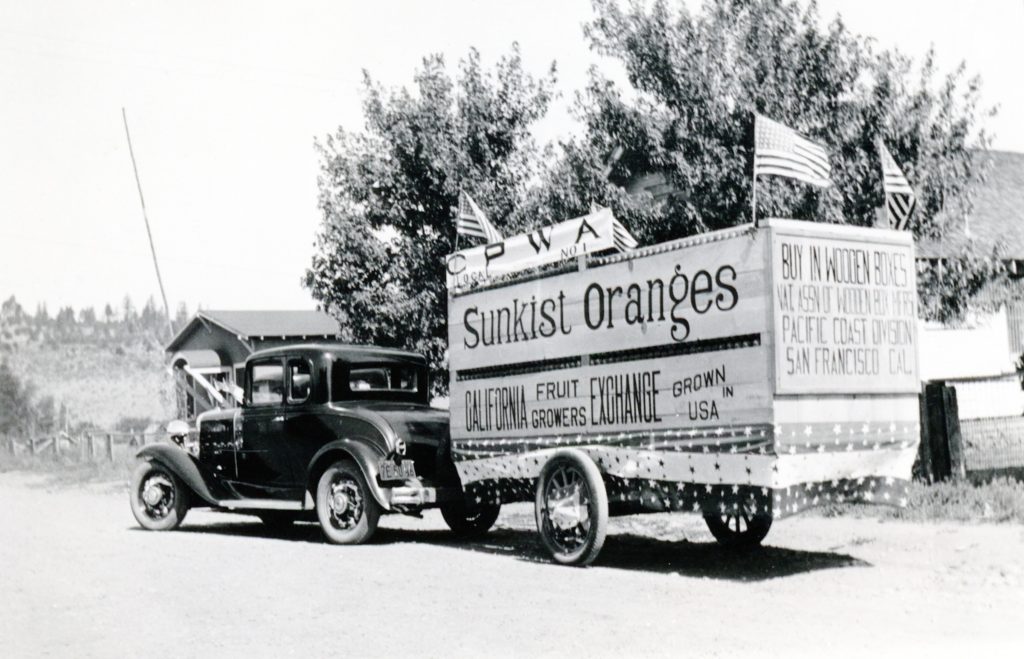
A 1937 Lassen County Fair Parade Entry, featuring an oversized wooden box.

While the California Fruit Growers Exchange over came many challenges there were more hurdles to conquer. Their marketing  efforts were effective, there was a problem, as non-citrus grower members benefited at no cost.

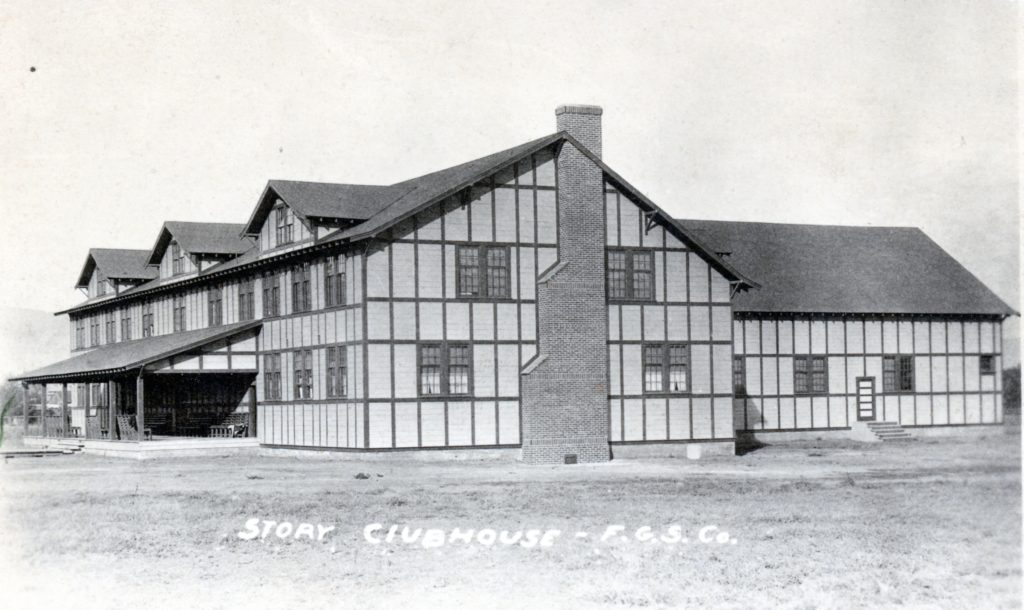
Francis Q. Story, a transplanted Boston wool merchant was elected as the Exchange’s president in 1904. Story understood the power of advertising, and it was advertising that transformed citrus from a luxury item into a household staple.

Fruit Growers Story Club, Susanville, 1924. Courtesy of Lola L. Tanner

What the Exchange needed to do was how to distinguish its fruit from that of its competitors—competitors who were benefiting from the Exchange’s advertising at no cost to them. A trademark or brand name was the answer.

In July 1907, R.C. Brandon of the Exchange’s Los Angeles advertising agency Lord & Thomas suggested the name SUNKISSED. On August 30th, an Exchange agent in Chicago, taking a bit of poetic license, changed the name to Sunkist. At the Exchange’s April 1908 meeting the board adopted Sunkist as its trademark, mandating that only the highest-grade oranges would bear the Sunkist name.

The next problem was how to mark them. Initially oranges were individually wrapped, the tissue paper for the highest-grade oranges was printed with the Sunkist name. In 1926, a machine was developed to stamp the name directly onto the fruit. Today, its placed there on a sticker.

These very successful advertising campaigns were also very expensive. From 1908 to 1951 the California Fruit Growers Exchange spent $61 million to advertise the Sunkist brand. The cost, however, was worth it. So successful were the campaigns that the name Sunkist became synonymous with citrus. On February 8, 1951 the California Fruit Growers Exchange officially changed its name to Sunkist Growers to reflect the famous trademark.

Donate

Did Old Man Winter Retire?

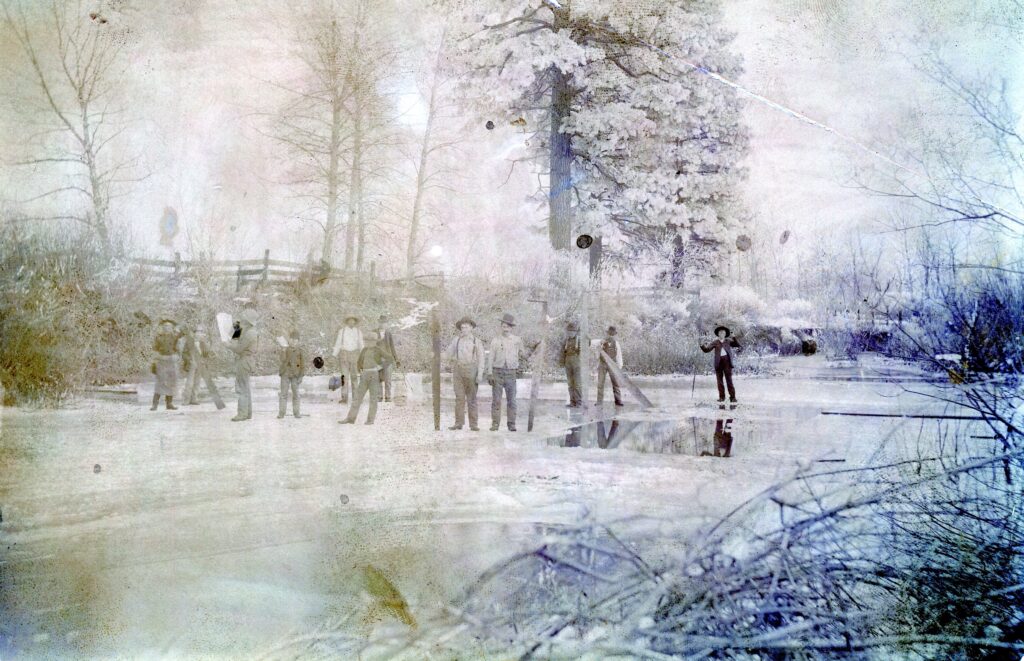
Ice Harvesting on the Susan River, early 1900s—Philip S. Hall

Yesterday’s post was about the Westwood frozen millpond when temperatures dropped to -30. Below zero temperatures used to occur on a regular basis during the winter months in this part of California. Over a century ago, it was an important fact of life, as the frigid temperatures were needed. The following is from an old post that explains why:

Ice Harvesting
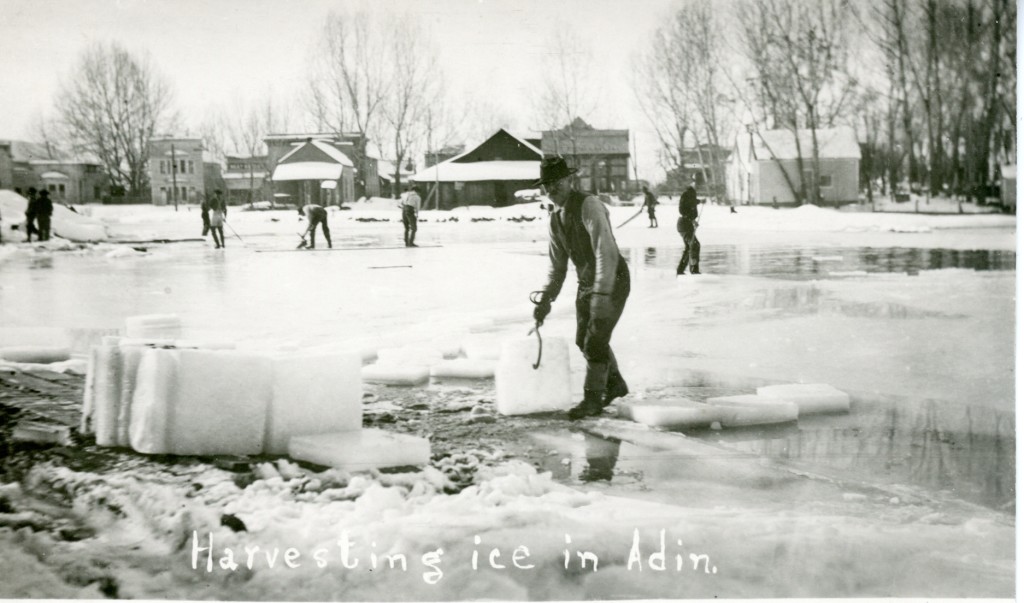
Ice harvesting at Adin, 1911

Way before the day of refrigeration, in colder climates ice was harvested, whether from a stream, pond or lake. Though by the 1920s, the practice slowly began to fade away with the advent of refrigeration.  Locally, ice was harvested from the Susan River, and two focal points were the Bremner dam in the Susan River canyon and the other at Dawson dam near Johnstonville that provided power for the Lassen Flour Mill. Roy Sifford, born in 1893 and raised in Susanville, recounts in his memoirs that in 1910: “I hauled ice from the ponds at Johnstonville to the stores and bars in Susanville–$2.00 a load delivered. In twelve hours I could haul four loads receiving $8.00 a day, paid in cash!”

Tim

It Was Cold in 1949

Dynamiting the Westwood millpond, January 27, 1949. Courtesy of Fruit Growers Supply Company

In January 1949, the temperatures plummeted to nearly thirty degrees below zero at Westwood. The millpond there froze. When Red River designed the facility, they placed piping from the powerhouse that forced steam air directly into the millpond near the sawmill. This system was no match for Mother Nature. To keep the mill operating it was necessary to use dynamite to blast loose the logs in the millpond. Continue reading It Was Cold in 1949