By the 1870s, Swiss Italians, mainly from province of Ticino were migrating to Northeastern California. A majority of whom found a new home in Sierra Valley, yet there was for a time a spill over in the Honey Lake Valley.
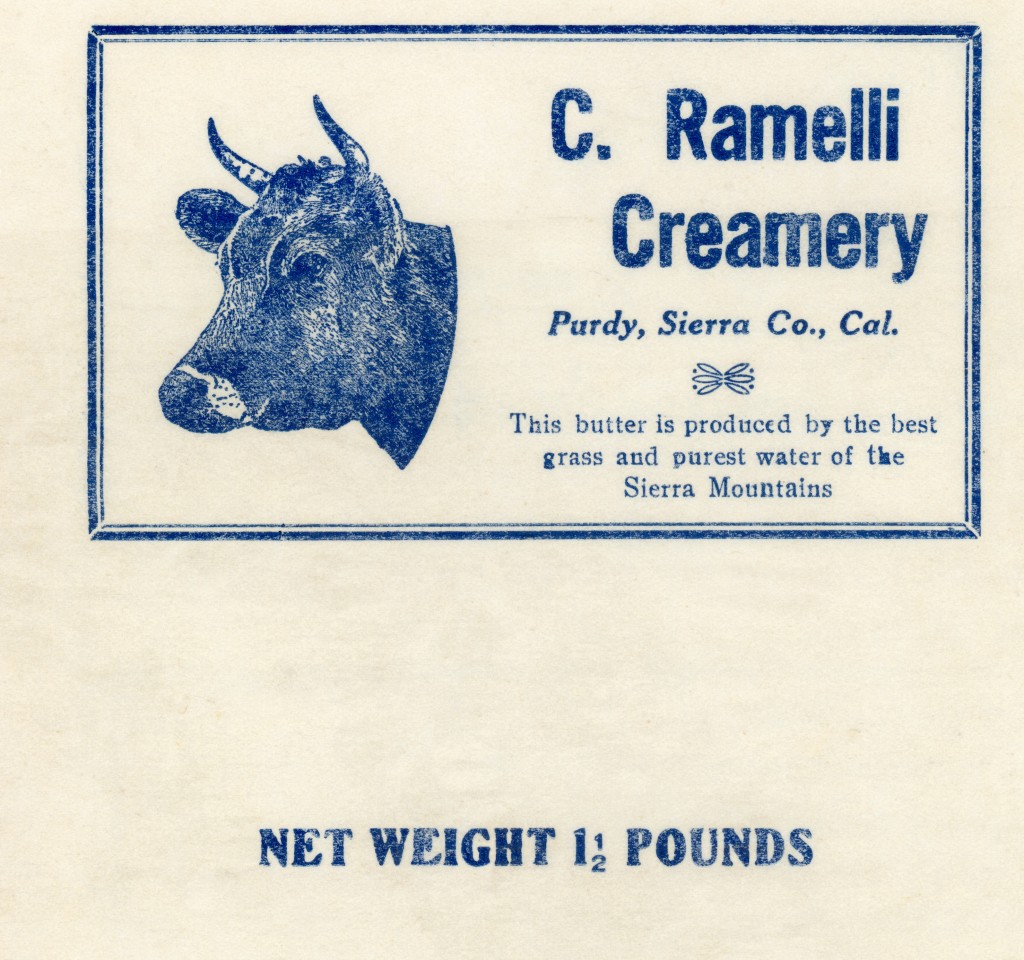
In 1887, Cesar A. Ramelli, was one of those migrants and he eventually located at Purdy, Long Valley, California. The area is best known to many as the region behind present day Bordertown, on the California-Nevada border. Rameilli established a dairy there. He later expanded and operated a second one at Bella Vista in the Truckee Meadows. With the assistance of his three sons, their dairy herd consisted of seventy-five cows. From that herd, butter and cheese were made. The cheese was made into blocks of 10, 20 to 25 pounds which was sold in the Reno stores.
Susanville’s first hotel, if you could call it such was Cutler Arnold’s story and half structure of hewn logs. For two years, beginning in the spring of 1857, it also housed the town’s only dining establishment, meals costing seventy-five cents.
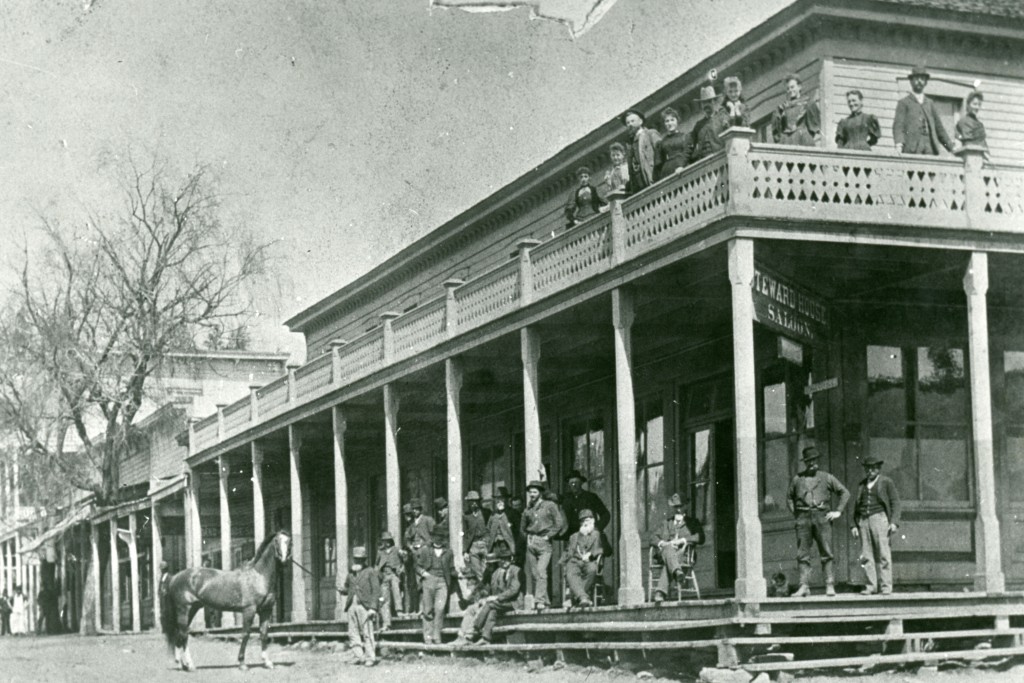
As the town progressed so did the accommodations. In 1860, Emanuel “Mike” Brannan built a two-story hotel on the northeast corner of Main and Lassen streets. It was a transitional period, as the days of log structures were being placed with wooden framed ones. Brannan operated the hotel for the next four years, and due to some financial problems lost the hotel. Just as the Brannan House had replaced Arnold’s, Brannan’s was replaced by the superior Steward House in 1864.
Susanville’s Stewart House, 1881. It sometimes was used as a hospital. Courtesy of Dallas & Joyce Snider
The Brannan House slowly faded away entirely. Its second floor was converted into lodge hall for the Oddfellows. The first floor was used for a variety purposes including that of the post office and the government land office. In 1880, it was torn down and replaced by a new Oddfellows Hall, and that building was replaced with the current structure built in 1896..
In June 1927, the Lassen Advocate reported how “Fort Weatherlow” was threatened by fire. The reporter new to the area, was not aware that while the historic structure located on Weatherlow Street, was known as Roop’s Fort.
Fast forward nearly a century later, though Susanville has no newspapers, there are some online news outlets. Some of these outlets are staffed by people new to the area. No problem with that. However, when they occasionally come up with new names for established landmarks, that make me cringe.
The Red River Lumber Company at its Westwood operation developed its own fire trains used to fight forest fires. Of course, Red River had its extensive railroad logging network. However, if Red River wanted to access the Southern Pacific’s railroad tracks between Westwood and Susanville there were protocols set by Southern Pacific. In 1936, a Southern Pacific Bulletin stated ”The fire train of the Red River Lumber Company may make the following speeds: Between Mason and Westwood Junction, 35 MPH’ Between Westwood Junction and Susanville, 25 MPH; and through all tunnels, 10 MPH.” I do not know what type of restrictions the Western Pacific imposed.
It being Valentine’s Day, I thought I share something a bit different. In the way back yonder, how real property was exchanged, was done in a variety of ways. During the late 1890s and through the early 1900s, transactions between spouses carried the clause “in consideration of love and affection,” to deed real property, which in most instances was the title to the family residence, as seen in the illustration above.
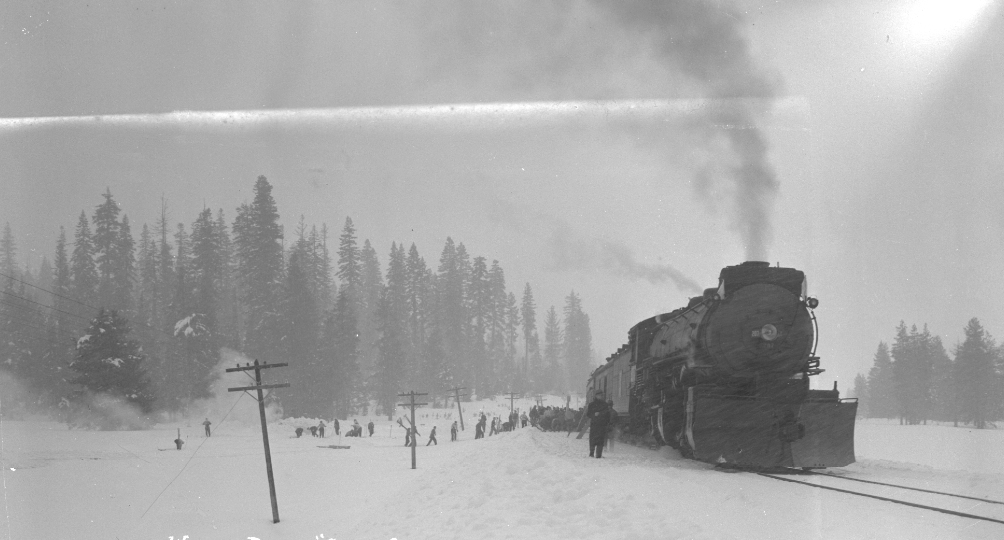
The Western Pacific Railroad’s Highline also referred to as the Northern California Extension went from Keddie, Plumas County north to Bieber, Lassen County where it connected with the Great Northern Railroad. A major disappointment to many was that regular passenger service was never instituted. Continue reading Western Pacific’s Snowball Special→
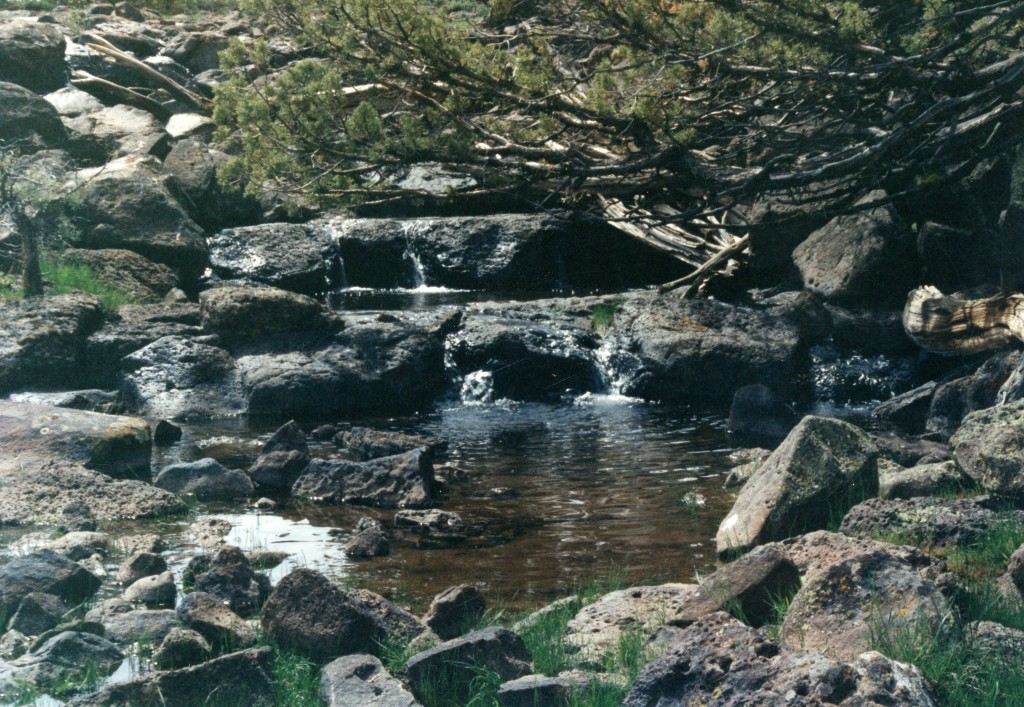
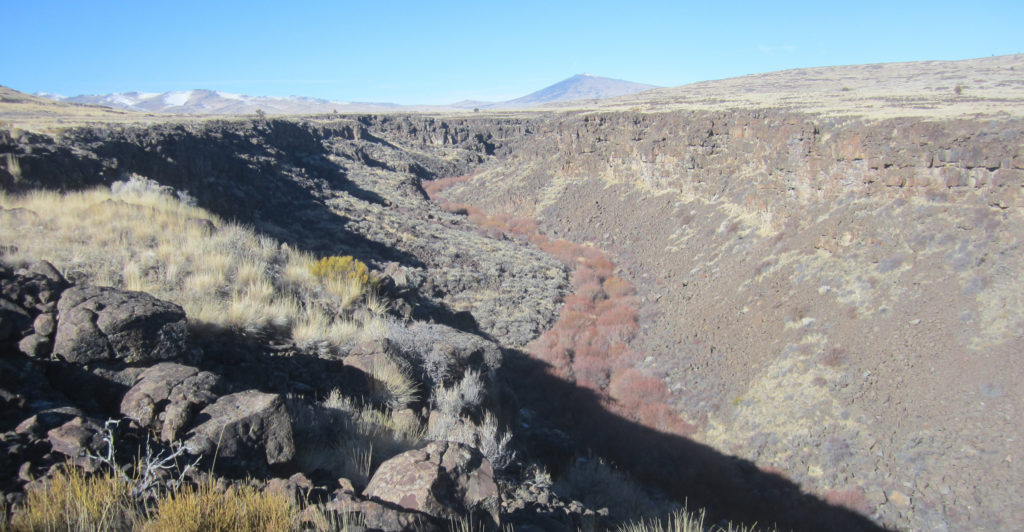
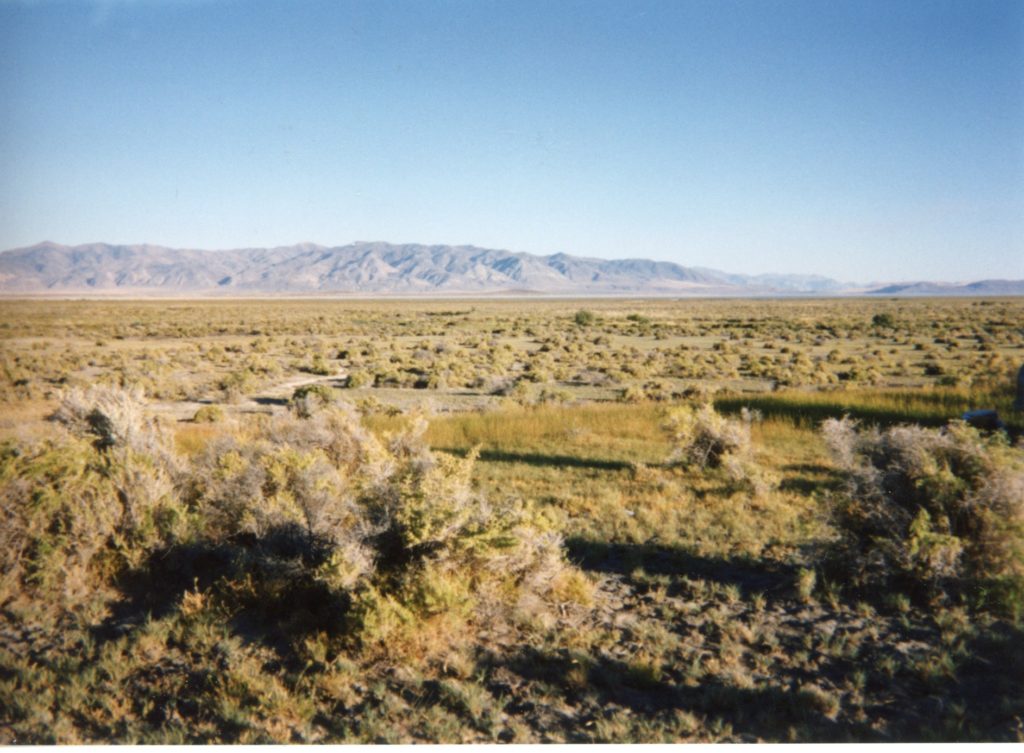
Smoke Creek is a desert stream that is approximately twenty-six miles in length with an equal portion in California and Nevada. Its headwaters is Big Springs at the southern base of Observation Mountain. The creek descends into a small canyon that early day explorer J. Goldsborough Bruff in 1850 dubbed as Hierioglyphic Creek, due to the numerous petroglyphs on the canyon walls. From there the stream enters a much larger deeper canyon.
Smoke Creek Canyon, January 2020—Greg Johnso
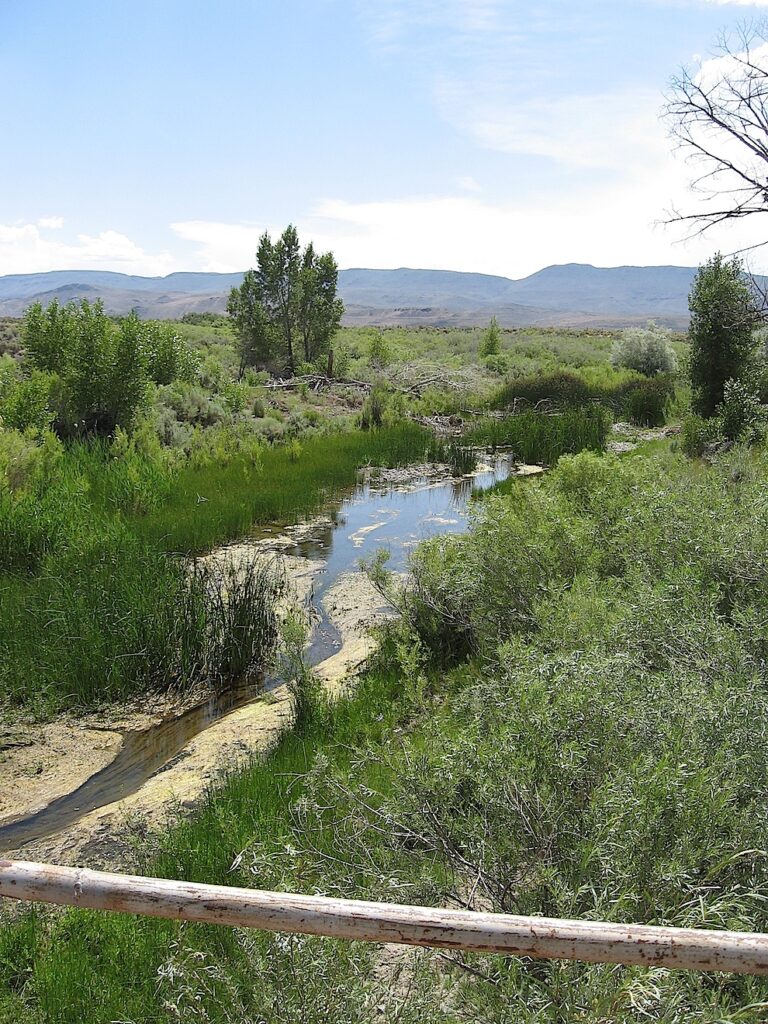
On the Nevada side, the lower end of the creek was a welcomed sight for weary travelers of the 1850s and 1860s on the Nobles Emigrant Trail. The water flow decreases the closer one gets to the Smoke Creek Desert.
June 26, 2023Smoke Creek Golf Course, 1996
The terminus of the creek varies as to the kind of water year. It can spread over the scrub brush terrain. I can attest since I played at a golf tourney there over Labor Day Weekend. One of the course’s many hazards were the mosquitos, and they were a hungry lot.
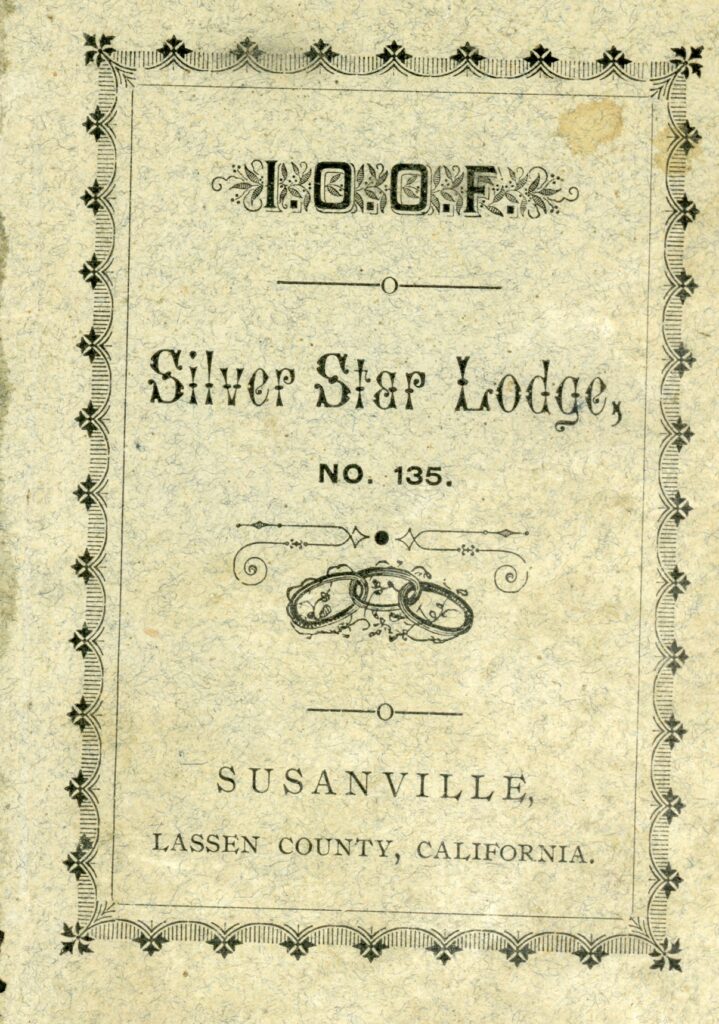
Since I am repository of a variety items, lately I have been rummaging through the local Clampers file, i.e. the Neversweats Chapter #1863, E Clampus Vitus. In 1990, they proposed to place a plaque at the Susanville Oddfellows Building located at 701 Main Street. For whatever reasons it did not happen. However, they submitted price quote for the cost of a bronze plaque with the following wording:
”Organized in 1879, the Silver Star Lodge No. 135 of the Independent Order of Oddfellows, is one of Susanville’s oldest fraternal organizations. In that same year, the lodge purchased this property for $4,000. This structure built in 1896 was the first two-story red brick building constructed in Susanville. C.E. Clough, Architect & Contractor, Reno, Nevada.”
The proposed plaque had a dedication date of August 4, 1990. Fast forward to 2023, the local Oddfellows organization disbanded years ago. If any one happens to know what year it folded, let me know, so I can do an update. It should be duly the local Clampers chapter went by the wayside a long time ago.
A most interesting desert stream that flows through some very fascinating terrain. It was a welcome sight among early day travelers and still is today.
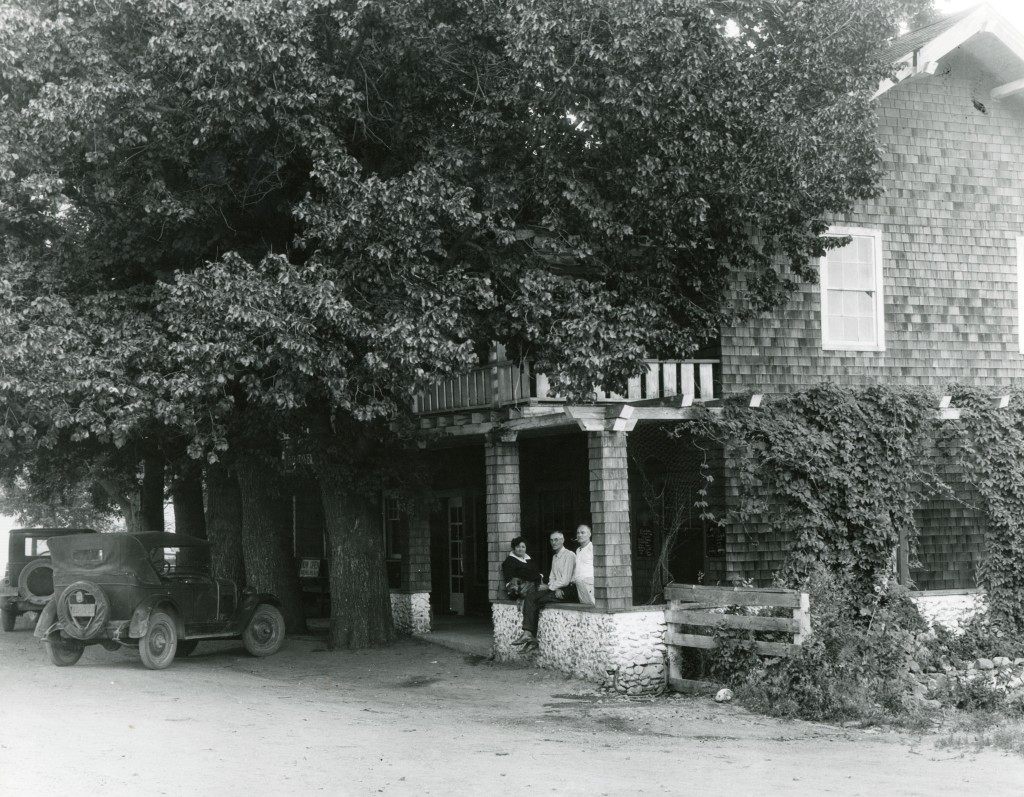
Diamond Mountain Inn as it appeared in the 1920s and was located next to the Masonic Hall. It was destroyed by a fire in 1931.
In 1913, the Lassen Weekly Mail published a special Railroad edition extolling all the virtues that Honey Lake Valley had to offer. In that same year B.R. Holmes purchased the Janesville Hotel. He renamed it the Diamond Mountain Inn. He made numerous improvements and placed wood shingles for the exterior.
The following is a description of the place that appeared in the Mail’s special edition:
”Situated at the foot of Diamond Mountain, in the beautiful and picturesque Honey Lake Valley this hotel offers every attraction that the tired and worn out city denizen can desire. Sparkling mountain water, direct from the snow clad peaks of old Diamond, pure as Nature itself, is piped throughout the hotel.
“Everything modern that goes to make for the comfort of guests is provided, and no better place in the state of California to spend the summer months. Fresh, crisp vegetables are served direct from the garden and purest milk and cream and other farm products will always be found on the table.
”In Janesville will be found some of the finest gardens in Honey Lake Valley and those belonging to the hotel are among the best. The Diamond Mountain Inn is not compelled to serve canned vegetables to its guests, neither does it supplies lay for days in commission houses and the baskets of green grocers.
The hotel is surrounded by a fine growth of old elms, which adds beauty and comfort of then hostelry.
“The Diamond Mountain Inn is the ideal headquarters for the sportsman. Game of all kinds abound in the nearby mountains. Deer may be found within easy distance and opening of every season finds sportsmen on hand. Wild fowl are plentiful and no difficulty getting the limit. Within a few miles my be found cold streams teaming with game mountain trout.”



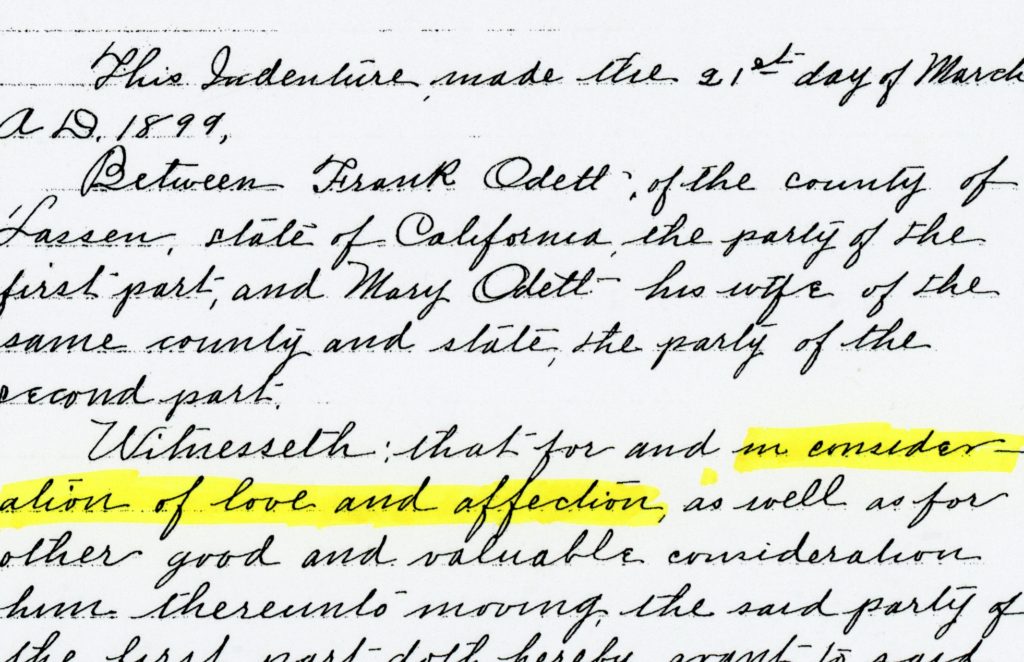 It being Valentine’s Day, I thought I share something a bit different. In the way back yonder, how real property was exchanged, was done in a variety of ways. During the late 1890s and through the early 1900s, transactions between spouses carried the clause “in consideration of love and affection,” to deed real property, which in most instances was the title to the family residence, as seen in the illustration above.