Category Archives: History

A Lassen Park Lost Mine Story

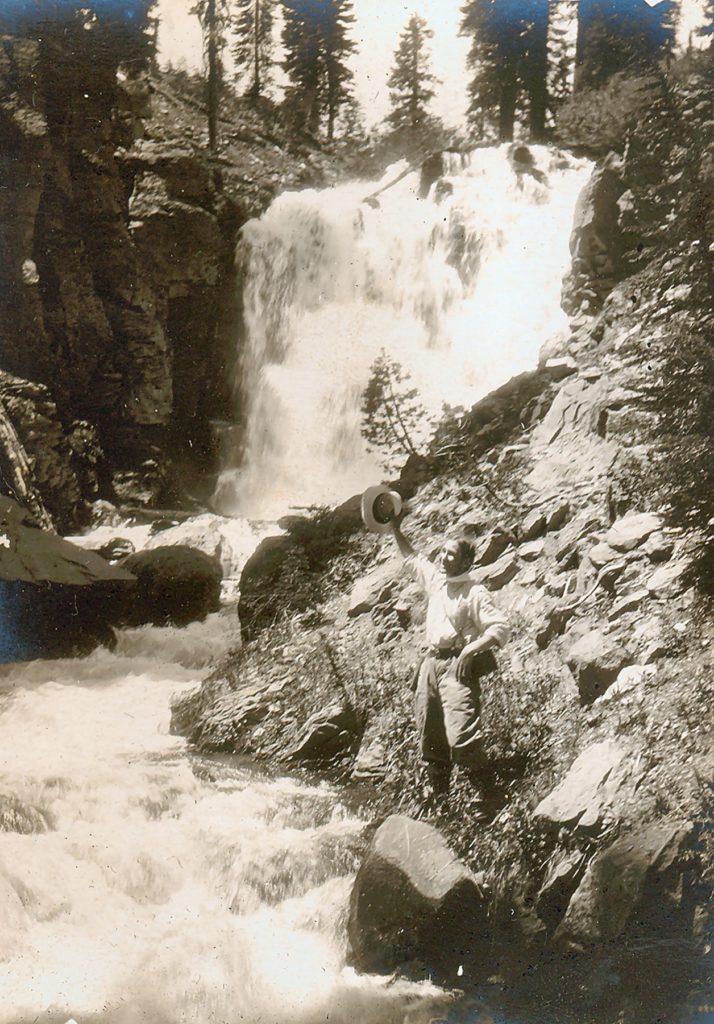
Kings Creek Falls, 1908–Sifford Collection

The American West is littered with lost gold mine stories. The Lassen Peak area was of no exception. In the early 1900s, Tom Ravenscroft had a ranch ten miles east of Susanville, and occasionally took in travelers. On one occasion a stranger stopped in and became ill during his stay. The Ravenscrofts nursed him, but to no avail; he died there. The stranger told Ravenscroft of a gold mine he had discovered in Kings Creek Valley, near Lassen Peak. There he made a dugout on the side of the mountain where he found the gold.  He extracted two or three sacks of ore that he sent to Salt Lake City to be assayed. To his amazement, it yielded nearly $300. When he left Kings Creek, he stored his rifle, cooking utensils and so on in the prospecting hole. He covered it with rock to make it look as natural as possible.

The following summer, Ravenscroft attempted to locate the mine. He stopped at Drakesbad to talk with Alex Sifford about various
localities. For some time Ravenscroft was elusive about what he
sought. He finally told Sifford the story, and Sifford was much more
responsive to Ravenscroft’s questions. Ravenscroft was intimidated by aspects of the region where it would be necessary to search to locate the mine, and he gave up.

Halls Flat CCC Camp. Courtesy of Hank Martinez

In the 1930s came a new breed of prospectors with the establishment of Civilian Conservation Corps Camps. In the summer of 1933, Frank Boghich, who worked at the Halls Flat CCC Camp east of the park, believed in the lost cabin mine legend. It was his contention that somewhere inside the park was a cache of a half million dollars worth of gold nuggets to be found, and he spent his free time in search of it.

Tim
Susanville Ranch Park’s Early History

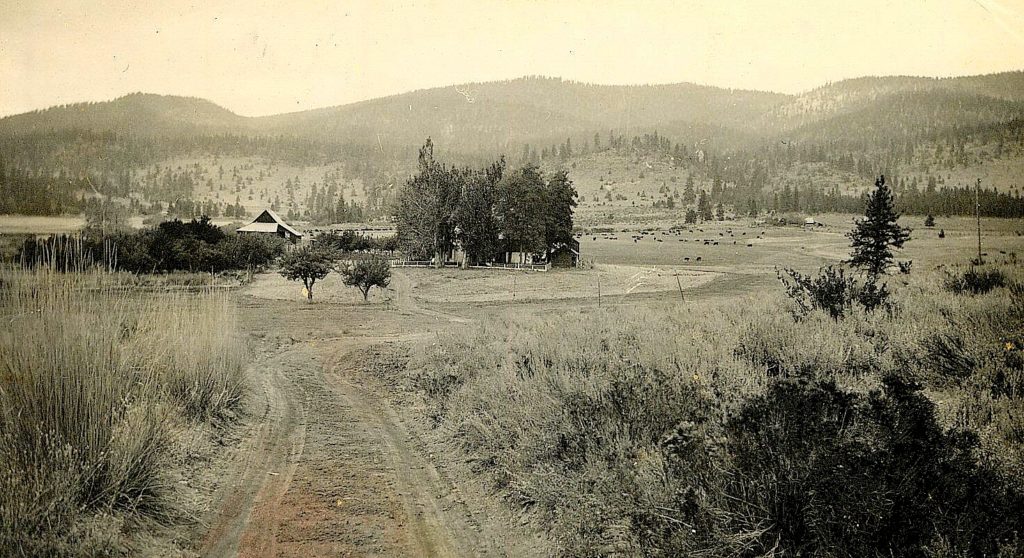
Known today as the Susanville Ranch Park, for many years it was the John T. Long Ranch.

Yesterday, we explored possible developments at Susanville Ranch Park. Today, we explore its agricultural history.

In November 1855, Moses Mason claimed this property and became the second person to file a land claim in the Honey Lake Valley. It is interesting to note that Peter Lassen & Company had located in the valley in June 1855, Lassen never filed a claim to his property. Who Mason was we may never know.

On September 12, 1856, William Weatherlow located on Mason’s abandoned claim and lived there until his death in 1864. William B. Long purchased the property from Weatherlow’s Estate. Long would soon have neighbors. In the mid-1870s, Abner and Margaret Van Buren settled to the west of Long, where he planted a small apple orchard. In the early 1880s, James Bagwell located at the north of Long where a spring bears his name By 1898, William B. Long’s son, John T., had not only purchased Van Buren’s and Bagwells’ properties, but that of his father. He consolidated these lands into one ranch. On June 2, 1913, Long, heavily in debt with his extensive ranch properties and a slaughterhouse in San Francisco, deeded this property to Alexander & Knoch, whom he owed $13,362.11. Alexander & Knoch, in turn, sold it to the McKissick Cattle Company, who then sold it to Fruit Growers Supply Company.

Subscribe

It Almost Never Came to Be—Susanville Ranch Park

A historic view near present site of Susanville Ranch Park parking lot/trail head.. Courtesy of Hank Martinez

Susanville is fortunate to have the Bizz Johnson Trail on the south side of town and Susanville Ranch Park with multiple trails on the north side of town. Each has their own unique story how they evolved. Today, we focus on Susanville Ranch Park.

The first person to examine the property for non-agricultural purposes was T.B.Walker, founder of the Red River Lumber Company. In 1912, the Walker family had a heated debate. as to their permanent mill, though a site had been selected at Mountain Meadows. T.B. Walker had given considerable thought to this particular site. However, as we known Mountain Meadows would win over, and the town of Westwood became a reality,

The ranch as it appeared in 1922, when Fruit Growers owned it.

In 1919, enter Fruit Growers Supply Company when they were scouting around for a mill site. That company went one step further and purchased the property for while undecided one the site, they wanted the water rights to Bagwell Springs.  While Fruit Growers chose a different Susanville location, they retained the property. After all it would be beneficial for pasture for horses, a then an important component in logging. Fruit Growers then established a dairy there. It was brief, and it was a leased to the Okelly family who operated Lassen Dairy there for several decades.

In 1934, Fruit Growers offered to sell the ranch to the City of Susanville. Fruit Growers cited it would make an ideal golf course, that the money received from the golf course could be used to develop the remainder of the property into a park. The City liked the idea, but said no. In 1935, Fruit Growers sold the ranch to the Republic Electric Power Company who wanted to acquire Bagwell Springs as an additional water supply for Susanville. Over the years, that Company went through numerous reorganizations and became CP National. In 1984, CP National donated the ranch to Lassen County, and it is now a county park.

An interesting footnote to the story is that Lassen Community College examined the property for a future campus back in the 1960s, but the asking price was too expensive at $3,500.

Subscribe

Another NCO Wreck

Karlo
Karlo, Secret Valley, 1920

While reading the Lassen Advocate for 1924 I came across this article about a NCO train wreck. I promised a friend whenever I came across of such, I would transcribe and send it along. Since there are some rail fans who subscribe, who may enjoy, too.

Lassen Advocate, May 16, 1924 – “NCO Train Nearly Wrecked. The train from Alturas yesterday came nearly wrecked a few miles from Karlo when on rounding a curve a section of the track as encountered that had been buckled from the intense heat.

”Approaching the curve at a speed estimated by W.R. Payne, a passenger, at 25 miles per hour. The engineer noticed the track was four or five feet out of line. He immediately applied the emergency brake and climbed down the gangway of the engine. He called the fireman to jump. The fireman jumped and suffered a badly sprained ankle. He was taken to Reno for treatment.

”The engineer who was standing in the gangway with one hand on the air brake and the other on the bad as thrown from the engine, but was not injured. The train went on perhaps the length of the block before coming to a stop.

”There were three or four freight cars containing lumber, a baggage car, passenger car and private car of S.H. McCartney, general manager of the railroad.

”Some of the cars left the track and the train was able to proceed after a delay of an hour. The brakeman acted as fireman to the terminus at Wendel.

”Passengers in the train experienced some queer sensations and one passenger declared that they hit an automobile as he had seen the man thrown from the car. That was the fireman who jumped from the engine.

”The cars careened over to one side and left the rails, but when they came back to the rails they staid on. Had the train been going at a lesser rate of speed when it hit there might have been a serious wreck but the speed at which hit, 18 to 20 miles an hour, was just the right speed to prevent any derailment.”

Subscribe


Petes Creek & Valley Lassen County

Pete’s Creek, 1916—-Betty B. Deal

Petes Creek is a small desert stream that originates near Horse Lake and then flows into a southerly direction where it empties into Willow Creek, at a site referred to as the “The Crossing.”

The who, when and what of naming the creek is not known. In 1944, Phil Lord attributed the naming after Peter Lassen during his 1850 expedition of the region. Lassen accompanied by J. Goldsborough Bruff among others. Bruff kept a diary of the travels, and upon close examination  its apparent they never came across this stream.

The area, even by today’s standard is somewhat remote. It was not until the 1890s that Petes Valley came into prominence.  In 1897, tjhe Associated Colonies purchased the Petes Valley Ranch as part of their Standish Colony scheme. They provided the following information about that place and their intended operations: “In order to give Standish colonists an opportunity to engage in the cattle industry on the most profitable terms, the Associated Colonies purchased one of the best stock ranches in northern California. By herding their cattle together the small farmers of Standish wil have the advantages enjoyed by large cattle owners. Under this systems the man who owns ten head of stock will have  precisely the same facilities as the man who owns a thousand head. The Standish Colony stock ranch and ranges is in Petes Valley, only about ten miles distant from the village of Standish. It is commonly spoken among stock men as a ‘little principality.’ It controls the water of a creek along which the titled land extends for a distance of six miles. The range surrounding the ranch proper includes 20,000 acres and furnishes good summer pasturage for at least 5,000 head of stock.”

The Associated Colonies Standish utopia floundered and so with it their vision Petes Valley—best known today for opening day of pigeon season on September 1.

Subscribe

Lassen County Bans Fishing

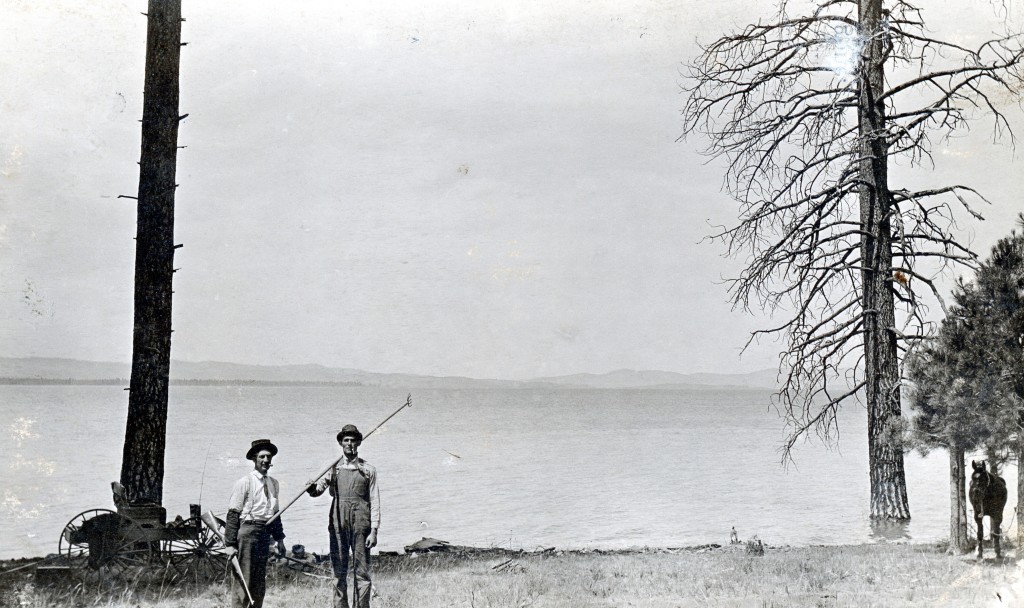
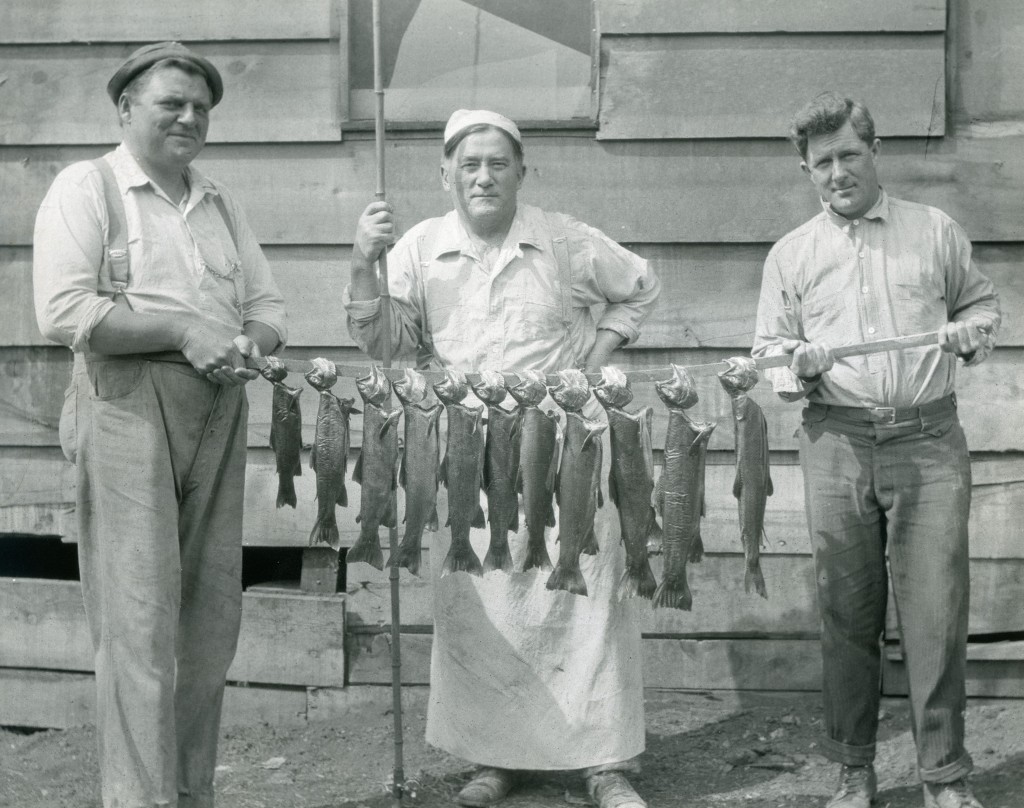
Eagle Lake fishing
Bass fishermen at the south shore of Eagle Lake, 1914.

Having been a long time observer of local politics, I am past the stage of shock and awe. Every now and then in my research I come across some things that leave, well just plain dumfounded. Today’s topic is one them.

For unknown reasons on April 28, 1924 the Lassen County Board of Supervisors held a special session—the agenda item to ban fishing. The supervisors gave no rhyme or reason why such action was needed. It did not stop them from proceeding. They drafted an ordinance and they would adopt it at their regular meeting on May 5.

Camp 38
Camp 38, Red River Lumber Company at Lake Almanor circa 1925—Hank Martinez

The California Division of Fish and Wildlife was not amused. They informed the county supervisors  the matter was unconstitutional. In addition, their local game wardens were told not to enforce it. The local nimrods were not pleased either and they let their voices heard. Needless to say when the board of supervisors held their regular meeting, the matter was tabled.

Subscribe

Goodrich Reservoir, Lassen County

Goodrich crossing and reservoir in 1914. Minnesota Historical Society

While most reservoirs in the region were constructed for agricultural purposes, there is always an exception to the rule. The Goodrich Reservoir on Goodrich Creek near Westwood was constructed in 1912, by the Red River Lumber Company. Its main purpose was for a domestic water supply for the residents of Westwood and also as a water supply for Red River’s millpond. During the winter months, it found another use as it was a popular ice-skating spot.

During the drought of 1924, Goodrich Creek could not provide for a stable water supply for Westwood. A pipeline was constructed  from Clear Creek to Westwood to correct the problem. In 1931, the State of California inspected the dam, deemed it a hazard and was removed.

Tim

Early Telephone History

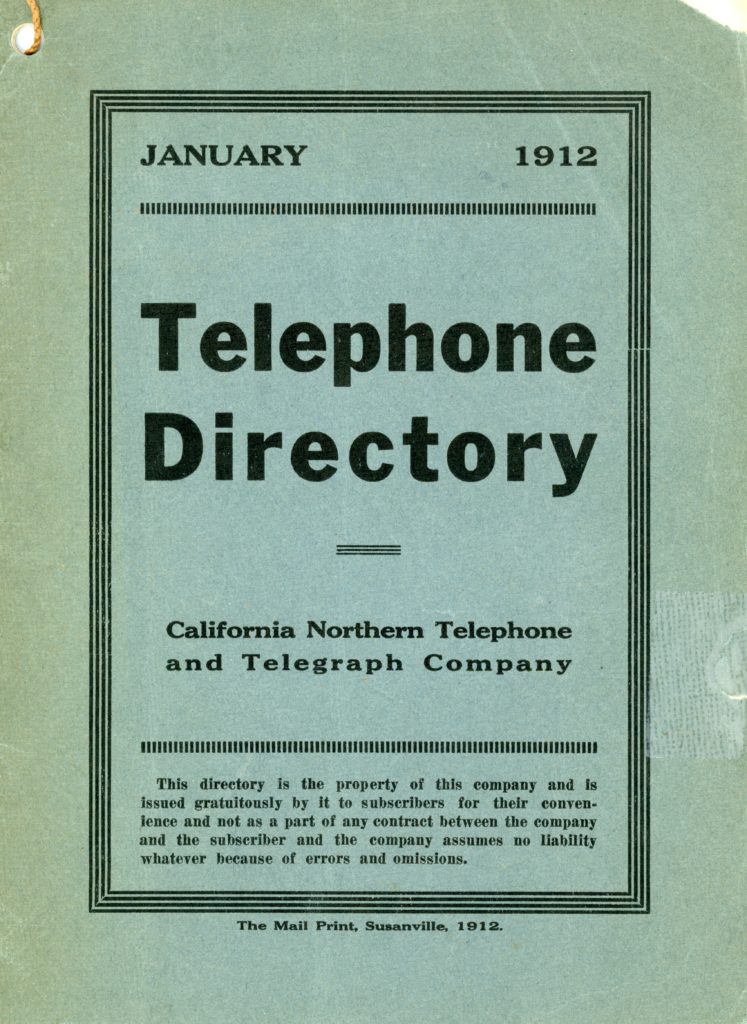
Cover of Susanville’s first telephone directory.—Mathews family

In the spring of 1910, a new telephone company for the region was established—the California Northern Telephone & Telegraph Company. The principal figures behind the company were W.E. Hills, Scott Hendricks and A.J. Mathews. Their mission was to provide for long distance telephone service for northeastern California. On October 4, 1910 the City of Susanville granted the company a fifty-year franchise. In return the City received free phone service for the fire hall, marshal’s office and two-percent of the gross annual receipts.

In the summer and fall of 1910, company invested $30,000 to construct a telephone line from Susanville to Big Meadows (today Lake Almanor) and onward to Quincy. On September 12, 1911, the entire sysrem was completed, with hookups throughout the Honey Lake Valley. On that date, Susanville residents could call long distance anywhere in California! At the Susanville office, three operators were hired. Such operators were generally known as “hello girls.” Those initial operators  were Nina Turnbaugh, Lucille Pearce and Eva Lanigar. The first two worked the day shift and the latter the night shift. Telephone operators would be referred to as “hello girls” until the advent of World War II. In 1951, the operator’s job became easier with direct dialing, when rotary dial telephones were introduced in Susanville.

Subscribe

Red River’s #102 Locomotive

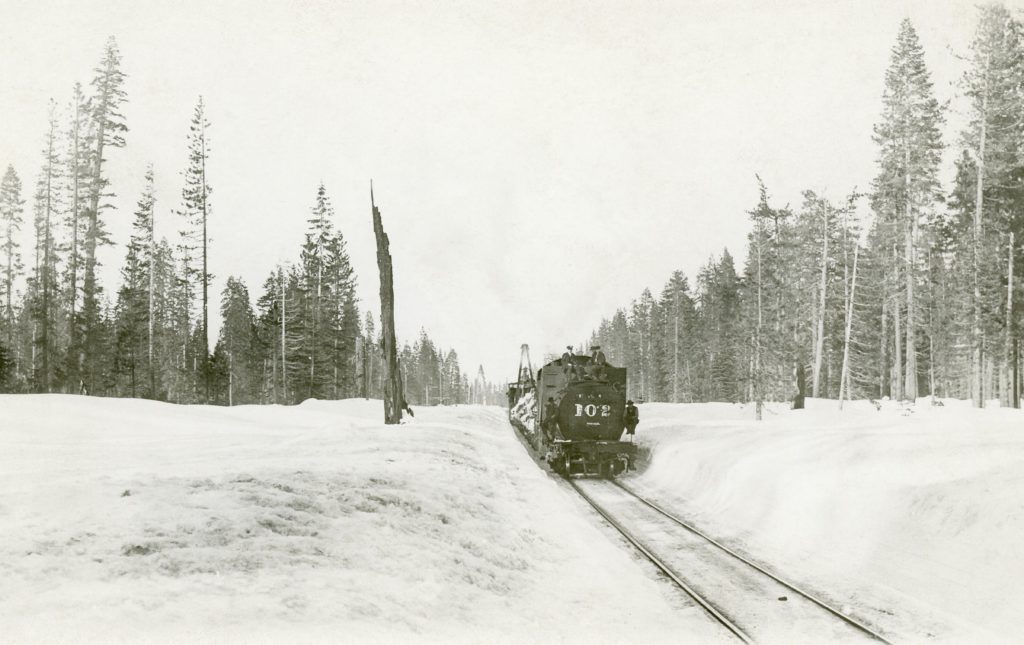
Red River’s 102, with a jammer in tow.

In 1914, Red River Lumber Company purchased three Baldwin locomotives from. the Tonopah Goldfield Railroad for its Westwood operation. Of course, Red River had quite a fleet of locomtives at Westwood.

The 102 remained in operation during Red River’s tenure there and the locomotive became the property of Fruit Growers Supply Company in 1944. When Fruit Growers closed the Westwood mill in 1956, the 102 was sold for scrap.

Tim

The Saga of California’s Last Gray Wolf

Frank &. Leda (Wood) Koehler

Note: In 2011, the first appearance of a gray wolf was reported in California. Prior to then, the last gray wolf in California was trapped in Lassen County in 1924.

At first I was going to do a condensed version of the account, but the Lassen Advocate had such a compelling story that I decided to transcribe it.

Lassen Advocate, Susanville, California, June 13, 1924 1;4 “Frank Koehler Gets Large Gray Wolf, June 12 – Frank W. Koehler, United States hunter and trapper had a thrilling experience yesterday afternoon when he encountered what is now almost an extinct species of animal in the United States, especially in this part of the country.

“June 2, Koehler had been called by G.E. Seeber at Litchfield to help him out as the coyotes had killed 50 of his young turkeys. That day Koehler set out seven settings of three traps each and returning to his settings on June 7 found that he had caught a coyote but he had broken away and escaped. He set his traps in the same place and yesterday afternoon returned to see what had been happening.

Continue reading The Saga of California’s Last Gray Wolf