Category Archives: History

Memorial Day Weekend

Diamond Crest Cemetery
Diamond Crest Cemetery. If you have not seen the Avenue of Flags, its worth the trip.

I still hold a grudge with Congress when they changed Memorial Day to make it a three day weekend. Prior to that, the true spirit of Memorial Day could be witnessed.  Today, I see fewer and fewer people paying a visit to the cemeteries. Instead of doing it on one day, those that still observe it, do it whenever its convenient. However, there are still some of us that follow tradition.

As I do a lot of cemetery work throughout the year, I do spend even more time during Memorial Day Weekend. Many instances is usually assisting people in search of a grave. One of my favorite cemetery stories occurred at Janesville. A couple had arrived, and I could see they needed help. The woman was perplexed and remarked “Why don’t they bury people in alphabetical order? It would make it so much easier.” After further discussion, I inquired as to the grave they were looking for. I informed them they were in the wrong cemetery, and needed to go Lassen Cemetery, which I gave them directions to, as well as to how to find the grave they were looking for.
Support this site and Subscribe today!

Perplexing Street Names

Roop Street
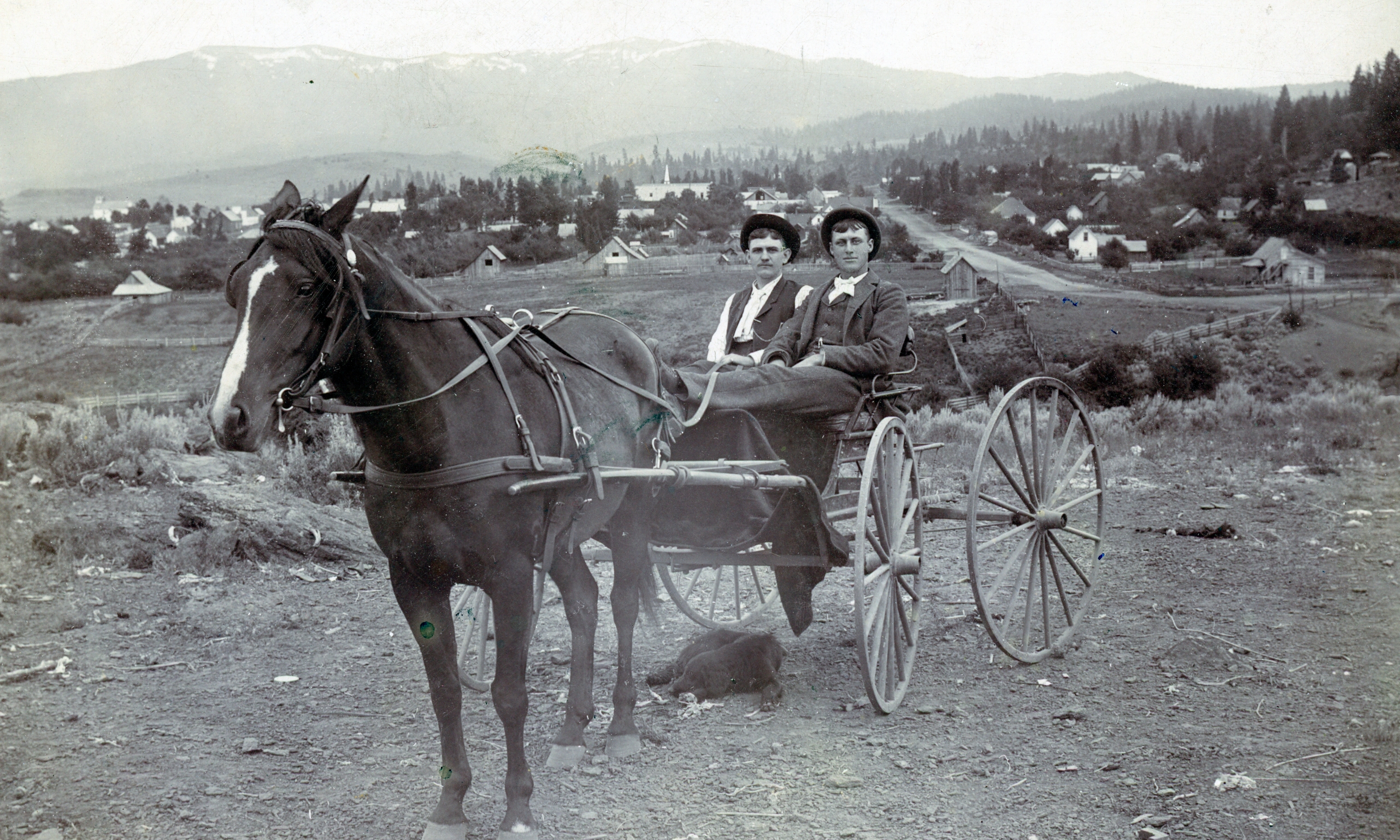
Roop Street in the background from Rooster Hill. Seated, Frank League and Tom Long, circa 1895.

While a few months ago I mentioned the peculiar situation noting that North Street runs in a east/west direction. As duly noted, it made sense back in the day, as it was the most northerly street in the new town.

Another peculiarity is that of Roop and Weatherlow Streets. This was pointed out to me  many years ago when Eleanor Vandeburgh and I worked at the museum. After all, her reasoning was, one would think Weatherlow Street should have been designated as Roop, since it went to his original home. Weatherlow lived at the end of Roop Street, though it did not extend that far, since his original home is known today as Susanville Ranch Park. On the same token, Weatherlow Street goes by Roop’s original home.

Support this site and Subscribe today!

Scotts

Scotts
Scotts, courtesy of the Nevada Historical Society

Scott’s was a little known Western Pacific station in Long Valley. It was so named for Charles and Franceska Scott who located there in 1901, from Fish Springs. With the railroad station, they decided to open a general store and even established the Scotts Post Office. The post office only operated from 1912 to 1916. In 1918, they sold their 3,160-acre ranch to Antonio Saralegui.

Support this site and Subscribe today!

Westwood’s Fire Train

Westwood's Fire Train courtesy of Doug Luff
Westwood’s Fire Train courtesy of Doug Luff

The winter of 1923-24,  was one of the driest on record in California. That summer another record would be broken–forest fires. It was June, 1924, when the Red River Lumber Company having been in operation for over a decade experienced its first major forest fire. The fire broke out at Chester Flats between Camps 34 and 38 and burned a narrow strip of land, eight miles in length. Red River’s loss was minimal as the fire burned recently logged over land and the only significant damage was 500 cords of wood burned along 1,000 feet of railroad track. Red River considered its biggest loss was to the men fighting the fire which cost the company a $1,000 a day in wages, and it took a week to contain the fire. Continue reading Westwood’s Fire Train

Dennis Tanner

Janesville Hotel
Janesville Hotel

Dennis Tanner’s residency in Lassen County was brief but a busy one. Upon his arrival in Susanville, he installed a skating rink in the first floor of the Masonic Hotel. The following year, he purchased the Janesville Hotel, if one could call the structure. It had been built in 1856, before Janesville existed. Tanner dismantled it, and built a two-story 22 room hotel. In 1874 he sold to McClelland and Byers for $3,500. His next venture was a general store at Milford, and then had a brief stint as a innkeeper of the Milford Hotel. In 1878, Tanner relocated to Ukiah where he operated another hotel until his passing in 1898.

Don’t forget to look at the Subscribe feature.


Stacy

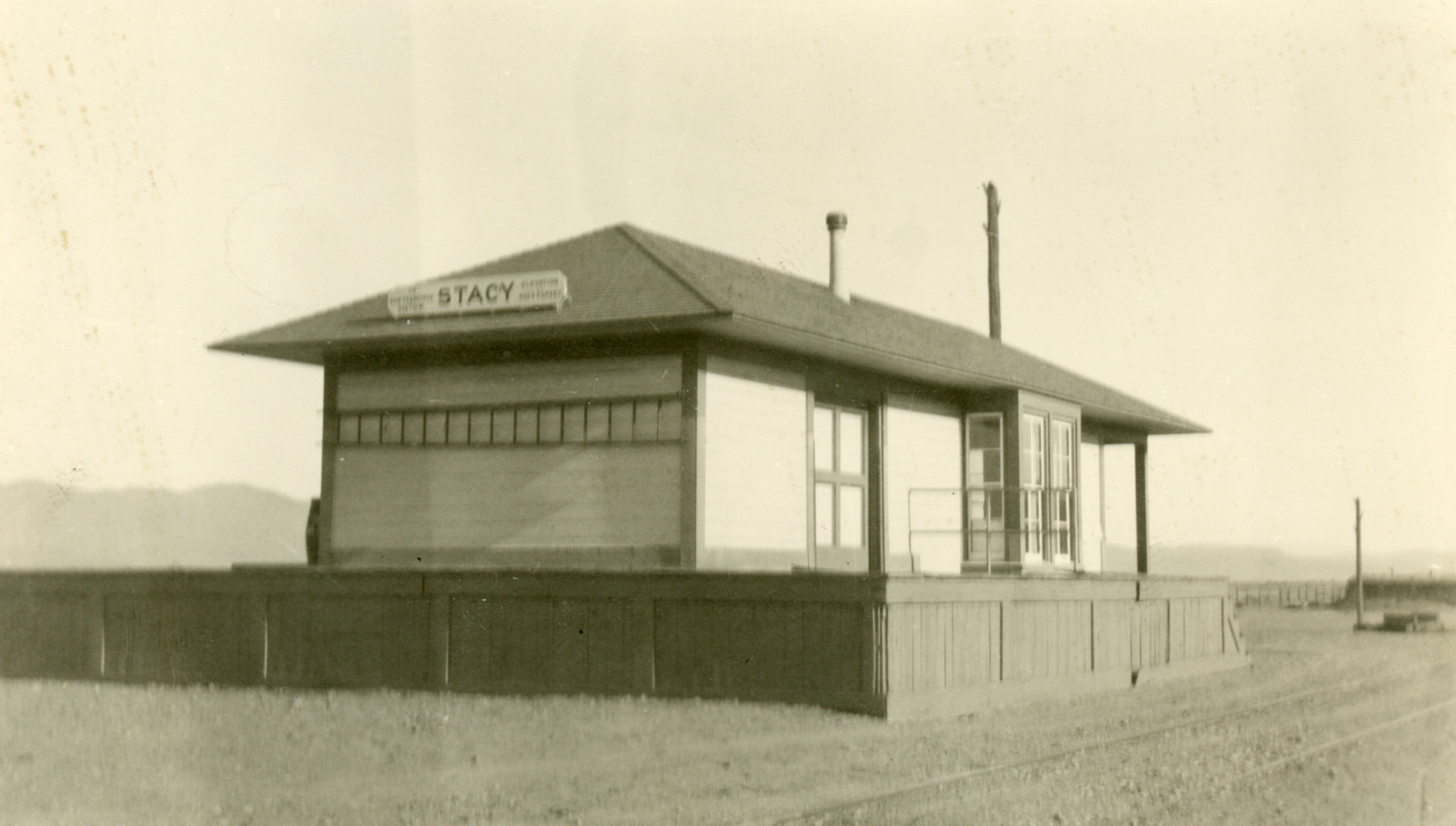
Stacy Depot
Stacy Depot. The town was named for Stacy Yoakum Spoon, wife of Grover Franklin Spoon, one of the town’s developers and its first postmaster.

Once it became known that the Fernley & Lassen Railroad would be constructed through the Honey Lake Valley, it made the region a virtual paradise for real estate promoters. Three towns were plotted out—Leavitt, Litchfield and Stacy, the latter being in the eastern part of Honey Lake Valley between Amedee and the Nevada Stateline.

On April 19, 1913, the Lassen County Board of Supervisors approved the Stacy townsite. The town’s founders, the Spoon Brothers—Frank and Andrew—and Doctor B.B. Bolton envisioned great possibilities, such as the development of a major shipping facility for the region’s start up sugar beet industry. Prior to the railroad development, numerous homesteaders had arrived in part of the dry farming experience, and that of the Standish Water Company’s reclamation plan to use water from Honey Lake to transform the area into a major sugar beet region.

Support this site and Subscribe today!

Lincoln School

Lincoln School
Lincoln School, 1924

In 1920, voters of the Susanville School District passed a bond measure to build a second school. The trustees indicated, however, that with the accelerated growth another school would be needed. What they had not bargained for was just how quickly the need would arise. On January 14, 1922 the District held another bond election for a new school. The voters approved the $50,000 measure by a vote of 140 to 5. In March, the District purchased a lot on the south side of Main Street at the intersection of Hall Street. In June local contractors Woodward & Grebe were awarded a $35,000 contract to build it. The school was completed and placed in use during the first week of February 1923. The Lincoln School closed at the end of the 1966-67 school year.

Support this site and Subscribe today!

Never Sweats

Unionville306
Unionville, 1880. Courtesy of Nevada Historical Society

An obscure mining term of the early 1860s. To be a Never Sweat was considered to be a non-conformist. In Nevada, for instance, one could hold an interest in a mining claim and not work it. One could wait for others to prove the claim. Should the prospects be favorable, the Never Sweat could recover his interest by paying an advance on the accumulated costs. In 1865, Nevada passed an “Act for the Encouragement of Mining.” That change in laws abolished the practice of a Never Sweat and the term faded into oblivion, with the exception of the bestowment on the Honey Lakers. Continue reading Never Sweats

Technology

Telephones
Lassen Advocate, November 28, 1977

I could not resist to scan and post this article that appeared in the Lassen Advocate. In the era of cell/smart phones, this seems so quaint with the introduction of push button phones. And to think, a century ago operators were known as “hello girls.”

P.S. – Some may not be aware, but if you click on the image, you will see a larger one.

Support this site and Subscribe today!

Lassen High School

Lassen High 08
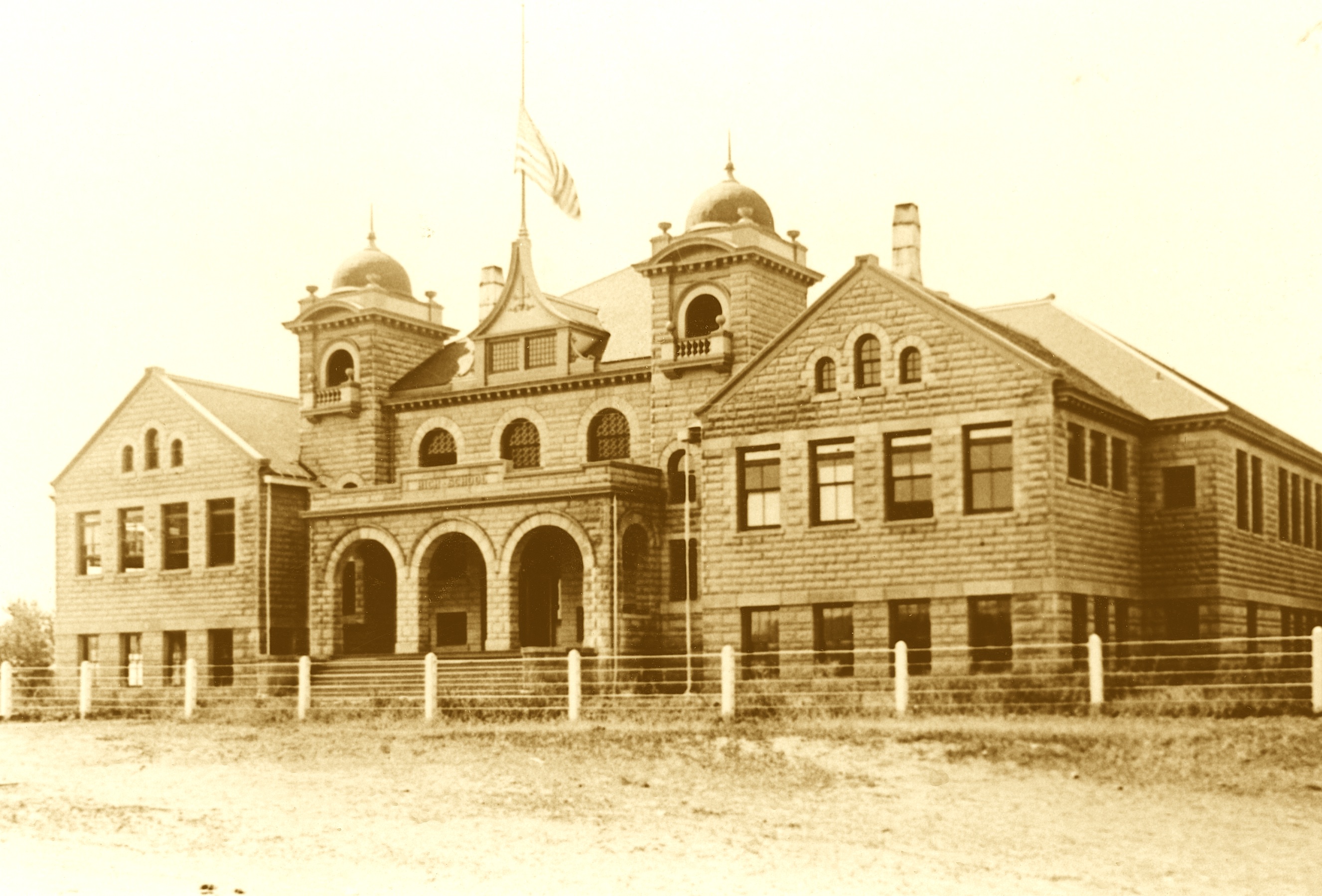
Lassen High School, 1908 courtesy of Phil Hall

Construction of the high school began in the fall of 1905 and was ready the following year. The school was constructed by Granite Rock Company for $25,670.

The photograph depicted above was taken in 1908, when the school grounds was fenced, not to keep the students in, but to keep roaming livestock off the school property.

Don’t forget you can still get the complete DVD collection of the Lassen High Yearbooks from 1904 to 2013. However, I only have about fifteen left.

Support this site and Subscribe today.