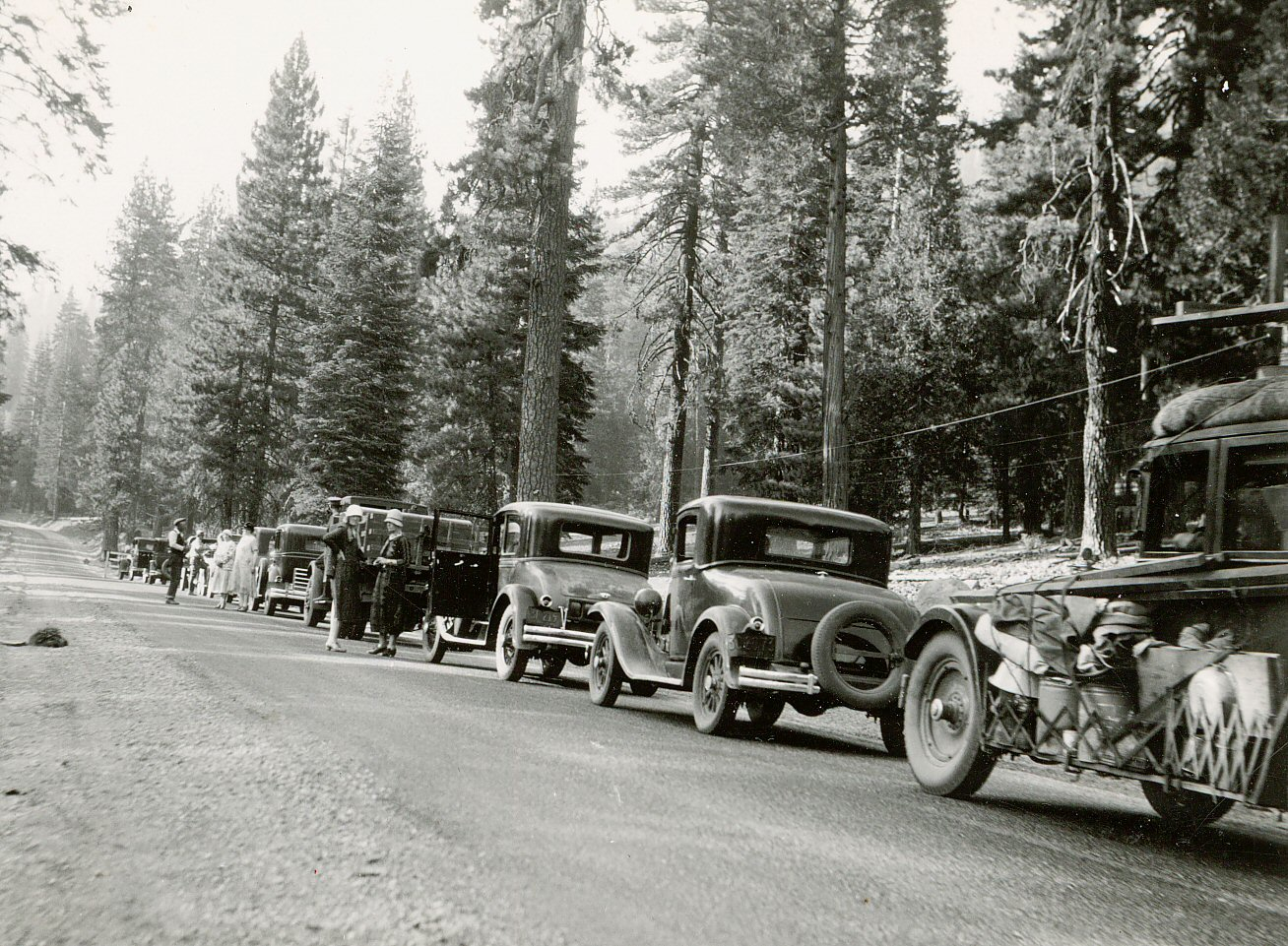
A caravan at Child’s Meadows on the way to Lassen. B.R. Zimmerman collection
On July 25, 1931 Lassen Volcanic National Park held its dedication as part of the completion of the park highway, though the park was established in 1916. Park Superintendent L.W. Collins had big plans, which were widely criticized. To highlight the dedication Collins wanted to create a fake eruption to resemble the volcanic eruptions of 1914-15 that made national headlines and led to the creation of the park. Continue reading Lassen’s Fake Eruption→
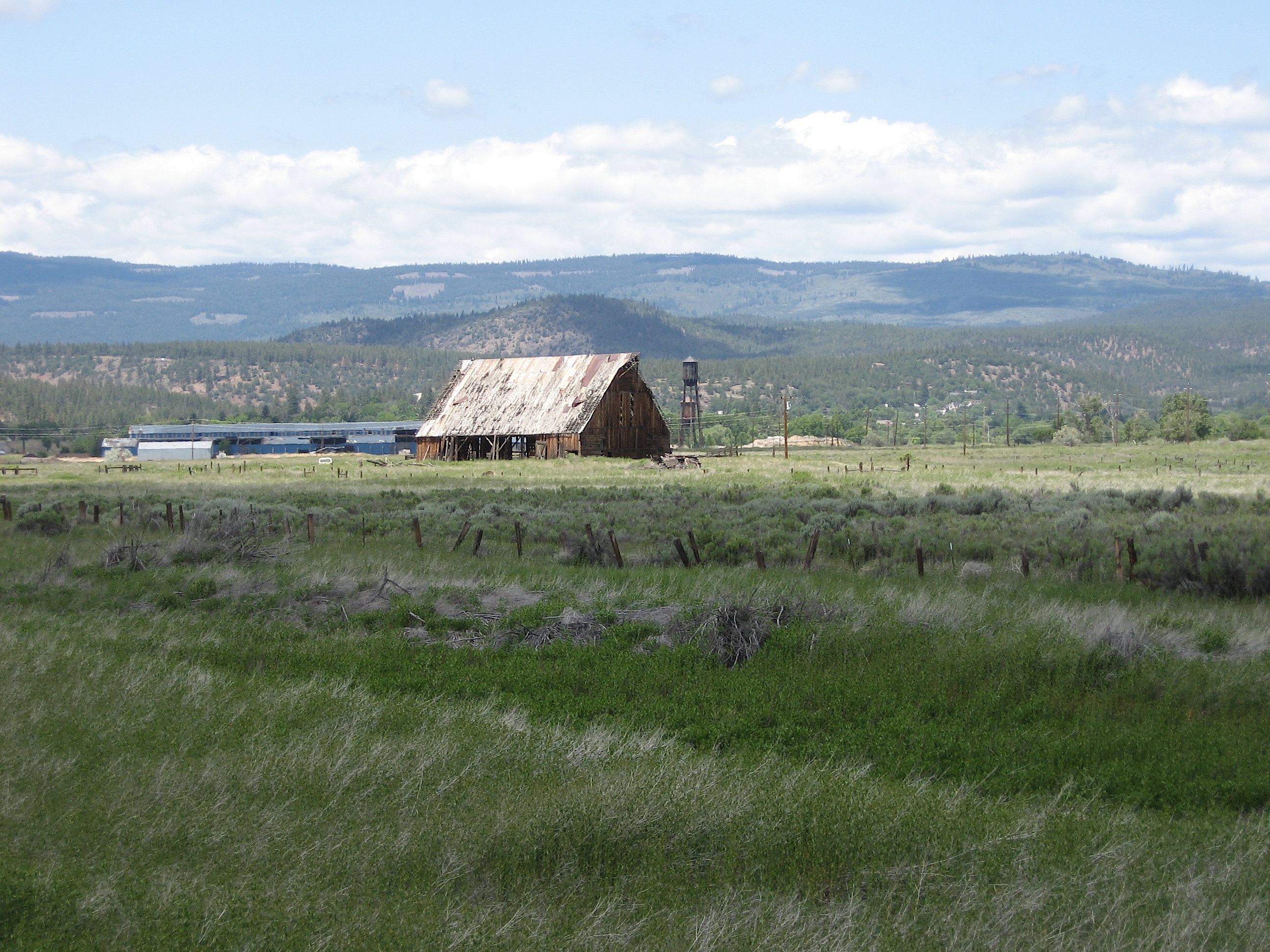
The barn was destroyed by fire the night of June 16, 2015. A transient caused the fire from a cigarette, thought to be extinguished, but that was not the case.
Routinely, when I am out and about someone will ask me a question about this or that. In many instances, I am able to provide an answer. Every now and then I get stumped with a doozey. In this particular instant, it was the old barn at the east end of Susanville, just past McDonald’s.
The barn sits like a lone sentinal these days. There used to be a small white painted caretaker’s house there, occupied for a number of years by Grant and Lena Trumbull. One of the oddities about the barn is it is far removed from any ranch. After extensive sleuthing it was built in 1920/21 for the Fruit Growers Supply Company, who were in the midst of constructing their new sawmill/box factory nearby. Continue reading That Old Barn Update→
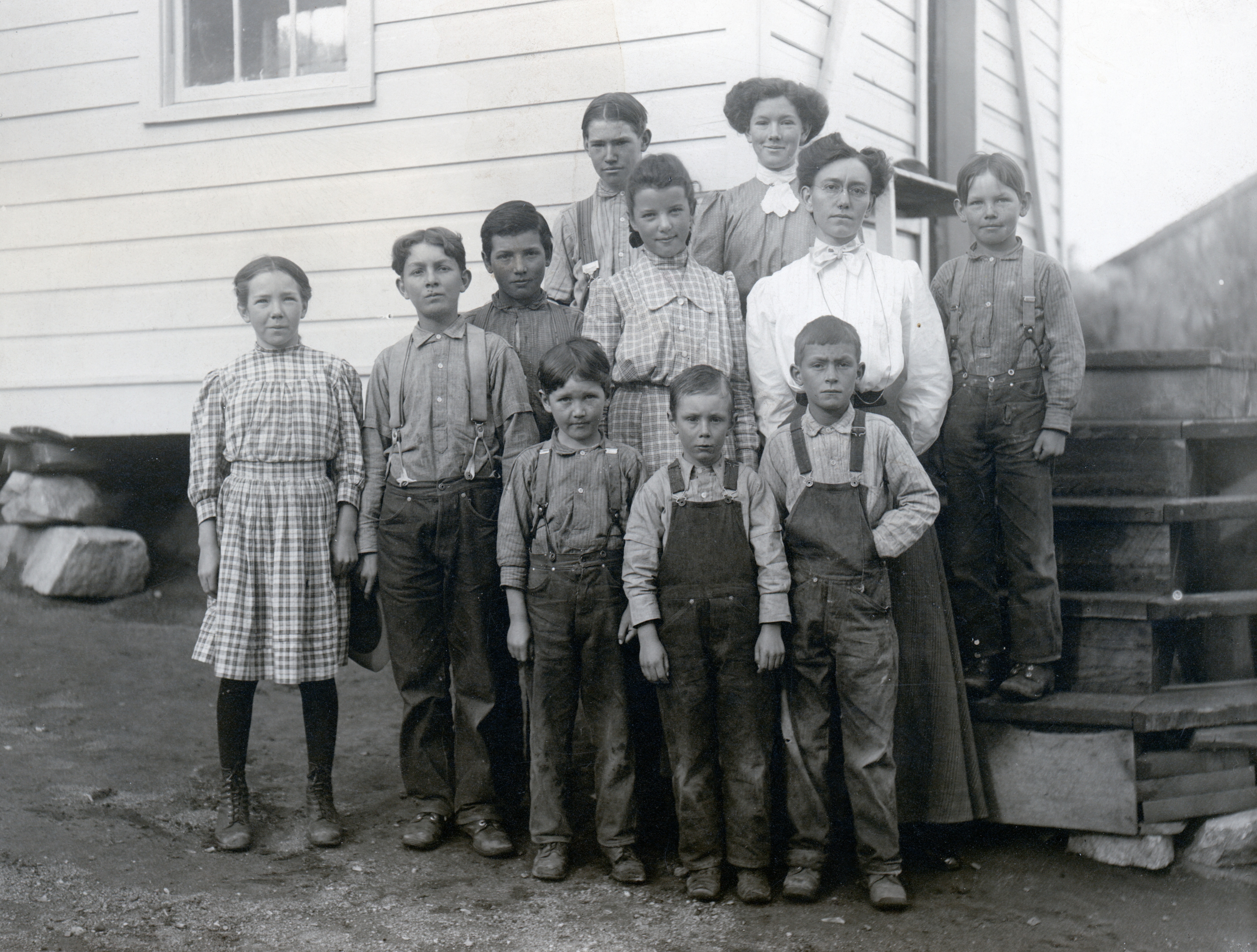
It was established in May 1883, from a division of the Lake and Milford School Districts. It was conveniently located halfway between those two schools. The bulk of the student population were from the Raker, Clark and Decious families. Though the Wales, Wilburs, Lindsay, Fisher and Grass also contributed to the student population. Like so many rural schools in 1920, the enrollment had declined to such an extent it was closed. In 1922, with no indication that the school would be resurrected, it was annexed to the Lake School District. The school was torn down in February 1926.
Subscribe and support this site for as little as $4.17 a month.
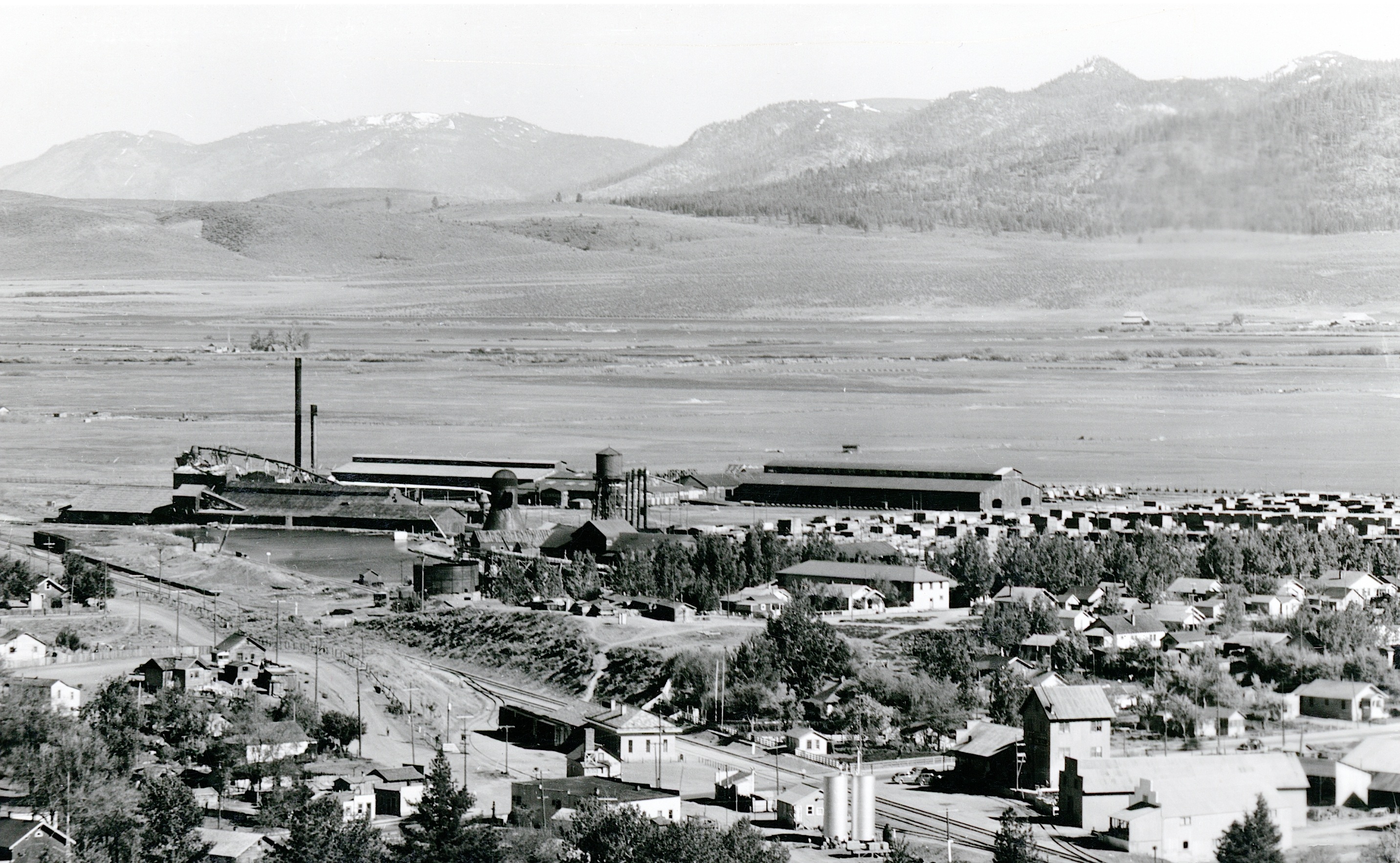
While I have wrote about Fruit Growers Supply Company and Red River Lumber Company and their operations, its time to include another major lumber mill, Lassen Lumber & Box Company Continue reading Lassen Lumber & Box Company→
Mapes Ranch, 1906. Courtesy of Madelyn Mapes Dahlstrom
Known today as the Mapes Ranch, located four miles east of Litchfield. In June 1859, George W. Lathrop and Thomas J. Harvey claimed 1,280 acres there. Located adjacent to the Susan River and the Nobles Emigrant Trail, it quickly developed into a station for travelers. On September 8, 1862, Lathrop sold this place to Uriah and James Shaffer for $4,250 and then the place was called either Lathrops or Shaffers Station. By 1863, it consisted of Shaffers station/trading post, Henry Lomas’ cabin and blacksmith shop, and a house belonging to Wilmans & Bass. At this same time, traffic along the emigrant trail increased dramatically as it was the shortest route to the mining discoveries in Idaho and Northwestern Nevada. With bright prospects, the residents plotted out a town and a name was needed. The place was best known as Lathrops. It was decided to name it Lathrop City. Henry Lomas, the “city’s” blacksmith recalled years later that the name was “Just too much for the town and it died a natural death.”
The Shaffer Brothers did not have much success, as by 1868 with decreased traffic with the transcontinental railroad and the nation’s economic depression they were forced into bankruptcy. Thomas French and Andrew Litch purchased the ranch for $2,500. The Shaffer’s lasting legacy is a mountain and a school that bears their name.
Subscribe and support this site for as little as $4.17 a month.
A town is born, Litchfield. Courtesy of John M. Gibson
Even before the first rails were laid on the Fernley & Lassen Railroad, those along the right of way knew exactly where it would be located. B.F. Gibson and his associate, Los Angeles promoter, B.F. Jackson had an initial plan for a new townsite, not too far from Standish. The new railroad was going through Gibson’s Ranch and its location in that part of the Honey Lake Valley made it a ideal place for a combination townsite and railroad shipping point.
As Standish was less than three miles away, Gibson offered that community free lots for those willing to relocate, which he dubbed his enterprise, New Standish. However, his offer was not well received, so Gibson named is his new town, Litchfield, in honor of pioneer settler and his father-in-law, Andrew Litch.
Subscribe and support this site for as little as $4.17 a month.
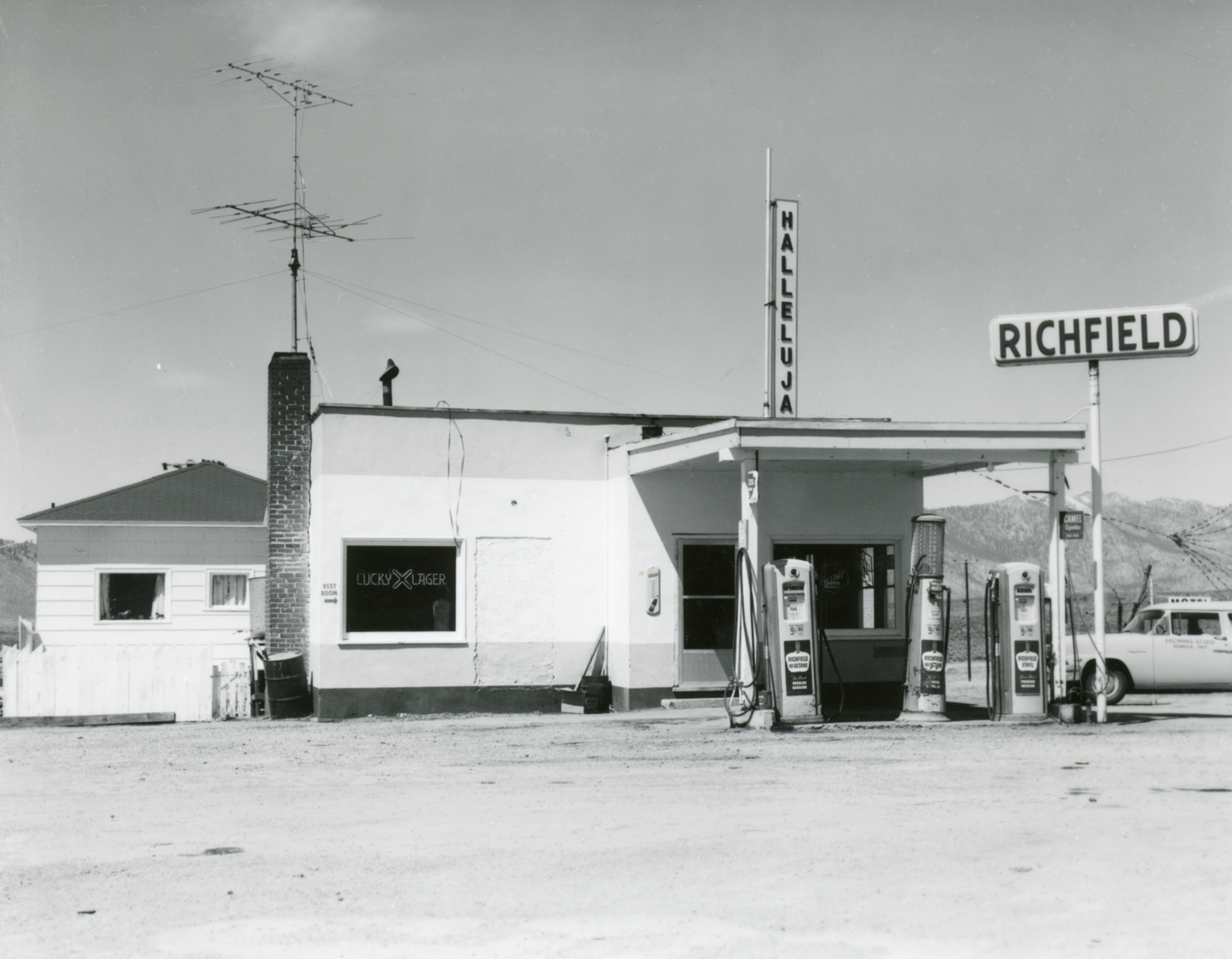
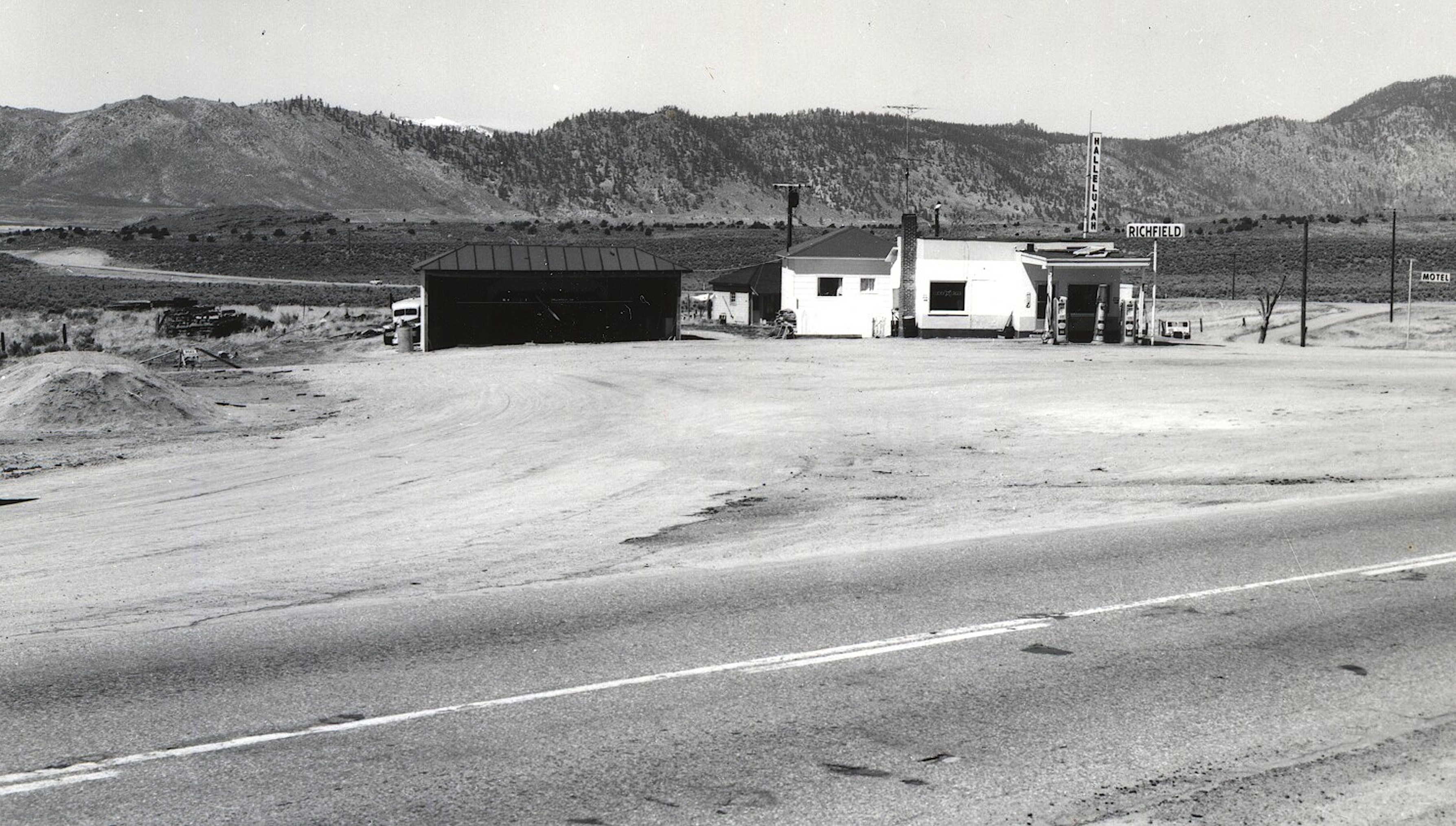
Since the 1850s, the region has always been referred to as a junction to Beckwourth Pass and the Sierra Valley. It has been told that emigrants in the 1850s, when they arrived at this spot, shouted “Hallelujah” whey they saw Beckwourth Pass—at 5228’ its the lowest pass over the Sierra. In 1932, Orville Stoy took up an 80-acre homestead there. Stoy built a gas station and it became a popular stop, known as Hallelujah Junction. In time, a bar, restaurant and motel were constructed. There was even the “Hallelujah International Airport” that consisted of a couple of airplane hangers and a runway that was an abandoned stretch of Highway 70. In 1973, the State of California purchased Hallelujah Junction. It was obliterated for the construction of the four-lane freeway from there to the Nevada State line. In 1991, a gas station and convenience store was built at the junction of Highway 395 and 70.
Hallelujah Junction
Subscribe today and support this site for as little as $4.17 a month.
With the pending arrival of the railroad to Susanville in 1912, it started a frenzy of housing subdivisions. The first was Hill Long’s Long Addition. It was unique in many ways, it being one of the smallest and at that it was located inside the city limits. Continue reading Long’s Addition→
The Church was located on the corner of Main and North McDow.
In 1911, two missionaries, Elders Harry Janson and L.R. Halverson arrived in Susanville, though it appears their stay was brief. It was not until 1922, that the members of this church organized in Susanville. The initial families included those of Frederick Johnson, W.K. Davis, William Mortimer, Afton White, James C. White, John Heath and Peter F. Olsen.
Initial services were held in member’s homes. By 1924, their numbers had grown and they the hall in the Knoch Building for $2.50 a week. From there they moved to the Orpheum Theater and later to the OddFellows Hall.
On November 13, 1927, discussions were held to build a chapel. The site chosen was the northeast corner of Main and McDow Streets. On November 10, 1929, the church was dedicated by Heber J. Grant, President of the Church of Jesus Christ of Latter Day Saints
Thirty years later the members had outgrown the church. They selected a new site on Richmond Road. On November 5, 1961, groundbreaking ceremonies were held for the $300,000 chapel.
Subscribe and support this site for as little as $4.17 a month.
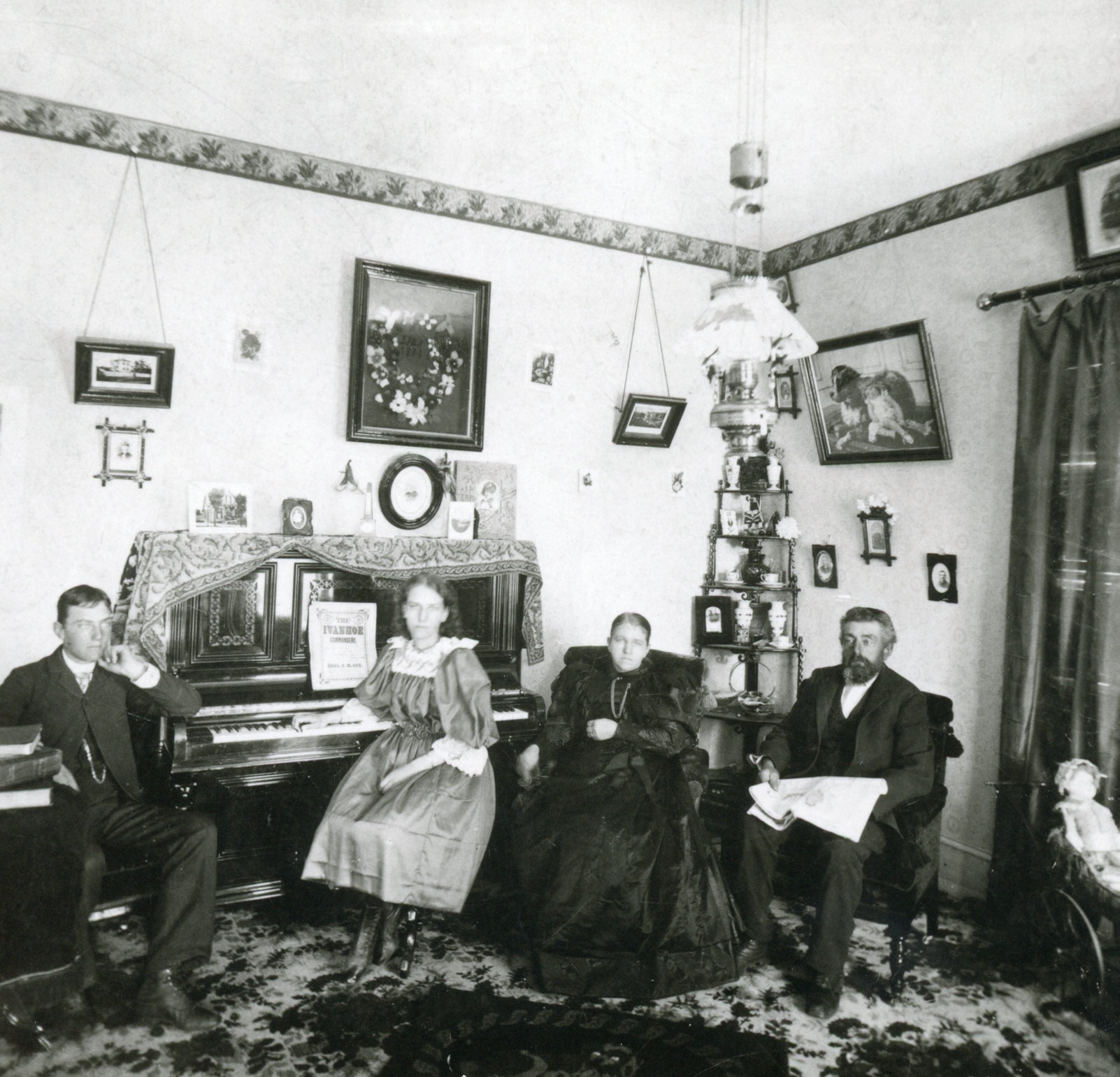
Jurgen Jensen family: Left to right: A.R. “Bert”, Delia, Effie and Jurgen, 1902. Courtesy of Abe Jensen
This being fair week, it is only fitting we salute the Jensen family. Two generations of Jensen’s had a major impact on the Lassen County Fair.
In the summer of 1922, A.R. “Bert” Jensen pushed the resurrection of a fair, the last one held was in 1902. Jensen recruited Russell Brownell, C.E. Lawson, L.E. DeForest and H.H. Ridells and formed the Lassen County Fair Association. Jensen offered the Association 20 acres of his ranch for a fairgrounds at a cost $2,750, though the group could pay him later—this is still the home of the Lassen County Fairgrounds. Continue reading Jurgen Jensen Family→