Category Archives: History

Madeline Plains – Horne Ranch

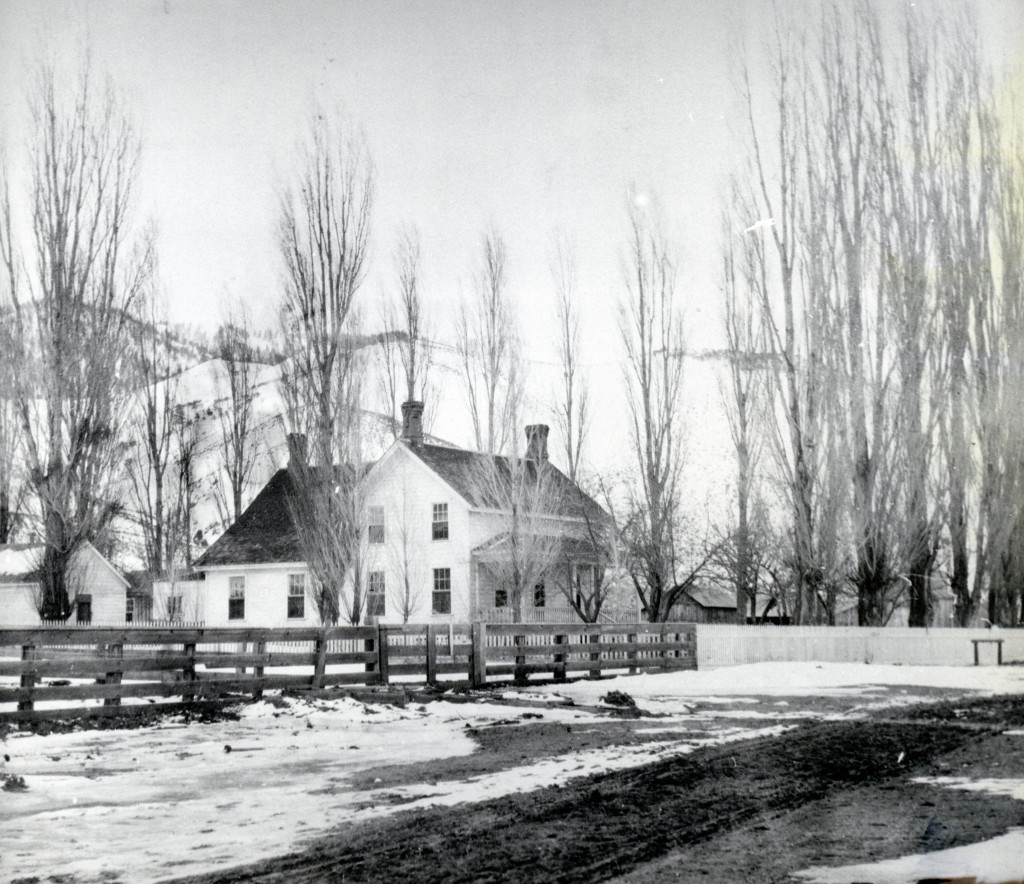
Horne Ranch, 2003
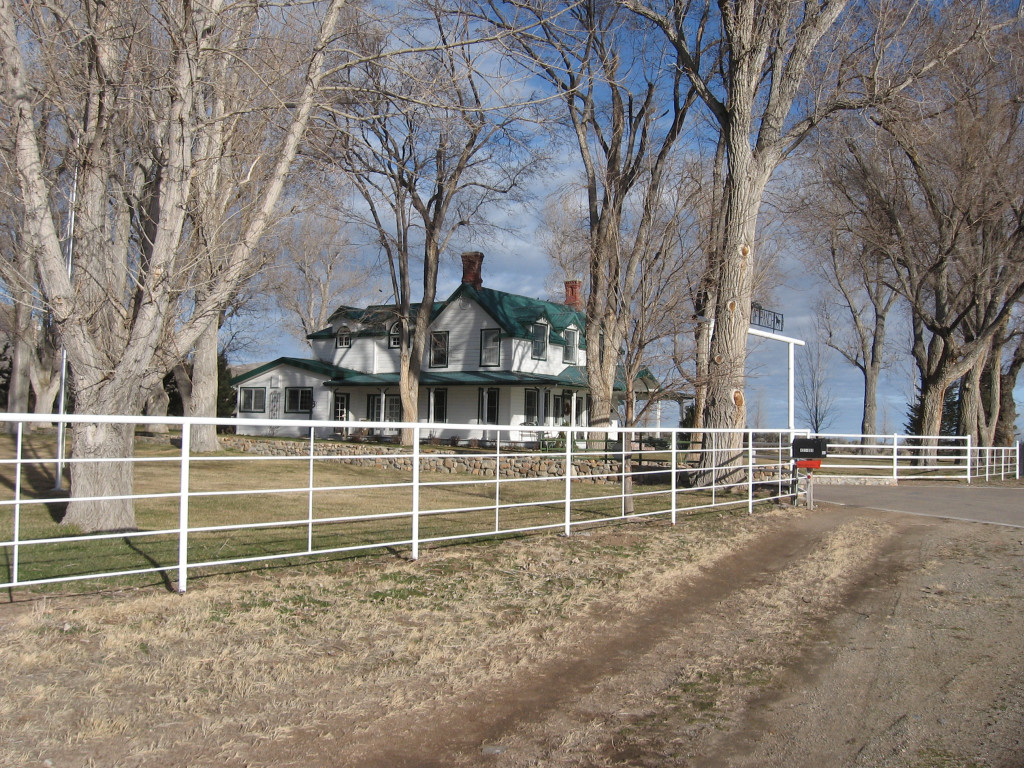
Horne Ranch, 2003

In 1870, Frank Eben Horne became one of the first settlers of the Madeline Plains. Horne retired from his ranch in 1905 and turned it over to his sons. On March 28, 1917, Frank L. Horne, William R. Horne, and Arthur T. Horne, along with Raglan Tuttle and Grant M. Lorraine, formed the Horne Development Company. On April 27, 1927, the Farmers & Merchants National Bank of Reno, Nevada, foreclosed on the Horne Development Company for $38,791.11 and became the owners of the Horne Ranch. It should be duly the Glade Post Office was located there from 1908 to 1918.

In the 1990s, the ranch had a new lease on life when it was incorporated in R.C. Robert’s Spanish Springs development. This and other properties were made available to guests, whether their interest was equestrian pursuits, hunting, etc.

Never miss a story, click here.

Horse Lake

Horse Lake, 1916. Courtesy of Betty Barry Deal

In 1916, William L. Wales, engineer for the Honey Lake Valley Irrigation District, looked at non-traditional water supply sources to reclaim the desert lands of eastern Honey Lake Valley. After all, other sources of water had been claimed.

Wales examined Horse Lake and wrote: “Horse Lake and it’s watershed of 115.2 square miles, laying just east of Eagle Lake, offer very good opportunities for a portion of the water supply. This lake has an area of 3520 acres at an average depth of six feet. According to a statement of a man living near the lake, it has not been dry but twice in sixty years. A shallow cut has been dug through the east rim connecting with a creek leading into Pete’s Valley. No doubt more than enough water has flowed out through this cut to offset the deficiency of the dry years.”

Never miss a story, click here.


Susanville’s Sierra Theater

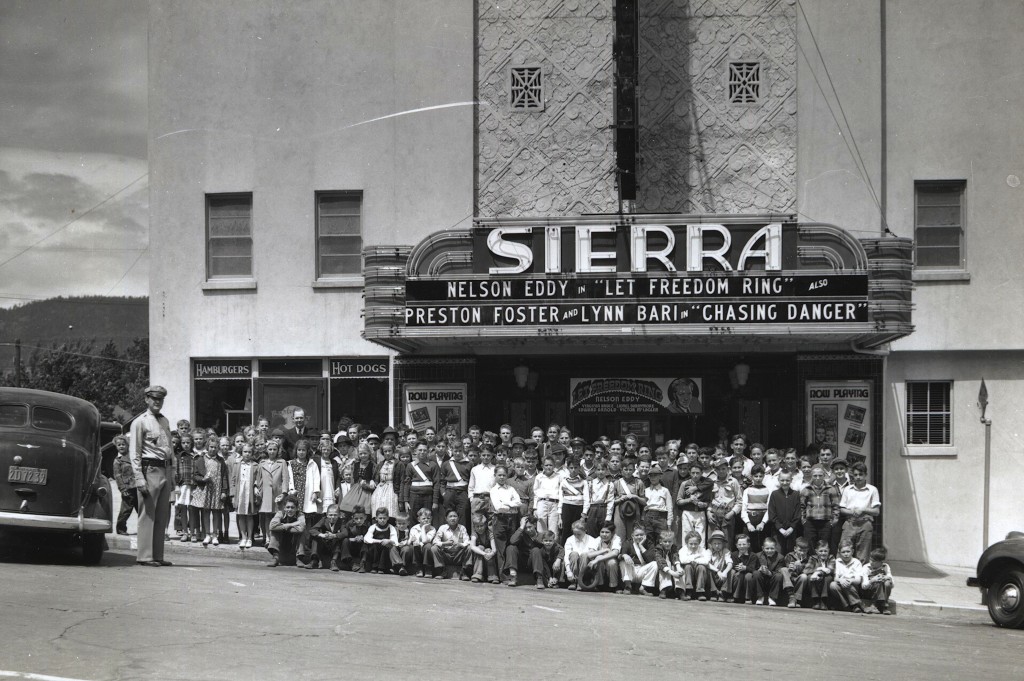
Sierra Theater. Courtesy of Hank Martinez

On August 7, 1934 during a special session of the Susanville City Council they condemned the Liberty Theater, after state inspectors stated it was unsafe. Two day’s later the theater would close, and it was only fitting the film shown that day was “The Party’s Over.” It should be noted that the Liberty was built in 1921 and in 1924 it was purchased by T & D Enterprises.

In late September, demolition began on the Liberty Theater and it was announced a new theater would be built on the site of the old one, to be named Sierra Theater. Construction on the concrete re-inforced theater began in October, and the owners noted it was earthquake proof, the first of its kind in Susanville. On Friday, March 8, 1935 a grand opening was held for $75,000 theater. The first showing was appropriately a film named, “The Whole Town’s Talking.”

Never miss a story, click here.

Lassen High Alumni – 2016

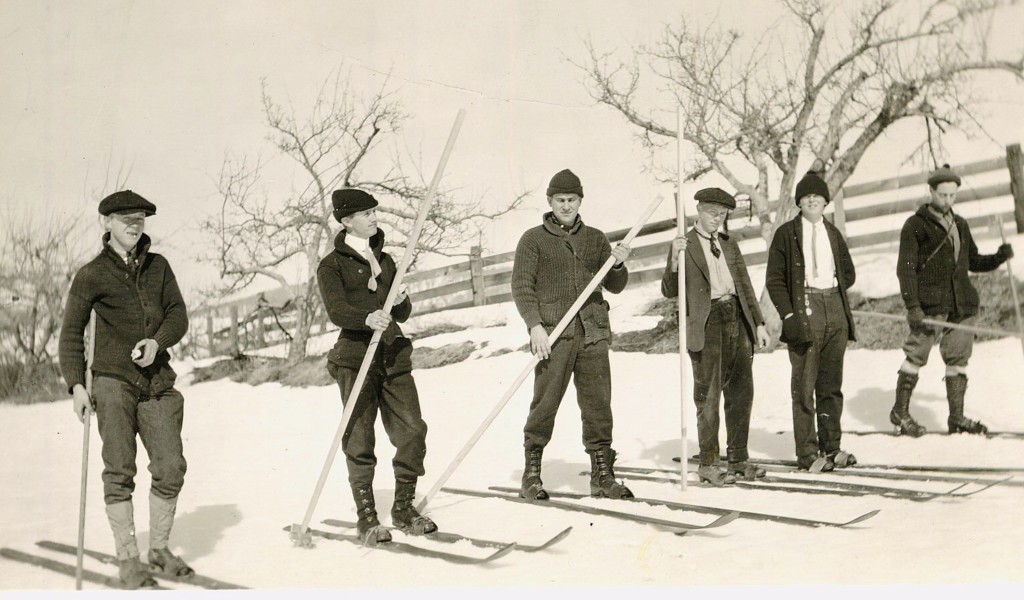
Lassen High faculty and student skiers, 1917. D.M. Durst Collection

Something a little bit different. On the third Saturday of June, the Lassen High Alumni Association holds it all alumni picnic in Susanville. Alumni come far and near to attend this event, some 400+. For me its always been fun, and I can conduct a lot of historical research in one afternoon. For your reading enjoyment, I provide you with the Alumni’s April newsletter, which has a lot of interesting reading material, including a Remember When column penned by yours truly.  Clink on the link below to open the PDF file.

Alumni Newsletter Apr 2016-3


Ravendale

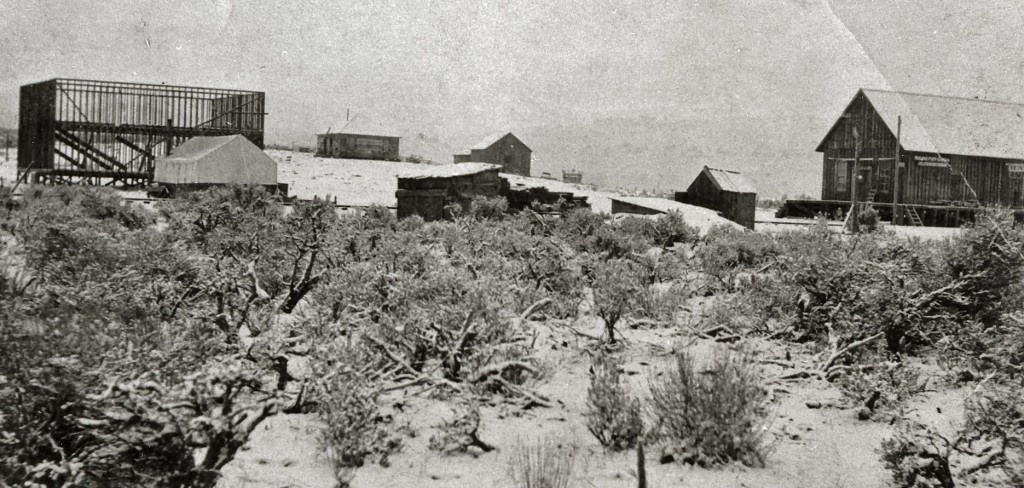
Early day Ravendale. Courtesy of Dorothy Capezzoli

It was the last of three towns established on the Madeline Plains.  It was reported that the end of February 1910,  that the new station of Ravendale  was rapidly being built and rumor had it that it was to become a division point for the NCO railroad.  It was also stated that J.H. Williams and G. Horton were surveying a town plat.  Whatever the case may be, it was not until  November 15, 1913, the official town plat of Ravendale, on lands owned by Jim Coe, was surveyed and recorded with the County. According to Madeline Plains historian, Don Garate, the name Coeville had been suggested for the new town, but Laura Coe already chosen a name—Ravendale.

By the way, in Susanville you can purchase Don Garate’s book Red Rock to Ravendale at Margie’s Book Nook.

Never miss a story, click here.

Paul Bunyan Trademark

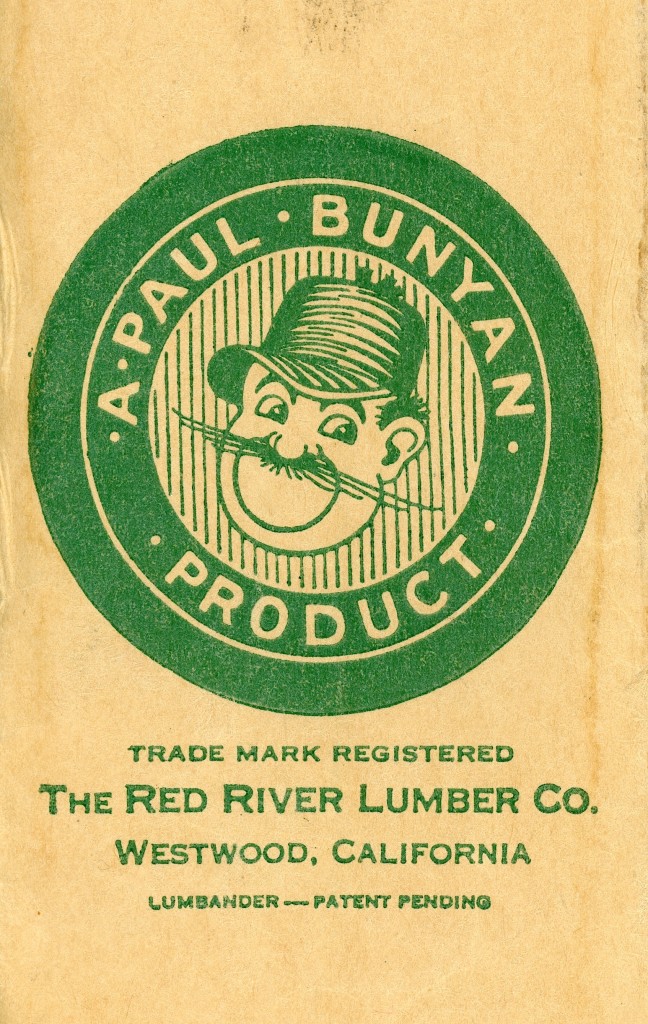
Packaging tape with the Paul Bunyan trademark.
Packaging tape with the Paul Bunyan trademark.Courtesy of John Webb

In the logging camps in Canada and Northeastern United States as folklore would have it, tales of the mythical Paul Bunyan was born. Stories were passed around in the camps, no written account.

In 1900, W. B. “Bill” Laughead, a cousin to T.B. Walker, went to work in Red River Lumber Company’s logging camps at Akeley, Minnesota.  There he undertook many jobs starting as a camp chore-cook and ending as a construction engineer. After eight years of working in the woods, he decided to move to Minneapolis working odd jobs and experimented with free-lance advertising work. It was at this time, Laughead drew the first known character drawing of Paul Bunyan, in part of an advertising campaign for Red River’s new California operation.   Laughead created the company logo, of a circular design, with his Paul Bunyan’s face, accompanied on the outside with the words Paul Bunyan’s Pine and it became Red River’s registered trademark. The logo was placed on many products and even on its logging trucks. For a short time, Red River even bottled their own soda beverage, with the embossed bottles displaying the trademark. When the company expanded into other operations, they changed it to a Paul Bunyan Product.

In the 1940s, during the dissolution process of Red River, Kenneth Walker continued in the lumber business. In doing so, the trademark was transferred to him, since his own enterprise was the Paul Bunyan Lumber Company.

Never miss a story, click here.

McKissick Ranch – Then and Now

McKissick Ranch, 1903. Courtesy of PhilipS. Hall

In 1859, Jacob “Uncle Jake” McKissick located in Long Valley in a short distance of what would be later the town of Doyle. In the summer of 1877 he had this ranch house constructed, a rather large home for a bachelor.

The house as it appeared on February 24, 2016.

Never miss a story, click here.

Harrison’s Traction Engine

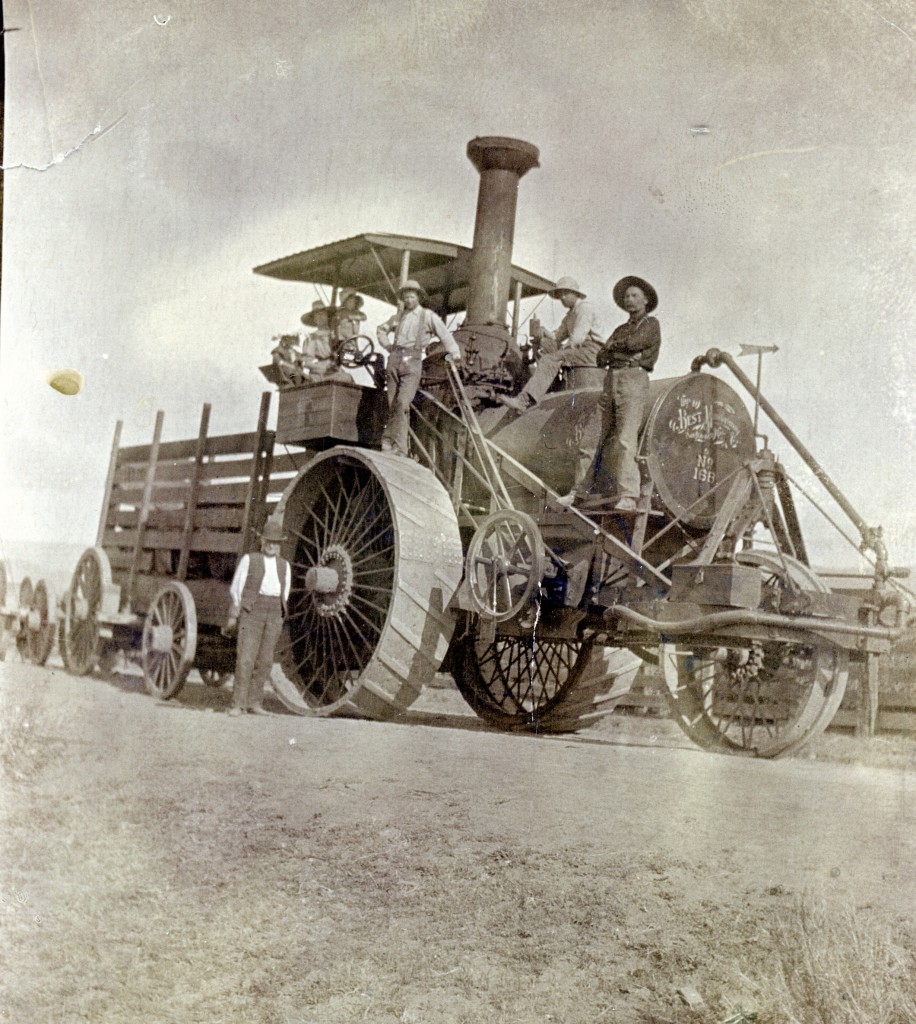
Harrison's "might beast." Courtesy of Lola L. Tanner
Harrison’s “mighty beast.” Courtesy of Lola L. Tanner

1907 was a a most interesting one  in certain circles. There was a national financial crisis, but California and Nevada were experiencing a building boom. For the Golden State it was still in the midst of rebuilding the San Francisco Bay region from the previous year’s earthquake. For the Silver State, a mining bonanza it had not experienced since the discovery of the Comstock.  These two episodes created a lumber shortage. Lassen County’s timber resources had basically remained untapped due to the lack of a railroad infrastructure to develop it. Continue reading Harrison’s Traction Engine

Lassen County Brand Index

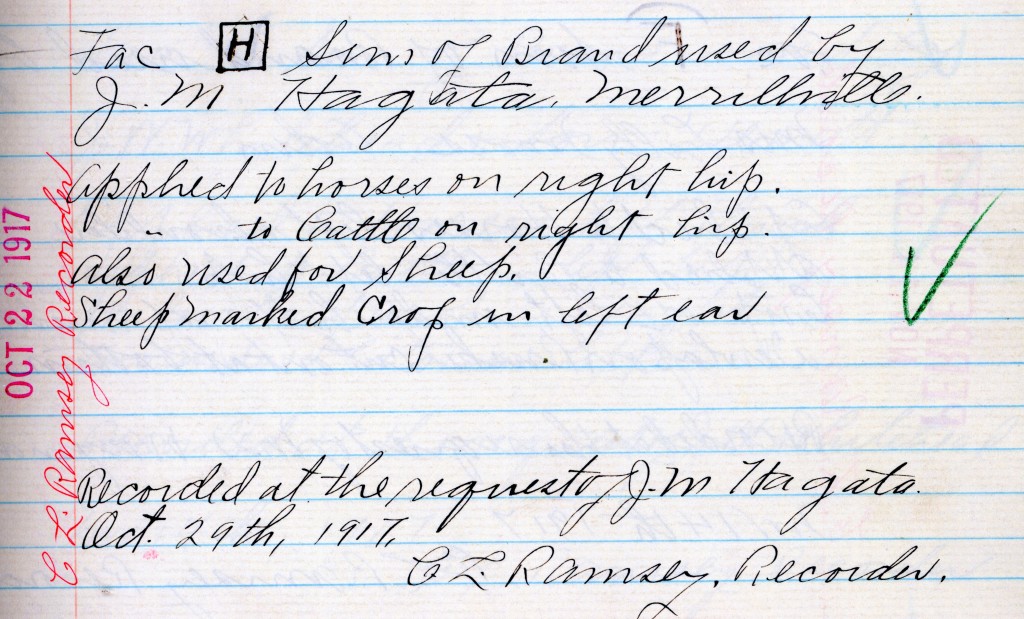
Recorded brand of J.M. Hagata

I am pleased to announce that the index of Book A, of Lassen County Brands is now online. This covers the period from October 20, 1864 when Thomas Watson was the first person to record a livestock brand to February 13, 1918, when the last brand recorded was for F. Lanigar & Son.

The index is quite interesting, especially who recorded their brand and who did not want. Take for instance the Hagata brand appears, but not the Wood brand or Wemple. Of some trivia, in 1875, Sarah Sornberger of Big Valley was the first woman to record a brand. In 1876, Charles Willard registered the first brand designated for sheep. While many associate sheep with the Basques, it was not until 1907 when Baptiste Alsaga became the first Basque in Lassen County to register a brand.

Click here to examine the brand index.