Category Archives: History

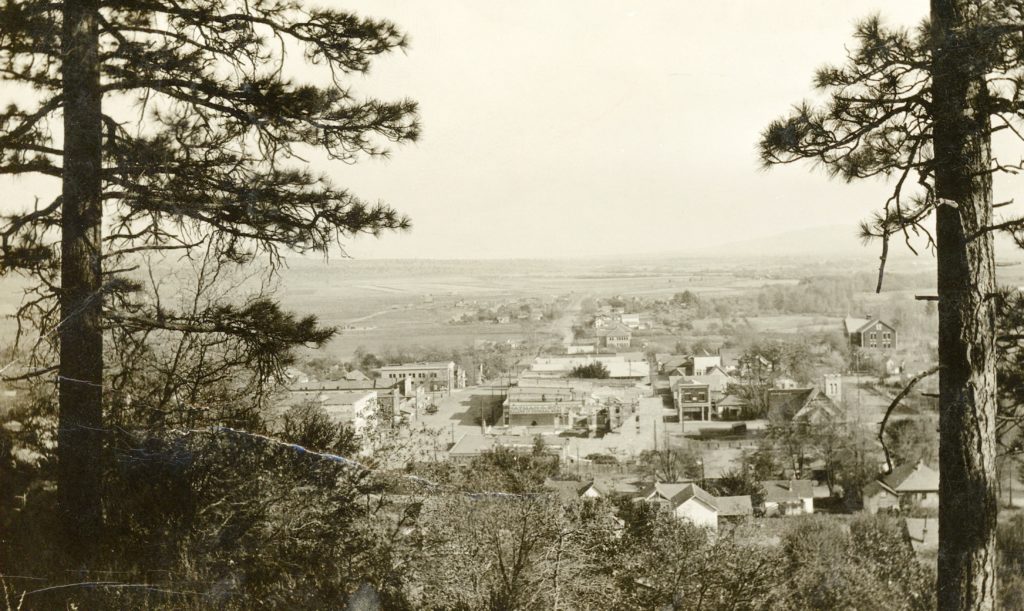
Susanville, 1916

Susanville view, 1916. Courtesy of Hazel Moller

In January the region was hit a big snowstorm and cold temperatures.  Over four feet of snow fell in Susanville, and to get an idea how cold a storm system it was, Sacramento had three inches of snow. The Susanville residents took the storm in stride, as they had been used to such storms every year since 1907. What they would not be prepared for, was this was the last major snowstorm for the next twenty-one years.

When spring arrived, the big news was Leon Bly announced to the world his Eagle Lake project. He assured everyone this time it would be different than the previous twenty attempts. In addition, to Bly the other big news was the first work on a state highway that would connect Red Bluff and Susanville, though it take until 1929 before it was completed.

The Fourth of July was a big celebration that the town had not had for a couple of years. In 1914 and 1915, Westwood was the host to celebrate the nation’s birthday. This time it was Susanville to be the host, and a good time was had by all. By this time a good nature rivalry between the two communities had developed and in the wild, wacky baseball game, Westwood beat Susanville 10-4.

In the fall, Jules Alexander launched a campaign for the preservation of Peter Lassen’s grave, which a campaign fund soon began to erect a new monument. It would take nearly year, but in the fall of 1917, a new monument was installed and dedicated in conjunction with the dedication of the new Lassen County Courthouse.

Just as the year had begun, it ended in much the same way. On Christmas Day Susanville was coated with four inches of snow.

Never miss a story, click here to subscribe.


The Cattleman

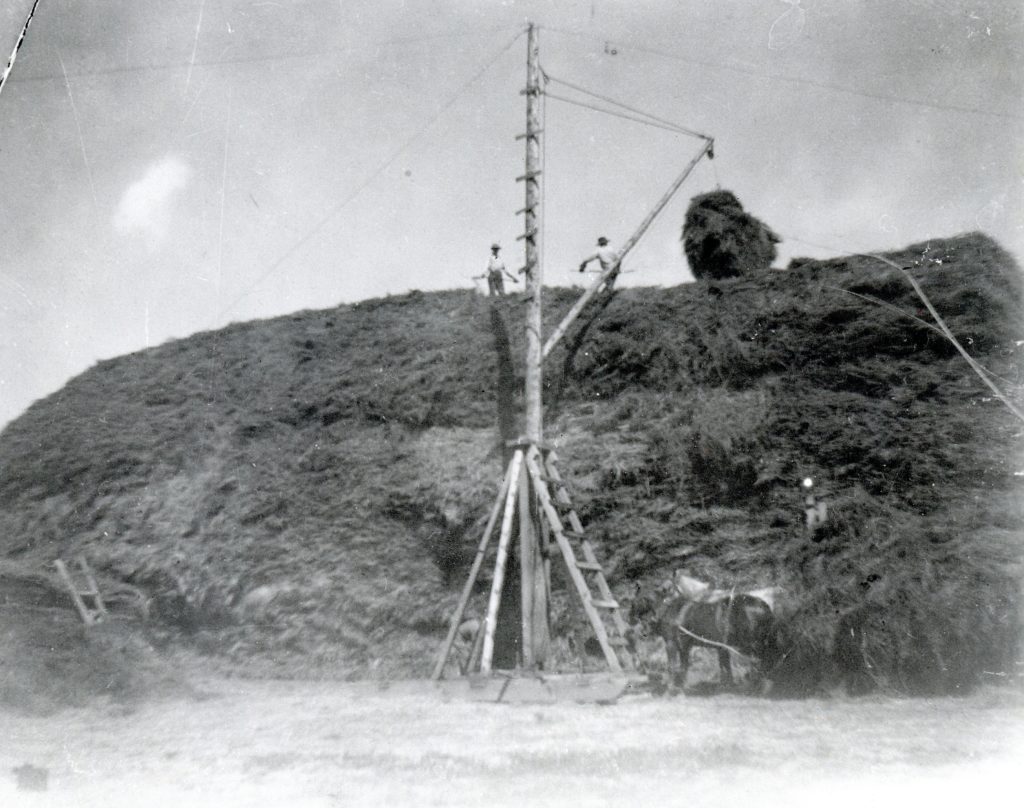
The film includes a scene of the hay derrick (above) in action. This photograph is the hay stacking at the Titherington Ranch, near Standish, 1908. Courtesy of Betty Gorbet

Lately, I have been working on my technical skills, which is always an interesting experience for me. Sometimes I succeed, and well on  other occasions I have new challenges.  My goal is put online a historic video, though viewing would only be for paid subscribers.  So if you are experiencing some technical difficulties, the culprit is probably me and working on this feature.

The particular film that I refer to is a short feature of the entire operations of the Vic Christensen ranch near Likely. It was done in 1939 as part of Encyclopedia Britannica’s educational films of the era.  Unlike the 1925 Fruit Growers Supply Company’s film, this one is narrated. Stay tuned.

Never miss a story, click here to subscribe.

Lassen County at 150

LC Cover022

In February, I inaugurated  a book-of-the-month, that featured Sagebrush Reflections. After all proceeds from book sales not only help support operations, but help finance future publications, in this case the stories behind the brands of the Pioneer.

April 1, 2014 marked Lassen County’s 150th anniversary. My sesquicentennial gift to the county is a quirky, entertaining look of the past 150 years. As Jane Baxton Little of the Sacramento Bee observed: “Purdy, Lassen’s self-appointed historian, juxtaposes the rural area’s colorful history with its not-so-distant past. He pairs a 1910 sighting of the Honey Lake serpent with the Army’s efforts in 2003 to get rid of the lake and its new monster, reportedly oodles of explosive debris from decades of Army operations. Honey Lake eventually was sold to the state for $8.6 million, a figure Purdy reports was redacted in public documents.

“His sardonic account of the cycles of history does not flatter the democratic process. In 1915 voters approved a $125,000 bond to build a new county courthouse. Its $39 million replacement was completed in 2012 without voter approval.”

For more information about the book and to order click here.

Eagle Lake’s Gallatin Peak

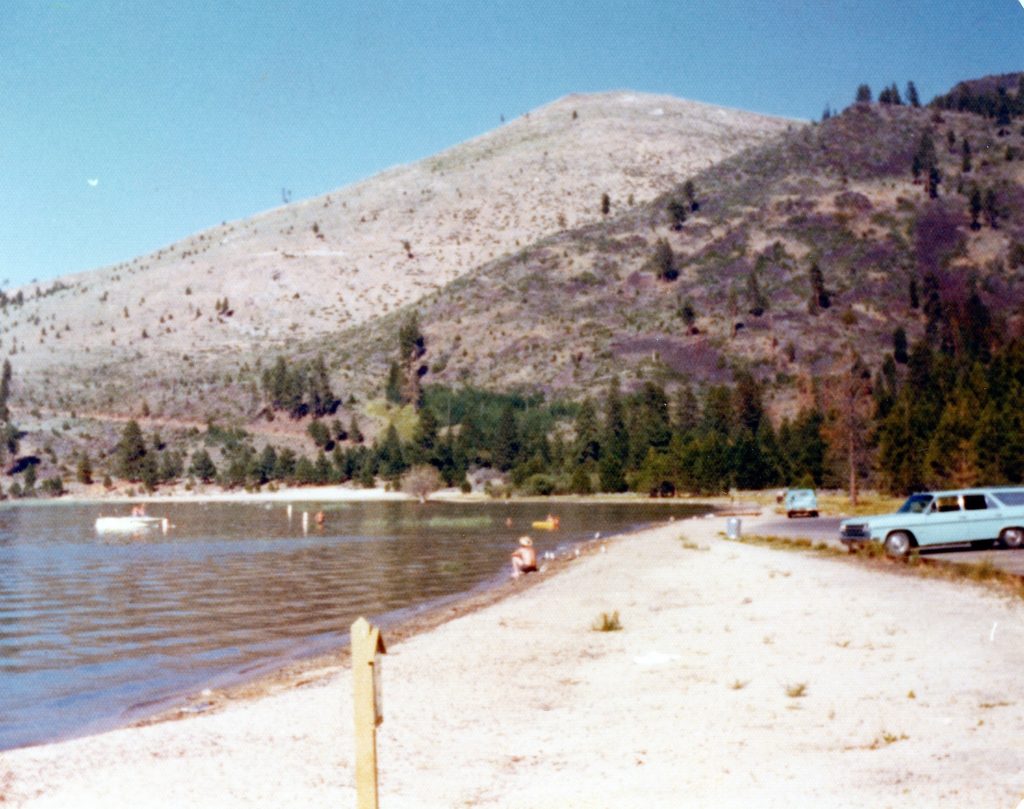
Gallatin Beach and Peak, July 22, 1974.

Gallatin Peak, with an elevation just shy of 7,000 feet is one of the most prominent features at the south end of Eagle Lake. It is interesting that it is of granite composition, while the surrounding mountains are basalt.  Actually, the peak’s original name was Granite, and it was not until the early 1900s that it began to be referred to as Gallatin, after the largest property owner at Eagle Lake.

For those who attended the Inspiration Point Tour, or received the narrative thereof, a geology lesson was given.  Four major land masses converge in the Susanville region–Cascade, Great Basin, Modoc Plateau and the Sierra Nevada.  This influence at the southeast corner of Eagle Lake is evident.

Because of granite and quartz composition of Gallatin Peak and extending over to nearby Round Valley, caught the interest of gold seekers.  From the 1870s until 1942, when President Roosevelt by executive order halted gold mining during World War II, there was considerable gold mining in this isolated pocket.

Never miss a story, click here to subscribe.
Fruit Growers – Camp 11

Camp 10, Cookhouse
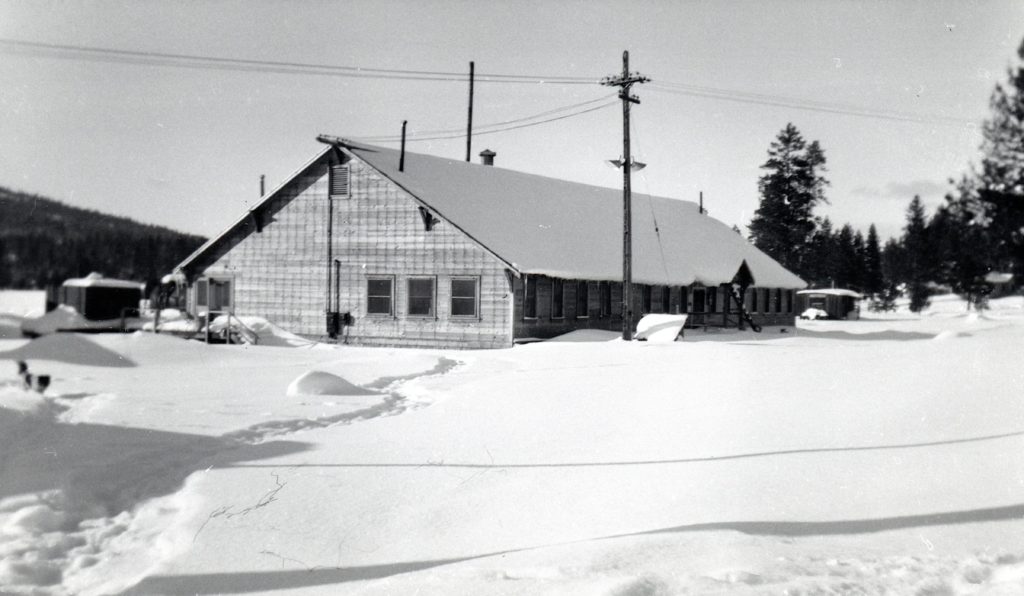
Camp 10, Cookhouse, December 15, 1951. Courtesy of the Fruit Growers Supply Company.

In 1929, Fruit Growers Supply Company consolidated all of its logging camps into one larger camp, known as Camp 10. It was located thirty-eight miles northwest of Susanville near the banks of Pine Creek. Ten years later, Fruit Growers considered leaving Camp 10 to establish Camp 11 on the east end of Champs Flat, about ten miles northeast. In the spring of 1940 that plan was put on hold.

In the early 1940s, Fruit Growers was awaiting a very important government decision on the Wage and Hour Law–whether or not an employee would be paid for travel time to the actual work site. Travel time between Camp 10 and the logging site was 1 to 1 1/2 hours each day. If the government mandated paid travel time, Camp 11 would be established, but not necessarily at Champs Flat. It would not be until 1948 when the government ruled that employees were not entitled to paid travel time, and the need for a new logging camp disappeared.

Never miss a story, click here to subscribe.
Constantia’s White House

Ross1
Courtesy of Joan Drum

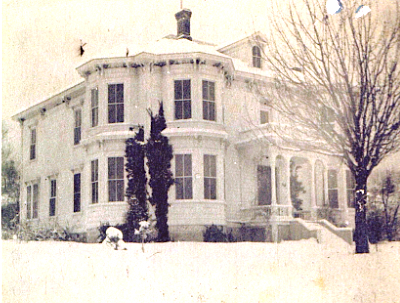
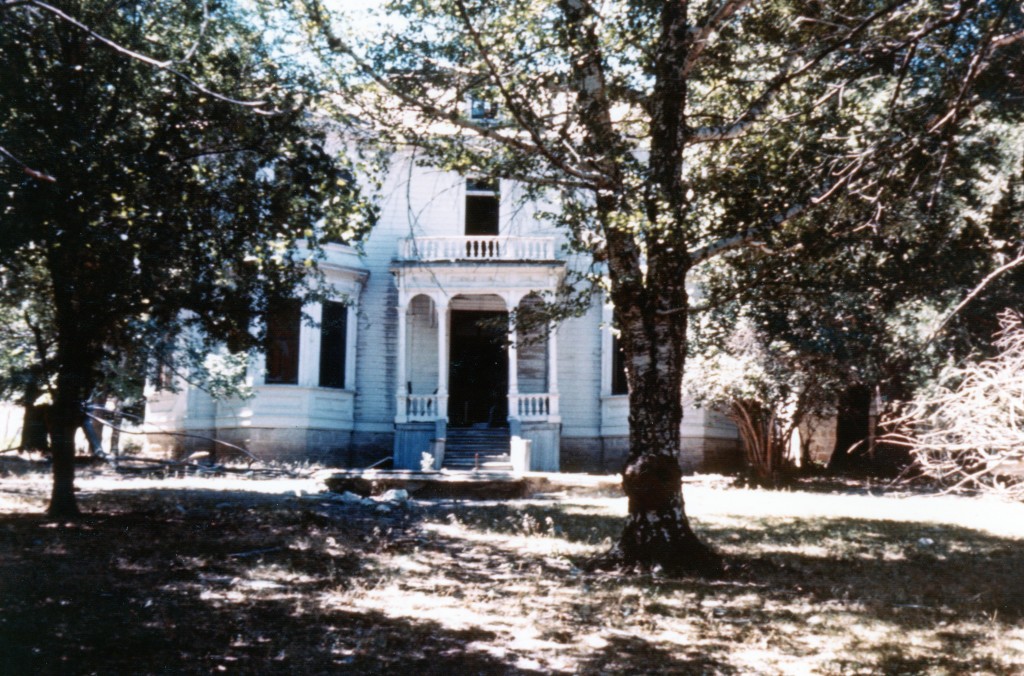
In 1863, Albert Elijah Ross (1836-1911) located on what would be later named Constantia. In 1884, Ross constructed a 17-room mansion there at a cost of $14,000. This residence and well-known landmark was simply referred to as the White House. In the early 1890s, Ross moved to San Jose to benefit his children’s education and eventually sold the property in 1898.  The ownership of Constantia would change several times until it became a part of the Pyramid Land & Livestock Company. In 1922, that Company filed bankruptcy and the Galeppi family purchased the Constantia Ranch. The Galeppi’s, for various unknown reasons, did not reside in the famed White House. Fred Galeppi stated that during World War II, the house was still in good shape, and even had furniture. During the construction of Sierra Army Depot during this time, Galeppi stated soldiers used the house for recreation, but over the years it slowly began to be vandalized.  In the early 1960s, most recall 1963, the house burned down. The cause of the fire remains unknown, though various residents of the region have their own story.

The "White House" at Constantia, circa 1960
The “White House” at Constantia, circa 1960

Never miss a story, click here to subscribe.
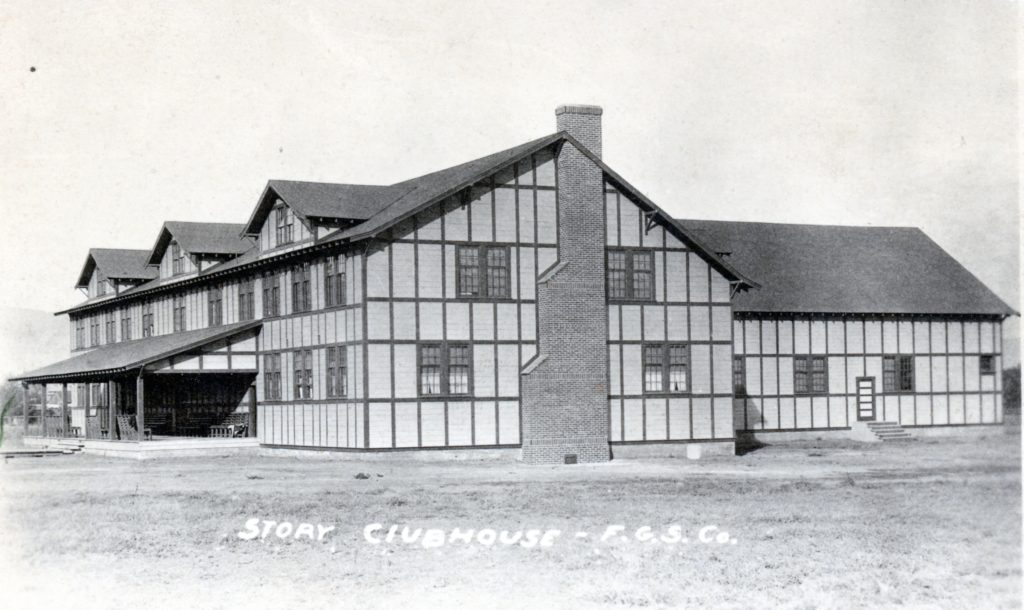
Fruit Growers – Story Club

Story Club, 1924. Courtesy of Lola L. Tanner

The Fruit Growers Supply Company operated a lumber mill in Susanville from 1921 to 1963. When it was sold it became the foundation for Sierra Pacific Industries.

In 1910, Fruit Growers found itself as a mill operated at Hilt. It should be noted Fruit Growers is a purchasing agent co-operative for citrus growers known today as Sunkist. This was an era when produce was shipped in wooden boxes, hence the need for lumber. Continue reading Fruit Growers – Story Club

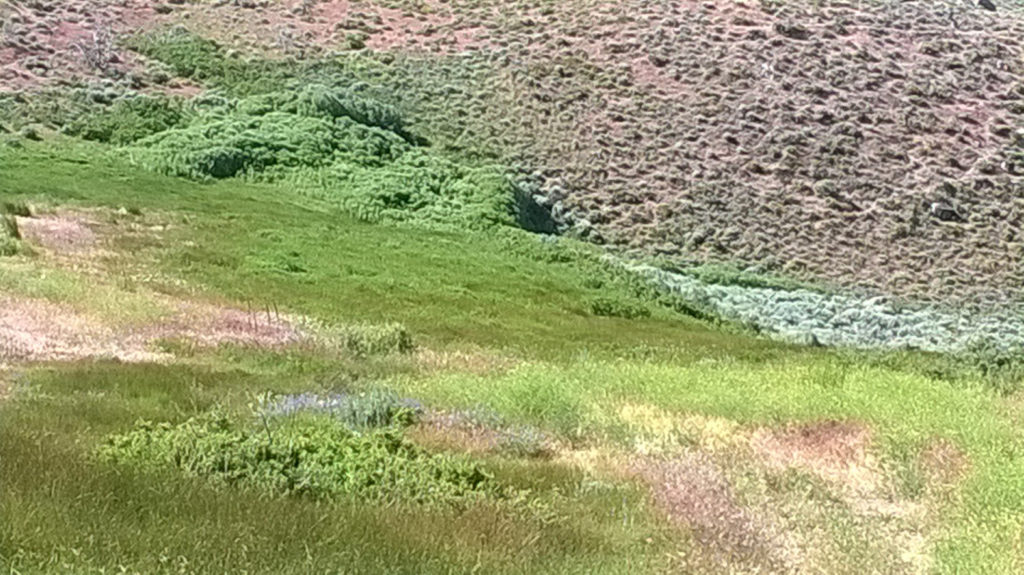
Lassen County – Jesus Spring

Jesus Spring, June 2016. Courtesy of Shaun Giese
Jesus Spring, June 10, 2016. Courtesy of Shaun Giese

In the mid-1980s, I taught a course for a couple of years in Research Techniques in Local History at Lassen Community College. The students ranged in age from 18 to 78.  The students received hands on training with visits to the Lassen County Courthouse to research records, and numerous other places during the course. They were always an enthusiastic bunch, and it was more the normal, the class would run over an additional hour or two.  Continue reading Lassen County – Jesus Spring

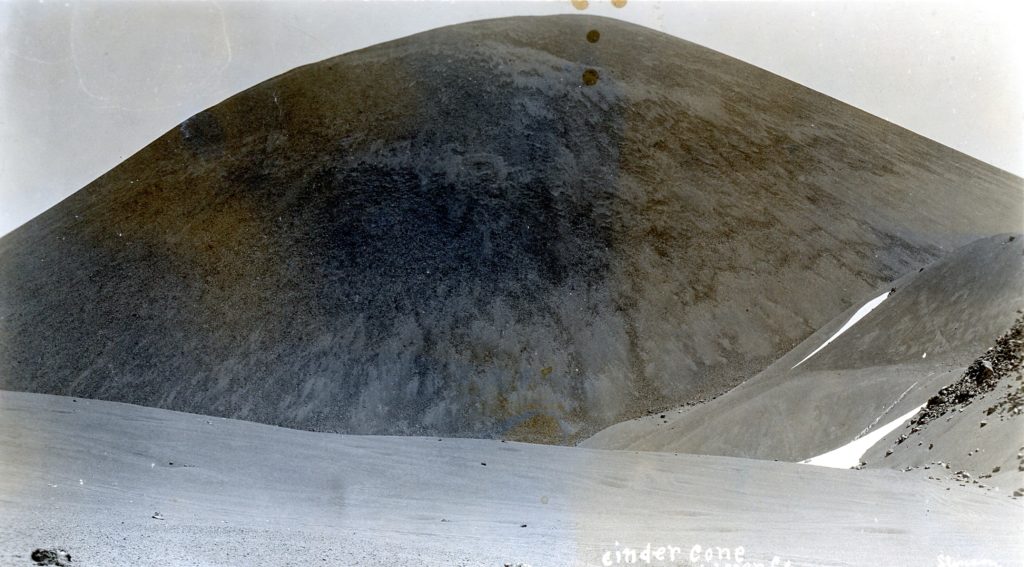
National Park Service

Cinder Cone, 1911. Mather considered unworthy to be part of a national park, though he had never seen the feature. Photo courtesy of B.R. Zimmerman collection.

When Congressman John E. Raker was diligently working on the establishment of Lassen Volcanic National Park, it was not the only item on his agenda. During the time when Raker introduced bills to establish Lassen Park, he had also authored proposals for the creation of a bureau of national parks. In 1914, Stephen T. Mather was recruited to create a separate agency inside the Department of the Interior whose sole purpose would be the administration of the national parks.

Raker and Mather, however, who sought for the same goal, had issues, namely in regards to that of Hetch Hetchy, which Mather opposed.  In 1913, Raker sponsored a bill to dam this glacial valley in Yosemite National Park for San Francisco’s water supply. The fight over it had been going on for a decade before Raker took office, though a century later Raker is branded as one of the main culprits, since his name is attached to the bill. There were many players in the field. One that is rarely mentioned is Franklin Lane, Secretary of the Interior. Lane was appointed to that position when President Wilson was elected in 1912. Prior to that Lane was the City Attorney of San Francisco who had a conflict of interest in Hetch Hetchy.

Whatever the case may be, one hundred years ago today, (August 25, 1916), President Woodrow Wilson approved the creation of the National Park Service, and Mather was made its first director.

Never miss a story, click here to subscribe.
Tunison’s Fried Chicken

Tunison's advertisement in the 1937 Westwood Chipmunk
Tunison’s advertisement in the 1937 Westwood Chipmunk

In the mid-1930s, Bill and Jeanette Tunison established very popular bar, restaurant and gas station five miles east of Westwood near Goodrich Creek. Tunison, it should be noted had been a Westwood resident since 1916. The establishment became very popular in a short order, known for its good food and hospitality. As Marian Hull Herrick recalled, “People would call ahead to see if they serving were Jeanette’s Rum pie that night. People raved about the fried chicken and biscuits. Jeanette confided in me that they were made with Bisquick.”

Never miss a story, click here to subscribe.