Category Archives: History

Susanville – 100 North Roop Street

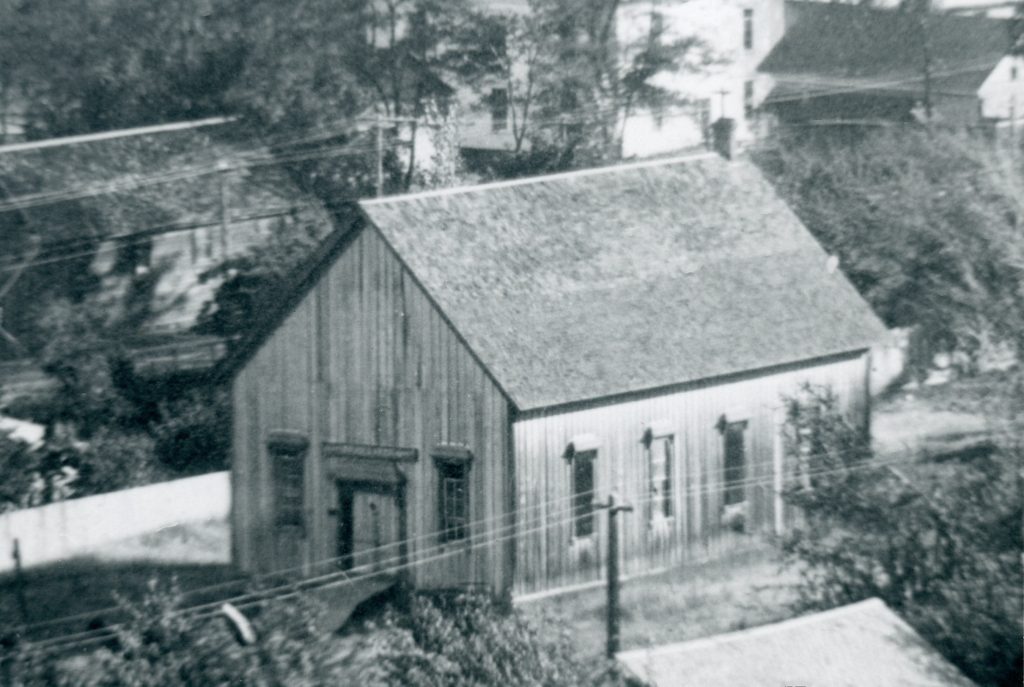
100 North Roop Street, January 1916.
In 1908, David Knoch, a pioneer merchant of Susanville, had this modest home constructed on the corner of Roop and Nevada Streets. With the exception of the Bunnell house on the corner of Roop and North Streets, the western frontage of that block had always been vacant. When Knoch opened up the property, three Queen Anne style homes were built shortly thereafter. After Knoch’s death in 1911, the house was sold to John T. Long. It would remain in that family for three generations, later the home of Long’s daughter, Maude Tombs, and Maude’s daughter, Nadene Wemple.

Subscribe!

Eagle Lake, 1915 – Part II

Happy campers at Eagle Lake, 1914.
This spring I wrote about the pamphlet entitled Lucky Land of Lassen that was produced and distributed at the Panama Pacific International Exposition that was held in San Francisco during 1915. In July, I published the first of two installments concerning Eagle Lake. The first account focused on the lava beds and ice caves.

“For years it has been a favorite camping place for the people of this county, and in this respect its attractions are many. It is an ideal place for camping, boating and fishing. During the summer months there is little or no rain to annoy the camper and the nights are cool during even the hottest weather. Its dry, pure air is mixed with the breath of fragrant pine, and gives to the tired mortal a new lease on life. At the southeast corner of the lake is a long stretch of swimming beach and there is another one at Spalding, a new town recently laid out on the west side of Eagle Lake, just south of where Pine Creek flows into it. Both this stream and the lake are full of black bass, cat fish, white fish and salmon trout of a kind unlike any other on the coast. It goes without saying, that on a deep lake like this, surrounded by timber and steep bluffs the boating is fine during the summer months.”

Subscribe!

The Courthouse Ghost

Fred Brunhouse. Courtesy of John & Deese Theodore
Many a former county official or courthouse employee holds a belief that the courthouse is haunted. This is especially true when one of those individuals work in the building on weekends. I can safely attest, one does hear a lot of strange noises during such occasion. I am not sure if this attributed to Fred Brunhouse. Brunhouse came to Lassen County in the early 1890s as a school teacher. In 1914, he was elected Lassen County Superintendent of Schools. In the fall of 1917, he began to have health problems, that was taking a toll on him mentally, as well as physically. At noon, on March 13, 1918, when the courthouse is usually vacant for lunch, he shot himself twice in his office. It was not until two hours later when County Surveyor Thad McKay found Brunhouse’s body. Brunhouse left a detailed note with instructions to carry on the operations of the Superintendent of Schools, as well as his personal affairs.

Subscribe!

Peg-leg Mountain

Peg Leg Mountain, February 1914. B.R. Zimmerman Collection
This mountain, for those not familiar is located a short distance northeast of Westwood. In 1864, David Johnson (1815-1904), who was better known as “Peg leg”, came to California. While en-route to the Sacramento Valley, his wife, Martha, aged 35, died on October 12, 1864, at Devils Corral, Lassen County. Johnson transported her body to Mountain Meadows where he buried her, which is known as the small cemetery at the 101 Ranch.

Peg leg was known as an old time mountain man who spent his summers in this region and wintered with his family at Red Bluff. In March 1903, his son, John W. Johnson was granted guardianship of Peg leg, who had been declared insane by the Court. Peg leg had two daughters, Mrs. Elizabeth Howard and Mrs. Mary Heckle. John had filed a request to sell the Mountain Meadows property for $800. The sisters contested the sale, as they cited the land was worth at least $1,400. The court approved John’s petition. Peg leg’s property was sold to W.C. Lucas and J.A. Virden for $800. On April 5, 1904, David “Peg Leg” Johnson died at the Napa Asylum for the Insane. His family brought his remains to Mountain Meadows in June and interred them next to his wife, Martha, and their twenty-nine year old son, Ralph, who died in 1884.

Support!

1917 Lassen Monument Dedication

The two monuments.
The Lassen County Courthouse dedication was not the only event to occur at the same time. For over a year, Susanville resident, Jules Alexander spear headed a fundraising drive for a new Peter Lassen’s Monument. The day before the courthouse ceremony several hundred people gathered at Peter Lassen’s grave. When the attendees arrived the new granite marker was draped in a large American flag. A supposed relation of Lassen’s, Mrs. May Lassen, who it was said was the wife of Lassen’s nephew, did the unveiling. This was followed by the obligatory speeches of local dignitaries.

Robert M. Cook, of the Lassen Weekly Mail wrote that more was needed to be done with the new monument: “The location is one of great scenic beauty and it is hoped that it can be made an official cemetery and thus secure the care of the county in keeping the grounds in first-class condition. There is no fund at present for this purpose and it will be a shame to allow the beautiful stone that has been erected to become the center of unkempt and neglected grounds.”

Subscribe!

Oakes & Philbrook

Oakes and Philbrook’s furniture store under construction.
In 1901, two half-brothers, Tom Oakes and Alonzo Philbrook built a furniture store at 800 Main Street, which building still exist. As was customary of the day, they were also the local undertaker, since making furniture and building a coffin went hand in hand. In 1912, the building was acquired by the Bank of Lassen County which remained in the building until 1933 when it was acquired by Bank of America. It has had numerous occupants since such as the United California Bank and the Lassen County Times

Subscribe!

Merrillville Continued

In 1884, the Hurlbut mill was at the head of Main Street, Merrillville
The Lassen Advocate of January 12, 1884, provided their readers with a description of Merrillville:
“Every week I see something in your paper about some “ville”—Susanville, Oroville, Marysville, Janesville—but I never see anything about Merrillville. Perhaps you do not know that there is a Merrillville. For your benefit and that of the traveling public, I will describe and locate it as best I can, or at least the business portion of the town.
“At the upper end of Main Street, is the Post Office kept by P.D. Hurlbut, a very sociable businessman, who unlike most government officials, does not try to make a fortune out of his office. When not employed in his official duties, he attends to and runs his sawmill, and keeps on hand a fine assortment of the best lumber.
“From the Post Office down Main Street about two miles is the next place of business, or such I think it is to be. This is the fine new barn, the property of Ben Neuhaus and from all appearances it is to be used as a livery stable as soon as the business will pay. Ben is one of the first settlers in this town, is a fine, jovial, liberal gentleman, and I think will make a good livery man. There is nothing small about Ben—nothing whatever—and that is not his fault.
“The next place of note, one and a half miles down Main Street is the school house, a neat and well furnished building, with a stable and a board fence around the playground. On the northeast corner of this fence I am sitting as I write this. It is a very convenient place to take notes and affords a good view of the surrounding country. The schoolhouse is used for a variety of purposes, town hall, polling place, church, etc. We have church here in two weeks and everyone attends regularly. If you should visit our schoolhouse after we have had a school election, from the empty bottles around the door you would take it to be a country saloon—if you should enter you would take it for the town spittoon.
“Two miles north of the school house, or Swamp Street, is the blacksmith shop and there you will always find Orman Folsom ready at any time. A fine gentleman and one of the best mechanics in Northern California.
“From the school house down Main Street about five miles, you will find Frank Fluery’s saloon, and for ten cents he will give you enough “make you happy” to cause you to forget all your trials, troubles and tribulations for a time.
“Merrillville is situated twelve miles north of Susanville, in Willow Creek Valley and was laid out and named by Capt. Merrill after himself—leaving off the Captain and adding the “ville.”

Where is Merrillville?

Folsom Ranch, 1900. Courtesy of Mary Dale Folsom
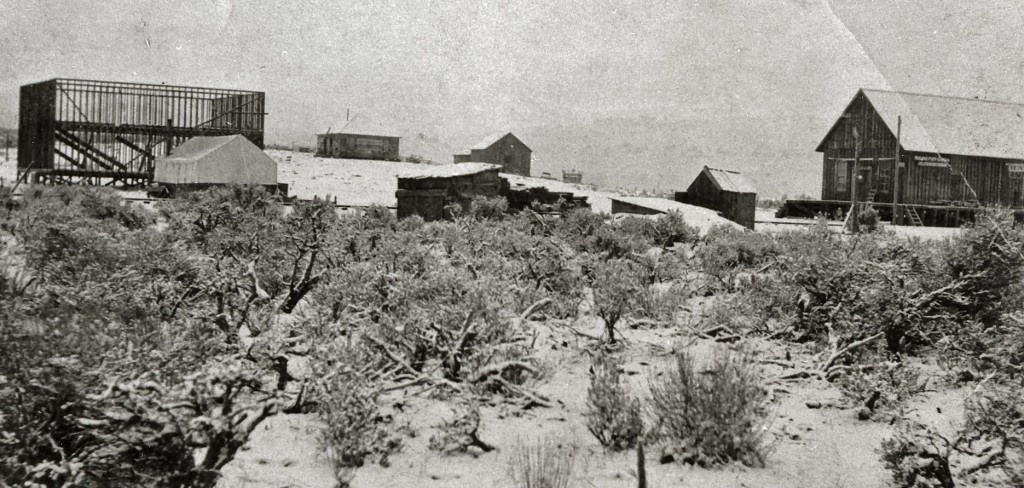
Unlike many rural outposts there is usually some sort of a nucleus of buildings. There is always an exception to the rule, and Merrillville is one of them. In the early 1870s,the residents of Willow Creek Valley desired mail service. It was Willow Creek blacksmith, Orman Folsom who led the movement. On April 1, 1875 the Merrillville Post Office was established at the Folsom Ranch, (Willow Creek Wildlife Unit), with Orman Folsom as postmaster. Folsom named the post office after Captain Charles A. Merrill who had recently arrived on the scene to tap Eagle Lake for reclamation. Folsom and his successors never had any intent to establish a town. The post office location changed over the years and when it was discontinued, on November 30, 1928, it was located at the Stone Ranch, Eagle Lake.

Subscribe!

The Great Purge

Purge Nite. Courtesy of Frank W. Davis
It is only fitting that on Labor Day that we remember the great purge of in which nearly 400 men, women and children were forced out of their homes in Westwood on July 13, 1938 over a labor dispute, one that lingers to this day. Yet, by the end of that historic day the California Highway Patrol, with the National Guard on standby placed a blockade on the community, sealing it from the world until things could stabilize. According to historian Gerald Rose about the historical significance of the purge he wrote, “Not until the 1941 deportation of Japanese-Americans was there a large forced migration of United States citizens.” To learn more about Westwood’s labor history, read Red River: The Turbulent Thirties.

Support!