Category Archives: History

A Spaulding Tract Revival

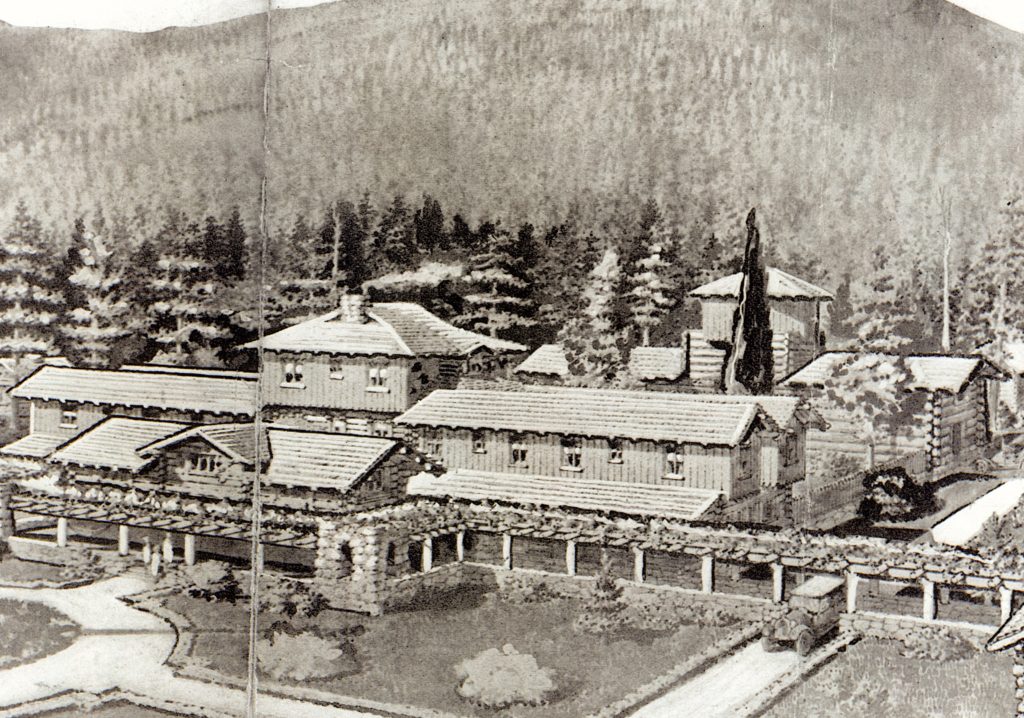
An artist’s rendering of the proposed hotel at Spaulding Tract

In 1914, John Spalding subdivided his brother-in-law’s Jules Hurlbut homestead for summer homes. While many took notice, the sales were dismal. Ten years later, W.J. Spalding, John’s son, revamped the subdivision to what is today.

Spalding enlisted the aid some real estate promoters from Southern California and formed the Eagle Lake Cabin Site Company. They had grandiose plans, at least on paper. There was a  proposed $100,000 resort complex, that the Eagle Lake Lodge was to resemble the Grand Canyon’s El Tovar Inn. In June 1925 the Company informed Spalding that sales were a doing great. Some 2,800 lots had been sold at $50 each “to a very desirable class of people.”. The sales remained brisk for the year.

1926, was a different story, as in buyers remorse. Some of last year’s buyers came to inspect Spaulding Tract. First they had to deal with poor road conditions and upon arrival there was no grand lodge or even a cabin. Needless, to say the lot owners were angry had invested in non-existent resort community. Over the ensuing decades lots at Spaulding could be had at bargain prices via delinquent tax sales. In 1950, Lassen County sold 524 lots during a delinquent tax sale that saw prices range from twenty cents to twenty dollars a lot.

Support
 

The Johnstone Letters

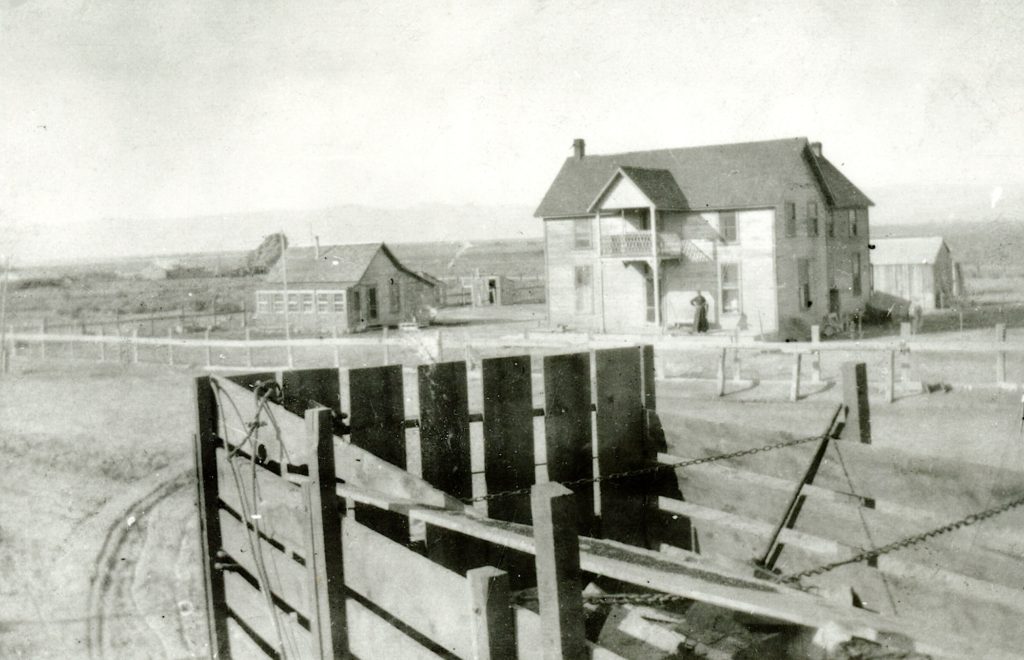
I.W. “Doc” Smith’s, Hot Springs Hotel, circa 1907, north of Wendel

Earlier this year, a friend sent me a copy of a 1890 letter between the NCO Railway and Cedarville merchant, T.H. Johnstone about a business proposal at Liegan. That triggered a memory. In 1982, a paper dealer from Redding contacted me about a collection of  letters dating from the 1890s to the early 1900s between T.H. Johnstone, and his brother Samuel A. Johnstone. Sam Johnstone came to Amedee  in 1893, and would later the become owner the Amedee Hotel from 1901 to 1907. The letters opened a proverbial pandora box, with topics such as the tragic death of Maud Bentel and the death Cora Johnstone, the first person interred in the Amedee Cemetery. Below, a is a 1899 letter about the NCO and  extending its line northward.

April 25, 1899 – T.H. Johnstone, Cedarville,

Dear Tom:  Are you having any maple sugar this spring, if so can I have some of it, 2 or 3 bricks for my own use. Well Railroad business is somewhat a standstill. Mr. Fulton has resigned his position taking effect May 1st. Do not know who will be his successor, think Ed Smith will. Smith is the head engineer on the. road is a fine man, has got charge of all trains. None think Amedee will be moved to Doc Smith’s place, that is at the foot of the hill where those warm springs are. They have built a side track there and level it up nice. Also built  water tank that hold 42,000 gallons of water. Mr. Gest calls the place Smith. They expect to move the shipping corrals up there for fall shipping of stock and think that the depot for Honey Lake merchandise will be there, but do not know yet as people are guessing at most of it. Smith told me if he had anything to do with it after Fulton. left, he would give me all the information he could. Are not doing much now as they are out of steel and will be summer time before they can get any.  Yours Respectfully Sam.

Never miss a story, click here.


A Sawdust Pile Tale & More

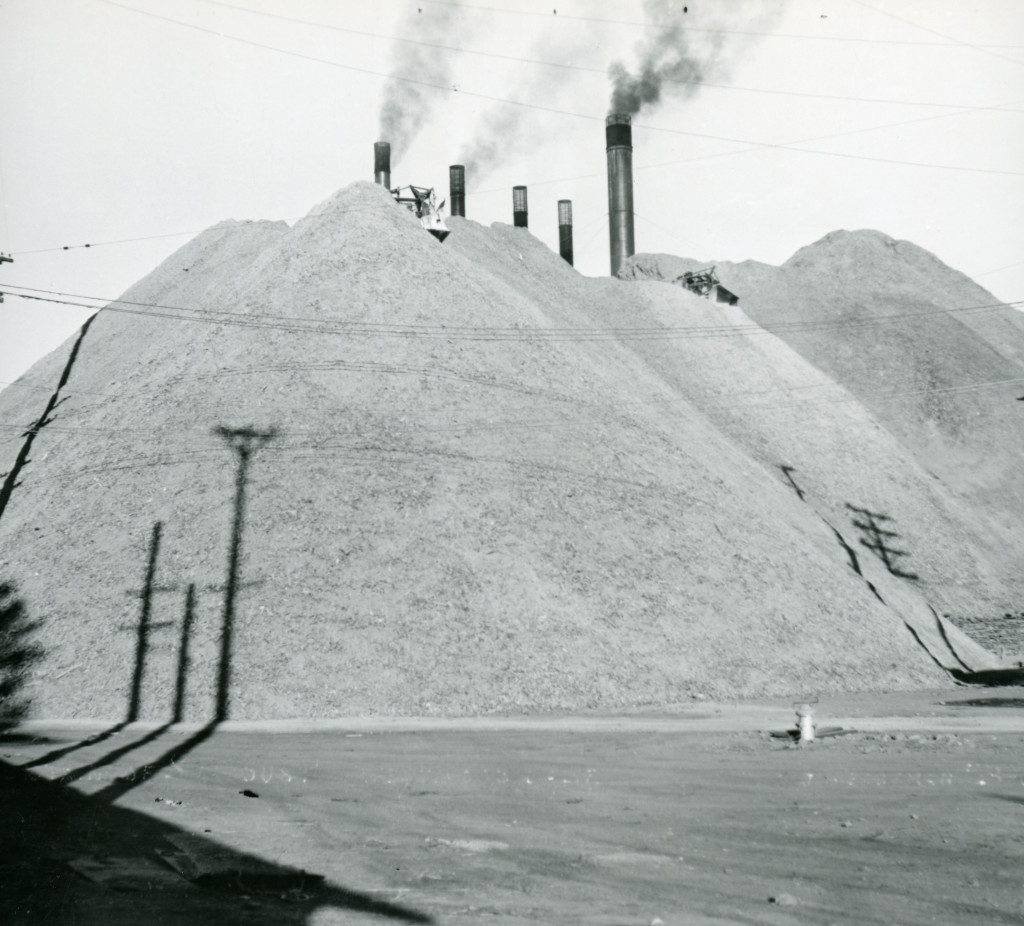
Awhile back Kay Ole Leary wrote: “I am making a book out of my mother’s memories of growing up in lumber mill towns. One of her vivid memories was of being warned to NEVER play in the sawdust piles, no matter how much fun it looked like it would be to do so. The spontaneous combustion inside the piles would create pockets of fire, leading to, in her words, “a horrible death.”
“I am illustrating her stories with the many photographs my grandfather took of his family and the places they lived. Unfortunately, the only photos of the Pine Ridge Forest Lumber Company Lumber Mill we have are of the log yard and log pond (each with their own stories), but none of the sawdust piles.
I have searched (online) historical archives and have contacted several PNW historical societies, all to no avail.
“May I, please, giving credit as you direct, use one of your sawdust photos in my book? I like the lower one, without the telephone pole, better. I would very much appreciate your permission, and would not use it without your permission. Thank you for considering my request.”
Of course, I was able to assist. From to time people start writing memoirs, usually at the urging of a family member. They happen on my site, and a popular request is the Westwood Hospital. This is why there is a no paywall. However, there are some people that blatantly abuse the privilege, and there is one person that copies the photographs and profits by doing so. As the saying goes, it takes all kinds.
Tim

Paul Bunyan Days

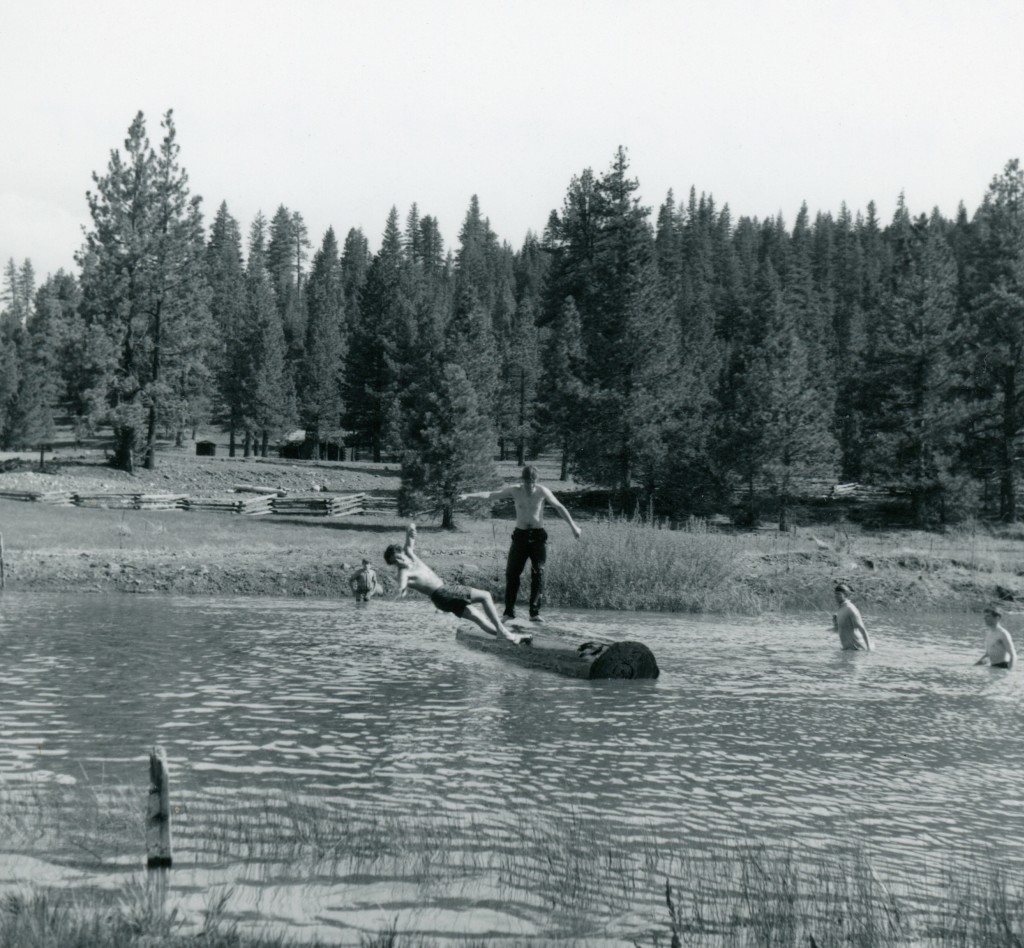
Log rolling contest at Willards. Couresy of D.B. Martin

In the late 1940s, Paul Bunyan Days  was a logging competition held not only at Lassen College, but other community colleges that had forestry programs.  Tom Gilfoy who graduated from Lassen in 1951, said it was Ralph Throop who was instrumental in starting Paul Bunyan Days at Lassen. At that time it was held behind the high school, since the college was located on the same property. Tom stated they made an impromptu dam on the Susan River for log pond events that included log rolling. Other contests involved burling, pole climbing and two-man bucking saw.,  In 1950, Rex Coalson was the overall winner, followed by Ted Pankey in 1951.

Some time in the late 1960s, no doubt due in part that Lassen College separated from Lassen High School, the Paul Bunyan Days was moved to Willard Creek. It was rather fitting since in 1938, it was the forestry students who developed the Willard Hill ski area, later converted into a sled hill.  Mike Moyers who later taught at Lassen stated that around 1981 or 1982 was when the last Paul Bunyan Days was held. In 1984, the forestry program at the college was terminated due to lack of students.

Subscribe

The Westwood Auditorium

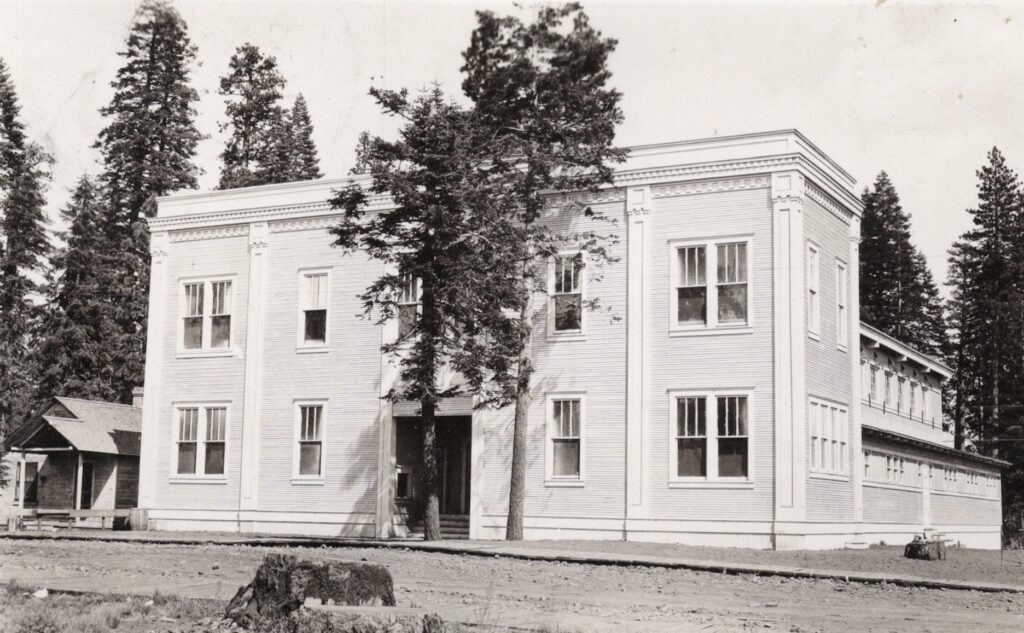
Westwood Auditorium, 1920

One  of Red River Lumber Company’s  early public buildings in Westwood was the auditorium located at northeast corner of Birch and Fourth Streets. It was in December 1917 when Red River unveiled the plans for a multi-purpose building. This much needed facility would house a fully equipped gymnasium, lodge rooms to accommodate its growing fraternal organizations, Billiard rooms and other spaces devoted for readings and meetings. The goal was have it completed by the spring of 1918, but Red River noted it could be delayed for a number of reasons due to the impacts created to meet the needs associated with World War I.

The Auditorium was put on hold, much to dismay of the residents. In January 1920, Garfield Oates, Red River’s resident engineer, announced that the plans for the Auditorium were being modified and construction would begin shortly. On May 29, 1920, the highly anticipated opening of the $30,000 Auditorium was held–by far the most expensive public building built in Westwood to date.

On the first floor was its most notable feature being a large dance floor measuring 48 by 96 feet. In the Auditorium’s later years the dance floor was converted into roller staking rink. By the early 1970s, the building was its showing its age. In 1973 the Lassen County Assessor deemed to building of no value. By the late 1970s the building was demolished. Many Westwood residents could not remember a year, but it has been gone by 1980, when the shuttered nearby Westwood Theater re-opened as the Red River Pub.

Support


Lassen Electric Company

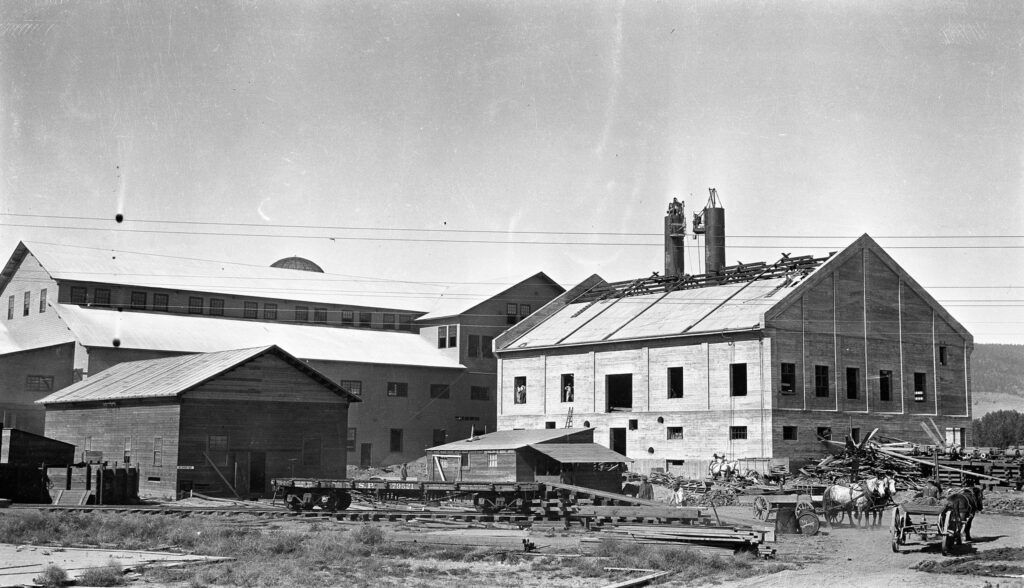
Fruit Growers Powerhouse under construction, 1920 – Courtesy of Ed Standard

In 1910, a partnership was formed between Abel Bunnell, L.R. Cady and J.E. Pardee known as the Lassen Electric Company. It should be noted, in 1901, electrical service were offered to Susanville residents. The anticipated growth with the imminent arrival of the railroad meant a larger more reliable electric plant was needed. A solution was found at Bunnell Springs, six miles west of Susanville The springs could provide sufficient hydro power. A plant was constructed at Bunnell Ranch and placed into operation on June 11, 1910. It had a capacity of 150 kilowatts, twice the capacity of the old system. In 1920, the Lassen Electric was sold to the Red River Lumber Company. This was done to meet the demands of the fast growing community. Red River, after all, had its own  extra power to supply Susanville. In the summer of 1920, Red River spent $100,000 to build the transmission lines from Westwood to Susanville. In 1924, Lassen Electric reached an agreement for Fruit Growers and Lassen Lumber Box to provide for back up power.

Tim.

Charles Crawford – Lake Cemetery’s First Internment

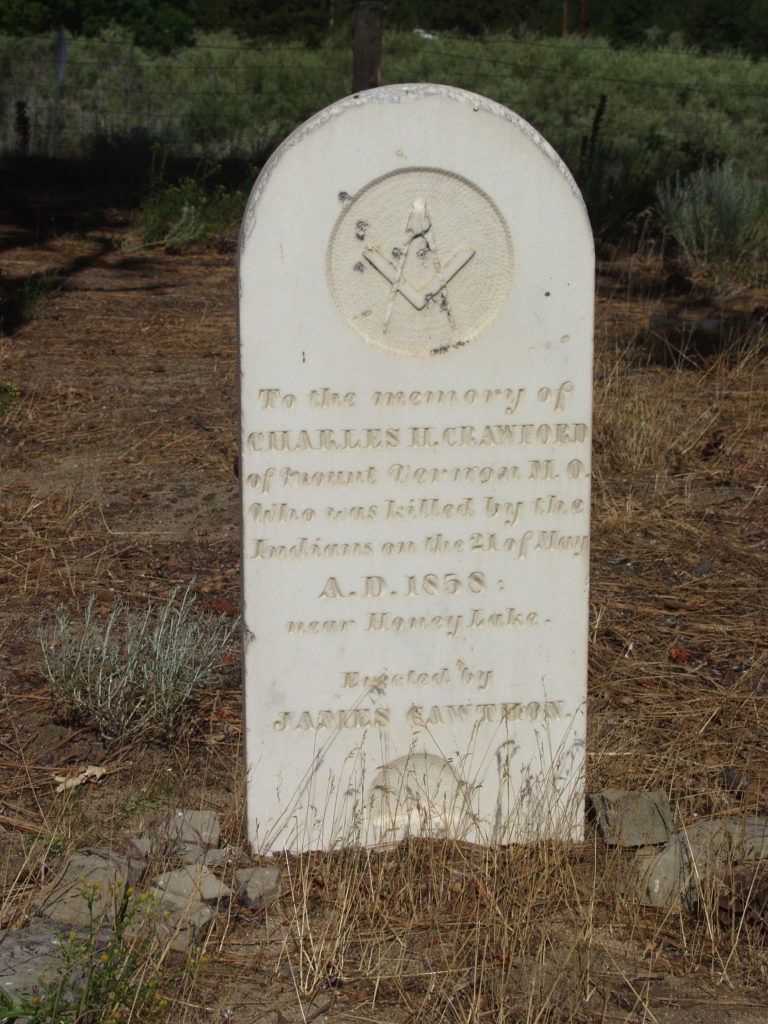
The grave of Charles Crawford, July 1, 2020—Larry Plaster

During the spring of 1858 relations between the Maidu and Washo tribes and the Anglo settlers were tense due to the Indians driving away the Anglo’s livestock. In May 1858, the Indians drove a yoke of oxen from Manly Thompson, near Janesville and for whom Thompson Peak is named for. The oxen were driven over the mountain. A posse of nine men formed to search for the animals. Eight traveled on foot, while Charles Crawford, a very heavy set man, rode a mule. Once over the mountain near Last Chance, they encountered an Indian camp, but there were no signs they had anything to do with oxen. Later they encountered another group of Indians, who fled, and a pursuit ensued. Crawford had a encounter with one, who shot him with a arrow, that deeply penetrated his chest to the extent, it nearly went through his body. In the end, the other men made a make shift of stretcher to carry Crawford back over the mountain to Janesville. It was an ordeal for them due to his weight. There was little that could be done to aid in his recovery and he died three days later on May 21, 1858, and his grave became the nucleus of the Lake Cemetery.

Forthcoming is the story of the murder of Harry Gordier, the next internment what would become known as Lake Cemetery,  that later in the  same year, but there is no marker for his grave. Gordier’s lasting legacy is that of  his hidden gold cache that still fascinates treasure hunters to this day.

Subscribe


Lake Cemetery Revisited

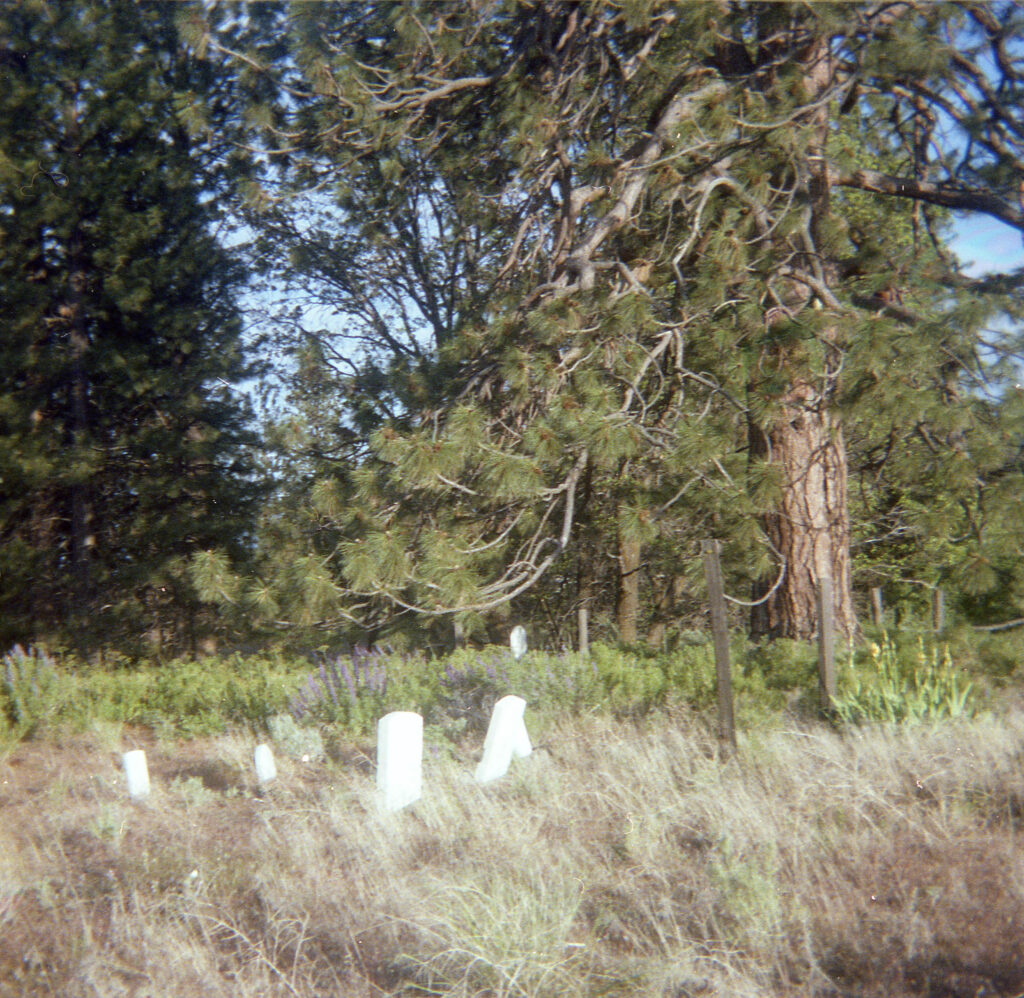
Lake Cemetery, 1978

As it is Memorial Day, I thought I would share this photograph of the Lake Cemetery a couple miles south of Janesville. It is the oldest cemetery in Lassen County dating back to 1858. In 1916, Asa Fairfield, Lassen County historian, requested that the county fence the cemetery. The Lassen County Board of Supervisors approved Fairfield’s request, and the cemetery was fenced. It should be noted, that it was not a public cemetery per se, and it was located on private property.

Fast forward to 2021, the cemetery was a victim of the Dixie Fire. From my understanding, as I have not been there since the fire, the majestic pine tree and the fence were destroyed. Hence this photograph with the tree.

Tim

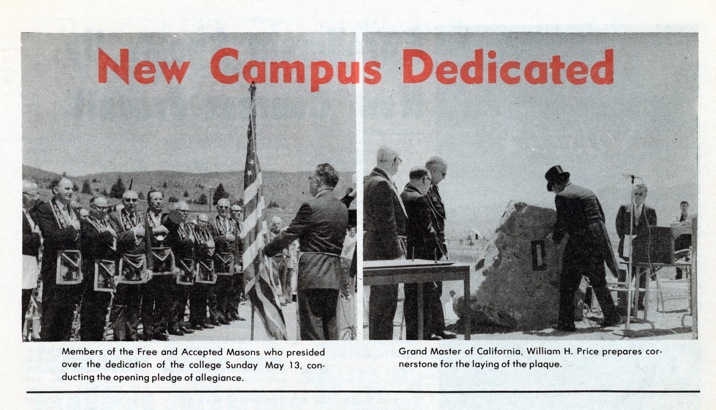
Lassen College Campus Dedication

Courtesy of Jim Chapman

May 13, 1973 was a historic day for Lassen Community College.  A formal dedication ceremony was held for the new campus. At 12:30, it began with the Grand Lodge Officers of the California Free and Accepted Masons with the cornerstone laying ceremony. A time capsule was included to mark the event for posterity. It was then followed by a barbecue. At three p.m. the formal dedication program began at the Sports Center with College President Robert Theiler, as the initial speaker. Theiler was followed by an assortment of dignitaries giving their blessings for the monumental occasion.

Support