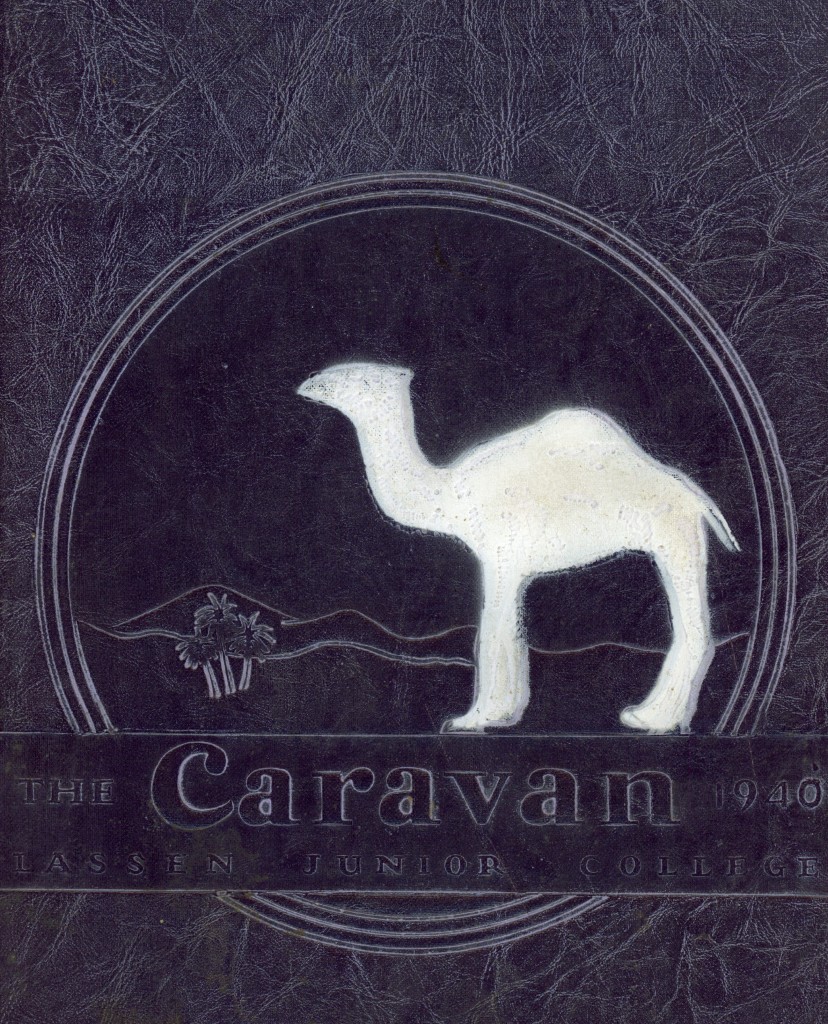
1940 Lassen College yearbook cover of Camel Caravan
This concludes the weekly post about Lassen College’s Centennial history. However, the College’s Willard Hill Ski area will appear near the end of November.
The following account is by Neil Wemple, who graduated from Lassen Junior College in 1938: “The story of the camel as mascot for Lassen Junior College is a bit unlikely and interesting and its goes like this. I had thought the selection of the camel had been the work of some of the “old grads” back in the late twenties. Someone had told me this, but it was not so. So I was determined that it was so and when I came upon the truth I could scarcely believe the results of my own research efforts. I wrote many letters, made many phone calls, studied many LUHS and LJC publications and was very embarrassed to discover that the evolution and adoption of the camel came about in my first year at Lassen Junior College in 1937! The advice and efforts of Bud and Don Cady, Adelene and Abe Jensen and my sister Deese Theodore lead me to Frank Rice and Phil Hall, former Lassen Junior College Forestry students who knew the answer. I was finally able to find some old publications which made the first mention of the camel in March of 1938. Frank Rice states that the camel began in 1937, and I know when I entered Lassen Junior College in the 1936-37 year we were called the camels. Continue reading Lassen College’s 1st Mascot→
American Legion Parade, Susanville 1926—Margaret Purdy
In early June 1924, the Thomas Tucker Post No. 204, of the American Legion decided to place American flags along Main Street in observance of the 4th of July. It should be noted that American Legion posts nationwide were doing the same. They ordered 100 flags to be placed on either side of Main Street from the Elk’s Lodge to Weatherlow Street. The flags 4×6 would be attached to 12 foot metal poles and spaced at 30 foot intervals. When installed on July 3 the general consensus deemed it a wonderful improvement from the past, that consisted of haphazard placements of bunting and flags here and there.
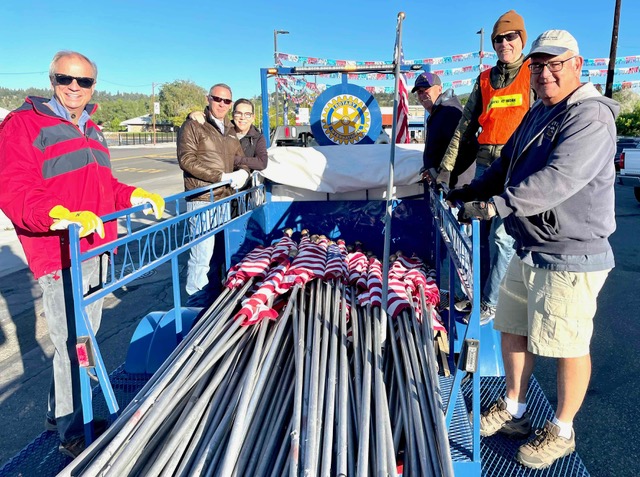
Rotary Club members preparing for Flag Day, 2012-Left Right: Rod Chambers, Richard Egan Holly Egan (driver), Morgan Nugent, Martin Balding, and Jim Chapman-Courtesy of Jim Chapman
The tradition continues. For over thirty years Susanville’s Rotary Club has taken over the role of placement of the flags. The flags are flown on major holidays and special events. Thank you Rotary Club!
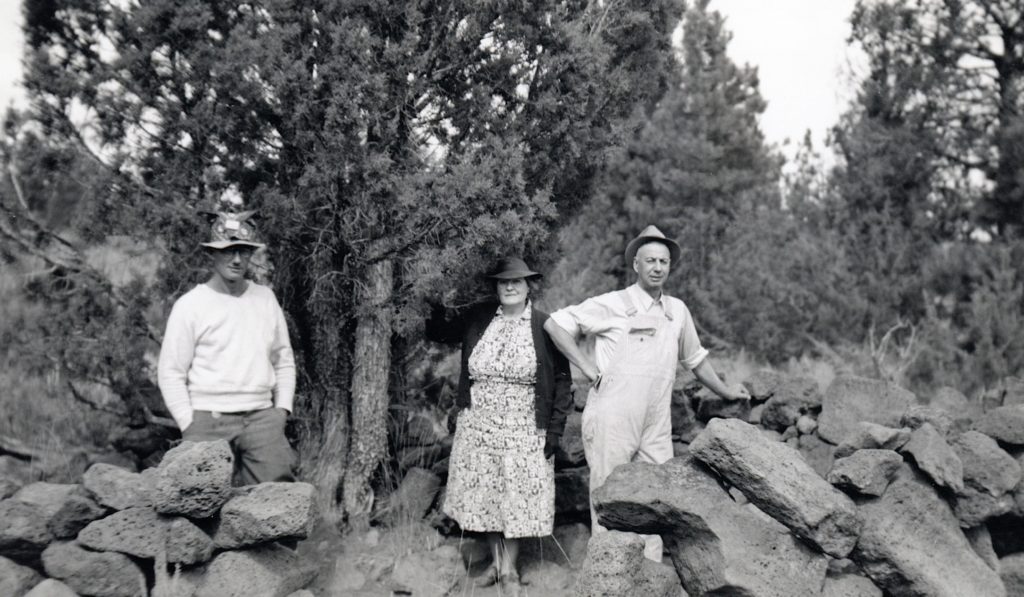
Indian ruins along Pine Creek, near Eagle Lake, 1938
This is a complicated tale., just like the geological history of Eagle Lake. Noted anthropologist Dr. Alfred Kroeber assigned Eagle Lake to the Atsugewi tribe. While Maidu elders such Roxie Peconum (1851-1958) indicated that Eagle Lake was part of its summer territory. On other hand, William Evans in his extensive research of the Honey Lake Maidu noted that there was a lack specific references to the lake. To complicate things, the Paiutes were the victims of the Papoose Meadows Massacre of 1866.
Of course, there are the rock circles can be found near Pine Creek, and those near the original Eagle Lake tunnel. However, of the three tribes mentioned,, none has claimed them. Can these ruins be associated with lake’s petroglyphs?
My friend, a noted archaeologist, Francis Riddell, would some time ask me to do research for him. One occasion it was Chauncey Spring, in the Belfast region of the Honey Lake Valley. When I sent him my findings, he remarked that we probably made more fuss for about him when he was deceased, than others did when he was alive. Years later, that would be farther from case in regards to Chauncey Smith. I actually published his tale, and his buried treasure in Untold Stories.
Along that line of Riddell’s thought, this tale is about a German immigrant day laborer by the name of Robert Isigheit, who resided at Amedee in the early 1900s. We really do not know much about him. There was an incident that occurred at the Amedee Hotel. On May 10, 1911, while working on the acetylene gas plant that was recently installed to improve the hotel’s lighting, an explosion occurred His clothes, and two other workers clothes were burned and received minor burns arms to their arms and faces, but aid quickly responded, the injuries deemed not serious.
On February 22, 1913, Robert Isigheit, at age of 66, died of a heart attack at Amedee. He was the last person buried in the Amedee Cemetery.
By the end of World War I cigarette smoking gained in popularity. In 1920s, advertisers promoted as stylish among other traits. On the flip side carless cigarette smokers routinely threw their lighted cigarette butts out of the car window. By the early 1920s the California made it a law to prohibit tossing lighted objects from an an automobile, but citizens ignored it. By the mid-1920s it got out of hand and was a major cause of forest fires.
On June 11, 1925 the first forest of season, locally occurred at Eagle Lake’s Gallatin Beach. Luckily, it was quickly contained as group of forty men, composed a campers and day visitors, quickly extinguished the fire. The fire’s origin was a caused by a discarded cigarette.
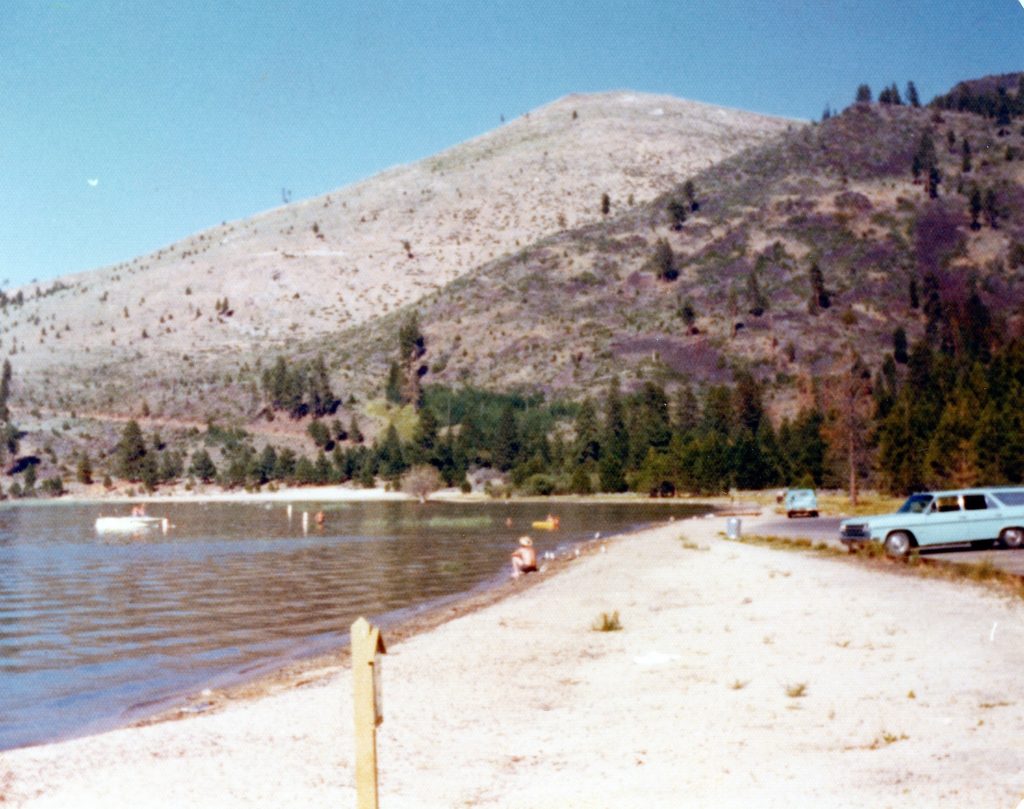
Gallatin Beach and Peak, July 22, 1974.
Menacing problem of cigarettes igniting forest fires continued for decades. Locally, for instance, on July 17, 1951 a 760-acre fire consumed the majority of timber on Gallatin Peak. The cause a careless cigarette smoker.
Hayden Hill, 1909. Courtesy of Beth Coppedge Walls
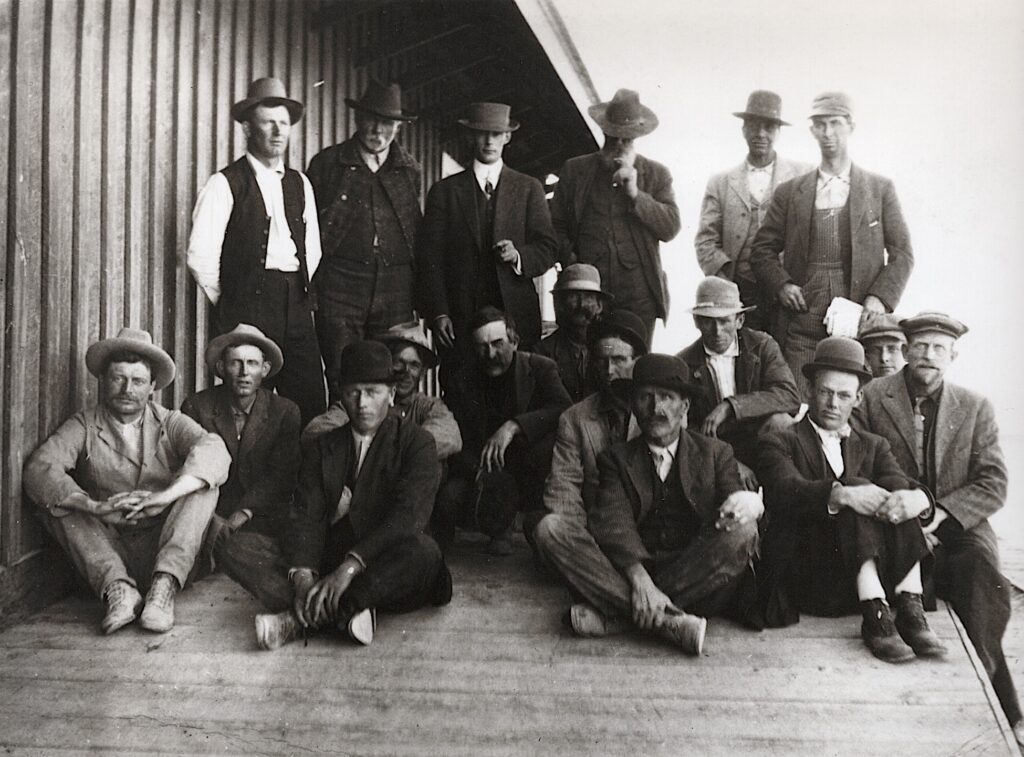
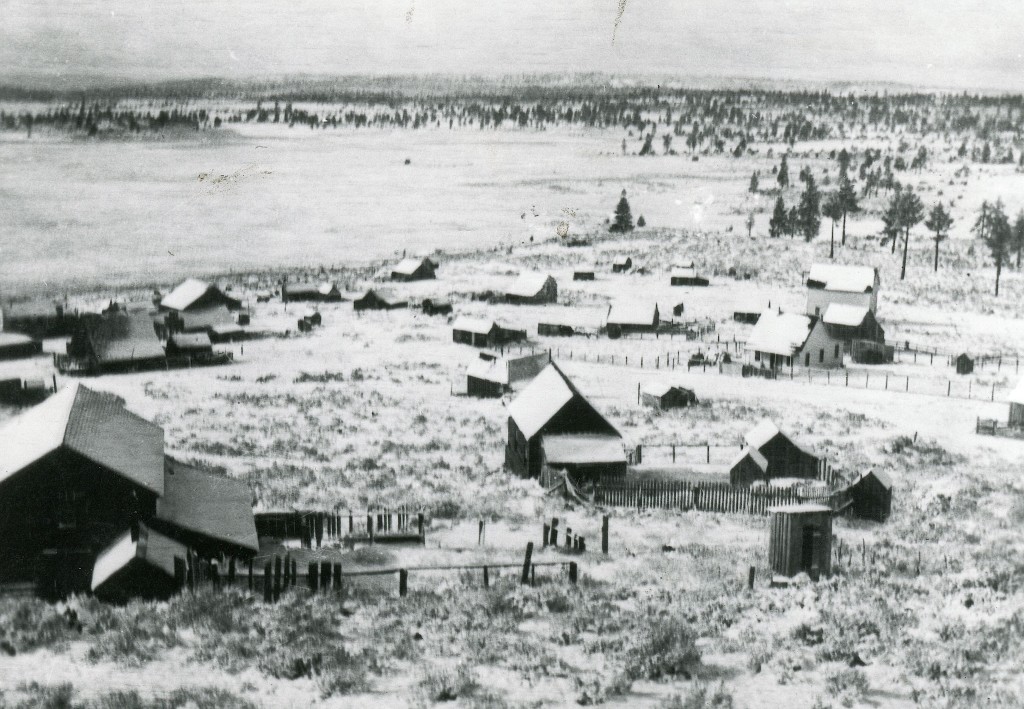
Hayden Hill was Lassen County’s only mining community. Like so many others it went through boom and bust cycles. In 1908, a new vein of gold was discovered and another resurgence was on its way. The Golden Eagle the Hill’s largest mine, hired 100 men for the initial operation and more were added to the payroll. In addition, the Lassen Mining Company’s Juniper Mine enjoyed good fortune and they had over 100 men on the payroll. Continue reading Hayden Hill, 1910→
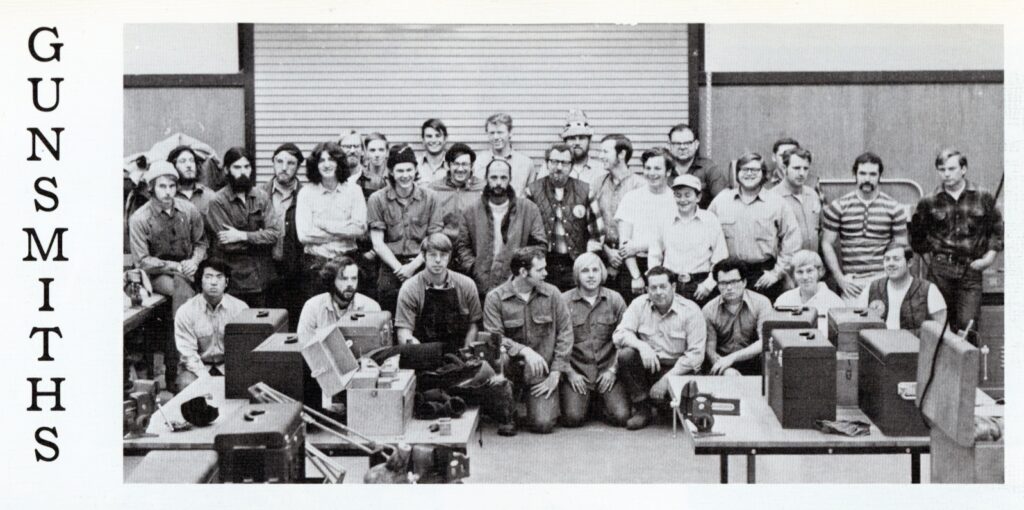
Lassen College Yearbook, 1973-Courtesy of Jim Chapman
Lassen Community College’s Gunsmithing Program is the oldest program of its kind in the nation.
The following is from the Lassen Advocate of 5 September 1946 providing a glimpse of the humble origins of the program.
“The only gunsmithing course being offered in a college or trade school in the United States is being given this year at Lassen Junior College.
“While the market for fine guns has multiplied in this country, old time master gunsmiths have declined in numbers, Charles W. Frost, gunsmithing instructor, explained. Improved roads into wilderness areas, shortened work weeks, longer vacations and wider familiarity with firearms from service in the armed forces were reasons given by Frost for increasing opportunities for skilled gunsmiths.
“The genial middle aged German, Swiss or Belgian gunsmiths so familiar to sportsmen of almost every fair-sized town a generation ago have, for the most part, passed on,” Frost pointed out. These old gunsmiths, who had become master crafstmen through a seven-year apprenticeship n Europe guarded the secrets of their craft so closely that not more than a handful of young men of their day learned it from them.
“Frost was one of these fortunate few learning to be a master craftsman under Fred Muhl, an old-school gunsmith in Bloomington, Ill. For 15 years before coming to Susanville a year ago, he operated his own gunsmithing shop in Arcadia and Eureka on the coast. He also taught musketry at Humboldt State Teachers College.
“This is not a tinker’s course,” Frost said, “It’s not just to teach repair of second hand guns.” The two-year course, with a third year optional, will prepare graduates to build fine rifles.
“For example, Model 6 Winchester rifles, selling for about $45, will bring from $200 to $400 when thoroughly rebuilt by a master gunsmith, according to Frost. He said such fine guns don’t attempt to compete with production-line factory models, which is another reason for only students with serious craftsmen ambitions to sign up for the course.
“Today there are probably less than a score of master gunsmiths west of Salt Lake City. “All of this seems to indicate,” he said, “that there is an assured future for any young man with the intelligence and determination to complete the course outlined.”
“Harland Fritts of Susanville is beginning his second year of gunsmithing at Lassen Junior College. He admitted it was a tough course. “It’s a wide open field,” he said. “And I like the work.”
Three other students have signed up to start the course this year.
“The two-year college course covers all phases of gunsmithing but barrel making and custom stock making, with correlated academic background courses about half time in mathematics, science and English. The additional year of graduate work includes barrel making, stock making, engraving and metallurgy.
“Trade courses in gunsmithing curriculum are mechanical drawing, precision woodwork, including pattern making; machine shop; soldering, brazing and welding; firearms’ history, design and construction; ammunition, including catrridge-case and bullet design, ballistics; sights, iron and optical fitting, chambering, turning, straightening and finishing of barrels.
“Academic background courses include geometry, physics, chemistry, English, accounting, typing and free-hand drawing.”
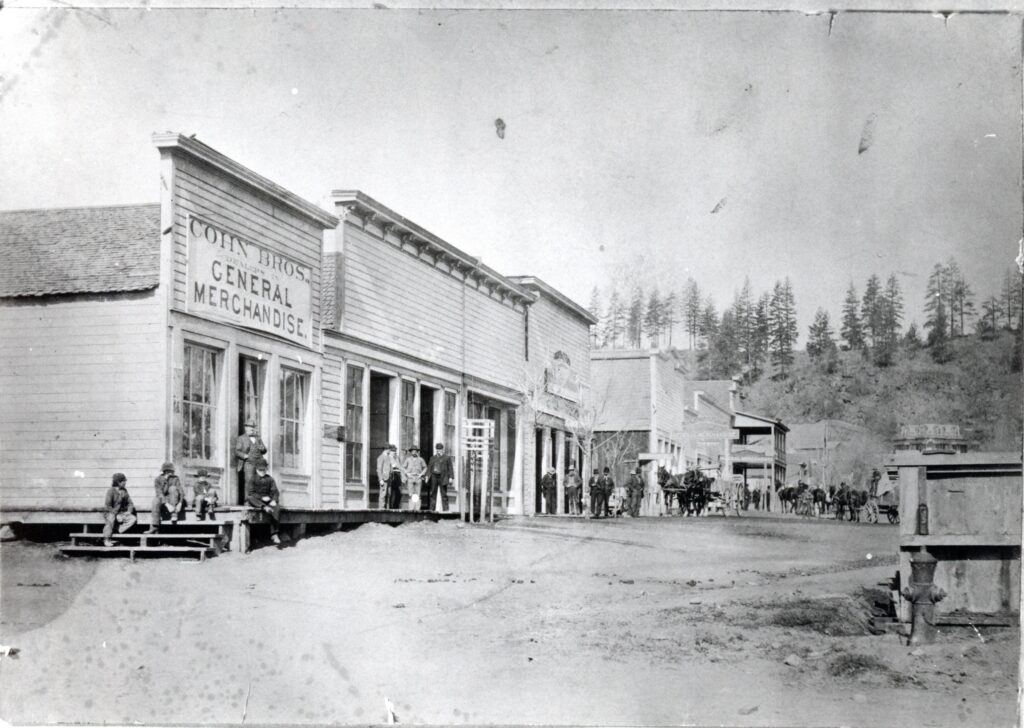
South Side of Main Street, Susanville, 1895-Harmon Anderson Family
In July of 1893, a fire wiped out Susanville’s entire business district. An 1898 fire would destroy records pertaining to 1893-1896 era. This makes this photograph rare, but intriguing. As the saying a picture is worth a 1,000 words. In this case, the picture asks a multitude of questions. After all, these buildings would be destroyed by a 1900 fire. It was that fire, the residents of the Susanville Township rallied for incorporation as a municipality for fire protection. A special election was held in August and City of Susanville became a reality.
Fire trail V-drag plow, 1929. Courtesy of Fruit Growers Supply Company
Fruit Growers Supply Company’s Lassen Operation, on the surface seemed ideal–abundant timber supply supply, two billion board feet worth. In 1922, Fruit Growers purchased one-half of that billion board feet from the Lassen National Forest, a story in itself. It should be that timber was intermingled on Fruit Growers and Lassen National Forest property, primarily to the west of Eagle Lake. Early on the two had divergent opinions on fire prevention methods. The forest service preferred the slash.burning method wherein tree limbs etc would be piled and burned. Fruit Growers said that method was costly, i.e. $13 per-acre. Fruit Growers adopted fire lnes, that other progressive timber companies had adopted. Fruit Growers created fire lanes that were 100 feet wide and completely void of vegetation, each encircling 100-acre sections of timber. They were formed by a specialV-drag hooked to a 60-Caterpillar tractor which could clear up to six miles of fire lines a day. The lanes not only served as firebreaks, but provided quick access in an emergency.
During the fire season, two crews of eight to ten men worked as fire prevention team. It was their job to build fire lines, oversee brush and slash piling, remove dead snags and maintain the company’s private telephone lines. Telephone “boxes” were attached throughout the forest, allowing for daily monitoring between the logging camps and the mill. The telephone system was also used to report fire or an accident when medical aid was needed.
By the end of 1932, the 178 miles of fire lanes constructed over 26,000 acres had proved very effective. Even though three of the. seven years it took to build them were critical fire years, only 53 acres burned. From 1925 to1940, prevention cost $40,373.54, fire fighting only $7,546.65. During World War II the construction of fire lanes was abandoned.