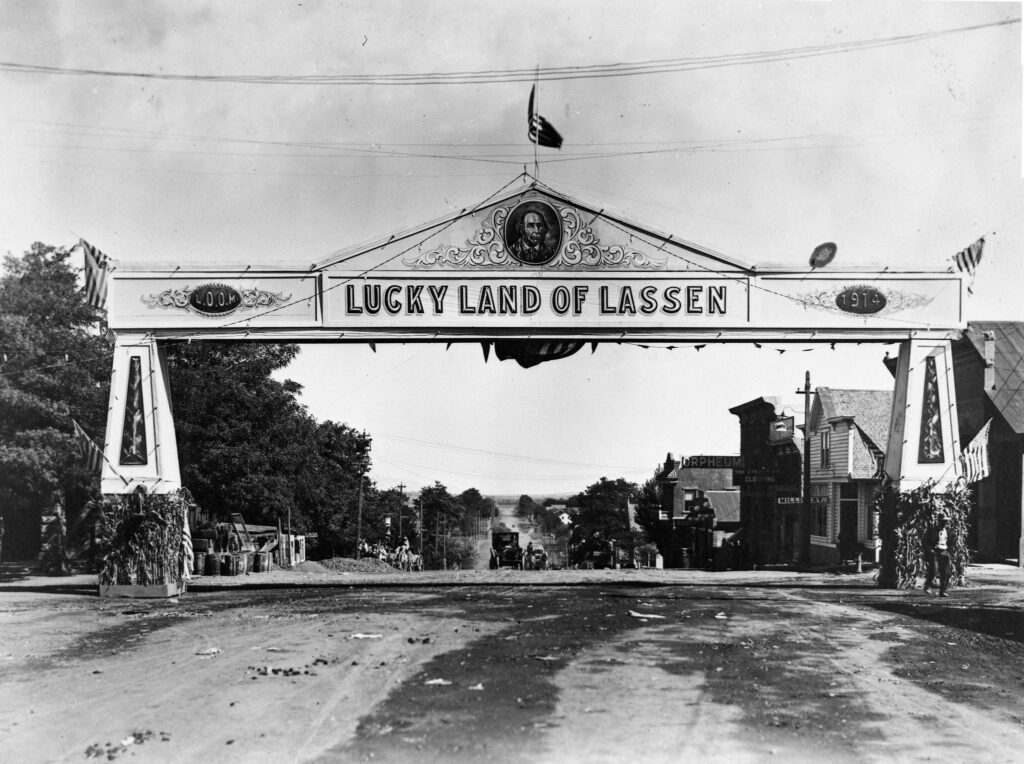
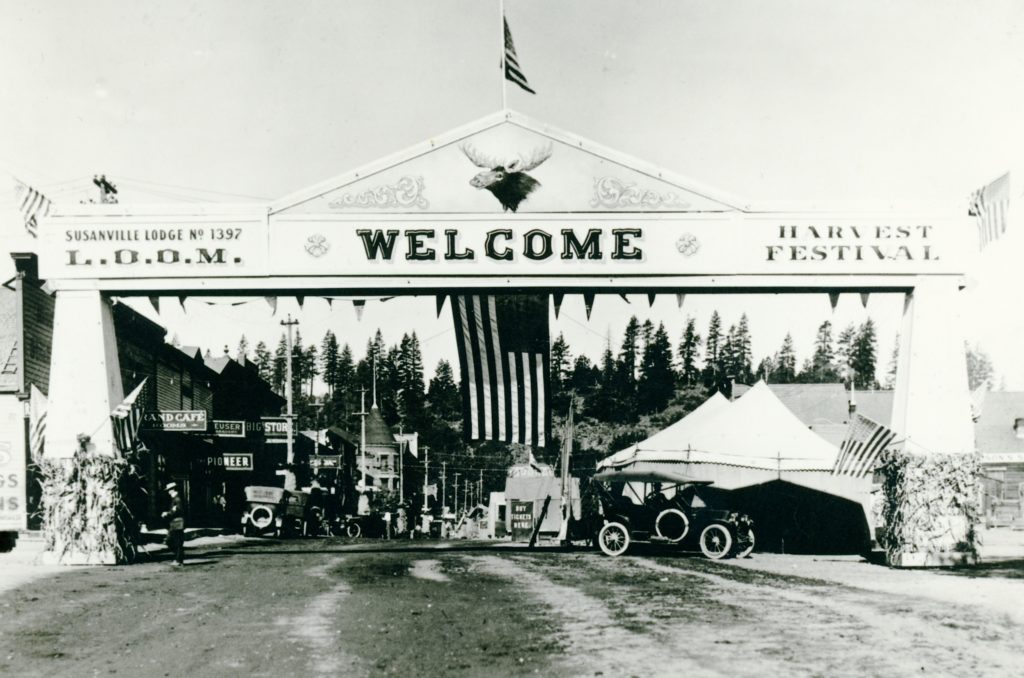
While we have explored the Harvest Festival of 1914, this post is with the emphasis about the arch constructed during the festivities. As noted, the four day event was a sponsored the local Moose Lodge. It is interesting to note that it coincided with California’s Admission Day, September 9.
The arch was a temporary affair, and a windstorm two weeks later, blew it over.
Some community arches, like Reno, were to be permanent. This was not case of the Moose Lodge arch located at Main and Gay Streets. The lodge duly noted that its arch was a temporary, but no one knew when it was to be dismantled. Mother Nature intervened. On September 18, 1914, a particularly strong windstorm hit the region. It did considerable damage and toppled the arch.
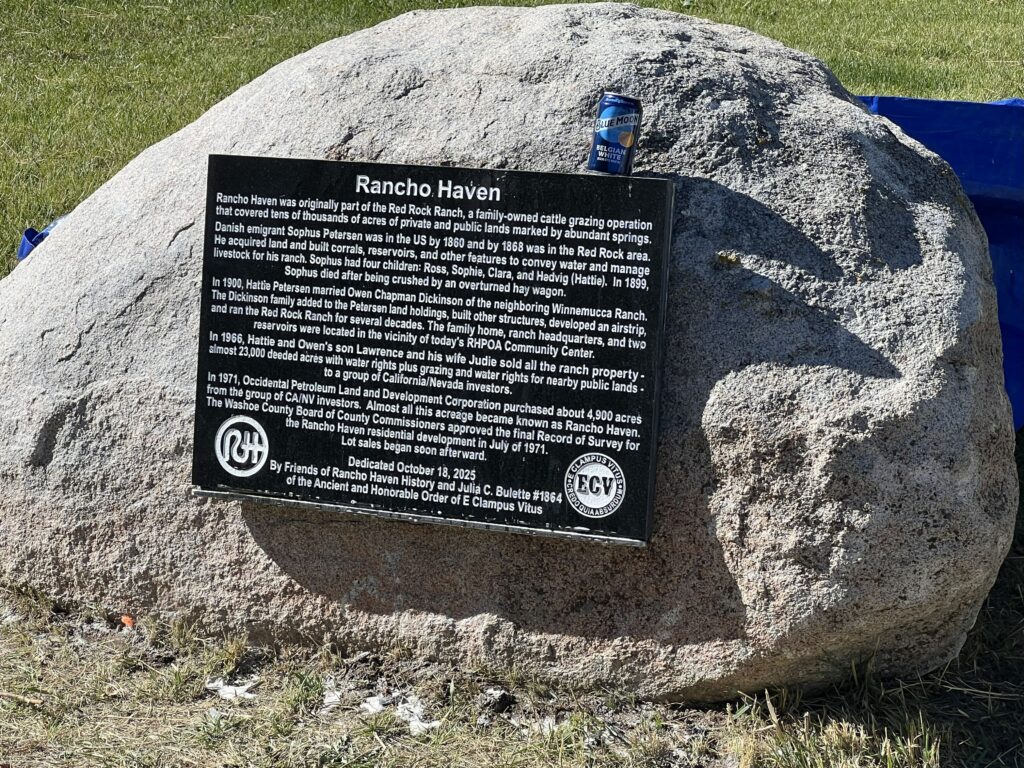
Rancho Haven Historical Plaque Dedicate, October 18, 2025-Courtesy of Pat Davison
Red Rock is a common name for landmarks in the American West. Today’s featured Red Rock is located in Washoe County, Nevada, north of Reno and south of Doyle. In 1867, Thomas Pearson and John Sutherland left Red Rock to relocate to Lower (Amedee) Hot Springs on the east side of Honey Lake. The following year, they planned to return to Red Rock, but were victims of what is known as the Pearson Massacre.
Sophus Petersen who had been in the Long Valley area, located on the abandoned Pearson & Sutherland property. Petersen, it should be noted was first married to Barbara Ross, whose father William and his brother Albert Ross ranch would eventually become Constantia.
On October 18, 2025 a historic plaque dedication was held at Rancho Haven Community Center to commemorate the history of the Petersen family and Red Rock. The pace reads as follows:
“Rancho Haven was originally part of the Red Rock Ranch, a family owned cattle grazing operation that covered tens of thousands acres or private and public lands marked by abundant springs.
“Danish emigrant Sophus Petersen was in the US by 1860 and by 1868 in the Red Rock area. He acquired land and built corrals, reservoirs and other features to convey water and manage livestock for his ranch. Sophus had four children: Ross, Sophie, Clara and Hedvig (Hattie). In 1899, Sophus died after being crushed by an overturned hay wagon.
“In 1900, Hattie Petersen married Owen Chapman Dickinson of neighboring Winnemucca Ranch. The Dickinson family added to the Petersen land holdings, built other structures, developed an airstrip an ran Red Rock Ranch for several decades. The family, ranch headquarters, and two reservoirs were located in the vicinity of today’s RHPOA Community Center.
“In 1966, Hattie and Owen’s son, Lawrence and his wife Judie sold all the ranch property almost 23,000 deeded acres with water rights, plus grazing and water rights for nearby public lands to a group of California/Nevada investors.
“In 1971, Occidental Petroleum Land Development Corporation about 4,000 acres from the group of CA/NV investors. Almost all this acreage became known as Rancho Haven. The Washoe County Board of Commissioners approved the final Record of Survey for the Rancho Haven residential development in July of 1971. Lot sales began soon afterward.
“Dedicated October 18, 2025 By Friends of Rancho Haven History and Julia C. Bulette #1864 of the Ancient and Honorable Order of E Clampus Vitus”
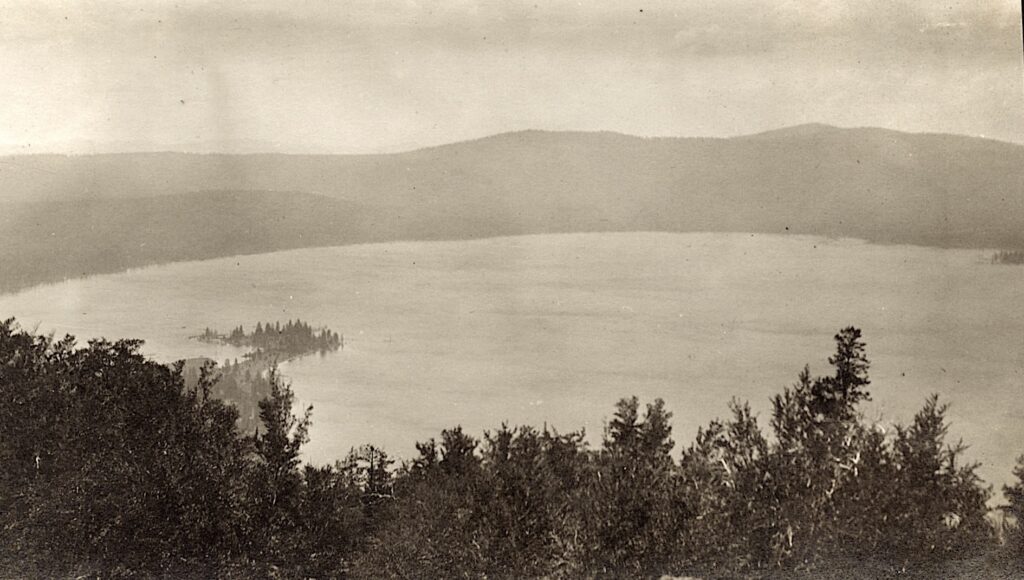
South shore, Eagle Lake, 1917-Gallatin/Wachhorst Collection
In 1913, Malvena Gallatin built the first summer home at Eagle Lake. For the next ten years her family, especially her granddaughter Norma Virginia, spent the summers there. The bulk of these photos were taken between 1917 and 1920, when Eagle Lake reached its historic high levels. I recently scanned few and I can post various scenes if there is an interest. It should be noted that there are some 200 photographs.
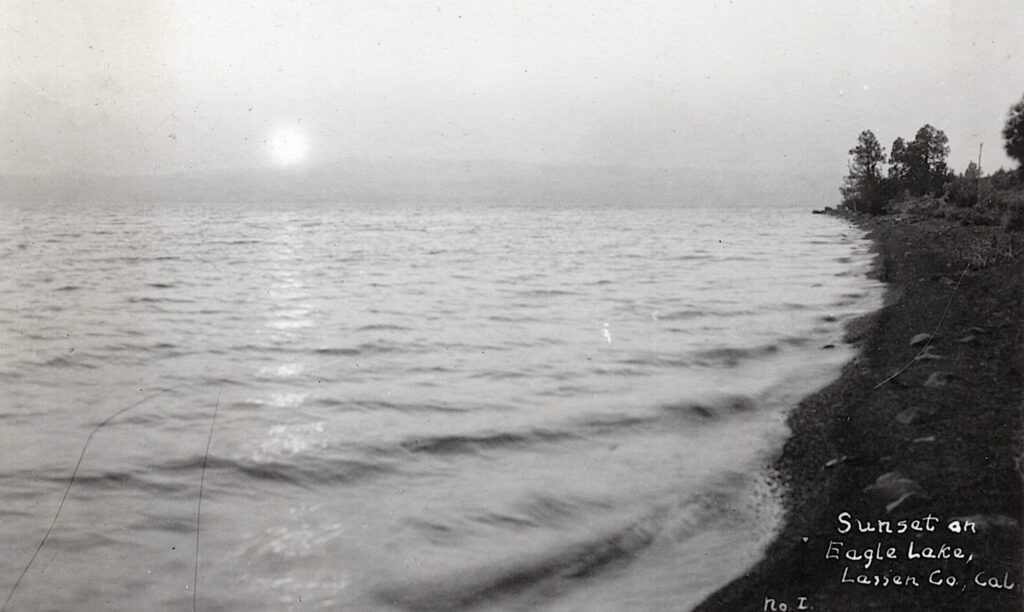
Eagle Lake Sunset postcard, 1916-B.R. Zimmerman Collection
During the 1910s there were only a handful postcards produced featuring Eagle Lake. First and foremost, there was no market. After all the majority of the south shore was privately owned, and there was one small seasonal resort. In all my years of research and I have come across two of the above pictured Sunset at Eagle Lake, circa 1916.
It was not until the early 1960s with development of forest service campgrounds and marina, that there were be quite of few Eagle Lake postcards produced. Those images are noteworthy reflecting on the change of the lake level elevation.
Some ranches retain their original name, after the owner is long gone. A perfect is the Bare Ranch in Surprise Valley. In 1864, Thomas Bare established the ranch, sold it in 1880, and it is still known over a century later as the Bare Ranch.
The Lonkey Ranch is not one of those ranches. It was originally known as the San Francisco Ranch, the owners were from that city. Lonkey was in the middle, followed by Five Dot. For those not familiar, this ranch is located approximately twelve miles north of Susanville in the Willow Creek Valley. Continue reading Willow Creek Valley – Lonkey Ranch→
El Solano, Westwood, circa 1916 – Courtesy of D.B. Martin
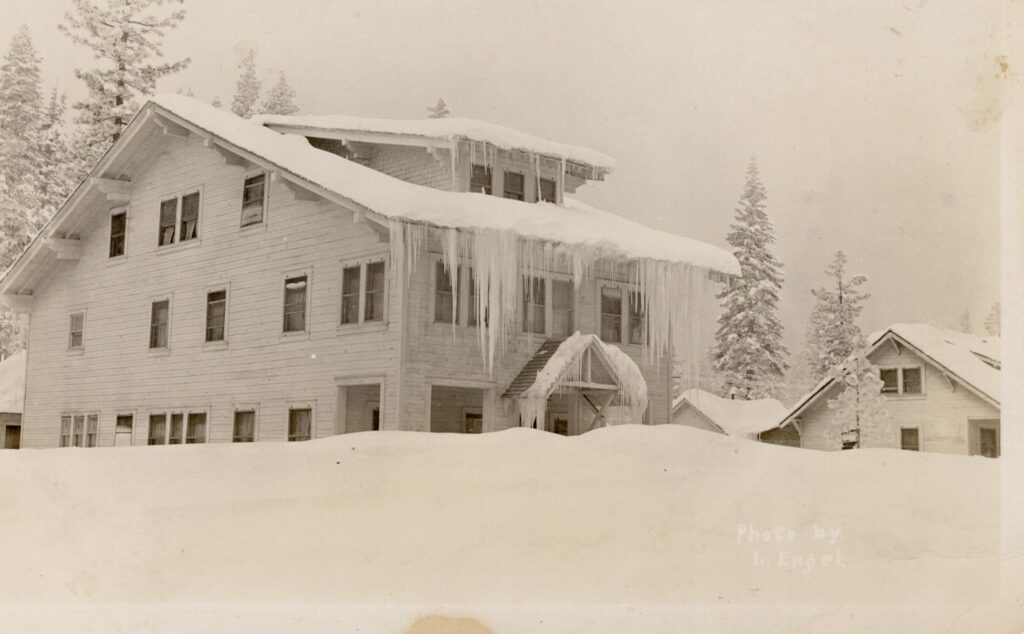
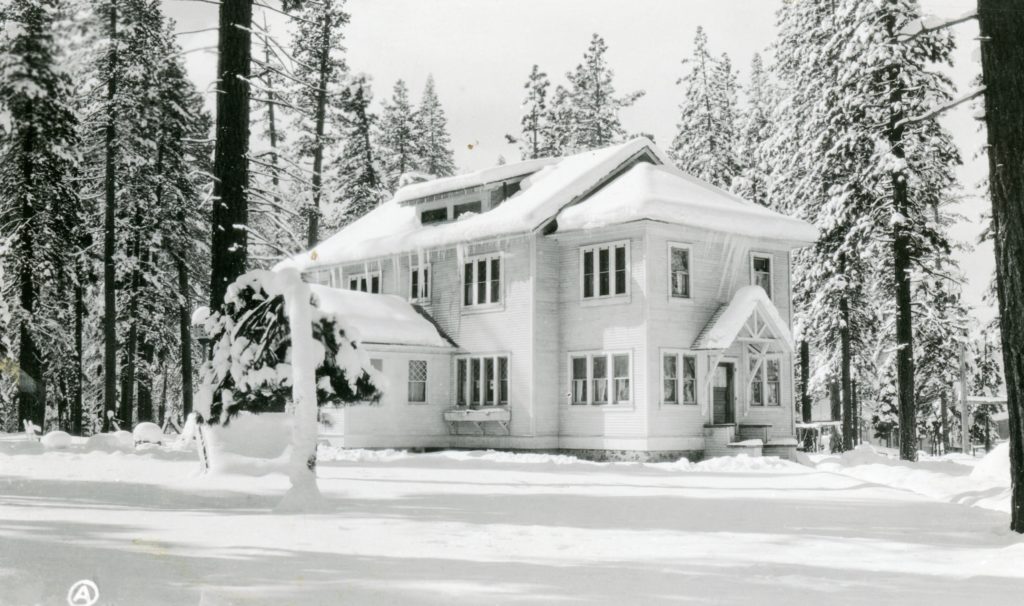
One of the peculiar oddities back in Westwood’s early history there were no accommodations for the traveling public. The Red River Lumber Company who controlled the town wanted it that way. This would hinder any “undesirables” to try infiltrate the town, i.e., such as union organizers. However, Red River needed to provide some sort of accommodations for people visiting on official business with the company. Red River constructed the El Solano at 501 Birch Street to meet those needs.
The El Solano, circa 1916. Courtesy of Leona Jackson.
In the 1930s, during Red River’s financial crisis, the company converted its American Legion Hall into a hotel known as the Blue Ox Inn, and thus the El Solano diminished in status. It would later be converted into apartments. In the fall of 1965 the Assembly of God Church renovated the building, and the second story removed. Today, it is a private residence.
Gerlach which straddles the Black Rock and Smoke Creek Deserts is a unique community. Its latest notoriety is that it is the closet community of the annual Burning Man event. I thought some might be interested in this September 2, 1910 article about Gerlach that appeared in the Lassen Advocate.
“Gerlach is Becoming a Metropolis. The town of Gerlach on the end of the Western Pacific is already the metropolis of northern Washoe County and is growing so rapidly that it will have a voting precinct of its own this fall.
“It will be the old Salt Marsh precinct, but a change will be made of the polling place to that point. The Buffalo Meadows farmers are kicking about the additional twenty mile drive to the polls, but as they previously had to go thirty-five miles, it is thought that the extra distance will not hurt them.
“There is a strong attraction possessed by Gerlach, which now boasts four saloons and more coming.
“Long Valley, some forty miles to the north, is also settlig up rapidly. There is a reclamation scheme in progress there and it is forecasted that the valley will be thickly settled and prosperous before many years pass.
“Gerlach is now the freight division point for the Western Pacific and is the shipping place for the southern end of Surprise Valley, California, to which place a county road was recently constructed.”
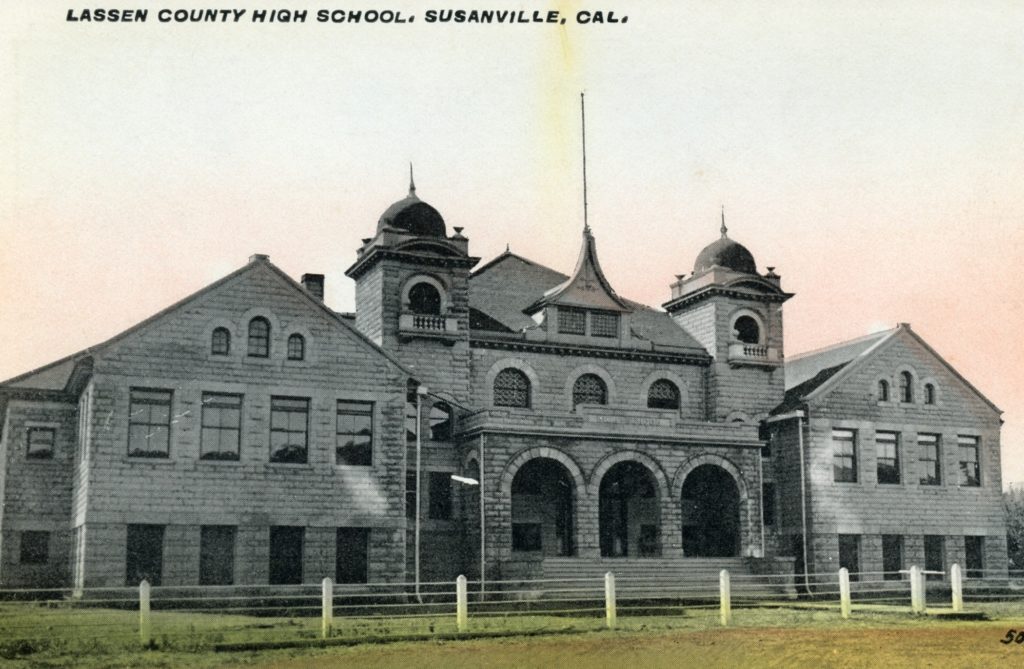
In 1911 the Fall River Valley High School was formed in eastern Shasta County. However, that school’s boundary extended into Lassen County, most notably the Pittville section. Prior to the Fall River school that area was in the jurisdiction of the Lassen County High School. Lassen County erroneously taxed those that served by the newly formed school. In 1912, Lassen County Auditor George Bailey addressed the Lassen County Board of Supervisors of the issue. He asked the board for permission to send out tax rebate checks to those affected-some 86 individuals. The total amount came to $483.01. The smallest amount was fourteen cents to Charlie Young and the largest was $112.00 to Thomas B. Walker.
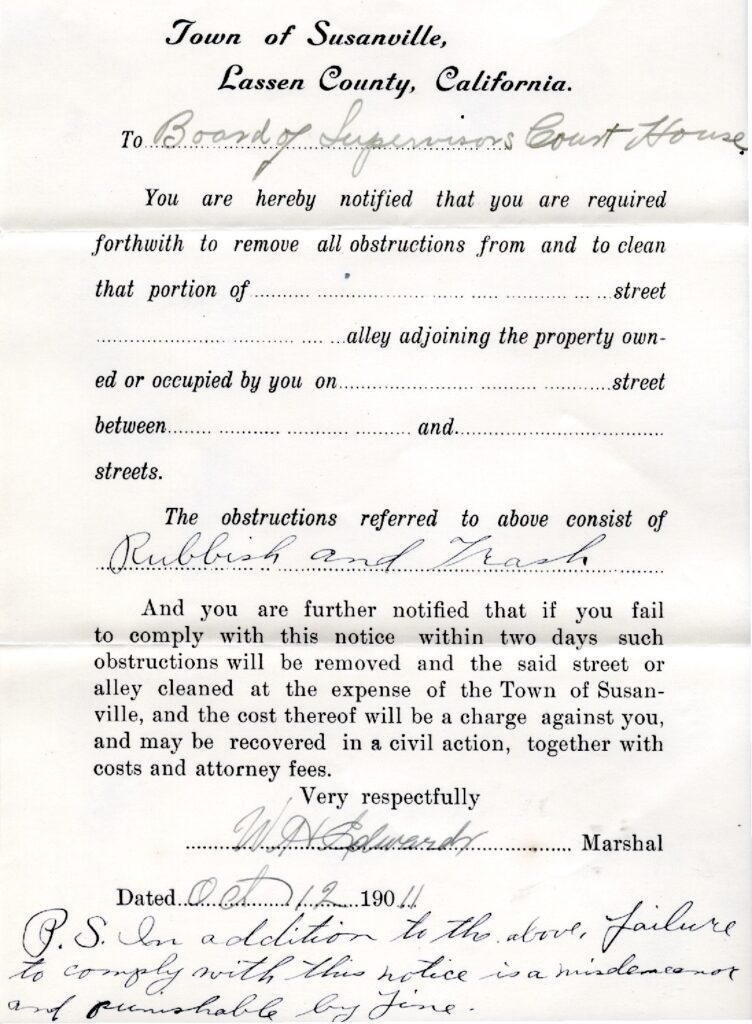
The citation to clean up the Lassen County Courthouse grounds
When the town was incorporated in 1900, the major impetus was for fire protection. One concern was that citizens would either pile up rubbish at the nearest vacant lot or in the alternative to avoid the city’s wrath and possible fine, one could easily find a convenient location outside the confines of the city limits.This in itself poised a fire risk, but also health hazard.
It was not until 1920 that a city dump was created. On March 20, 1921, the City awarded a franchise to Frank Gerig, who offered twice weekly garbage collection at a monthly fee of fifty cents per address.
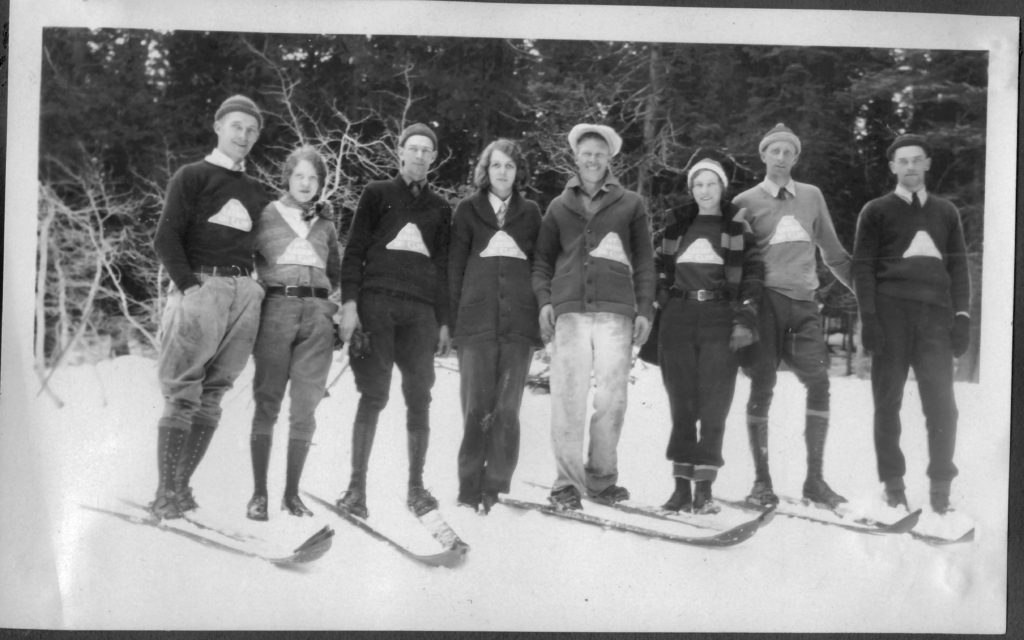
During the winter of 1930-31 a group of Mineral residents organized the Mt. Lassen Ski Club. The first officers were : L. Walker Collins, President; Art Holmes Secretary and H.K. “Husky” Beresford, Treasurer. Not only was club influential in bringing winter sports to the region, but they also brought skiing to Lassen Park. On October 23, 1931, Beresford had obtained a special use permit from the forest service to construct a fifty meter ski jump near Mineral.
The club was off to a good start. On January 17, 1932, it sponsored its first ski tournament at Mineral .To attract crowds, it was necessary to showcase the talents of professional ski jumpers. The club was able to secure the attendance of the “Viking Caravan,” a renowned group of professional Norwegian skiers–Alf Engel, Lars Haugan, Halvor Halstad, Sig Ulland Steffan Trogstad, Sverre Engine and Einar Fredbo–plus an American Ted Rex, Rex was a Michigan native, won the the 1930 U.S. Professional Ski Jumping Championship.
Mt. Lassen Ski Club, 1930
While the professional ski jumpers served their purpose in drawing crowds to the event, this was not their only intention. It provided a golden opportunity to encourage spectators to to participate in skiing, many for the first time. At the Mineral event, the morning was devoted to the public and billed as a “snow folic” where one could ski, take skiing lessons, sled toboggan and to partake in the popular ashcan slide.