Category Archives: History

Winter Donkey Logging

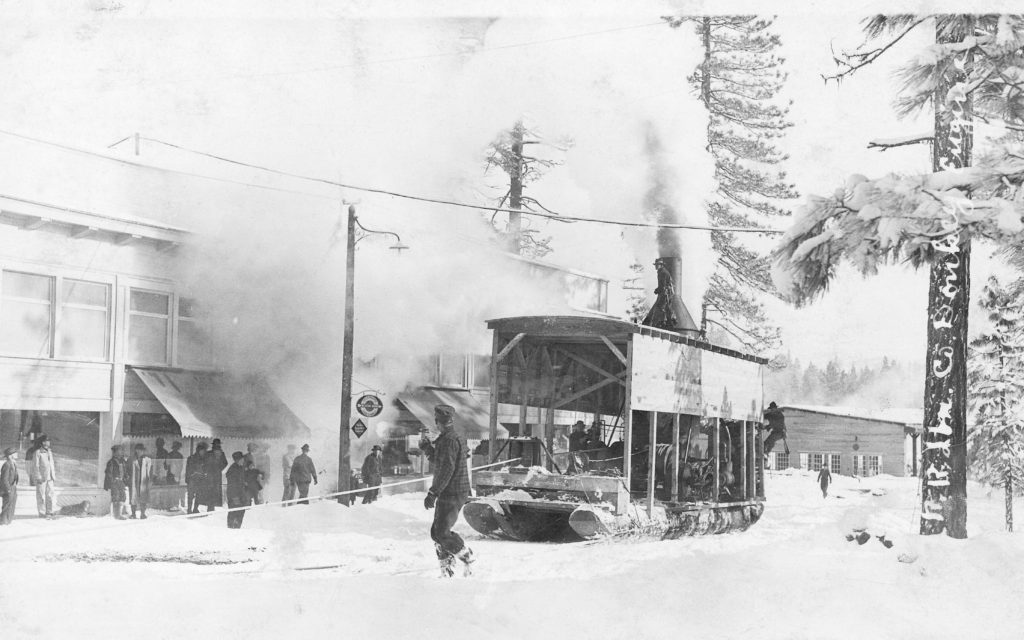
A steam donkey being pulled through Westwood, 1916.

Fletcher Walker, who was the resident manager at Westwood for the Red River Lumber Company, was an interesting individual just like the other Walker siblings.  It should be duly noted, that Westwood was Fletcher’s creation and during the early years operation did not handle criticism very well—especially when it came from family members.

First of all, there would be major learning curve as to what worked in Akeley, Minnesota, and what would not work in Westwood, California. Fletcher initially wanted year-round logging in California, while other companies shut down their operations by November.  It was Fletcher’s contention they would be ahead of their competitors operating winter logging operations—it would take some time for him to yield because his proposition was not only expensive, and not justifiable. However, from the late teens during the early 1920s, he demanded an early start of spring logging beginning by February and that the steam donkey’s necessary for the operations be mobilized. By the end of that decade it was no longer necessary, as motorized tractors replaced the “donkeys” and Fletcher finally succumbed the hard way that his competitors were right.

Subscribe
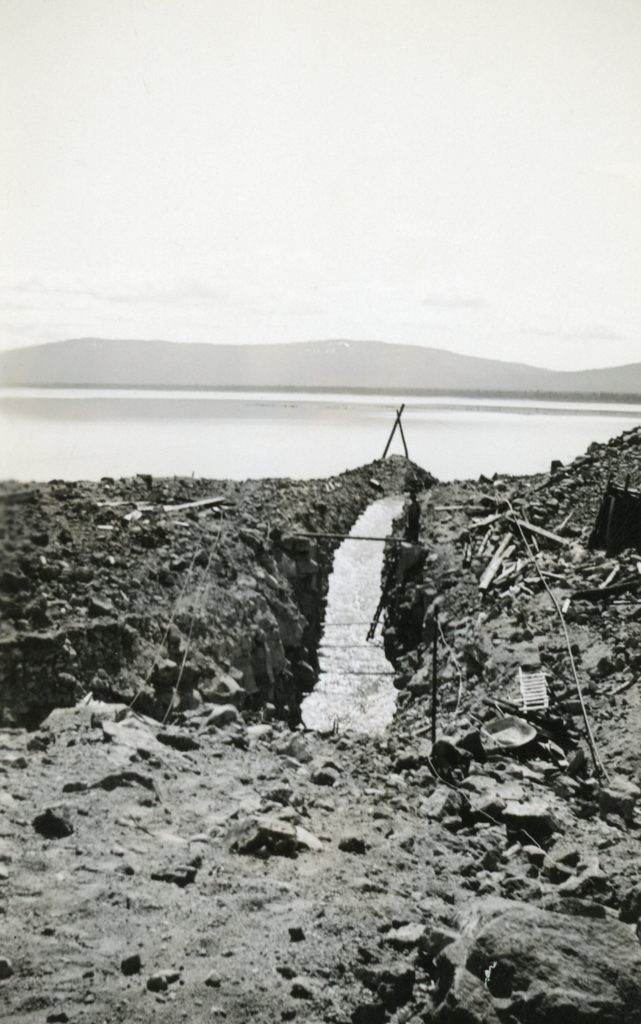
 

The Bly Inlet Problem

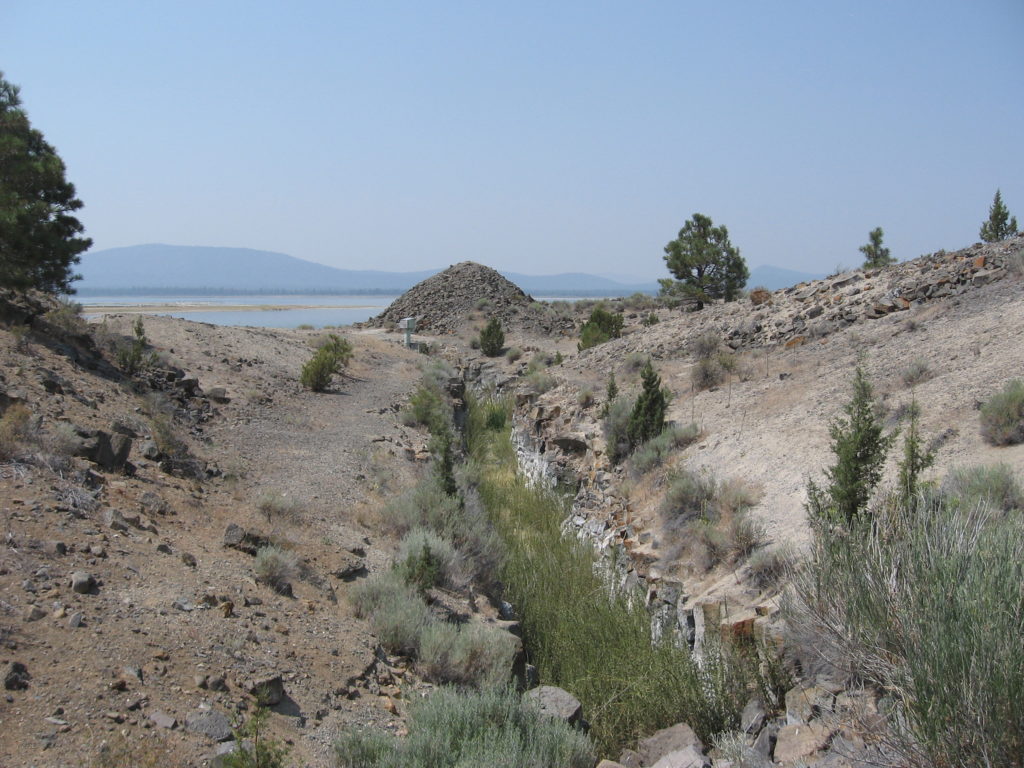
The first of many of deepening the intake to the Bly Tunnel.

In 1928, the Tule & Baxter Creek Irrigation Districts brought in yet another engineer to examine the Bly Tunnel, with a special emphasis on the inlet channel. Of course, they did like what they were told that it would take at least $100,000 to fix the problem, and it might only extend the life of the project by ten years. The Districts continued on with annual blasting through solid rock to deepen the channel. This exercise in futility finally ended in 1935 when they conceded.

August 9, 2018

Should you ever have the opportunity, it is well worth the visit to see the inlet channel. While I took this photograph August 9, 2018, it does not do it justice of the solid rock encountered. It also means, I either need a better camera, improve my photography skills or both!

Donate

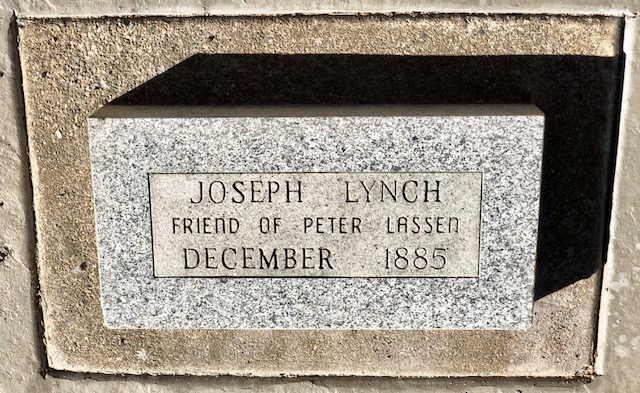
Joseph Lynch, Lassen’s Surviving Partner

September 16, 2018. Courtesy of Jim Chapman

Just because one enters into a partnership with a person who has a high profile name, does not guarantee success. While Peter Lassen enjoyed name recognition, his many business ventures had a lot to be desired. In 1851, in near exile from failed pursuits, Lassen and his partner, Isadore Meyerwitz operated a trading post in Indian Valley, Plumas County.

In late June 1855, Lassen along with partners Joseph Lynch, William Gallagher and Samuel Knight began to develop a mining claim on unamed creek in the Honey Lake Valley, to be later known as Lassen Creek. Work would come to a halt, when the water flow from the creek became too low for work to continue. The four men returned to Indian Valley. Lassen was not going to give up. That fall, along with Meyerwitz and Lynch, with plenty of provisions in hand returned to establish a camp at their claim and to spend the winter. A log cabin 10 feet by 12 feet was constructed a half mile or so west of the large ponderosa pine tree. it (The cabin was later enlarged to 16’ x50’). Three other men would join them—Marion Lawrence, John Duchene and Newton Hamilton. The following year some of men sought other claims. Even Lynch had settled on claim along Parker Creek south of Janesville, but eventually returned back to the cabin.

After Lassen’s death in 1859, his estate sold Lassen’s Ranch where he was buried to David Titherington. It did not include the property where the cabin was located and Lynch laid claim to that property. In 1880, Lynch secured a 160-acre federal land patent to that property.

As if he knew his day of reckoning was at hand, at the age of 73, Lynch sold his 160-acre homestead to W.P.Hall on October 20, 1885 for $1,000 with the provision to a life estate to the property. Lynch died that December. In 1896, Peter Vogt who had purchased the property from Hall, burned down the dilapidated cabin that Lassen, Lynch  with other comrades had constructed in the fall of 1855.

Subscribe

Pogonip Season Is Here

fog
A pogonip as seen from Antelope Grade

Over the last couple of days a pogonip had been trying to form over the region. So far we have had two of three contributing factors. High pressure over the region forcing a persistent cloud cover to near the valley floor, and some fog. A true pogonip is when the fog freezes coating everything with ice crystals. The name is from the Native American community when translated means white death, due to the number of Indians who would contract pneumonia from this weather condition.

There are varying types of pogonips. The most common form is when the high pressure holds down the cloud inversion. Thus, in many instances, one only has to travel a few hundred feet above the valley floor to bask in the sunshine. The pogonip season usually runs through December and January. The longest recorded duration, locally, lasted for six weeks in the winter of 1859-60.

On a final note, the National Weather Service states that there is a weak storm front headed our way today. There should be enough winds to break up the inversion, and may be we will see a little sun shine in the afternoon.

Subscribe

A bit of trivia

Lassen County Hospital, circa 1925.

In 1914, when Lassen County and T.A. Ramsey did a land exchange wherein the County obtained thirty acres on Richmond Road and Ramsey the County Hospital property at the end of Miller Road. The County went ahead with initial plan to build a new hospital. The County was also in need of another cemetery, as the Susanville Cemetery was running out of plots. It was the County’s original intention to establish a new cemetery on what would later become the Roosevelt School property.

Donate

Eagle Lake Remnants

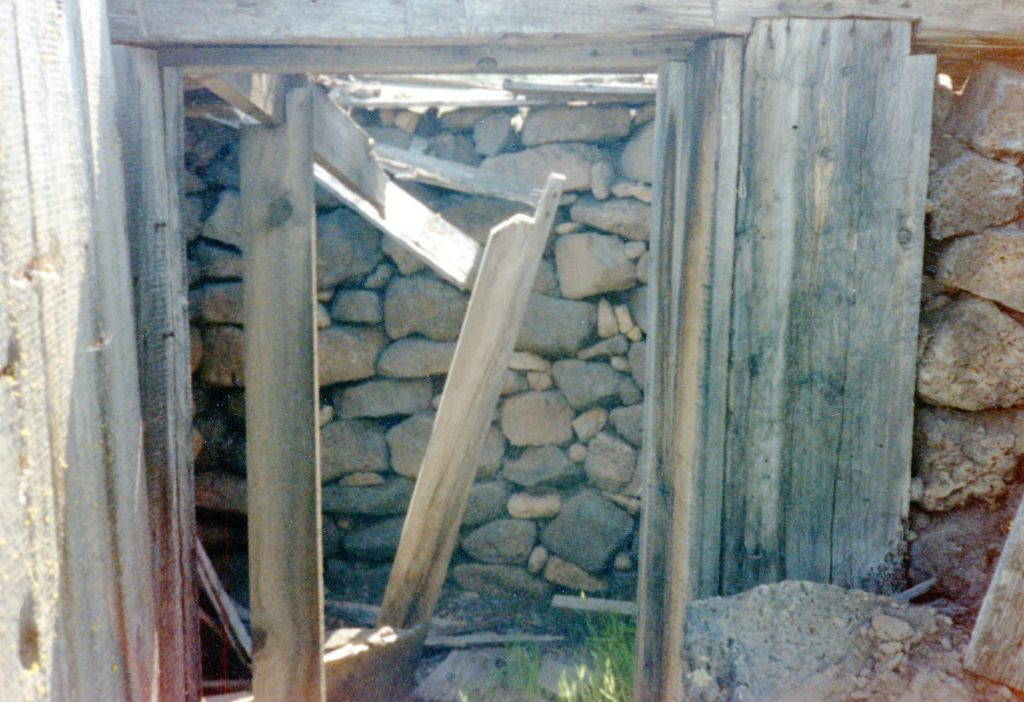
Plenty to see at Tunnel Works No. 2

Since it is December, I am busy filing and/or cataloging items in anticipation for a fresh start with a new year approaching. I came across the above photograph on an old trip to Tunnel Works No. 2 of the Eagle Lake Land & Irrigation Company. While the short-lived company only existed from 1891-1894, it did accomplish a lot.  While they knew it would take a very long time to complete the tunnel that Merrill had begun a decade earlier, they had a vision to provide necessary funds. They installed a pumping plant to pump water out of the lake, and sent water to the east side of the Honey Lake Valley. Thus, they were able to sell water for the 1893 irrigation season, while work continued on the tunnel. However, by the fall of 1893 with nation’s financial panic in full force, they were unable to sustain operations and went bankrupt.

Donate

A bit of Westwood Trivia

Westwood 1915
Westwood 1915

While some are aware that on September 10, 1912, marked the cutting down of the first ceremonial tree by Clinton Walker and W.B. Carlin on what would be site of Westwood. On the surface, it seemed like a jubilant occasion. However, unbeknowst to the outside world was the Walker family feud, and the location of Westwood, was one of many issues at hand. Patriarch T.B. Walker was caught in a dilemma. After all, it was his dream that the California operations were to be run entirely on their own, hoping they would achieve the same success he did when he founded the Red River Lumber Company in Minnesota. While tempers flared an ambitious building program was implemented. On July1, 1913 some 450 buildings had constructed in this new town in the wilderness.

Subscribe

Diamond Mountain Forest Reserve

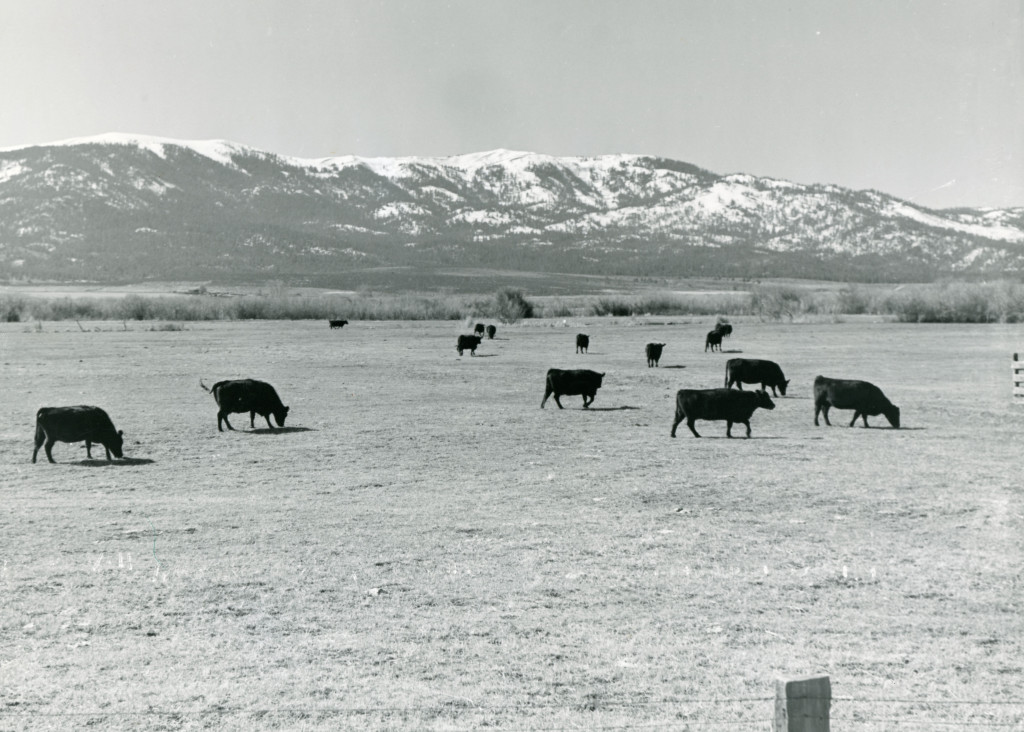
Diamond Mountain, 1950s.

In 1891, Congress made revisions to land acts, one of which was the foundation for the creation of national forests. It would take considerable time before it had a ripple effect locally. In 1905 witnessed the creation of the Diamond Mountain Forest Reserve by Congress. Initially, it had little impact on the region, as the government was still tweaking the process. In time, the first two biggest impacts were (1) forest lands were removed from the federal land patent process and (2) the agricultural community, i.e., livestock operators were in for a rude awakening when not only grazing permits were implemented, but fees too! In an interesting turn of events, it was the livestock operators from Tehama County, that fell the brunt of the forest reserve, since these properties they had used for years for summer grazing, that found mutual ground. In a co-operative effort the forest reserve and Tehama stockmen, help build a telephone line. This aided the stockmen who could connect with their tenders, and for the forest reserve it was their earliest method for fire reporting.

A footnote: In 1907, the Diamond Mountain Forest Reserve, with boundary changes became the Lassen National Forest.  The headquaters was located at Red Bluff.

Subscribe

Nubieber, Lassen County

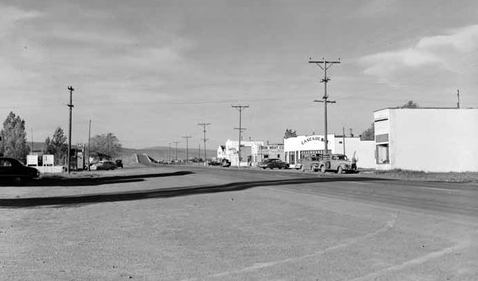
Nubieber, 1949

The town came into existence in 1931 when it became the connecting point of the Great Northern and Western Pacific Railroads.  The first name proposed was Big Valley City by Byron S. Greenwood, the promoter of the new town.  When the Postal Department received Greenwood’s petition for a post office for the town, they denied the name. The Department had adopted a policy against three word names.  The Great Northern designated their new station as Bieber, though the town of Bieber was located two miles northeast.  It was suggested to call it West Bieber, but that name did not find acceptance and finally the name Nubieber was chosen.  On July 4,1931, a patriotic celebration was held.   Mrs. A.W. Peterson, President of the Ladies Pioneer Club, gave a brief speech and then introduced Miss Vivian Goddard who christened the townsite of Nubieber by breaking a bottle of wine over the entrance sign.  Nubieber, like so many speculative railroad communities, never reached the expectations of its promoters. In 1940, Greenwood traded all his unsold lots, (the vast majority of the town that encompassed 250-acres), along with his adjoining 630-acre ranch, to E.L. Robertson of San Francisco, for a 60-room apartment building in San Francisco.

Donate