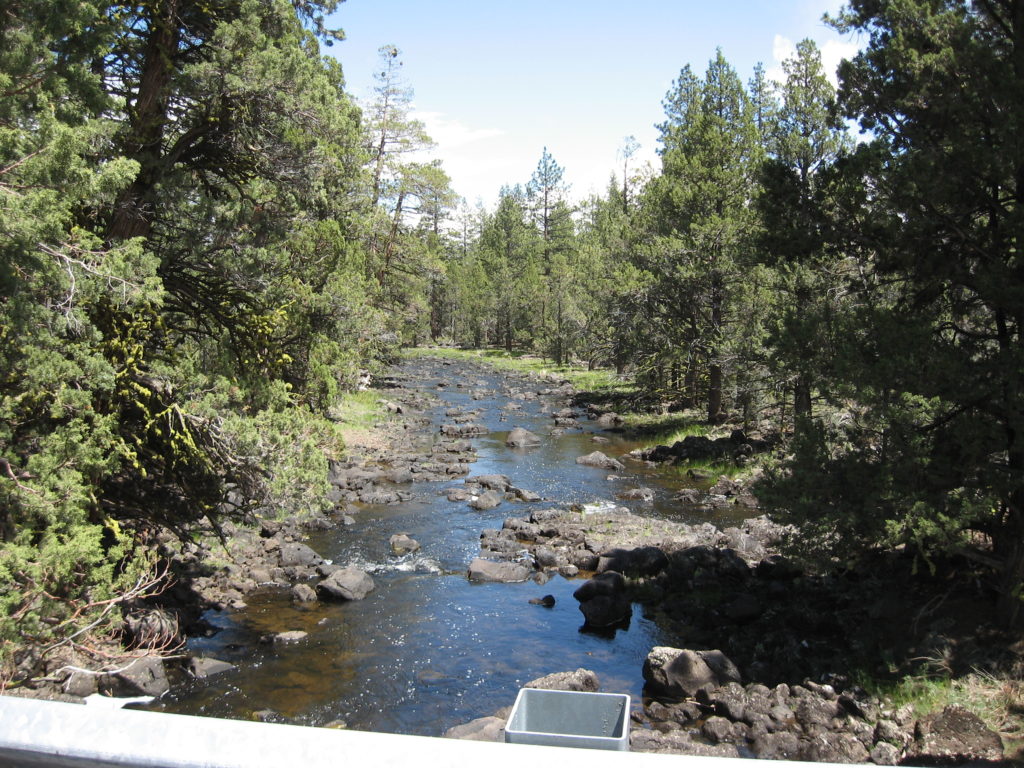
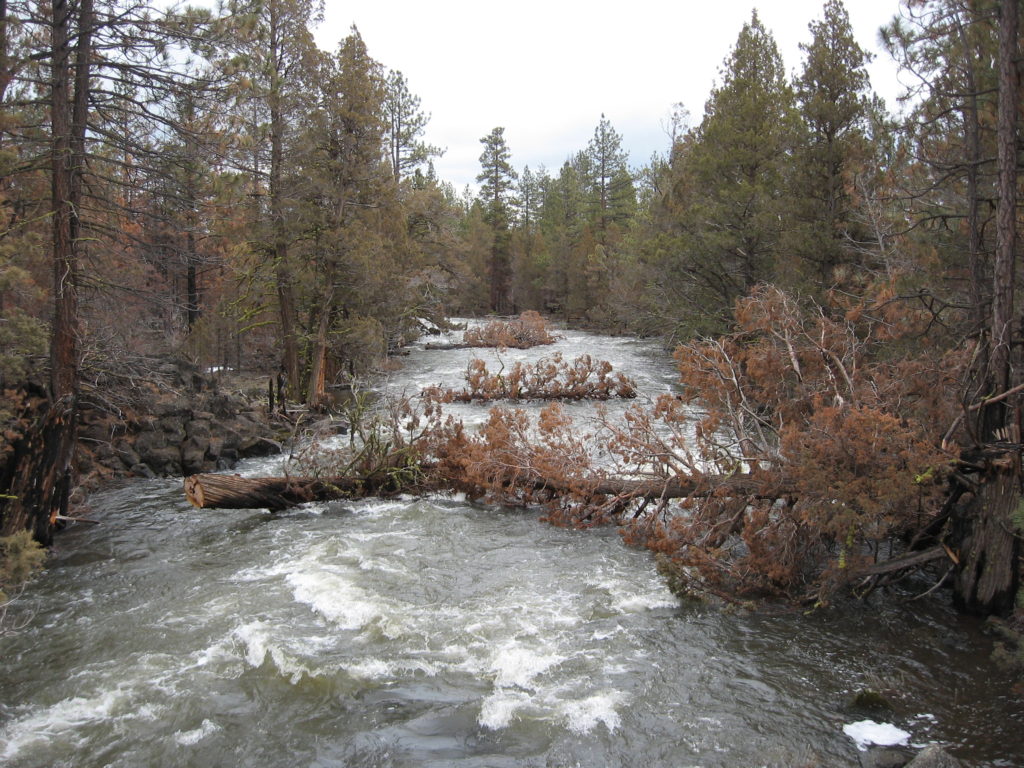
Some times, certain places just always seems to stay the same. Others can go through dramatic transformations. Having a severe case of either cabin fever or the lack of warm spring weather, necessitated an outing, even if it was cold. A journey to Eagle Lake and check out the Pine Creek fish trap/egg collection facility. Turns out the spawners are moving slow, the water temperature even a bit chilly for them. The pelicans on the other hand are abundant. Since we were in the neighborhood, a trip to the south shore to check out the marina, etc. On the return, stop at the Pine Creek bridge, thus the changes taking place.
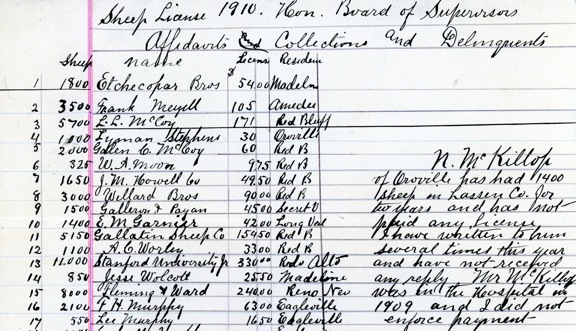
In the early 1880s, California’s mountain counties lobbied the California Legislature for the implementation of a migratory sheep license tax. It was their contention that seasonal movement caused damage to the roads, thus the counties should be compensated for the road maintenance. Of course the sheep industry fought hard against. Even when legistation was passed to implement the tax, it was challenged in court, but lost. In 1910, Lassen County assessed a tax at three cents per head. One of the largesgt sheep operaters in Lassen County at that time was Stanford University that grazed 11,000 head of sheep just west of Eagle Lake. In the 1920s, the sheep industry collapsed, but with other factors in play the sheep license was repealed.
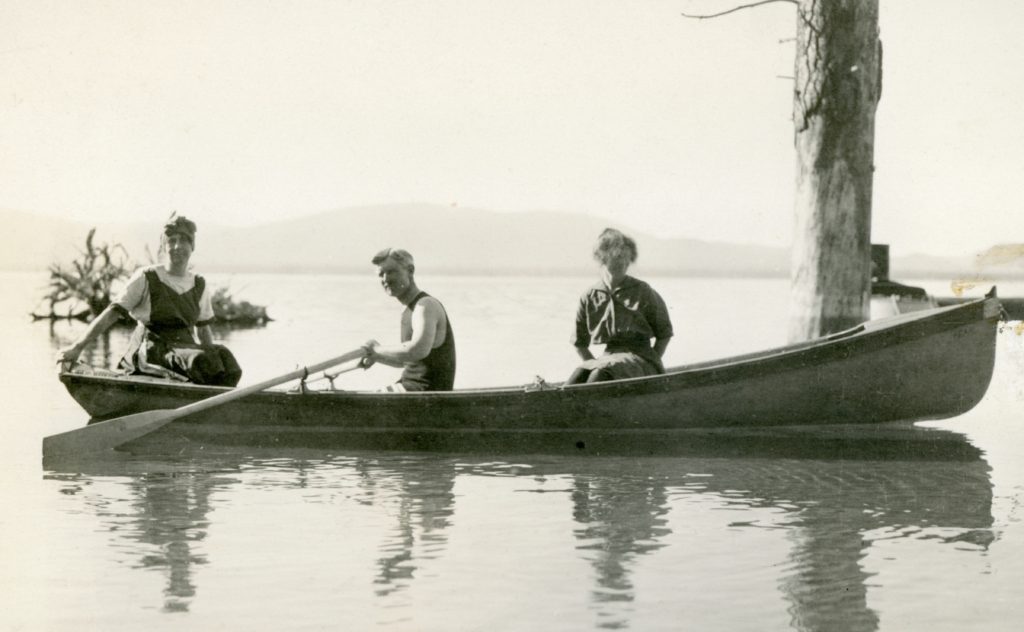
A 1919 Gallatin family boating outing on Eagle Lake. Courtesy of Wyn Wachhorst
In 1876, when Capt. Charles A. Merrill formed his Lassen County Land & Flume Company to tap Eagle Lake for irrigation to reclaim the sagebrush lands of the Honey Lake Valley, in certain ways he suffered from illusions of grandeur. Of his many schemes was to log the south and west sides of Eagle Lake. The logs would be rafted across the lake to the east side of his proposed tunnel, and each log, one by one through the tunnel. From there a flume would transport the logs to his proposed city of 25,000 souls at Belfast in the Honey Lake Valley where they would be milled and shipped out by rail. This pipe dream never happened.
Pine Creek Estuary, July, 1973
In 1919, when the Fruit Growers Supply Company made the commitment to establish a sawmill operation in Lassen County, they sought advice from the Lassen National Forest Service where to locate. The forest service suggested a mill site along the Pine Creek estuary, that they could use as a millpond. The forest service stated Fruit Growers, if needed could use Eagle Lake as a millpond, but with Leon Bly’s pending project there might be legal problems.
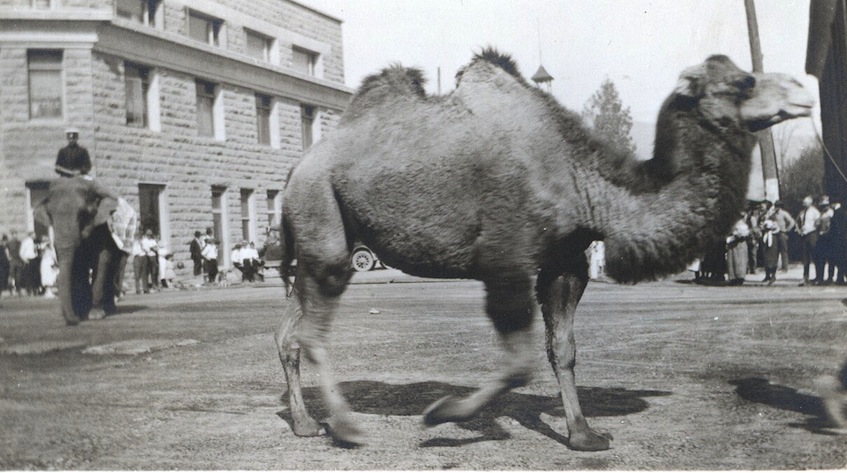
That is right, a camel at the intersection of Main and Lassen Streets, during the 1916 circus held in Susanville. B. Dorsey Collection
It is not really known how this form of entertainment made it to Susanville way back when. On July 25, 1868, Bartholomew’s Great Western Circus came to town to give its first performance of this kind. It was part of their tour into the hinterlands of Northern California. The details of the event are rather sketchy. Its most famous act was the great talking pony, “Napoleon.”
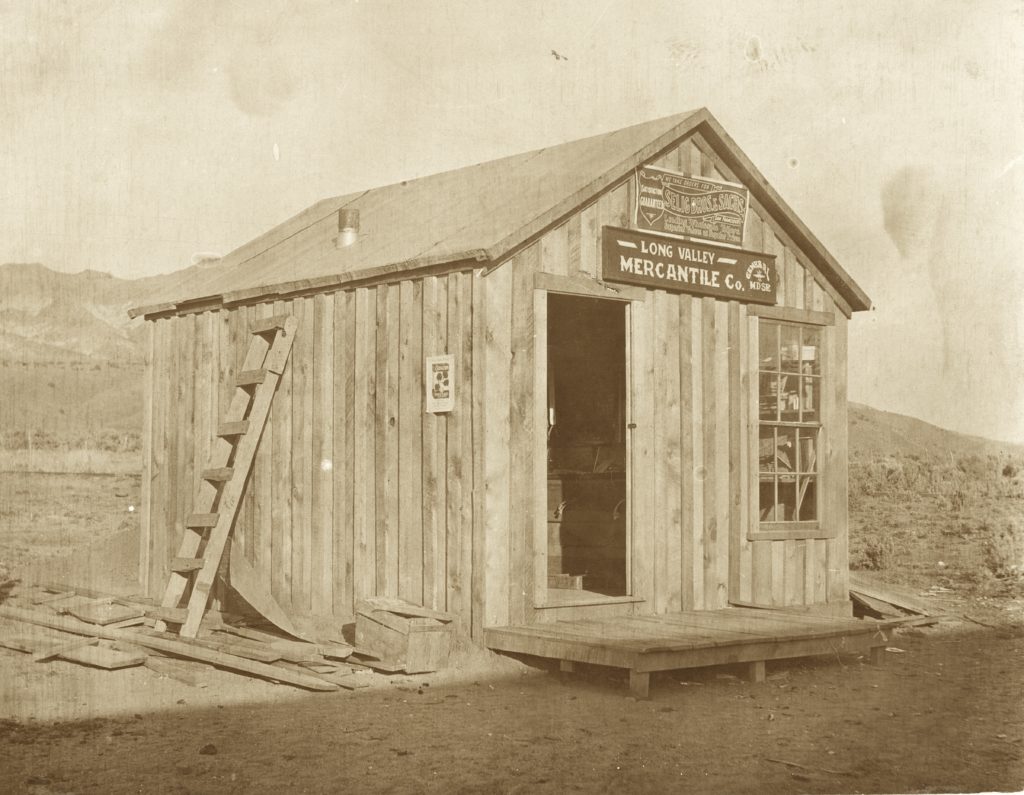
Long Valley Mercantile Company, Constantia, 1905. Courtesy of Marie H. Gould
Constantia, located five miles south of Doyle came into existence when Henry Butters bought the Albert Ross Ranch, and gave his new acquisition its name. In 1898, Butters transformed the ranch into a small village—complete with a general store, Wells Fargo Office, dwellings for the employees and a Catholic Church.
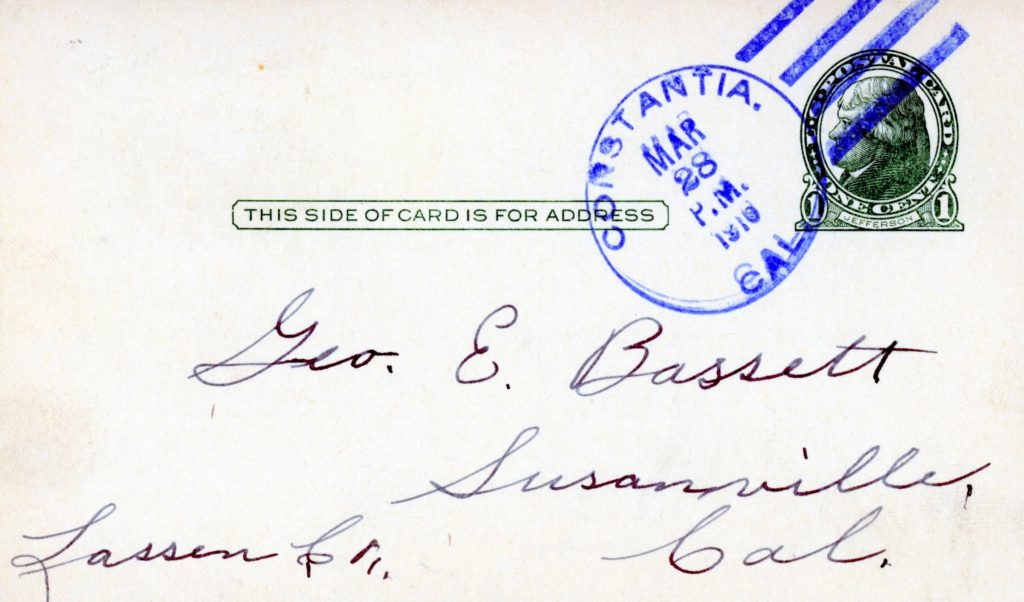
A Constantia Postal Cancel
The Constantia Post Office was late on arrival, it was not established until April 5, 1912, with August C. Drayeur, serving as first postmaster. In the 1920s, saw the introduction of the Rural Free Delivery, thus many of these rural post offices were closed. Constantia was a victim and it ceased to operate on June 30, 1927.
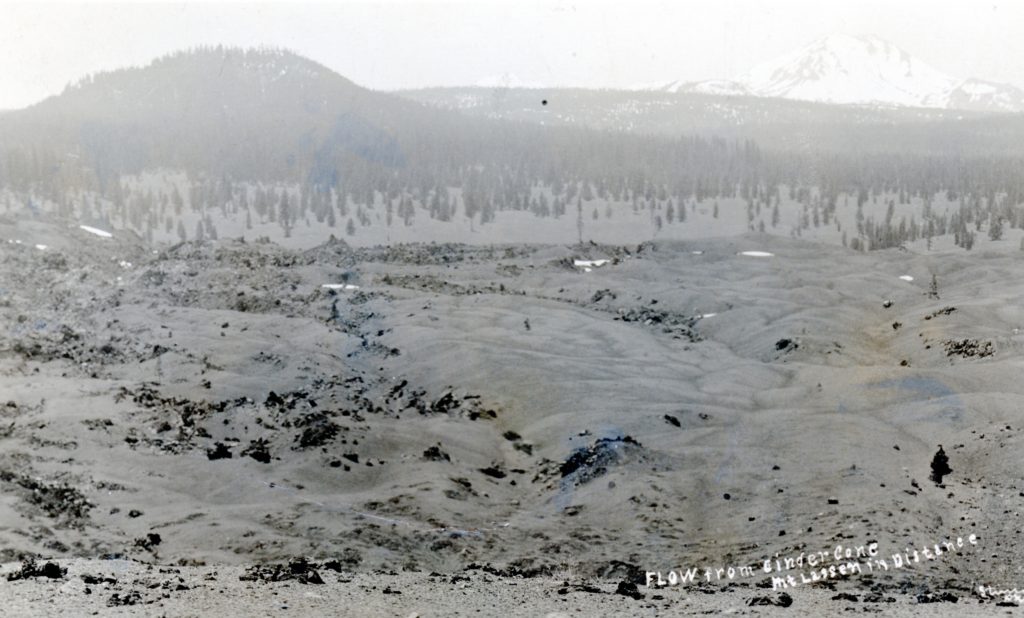
The view of Fantastic Lava Beds from Cinder Cone, circa 1911. Courtesy of the B.R. Zimmerman Collection
This historic photograph does not do justice to these lava beds located in the eastern section of Lassen Volcanic National Park. A color photograph would be preferred. This basaltic lava flow is a recent creation within the last 250 years and is adjacent to Cinder Cone. The view from the top of Cinder Cone looking over the lava beds and to Lassen Peak is worth the climb. After all, spring is trying to arrive here, though Mother Nature can be tempermental.
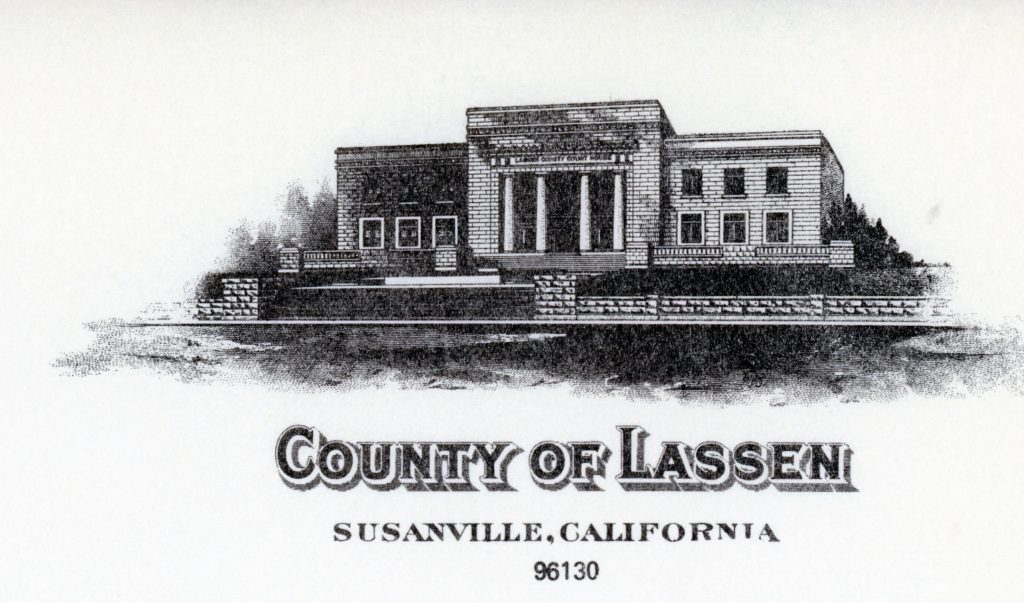
Lassen County Stationery of yore, notice the changes.
It was on this day in 1864 that saw the creation of Lassen County. It was not quite supposed to happen in the way it was originally intended. It was Plumas County Assemblyman Richard A. Clark who introduced the legislation to create the new county. Clark proposed the name Byers County, after James D. Byers, a Plumas County Deputy Sheriff during the Sagebrush War. It was that event that led to the creation of the new county. Byers objected and suggested it be named after the late Peter Lassen, one of the original settlers of the Honey Lake Valley.
It was only fitting that later that year, on Halloween Nevada was granted statehood. Also on Halloween in 1800, Peter Lassen was born. Another of these notable dates, Susanville’s founder, Isaac Roop died on Valentines Day 1869, at the age of 47.
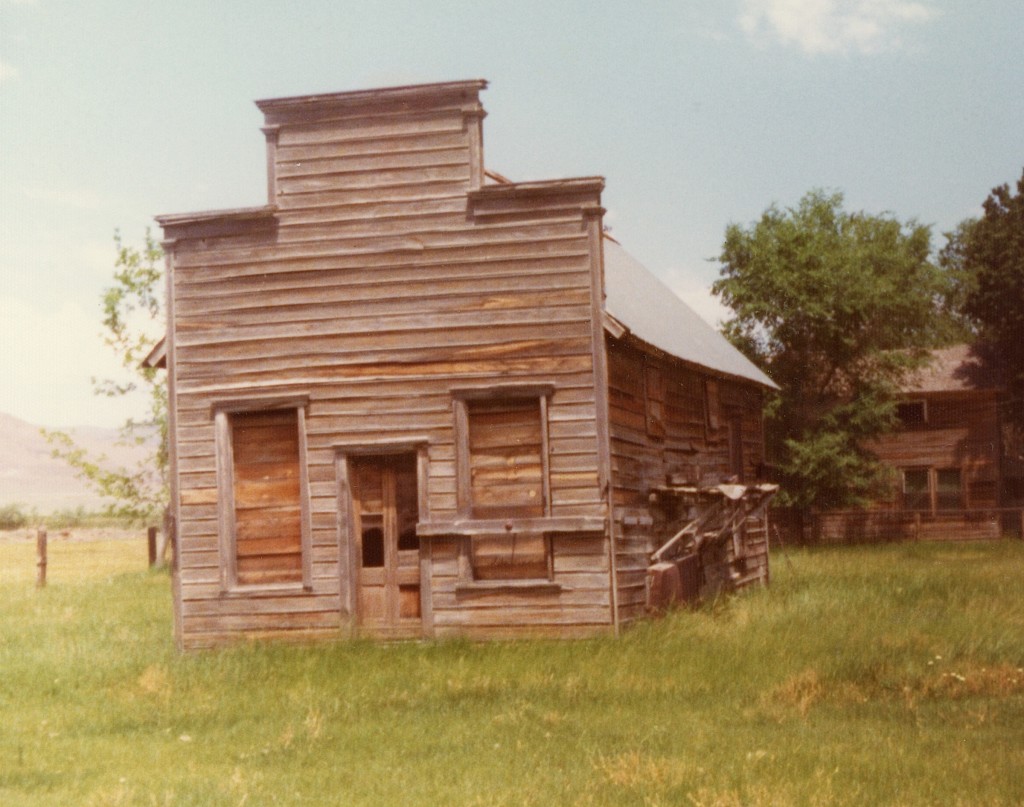
Byers’ old Baxter Creek general store that was later moved his Tule ranch and operated by his nephew, Jim McClelland, May 1975
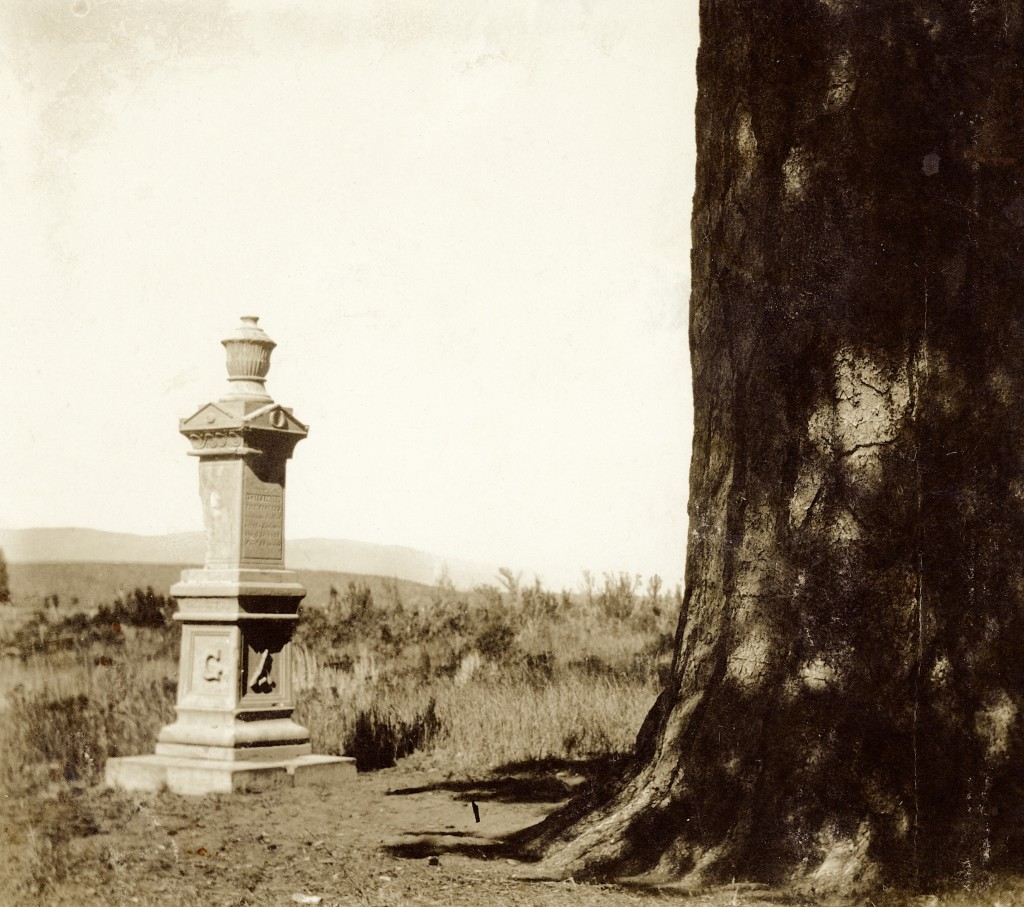
In November 1859 a posse was formed to retrieve Lassen’s remains for burial on his property near Lassen Creek by a majestic ponderosa pine tree. In June 1862 the newly organized Masonic lodge placed a monument on Lassen’s unmarked grave. It should be duly noted when Lassen made the trip to Missouri in 1847 to recruit settlers, on his return he brought back with him the state’s first Masonic charter. By the early 1900s, concerns were made that the elements were taking a toll on the monument. In 1916, Jules Alexander unveiled an ambitious plan to raise funds for a second monument, which was placed and dedicated in September 1917.
Fast forward nearly a century later, it was determined the property could use some tender loving care. The first community organization to step forward was Susanville Rotary Club. Their first order of business was to replace the old wooden picnic tables with metal ones. The Masons, too, got involved, since they are the owners of the property. The next thing you know in 2017, Susanville Boy Scout Hayden Chittock made the rehabilitation of the premises into an Eagle Scout project. It was a massive undertaking to say the least, with many volunteers lending a helping hand. Go check it out, when you can.
Lassen’s Monument, 1905. Courtesy of Philip S. Hall
With the daylight hours getting longer, coupled with temperatures getting warmer, it is time to put away those skiis or snowshoes, and change your footwear. Whether you are a native, recent newcomer or traveller, one has to check out how the Lassen Monument five miles south of Susanville that went through a major transformation last fall.
For the uninitiated, this is the final resting place of trailblazer, Peter Lassen—a name well known throughout Northern California. This Danish adventurer was born in 1800. He left his native country in 1830 to come to the United States, like so many others to escape poverty. The following year he embarked on his westward expansion and moved to Missouri, where he applied his blacksmith trade, a skill he learned from his uncle—a good one at that, for he always had something to fall back on when other ventures failed.
In 1839, Lassen made the gigantic leap to the West Coast, first to Oregon, then to the Russian colony of Fort Ross on the Northern California coast. It was then onward to John Sutter’s Ranch, known today as Sacramento. On a expedition to the northern Sacramento Valley Lassen came upon the confluence of the Sacramento River and Deer Creek. So impressed with the site, Lassen obtained Mexican citizenship. This allowed him to claim the property and was granted five Spanish leagues (22,000 acres) at Deer Creek, he named it Bosquejo Ranch. Lassen’s next enterprise there was the establishment of Benton City. In 1847, Lassen returned to Missouri to recruit settlers for his new community. In the spring of 1848, he brought back a small group of emigrants and they were the first to cross over the infamous Lassen Trail, that was a disaster.
In a sense the trail crossing was an omen of more bad things to come. Within two years, Lassen had lost his ranch. Lassen, now freed as a landholder, relocated to Indian Valley, Plumas County. Lassen, like so many others, had become intrigued by the possible existence of the fabled Gold Lake. In the late summer/early fall of 1850, Lassen, J. Goldsborough Bruff, and a small group of men explored Northeastern California in search of Gold Lake, though they never found it. In 1855, Lassen did find gold, in the Honey Lake Valley. That fall, Lassen, and six companions, built a log cabin near Lassen Creek and spent the winter there, making the Honey Lake Valley his new home. In the fall of 1858, news circulated of a silver discovery in the Black Rock Desert, Nevada. In the spring of 1859, Lassen organized a prospecting party. It was divided into two groups, one led by Captain William Weatherlow and the other by Lassen—that group consisted of Lassen, Edward Clapper and Lemericus Wyatt. The two groups were to meet at Black Rock Canyon. Lassen and Company arrived first and remained to wait for Weatherlow’s party—a fatal mistake. On the morning on April 26, 1859, Lassen’s camp was awakened by a gunshot, a fatal one, striking the head of Clapper. Lassen was killed by the second shot. Wyatt escaped and rode horseback 124 miles to Susanville to safety and to relay the tragic event.
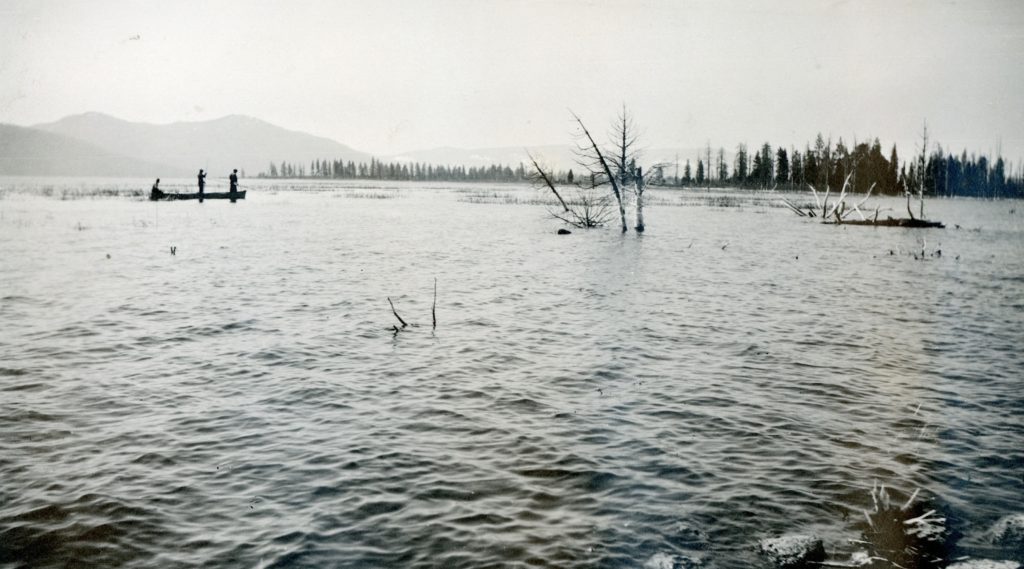
A view of Eagle Lake, looking towards Spaldings, 1921. Courtesy of Lola L. Tanner
While there are numerous citations that Eagle Lake had reached its highest level at 5,125.2 feet in 1917, though what is peculiar was that this benchmark occurred in late March. One would think that a final observation would have been made in May, after the spring run-off. Then again, no one knew what the future had in store. First of all, 1917 marked the beginning of a twenty-year drought. That would be a rude awakening for many as nothing like that had happened since the Anglo settlement of the region. Then there would be another culprit to greatly affect the dropping of the lake’s level to historic lows. In 1923, water started to flow out of Eagle Lake to the Honey Lake Valley for irrigation through the Bly Tunnel.
To provide a better comprehension just how high the lake was in 1917, is that of March 1, 2019 the level of the lake is pegged at 5095, that is a difference of some thirty feet!