Category Archives: History

A Freak party to remember!

Who needs Halloween when you can have a freak party?—B.R. Zimmerman Collection

Olga Wemple who wrote the Society page of the Lassen Weekly Mail reported on a special party that occurred on March 3, 1916. She wrote: “A freak party given by Mr. and Mrs. Jules Alexander (145 North Roop St., Susanville) proved to be the most unique and original that Susanville Society has seen for a long time. Every one was requested to come dressed in freakish costumes. Those who were invited responded with such enthusiasm in designing their queer attire that wide spread interest was caused not only among the lucky ones, but also among their friends who eagerly aided with their ideas. The home of the hosts was decorated in keeping with the plan of the evening. The living room was brightened with strings of oranges, lemons, apples with gayley colored balloons hung from the chandeliers and freakish pictures of all descriptions ornamated the walls. When every one had arrived each drew a caricature cleverly drawn by E.J. Feher to find “yourself” which table to be seated at.

“At midnight all entered the dining room which was decorated with onions, turnips, and beets. The large table was bountifully laden with all kinds of goodies. At each place a card upon whichwas tied a minature knife, fork and spoon and also the initials F.W.M.B.F were painted. All were asked to guess the meaning of the initials and Mrs. C.M. (Maybelle) MacDonald proved the clever one and guessed the meaning which was “Fingers were made before forks.”

Subscribe

First Impressions – Reno, Nevada

Sylvester Daniels. Courtesy of Jean Gorzell

On June 3, 1874, Sylvester Daniels arrived in Reno, Nevada by train from Iowa. It was his first stop on his way to tour Northeastern California. He was not impressed. Daniels wrote:

“Lots of drinking of all kinds of drinks. I have not seen anyone drunk enough to stagger, yet it is only eleven o’clock in the morning. They don’t know any money smaller than ten cents. Money making is all the rage here. Most every man has his pockets full of silver. It seems very strange to me, it is so different from what I have been used to.

“In this place, lodging is one place and eating is another, eat wherever you have a mind to. I took a walk this afternoon out to the west end of town. It is just sagebrush desert, but I saw some yards that is irrigated. The Truckee River runs along the south side of town. It runs very rapidly. It goes tumbling over the stones as though it was in a great hurry to go to some place right quick. The town is watered by the river.

“Saw a drunk squaw this afternoon. She was walking up the street swearing at an awful rate. A man told me they always talk in English when drunk. This is a terrible place for drinking and gambling to say the least. And I can not say any more that I have not seen any one drunk. I have come to the conclusion that the drinking men are drunk all the time, are never sober. I think it is different with the Merchants and they have nice stores here.”

Subscribe

The strange fate of the Amedee Hotel

The remnants May 1950. Photograph taken by Harry Ryan

Amedee was the premier railroad boom town on the east side of Honey Lake. It was created in essence when the Nevada-California-Oregon Railroad (NCO) extended its line there in 1891. The following year witnessed lively times rivaling in population of Susanville. The town’s centerpiece was the majestic Amedee Hotel. In 1899, the NCO began work to extend its line north, and Amedee slipped a notch or two in importance. A revival of sorts began in 1910 with the Standish Water Company’s development of an elaborate irrigation system. In 1912. A second railroad, the Fernley & Lassen, added more excitement to region.

By 1917, Amedee’s decline had begun. In 1918, the NCO abandoned the segment of the railroad that serviced Amedee. At the same time the Standish Water Company’s project failed. Then with the advent of World War I a major segment of the east side of Honey Lake was de-populated. By the 1930s, the only occupants of the hotel was the town’s caretaker. By the 1940s the hotel was in a slow decay. In the spring of May 1950, Jack Humphrey who owned it had the hotel dismantled, since it was constructed with premium lumber. The lumber was then hauled to Jack’s residence near Milford, in which he intended to use it to construct a new home the following year. That September a forest fire destroyed the barn that the lumber was stored in.

The Amedee Hotel in its prime.

Subscribe

Standish vs. Litchfield

Standish, 1908. Courtesy of Betty Gorbet

All things considered, since Standish started as a planned utopian community that eventually failed, there was that bit of original quirkeness that prevailed for years, after the demise of the failed experiment. Case in point, when the Fernley & Lassen Railroad surveyed and later constructed the railroad north of the town in 1913, it was not a big issue. It was odd. Other communities would have lobbied hard to have a railroad come into their town. Not Standish. When Ben Gibson plotted out the nearby town of Litchfield that the railroad would become an integral part of that community, Standish yawned. Standish had only been established in 1898, yet it was the first major town in that district and enjoyed a loyal following of the agriculural district, that Litchfield which tried could never overcome.

Never miss a story, click here to subscribe.
Lassen County Centennial Coin

The front side, the reverse has all the details.

In 1964, Lassen County celebrated its centennial in a big way. Throughout the year a wide variety of events were held from a reenactment of the Sagebrush War to a Pony Express Ride. Just prior to July 4, 1964, the Lassen County Chamber of Commerce distributed to retail stores, hotels, restaurants and a commemorative centennial coin. Believe it or not they actually had a value of fifty cents towards any local purchase. It was the chamber’s opinion few people would redeem, and keep them as a souvenir. Whatever the case may be 10,000 were made.

Never miss a story, click here to subscribe.
Long Lake/Windy Hollow

A 1971 Lassen National Forest Service in which both features are highlighted in yellow.

A reader raised concern about the location about an earlier post about Windy Hollow and its close proximity to Long Lake. Long Lake, which is an intermittent body of water is just south of where Highway 44 and the Western Pacific Railroad crossing, while Windy Hollow is just north from the same crossing.

Long Lake prior to 1900 was known as Anna Lake. George Best Long (1868-1925) had a homestead in the vicinity, hence its current name. He sold that property in 1925 for $500.

Never miss a story, click here to subscribe.
Stones Subdivision

A lakeview scene, circa 1963

On May 4, 1961, the Stone family sold their Eagle Lake ranch to the Five Dot Land & Cattle Company. They did retain ownership of their shoreline property on the northwest end of the lake. In October 1961 they began subdividing property into 244 lots.

A 1963 view of Stones subdivison.

Never miss a story, click here to subscribe.

Westwood’s 4th of July 1915

4th of July 1915 celebration at Westwood. Courtesy of the Nevada Historical Society.

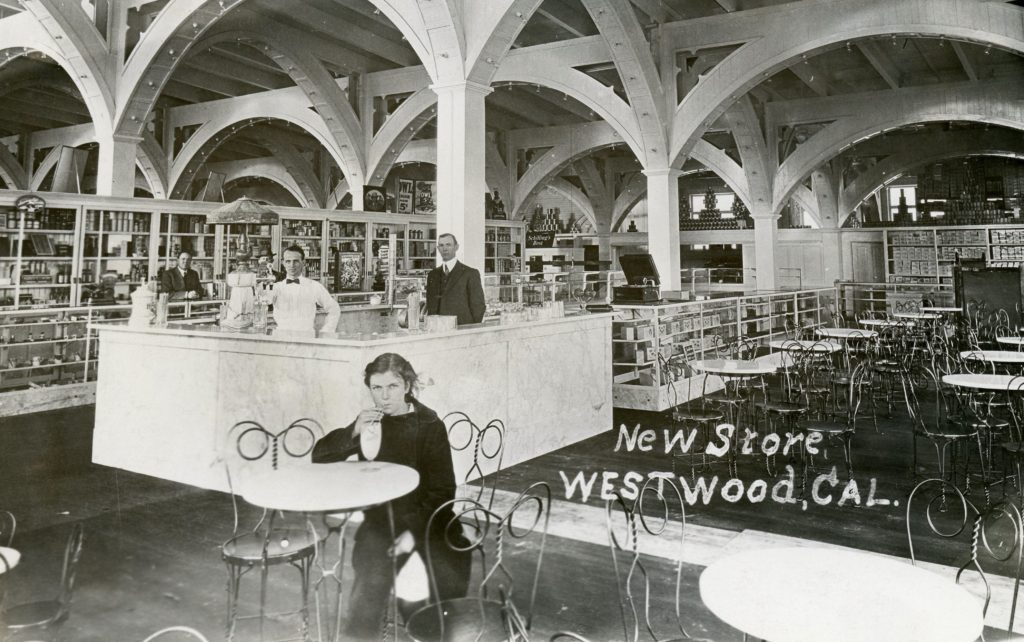
This was unlike other patriotic events taken place across the nation that particular year. In 1914, after the completion of the Fernley & Lassen Railroad to Westwood, the Red River Lumber Company was eager to host an event to its neighbors to showcase their new town. However, it always turned out as a logistical nightmare, as other events prevailed. Instead of attempting to do something hasty in the short term, the company focused its attention on July 4, 1915. It was a grand success. A special train came from Susanville to Westwood for the day and those who traveled by car, allowed for thousands to attend not only traditional activities associated with the Fourth, but to sight-see and explore the new town.

Never miss a story, click here to subscribe.

Star Spangled Banner

Veteran’s Memorial Building, Susanville

Something a bit different today. Some may not realize that it was not until in 1931 when the Star Spangled Banner was made the national anthem. In September 1936, there was a nation wide movement by the American Legion Auxillary to have the national anthem played as many venues as possible. Locally, it was Maud Lund, the music chairman of the Thomas Tucker Post American Legion Auxillary duty launch a local campaign to have the anthem played at local events.

Never miss a story, click here to subscribe.