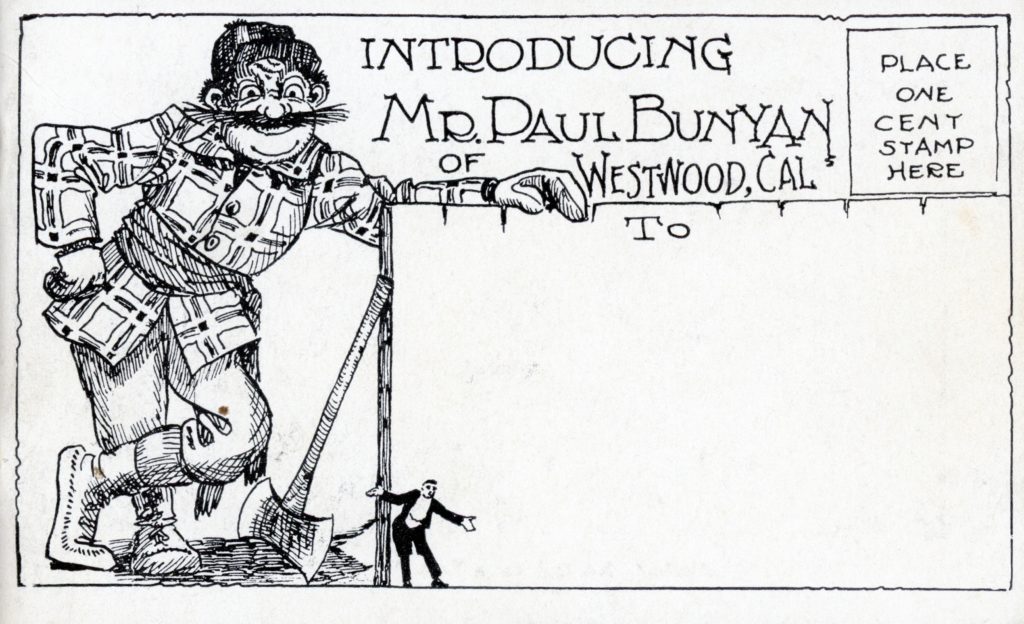
Since today is the Paul Bunyan Festival in Westwood, here is the origin of the town’s mascot.
During Red River Lumber Company’s expansion to California, they had number of hurdles to overcome. Since they would be using a different species of pine, than what they had previously used in Minnesota, they had to monumental task to educate their customers. Part of the duty fell to Archie Walker in Minneapolis, and he contacted his cousin, W.B. “Bill” Laughead, who was doing some free-lance advertising work to assist him. At this time, Paul Bunyan was a little known folklore, associated with loggers. The two came up with the idea of Paul Bunyan, and prior to this no one had rendered a drawing of the mythical logger. Continue reading Introducing Paul Bunyan→
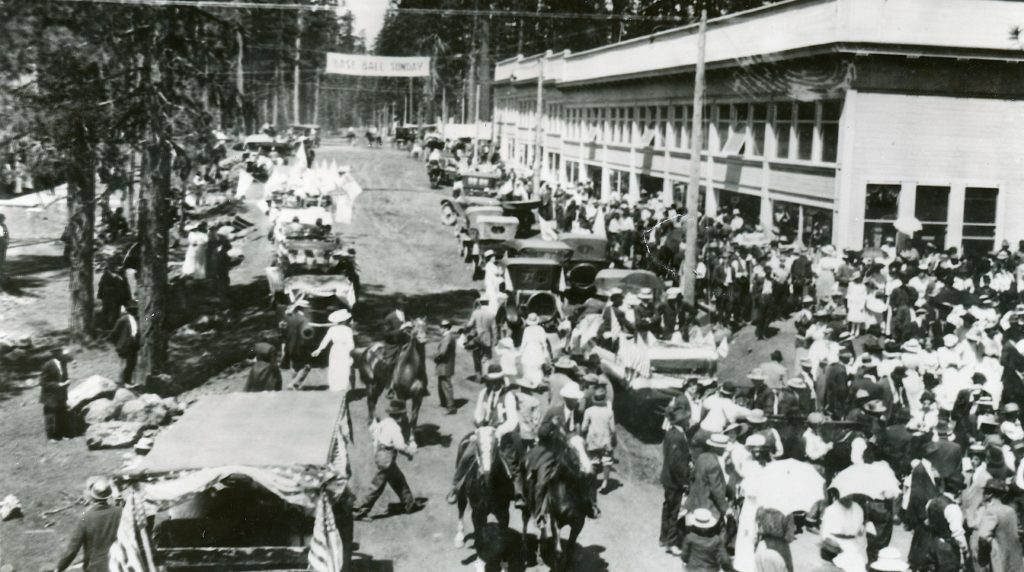
4th of July 1915 celebration at Westwood. Courtesy of the Nevada Historical Society.
In the spring of 1914 Red River Lumber Company announced that it would hold a grand 4th of July celebration to welcome visitors to its new town. Red River officials stated its main purpose was to establish and maintain the “friendliest” relations with Susanville. On the other hand it evolved in a two-day event featuring a baseball tournament.
The Fernley & Lassen offered a special excursion train that consisted of eight passenger cars. It was sold out and the fare was $1.50 round trip. As soon as the train arrived around 10:00 a.m. a procession was formed and marched through the principal streets of Westwood. It ended at open air pavilion where entertainment and necessary orators speaking. It was followed by barbecue. The next event were scheduled baseball games. The evening consisted of a firework display and a dance. It was successful event and repeated in 1915. In 1916, Susanville reciprocated and was the host of the grand 4th July celebration.
These nuggets of information were a part of local newspaper exchanges that appeared in Lassen Advocate of August 21, 1914. I thought some would enjoy. This was the happenings in Modoc.
A large freight and passenger steamboat, building for use on Goose Lake is nearly ready to be launch.
Sagehen are so numerous as to be considered a pest by ranchers in the vicinity of Alturas, yet it is a violation of the law to shoot them.
Ey-Ee, chief of the Pit River Indians, who died last week, was knwon among the whites as the “peace chief.” He is credited with having persuaded his tribe not to join the Modocs in their war upon the settlers, 40 years ago.
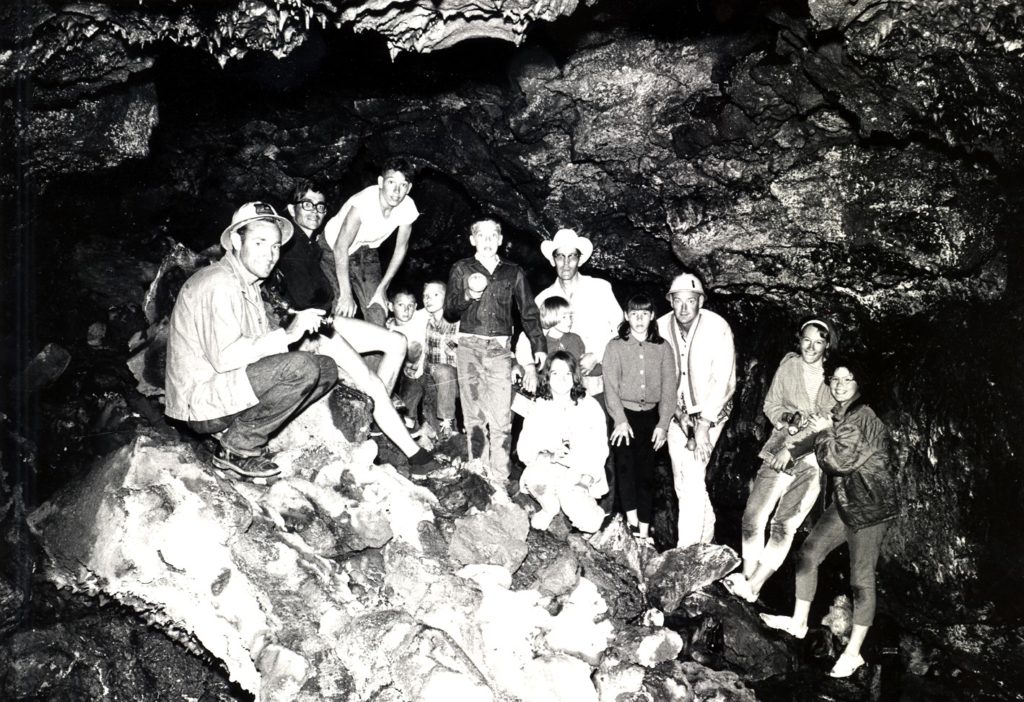
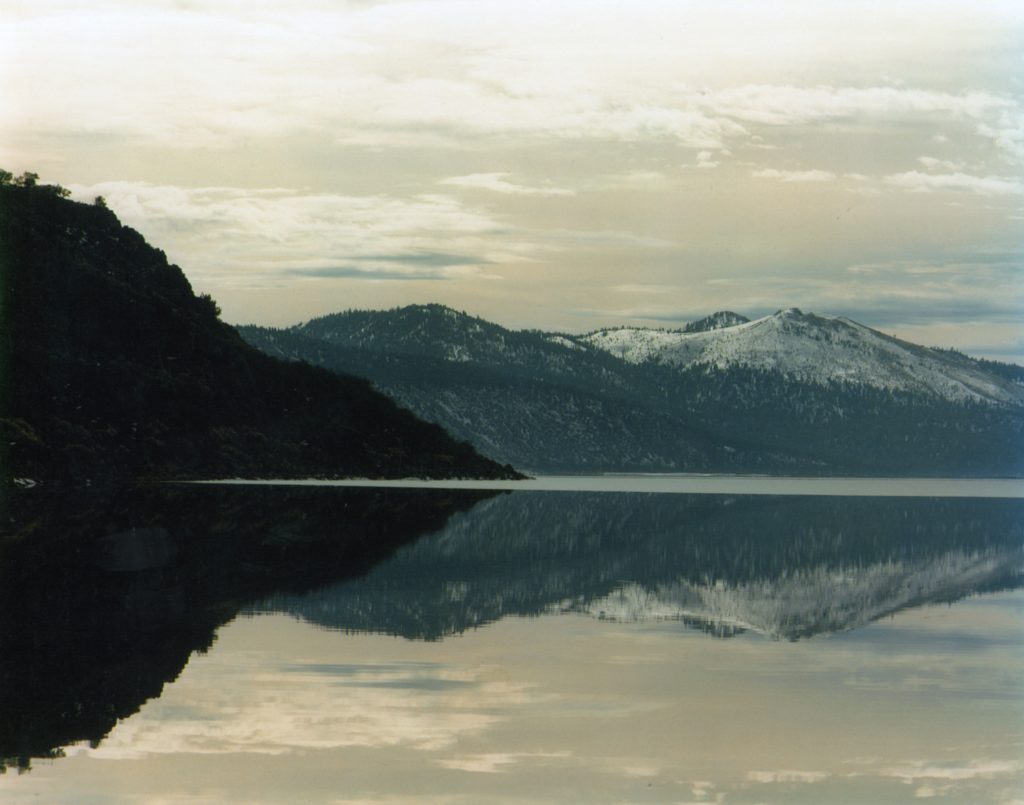
It is a rarity to come across early day descriptions of the various ice caves on the west side of Eagle Lake. The following account was a part of Ada Gerking York’s memoirs (1877-1936). She was raised in Willow Creek Valley and spent most of her life in Grasshopper Valley.
”Eagle Lake is surrounded by many wonders, especially on the west side, great lava beds of which little is known. A great volcanic crack extends for ten miles; some places 10 to 15 feet deep, others bridged and so on. The place where I visited had a bridge upon which I went; I found a small hole in the ground and dropped a rock down. It struck far below then rolled, clattering among other rocks, fell again, and was some moments before all was quiet again. One of the party went into the crack and found an entrance to the cave under the bridge, but cannot be explored on account of its depth. Another time I visited the caves, how many I forgotten, and I think there are many yet unexplored; some of them had monstrous holes as openings, and in entering I found large rooms, some of which were exquisitely shaped. One known as “The Grottos” had many stalactites and stalagmites; some have more than one opening and some several apartments. One contains ice and is known as the Ice Cave and ice may be had any time of the year.”
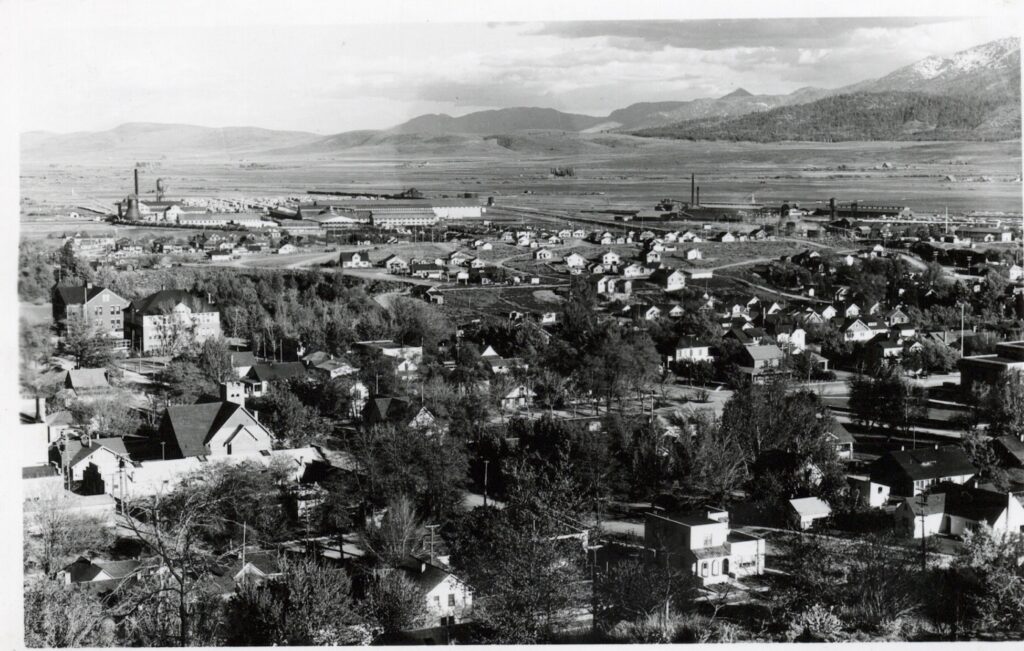
This view taken from Inspiration Point by Eastman Studios was not reproduced for a postcard. In the late 1970s, I gained access to Eastmans vault, and for some unknown reason this picture caught my attention.
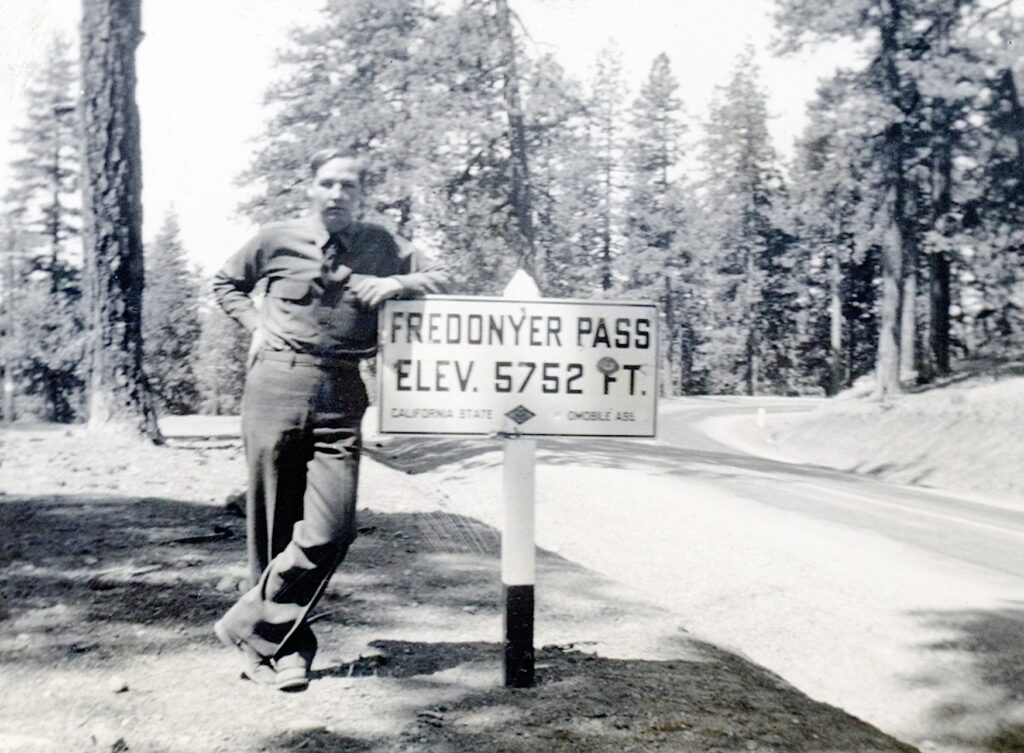
A lot has been written about Atlas Fredonyer early activities in the region. Among other things he filed a land claim in what would later become Susanville, since that town’s founder neglected to do so.
In 1862, Fredonyer was found guilty and sent to prison of a sexual assault charge involving his fifteen year old step-daughter, Sally. Many were of the opinion that Fredonyer did not commit a crime. A petition was circulated and California Governor Stanford pardoned Fredonyer the following year.
After his pardon, Fredonyer seemed to have disappeared, as he never returned back to this region. A few years ago, I finally found out what became of him. He surfaced in a most unusual way in 1880 in San Francisco. Fredonyer it should be noted used the title of “Doctor” to what extent of medical training he had, is not clear. At this time he was suffering from bowel blockage. He attempted perform his own colonoscopy, which a bottle, which got lodged in the colon. The heavy set Fredonyer was finally taken to St. Mary’s hospital. A colostomy was performed to remove the bottle. He did not recover from the procedure and died in San Francisco on August 10, 1880.
Native American mythology of the western Great Basin has that a serpent lurks in the waters of the various lakes, whether it be Eagle, Honey, Pyramid or Tahoe. Some versions assert the lakes are connected by underground channel, and this is why sightings of the serpent are rare as the serpent is constantly traveling from lake to lake. Herewith are two accounts one at Eagle Lake and the other at Honey Lake.
According to the Lassen Advocate of August 13, 1976: “Suspicions of a possible Loch Ness monster in Eagle Lake were aroused Tuesday, Aug. 10, at about dusk when a group of people apparently saw a mysterious creature twice surface near the Eagle Lake marina.According to Gene Moore of Hemet, California who was fishing from shore, it looked like a 15 to 20 foot creature that almost looked like a big eel.”
Honey Lake, 1997.
Orlando McNabb was a mining prospector of the Honey Lake region in the early 1900s, but was he was also a prolific writer. Here is his observation of a Honey Lake serpent:
“Mr. J.C. Wemple, an old and respected citizen of our village [Milford], and a friend of mine, has been, for some time, observing very carefully the strange actions of Honey Lake. Mr. Wemple and I are both of an observing. turn of mind, with a desire to investigate the strange and mysterious nature. At various times during the last year so we have wandered on the sunlit shores of this beautiful lake we have heard strange sounds and often at evening late, we have seen the waters of this lake in great commotion, great waves rolling on its surface. At the same time we also heard a noise like unto the roaring of a dozen bulls. ‘What is the cause of all of this? Said I to my friend. ‘Well’ said Mr. Wemple, ‘It is a long, strange story. It is undoubtedly the return of the sea serpent that comes back every thousand years. During my early days here I found an old record written in what afterward was found to be in the Piute language. I was unable to read it, of course.’
“Both of us being much interested we called in consultation Piute Jack, a very intelligent native who lives at Willow Ranch, Long Valley. He is well versed in all the lore of his race, and by his aid translated the manuscript written in hieroglyphics on slabs of slate rock and will provide a translation at a later date. In the mean time and I would give a word of caution to persons who go fishing to have an eye open for this serpent-also be aware of the ‘eye-opener.'”
This is Native American Cemetery located on Rice Canyon Road and adjacent to the High Desert State Prison.
It is also a family cemetery of Charlie & Jennie Piute. Charlie Piute was half Maidu and half Paiute and was born in 1837 at Big Meadows, now Lake Almanor. As to Jennie she was born in 1861. She died on March 26, 1916 at their home at Rice Canyon from some form rheumatism affection and was the first person to be buried. The second was her infant grandson Laurence Charles Mullen born January 21,1925 and died August 31, 1925.
Charlie Piute died on April 9, 1927. It is not known when the family moved from Big Meadows to Rice Canyon, but it appears to be after 1900. I inquired with the late Leonard Lowry as he is somewhat related, but he did not know.
Charlie & Jennie’s eldest child Ora was born circa 1873 at Big Meadows. She married George Evans on November 5, 1893. They had four children: Willis, Oliver, Lester and Marie. In 1912, George and Ora Evans were the first Native American couple to file for divorce in the Lassen County Superior Court. Ora Evans died in Susanville on September 6, 1948 and was buried in the Lassen Cemetery.
Other children of Charlie and Jennie include, John Brown, Russell Piute, Minnie who married James C. Mullen and Nellie who was married to Jimmy Mullins.
The last time I did any research on this family was back in 2004 for Adam Mullins. Leonard Lowry wrote in my file; “Descendants of Charlie Piute living in Susanville include the Valadez, Granados, Nelson, Kingston, Law, Allen and others.”
Subscribe and support this site for as little as $5.00 a month.
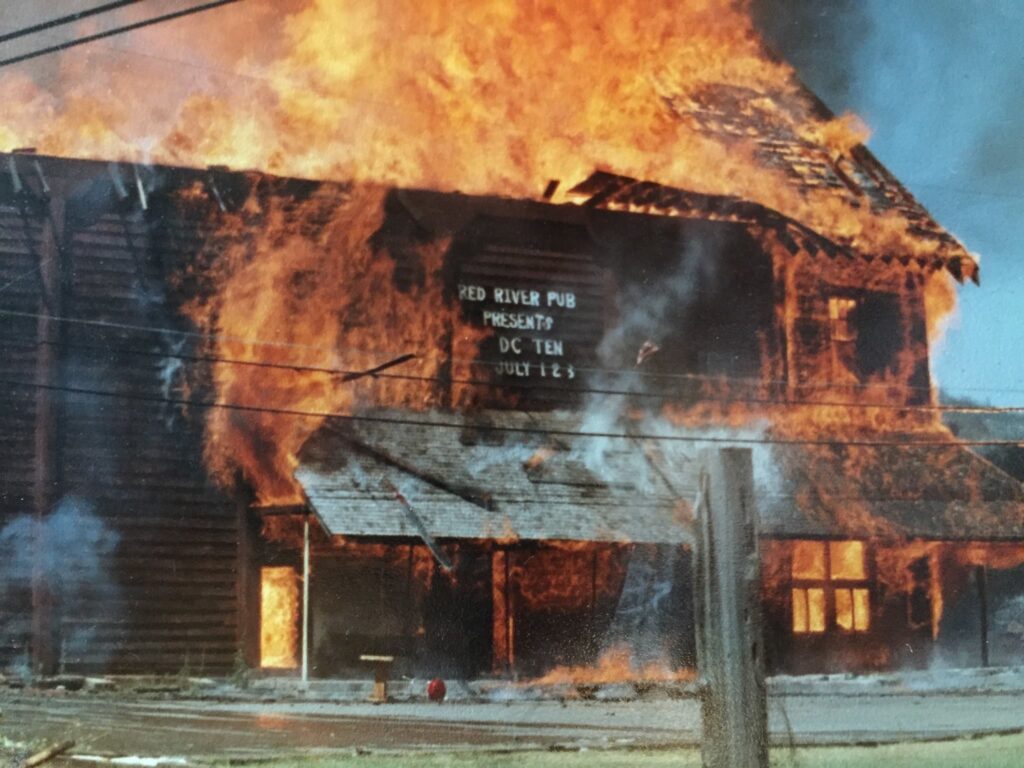
The Red River Pub fire, 1982-Courtesy of David Zoller
After the closure of the mill at Westwood in 1956, a lot businesses fell on hard times. One of the victims was the majestic Westwood Theater. Several attempts were made to revive it, but to no avail. By 1980, it took on a new life as the home of the Red River Pub. On July 12, 1982, it was one of the most spectacular fires in modern Westwood history. when the old theater caught fire. Due to the intense heat of the blaze, aid from a forest service air tanker dropped retardant to combat the fire and to keep it contained.
Westwood Theater. Courtesy of David Zoller
If you have memories of the pub or fire, that you would like to share, please do so.
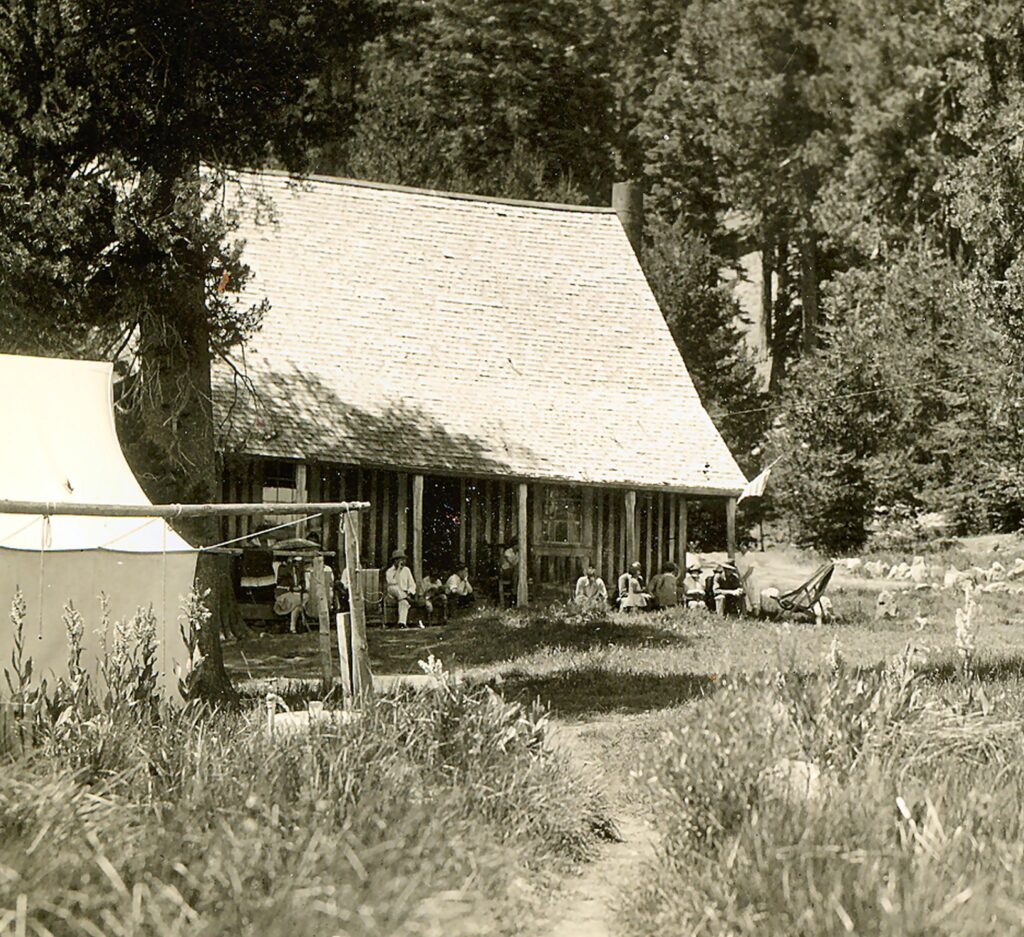
When Alex Sifford purchased Drakes Springs (now Drakesbad) in 1900 he did not envision that he would own it for decades to come. When the Lassen Peak eruptions began to occur in 1914, he was overwhelmed with visitors, since his resort was nearest to the mountain. In 1917, Sifford retired as a Susanville school teacher and was eligible to collect a pension of $500 a year. . He was at a crossroad as to what to do with Drakesbad. With Lassen Peak’s continuous eruptions, it became a burden to operate Drakesbad. Sifford offered to lease it to the national park service, but since it was private property, it could not.
Then there was World War I, in which son Roy was drafted. Alex, not knowing the outcome, persevered with the operations of Drakesbad. In March 1919, Roy was discharged from the Army and it was Roy’s great pleasure to assist his parents for the summer season at Drakesbad. A family meeting was held, whereby Alex informally turned over the ownership of Drakesbad. (It was until 1931, that Alex and Ida Sifford deeded the Drakesbad property to their two children, Pearl and Roy.
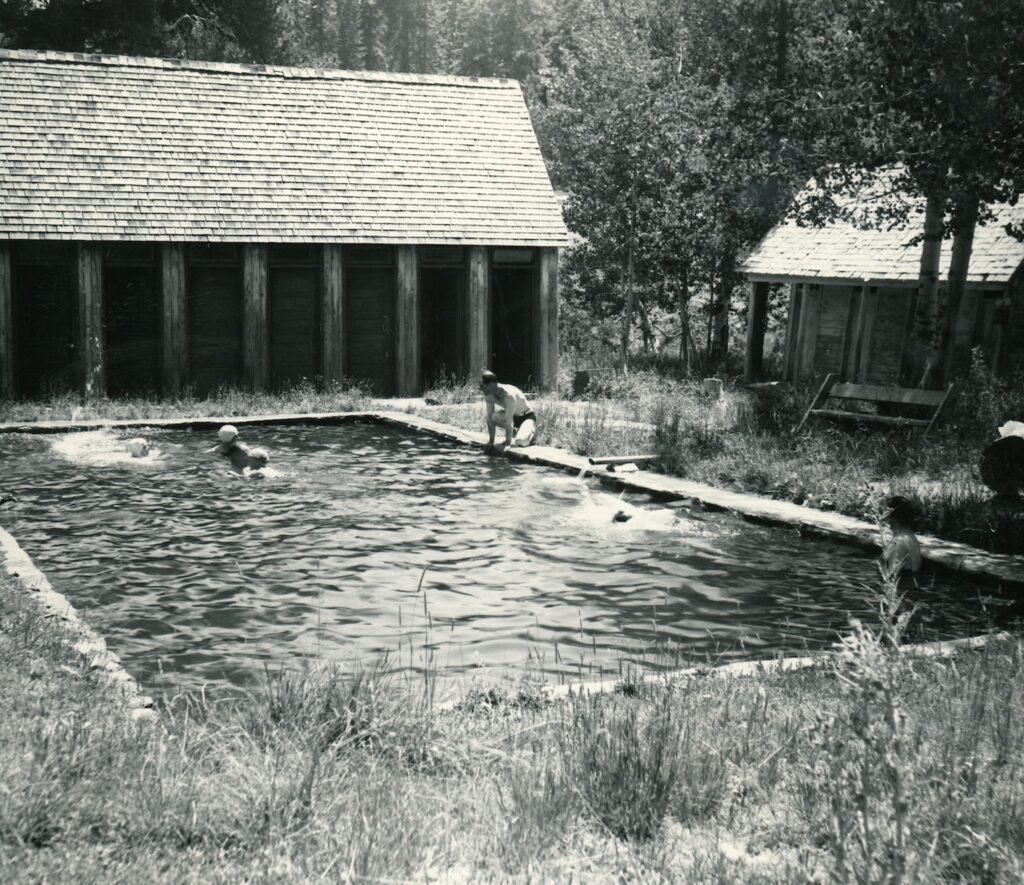
Drakesbad swimming pool, 1920s-Sifford Collection
While Roy managed Drakesbad, while Alex milked the cows and took care of the saddle horses, he was still in charge. In 1925, Congressman John Raker struck a deal with Alex to sale Drakesbad to Lassen Park. Sifford would be paid $150,000 lump sum tax free payment. Congressman Raker died in January 1926, was not able to get Congressional funding. and deal was null and void. It was not until the 1950s the Siffords entered into agreement to sale it national park service.