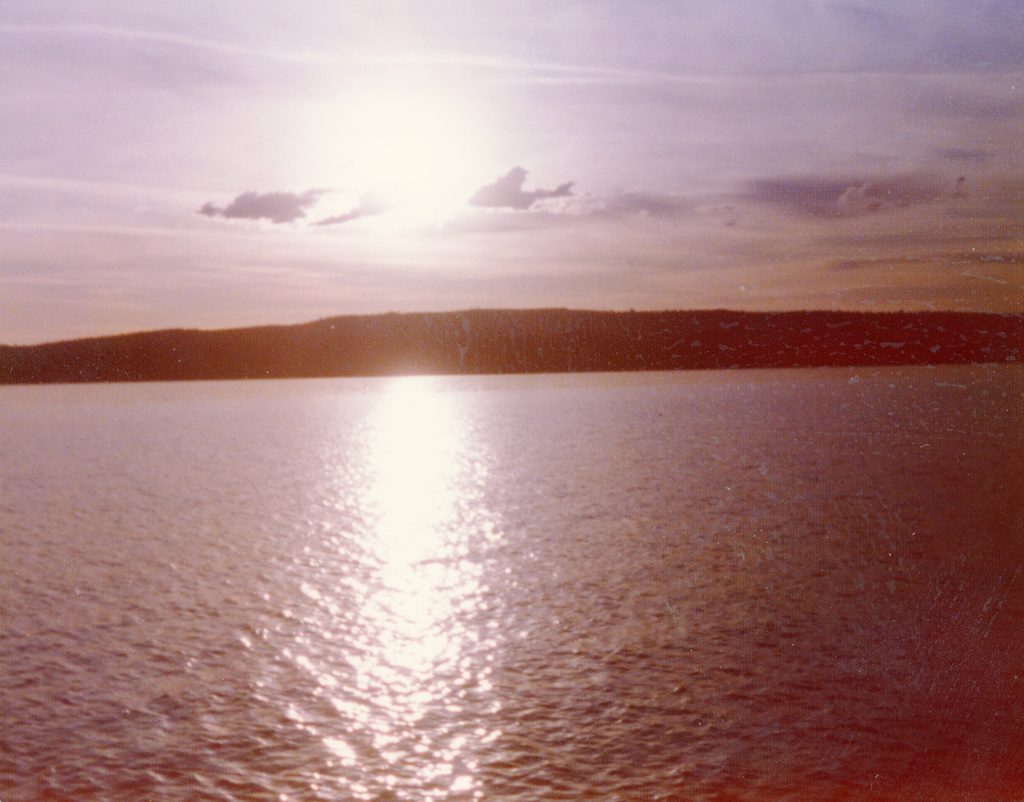
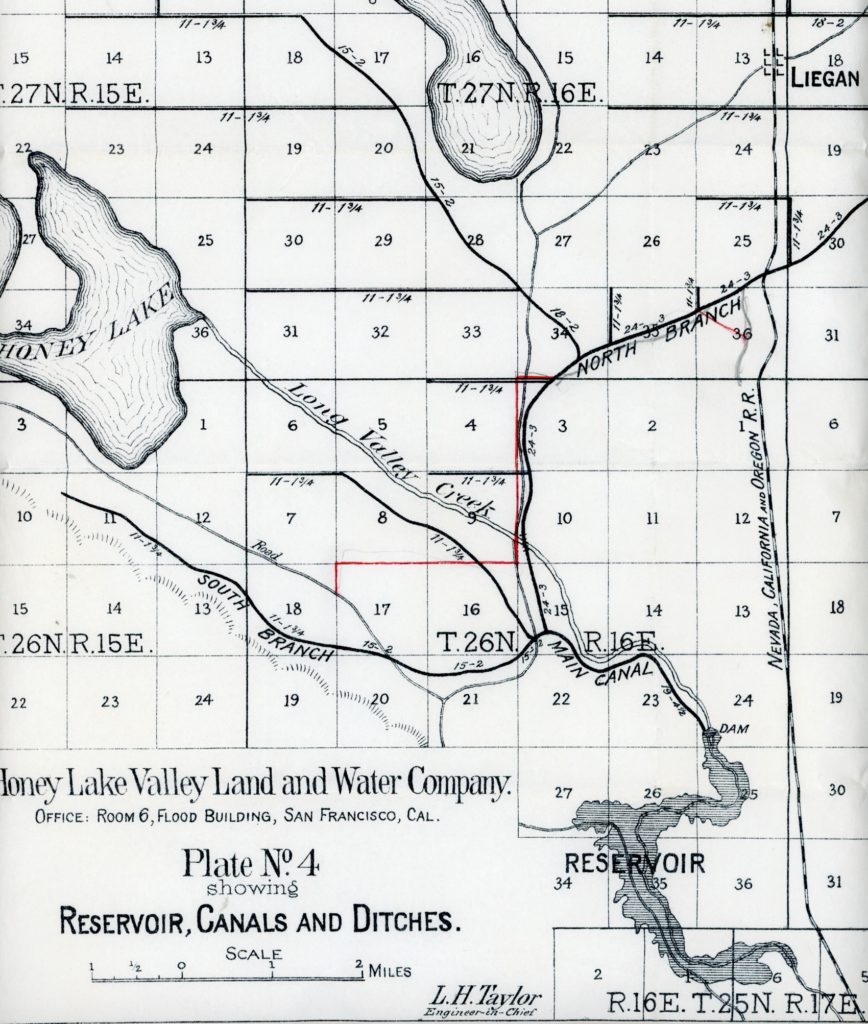
Of what was one of the more unusual uses of Eagle Lake water was a proposal to use that resource in the mining operations at Hayden Hill, located some twenty-five miles north of the lake.
During the 1920s and 1930s, both the mining activity and the population at Hayden Hill declined. In 1934, Stratton & Stratton of Spokane, Washington consolidated the mine ownership. They had high hopes to revive the Hill. One of the main drawbacks that Hayden Hill suffered was the lack of water for milling. In 1938, Stratton & Stratton proposed to pipe water from Eagle Lake, at a rate of 2,500 gallons per minute. This scheme never came to fruition.
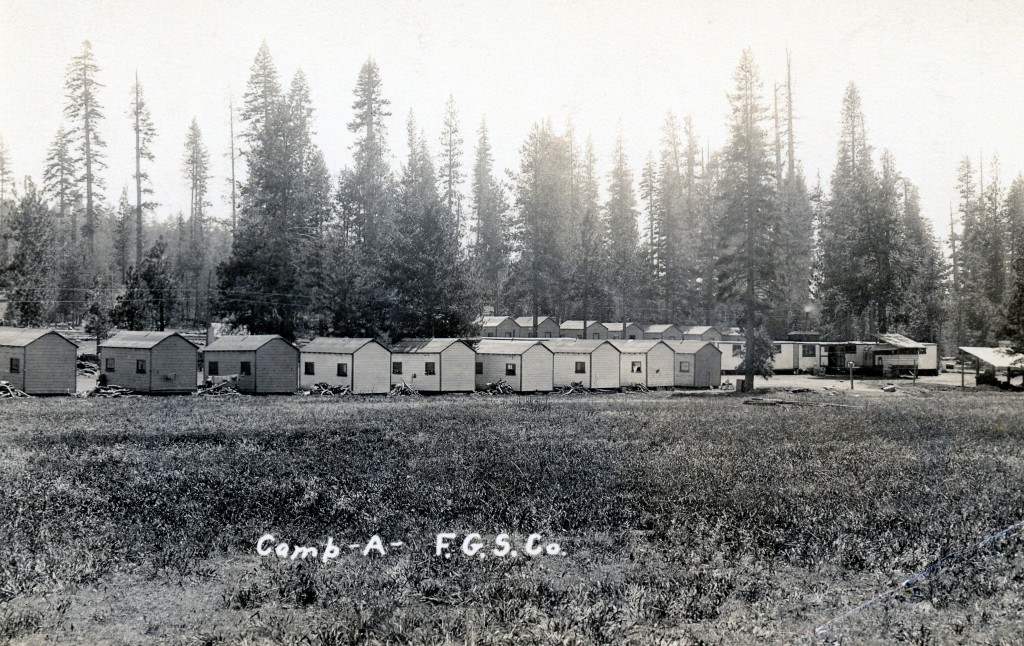
Camp A, Fruit Growers Supply Company, located just north of McCoy Flat Reservoir, 1921
In the summer of 1920, Fruit Growers started their logging operations near McCoy Flat Reservoir, while their Susanville mill was still under construction. Since logging then, was seasonal in nature, they wanted to make sure they would have a steady supply of logs ready when the new mill would be placed into operation in the spring of 1921.
Camp A was the first of ten railroad logging camps of Fruit Growers Lassen Operation. It opened on July 1, 1920. The operation was comparatively small, only logging 720 acres that season. On April 29, 1921 the first woods crews were dispatched by rail, where they encountered three foot of snow on the ground. The first item of business was to remove the snow from the railroad spurs, so that the timber fallers could start work. Within in a weeks’ time, logs were already being shipped to Susanville. In addition, a second camp, known as Camp B, opened three miles to the north of Camp A. Between the two camps, they housed over 600 men.
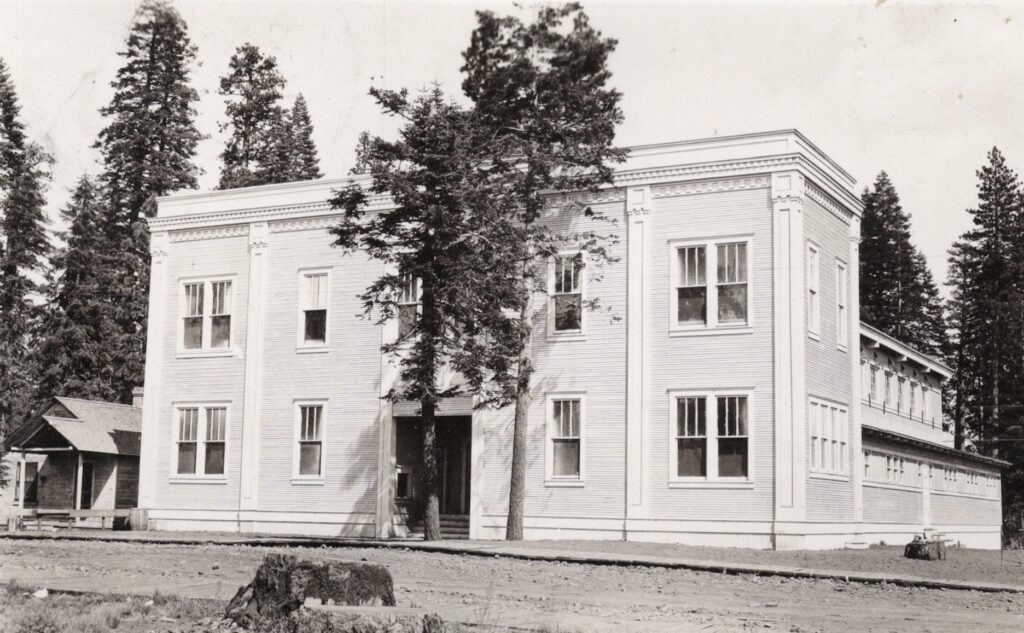
The Westwood Auditorium was built in 1920 at a cost of $20,000, was the most expensive Red River public facility to date. It was used for multiple purposes. In 1937, Charlie Munroe leased the building from Red River. It was an oral agreement on day to day basis. He converted the building into a roller skating rink. Through successive ownership of Westwood, that agreement was honored. In the fall of 1976, Greater Westwood, Inc. owners of the property held a public auction, and the roller skating rink was one of them. It sold. After nearly forty years of operation the rink closed and the building dismantled.
Secret Valley, as seen from the lower end of Secret Valley.
In the mid-1920s the U.S. government sought to establish a munitions depot in the west. The two main criteria, that it be a sparsely populated region and have railroad access. In 1927,the Lassen County Chamber of Commerce, along with the Lassen County Board of Supervisors petitioned Congressman Harry Engelbright to consider Secret Valley. It had rail access and only five families lived within thirteen miles of the proposed site. In the end the government selected Hawthorne, Nevada.
The December 1955 floods caused considerable damage to the railroad line between Susanville and Westwood. With the imminent closure of the lumber mill at Westwood, the Southern Pacific Railroad decided to close that segment, rather than spending significant amount of money to repairs, when freight would decrease. Since Southern Pacific did not abandon the line at that time, if a person wanted to ship something by rail from Susanville to Westwood, or vice versa, Southern Pacific could only charge the freight costs between the two points. It was their problem to figure out how to deliver the freight and bear the additional cost. In 1976, Southern Pacific began the formal process to abandon that segment of the line. It is interesting. to note that at the same time discussions were held as to resurrect that segment to convert it to a tourist line.
While many travelers along Highway 395 by Honey Lake have seen this landmark, but had no idea it had a name or what they were actually seeing. Located on the lower southwest side of Honey Lake, near Bird Flat is True Island. When the lake is full it is almost actually a “true island” with water nearly encircling it. But that is not why it is called such.
In 1870, Thaxter True (1824-1904) moved to Milford and opened a blacksmith shop. One of True’s blacksmithing techniques was unique. As Claude Wemple recalled “True used charcoal. True would dig a six foot deep pit and fill it with green pine rails. It was then covered with straw. True would then burn it to smolder and cover it with dirt. The charcoals from one pit would last him about a year.” Anyhow, True later took up a 160-acre homestead on what is known as True Island. He sold the property in 1901 to Sumner Tyler for $500.
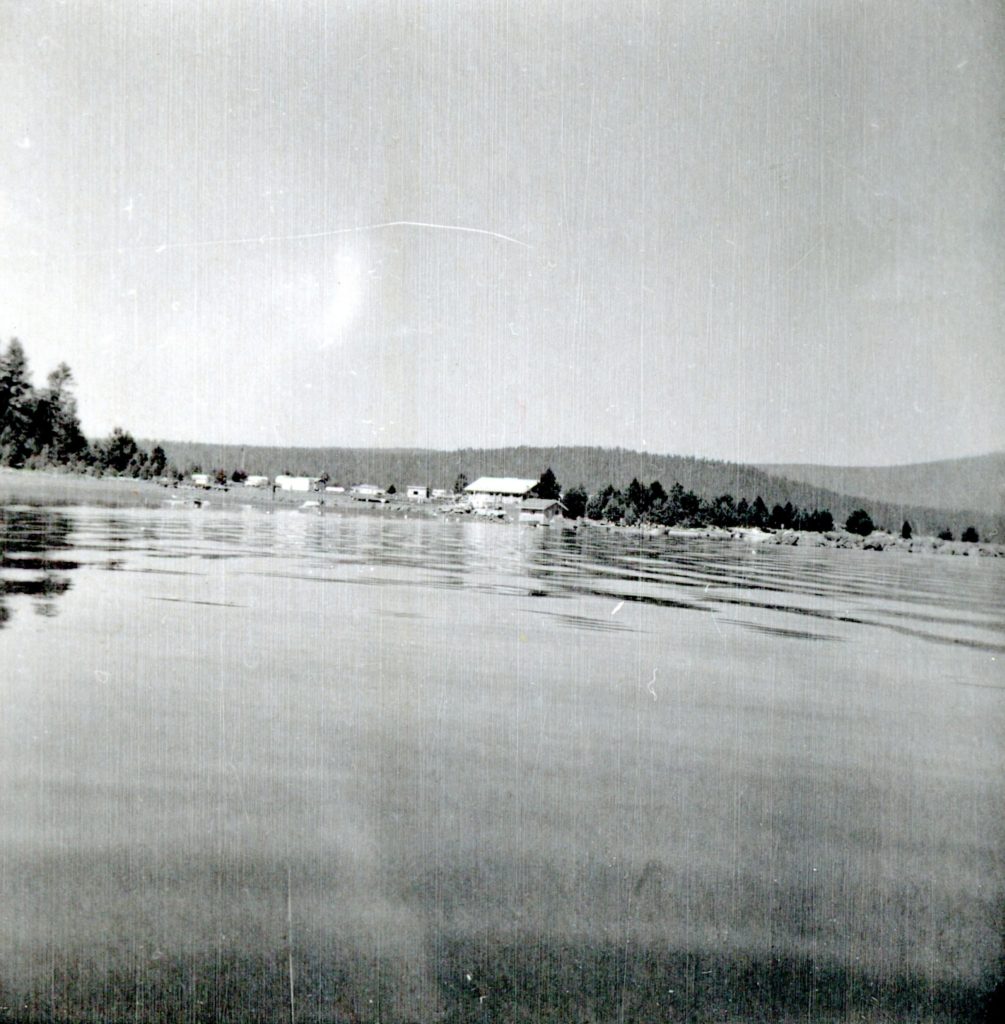
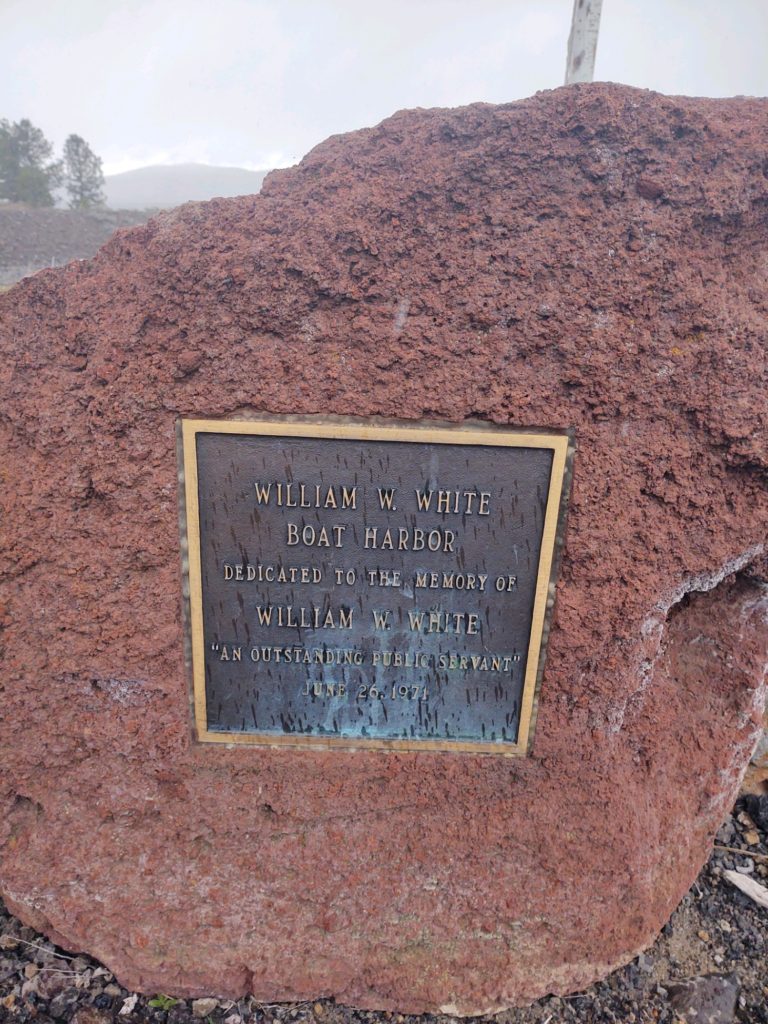
In the mid-1950s, the Lassen National Forest Service inconjunction with Lassen County officials began the planning process to make improvements at the south shore of Eagle Lake, since it still remained in its primitive state. One of the top priorities was the development of a marina near Gallatin Beach. The county leased the property from the forest service and in 1961 completed the marina. The following year, the county sub-leased the operation to Richard Gentry. In 1970, due to the rising level of the lake, the boat harbor was revamped. Upon completion it was named the William W. White boat harbor, for former Lassen County Planning Commissioner who was an ardent supporter of the project.
The ranch as it appeared in 1922, when Fruit Growers owned it.
Note: Still in search of a home.
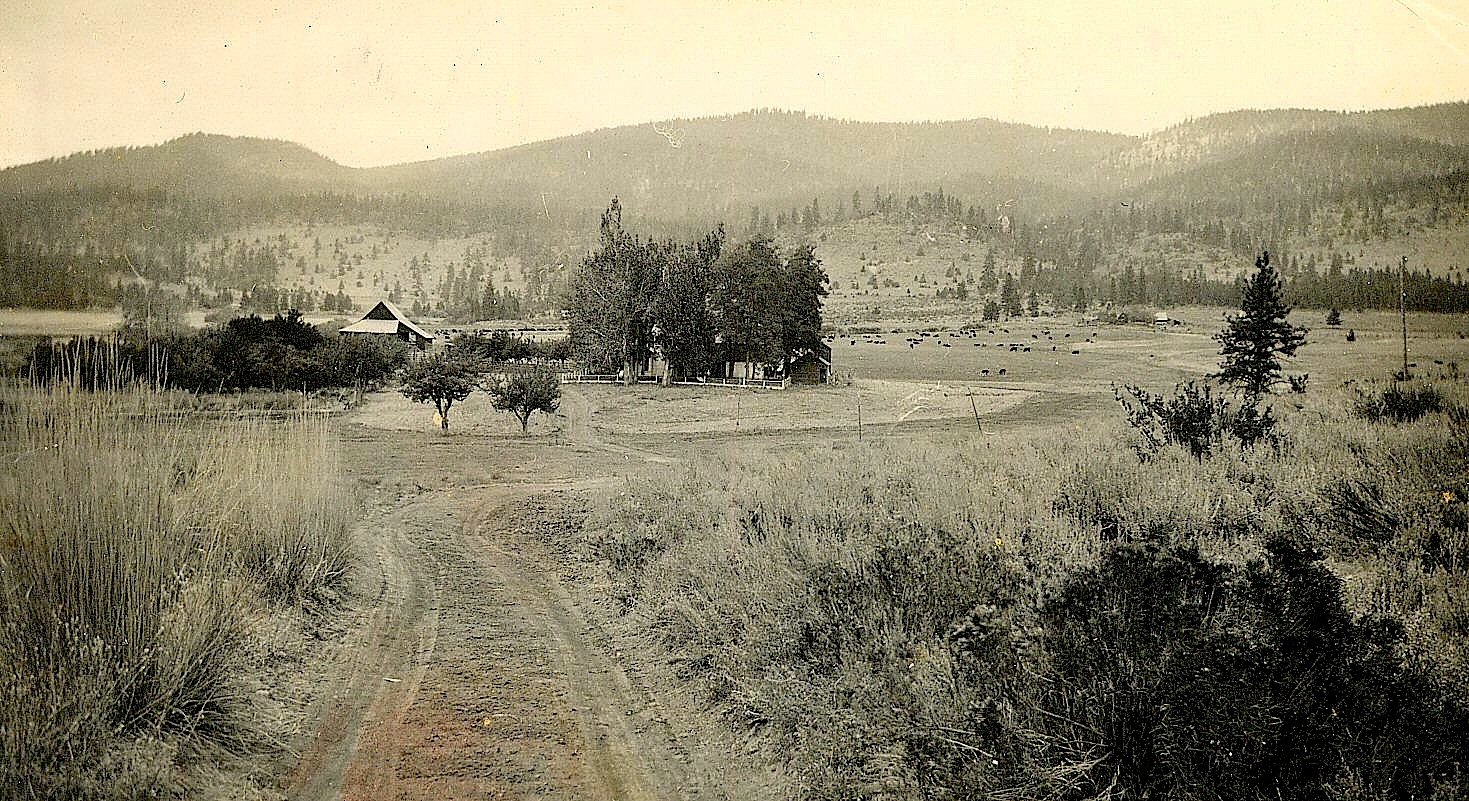
On October 30,1919, the Fruit Growers Supply Company purchased it from McKissick Cattle Company, for approximately $29,000. Fruit Growers anticipated using Bagwell Springs for a water supply and they would use the ranch land to provide winter pasture for the horses they used in logging. Fruit Growers constructed a water pipeline from the ranch to the mill, but it was never used due to litigation filed by other water right users. Fruit Growers briefly operated their own dairy there and, in 1923, leased it to the O’Kelly family who operated Lassen Dairy through the 1950s. In 1934, Fruit Growers offered to sell the ranch to the City of Susanville. Fruit Growers cited it would make an ideal golf course, that the money received from the golf course could be used to develop the remainder of the property into a park. The City liked the idea, but said no. In 1935, Fruit Growers sold the ranch to the Republic Electric Power Company who wanted to acquire Bagwell Springs as an additional water supply for Susanville. Over the years, that Company went through numerous reorganizations and became CP National. In 1984, CP National donated the ranch to Lassen County, and it is now a county park.
An interesting footnote to the story is that Lassen Community College examined the property for a future campus back in the 1960s, but the asking price was too expensive.
News Flash: I am still in search of a home! This is how the ranch appeared in the early 1900s when the Longs owned it.
In November 1855, Moses Mason claimed this property and became the second person to file a land claim in the Honey Lake Valley. On September 12, 1856, William Weatherlow located on Mason’s abandoned claim and lived there until his death in 1864. William B. Long purchased the property from Weatherlow’s Estate. In the early 1880s, James Bagwell located at the north end of the Susanville Ranch. In the mid-1870s, Abner and Margaret Van Buren settled on the western end of the property. By 1898, William B. Long’s son, John T., had not only purchased Van Buren’s and Bagwells’ properties, but that of his father. He consolidated these lands into one ranch. On June 2, 1913, Long, heavily in debt with his extensive ranch properties and a slaughterhouse in San Francisco, deeded this property to Alexander & Knoch, whom he owed $13,362.11. Alexander & Knoch, in turn, sold it to the McKissick Cattle Company.
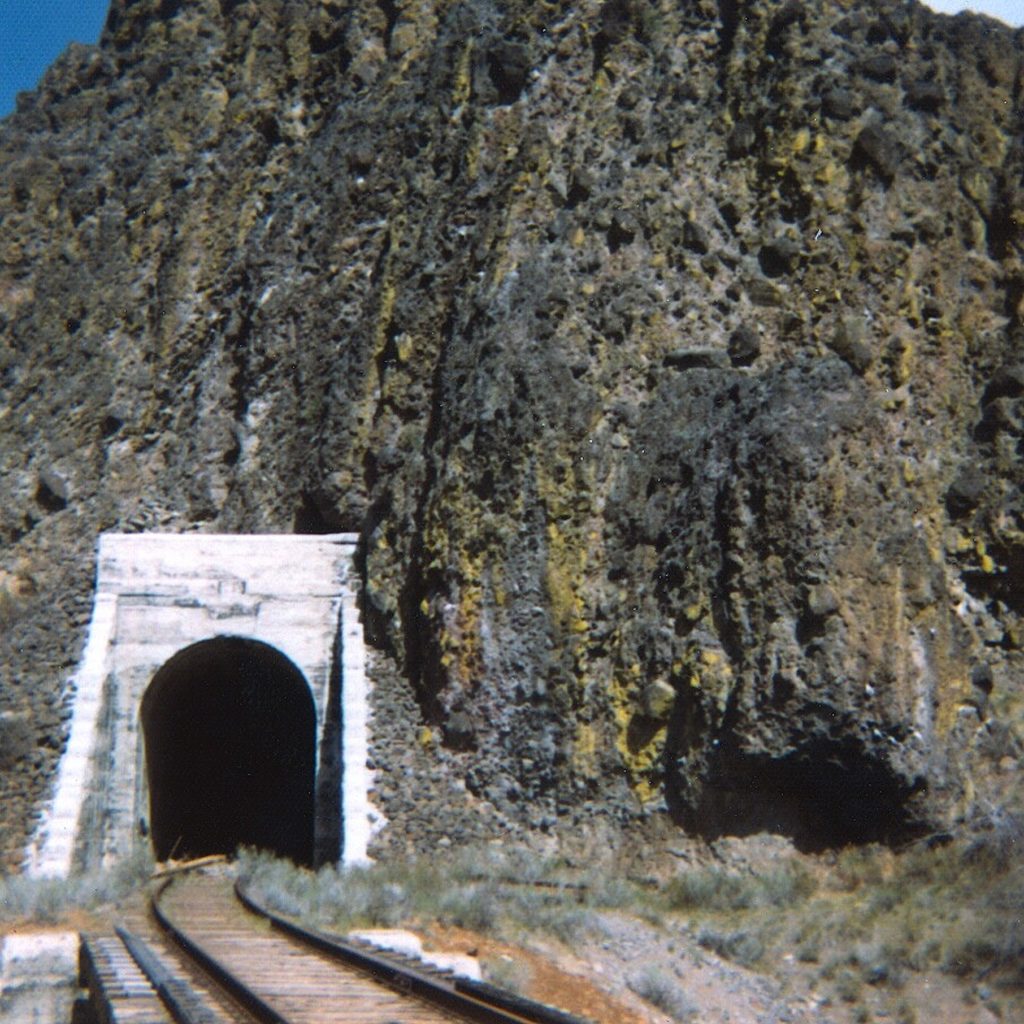
It has been a long time since I have done this feature. For some, even though the photograph was taken in 1965, it should be easily recognizable. However, things change over the years, and this location and has under gone many.




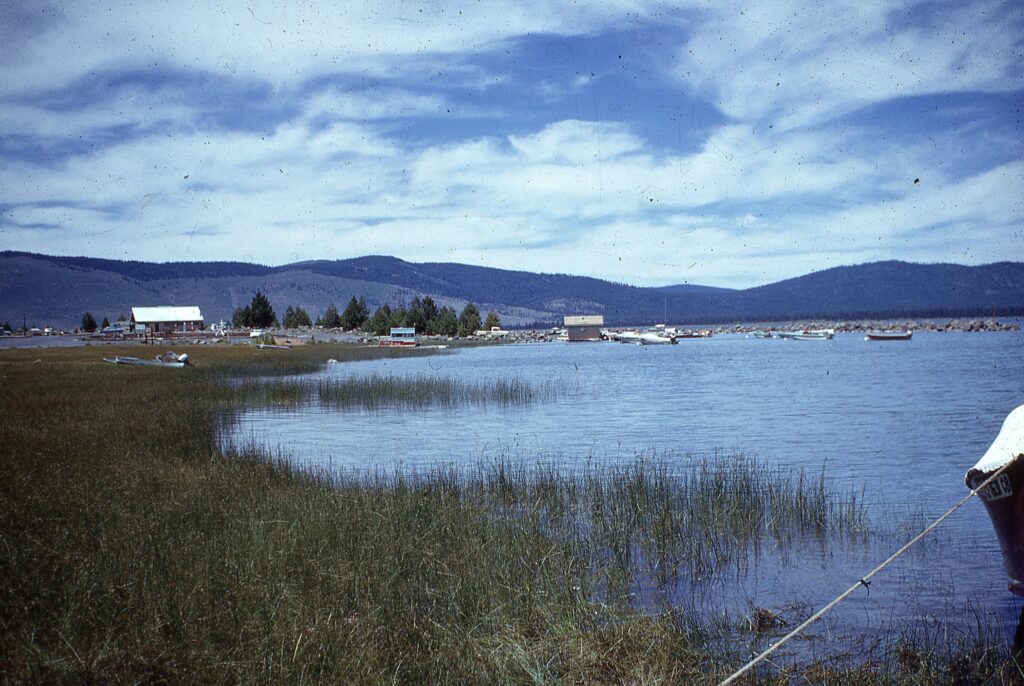 It has been a long time since I have done this feature. For some, even though the photograph was taken in 1965, it should be easily recognizable. However, things change over the years, and this location and has under gone many.