
While many of the city street names have links to families from the pioneer era–Alexander, Brashear, Lassen, etc.–that is not the case with Cook Street in the Inspiration Point neighborhood. Continue reading Cook Street, Susanville
While many of the city street names have links to families from the pioneer era–Alexander, Brashear, Lassen, etc.–that is not the case with Cook Street in the Inspiration Point neighborhood. Continue reading Cook Street, Susanville
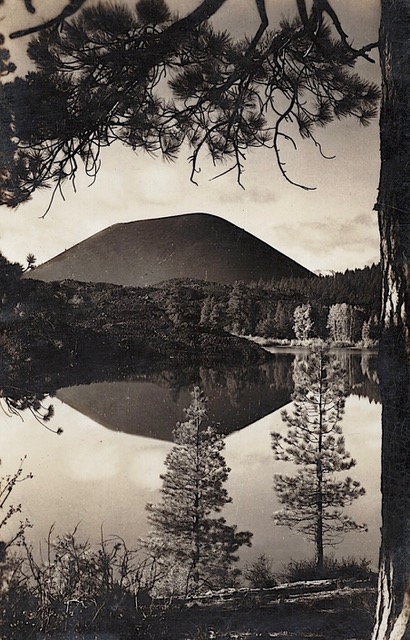
Note: This photograph is featured for March for those that purchased my 2026 calendars. So this a refresher, in case you are about Cinder Cone.
Long before the Lassen Peak eruptions of 1914-15 there were reports of other volcanic activity in the region. It was said that Cinder Cone, ten miles east of Mount Lassen, had erupted during the winter of 1850-51.
These purported eruptions caught the attention of San Francisco physician Harvey W. Harkness, who had a keen interest in scientific matters. In the summer of 1874, he visited Plumas County. While there he heard the story of a recent volcanic eruption located in a far northern portion of the county known as Cinder Cone. Since he was already in the territory, he decided to examine Cinder Cone. In the fall Harkness addressed the California Academy of Sciences and told of his observations. He informed the Academy that the eruption there was indeed of recent origin. After his presentation, he came in contact with four men who had seen the eruptions from afar. One of these men was Oliver Wozencraft, who lived near Red Bluff during the winter of 1850-51. He informed Harkness that he saw a great fire east of Lassen that continued for many nights but never changed its position.
After Harkness’ findings were published, it served as a reminder to many that a volcanic eruption could be impending. It was not for decades that Harkness’ theory was challenged. The whole issue has been resolved only within the last few decades by the United Stated Geologic Survey, which determined that Cinder Cone’s last eruption occurred sometime around 1666, not 1850.
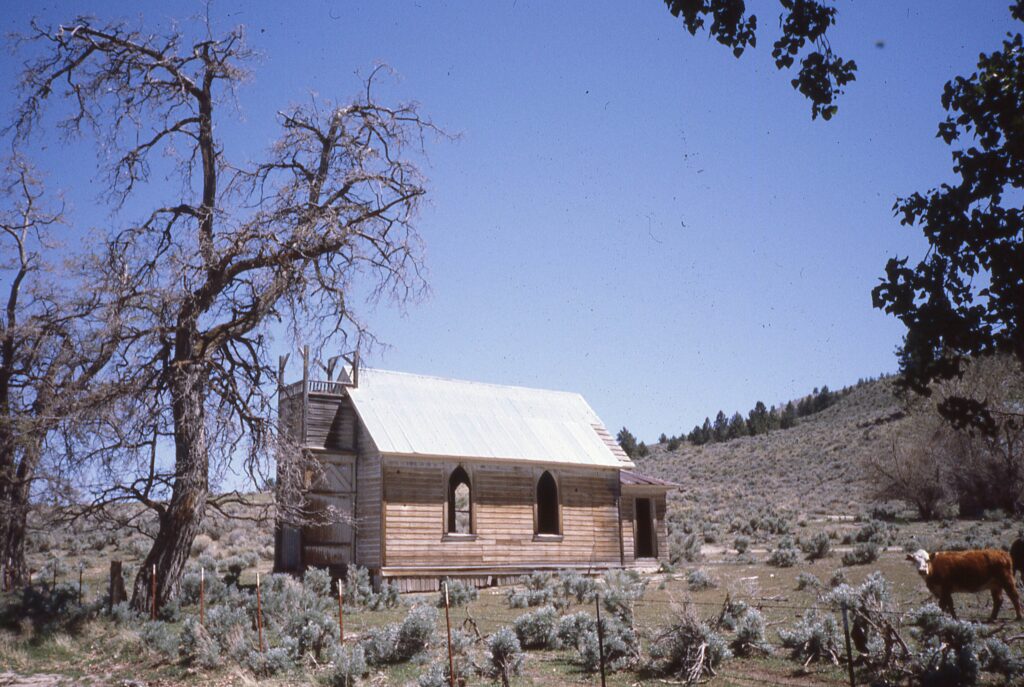
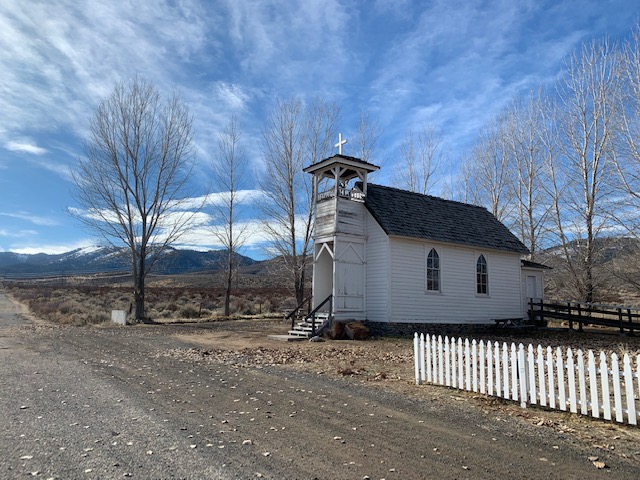
While sorting through files, I came across this photograph that some might be interested. It was a Catholic Church located at Constantia Ranch. By the mid-1920s services were discontinued and the church abandoned. In 1994, the Doyle Historical Society moved the church to Doyle and restored the building.
Tim

In 1970, the Lassen County American Indian Organization held its first annual All Indian Basketball Tournament. In 1976 during the nation’s bicentennial a special championship trophy would be in the memory of Thomas Tucker, a Maidu. Tucker fought in World War I with Company L, 363 Infantry, 91 Division of the U.S. Army. He was killed in action on September 28, 1918 in France. Susanville’s American Legion Post 204 was named in his honor. Oh, and by they way, the Bridgeport Renegades won the tournament by crushing the North State Hawks of Redding, 100 to 53.
Tim

Today marks the first day of meteorological spring, though the spring equinox does not occur on March 20. On the other hand Daylight Savings Time begins on Sunday, March 8.
The old saying goes March comes in like a lion and goes out like a lamb. Around these parts, March weather can be extreme. March 1907 was one for the records. It started with heavy rains and then by March 22 forty inches of snow blanketed Susanville. The total precipitation that month was thirteen inches.
On March 24, 1924 a snowstorm dumped 18 inches of snow in Susanville and a similar amount in Westwood. What made this event remarkable, was it was the only storm for the winter of 1923-24, one of the driest since Anglo settlement. The parched earth created the perfect setting that summer as forest fires ravaged California like never before.
Tim
P.S. The search still on for my relocation. Please spread the word.
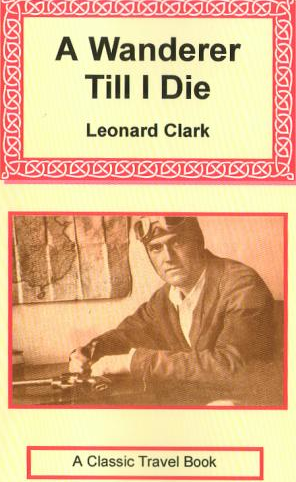
Leonard Clark was one of those interesting Never Sweats who went on to live a very colorful life. Clark was born in 1907 in British Columbia, but was raised in the Honey Lake Valley, as his mother was a member of the pioneer Brubeck-Grass-Litch families of the same place. After he graduated from Lassen High School in 1925, he was struck with wanderlust. By the early 1930s he had explored Asia extensively and wrote his first book, A Wanderer Until I Die. The book published in 1937, as one review began, “Aviator, soldier of fortune, mountain climber this young American has adventure in his blood. From tiger and python hunting in China, treasure hunting in Malaysia . . .” The following year he married Jean Wingfield, daughter of Nevada tycoon George Wingfield.
Because of his vast knowledge and contacts in China and Mongolia, during the early stages of World War II, he was recruited by the American OSS, the forerunner of today’s CIA to conduct espionage and guerrilla warfare in those two countries. After the war, he continued with his adventures and now focused on South America. In 1952, his most popular book, The Rivers Ran East was published, which is his account for the search of the legendary Seven Cities of Cibola in the Peruvian Andes. It was also in South America where he met his demise. On May 4, 1957, Clark drowned in the Caroni River, Venezuela while on a diamond mine expedition.
Tim

Actually, it is somewhat of a misnomer, as it is actually more like a peninsula. What I am referring to is a large area that encompasses approximately 13,000 acres that is surrounded on three sides by Honey Lake. Between 1905 through 1919, there were numerous homesteads there. In 1911, the Honey Lake Irrigation Company constructed a water pumping plant and several miles of irrigation ditches on the east side of the Island to reclaim the sagebrush lands using water from Honey Lake. The project failed for several reasons. There was a federal court injunction that prohibited the Company from using governmenrt lands as right-of-ways to convey the water. This was a matter that first had to be resolved at the State level. California law had never addressed this issue—how water from a lake with no outlet could be appropriated for irrigation. It took the State two years to render a decision. By the time the legal issues had been settled, interest in the project had waned. Additionally, in 1917, Honey Lake went completely dry.
I have a 1915 soil survey map shows the irrigation canals and such, but with my housing crisis, it will be awhile before I can access that file.

Housing whether lack of and/or affordability has been an ongoing issue for well over a hundred years. Since it is an election year many politicos will be yapping on this issue.
In the 1870s, the Williams Brothers (Morgan & William) stepped up to the plate, so speak and built rentals in Susanville. We will explore this issue and how it was dealt with over the years. In 1915, California had a Commission of Immigration and Housing. I guess some things never change.
Tim
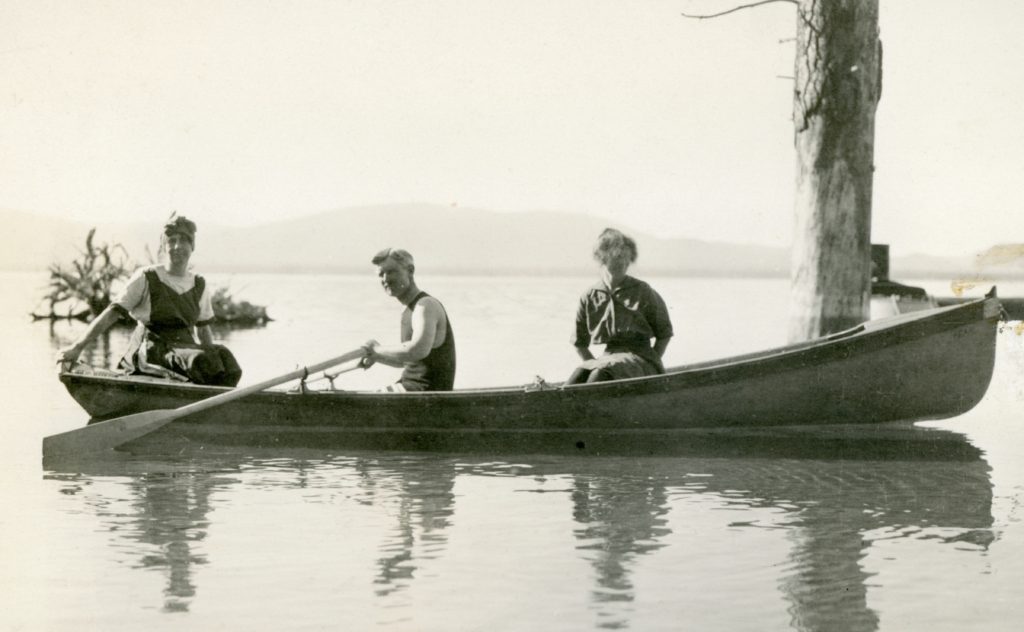
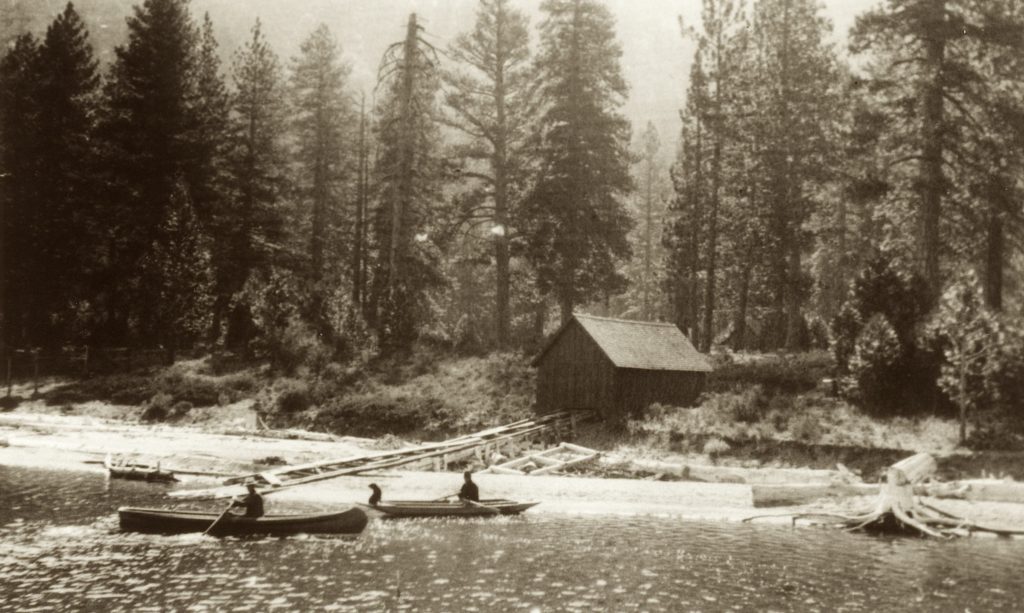
Slowly, but surely I am getting around to the Gallatin photographs. The family sure did like their boats. It was interesting that boat dock and the boat house were not side by side. More about that later.
Tim

Last year we learned story behind the Lucky Land of Lassen slogan. For a refresher, here is the link. While sorting old documents of the 1910s I recently came across a letter dated 15 December 1915 from Wm. Lucas of the California Land & Power Co to the Lassen County Chamber of Commerce. Lucas interested to have more cards that the Chamber distributed at the Panama Pacific Exposition, which he stated as “Lucky Land of Lassen Where Milk and Honey Flows and the perfect Apples Grows.” Lucas continued this was very good advertising for Lassen County. It was his desire to secure an additional 1,000 cards and was willing pay to pay the printing costs. Unfortunately, I do not what the outcome was.
Tim