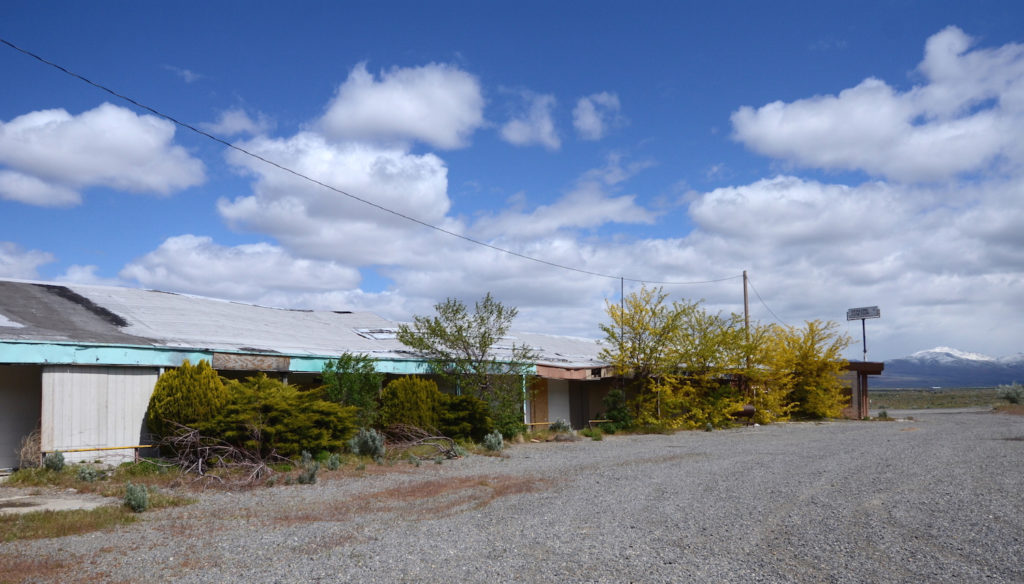
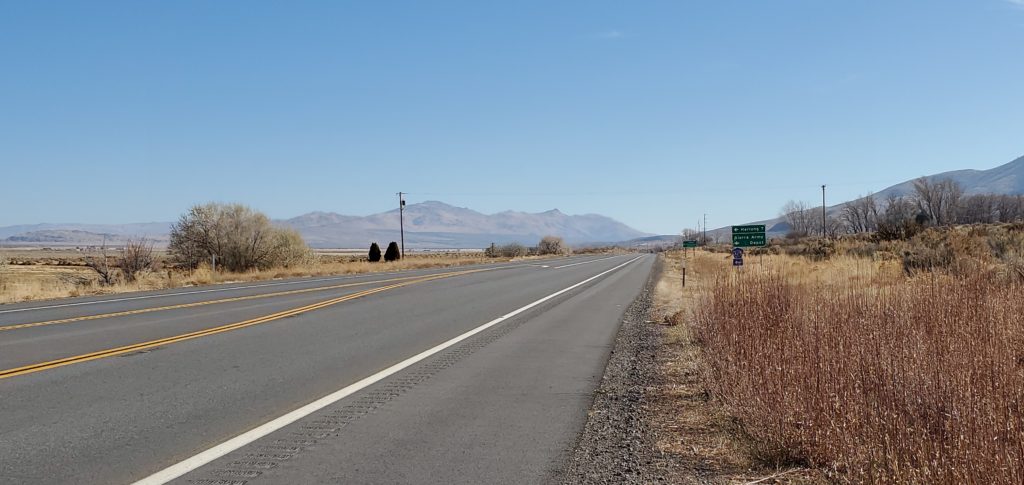
Herlong Junction, April 2016. Courtesy of Oliver Grosz
One of the lessons, I learned from my ‘fall from grace,” is that I do need to get out more, than my familiar customary outings in the back country of this region. Prior to the accident, I had not been to Reno since June 2017, when I boarded Amtrak with a destination to the Bay area to attend a special 95th birthday luncheon for Art Mathews. To my surprise on my return to Susanville from Reno last month, that in the preceding two years the abandoned building known as Herlong Junction had been demolished.
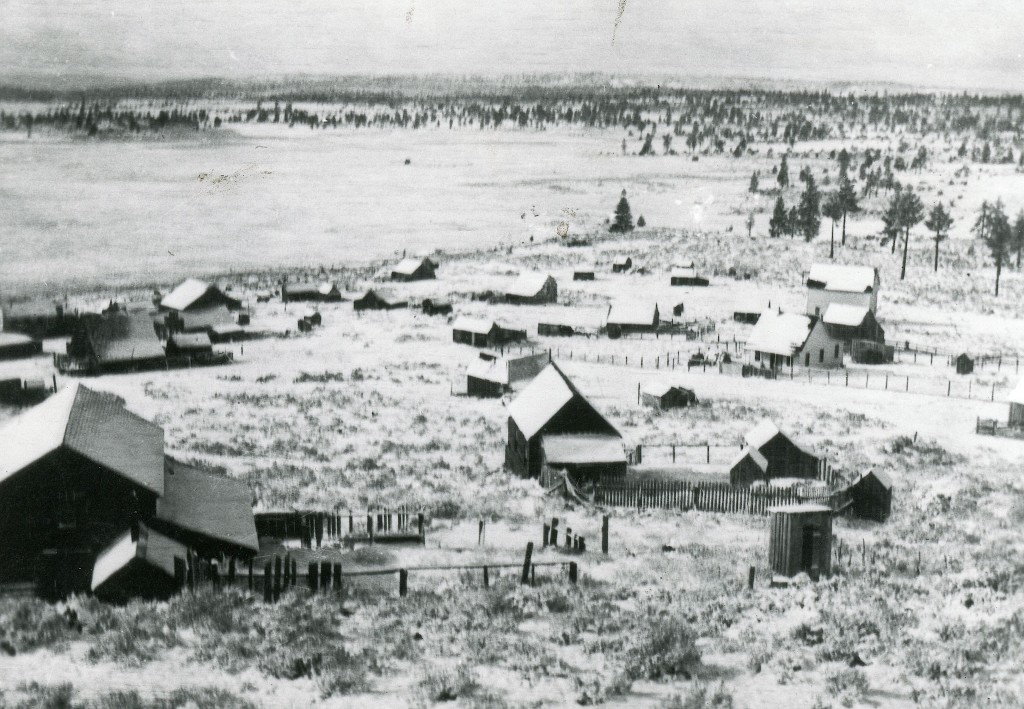
Hayden Hill, 1909. Courtesy of Dallas & Joyce Snider
On December 5, 1870 the Hayden Hill Mining District formed.* Gold was accidentally discovered there in the fall of 1869 when a group of prospectors camped on the mountain, after an expedition in search of the fabled Lost Cabin Mine. They returned the following spring and named their discovery, “The Providence.” Once word spread of the new gold strike over 500 miners had flocked there. It was necessary to form a mining district to keep track of the claims. It was decided to name it Hayden Hill, instead of Providence, since Joseph W. Hayden, a veteran miner aged 56, was the oldest miner there, and they honored him with the bestowment. Hayden died there on Christmas Day 1884 and was buried in the town’s cemetery.
*For those not familiar, Hayden Hill is located approximately twenty miles north of Eagle Lake and eleven miles south of Adin.
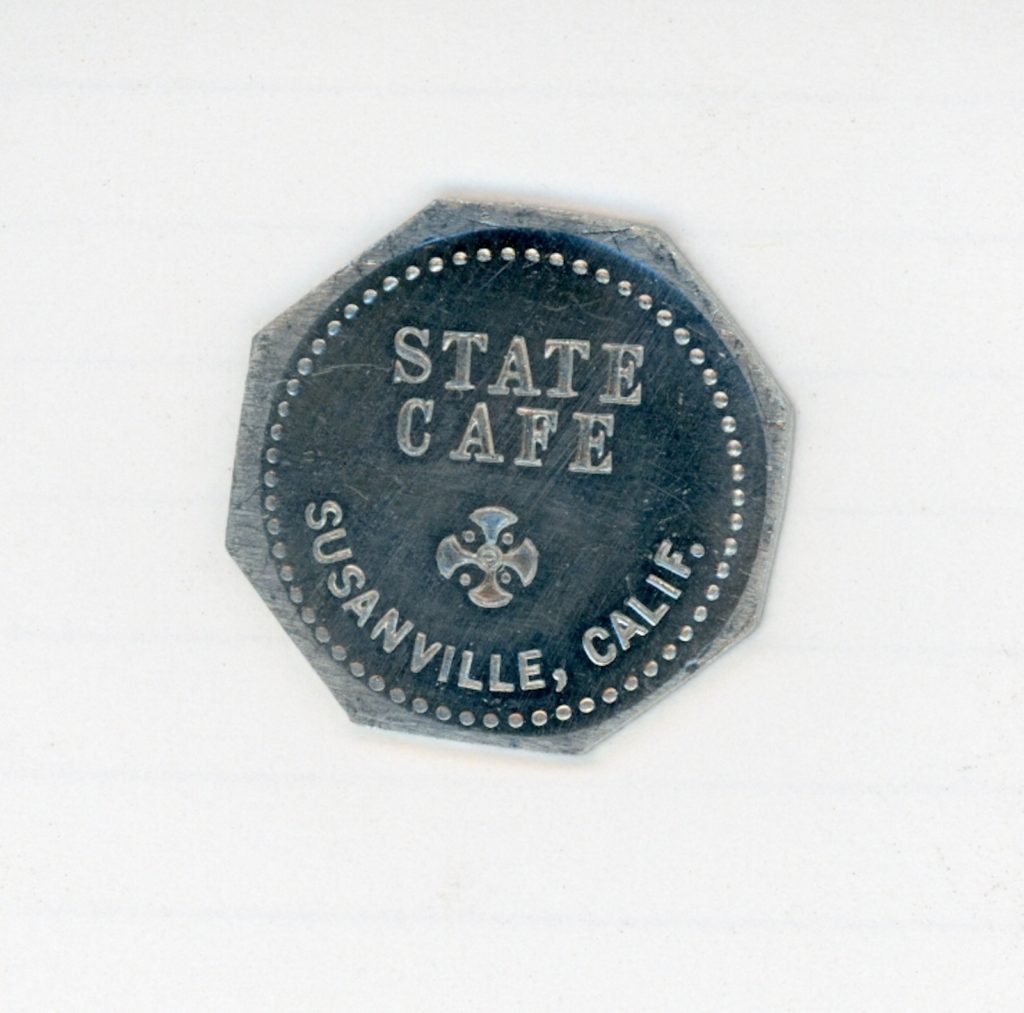
The State Cafe was located on South Gay Street, Susanville.
Seasoned residents of the region may recall this restaurant on South Gay Street. What many may not realize when it opened its doors on July 3, 1936 it was on the corner of Main and Gay. Its first proprietors consisted of E.L. Elskamp, Paul Dedick and Jack Tilton, best known for their bootleg joints during prohibition. In the course of time, the restaurant moved from its prime Main Street location to the rear of the building to be replaced with the State Bar. In the center of the building between the two establishments was a laundromat—all interconnected. One could easily eat, drink and do laundry all at the same time, never leaving the premises.
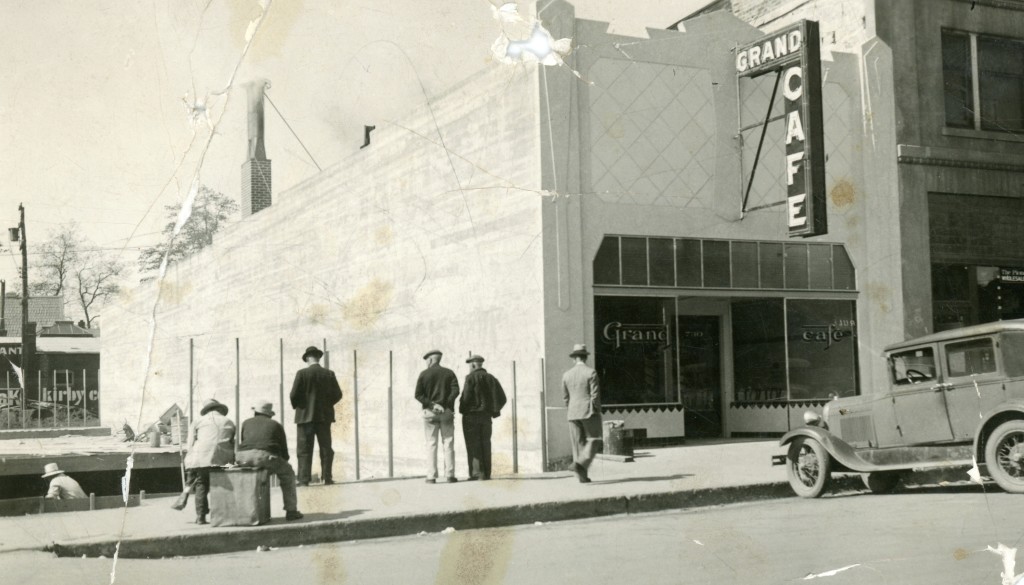
Excavation of the State Building, next to the Grand Cafe., May 1935. Courtesy of Helen Sargent
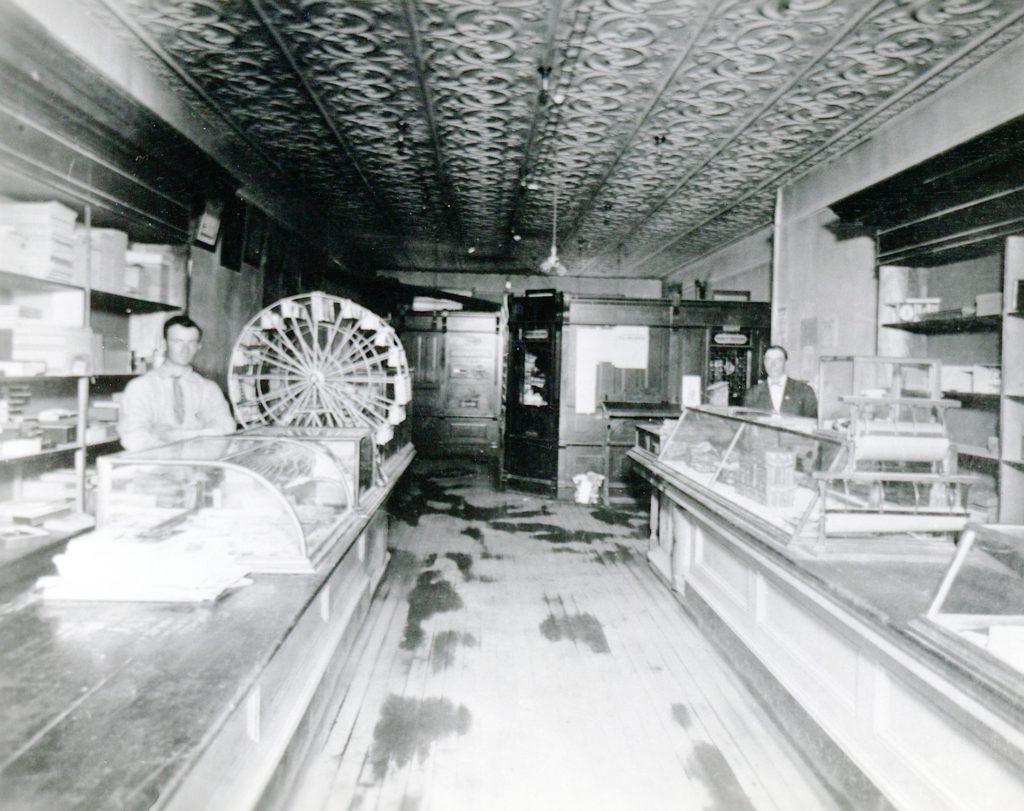
Interior of Spalding Drug, circa 1910. Courtesy of George McDow Jr.
Seasoned residents of the area will have fond memories of a one time inconic local instutition, Spalding Drug. It was established in 1865, by Zetus N. Spalding. In the 1890s, his son, John B. Splading took over the business. To give it a more cosmopolitan flair, he renamed it the City Pharmacy. The basic operation remained the same. Members of the Spalding were avid sportsmen and it was reflected in the merchandise they stocked. Not only was there a wide selection of fishing tackle, but guns and ammunition as well. By the time, City Pharmacy moved into its new stone building on the 700 block of Main Street, the name reverted back to Spalding Drug.
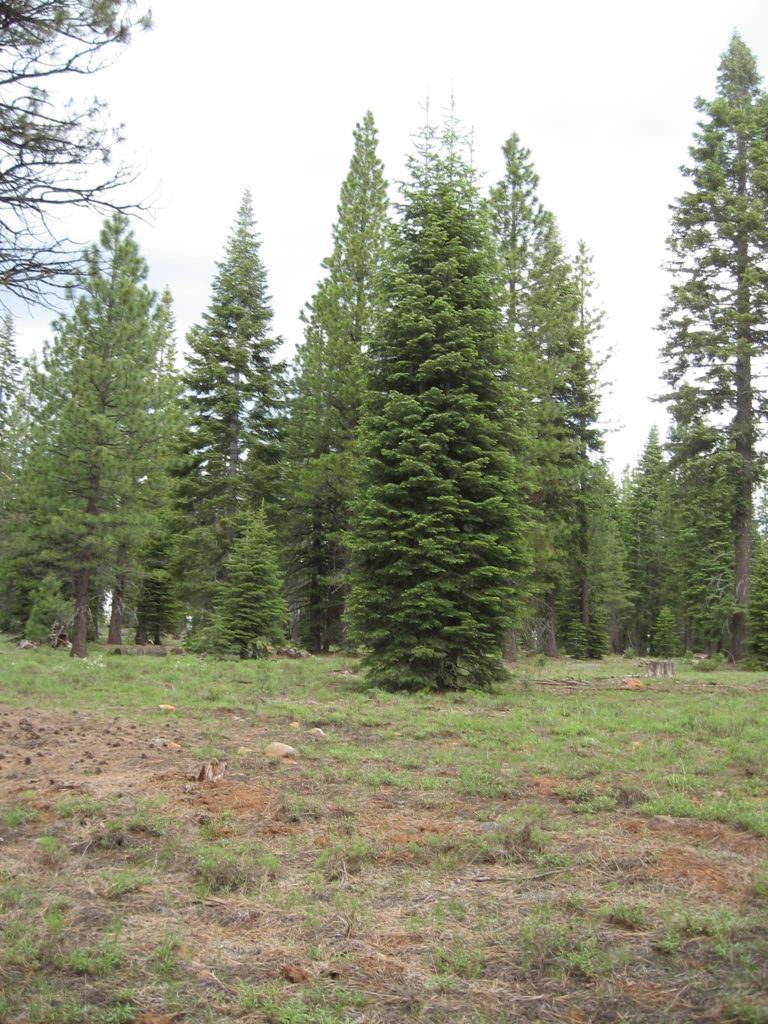
An interesting silver tip near McCoy Flat Reservoir, June 15, 2019
In December 1936, the Lassen National Forest issued a statement that 15,000 Christmas trees had been cut. The majority of the harvest were shipped to metropolitan areas for sell to “city dwellers.” The forest service stated, “The cutting serves to thin crowded stands and to stimulate growth of the remaining trees.” The most popular tree cut were “silver tip” fir.
Elk, with the Wingfield residence in the background. Courtesy of Alphozene Terrill
On May 23, 1910, Goldfield Nevada millionaire, George Wingfield purchased the 320-acre Clint DeForest ranch about eight miles south of Susanville. Besides an elaborate summer home, he created a wildlife preserve. During the fall of 1910, Wingfield had eighty acres fenced off for a elk and deer park, where he imported the elk from is not known. In 1914, he purchased four buffalo to add to his preserve. This was a popular local attraction to see the buffalo and elk. To round out the “exotic” species were numerous peacocks that roamed the grounds.
In July 1923, Wingfield sold the property to Lassen Lumber & Box Company. The buffalo were shipped to Wingfield Park in Reno, that were on display there for many years. Subsequent owners did not maintain the fenced enclosure, allowing the elk to escape the preserve. In the winter months the elk could be found foraging on nearby Bald Mountain and sightings of the elk were reported in Willow Creek Valley, north of Susanville. Of course, hunters delighted in this new game to pursue. It was sometime in the late 1930s or 1940s, when the last elk was killed.
Where the buffalo and elk roam at Wingfield Ranch. Courtesy of Lola L. Tanner
Rager Reservoir is a small body of water located in the eastern Madeline Plains (Section 24, T. 36 N. R. 15E). It was built in the early 1900s by Thomas Rager, a resident of the Madeline Plains. A native of Illinois, Rager first came to the region in 1879 working as a cowboy for the Smoke Creek Ranch. By the 1890s, he set out of his own on the Madeline Plains where the lived the rest of his life and passed away in 1925.
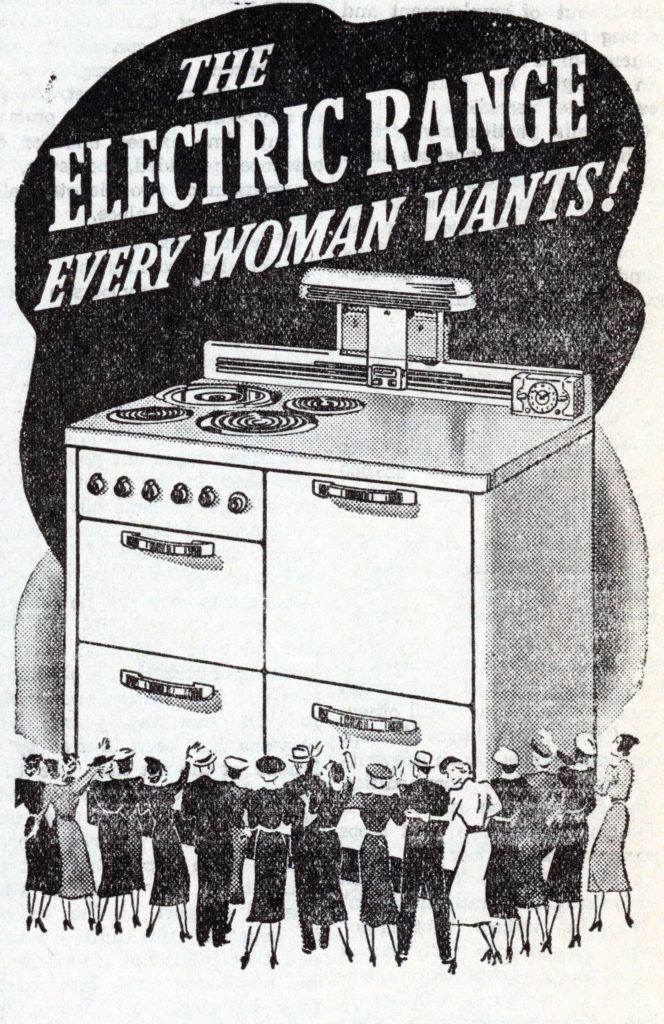
California Pacific Utilities of Susanville ad for electric stoves, 1938
Here is a safe non-political topic to discuss at your Thanksgiving dinner. During the 1920s and 1930s, the way people lived was revolutionized with all things—electricity. Local electric companies pushed for people to buy electric stoves, stating they were clean, no smoke like a wood stove, and economical among other things. In 1937, on the West Coast just before Thanksgiving, turkey prices plummeted to eight cents a pound. Why? The current gobblers were too large for the modern electric stove.
P.S. – First of all, I am so thankful/grateful for all those who provide moral and physical support (the latter taking me to the doctor, running errands) etc it means so much to mean. In additional, I consider my fortunate for the beautiful natural surroundings where I live. After all, I spent three weeks, where the main view is ceilings, so it really changes one’s viewpoint.
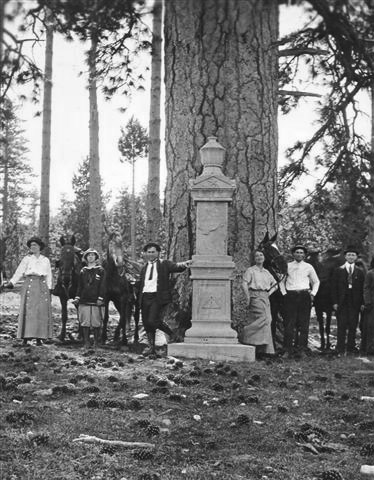
Lassen’s grave has been a popular gathering spot over the years.
It was 160 years ago on this date that a belated funeral service for Peter Lassen was held. It should be duly noted that Lassen met an untimely death on April 25, 1859 in the Black Rock Desert some 125 miles east of Susanville. In November his remains were brought back for burial in the Honey Lake Valley and placed near the majestic Ponderosa pine tree where he camped there in 1855.
Lassen’s funeral was chronicled in the Territorial Enterprise newspaper of Virginia City. The paper noted: “The remains of Peter Lassen, the old pioneer, were buried with Masonic honors, Sunday November 27, on his own ranch at Honey Lake. The attendance upon that occasion, was a very large one for that place.”
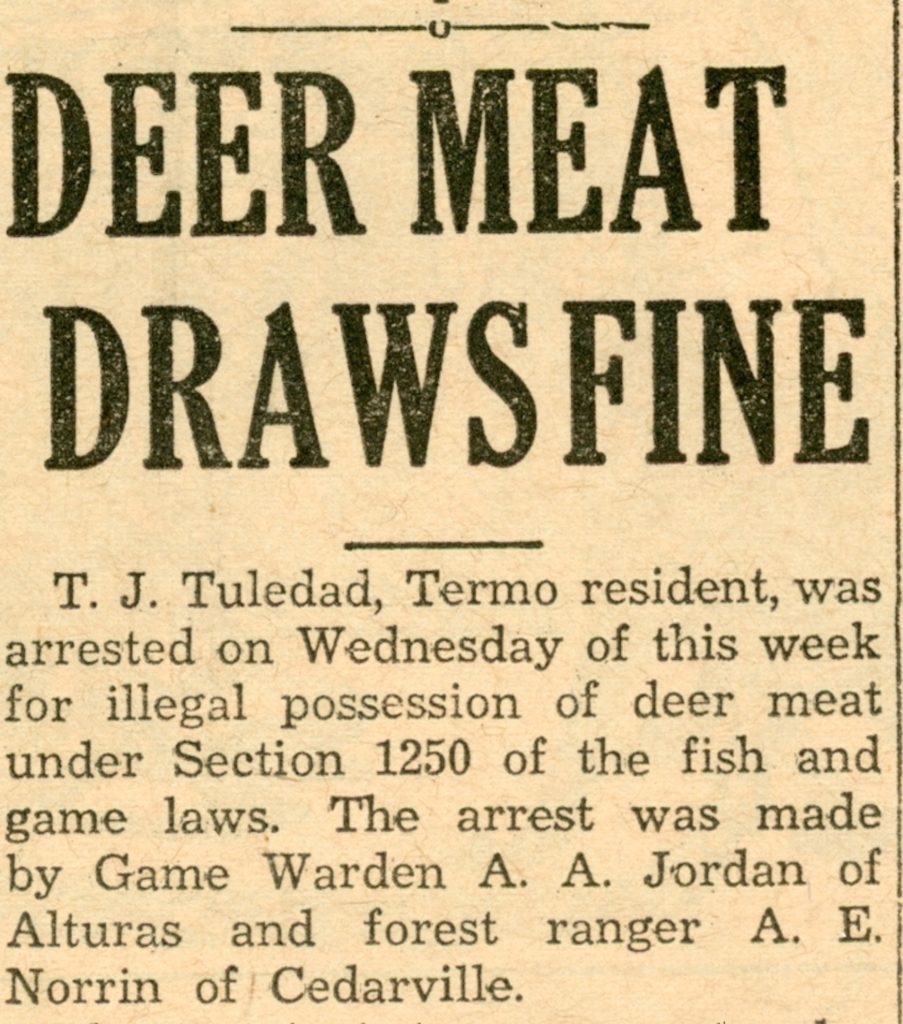
It is one thing to come across the surname of Tuledad, but it is another when one with the last name resided in proximity of Tuledad Canyon, east of the Madeline Plains.
As the newspaper indicates, T.J. Tuledad was a resident of Termo when he was charged with illegal possession of deer meat. When he appeared before Justice of Peace, George Wood, in the Madeline Township, he pled guilty as charged. His sentence was a $50 fine or ten days in jail. Tuledad opted for the bastille in Susanville.