Category Archives: History

B.F. Loomis and a story of jury duty

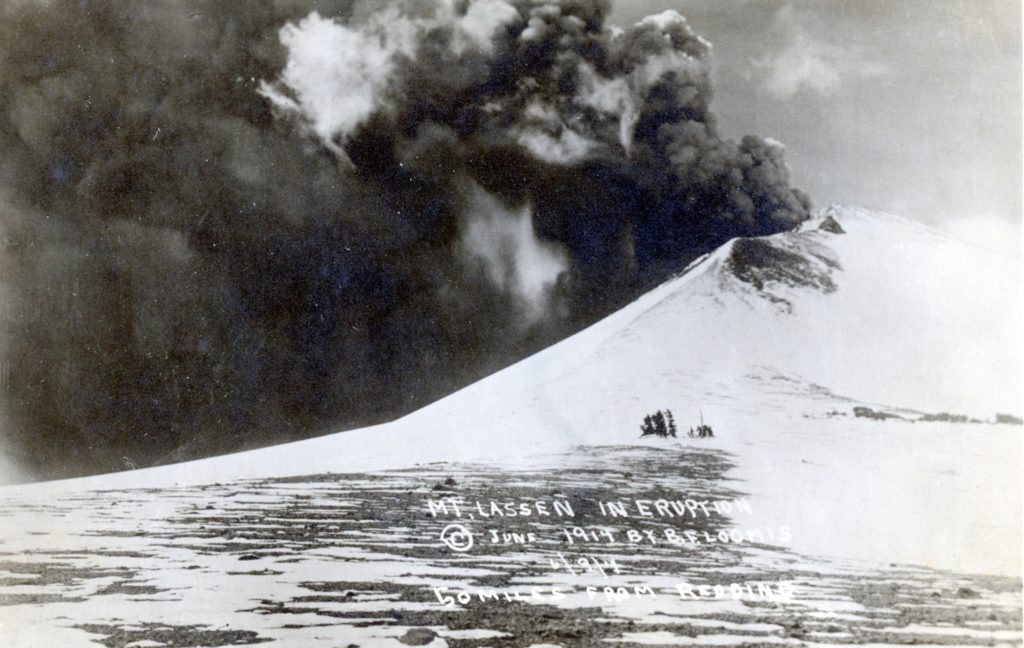
One of the many photographs Loomis took in June 1914

We are fortunate to have a bounty of museums in our region. Each one unique in their own special way. Equally important, all of them are worthy of a visit. Since this is July, there is no better time like the present to check them out.

One of the oldest museums is Loomis, located near the northern entrance of Lassen Volcanic National Park. Its founder, B.F. Loomis had an interesting association with the region. Actually, how the museum came to be is as intriguing as Loomis.

Initially, Loomis’ origins were rather typical of the era. He was born in Illinois and came to California as a child with his parents who settled in Tehama County. In 1874, Loomis had his first exposure in the area later to be destined Lassen Park. It was a camping trip to Manzanita Lake. The region suited him well and took up residence in nearby Viola. He made a living making wooden shakes, commonly used as roofing material. As he prospered he established a hotel at Viola.

In 1897, an event dramatically transformed his life—jury duty. Off to Redding Loomis went and there he met fellow jurist Leander V. Loomis. While the two men were not related, they both shared an interest in phrenology and astronomy. During a trial recess, Leander invited B.F. to his home. During his stay met Leander’s daughter, Estella. A romance ensued and they were married that fall. Leander had another child that influenced B.F.—Arthur who was a commercial photographer. Arthur introduced B.F. to the world of photography and years later B.F.’s photographs became widely known.

The next life changing event for B.F. Loomis came on June 14, 1914 after one of the volcanic eruptions of Lassen Peak. With camera in tow Loomis, as did other photographers captured the event on film. It should be noted the initial eruption occurred on May 30 and word spread like wildfire. Multiple news organizations were dispatched to report on the first active volcano in the continental United States. Loomis’ timing was impeccable and various news outlets used his images and Loomis gained a certain notoriety.
Subscribe

Answers to Some Questions

Amedee Hotel, 1910. Courtesy of Betty B.Deal

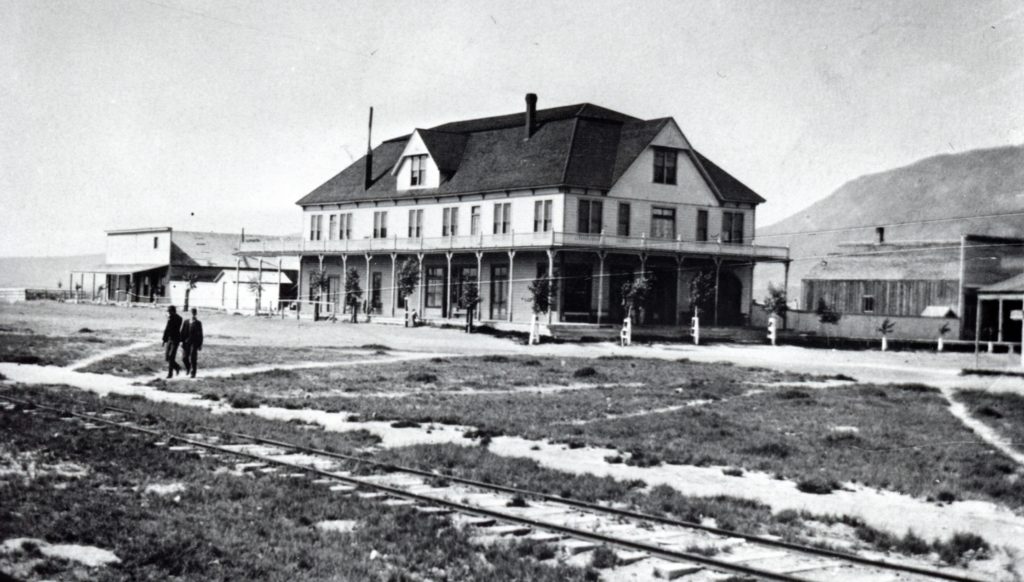
By coincidence I am working on feature article of the Amedee and Madeline Hotels for the Northern California Traveller. As to the Brubeck family, I am able to provide some insight, as years ago I corresponded with Leslie Brubeck, who was born at Amedee in 1900. In addition, a subscriber is going to make a journey to Brubeck Spring, so I will ask for a photograph to include in a future post.

As to the natural history of the flora fauna conditions prior to the settlement, that can be done in several installments. In the 1990s, I conducted extensive research of the vegetation of eastern Lassen County prior to extensive grazing of cattle and sheep. An interesting source were the field notes of the Government Land Office surveyors who included descriptions of what they observed during the initial surveys of the 1870s. Another example was when in 1854 Lt. E.G. Beckwith explored the region for a possible transcontinental railroad route. Members of his expedition studied and documented the flora and fauna they found.

Subscribe

Early forest fire origins

Prattville Fire burn, 1925

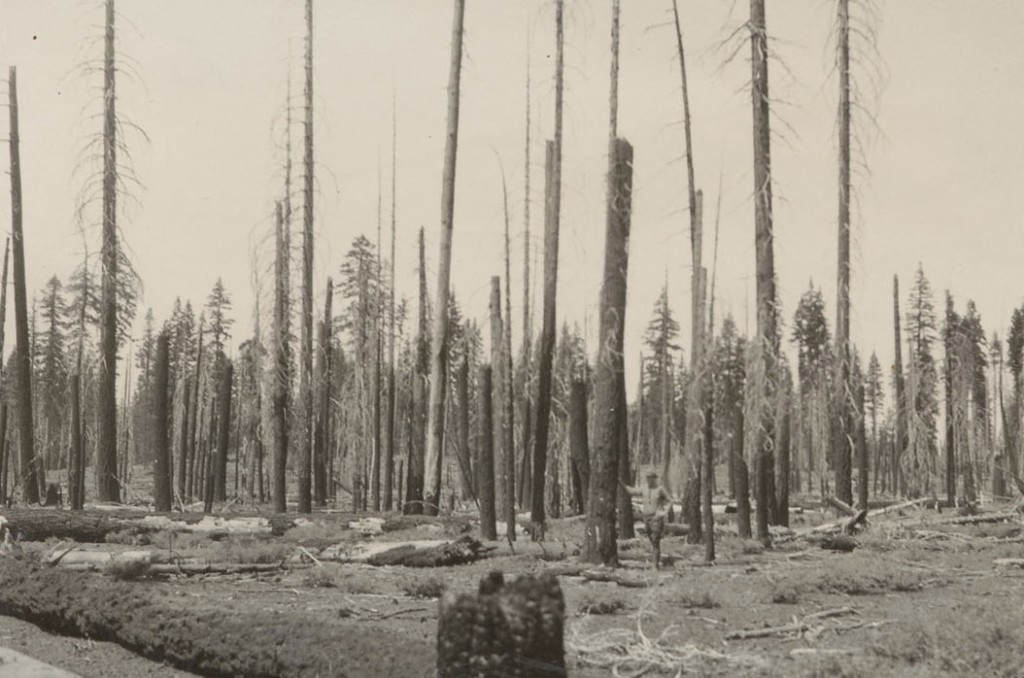
In the fall of 1899 various Northern California newspapers pondered the question of the causes of forest fires, especially during fall. The San Jose Mercury News blamed it on hunters. The Oroville Register stated it was the cattlemen who set the fires every fall. Susanville’s Lassen Advocate chimed in with this response: “Over this way it is the custom to charge the sheepmen with the forest fires. Some of the fires are doubtless due these different agencies, but not all of them. An old hunter “a man who has lived long in the mountains” tells us many fires are set by Indians. He says that in seasons when deer are numerous, as they have been in this season, they may be found in numbers where the underbrush has been burned off, disporting in the soft warm ashes and fall easy victims to the Indian hunters.”

Subscribe

Whaleback Fire Revisited

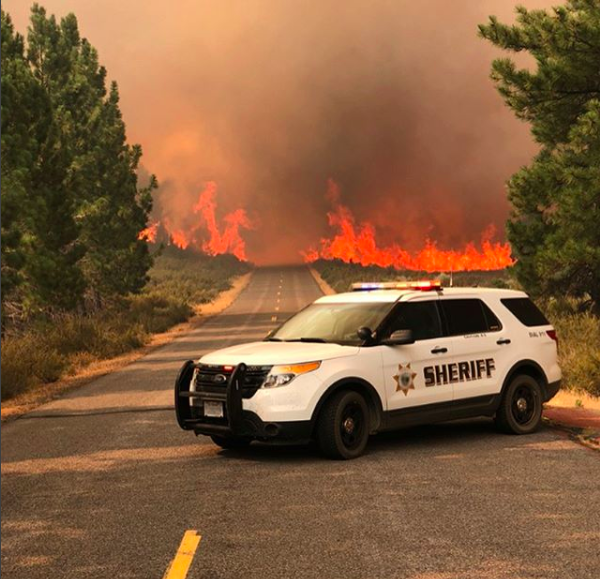
Whaleback Fire courtesy of InciWeb

It was a year ago, on July 27, 2018 that in the early afternoon a fire was spotted on Whaleback Mountain, just west of Eagle Lake. During its peak Spaulding Tract, Aspen Grove, Christie and Merrill campgrounds, along with the marina and Camp Ronald McDonald were evacuated. A voluntary notice was provided to Buck’s Bay and the Stones-Bengard subdivision. On August 8, 2018, the fire that destroyed 18,703 acres was fully contained. The origin of the fire was never determined or if it has not fully disclosed to the public.

Subscribe

A Sunday Drive – Antelope Lake

Antelope Lake, 2002

For many years, when my Mother was alive we would have the weekly ritual of a Sunday drive. During the summer months, we would make some extended loops. One of these featured Antelope Lake on the side of Diamond Mountain for those who reside on the eastern slope. This would entail leaving Susanville via Highway 36, then going along the east shore of Lake Almanor. Once in Indian Valley just past Crescent Mills is the turn off to Taylorsville and Antelope Lake. It is very scenic especially through Genesee Valley, then one makes the climb up the grade and at the top you are near the splilway of Antelope. The paved road meanders around the lake, eventually takes you to Janesville Grade.

Antelope Lake, by the way, is in Plumas County and is a popular recreational spot for a number of Honey Lake residents. It is part of the State Water Project of the California Department of Water Resources. The projects original intent was to provide water to Southern California to augment that of the Colorado River. Antelope Lake was constructed in 1964. There is a 113 foot tall earthen dam. The lake has a surface area of 931 acres with a maximum capacity of 47,466 acre feet.

Never miss a story, click here to support and subscribe.

A Scarlet Fever Panic

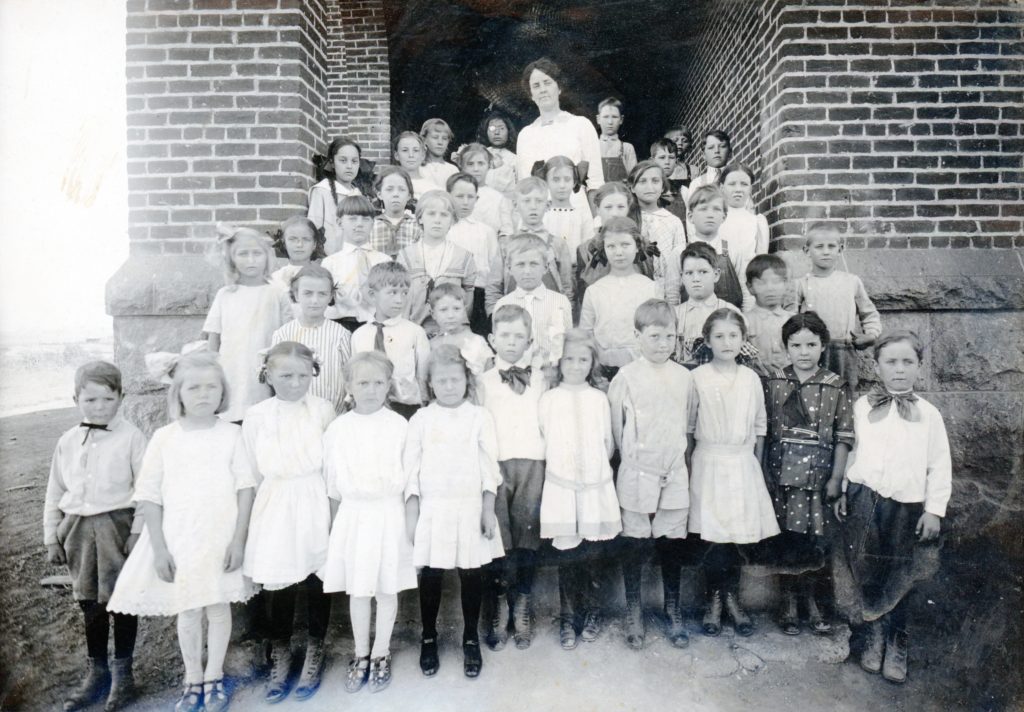
First Grade, Susanville Grammar School, 1914, teacher Mrs. Tom W. Wilson—B.R. Zimmerman Collection

It seems of late, that on a almost daily basis measles is in the news. There was a time when other communicable diseases made headlines. Locally, in the spring of 1916 a scarlet fever epidemic hit Susanville. Not to take any chances, school officials closed the Susanville Grammar School for a week, hoping that would be sufficient enough. It was.

Subscribe

Three Flags Highway

Doyle one of the many communities along U.S. Highway 395. Courtesy of Marie H. Gould

For many decades U.S. Highway 395 was referred to as the Three Flags Highway. The name representative that the highway began at the Mexico border and ended at the Canadian border. It had its humble origins in 1931 when a group of Lancaster, California businessmen as a way to promote the possibilities of a singular highway that traversed the east side of the Cascade and Sierra Nevada mountain ranges.

Subscribe

Interpreter Needed

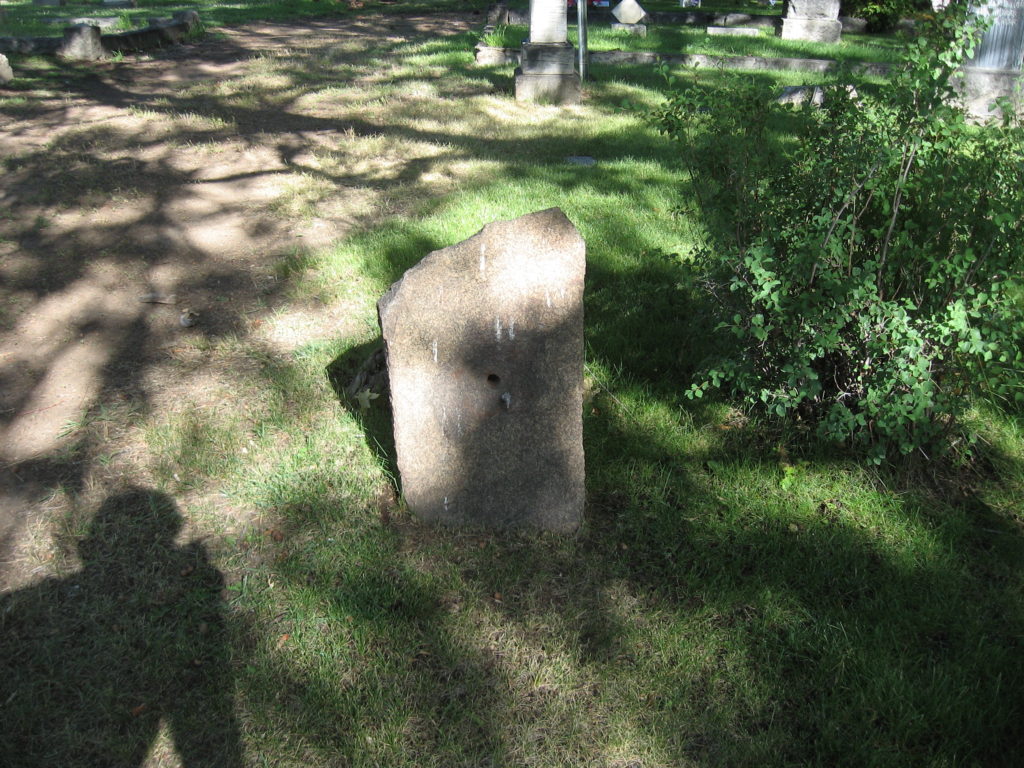
Unknown grave, Susanville Cemetery, July 19, 2019

It must be the dog days of summer, or is it sleep deprivation with roofers by day at my chateau and the Susanville Main Street reconstruction project at night?

For a respite, I have been working in the Susanville Cemetery in the afternoons. It is quiet there and the inhabitants are quite pleasant. There are lots of interesting headstones to be found there. However, there are several that leave me puzzled. They basically consist of chunks of unfinished stone. The one above has a hole drilled through it.

In the past, I have had a good luck in seeking an interpreter on an unusual headstone since the headstone’s inscription is in Japanese. A Japanese Lassen College student came to my aid to translate. As to the other stone monoliths, I let you draw your own conclusion.

Never miss a story, click here to subscribe.

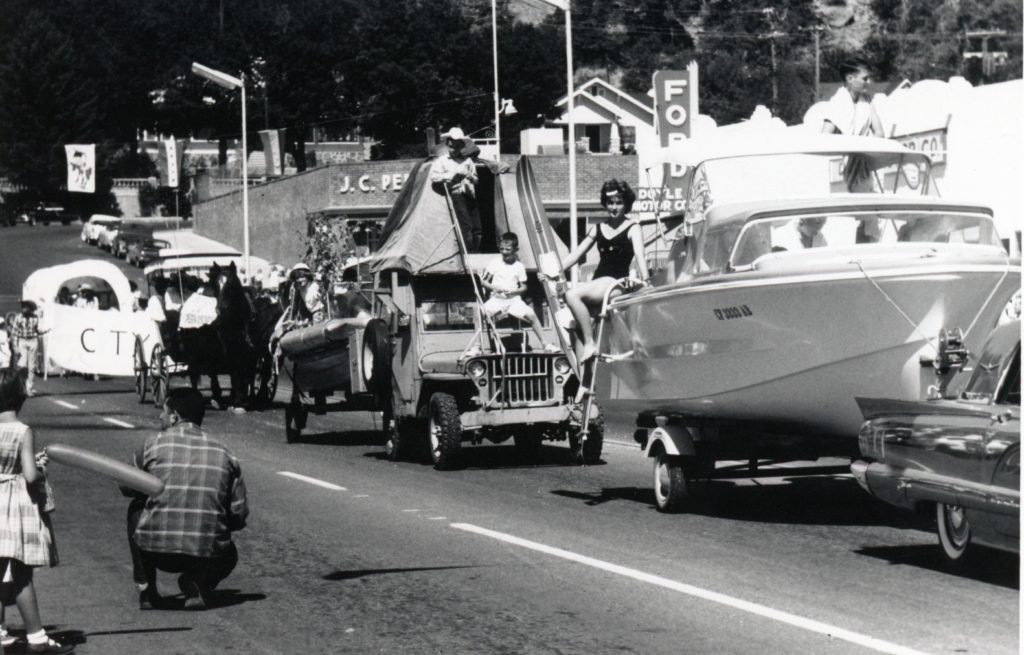
Lassen County Fair Parade, 1965

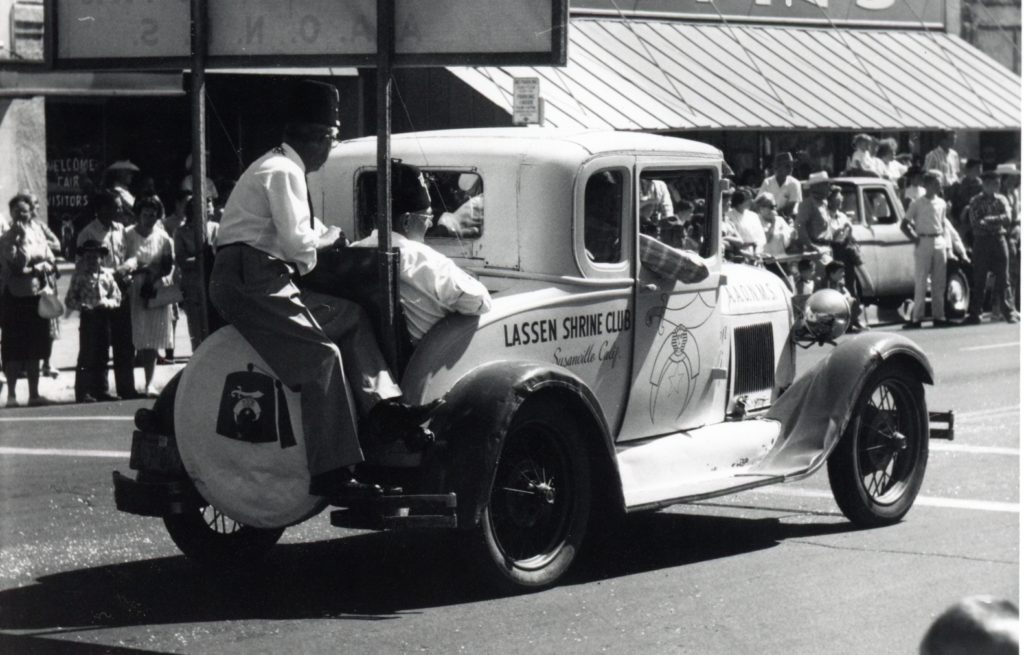
Lassen County Fair Parade, 1965

Oh my, here it is the last day of the Lassen County Fair and I am now just getting ready to do a bit of fair history. It’s not intentional. However, my interest in the county fair began to wane ever since it was moved to July from the third week in August. It is just not the same.

Lassen County Fair Parade, 1965

In 1965, Bud Deaton of Herlong was the parade chairman. He was happy to announce that there were 110 entries for the parade. Judge Stanley Arnold and Dr. Robert Amesbury were the parade marshalls. It was a good thing it was a morning event. That afternoon, a thunderstorm poured down rain on the rodeo festivities at the fairgrounds.

Never miss a story, click here to subscribe.

Buzz Aldrin & Constantia

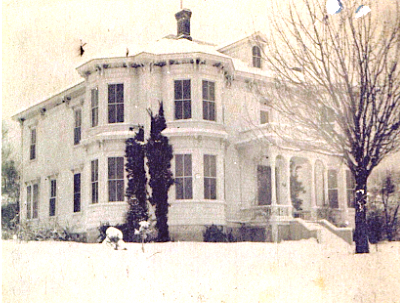
Albert Ross’ home in Long Valley. Courtesy of Joan Drum

As today’s marks the fiftieth anniversary of the landing on the moon, I thought I would provide a bit of local trivia. On Apollo 11 was Buzz Aldrin. His family, Albert and Robert Ross were early settlers in Long Valley.

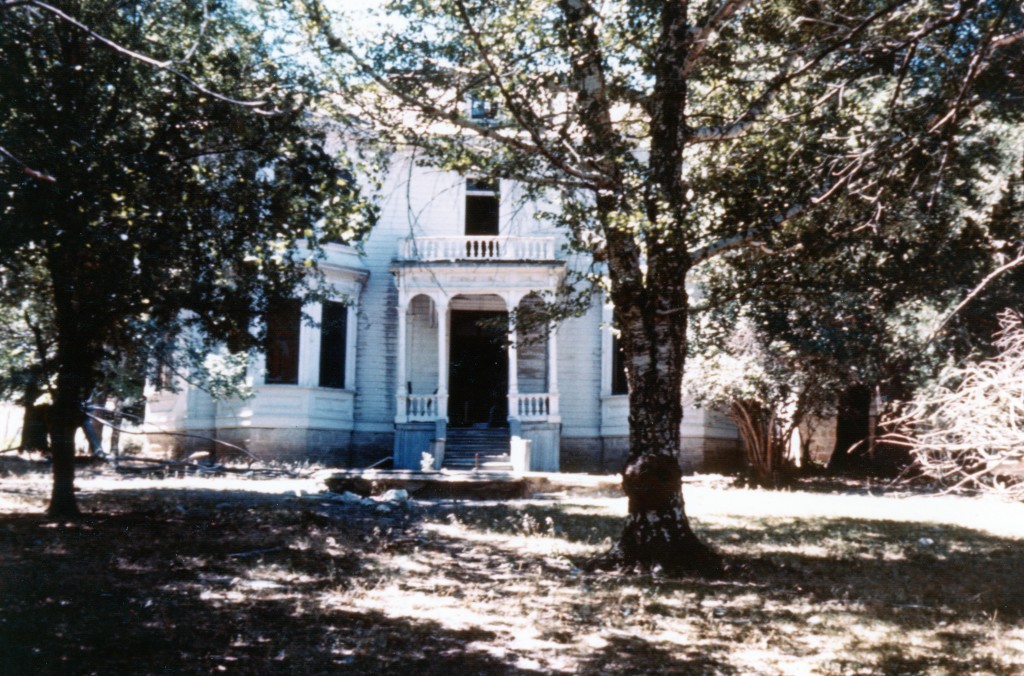
In 1884, Albert Ross constructed a 17-room mansion there at a cost of $14,000. This residence and well-known landmark was simply referred to as the White House. In the early 1890s, Ross moved to San Jose to benefit his children’s education and eventually sold the property in 1898.  The ownership of the property would change several times. In 1922, the Galeppi family purchased what became known as the Constantia Ranch. The Galeppi’s, for various unknown reasons, did not reside in the famed White House. Fred Galeppi stated that during World War II, the house was still in good shape, and even had furniture. During the construction of Sierra Army Depot, in the early 1940s, Galeppi stated soldiers used the house for recreation, but over the years it slowly began to be vandalized.  In the early 1960s, most recall 1963, the house burned down. The cause of the fire remains unknown, though various residents of the region have their own story.

The "White House" at Constantia, circa 1960
The White House in 1960.

On final piece of trivia about Buzz Aldrin, his mother’s maiden name was Moon.

Never miss a story, click here to subscribe.