Category Archives: History

Bieber’s New Jail

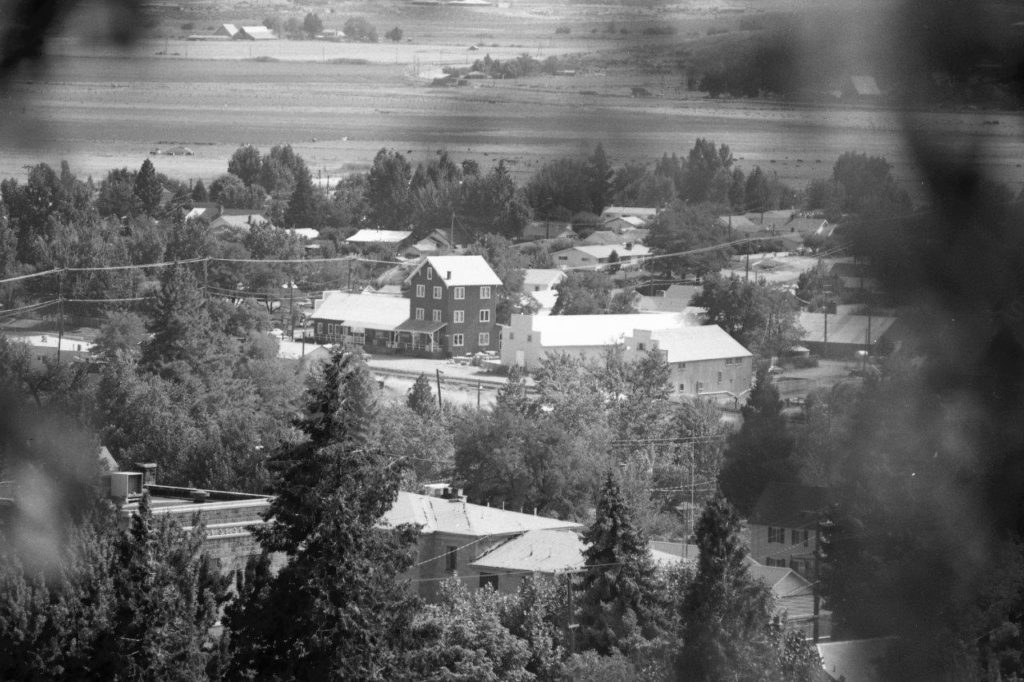
Bieber Jail, 1947

On Saturday, August 8, 1931, Lassen County purchasing agent, E.F. Koken drove to Bieber to sign and award a contract to build a jail for that community. The concrete structure contained three cells and a storage room. W.A. Zimmerman built the structure at a cost of $1,935.50.

These were exciting times for Bieber being the focal point where the Great Northern and Western Pacific Railroads were in the midst of constructing their respective extensions to connect the two railroads. Besides the new jail, construction began on a $10,000 grammar school. In addition, Pacific Gas & Electric was constructing a transmission line from Fall River Mills to Big Valley.

Support

Lake School, Lassen County

Lake School
Lake School, 1886

One of the original six school districts established in 1864, that was located in the northwest segment of Honey Lake, near what would become Buntingville. In 1877, the District constructed a two-story schoolhouse with the assistance of the Independent Order of Good Templars. The second story was used as a hall for that organization. In 1934 the second story was removed as part of a WPA project. Francis Wilbur, a local carpenter was hired to do the work at a cost of $1,740.

In 1953, a ballot referendum was held to consolidate the Janesville, Lake, and Missouri Bend schools. The Lake District voters opposed it. In 1971, the school closed and annexed to Janesville. In 1975, the Janesville District declared the Lake School as surplus property and it was deeded to George and Jane Bailey. The schoolhouse has since been converted into a private residence.

Lake School as a private residence, February 7, 2016.

Spread the word, and encourage a friend to subscribe

The Chateau

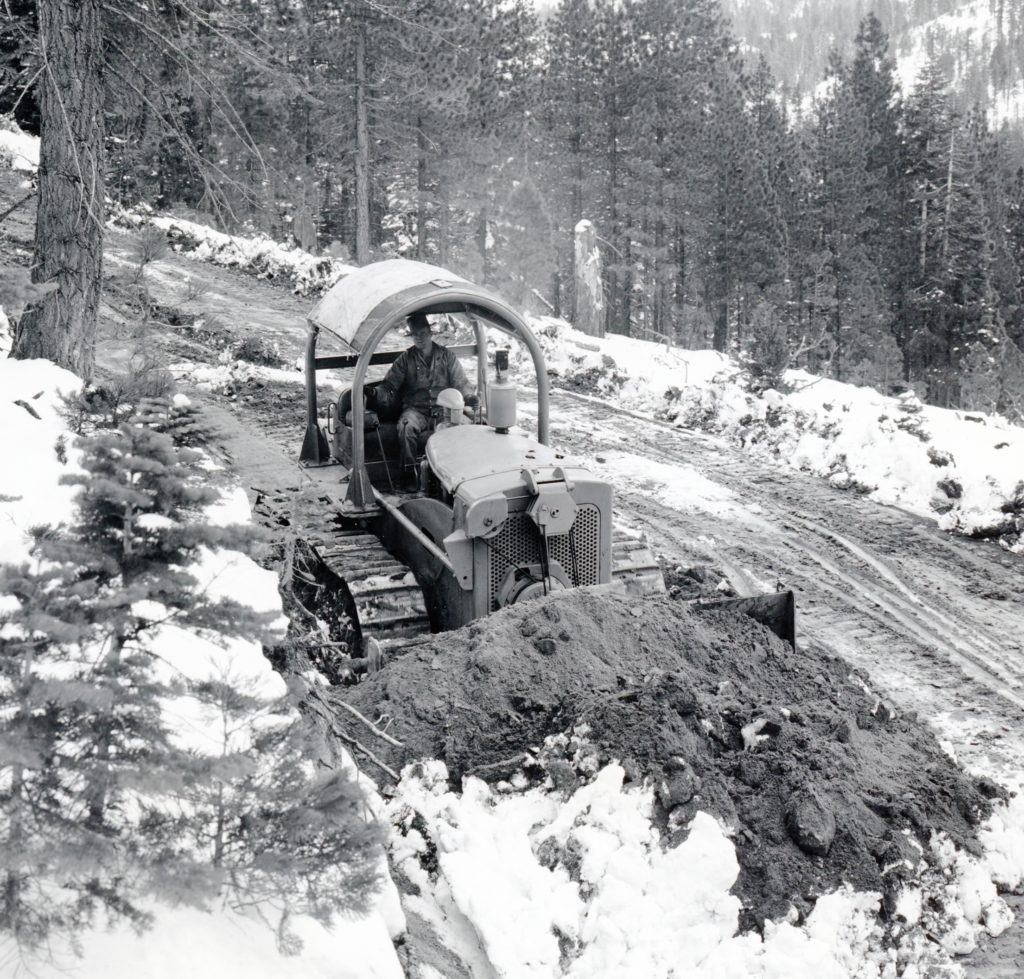
In the 1920s witnessed the construction of State Highway 36 between Red Bluff and Susanville. This allowed entrepreneurs opportunities to take advantage of the motoring public’s needs. This was readily apparent between Susanville and Westwood that within a short time frame four roadhouses were established.

The first one, “The Chateau“ was operated by Bill and Julia Nolan just a short distance west of Devil’s Corral. The initial operation was modest with a gas station and a small store selling snacks. Business was good and by 1929, a restaurant was added. Another unique draw was Julia Nolan offered her abilities as a fortune teller.

By the early 1930s, the Nolan’s sold their enterprise and it would change ownership on a rather frequent basis. It also became known as “Deerhaven.” The big snow of 1952 severely damaged the building and it closed for good.

Support

Eagle’s Peak Ski Resort Revisited

A portion of the resort’s brochure.

Note: This originally appeared on June 28, 2019. There are several new subscribers who would be quite interested on this topic. Also, unfortunately I have not located any additional information.

This short-lived ski resort was the brain child of Ernest “Ernie” Forbes, an Austrian skier. Forbes established Eagle’s Peak in 1971, in one of the more peculiar places, near Doyle. As the late Paul Herman informed me that Forbes always wanted his own ski hill. In a 1972 interview Forbes stated “Started a dream that is becoming more and more a reality everday.” He designed the entire operation with the first slope for beginner and intermediate skiers that according to Forbes to accommodate 150-200 skiers at a time. Of course, Forbes offered skiing lessons, since he had been a ski instructor at various resorts in the west. Other amenities included a snack bar, ski rentals and even a free shuttle service on weekends and holidays. Of course, Forbes had grandiose plans of a modern lodge, advanced ski runs and so forth, none ever materialized. Records are rather sketchy but it remained in operation until the early 1980s.

Support


Christie Furniture Update

Lassen College 1970-71 yearbook ad—-Jim Chapman

According to Claude Wemple, who by the way was related to the Christie family, that after Jim Christie’s death in 1936, the furniture store was sold to Frank Stewart, It was Stewart who moved the store to the Main Street location from Weatherlow Street. Stewart later sold to the store to Madge Dolio, who in turn sold to Carlomagno.

Tim

Latasca Shidler & The Monastery

The White House, 1947—-Eslie Cann

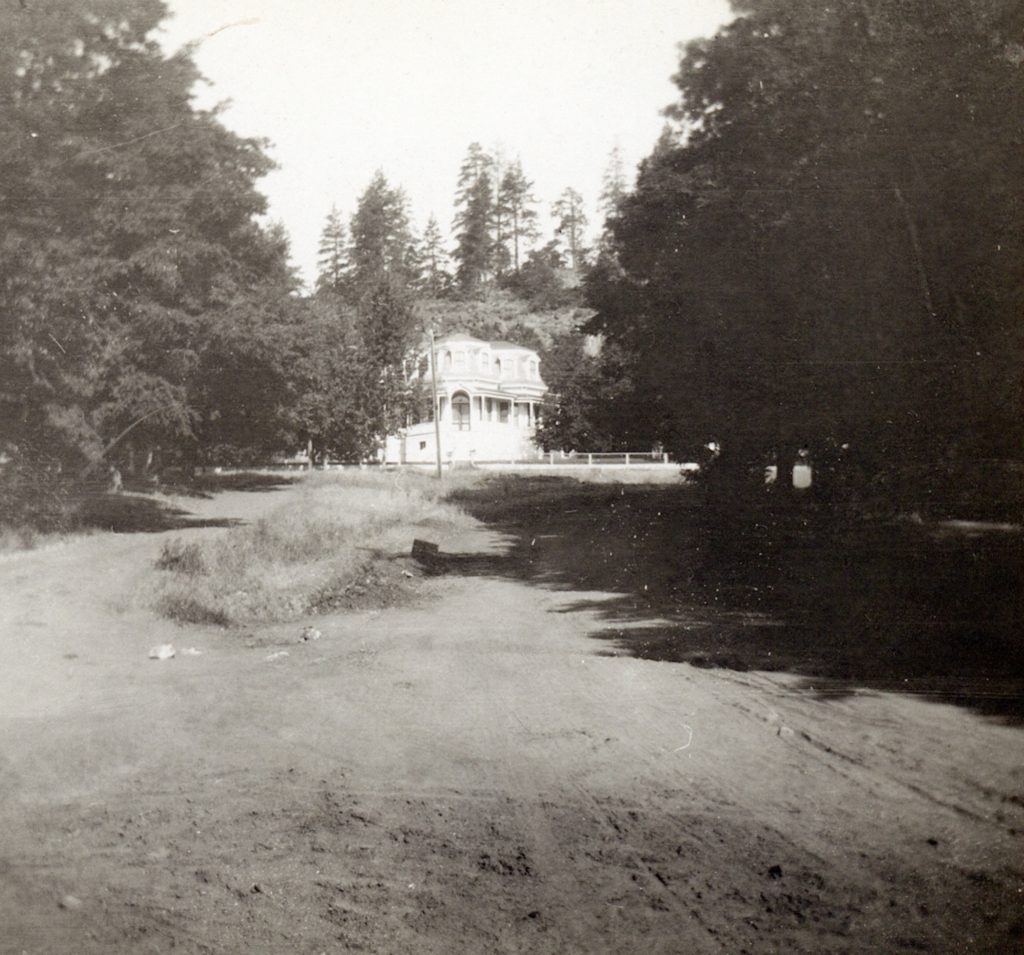
On Monday morning, January 7, 1929, Latasca O. Shidler was killed instantly when his car collided with a Western Pacific passenger train at Constantia. Such traffic events were common then.

The 39-year-old Shidler had previously worked as a mechanic for the Western Pacific. However, at the time of his death, he was employed as a ranch hand for the Galeppi family at Constantia. One newspaper report cited that Shidler resided in the old Monastery, which in reality was the White House at Constantia. For whatever reasons, members of the Galeppi had no desire to reside in the 17-room house. After Shidler’s death, an elderly Indian couple by the name of Purdy, resided as caretakers in the house. With their passing by the end of the 1930s, the house was never occupied again.

Support

Eagle Lake Water Levels—A Spalding Tract Perspective

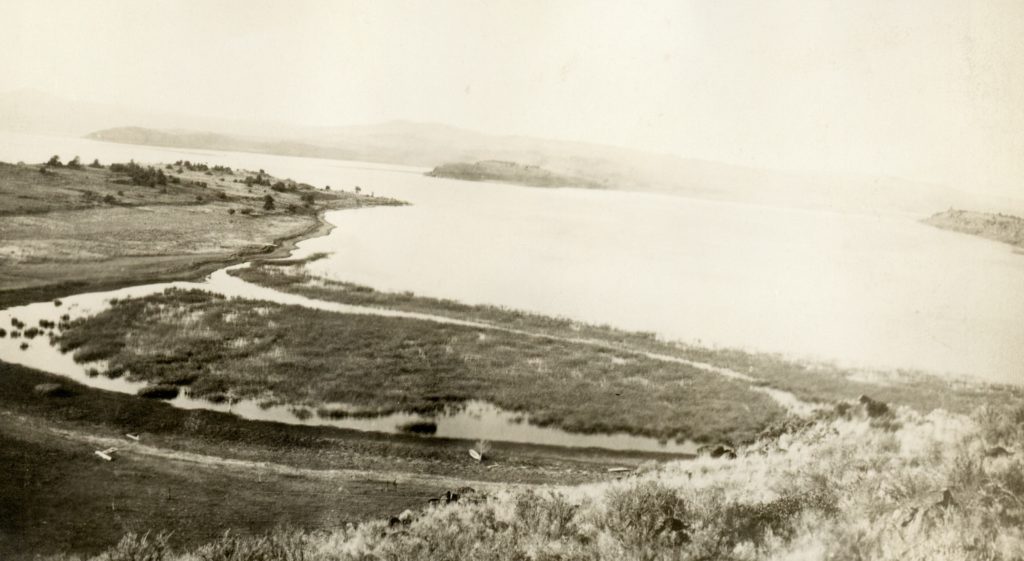
A view of Eagle Lake, looking towards Spaldings, 1921. Courtesy of Lola L. Tanner

This is a simple minded post. It should be noted that there are a number of Eagle Lake affeciendos on this site, so they may get more enjoyment from today’s post, than others. When Spalding Tract was subdivided in 1914, the lake was approaching its highest water level. “The Strand” the town’s lakefront boulevard, was truly lakefront. Fast forward to 2020, the lake is far, far away as seen from the below photograph taken along the shoreline looking towards Spalding Tract.

A view of Spalding Tract from the Eag;le Lake shoreline,June 21, 2020.

Support

Buyer Beware

David Titherington purchased Lassen’s original ranch. In 1862, John Hulsman became a partner. Ever since the Hulsman  family owns and operates this ranch. This scene of the ranch was taken in the mid-1950s.

While many have heard or read about tales of someone buying property sight unseen, the practice has been going on longer than I thought.  The first such recorded occurrence in the region took place in 1860, involving the estate of Peter Lassen. In 1857, Peter Lassen purchased R.J. Scott’s claim on the west side of Honey Lake, some twenty-five miles from Susanville. After Lassen’s death in 1859, this property became part of his estate. In 1860, two miners from Rich Bar, Plumas County purchased the property, thinking they were buying Lassen’s original ranch south of Susanville where he was buried. When they finally came to inspect their purchase, they discovered the purchase was for Lassen’s other holding on the west side of Honey Lake. Though somewhat disappointed, they embarked on developing their new acquisition, which became the founding of Milford.

Subscribe

The Modoc Line Trail

Upper Biscar Reservoir, as seen from the Modoc Line Trail.

In 1996, the Union Pacific Railroad received permission to abandon    an 85 mile segment of railroad from Wendel to Likely. Since then it has been converted into another “rails to trails.”  It should be duly it was the NCO Railroad that initialy constructed the line and in the 1920s it was acquired by the Southern Pacific  Railroad.

Map showing the route from Karlo to Horse Lake Road.

Personally, I prefer the segment from Karlo, Secret Valley to Horse Lake Road. While, I do not have a preference which way to approach, I think its best to travel it each way, since doing so one sees different perspectives of the area. 

Foundation remains of the Horse Lake Siding, is one of many sites to see. January 27, 2019. Courtesy of Anna Stewart

Subscribe

An Innocent Advertisement?

Franceska Murrer Neuhaus, 1916—Leona Jackson Byars

In October 1916, Franceska Neuhaus placed a small 2×2 inch display advertisement in the Lassen Advocate that for sale was the Commercial Hotel on the corner of Main and Union Streets, Susanville. She also offered 80 acres of timberland two miles from Susanville. Innocent enough? The hotel that she offered was named the St. Francis Hotel., after all there was the Commercial Hotel a block away on South Weatherlow Street. As to the timber property she did not own any.

St. Francis Hotel, 1922. Courtesy of Art Almeda

This alarmed Leona Jackson, a granddaughter of Franceska. She went to court to file guardianship papers for her grandmother. Of course, a notice is required to be sent to all relatives. It turned into one of those proverbial “all hell broke loose.” Other relatives filed their own petitions seeking to be Franceska’a guardian. Most of 1917 was tied up in litigation over Franceska’a guardianship, until finally the court appointed, Franceska’s son, W.H. “Bill” Neuhaus her guardian. The following year, 1918, Franceska passed away, a victim of the Spanish Influenza.

Support