This is something that definitely slipped underneath my radar. Last fall a historical railway society was organized for the preservation of the history of the Nevada-California-Oregon Railroad, more commonly referred to as the NCO. What was even more intriguing its headquarters is that of Alturas. In one sense it is a logical choice that Alturas is home to a NCO depot and also was railroads’s headquarters during its final days, after its departure from Reno.
For the un-initiated the NCO was one of the 20th century’s longest narrow gauge railroads that ran from Reno, Nevada to Lakeview, Oregon. As one observer put it, it was a railroad that went nowhere. Its original intent was to extend all the way to Columbia River with a terminus at The Dalles, Oregon. During its fifty year existence from 1879-1929, there were a lot of interesting characters involved in its operation.
For those who would like to learn more about this organization see their website at: NCO Railway
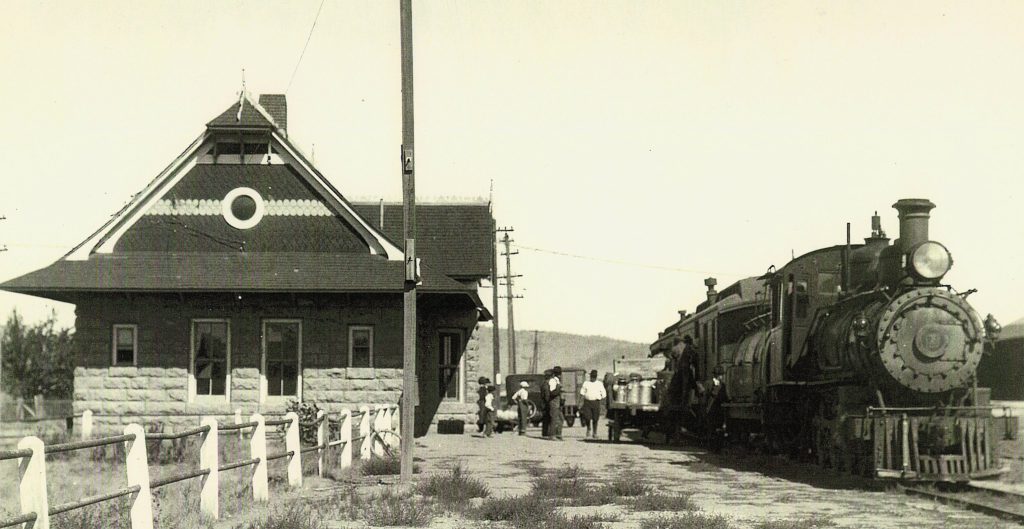
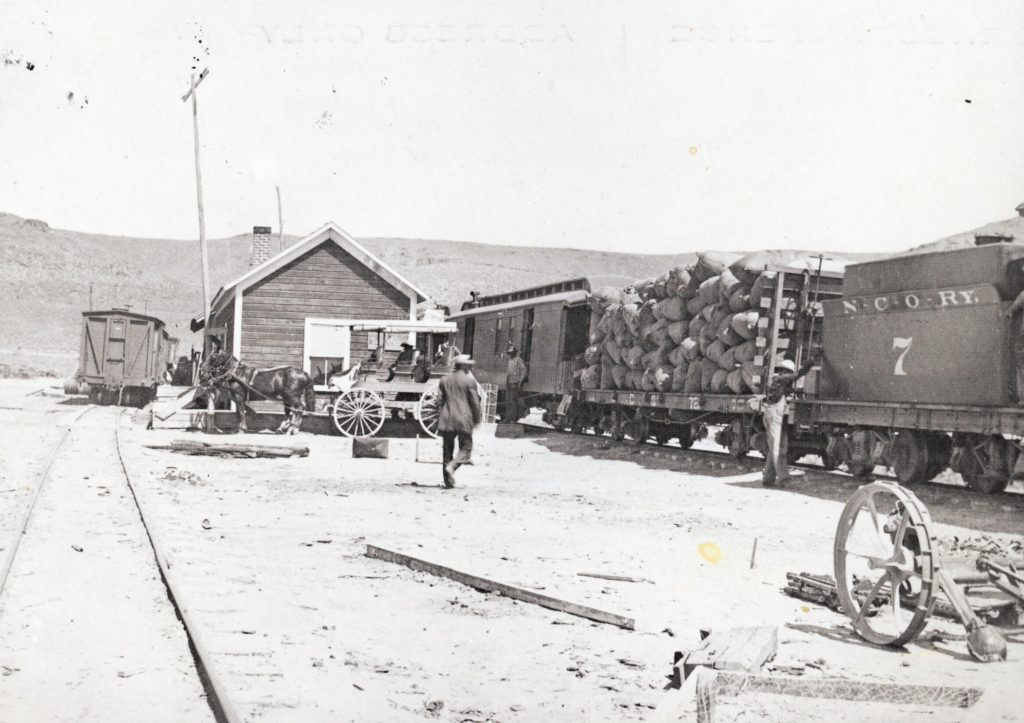
Hot Springs Station would later become Wendel. This scene is dated 1899–Tom Armstrong
No one would have ever thought that Amedee would be the terminus of the Nevada-California-Oregon Railroad (NCO) for nearly a decade. It certainly was not the railroad’s plan. However, the nation’s financial crisis of 1893 coupled with a national railroad strike brought a lot of activities to a screeching halt.
In January 1899, without any fanfare the NCO finally jump started its northern extension. Five miles to the north the railroad established its Hot Springs Station, known today as Wendel. Some had aspirations that it might become a new “Amedee.” However, that would not be the case. What Hot Springs did receive was a bunch of camp followers. This rag-tag group peddled alcohol, gambling and prostitution. By the time, the Lassen County District Attorney could crack down these activities, not only had the railroad continued to build north and the followers fled to more profitable locations. Hot Springs Station heyday did not arrive until after it became Wendel and the demise of the NCO. In 1927 the Southern Pacific Railroad began the conversion of the NCO from narrow to standard guage.
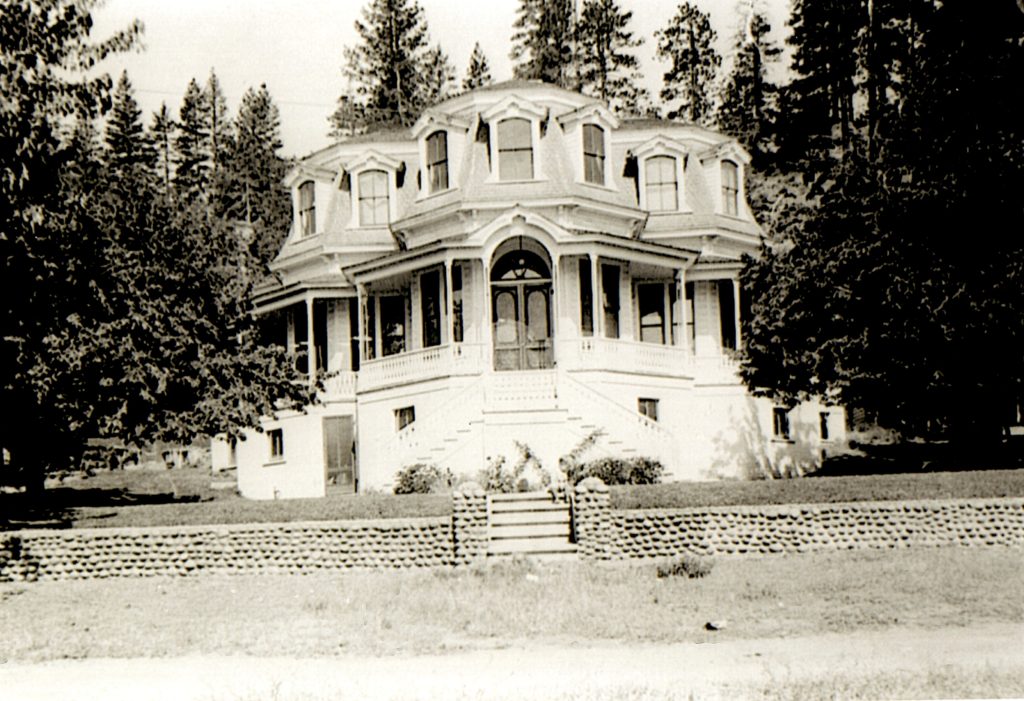
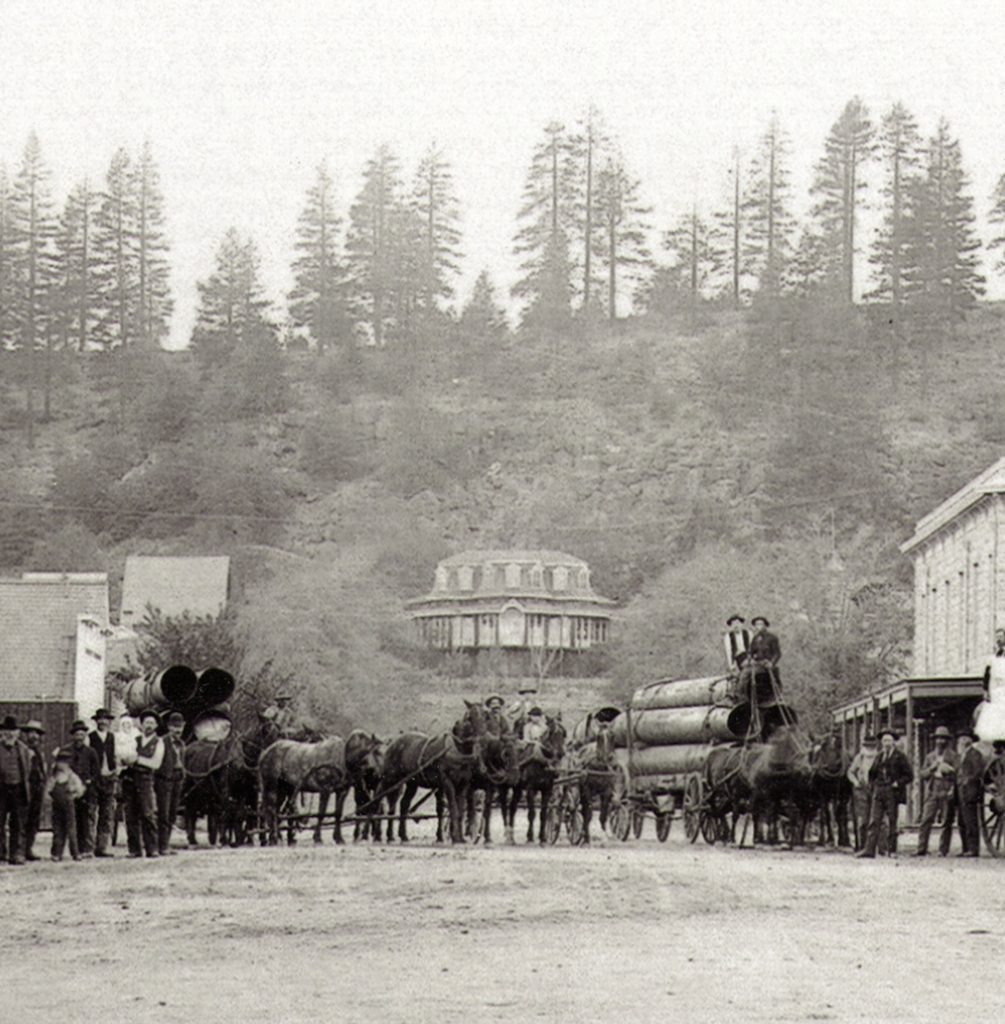
Dr. Leonard’s residence when completed, 1913–Frances Swain
When William Greehn took possession of Dr. J.G. Leonard’s residence he decided to make it a rental. The exterior had a very dilapidated appearance. It had never been painted. The windows on the top floor were never installed, so they were boarded up. Greehn had no intention to make improvements to the building. The residence rented for $10 a month, and it was rarely vacant. In 1906 Greehn passed away leaving this and numerous other properties to his two daughters—Fannie Asher and Hattie Grunauer.
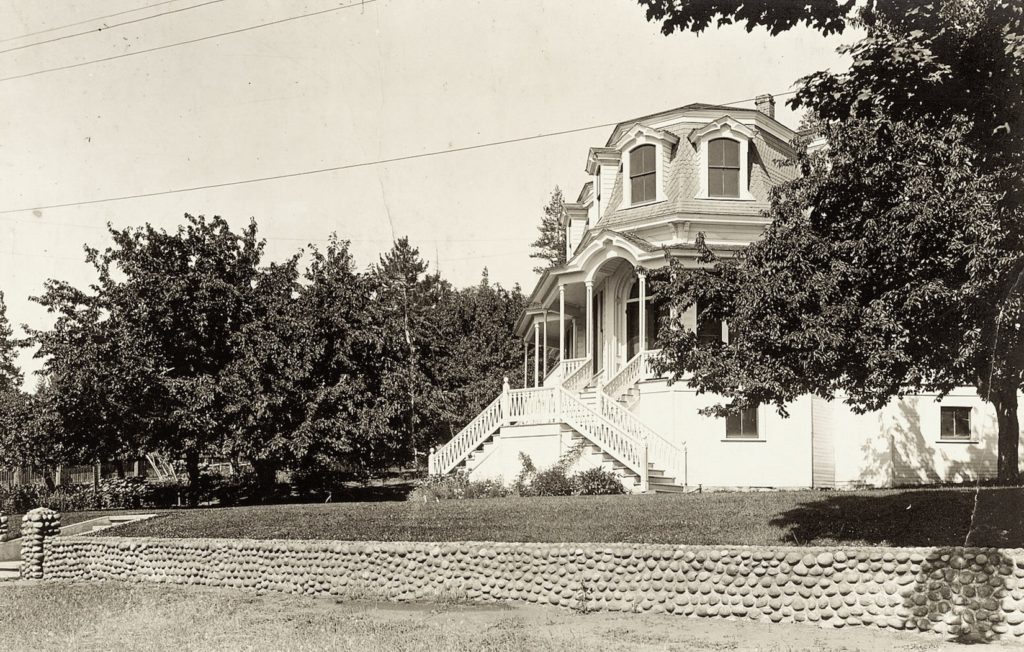
A side view of the Swain’s residence, 1913—Frances Swain
On April 11, 1908, during the liquidation process of the Greehn Estate, Joel Henry Swain purchased Leonard’s residence for an undisclosed amount. In 1888, Swain, along with other members of his family originally located in Dry Valley between Grasshopper and the Madeline Plains. In 1903, Swain decided to switch careers from farmer to saloon keeper and moved to Susanville. Swain found the bar business to be very lucrative. This provided him with the means to finish residence that Leonard had started. In just a short time it became one of the most prestigious homes of Susanville. In an interesting side note, his wife, Annie, somewhat disapproved her husband’s line of work, she being a staunch tea-toler, but she enjoyed the finer things of life that the saloon trade provided. An awkward situation to say the least.
In 1917, J. Henry Swain’s health declined. No treatments seem to improve his condition. He passed away on May 3, 1918. Besides his wife, he left four small children, Frances, Fitzhugh, Blanche and Nellie. In 1922, Annie Swain sold the residence to the Antlers Club, which would in turn become the future home of the Elks Lodge.
Main Street, 1894. You can see the condition of the house—Ivor Lanigar
Susanville’s iconic Elk’s Lodge located at the west end of the town’s Main Street, had a humble origin. The story unfolds when Michigan native Dr. J.G. Leonard (1843-1916) opened a dentist office in Susanville on March 1, 1884. A large vacant lot at the west end of town caught his attention, especially since it was so centered to have an excellent view looking down through the center of main street. He approached the owner, Sarah Hosselkus about its availability. On March 22, 1884, she sold the lot to Leonard for $450.
Leonard then proceeded to design a unique residence on this unique lot. The instincts came naturally for him, since for a time he studied to become an architect. Dentistry or Architect are noble positions, such professions, even in cities, during the late 1800s could be financially challenging.
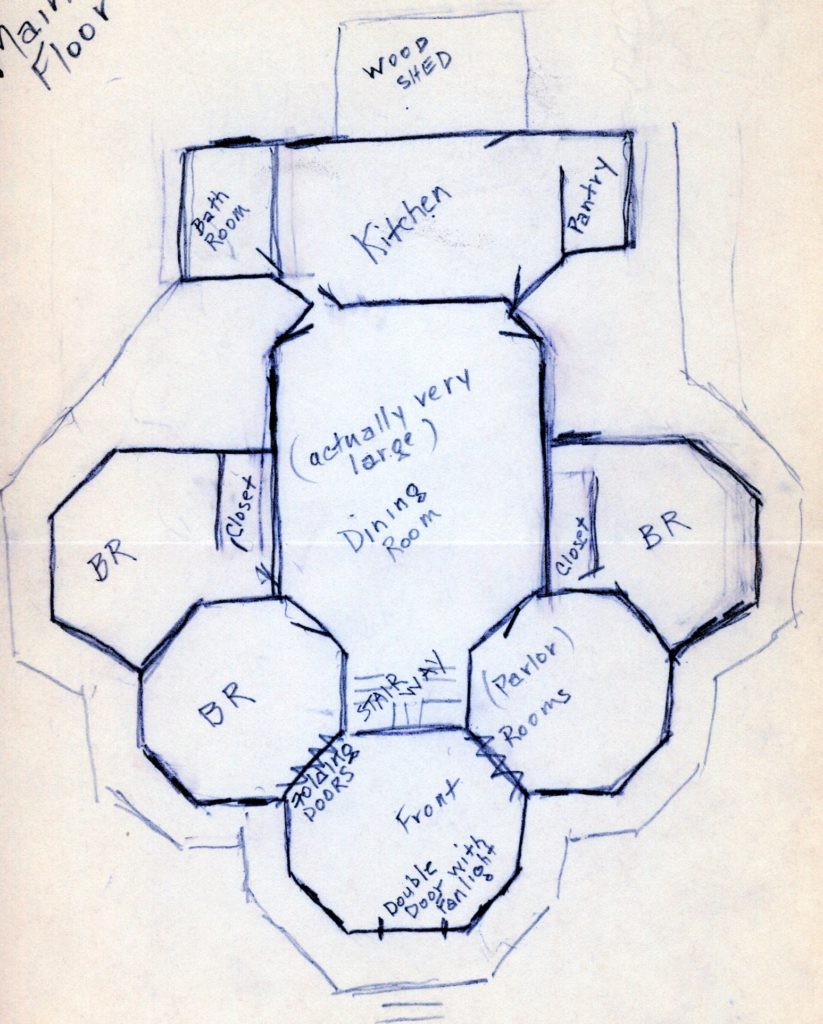
Main floor plan sketch by Frances Swain
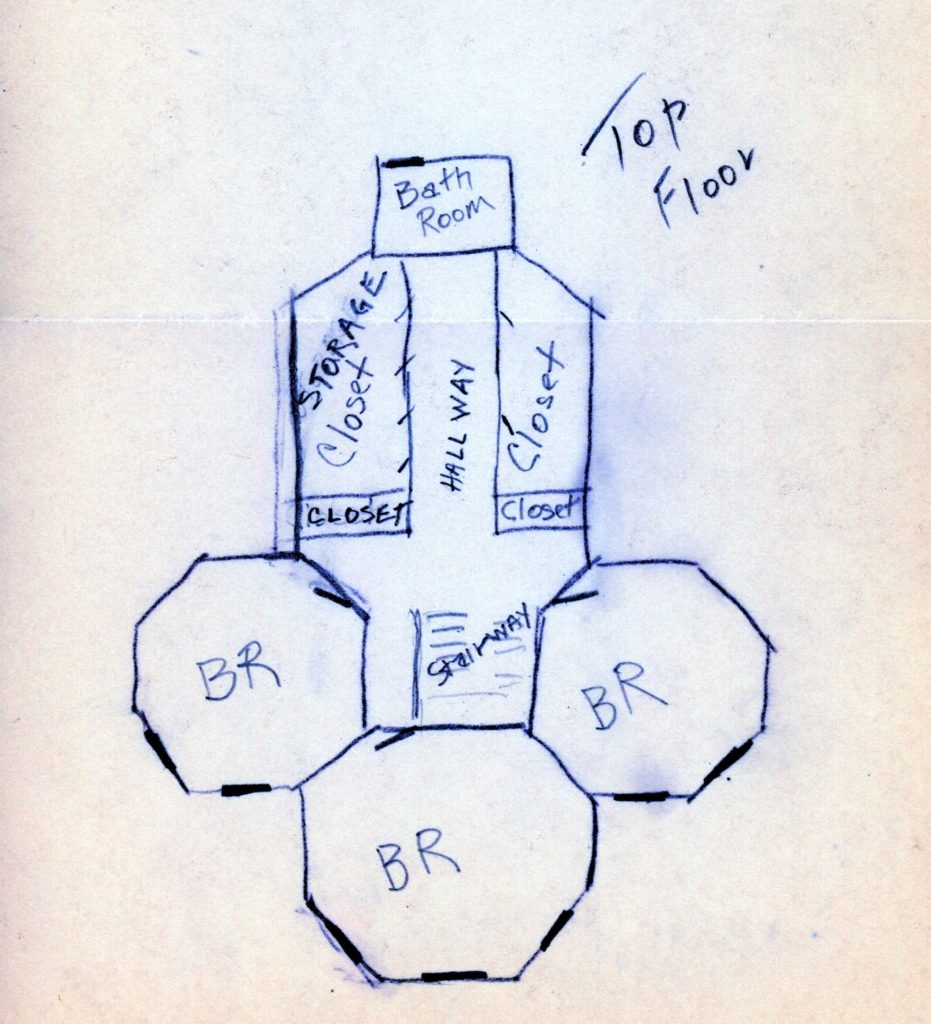
In November 1884 work was underway to clear the homesite. The proposed two-story home, contained twelve rooms, many of which were octagonal. Leonard hired local contractor Charles Odette to build it, though no record exist as to its cost. In February 1885 Leonard moved his family into their new home, though it was far from finished.
Top floor sketch by Frances Swain
Leonard quickly learned that there was not a sufficient enough population in Susanville, as well as the Honey Lake Valley to sustain his practice. Like others before him and after him he rode the circuit to provide his services in neighboring counties, with an emphasis on Modoc County. The other financial obstacle Leonard faced, was his patients would provide goods and/or services rather than paying in cash. After five years of eking out a living, Leonard, filed for bankruptcy on April 17, 1889. One of his main creditors, was Susanville merchant William Greehn who he borrowed money to construct his home. Greehn secured the promissory note with Leonard by attaching a mortgage to Leonard’s home. At the conclusion of the bankruptcy proceedings Greehn was awarded the property. Leonard moved on and by 1898 established a practice in Reno where he lived the rest of his life.
Gilman Basin, located on the north flank of Diamond Mountain is the headwaters of Gold Run. It was so named for Jerome A. Gilman, who came to Lassen County in 1879 and became a prosperous sheepman. There is also a Gilman Spring on the north slope of Shaffer Mountain, Gilman Street in Susanville, and the Gilman residence still stands. For a bit of trivia, the Gilman headstone in the Susanville, may be largest in Lassen County.
The J.A. Gilman Residence at 1913 Main Street was built in 1898. Today it is the office of Town & Country Real Estate.
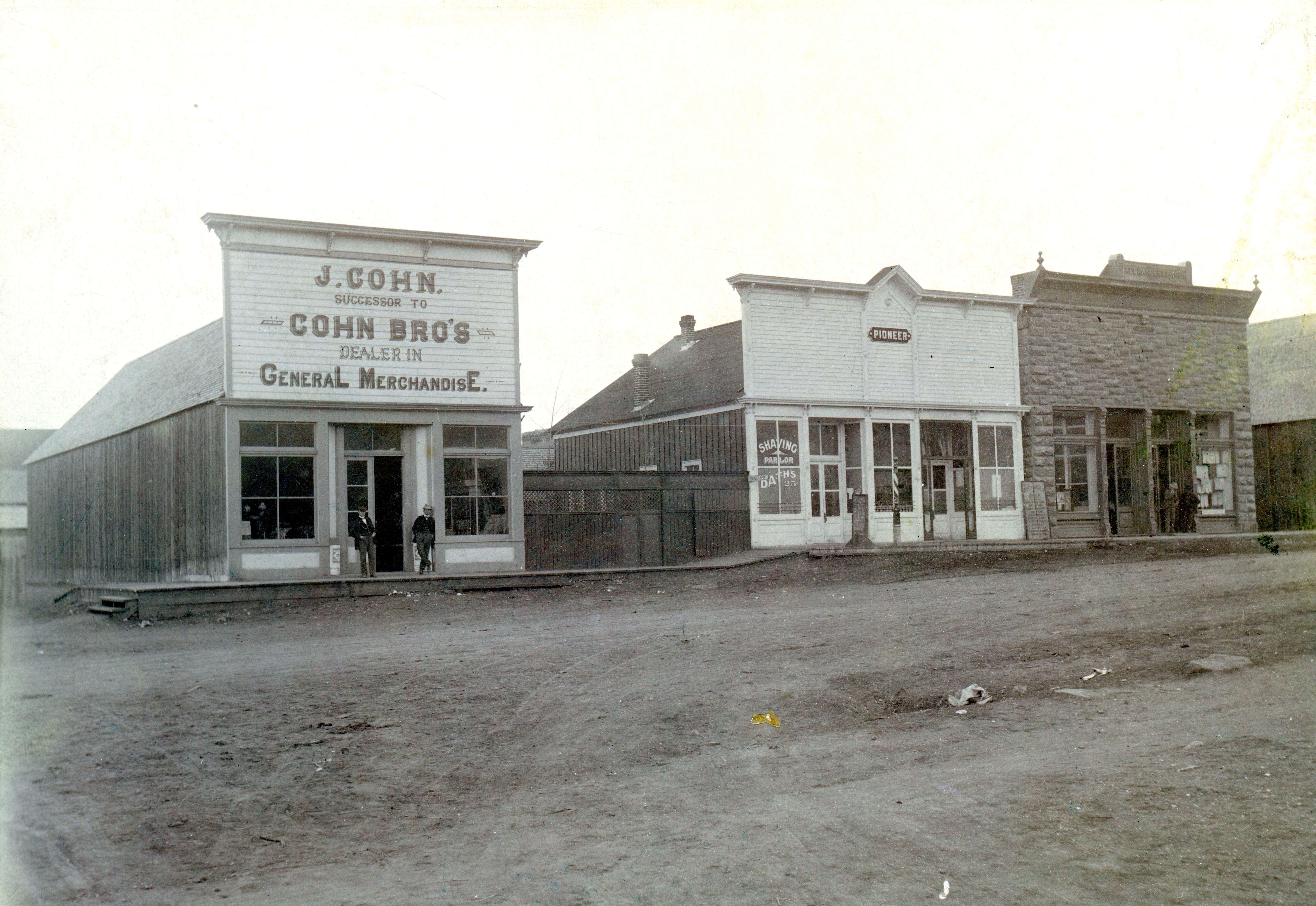
South side of the 700 block of Susanville’s Main Street, March 12,1901—Sheila Holcomb
On June 6, 1900 an early morning fire started at Dave Stark’s blacksmith shop on the southeast corner of Main and S. Roop Streets. Within two hours some forty structures from Roop to South Union Street were destroyed in the blaze. The only building remained standing was Alexander & Knoch’s store, constructed of native stone, though it did sustain damage.
While this fire became the catalyst to incorporate Susanville, many resorted to the old wooden frame building practices of the past. The above photograph is a perfect example. What is interesting with this photograph you will notice the vacant lot between the Cohn Bros. and the Pioneer. It should be noted that the Pioneer used the lot for a beer garden, until O.M. Doyle constructed a two-story stone building that eventually became home of the Grand Cafe. The building to the right to the Pioneer, which was Alexander & Knoch’s store, though the store front has been modified is home to Margie’s Book Nook.
In 1902, Susanville passed Ordinance No. 17 which prohibited wooden frame buildings in the heart of the town’s business district. All future materials, would be brick, native stone or cement. Roofs were required to be metal, slate or tile.
Hayden Hill, 1909. Courtesy of Dallas & Joyce Snider
During the early years of Hayden Hill in the 1870s and 1880s numerous little encampments within a three mile radius sprang up. Paradise City was one of the earliest mining camps adjacent to Hayden Hill. In 1872-73, according to the Lassen County Assessment Rolls, Joseph Miles owned a house and lot in Paradise City—though no records of any subdivision is known for that place or for that matter Hayden Hill. Paradise City was also the location of the Providence Mining Company’s quartz mill. It was the first quartz mill constructed at Hayden Hill. This mill would crush the rock so that the gold could be extracted. Incidentally, that mill was hauled to the Hill from its original location at Hardin City in the Black Rock Desert.
Subscribe today and tomorrow enjoy with daily notifications. You can also surprise someone with a gift subscription.
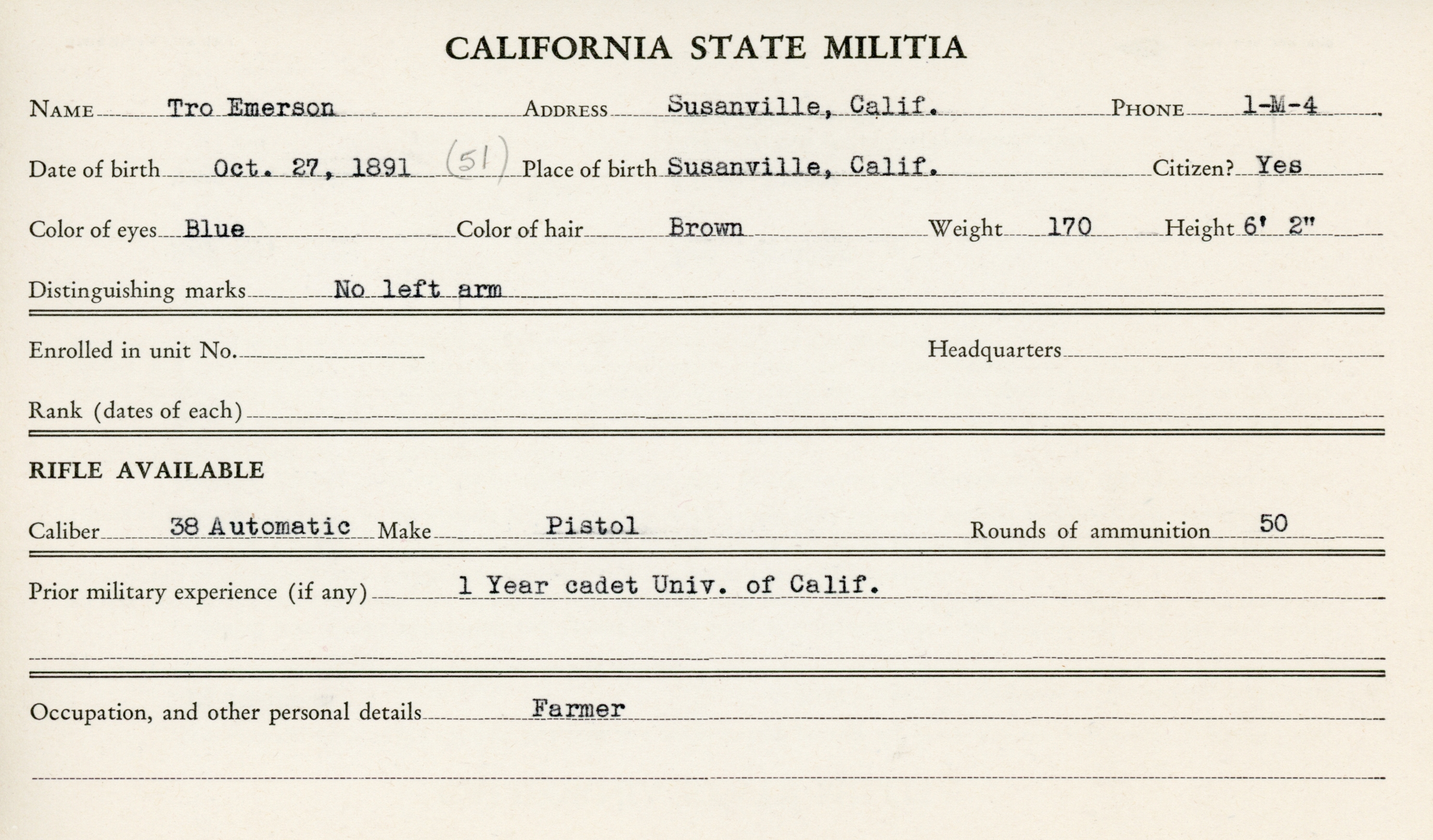
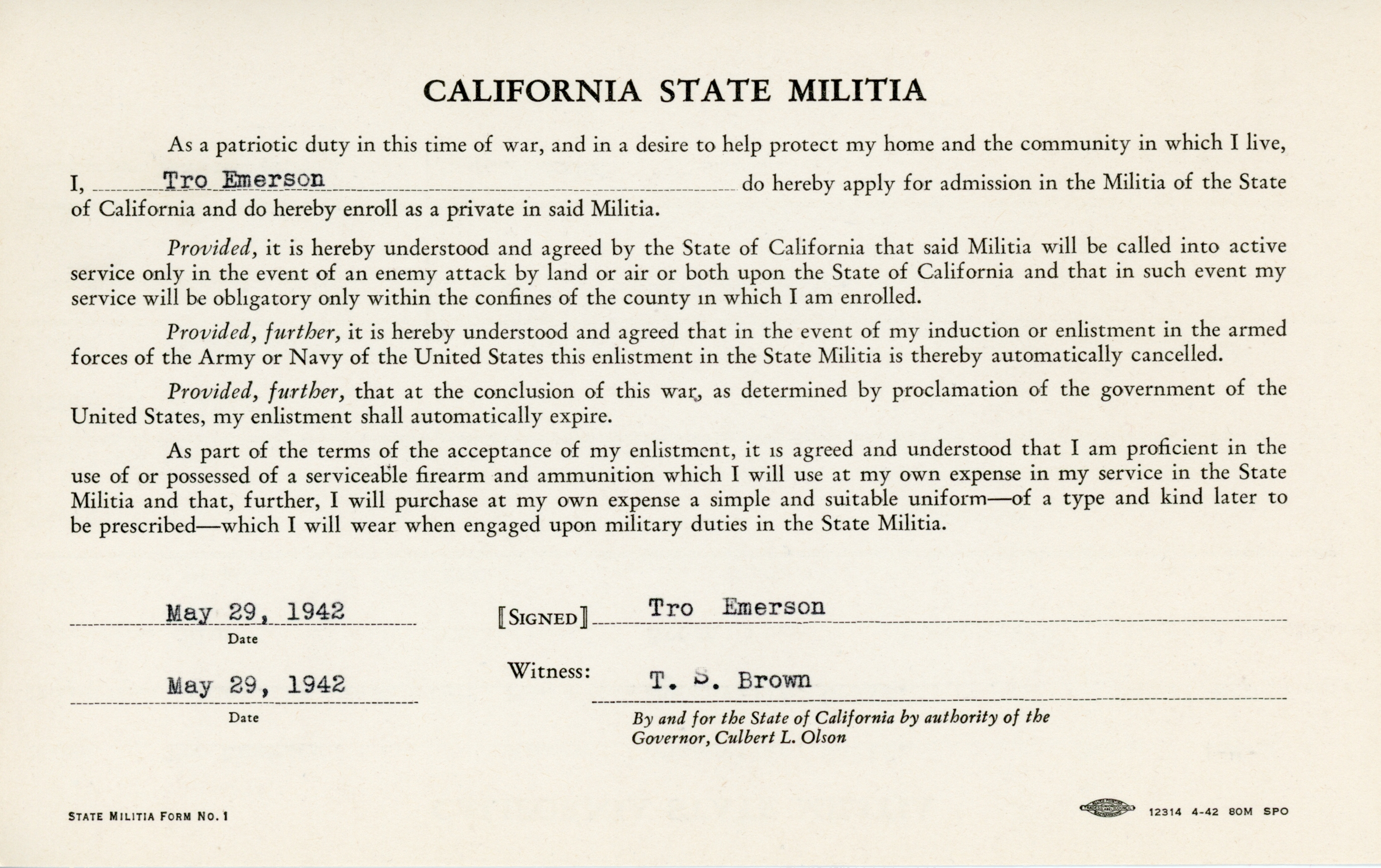
Twice in Lassen County’s history there have been local militia units of the California National Guard. The first was the Honey Lake Rangers of the 1860s. The last time was during World War II. Initially, there was to be one large unit for Lassen and Modoc counties. That plan was neither feasible or practical and was dropped.
A new strategy was drafted. Inside each county, especially in large rural counties like Lassen, several local militia units would be formed. There duties were to protect the area in case of enemy invasion. Their involvement was confined to the boundaries of the county. Uniforms, guns and ammunition would be provided to each unit. They would also be trained in guerilla warfare. In Lassen County it fell upon the Farm Advisor (T.S. Brown) to organize these units.
On May 20 1942, the first organization meeting was held in Susanville. Local units were created for Susanville, Bieber, Doyle, Janesville and Standish. By the first of June, the Susanville Militia had 70 members. It became known as Thomas Tucker Militia—named after Thomas Tucker the first casualty from Susanville in World War I. Fortunately, this volunteer force never had to be activated. At the conclusion of the war, each individual’s enrollment in the militia was automatically cancelled.
April 1948 was a very rainy month. According to Lassen Volcanic National Park officials that placed received 419% above average precipitation for that month.
Closer to home, all the heavy spring rain and snow runoff, filled Leavitt Lake to capacity in a few weeks. It should be noted that the lake was nearly dry for three years. Then a brisk windstorm on April 28, with gusts as high 40 miles per hour, caused a lot of excitement at Leavitt Lake. With the winds whipping the lake into a frenzy, it began to wash away a portion of the northern levee. Grover Bass who was charge of Lassen Irrigation District, the owner of the lake, summoned nearby ranchers—Denny Elledge, Stanley Bill, Howard Bill, Bill Ahern, and Les McColm—to form a sand bag brigade. The men worked tirelessly all day and placed over 300 sand bags along a quarter mile section of the damaged levee.
 Gilman Basin, Diamond Mountain, August 1985