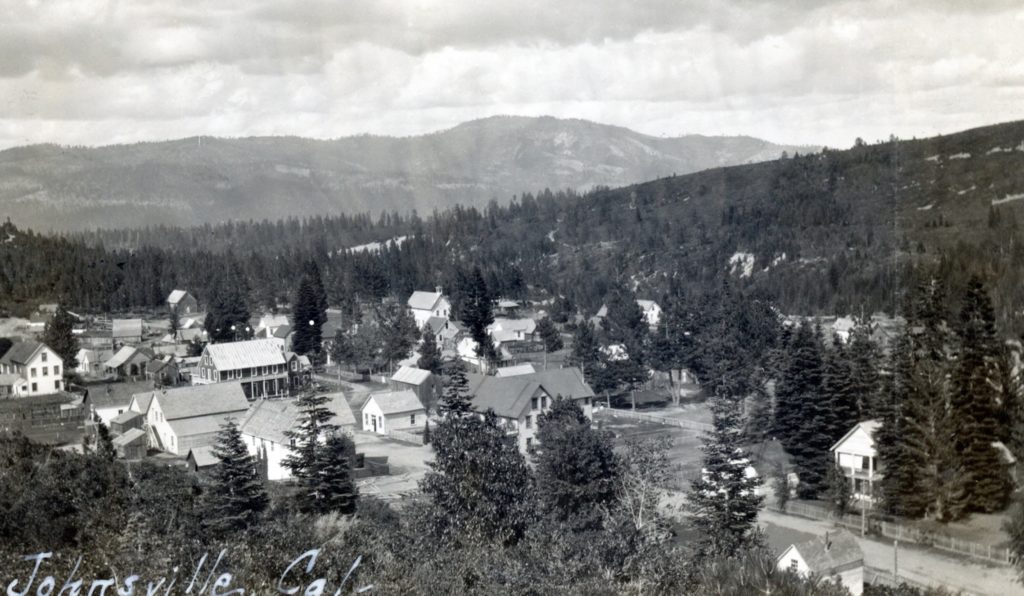
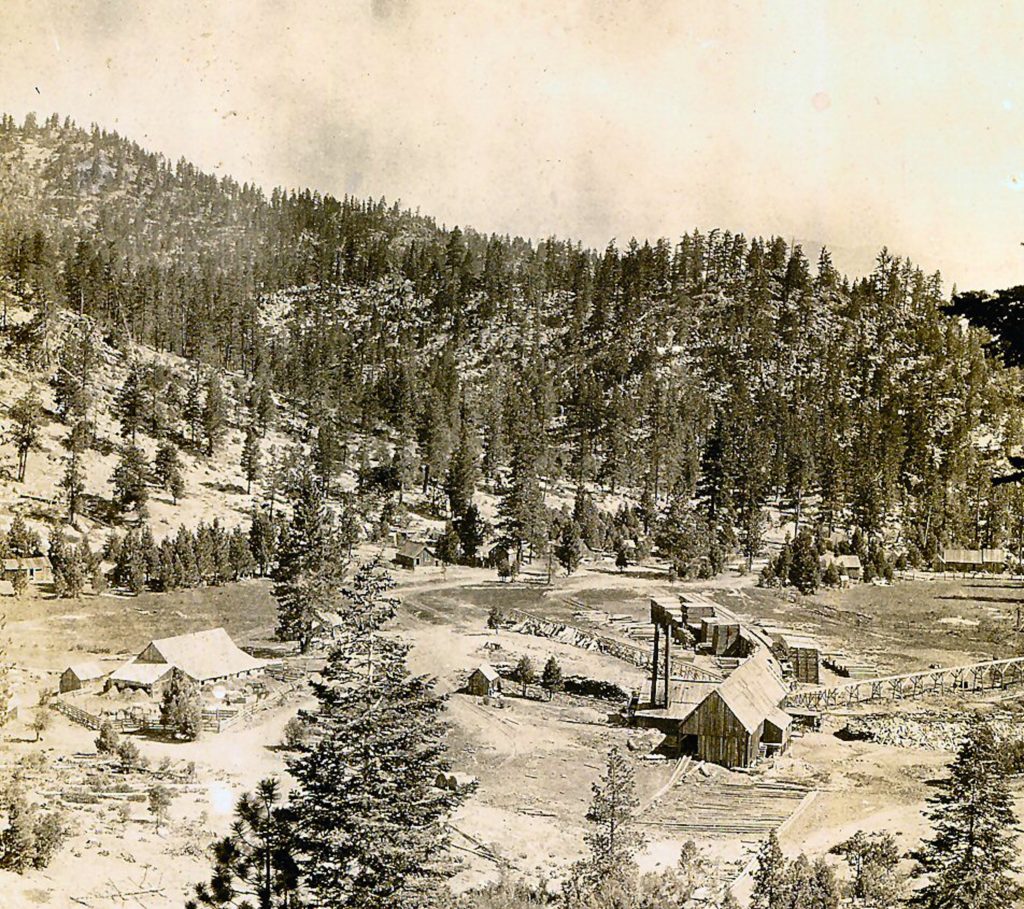
Johnsville, Plumas County, 1911—-Sifford Collection
In keeping with yesterday’s topic of exploring, one may want to include the former mining community of Johnsville, Plumas County, near Graeagle. It is adjacent to the Plumas Eureka State Park that was established in 1959.
Johnsville came to the forefront in 1851 with the discovery of the Eureka quartz vein. After the early 1900s mining activity fluctuated like so many other mining communities. The last of mining came to an end during World War II.
It is well worth the trip and for the adventurous minded you could make trip via Milford grade to Beckwourth.
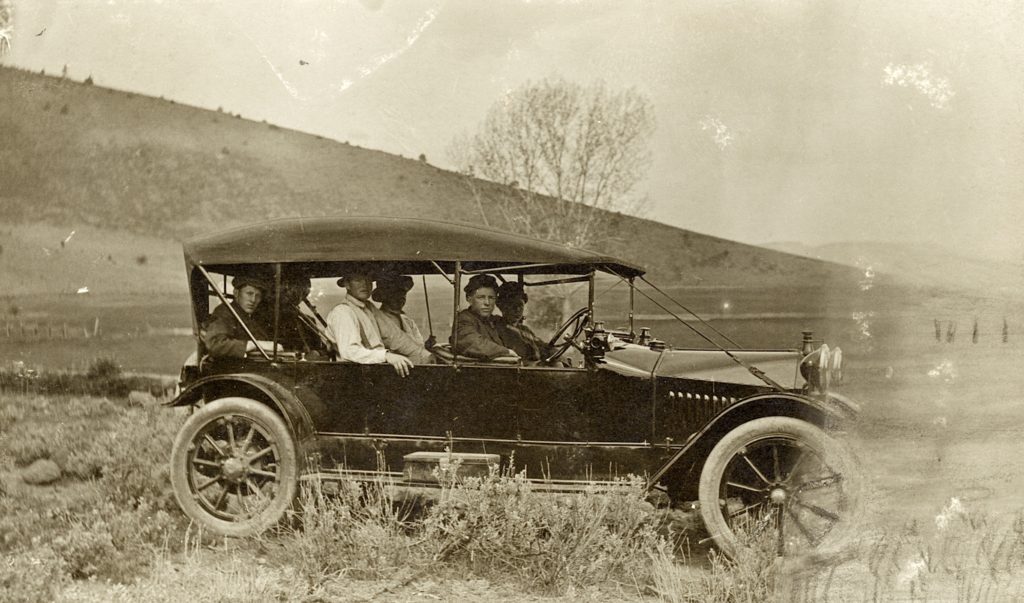
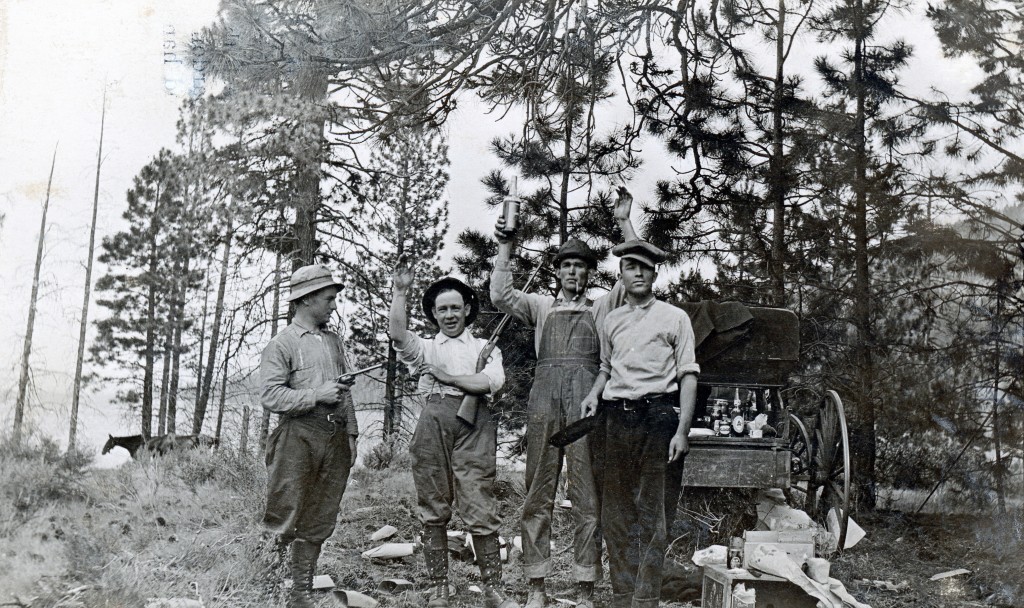
Joe Odette and friends returning from a fishing expedition on Eagle Lake’s north shore. These guys had numerous adventures in 1914.—Delores Gasperoni
It is that time of year when I sound the annual alarm to go exploring wherever you reside. It began several years ago when I republished a 1929 editorial that appeared in the Lassen Mail. It summed up that there are so many fascinating natural attractions surrounding the countryside that are easy day trips, yet so few take advantage. The paper cited a wide array of opportunities whether exploring the ice caves of Eagle Lake, or packing a picnic to spend a leisurely day along a mountain stream.
After last years destructive fires in the region, it is even more apparent to get out and about. Sometimes historical landmarks can disappear too, such as burning of the Constantia townsite.
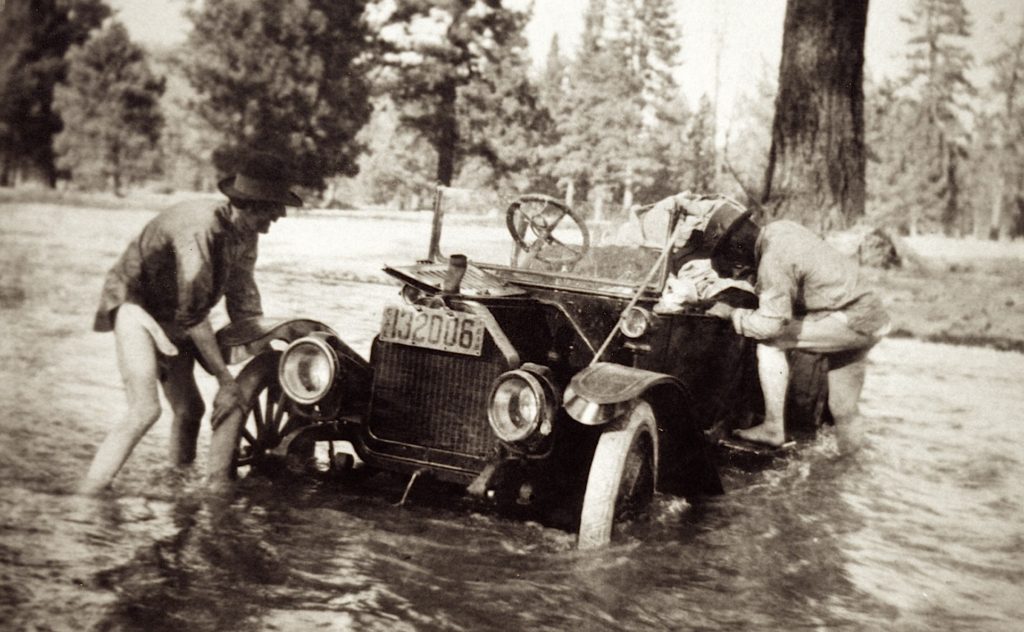
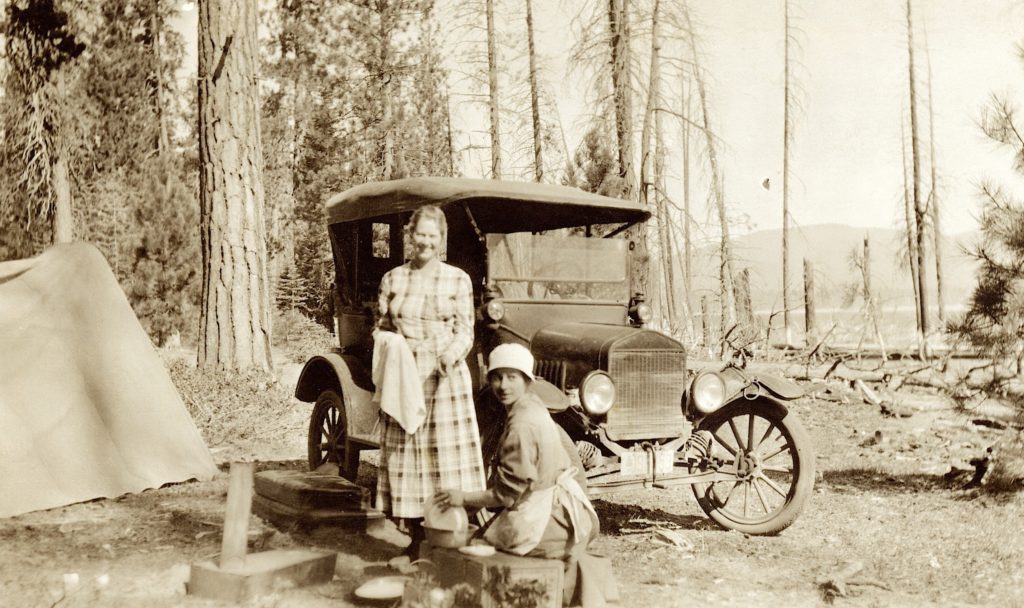
Frank Wood & Cass Hunsinger on their camping expedition!—Verna M. Wood
Hopefully, this provides everyone with a bit of motivation. Enjoy.
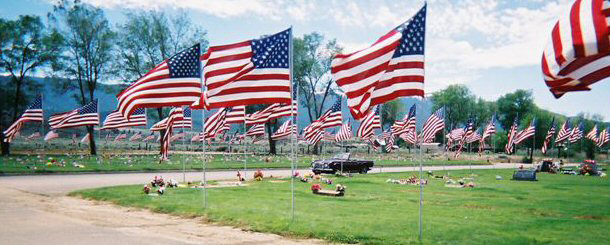
In May 1992, a new and unique tradition began at the Diamond Crest Cemetery conducted by the local American Legion Post. It started slowly with veteran families donating the American Flag that was presented to them upon their relatives passing. Of a personal note, both my uncle and father, James and Leroy Purdy were veterans, and I donated their flags to this worthy cause. Today, there are now more than 300 flags.
The flags are flown at Diamond Crest Cemetery on Memorial Day and Veterans Day. Flags are on display from 8:00 a.m. to 3:00p.m., weather permitting. It is an impressive sight to behold.
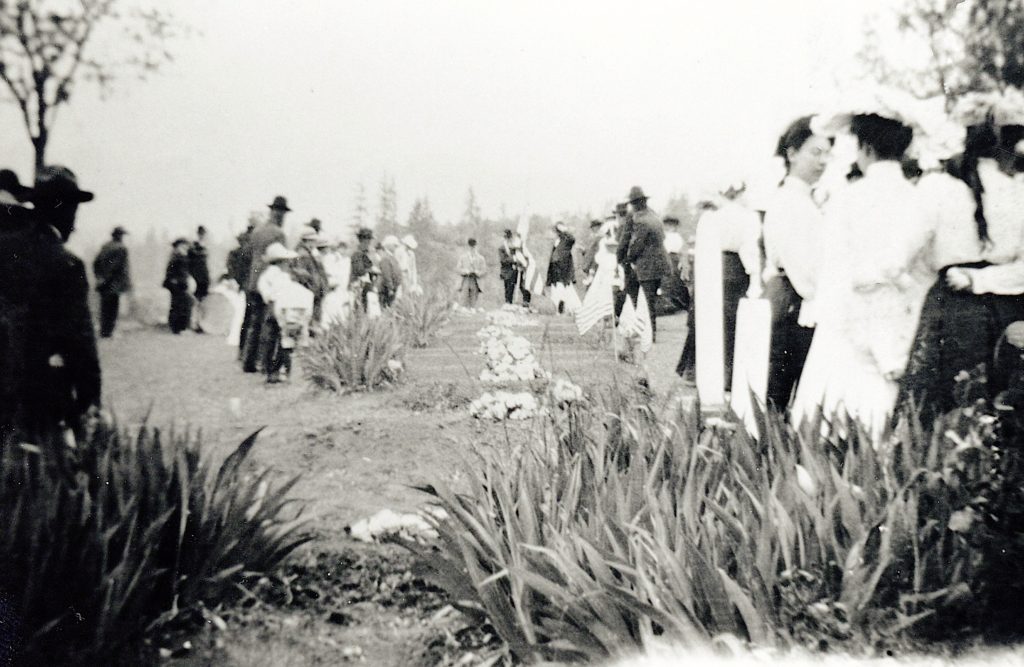
Decoration (Memorial) Day, Susanville Cemetery, 1905—Verna M. Wood
In 1915 there was no formal Memorial Day services conducted at the Susanville Cemetery. This was due to fact of the dwindling members of the Benton Post of the Grand Army of the Republic (G.A.R.) No.163 and were no longer able to lead a program. Those not familiar with the GAR comprised of Union Veterans of the Civil War. In 1916, the local parlor of the Native Daughters of the Golden West organized a Memorial Day ceremony at the Susanville Cemetery.
It should be noted when the local GAR was active, they would march from the Methodist Church to the Susanville Cemetery. Once everyone assembled, including the public, a eulogy, usually by the Methodist Minister. After which the GAR members decorated the graves of the veteran’s with flowers donated by the community.
At the same time, it should be noted the local post of the GAR more or less disbanded, citing a membership of three. They donated their American Flag to the Monticola Club. The flag was given to the GAR in 1891 by the Ladies Aid Society.
In 1920, when the local American Legion Post was established, they would carry on the tradition of their earlier counterparts.
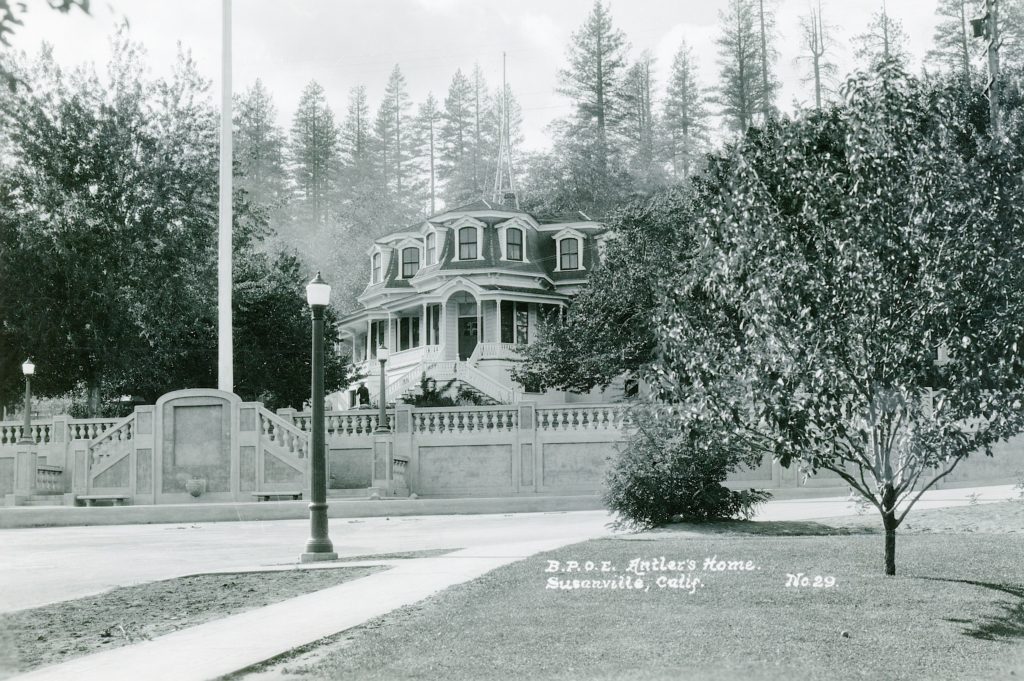
In the fall of 1926, the Elks did a major renovation to the main floor of the building. Instead of six rooms, it was converted into one large room for use a lodge and also lounge for other occasions. On the lower floor what was referred to as hot air heating system was installed. While all of this may not sound dramatic, it was. This remodel project cost nearly $26,000–twice the amount of the purchase price. For even a better comprehension of this expenditure, the American Legion Memorial Building was under construction that year with a price tag of $23,000.
Traveling across Highway 44, the Pine Creek Valley appears to be a desolate wind swept sagebrush flat, surrounded by pine trees. After all, the majority of human activity is concentrated at the Bogard Rest Station. By the way the area is named for John Jasper Bogard, a Tehama County stockman, who in the mid-1870s started using the area for summer grazing of sheep. Actually, the region was home to many sheep outfits, such as Champs, Cone, McCoy and Stanford, the latter as in Stanford University. These sheep outfits had a huge impact on western Lassen County, and so many of the natural features were named for them. Continue reading Pine Creek Valley, Lassen County→
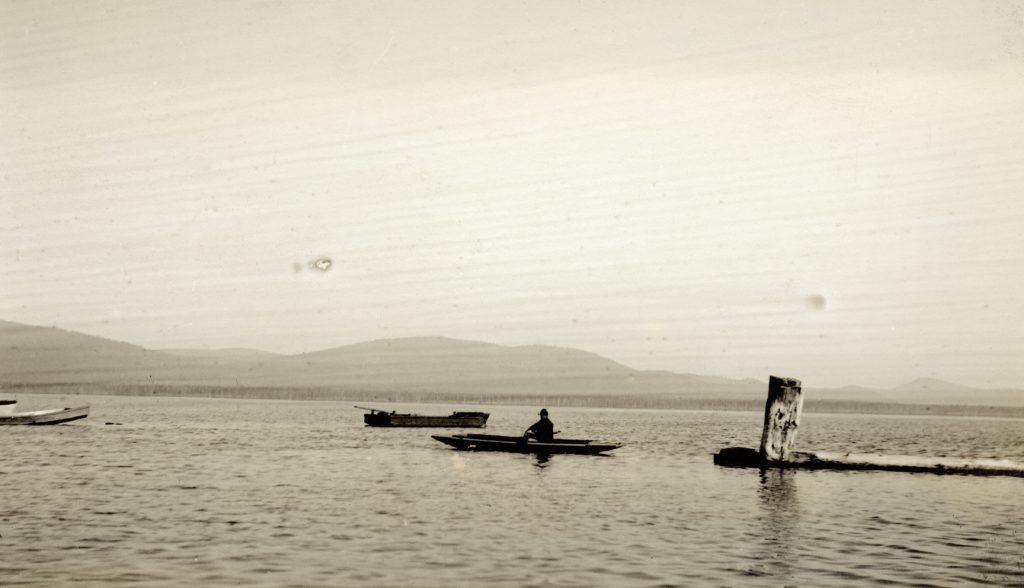
With Memorial Day weekend approaching, Eagle Lake opening day of fishing season will be here in a few days. There will be, without a doubt, plenty of boating activity on the lake.
Gallatin Boat House—Wyn Wachhorst
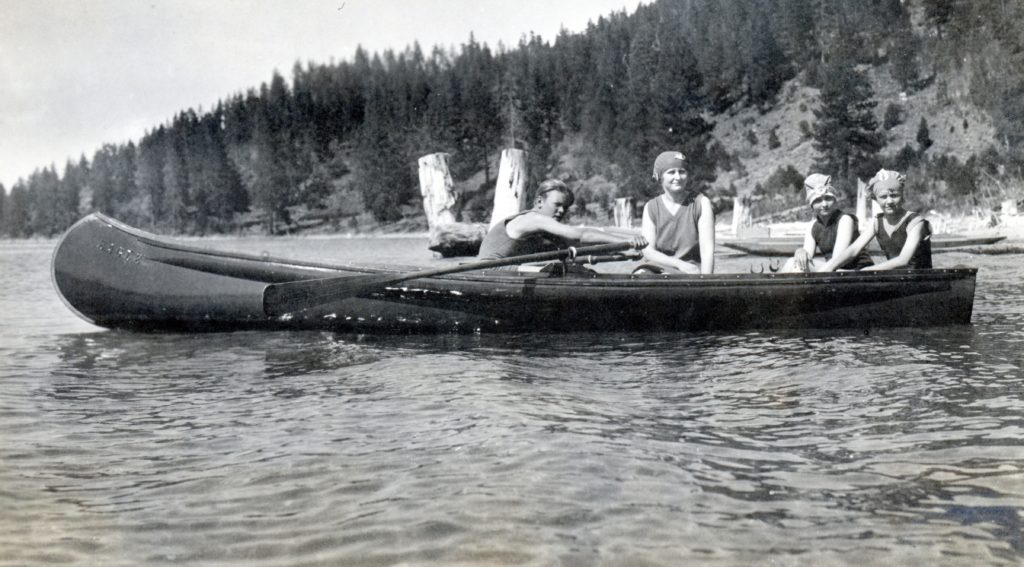
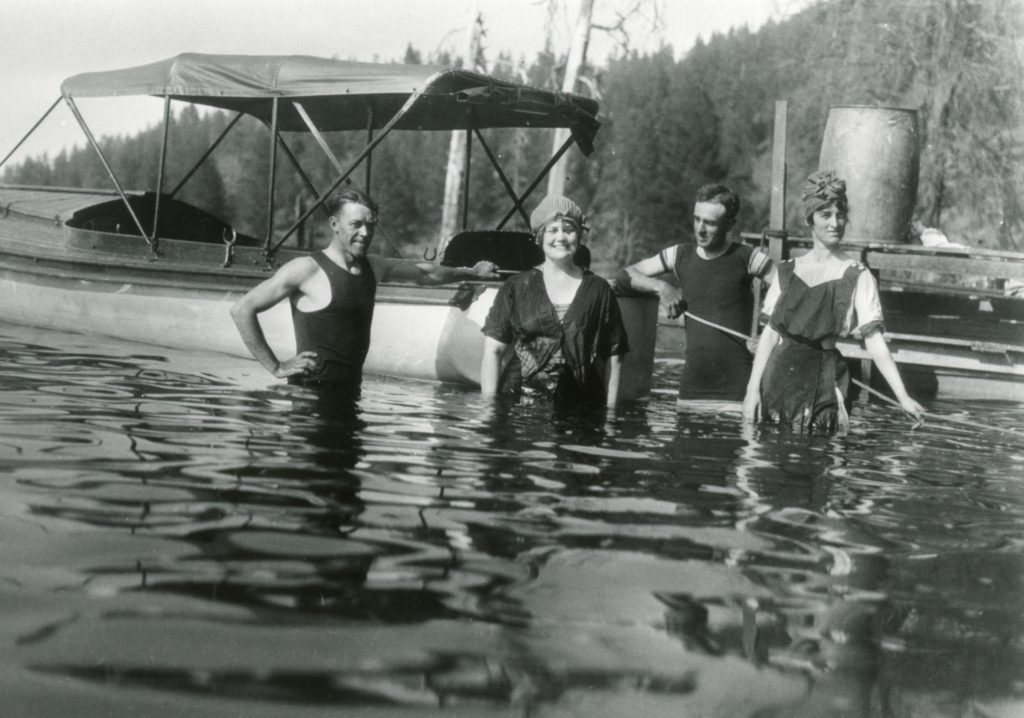
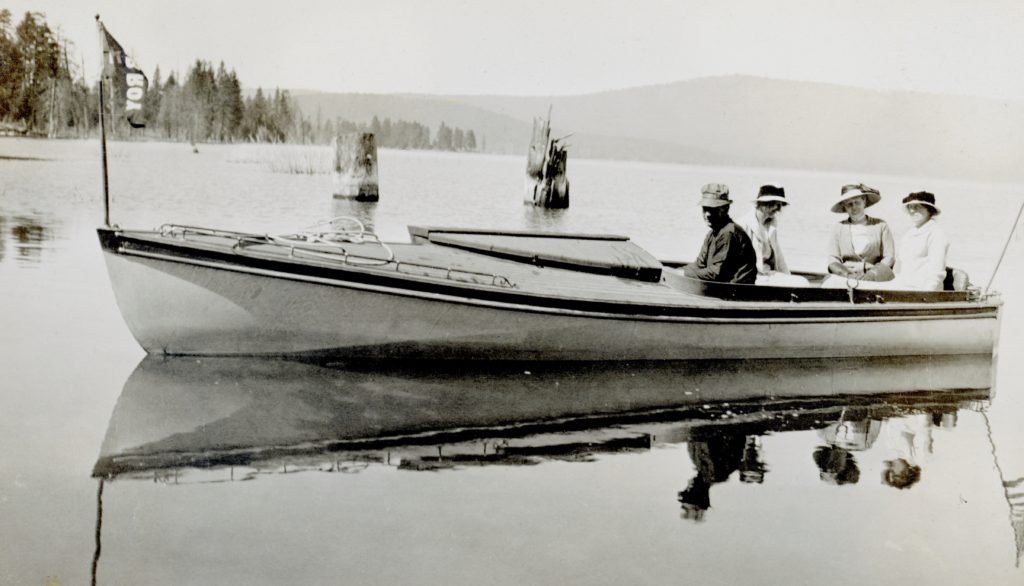
In the summer of 1913, Malvena Gallatin built a summer home on the southeast corner of Eagle Lake. For about the next nine years the extended Gallatin clan spent a lot of time recreating at the lake.
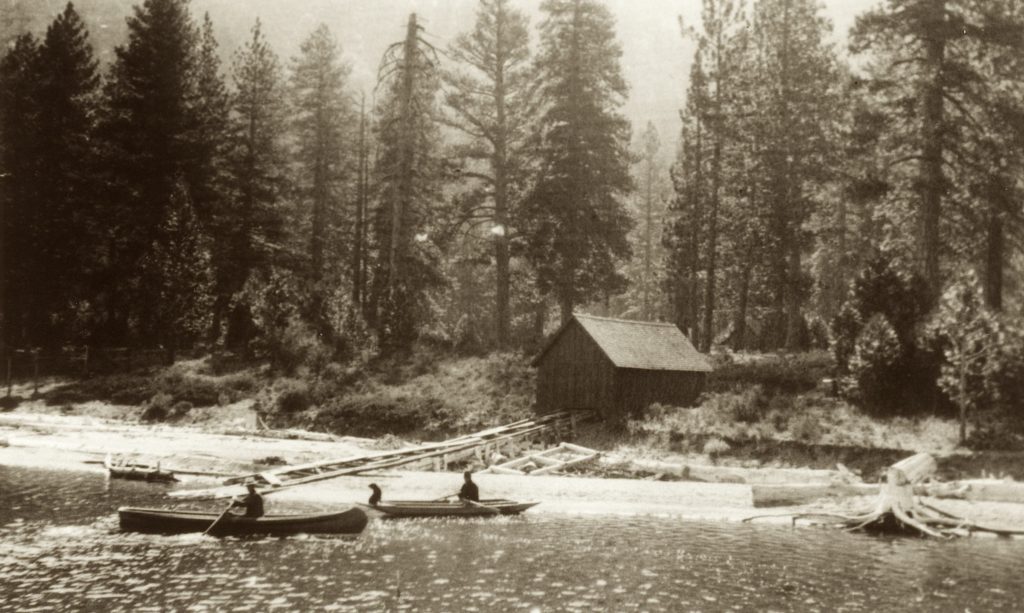
A Gallatin boating scene—Wyn Wachhorst
While there is not much written record about the Gallatin’s recreational activities at the lake, they did leave behind a photographic one. I am very thankful to Wyn Wachhorst, Melvana’s great grandson for sharing them.
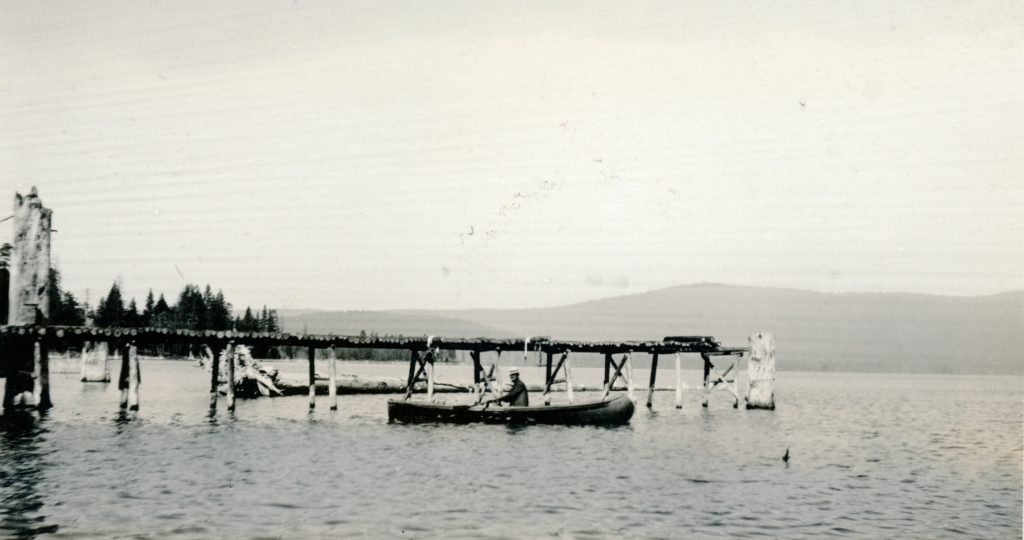
Part of the Gallatin boating fleet at Eagle Lake, 1918. Courtesy of Wyn Wachhorst
The person rowing the boat depicted above is Gallatin Powers. He would go on to establish a well known restaurant in Monterey named Gallatin’s.
Gallatin’s Boat at the south shore.
Enjoy the long holiday weekend and be careful out there. I will probably being staying close to home doing my usual cemetery routines.
In the early 1900s, saw the creation of the national forest reserves, that became the national forest. Each national forest had wide authority on regulating forest use. A classic example occurred in 1920 between the Lassen and Plumas National Forests. In the spring of 1920, the Plumas National Forest made camp fire permits mandatory, while the Lassen did not. The Plumas National Forest issued the following statement:
”The camp fire permit requirement is one move in an intensive campaign conducted by the forest service for the prevention, detection and suppression of fires during the coming summer. Following a succession of years in which the precipitation has been deficient, this season finds the forest service on highly flammable condition and the greatest possible care is imperative in the use of fire in the woods.”
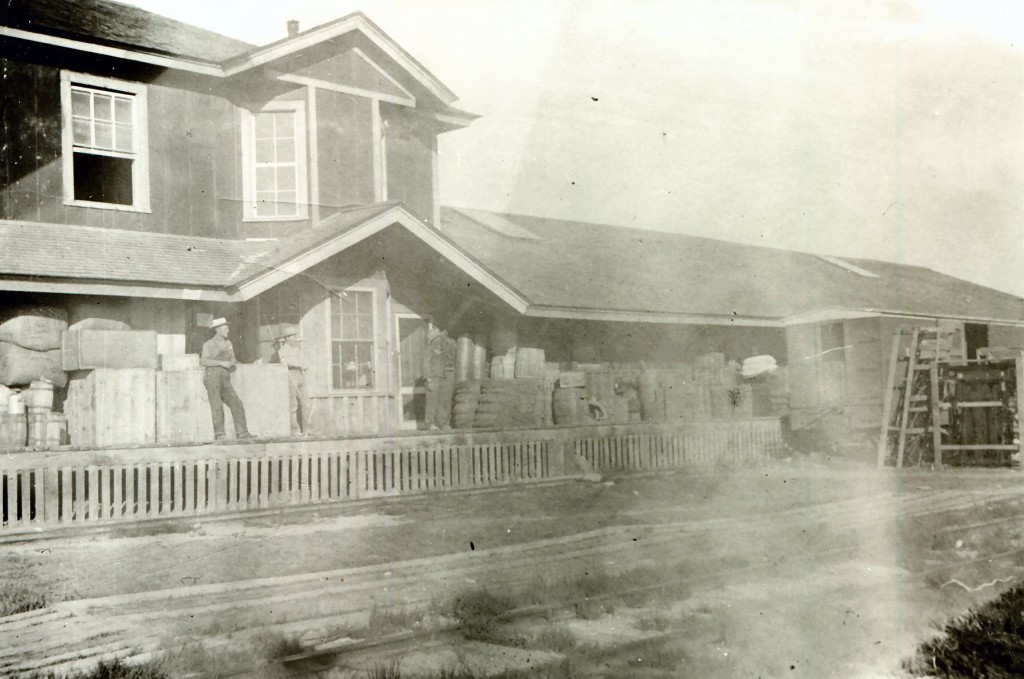
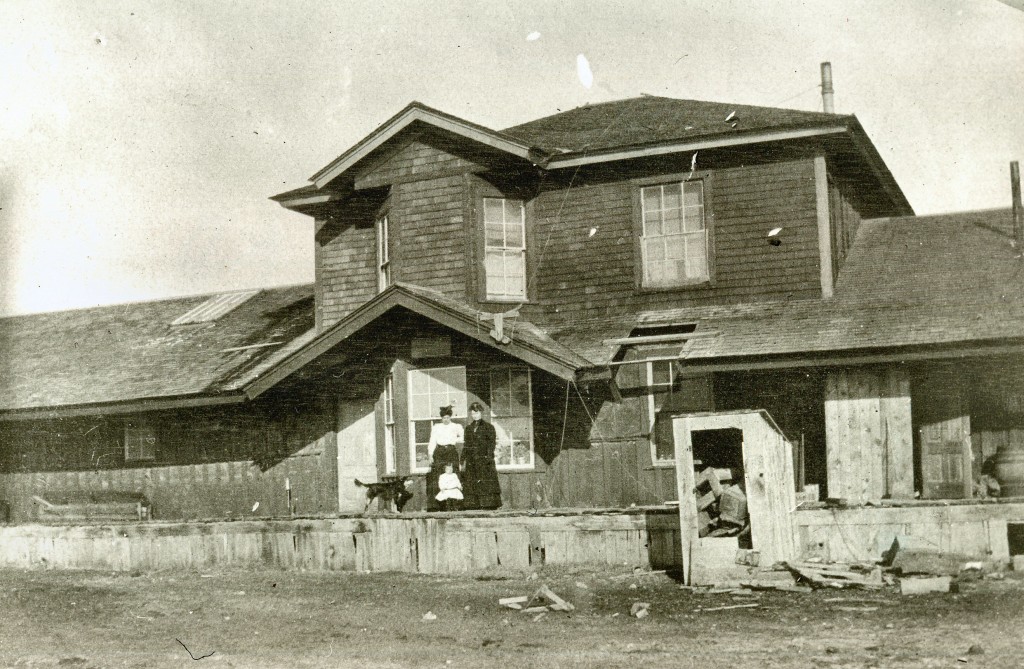
In August 1890, the Nevada-California-Oregon Railroad (NCO) extended its line northward from Onieda, near the Nevada state line for some fifty miles to Lower Hot Springs, later to be renamed Amedee. The region was stunned as the railroad abandoned its original survey on the west side of Honey Lake, to the east side nearly barren of inhabitants. That is a long story, for another time.
What was also stunning was the size of the depot built there. The two-story structure was 168 feet in length, making it one of the largest buildings in Lassen County. The second story provided lodging for railroad employees. The south side was offices and the remainder of the building was for freight storage.
N-C-O Depot at Amedee, circa 1906. Courtesy of Marie Herring Gould
In its early years, it was a busy place. A quarter mile away the NCO constructed stock years. To understand the activity, during a two week period in April 1891 nearly 30,000 head to sheep were at the corrals. After shearing the sheep, 160,000 pounds of wool was shipped, along with forty carloads of cattle.
In 1900, when the railroad extended its line north to the Madeline Plains, Amedee lost its status as a major shipping point. On July 1, 1909 the depot was destroyed by fire, origin unknown.
Doyle & Crowder Mill. Courtesy of Marie Herring Gould
The Long Valley Lumber Company was a perfect example how the lumber industry locally evolved. Instead of meeting local demands, which it did, the production was focused on outside markets.
The company established in 1906, was also known by its owners name Doyle & Crowder. They located their mill in a location known as Cannon Field, near the top of Doyle Grade. On a side note, local folklore had it that the name of Cannon Field was attributed to where John C. Fremont in his 1844 expedition discarded cannon balls, and would eventually at some unknown location abandon a howitzer. In all actuality, it was so named after William Cannon who lived there during the 1870s.
Anyhow, back to the topic at hand. The mill owed its existence to the Western Pacific Railway to supply ties for the construction of that railroad. Once the railroad no longer needed ties, the mill closed in 1910. In December 1917 the mill was sold to the Lassen Lumber & Box Company. That company moved the mill to Susanville, where it was used cut the lumber and timbers for a much larger mill there.
An interesting tidbit. At an Easter picnic in 1946 at the old millsite, Betty Richens found a 1906 $10 gold piece in the old sawdust pile.