Category Archives: History

Local Tales of the Spanish Influenza of 1918-19

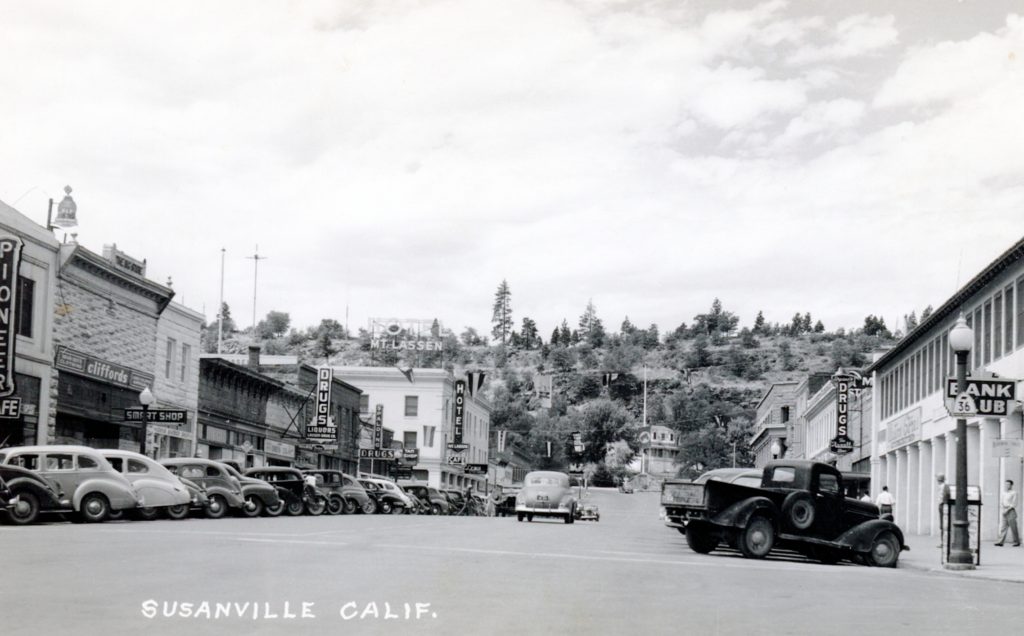
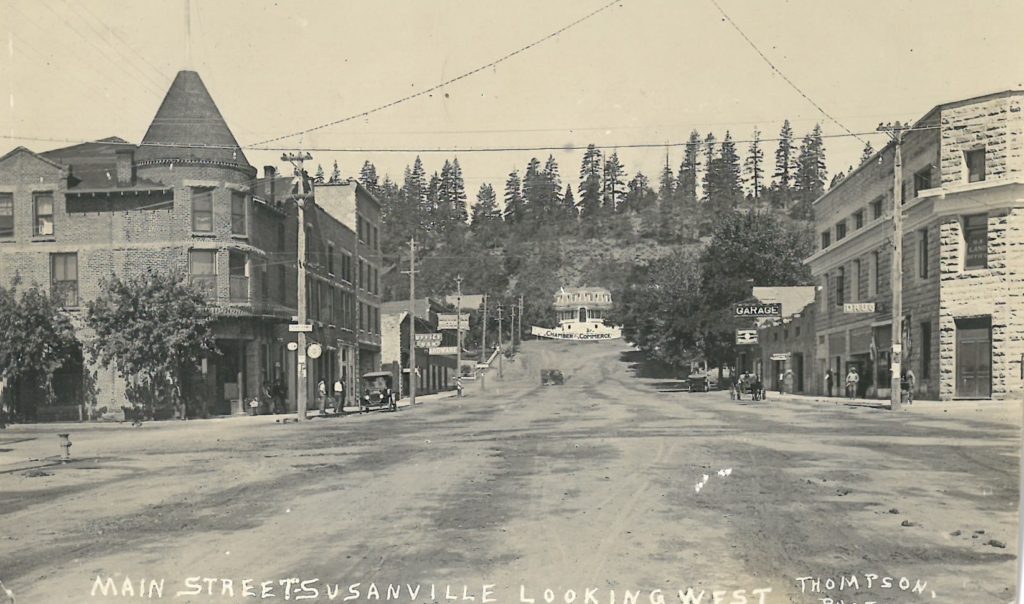
Susanville, 1920

Recently, I came across two snippets of local citizens who experienced the Spanish Flu first hand. The first is from Mary Eloise Sifford Thomas who was born near Susanville in 1892.  She stated that the flu was very bad and that several people in Susanville had died from it. She, as well as her four sisters contracted it and that old fashioned vegetable soup seemed to help. Her father, Tom Sifford, never did come down with the flu. She wrote, “I think chewing tobacco and taking a little whiskey made him immune.”

George McDow, Jr., who was born in Susanville in 1910 wrote, “Our town was not spared from the devastating effects of the nation-wide influenza epidemic. One of the prominent people to succumb to the illness was Lassen County Surveyor, Thad McKay, a good friend of my father. As a precautionary measure the Town Trustees had closed the theater and all the saloons and barred any public gatherings, but only for a short while.” 

Support

Westwood’s Craveneer Plant – Part II

Craveneer moving through the lamination process—-Hank Martinez

When it was announced that Fruit Grower’s Westwood facility would become its Craveneer plant it came as a great relief to the employees there that the operations would continue. It was after all a $200,000 investment.

Machinery installation was expected to take four to six months and production to start by July 1954. Unexpected problems caused delays, however, and it was not until November that the first shipments of Craveneer were sent. It is interesting Fruit Growers box factories at Hilt and Westwood continued to operate . In addition, Fruit Growers even contracted for a supply of cardboard cartons. The growers now had their choice—wood, cardboard or Craveneer.

Cutting machine clipping the finished Craveneer into sheets—-Hank Martinez

In the meantime, Fruit Growers had not ruled out a Burney plant. In early 1955 they began to budget a new plant there that would cost $9,450,000. To make the Burney plant flexible besides a Craveneer plant, it would also have a plywood plant.

Changes on the horizon were swift. In the summer of 1955, it was announced by Sunkist  that the cardboard box, was the container of choice. Thus, no longer a need for wooden boxes or Craveneer. On June 18, 1955 the Westwood box factory closed. On August 25, 1955 the Craveneer plant was closed and liquidated, which the California Barrel Company of Arcata purchased the Craveneer machinery. It should be noted that the box factory at Hilt remained in operation to manufacture picking boxes.

Subscribe

Your Tuesday Tidbit—Coppervale

Coppervale, courtesy of Lassen College

In the early 1930s, professional ski jumping events were all the rage. Westwood’s Paul Bunyan Ski Club built a ski jump on Fredonyer and held several contests. In November 1937, Bert Bain operator of the popular road house The Meadows built an amateur ski jump across the highway from his establishment. In time it evolved into today’s Coppervale Ski Area operated by Lassen Community College.

Tim

Westwood’s Craveneer Plant – Part I

Steaming logs in preparation for peeling into Craveneer—-Hank Martinez

The Chicago Mill & Lumber Company developed the Craveneer process during World War II in their Tallulah, Louisiana laboratory. Experimenting with Mississippi delta oaks, which had no commercial value, Chicago Mill & Lumber Company discovered an adhesive that would glue 42 pound Kraft paper to the green veneer wood with a continuous roller process. One advantage of the process was the small amount of shrinkage when it dried. Conventional rotary cut veneer shrank up to 10 percent; Craveneer shrank only 1 1/2 percent. The Kraft paper also hid defects such as knots. And the exterior could be treated with a wax emulsion that acted as a mold inhibitor, a real plus in a citrus packinghouse.

The Globe DeBarker preparing logs for peeling into Craveneer—-Hank Martinez

In 1953, Fruit Growers Supply Company purchased the necessary machinery from Chicago Mill & Lumber Company and became the sole licensed manufacturer of Craveneer for the West Coast.

The big question facing Fruit Growers was where to install the plant—convert the box factory at Hilt or build a new sawmill and Craveneer plant at Burney? On November 9, 1953 it was decided to convert the veneer plant at Westwood into a Craveneer plant, yet Burney was still a future option.

Donate/Subscribe

The Craveneer Box

A craveneer box, which resembles the standard wooden box—-FGSCo.

For whatever reasons the California citrus growers did embrace the cardboard of the late 1940s, like vegetable produce growers did. Fruit Growers were in quandary with diminishing pine reserves to manufacture the citrus grower’s demand for wooden boxes.

Fruit Growers came across a patented material known as Craveneer. It was a variation of veneer—wherein a log is peeled to make a thin slice of wood, instead of being sawn into a board. On the surface Craveneer appeared to make the ideal container. It utilized white fir, of which Fruit Growers had an abundant supply. It cost less to manufacture than the wooden box, yet it was more durable than the cardboard carton.

In 1952, Fruit Growers decided to experiment with the Craveneer and more about in the future.

Support

Where Are We — Termo

Termo Store, October 8, 2020

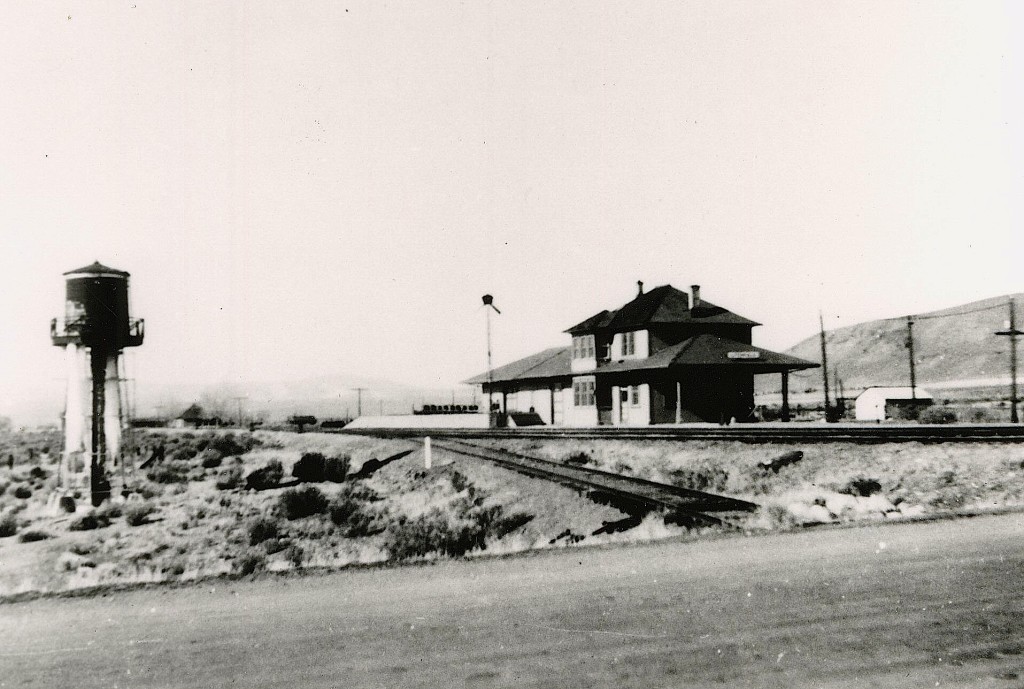
The town of Termo certainly has seen better days. The town came to life when the NCO Railroad extended its line north from Amedee to the Madeline Plains. In June 1900 the railroad named its new terminus Termo, meaning the end and it certainly looks like that now.

The landmark Termo Store.

One of the fatal blows to Termo came in January 1989 when postal officials from Reno inspected the premises of the Termo Post Office, which they felt was a hazard to the postmaster and the patrons. On February 2, 1989 the Termo Post Office ceased to exist.

Don’t forget to look at the Subscribe feature.

Lassen County Mines, 1892

Golden Eagle Mine, Hayden Hill, 1894. Courtesy of Del & Diane Poole

Just as you can not believe everything on the internet, its true with various published accounts in all forms—past and present. The following article about Lassen County mines appeared in the San Francisco Chronicle, May 24, 1892.  Two items struck me, one which is obvious the mines of Hayden Hill were located on a spur of the Sierra Nevada Mountain, which is not the case. The other which was unusual was the mining activity at Eagle Lake which usually is never mentioned.

”Lassen County, bordering on one of the best mining counties of California, being separated from Plumas county by a spur of the Sierra Nevada, has so far developed little mineral wealth, a few claims having been prospected on Diamond Mountain, near Susanville, the county seat, have yielded some gold. Veins of silver and gold ores have also been found on the southeast side of Eagle Lake, but mining as a regular business has only been prosecuted in the extreme north of the county, sixty miles north of Susanville and nine miles south of Modoc county line in what is known as the Hayden Hill Mining District. This hill, named after one of the first locators who is buried there, is one of the highest points of a spur running out of the Eastern slope of the Sierra Nevada; its altitude is given at 7500 feet. The mines were discovered nearly twenty years ago, since which time they have been more or less continuously worked yielding to the world’s gold supply. a little over $1,000,000.”

Subscribe

Logan Springs, Lassen County

Logan Springs, October 8, 2020

Logan Springs is located in the Pine Creek drainage west of Eagle Lake and north of Pine Creek Valley, not far from the site of former Fruit Growers Supply Company logging Camp 10. During the late 1800s and early 1900s this region was used for summer range for the sheep outfits, mainly from Tehama County.

The springs and nearby mountain were named for Griffin Logan (1842-1885), an African American, who was the foreman for J.S. Cone, a large Tehama County livestock operator. The springs are noted for its substantial aspen grove. However, on my visit last fall, we had just missed the prime fall foilage.

Don’t forget to look at the Subscribe feature.

Walking Tours

One of the panels on the LMUD building, part of a forthcoming mural tour. The building depicted was the home of the Telephone Company . December 26, 2016

Note: This was originally scheduled for last August, then moved to September, and now bumped to January. That just the kind of year 2020 was. Anyhow, before you know it, winter will be in the rear view mirror. I thought this would be a good opportunity to solicit as what might work best for everyone, other kinds of tours, etc.

It is my goal, if everything goes accordingly to provide some guided walking tours. While in past posts I have the gave information of the historic “mobile homes” of Susanville, it is not the same as in person, where there is interaction. In addition, I will be able to point out other features of interest. Another one would be a mural tour, which would also highlight information about the buildings they were painted on.

709 Mill Street, October 12, 2017

The brick building above, while it was not mobile, there is an interesting story where the bricks came from.

If any one has preferences such as a weekday evening or a Saturday morning, please let me know.

Subscribe