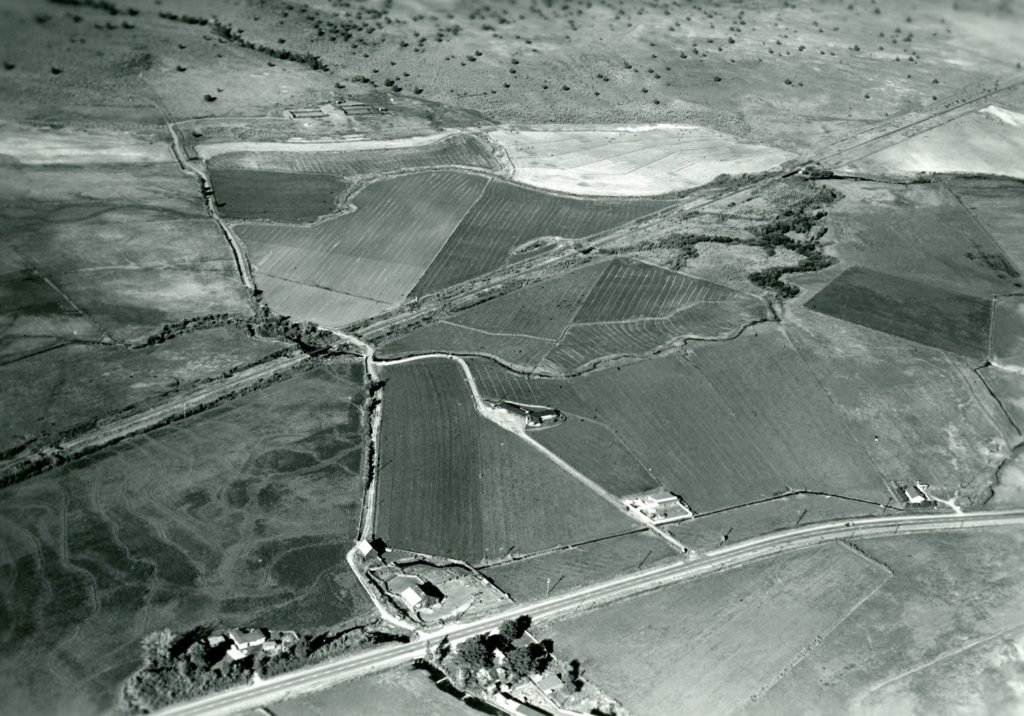
Forest service aerial of the south shore of Eagle Lake taken on 11/9/1941 from Flight No. 44—Hank Martinez
In the fall of 1941, the Lassen National Forest implemented the use of aerial photography as a tool to manage the forest’s resources. However, while the aerial mapping was completed, the outbreak of World War II suspended the work.
In February 1946, the project was brought back to life, to utilize the aerial photography taken five years ago. The forest service was pleased with the program. One of the many benefits, was that forest service personnel could conduct other kinds of field work than surveying during the summer. In the winter months, the aerials provided work for staff to plot out and design new roads, etc.
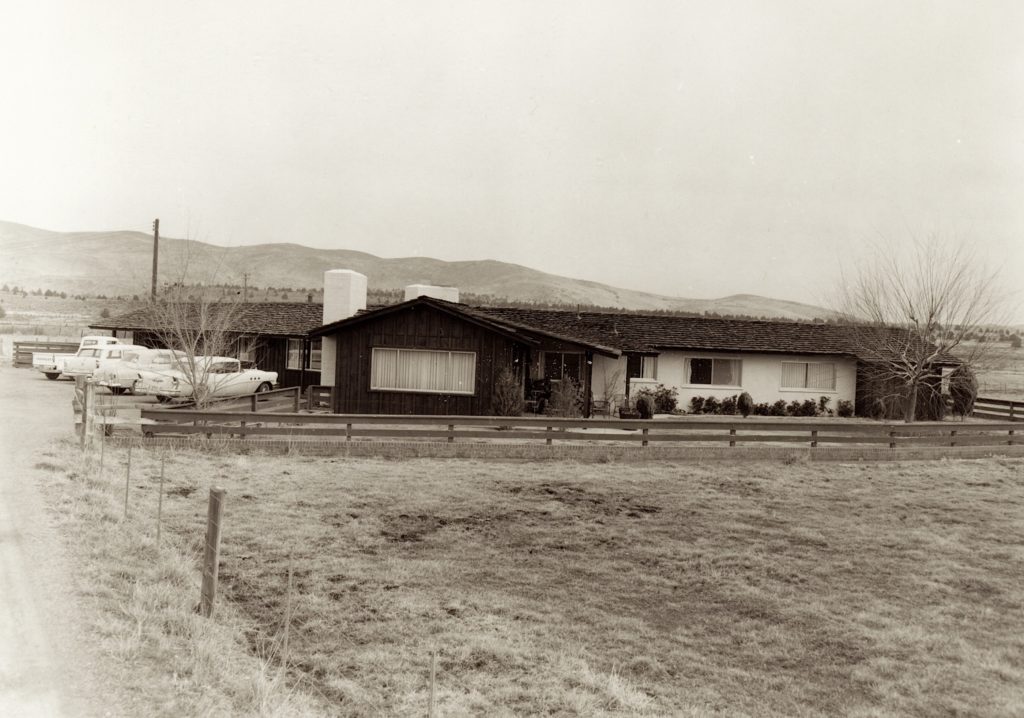
Originally known as the Susan River Ranch was located on Johnstonville Road a few miles east of Susanville. It was originally a part of the Bangham Ranch. In 1948 the property was acquired by Dale Soule. Construction of the house began in 1950 and over the course of time additional buildings were constructed. However, in time the property was too much for the Soules who had other business interests in Susanville to tend to. The next owner was Lawrence Holland and he owned until his death in 1969.
Susan River Ranch, 1958. Courtesy of Wendell V. Loughead
In 1973, Ray and Elberta Fraley purchased the ranch, who had spent many years in the Standish district. It was ideal for Ray as it just the perfect size for a semi-retirement ranch to raise his registered herd of Red Angus cattle. After Ray’s passing in 1979, Elberta sold the place. Its been through a number of owners over the years, and is no longer referred to as the Susan River Ranch.
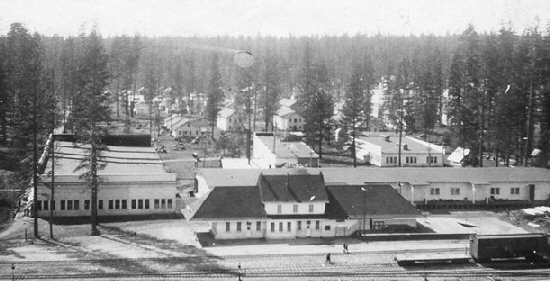
In 1912, witnessed the Red River Lumber Company’s westward expansion from Minnesota to California. The founder, T.B. Walker, turned the enterprise over to his four sons. The site selected at Mountain Meadows, Lassen County initially had no name. Rather peculiar in my thinking that a company is going to spend $3 million to build a mill and company town, and it does not even have name.
Fletcher Walker was in charge of the new town and would be its resident manager. On October 3, 1912 he wrote to the Red River board, i.e., his brother’s soliciting a name. In his letter he wrote:
“I have thought over the name TRRLCO, first letter each word and the abbreviation of company, and talked it over with Clinton and Della [Walker]. They are not very enthusiastic over the name but said it seems like a good business name and sounded pretty good. I have written you on several occasions mentioning the name, but up to present time have not had a very enthusiastic adopting of the name. It seems that unless someone else can come through with a better name that we should officially adopt it.”
There was a sense of urgency as they needed a name to submit an application to the postal authorities. Several names were bounced around including Fletcher’s favorite, “City of Trees.” That, too, was rejected, and the name of Westwood was decided, though it is not known who coined it.
In November 1931 a Lassen County Farm Bureau committee was formed to see how to make cuts to the expenses of Lassen County government. One of their first recommendations was to make the Lassen County Assessor personally inspect every tax payers property to make sure nothing escaped assessment.
It was education they really set their sights on. J.H. Hunter of Westwood stated that 32 cents out of every state dollar went to education. It was Hunter’s opinion that colleges were turning out so many yearly graduates who could not find employment.
J.A. Pardee chimed in with his two-cents worth. He thought community colleges were a waste of time and money. Its was Pardee’s thought that a grammar and high school education was more than sufficient and that higher education was not necessary. Their consensus, “We are spending hundreds on ten-cent kids.”
During the late 1950s, the Lassen Advocate held a contest for readers to ascertain a local ranch taken from an aerial view. This particular photograph was not featured, but the first person to identify will receive my 2022 calendar, due out later this month.
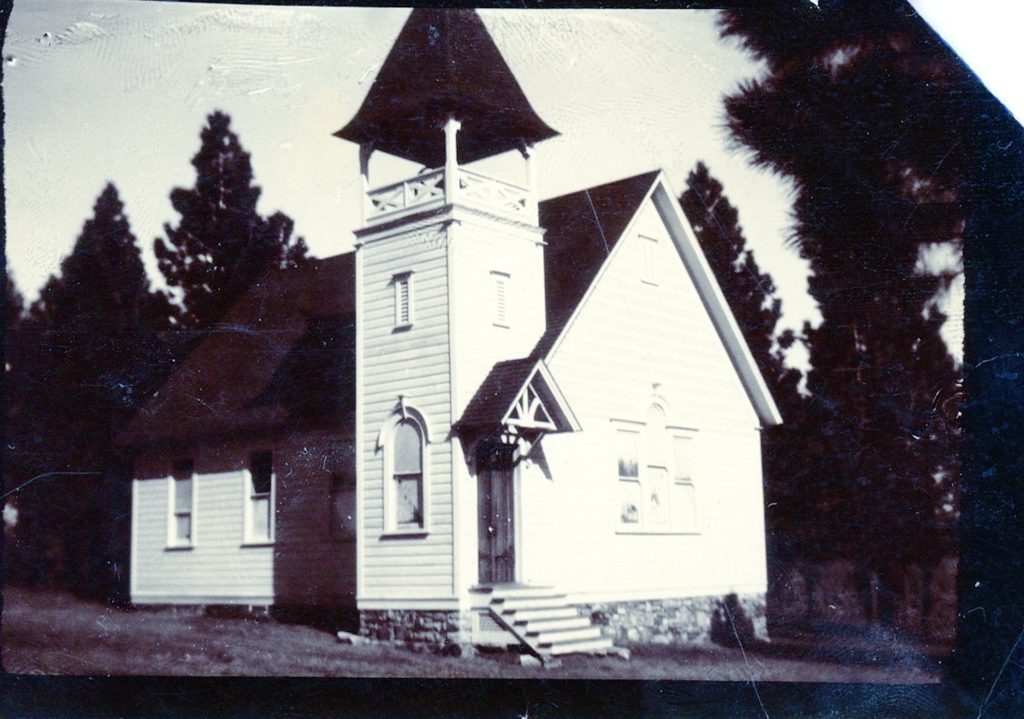
The Janesville Methodist Church had a very short time span, of just thirty years. By 1928, it had been abandoned. In January 1946, the Trustees of the Susanville Methodist Church, who had inherited the old church put it up for sale. The demand for buildings in the region was extremely high due to the conclusion of World War II. The trustees asked for bids to be submitted by February 4, 1946. Unfortunately, I have not been able to ascertain what transpired since then.
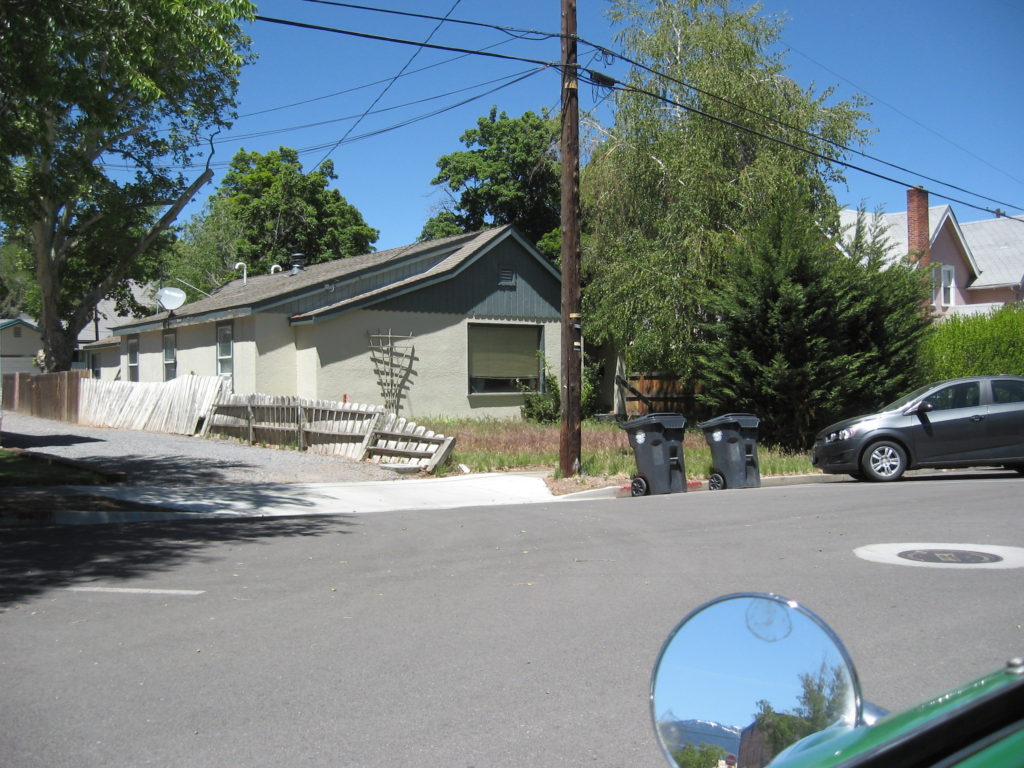
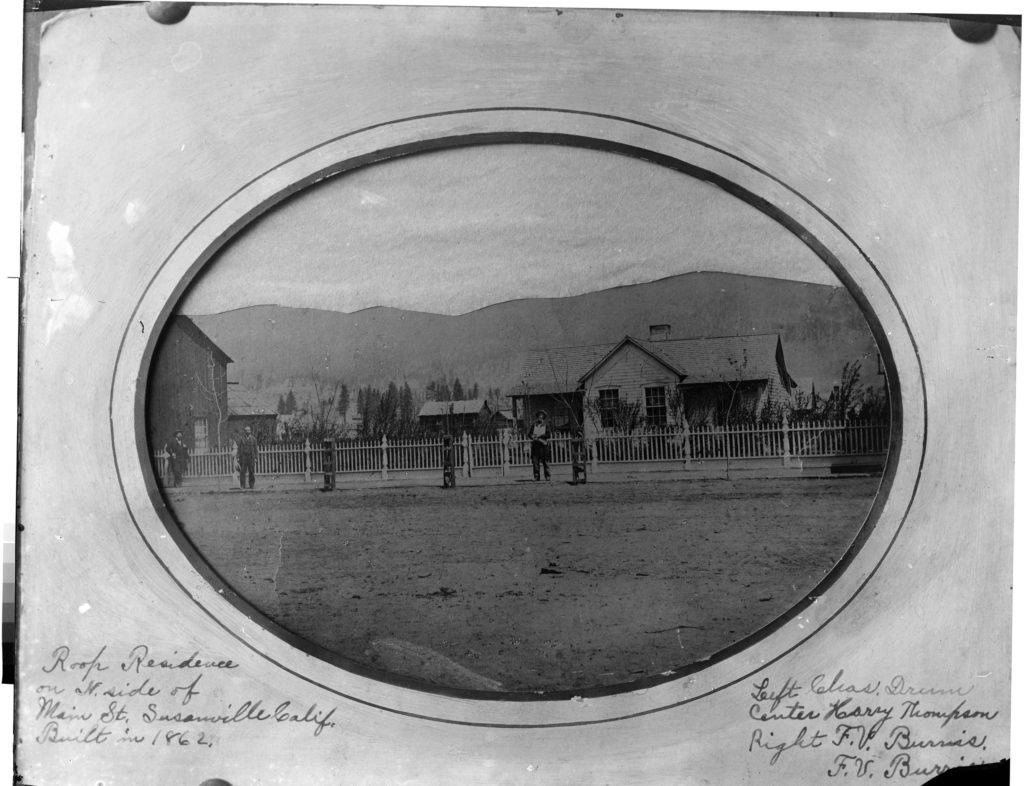
In 1862, Harry Thompson who operated the local stone quarry in Susanville purchased three lots on the north side of Main Street between Lassen and Gay Streets from Isaac Roop. Shortly, thereafter he built a house there. The following year he defaulted on the payments to Roop and Roop took possession of the house and moved in. He would reside there until his death in 1869. Later his daughter and son-in-law, Alex and Susan Arnold resided with him. The Arnolds remained there until 1885 when they sold the house, and built a new home on Weatherlow Street. The Roop house was then moved to its present location at 140 North Lassen Street where it remains to this day. In 1935, Ardell Torrey completely renovated the house.
The house as it originally appeared on Main Street—Eastman Collections, UC Davis
In 1853, Congress passed an Act granting the State of California school lands, in effort to support public education. Every Section 16 and 36 in every Township was granted to the State of California as school sections. These properties did not require a federal land patent to be acquired, just simple fee to the State. It is interesting that 19 California counties were exempt. During the early years, the State sold these lands to prospective buyers at $1.25 per acre. When school lands are sold today, those funds are deposited into the State Teacher’s Retirement Fund. In Lassen County, there remains a high concentration of school lands in the eastern portion of the Honey Lake Valley.
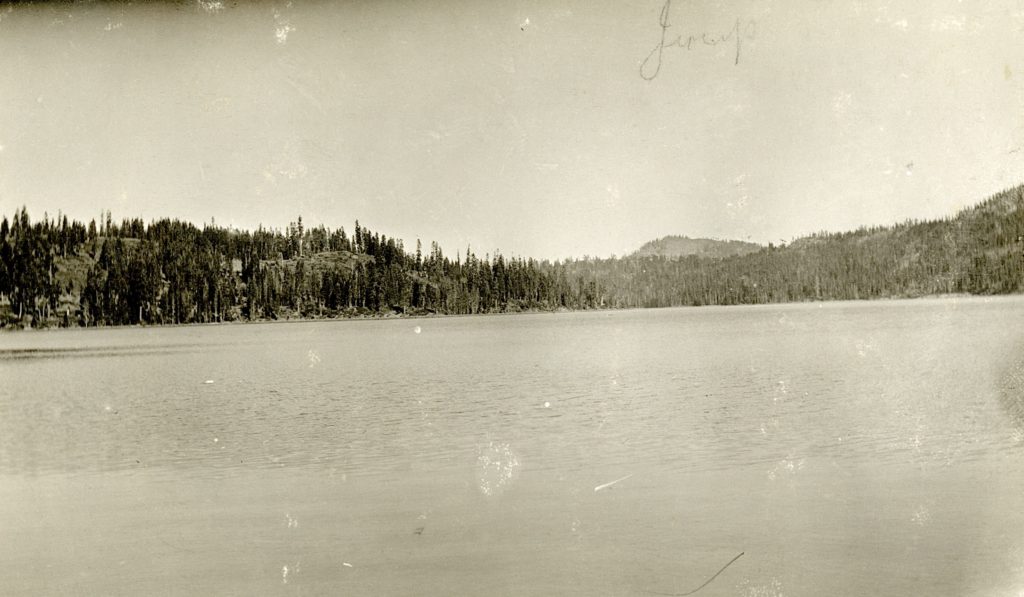
Juniper Lake, located in Lassen Volcanic National Park fell under the jurisdiction of the State as a school land section. In 1892, San Francisco resident, J.P. Frenna purchased 475 acres that included Juniper Lake from the State for $1.25 per acre.
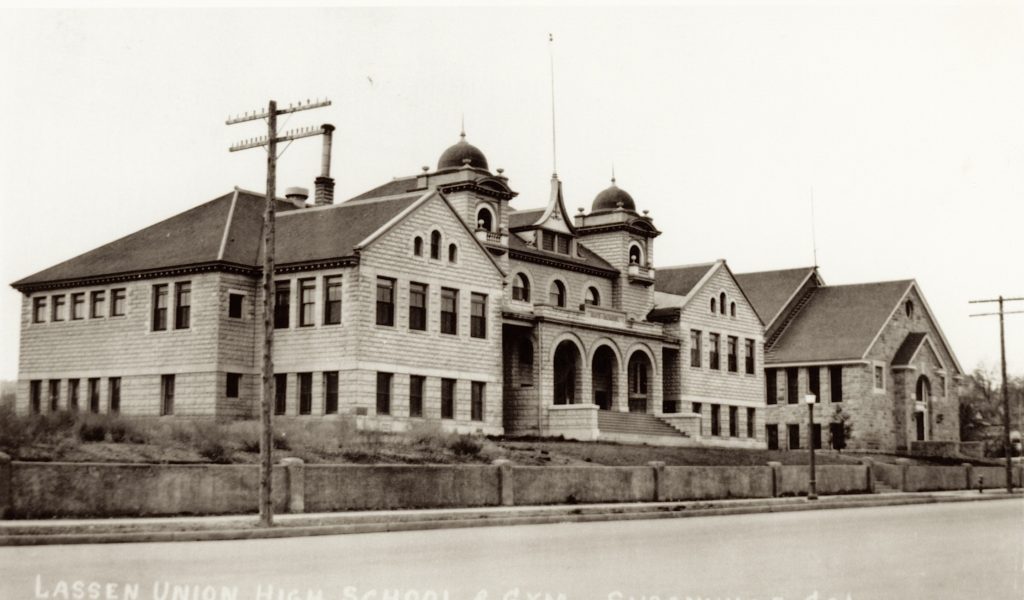
The May 1907 meeting of the Lassen County Board of Supervisors was a lively one. The hot topic was a new county jail and courthouse. The board received numerous petitions from throughout the county. One common thread that residents was for better roads. Many thought the county should be investing in a rock crusher and replacing wooden bridges with steel. There was, of course, resentment from the public who resided far Susanville over the cost of the newly established Lassen County High School.
The petitions from Bieber and Standish had another odd twist. Both petitions urged the board that the county seat be relocated. It was their opinion that Standish be made the county seat on the grounds it was more centrally located. The board took no action on these topics. In addition, it would be some time before the board would even bring up the topic of a new jail and courthouse.
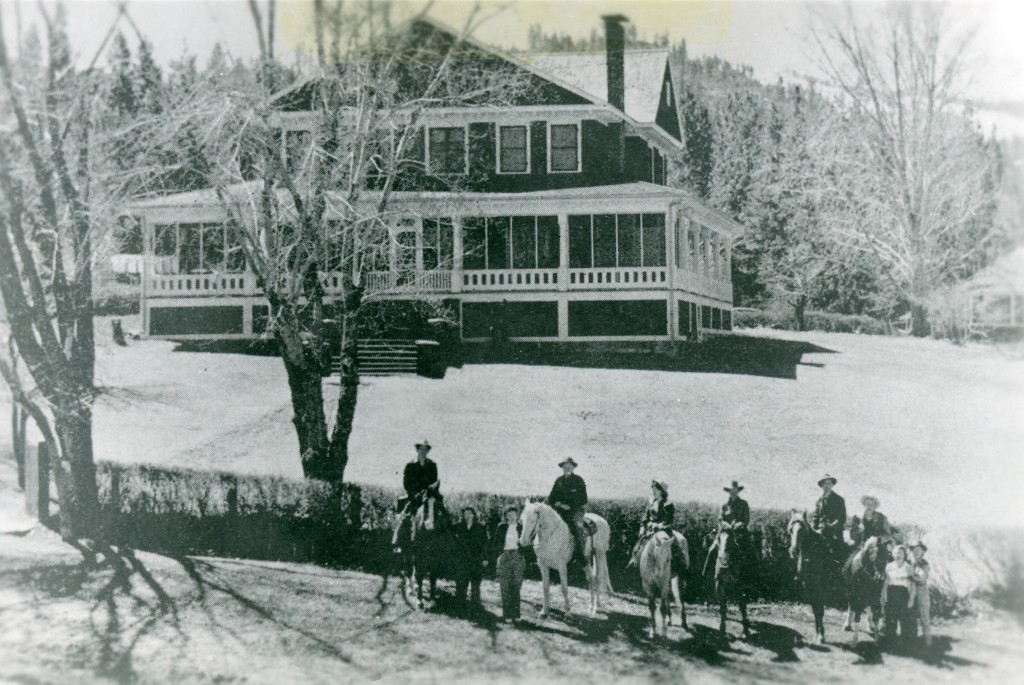
The Wingfield property as it appeared in the 1950s.
George Wingfield’s original summer home had many reincarnations. In 1946, three Carson City investors acquired the property eight miles south of Susanville and known to many as Ellena’s Mountain Meadow Ranch. They incorporated as the Diamond Mountain Guest Ranch. They envisioned transforming it into another New Mexico Vermejo Club or Colorado’s Rio Blanco Ranch.
J.E. “Jack” Hauskins was hired as manager/promoter. It was their original intent to offer 150 one-acre homesites on the property under a 49-year lease agreement. The first 50 sites were offered at $2,000 each, approximately $25,000 today, with an annual fee of $20 for maintenance. They also proposed to build an elaborate clubhouse just east of the original Wingfield home, where numerous events would be held.
However, in the spring of 1947, the future of the guest ranch was in jeopardy. At the time, Hauskins was arrested for embezzlement. In addition, he was accused of not paying employees. In late May, the criminal charges were dropped, but guest ranch never recovered from its tarnished image.