Category Archives: History

Congressman Raker’s Funeral


John Edward Raker was born in Illinois in 1863, at the age of 10, came to Lassen County with his parents. In 1885, he passed the bar examine, and moved to Alturas to practice law.  He eventually went into partnership with his father-in-law, E.V. Spencer. Raker went on to being elected Modoc County District Attorney and then Modoc County Superior Court Judge. In 1910 he decided to run for the California’s First  Congressional District seat  and won by a slim margin of 141 votes. Raker continued to serve as Congressman until his death in 1926.

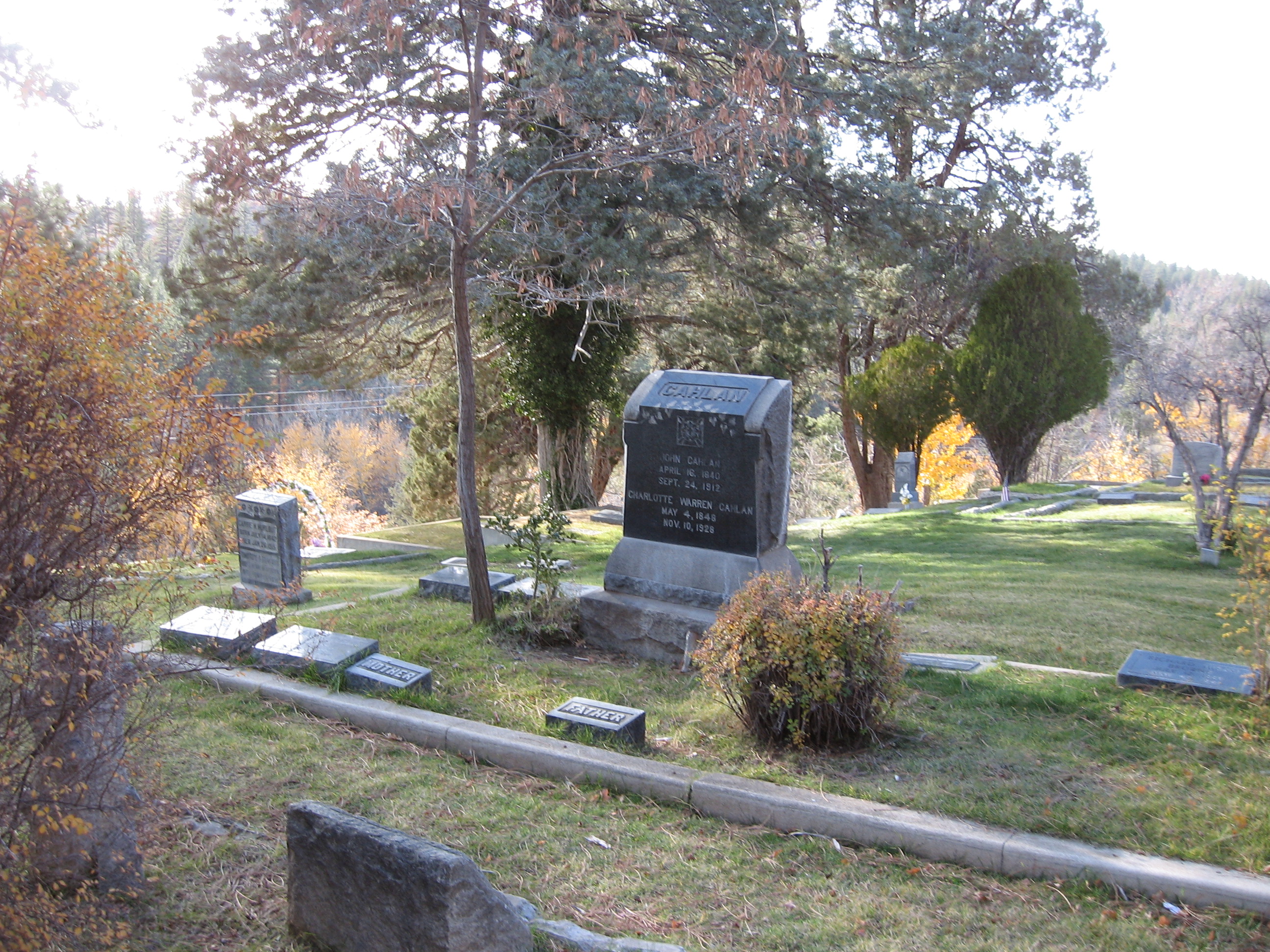
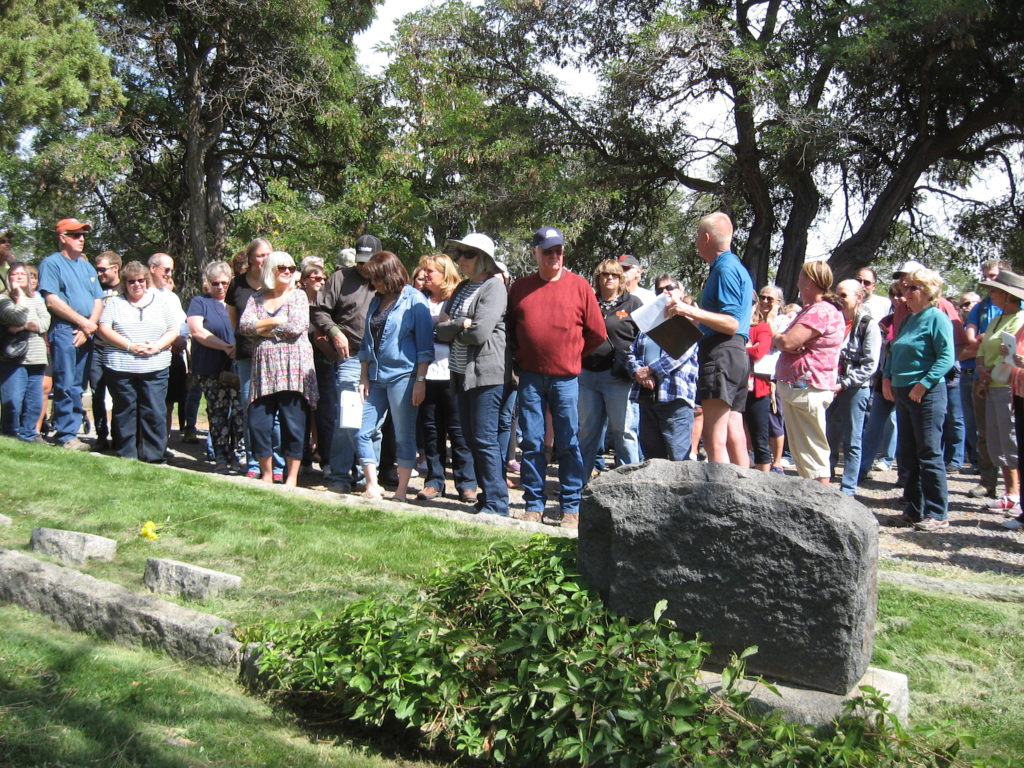
Raker was buried in the Spencer family plot in Susanville. The services were held on Sunday, January 31, 1926–an impressive. affair. The body arrived by train at noon at Susanville, which also consisted of a number of Congressmen, along with a contingent of forty-seven people from Alturas.

As the Lassen Mail noted: “The procession was an imposing one, as it slowly and solemnly wended its way along the slush covered streets. When the first automobile reached the Methodist Church, the line was still moving at the depot. The line of march was along Richmond Road to Weatherlow, north on Weatherlow to Main, up Main to Lassen and thence to the church.”

The night before the region was hit with a heavy snowstorm, making the roads a big slushy mess. Twenty-five members of McKea Post, American Legion, attended but it took them two and half hours to make the trip from Westwood. Had the weather been more favorable there would have been an even larger turnout.

Tim

Identify Those Photographs

Lake Almanor Spillway, August 1923–C.R. Caudle

This is a good time as any, in the middle of winter, to label those old print photographs that you may have. It is sad and some what tragic to come across a box of old photographs given to me, only to find that so many are not identified.

Then, of course, there is the other extreme. When I received the C.R. Caudle Collection I was quite fortunate, since so many were labeled. Maybe because he was a civil engineer, might have something to do with it. Some of his photographs he wrote in great detail on the back of photographs. Today’s featured photograph is a perfect example. Caudle wrote: ”Overflow spillway for Lake Almanor, Plumas County, Calif. One of the water storage reservoirs of the Great Western Power Company, taken Aug. 1923 by R.A. Warden, when C.R. Caudle and Warden were on their way to visit V.S. Barber at the Sunnyside Gold Placer Mine.”

Tim

Where Are We?

Some readers may recall in October, I used an aerial of the Susan River Ranch. At that time, I mentioned the Lassen Advocate ran a weekly contest using aerial images of ranches. The above photograph was not part of that series. The ranch remained in the family for over a century. Very seasoned residents have fond memories of one its crops—watermelons. Most all of the buildings are still there with the exception of the barn.

Tim

Leon Bly’s Original Intent

Leon Bly
Leon Bly sounding Eagle Lake. Courtesy of Wyn Wachhorst

There were all kinds of social groups of days gone by, prior the advent to television and later the internet. The Lakeside Literary Club was a group of women comprised of the Tule District a region that encompassed the lower Susan River before it enters Honey Lake.

At the May 1922 meeting of the Lakeside Literary Club, Mrs. J.T. Barnes and Mrs. Erma Haley presented a lengthy report on the Eagle Lake Irrigation Project that was currently under construction. According, to the two women, Bly’s original plans were rather dramatic. Below is an excerpt:

”While spending a vacation at the summer home of the Gallatins at Eagle Lake, Mr. Leon Bly, an engineer from San Francisco, became interested in the possibilities of making some use of this large body of water. Thirsty land might be found and the ever increasing demand for electric power could be partially applied. He planned to take the water to the Sacramento Valley by means of tunnels connecting with the natural channel of the Feather River.”

The women noted that there were too many obstacles to overcome and Bly turned his sights on the Honey Lake Valley. While Bly’s initial proposal sounds farfetched, as late as the 1960s there were plans to divert Susan River into the Feather River drainage. That would be very simple to do.

Support

The Perils of Research

Longville, Humbug Valley—Plumas County Museum

January has been an interesting month, especially research wise. While working on a story about noted archaeologist Francis Riddell, I came across something he compiled that escaped my attention. It was account of the Papoose Massacre of 1866 that was relayed to him by Kitty Joaquin. There are three versions, which will be explored in the future.

While doing some research on Marion May Hapgood, born 1902 at Likely (her parents owned the South Fork Hotel), I came across an article about how Stover Mountain was in eruption at the same time as Lassen Peak. Then I was re-reading Marion’s grandfather Eber Bangham’s 1906 biography. This has the earliest history of Granite Creek Station. Then, in turn, I remembered that Thomas Bare who owned the nearby Deep Hole Station, also owned the meadow at Granite Creek. More about that in the future.

In the course of all of this, the Milford Cemetery pops up. According to Asa Fairfield, Mrs. Mary Harris was the first person buried there in 1867. However, in that cemetery is a marker for Philip Wales who died on June 6, 1864. Both Wales and Jacob Boody were found dead in proximity of each other, and case was never solved., Again more on that in the future.

One topic, has a way of mushrooming into several, and its an interesting journey.

Tim

Amedee’s Southern Pacific Depot

Southern Pacific Depot, Amedee, 1912–Marie Gould

In 1912, when the Southern Pacific Railroad began construction of its Fernley & Lassen branch line from Fernley to Westwood Junction, if graced the north side of Amedee. The Southern Pacific built a very small depot at Amedee, it measured 64 by 80 feet, which included the loading platform. Southern Pacific would build a much larger facility at Wendel, only five miles away, so there was no need for a large depot at Amedee. How long the depot operated, is not clear, though it does show on a 1919 timetable.  What became of it, I am not sure. There are some unsubstantiated claims that it was moved to Wendel and was incorporated with the depot there.

Subscribe

The Sagebrush Aristocrats

David Knoch. Courtesy of Lassen Lodge #149 F&AM

A long time ago I had a research request from the Huntington Library. It had to do with wealth, and they wanted to know everyone in Lassen County who had assessed value of assets of over $20,000 in 1880.  So off to the Assessor’s Office I go to examine the Assessment Roll for Lassen County for 1880.

There were six individuals. At the top of the list was Susanville merchant David Knoch at $30, 167. Knoch who came there in 1864, was not only a successful at his store, he found another lucrative venture—loaning money. It should be noted, there were no banks in the area, so it did not take long for people to learn who had money to lend. Knoch made sure there was collateral involved, usually in the form of a mortgage to real property.  Another Susanville merchant on the list was William Greehn, who operated in the same manner as Knoch.

The other big players were the ranching community. These consisted of James Byers of the Honey Lake Valley, Andrew Reavis of Big/Dixie Valleys and Jacob McKissick of Long Valley.

McKissick Ranch, Long Valley,1903. Courtesy of PhilipS. Hall

McKissick’s wealth was much larger than reported for Lassen County. McKissick had extensive land holdings not only throughout Lassen County, but Washoe County. McKissick’s owned such places in the latter as an obscure place in far northern Washoe such as Hole in the Ground, to well known Reno landmark known today as Rancho San Rafael Park.

Support

Susanville Street Signs & Mail Delivery

Lassen County Courthouse, 1926

While I have addressed this topic before, it will be new to others. However, I recently acquired the above photograph and this earliest dated photograph where a street sign appears at the intersection of Lassen and Mill Streets.

By the early 1920s, with a tremendous increase in population, the Susanville Post Office had a lot of work to do. There being no home delivery of mail, the post office would get swamped for people picking up their mail. To institute home mail delivery was not as simple as it seemed.

On April 16, 1923 the Susanville City Council passed an ordinance for the numbering of houses and businesses, too. This was the first step towards residential mail delivery. It was a slow process, that took two years. In November 1925, Postmaster C.D. Mathews ordered street signs to be installed to assist the mail carriers. For many residents it was not only a novelty, but not everyone knew of the name of the street they resided on.

On December 1, 1925, residential mail delivery was instituted with three carriers for the greater Susanville area.

Subscribe


An Interesting Observation—Merrill’s Enterprise

A partial view of Eagle Lake, 1921—Lola L. Tanner

The following appeared in the Candelaria, Nevada newspaper about Capt. C.A. Merrill’s undertaking at Eagle Lake. (For those not familiar with Candelaria  was a mining town between Hawthorne and Tonopah.

Not only did Merrill plan to tap Eagle Lake for irrigation, but he planned for a major manufacturing city at Belfast. With the tunnel, along flumes, it was the intent to log the timber at Eagle Lake, float it across to the tunnel, where eventually using Willow Creek and a series of flumes, the logs would then be manufactured at Belfast. The enterprise was widely followed by the press in California and Nevada.

True Fissure, March 25, 1882:  “The Eagle Lake Tunnel. The tunnel to tap Eagle Lake is being advanced at the of thirty-five feet per week. It will be about a mile and half long, and it is expected that it will be completed next fall. It will furnish water power for running several sawmills and finally will irrigate a great area of now barren sagebrush land in Honey Lake Valley. The tapping of the lake is an experiment that is being watched with great interest everywhere on the coast. Should it prove as successful as is anticipated, it will be followed by a similar tapping of many lakes on both sides of the Sierra for mining, timbering and other purposes.”

Finally, a big thank you to Bill Johnson for sending along this article.

Donate

A Tuesday Tidbit – Ice Harvesting

Ice Harvesting
Ice harvesting at Adin, 1911

In what may be considered a small world, especially with the internet, a number of people check out this site while researching something. Two months ago, a reader from Amsterdam came across my 2017 post on Ice Harvesting.  This person requested permission to use the above photograph in an essay. I was more than happy to oblige, as I am a firm believer in sharing history.

Tim