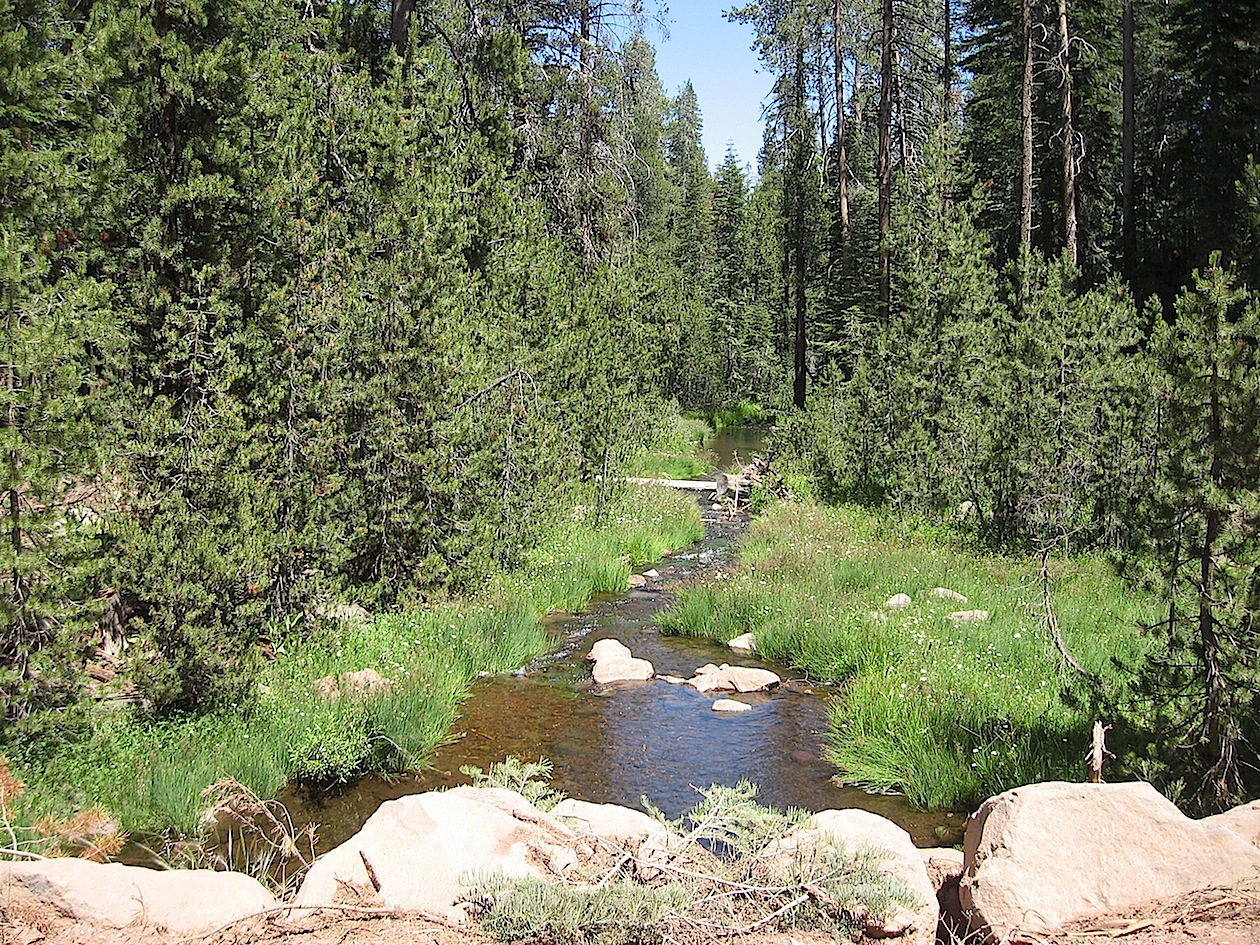
This view of the Susan River was taken near the headwaters at Silver Lake. In 1934, in the case best known as Fleming vs. Bennett, would more or less once and for all settled not only the water right issues to the Susan River, but all of its tributaries. The State Department of Water Resources, per court order, intervened and put together a complete adjudication, which is still used today.
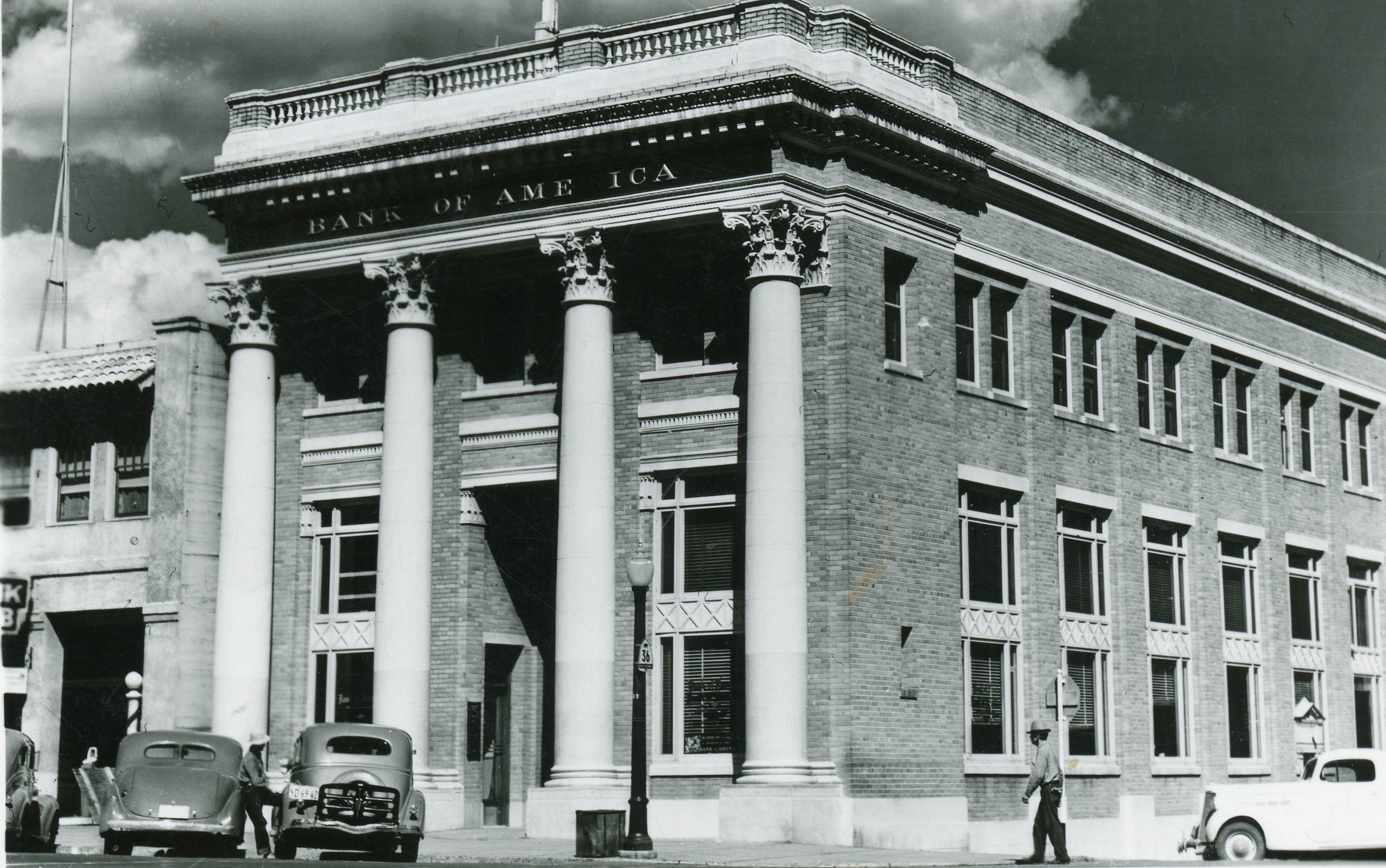
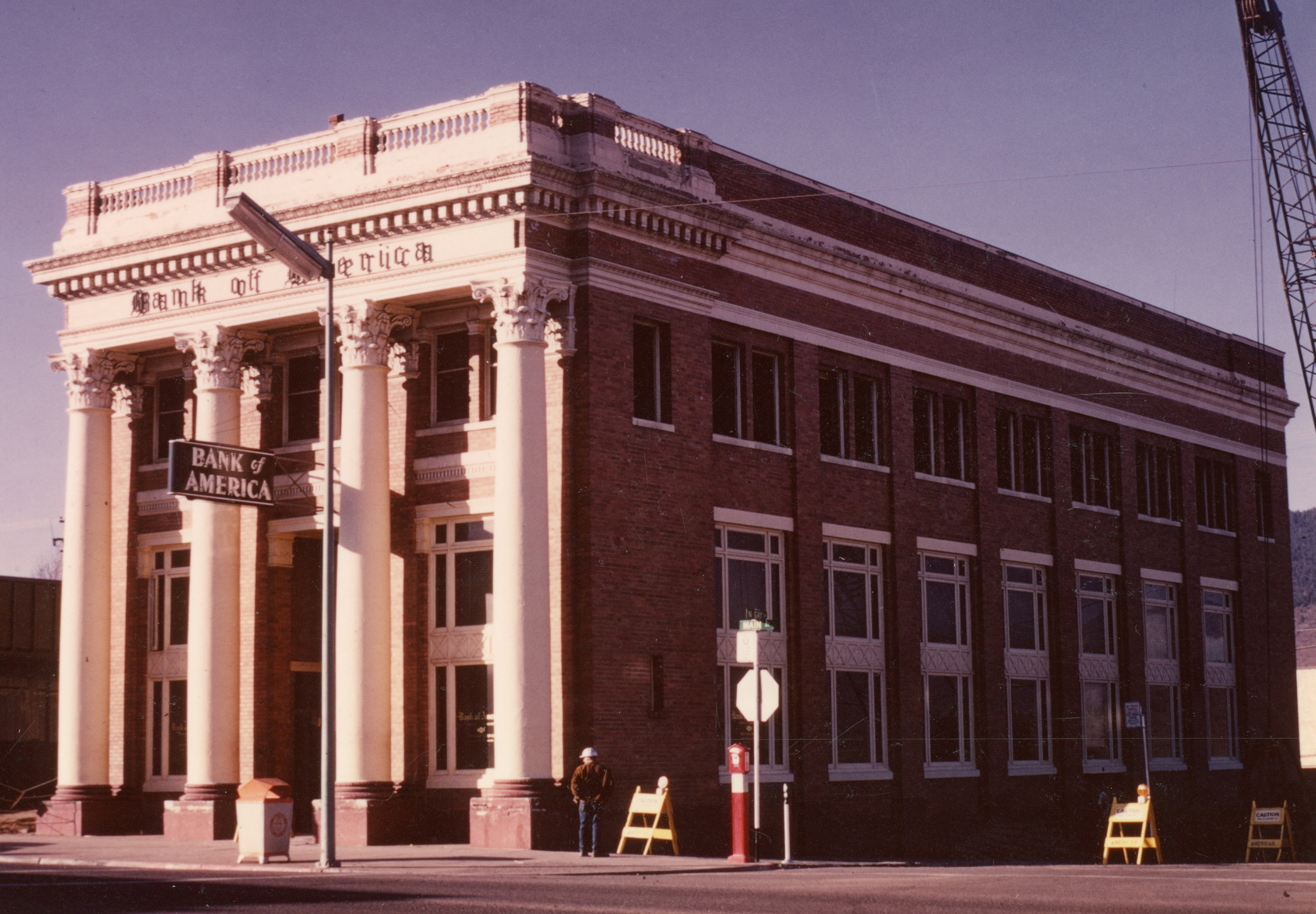
Lassen Industrial Bank built this Susanville landmark in 1922. Some fifty years later Bank of America tore it down.
In August 1928, in a somewhat surprising move to the local populace was the announcement that the Lassen Industrial Bank had intentions to sell the bank to Bank of America, formerly known as the Bank of Italy. Jules Alexander, president of Lassen Industrial Bank highlighted some of the positive aspects being part of larger bank, due to its access of larger amount of capital. Bank of America stated there were be almost no change in operations or that of the personnel employed locally.
Bank of America, 1971.
But there was more to the story, that the public was not aware. Lassen Industrial Bank was a in a financial crisis due to the delinquency on loans to the farmers and ranchers of the Baxter Creek & Tule Irrigation Districts due to the problems associated with Bly Tunnel at Eagle Lake. On December 1, 1928, Bank of America took over the beleaguered bank and with it and infusion of $100,000 to stabilize it.
Many may not be aware but the dam at Lake Almanor was constructed in the three phases. The first was the initial dam completed in 1914. That dam had to be scaled back due to financial issues. The second phase was competed in 1926.
In the fall of 1961, PG&E disclosed that it intended to raise the dam by sixteen feet and increase the storage capacity by sixty percent. The $6.7 million project began in the spring of 1962—the job was awarded to construction giant Morrison-Knudsen. As the cost indicated, this was a substantial project, as the entire dam needed to be retrofitted. A portion of this was due that there was a seepage problem since the dam was first constructed. To rectify that problem over the years, several dikes were built in front of the dam, along with other alterations. To reinforce the dam required moving of some 800,000 cubic yards of earth; 275,000 tons of rock fill, and 90,000 square feet of gunite to prevent water seepage from the increased water pressure. Work on the new improved Lake Almanor dam was completed in the fall of 1963.
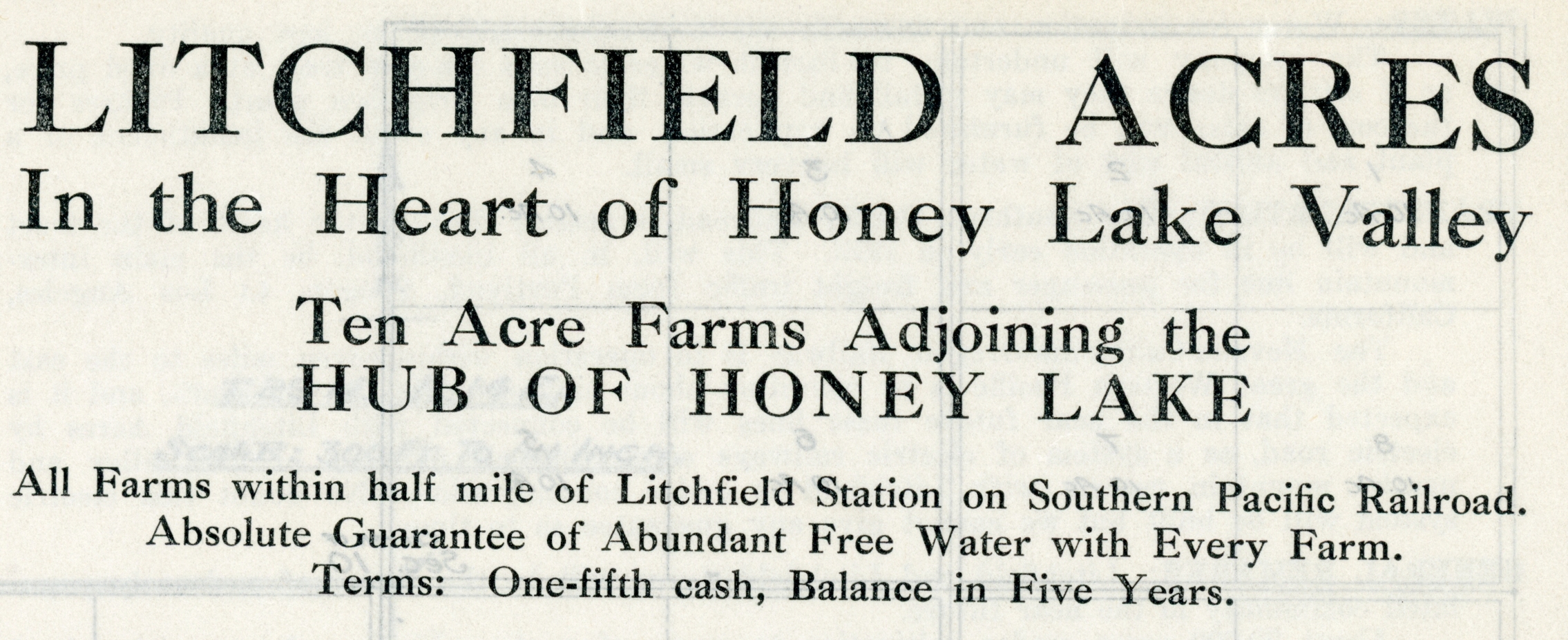
There were two Litchfields—the town proper.and surrounding it ten acre parcels known as Litchfield Acres. During the 1890s and into the early 1900s there was a colony movement across the nation where one could reside in a community and work their farm property adjacent to the town. Readers may recall that Standish started out as a colony.
In 1913, with the arrival of the Fernley & Lassen Railroad through the Honey Lake Valley witnessed the developments of several towns—Litchfield being one of them. There was the town proper, and then adjoining the town, the property was subdivided into ten-acre parcels known as Litchfield Acres comprising some 570 acres. The promoters thought the ideal conditions found there, where one could make a comfortable living whether planting an apple orchard to growing alfalfa. Of course, the literature sounded good, but it was not enough to entice buyers. Litchfield’s growth was stymied by the fact it could not compete with the nearby established town of Standish. On the other hand, for a number of years, the Litchfield Depot was a busy place which became the major hub for shipment of agricultural products.
When the NCO Railroad arrived on the Madeline Plains 1899/00, it gathered a great deal of media attention. The area witnessed some prosperous times, which peaked around 1915-16. World War I saw the drafting of the young men of the Madeline Plains, who after the war did not return because there were a lot of opportunities elsewhere than making a hardscrabble existence at their former home.
By the 1920s and into the 1930s, it was not all doom and gloom. Take for instance the Bailey Creek Sawmill to the west of Termo, that was a major boost to the economy. Of course, the Southern Pacific Railroad, which had taken over the former NCO provided jobs as well.
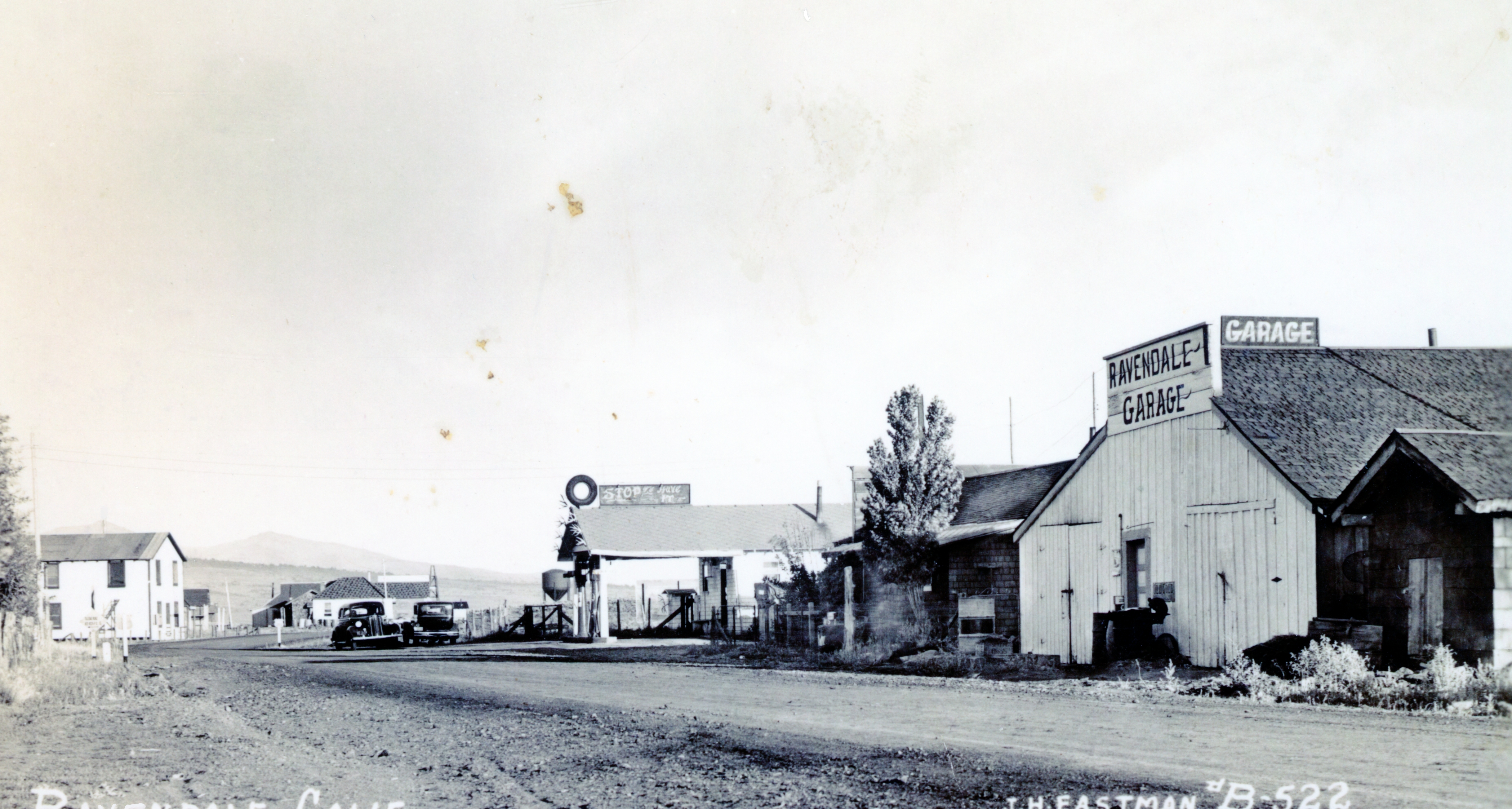
Of course, passer by travelers also was part of the economic fabric. For one Jim Lechuga, his visit to Ravendale was memorable. On April 28, 1930 he was arrested there with a suitcase that contained 360 tobacco tins full of marijuana. He told authorities it was for medicinal purposes. Roy D. Jones, State Narcotics Office, said that was hogwash, that marijuana had no medicinal value. On May 7, 1930, a jury trial was held in the Lassen County Superior Court. Lechuga was found guilty and sentenced to six years in prison at San Quentin.
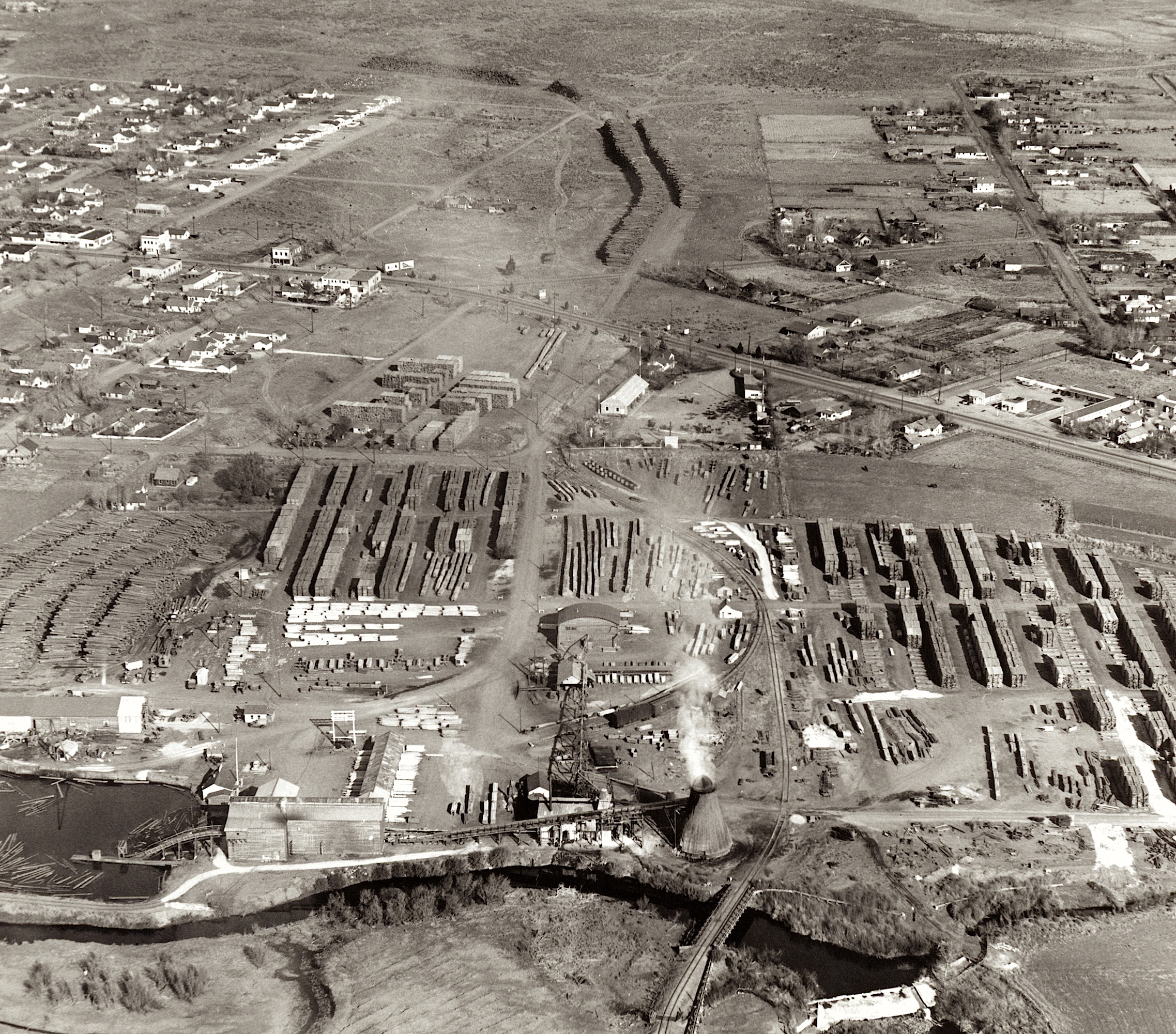
Paul Bunyan Mill is now the location of a shopping district and more on the eastern edge of Susanville.
The Paul Bunyan Lumber Company was formed in 1945/46 as part of the break up of the Red River Lumber Company. Kenneth Walker wanted to remain in the family business and took over the company’s “Cedar Mill” in Susanville. This mill was closed in Susanville in 1967, but the lumber company continued with another mill in Anderson, Shasta County.
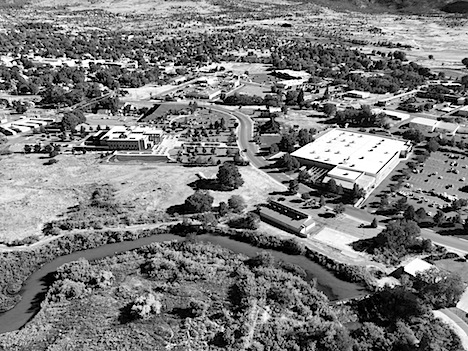
Thanks to Dave Bricker, he took this picture overlooking the same area in June 2022. Times have changed.
The east send of Susanville, June 20,2022–David Bricker
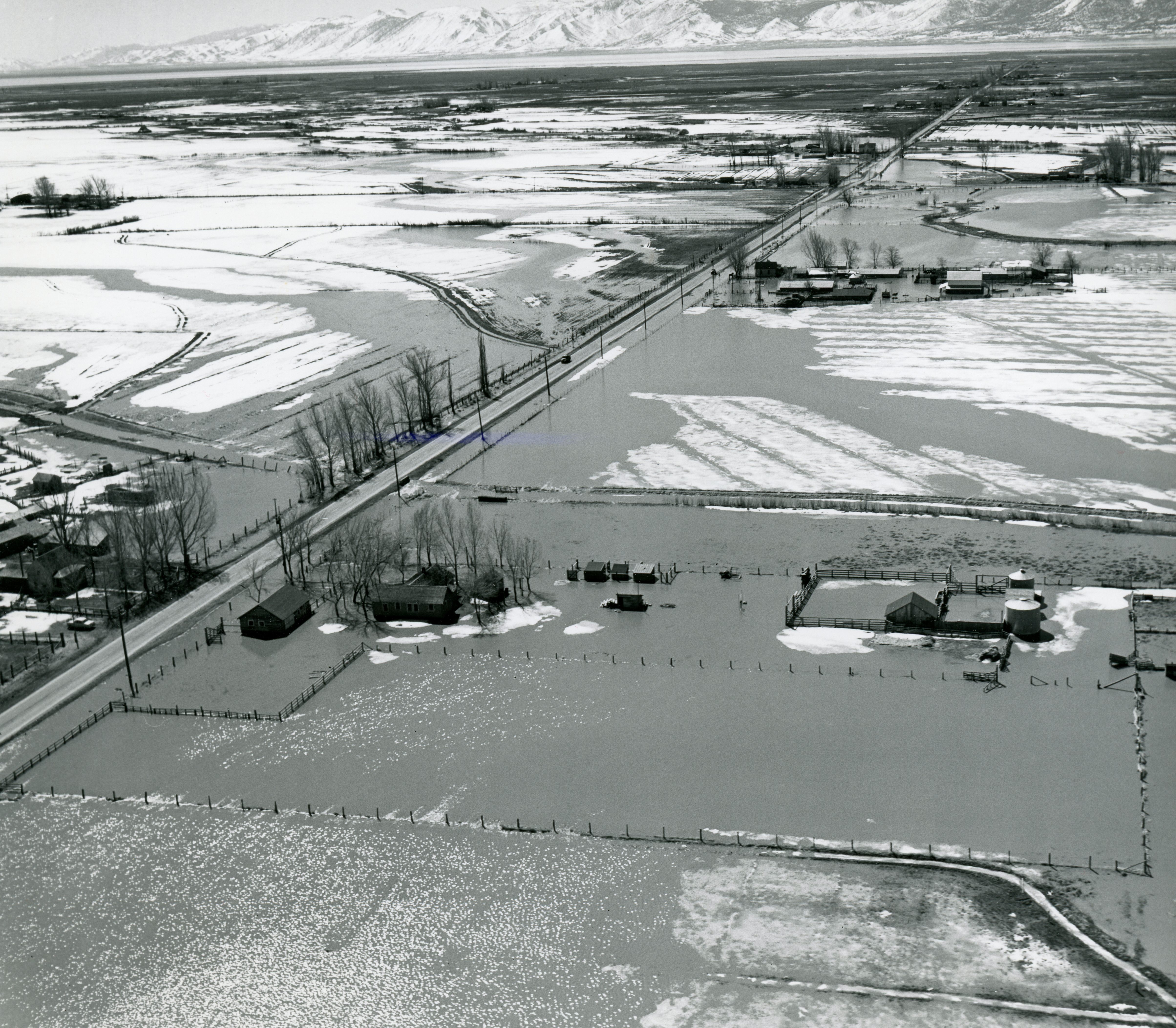
Flooding near Standish, 1952. Courtesy of Betty Barry Deal
If anyone has resided in California for any length of time, it is known for its extreme weather patterns. The winter of 1861-62, is one for the record books, which some in meteorological circles refer it to “The Ark”. There is a reason why, as California has not experienced anything like it since. It was reported that the Sacramento/San Joaquin Valleys were transferred into a vast lake. It should be noted that the floods of March 1907 did the same thing to the the Sacramento Valley.
As to the winter of 1861-62, locally we are thankful, for the A.L. Tunison diaries to provide a glimpse of what happened and also regionally.
By the end of November 1861 there was a foot of snow in the Honey Lake Valley. Then on December 8 and 9, heavy rains occurred. On December 18, 1861 Tunison receives news of flood damage elsewhere and writes, “Good flood in Sacramento Valley. Water 15 feet deep in Sacramento City. Boats run on Main Street in Marysville. Great many cattle lost. Slide on Sierra Nevada Mountain at Washoe covered up a quartz mill, injured two men, killed another. Two bridges gone on the Truckee River.”Continue reading How Wet Will It Get?→
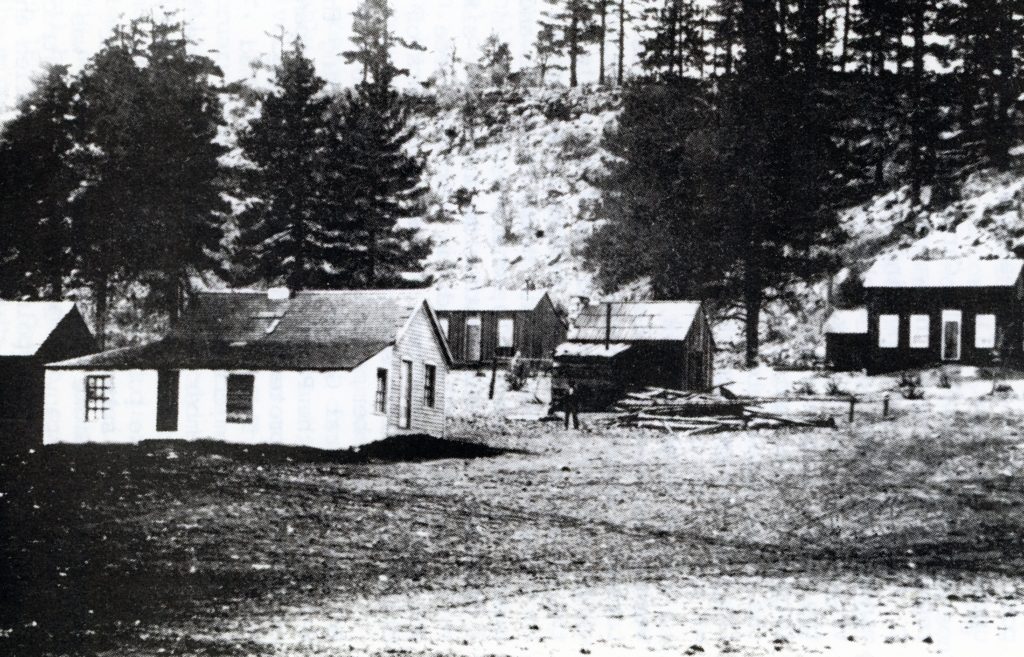
Many visitors to Susanville when it was a frontier outpost during the 1850s and 1860s had positive comments about the community. One aspect in common, was its natural setting at the base of the mountains and two flowing streams. Well, there was one particular visitor, Major Gorham Gates Kimball of Red Bluff, California who was not impressed with Susanville when he passed through there on his way to Idaho. Kimball wrote in his diary on June 15, 1865: “This is a small town and a darn poor one—Indians ought to come in and kill the white man that would live there—it was made for Indians.”
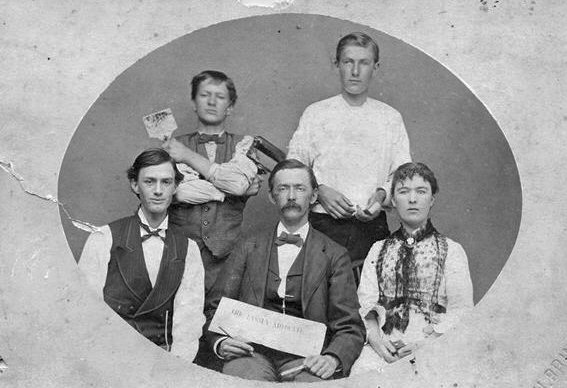
The 1878 staff of the Lassen Advocate
It is interesting note, while Kimball in his opinion it was a poor town, three major businesses were established in Susanville. that year. David Knoch established his general merchandise store, to become one of the leading merchants of Susanville. It would last for three generations, later as Alexander & Knoch and finally Feher & Worley’s Big Store and it shuttered its doors in 1942. A.C. Neale and Zetus Spalding founded Spalding Drug, an institution that lasted 102 years. Lastly, was the town’s first bonafide newspaper the Sage Brush. It would evolve into the Lassen Advocate and chronicled the region’s news until 1987 when forced into bankruptcy.
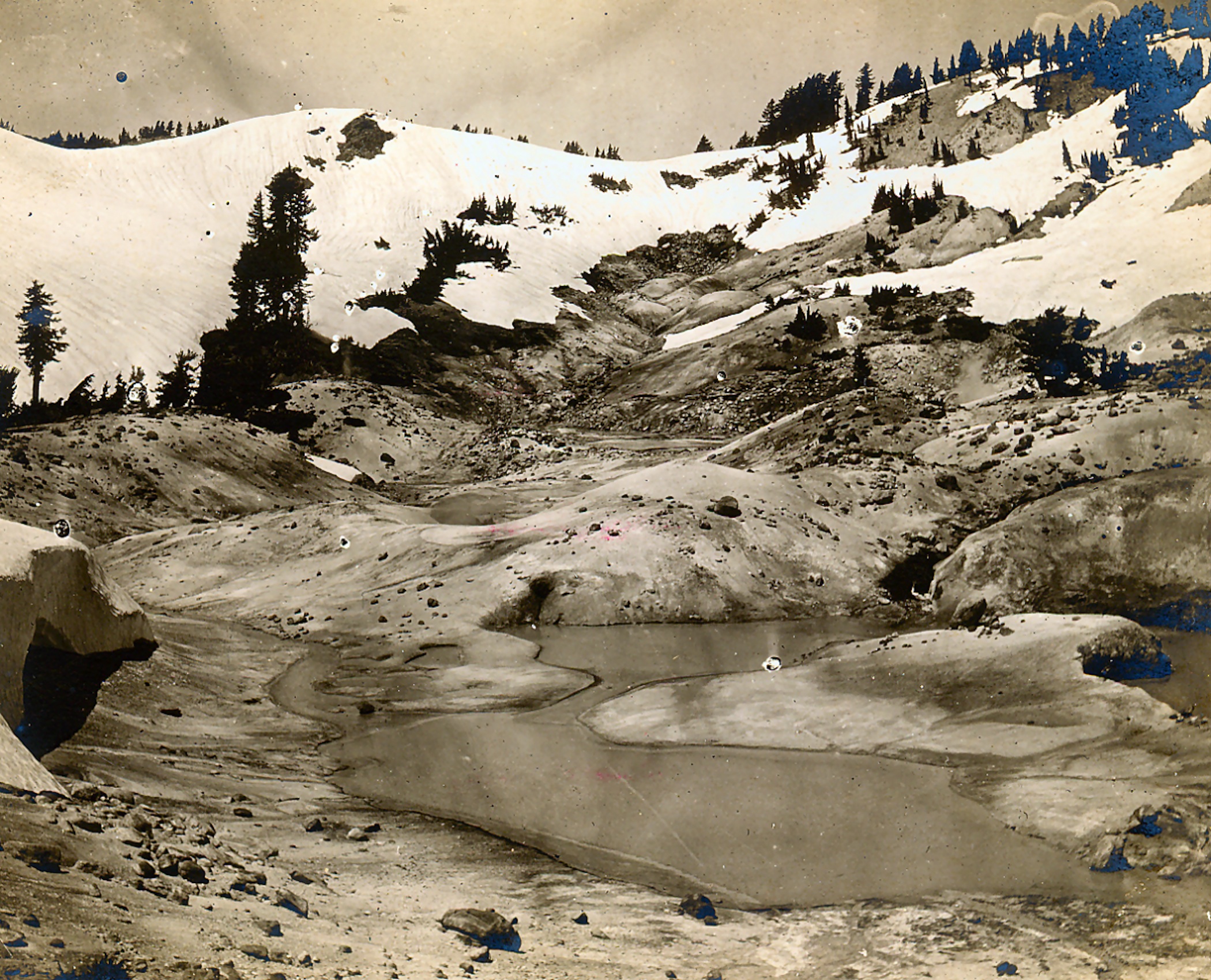
Bumpass Hell, 1908, Courtesy of the Sifford Collection
On September 10, 1864, Pierson Reading and Kendall Vanderhook Bumpass filed a claim there for “all the minerals there for mining purposes.” Their claim became known as Bumpass Hell, a year prior to another event that some have attributed to the origin name.
In September 1865, Bumpass acted as a tour guide for Watson Chalmers, publisher of the Red Bluff Independent. Upon arriving at Bumpass’ mining claim, Chalmers wrote, “On turning the ridge all the wonders of hell were suddenly before us and the descent into hell was easy.” Bumpass warned Chalmers to be cautious while walking around the boiling mud pots, for the ground was not as stable as it appeared. Alas, that was exactly what happened to Bumpass on this visit, as one leg broke through the crust into the boiling mud. For relief, there was a nearby snowbank wherein Bumpass, using a handkerchief, wrapped his leg with the snow.
Over the years, others would fail to heed the warnings at Bumpass Hell, as well as Devils Kitchen, and receive severe burns from falling through the soft ground adjacent to the mud pots. The worst of these instances occurred in August 1930. Harley Pinson, age sixteen, was visiting the park with his parents. They were at Bumpass Hell where the tragic event occurred. Harley walked over to a mound to have his picture taken. At that point, the ground gave way and nearly “swallowed” him, for he was submerged nearly to his neck in the boiling mud. Heroic efforts were made to rescue him, and he was taken to Red Bluff for medical treatment. The burns were so severe that Pinson died four days later.