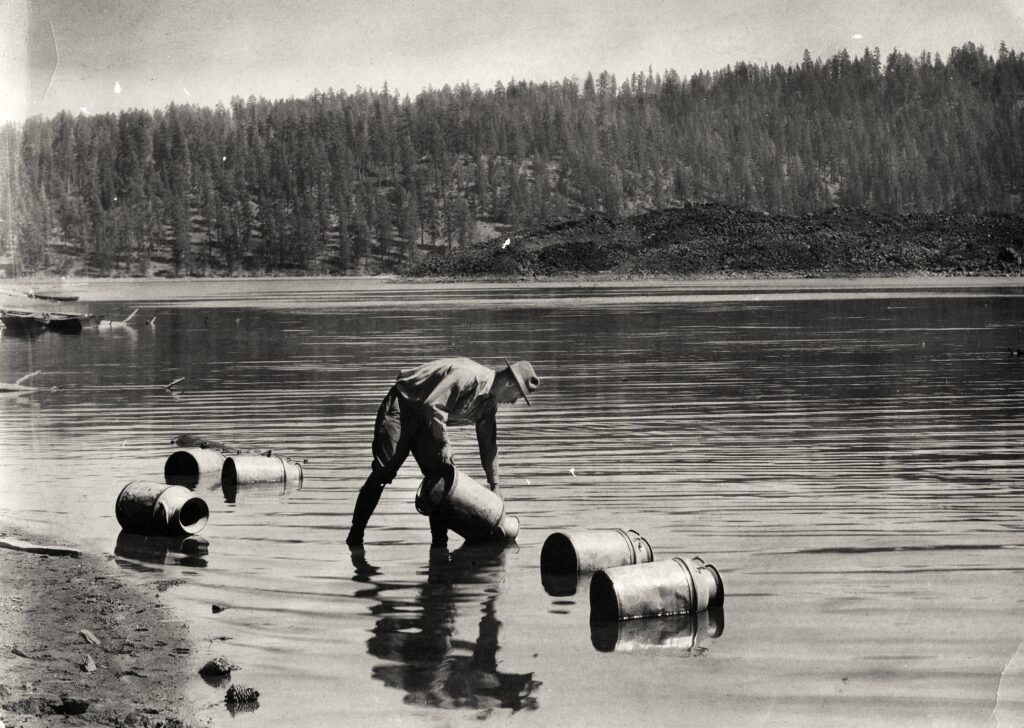
Fish planting at Lassen Park, 1930–National Park Service
One of the consequences when President Nixon signed the Lassen Volcanic Wilderness Act of1972 was the elimination of fish planting in two-thirds of the park. The area comprised the national park’s eastern section where the majority of the lakes are located.
One of the earliest known plantings was done prior to the creation of the park. In mid-July 1915, the first planting occurred through the efforts of San Francisco resident E.T. Niebling. The California Department of Fish and Game provided him with 5,000 small rainbow trout, which he planted in Juniper Lake. Beginning in 1927, the park, with the assistance of the Department of Fish and Game, began annual fish plantings in the majority of the lakes, that ceased at the conclusion of 1972.
The Portola Depot. Notice the rails had been recently laid, no ballast.
The Plumas Sun has reported that there is a revival of Portola’s Railroad Days, for those interested will occur this Sunday, October 29. If you have never been to the Western Pacific Railroad Museum at Portola, this provides a perfect opportunity—a two-fer as the museum normally shuts down for the winter months, but will be open, plus there will be plenty activities and vendors for the whole family. If I understood correctly the Western Pacific Railroad Museum will have special Pumpkin Patch Express train rides that day.
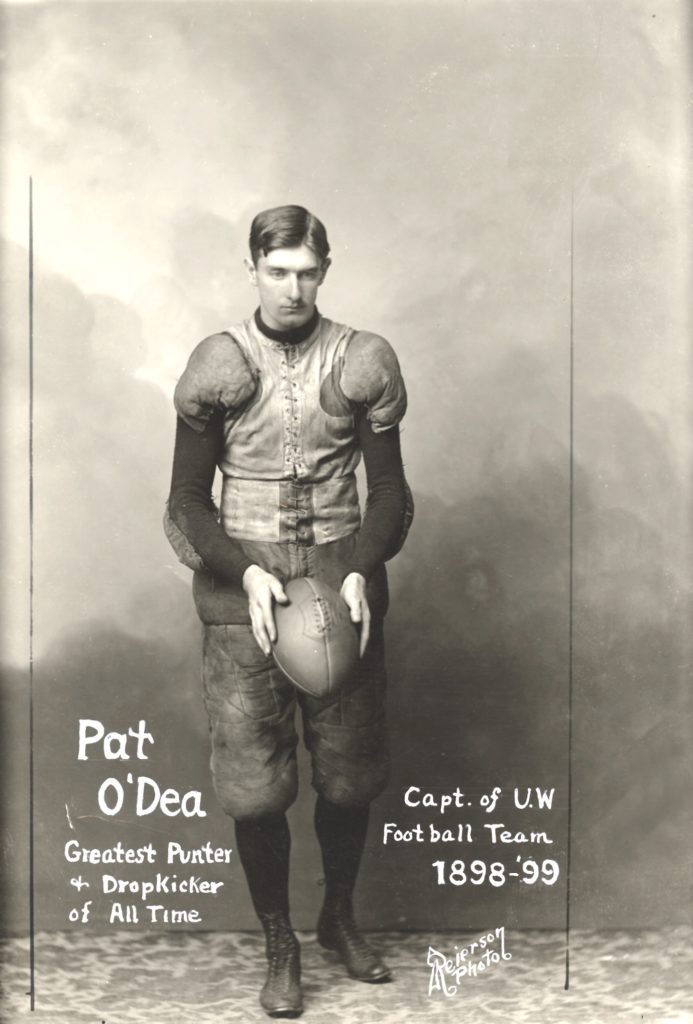
Pat O’Dea, Courtesy of the University of Wisconsin
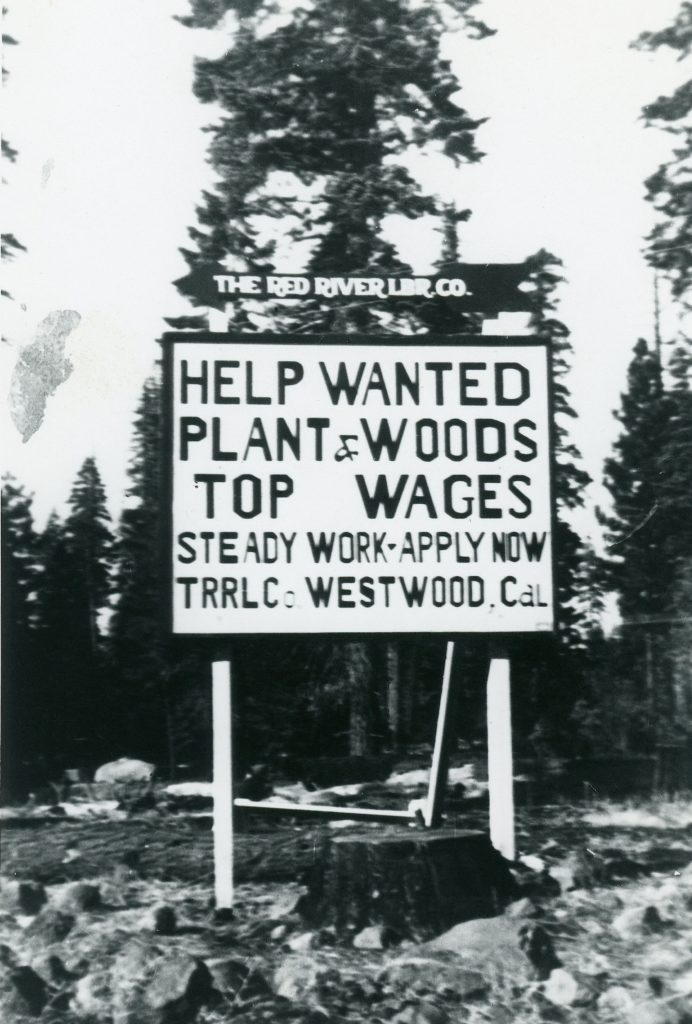
In 1919, Charles J. Mitchell arrived in Westwood like so many before and after him seeking employment. The Red River Lumber Company had high turnover in its workforce and always had openings. Little did Red River know their new hire was a famous football player. Then again, Mitchell used an alias. After all this was in an era, where few people carried any type of identification, and Social Security numbers were non-existent. Continue reading Pat O’Dea—The Kangaroo Kicker→
Very seasoned residents will remember this location as Borghi’s on Richmond Road. On one side was a grocery store and deli, the other a bar known as the S.P. Club. After the brutal murder of Jennie Borghi in 1973, the placed closed down.
In the early 1980s it was brought back to a new life as Aardvark Pizza and became a popular gathering place. When the business moved to 1535 Main Street, now the location of Mazatlan, it just did not have the same appeal as its original location and eventually closed.
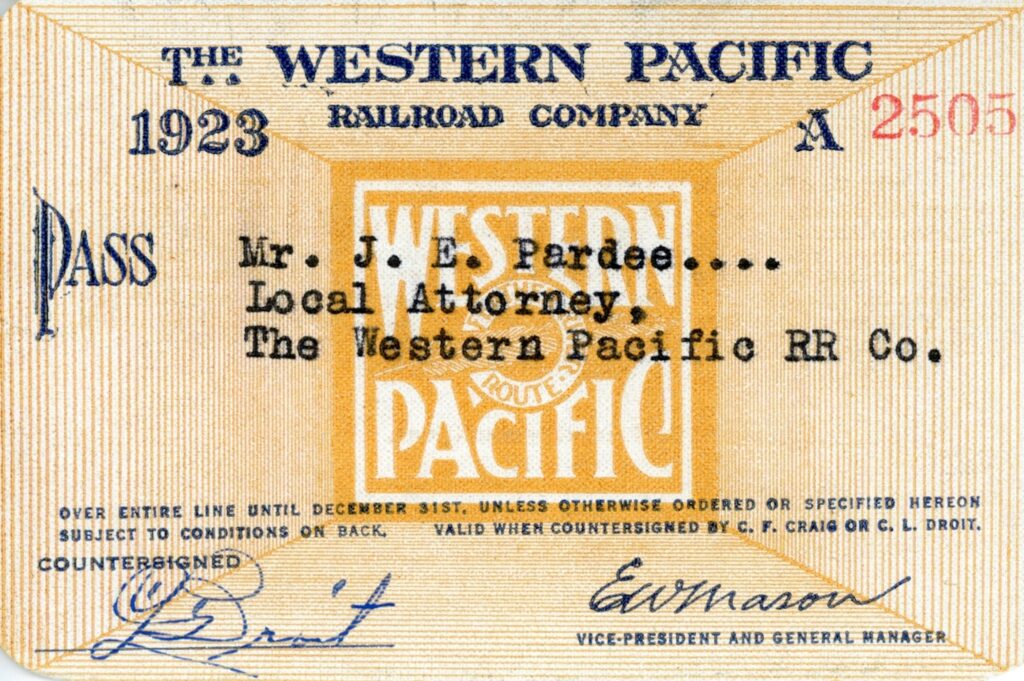
Susanville attorney, J.E. Pardee’s free Western Pacific rail pass
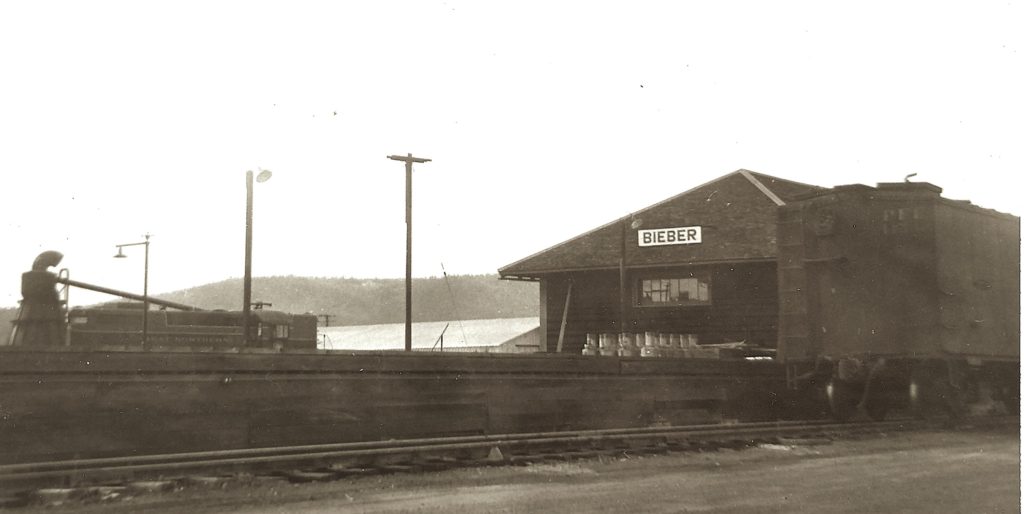
Yesterday’s post was about a 1934 special excursion train between Keddie and Klamath Falls. Two months prior to that event passenger service had been debated in Bieber. The following appeared in the Big Valley Gazette, which was penned by Aubrey Bieber, editor and publisher.
Dateline Bieber, Cal.—13 July1934: The Big Valley Lions Club have started a movement to induce the Great Northern and Western Pacific Railroads to inaugurate passenger service over their lines through Big Valley. The railroad companies do not seem to think that this section is ready for passenger service. Yet, they do admit that the Klamath Falls-Keddie connection has been a paying freight line. They seem to have forgotten, however, when they asked for permission to build the line and asked all the individuals and organizations in this section to support them, that one of the chief arguments was the wonderful passenger and express service this section would enjoy by being served by the Empire Builder. The time is ripe for all organizations to cooperate with the Big Valley Lions Club and demand the service all were promised.
In September 1934, when the Plumas County Chamber of Commerce sponsored a special excursion train Keddie to Klamath Falls. the Oregon city chimed in about the lack of passenger service on the Great Northern and Western Pacific railroads. The Klamath County Chamber of Commerce formed a special committee to address this issue.
While searching through files concerning railroad passenger service between Keddie and Klamath Falls, I came across the following account, that I thought some might find of interest
On September 22 and 23, 1934, a special excursion train sponsored by the Plumas County Chamber of Commerce went from Keddie to Klamath Falls. At Bieber, Lizzie Durfee and Ellen Elliott boarded the train to its final destination at Klamath Falls and the following is their published report.
Big Valley Gazette, Bieber, California — 4 October 1934: “This excursion was the first passenger train to leave Big Valley since the dedication of the railroad three years ago. Big Valley waited fifty years for the railroad, but there is no passenger service yet. Of course, there are better roads and the automobile, so we do not miss the train service too much.
“The excursion left Bieber about eleven o’clock Saturday morning. It was a little chilly but the cars were comfortable and the crowd was sociable and friendly.
”A stop was made at Merrill going up and the excursionists listened to a recital of the resources of Tule Lake section that seemed almost incredible. Space does not allow a detailed account but the crops and stock produced for disposal this year totals over $4,000,000. As a souvenir of the good will of the people of Merrill. each excursionist was presented with a ten pund box of potatoes of the best variety grown in that section.
”Klamath Falls was reached about 3 o’clock and courtesy cars took the visitors around the city and showed them the vantage points, and the growth and expected development of that busy bit little city.
”The banquet that evening was a pleasant affair where everybody visited with his neighbor on either side of him and across the table. Of course there were speakers of good will and friendliness and the banquet ended with everyone in the best of humor.
”The return home was uneventful and arrived back in Bieber six Sunday evening.”
It should be noted that nearly 200 people participated in the event.
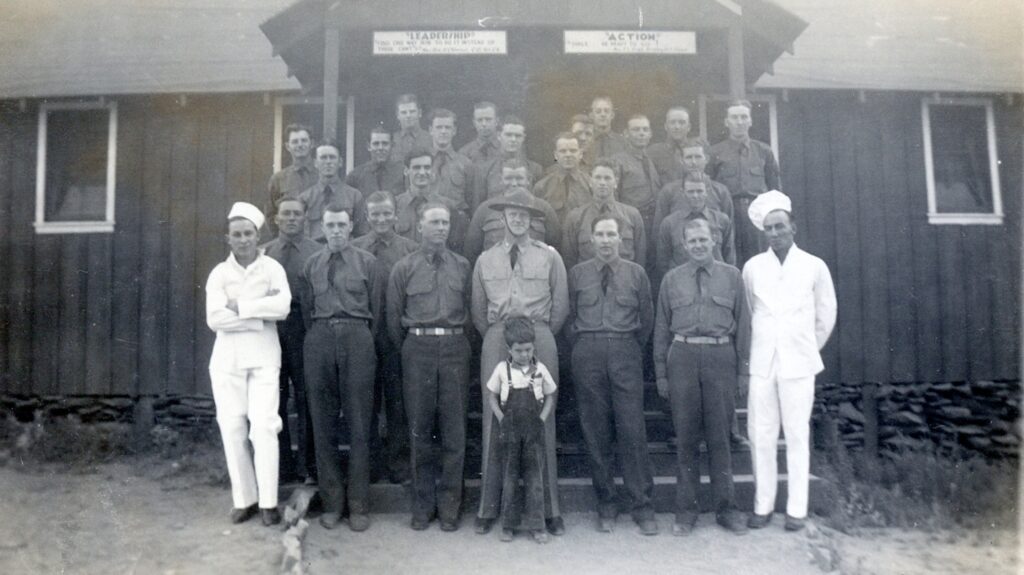
The reduced size of Camp 740—C.H. Bennett Collection
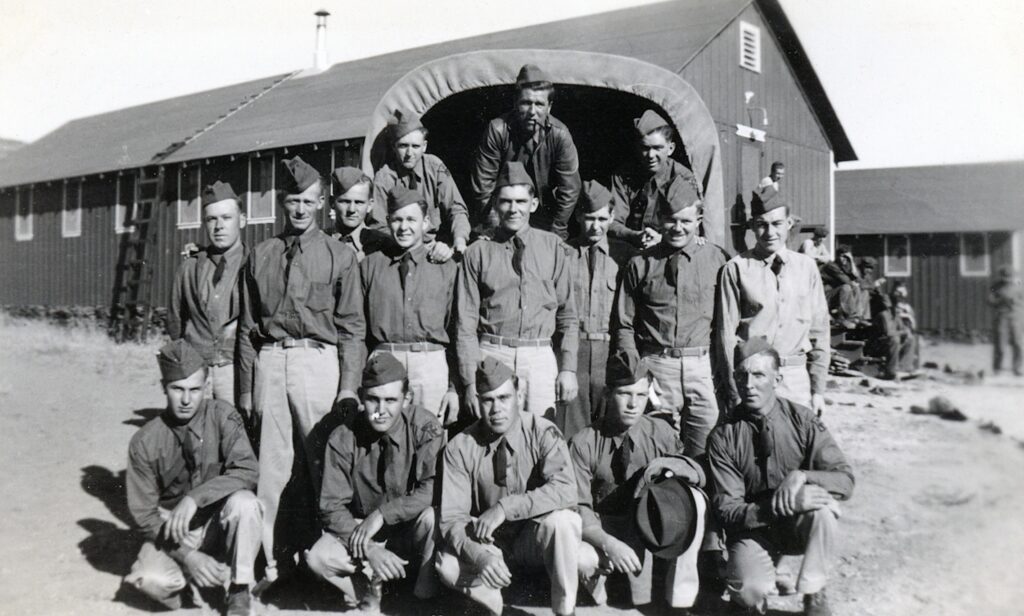
CCC Camp 740 started with an original crew of 178 men that came from Piedmont, Missouri, and then briefly to Spalding, Nebraska with its final destination of Secret Valley, California. Bennett’s caption of the above photograph, that after seventeen months, this was who remained. Enrollees had the option at every six months to either enlist for another six months or depart. Over the course of time, many departed.
A group of CCC’s leaving Secret Valley on September 30, 1936—C.H. Bennett Collection
By 1938 the Secret Valley camp days were numbered. Its mission had been completed with the work needed to be done. I have not been able to locate an exact date of closure, but I do not come across any references of its existence by 1939.
Red River Lumber Company had a large employee turnover.
The labor movement received a big boost during World War I. However, unions lost some momentum after the war as nation went into a recession. Industry on the other hand came up with strategies to counter act the union movement. One of these was the American Plan. The plan had its origins from the labor turmoil of World War I and was first adopted in November 1919 by the metal trades. In time, the Industrial Relation Association of California got behind the movement. It recognized that the model had to be flexible, since there were many variables between industries.
The plan deemed unions a nuisance—a barrier between the employer and the employee. In the simplest of terms, both the employer and employee had to maintain certain obligations. For the employer, one of the critical factors was to design its business wherein the employee was guaranteed steady employment.
In 1921, the Red River Lumber Company adopted the American Plan as a way to stave off the union movement. Actually, during the 1920s Red River’s labor issues were nominal. By the end of the decade, things changed. It was not just from Red River’s own financial turmoil, but the lumber market was headed in a downward
spiral, even before the stock market crash of 1929. Like many lumber operations, Red River was forced to curtail operations. On July 28, 1930, Red River reduced wages by 15% and adopted a five-day week, with an eight hour working day. Red River did make a concession for its employees. It reduced the rents in Westwood accordingly and board at logging camps was reduced to $1.25 a day.
The American Plan at Red River was put to the ultimate test, but circumstances were overwhelming. Red River sought other solutions and company would experience labor turmoils during the 1930s.
When Lassen Park was established in 1916, most of it was in a primitive state. There was a lot of internal debate as to what type of development should occur. The initial conclusion was that there would be only one road and the remainder of the park remain in its natural state. This approach did not sit well with the people living around the park, who were under the impression that it would be developed, bringing throngs of tourists, and providing an economic bonanza to them.
One of the problems was the private lands inside the park boundary—especially that of Drakesbad. Any park improvements would increase the value of these private holdings, thus adding to higher cost when the park would be in a position to acquire them. In 1935, it was decided to place the eastern portion of the park under a “primitive” designation for a period of ten years.
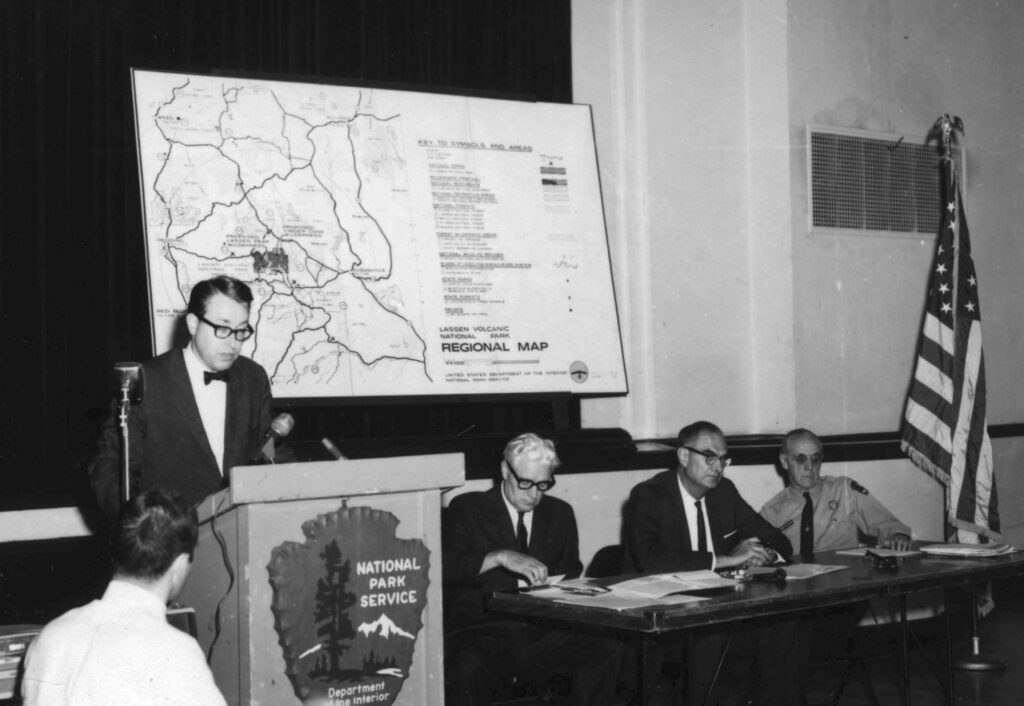
In the 1950s, the movement was growing to a seek a clear definition what a primitive and/or wilderness area consisted. This culminated in the passage of the Wilderness Act of 1964. A large segment of Lassen qualified for this designation. The question park officials had to determine was how much of the park should be designated as wilderness. Of course, individuals and organizations alike had their own opinion.
After numerous public hearings, written statements and other commentary the park recommended that 73,333 acres be designated as wilderness—nearly two-thirds of the park. Of course, not everyone was pleased with this decision. Organizations such as the Sierra Club and the Wilderness Society had urged for more land —101,000 acres, almost the entire park. Their proposals would encompass all the land in the park with the exception of the corridor of the loop highway and a few other improved properties. Ultimately, a compromise was reached. On October 19, 1972, President Richard Nixon signed the Lassen Volcanic Wilderness Act, involving 78,982 acres.
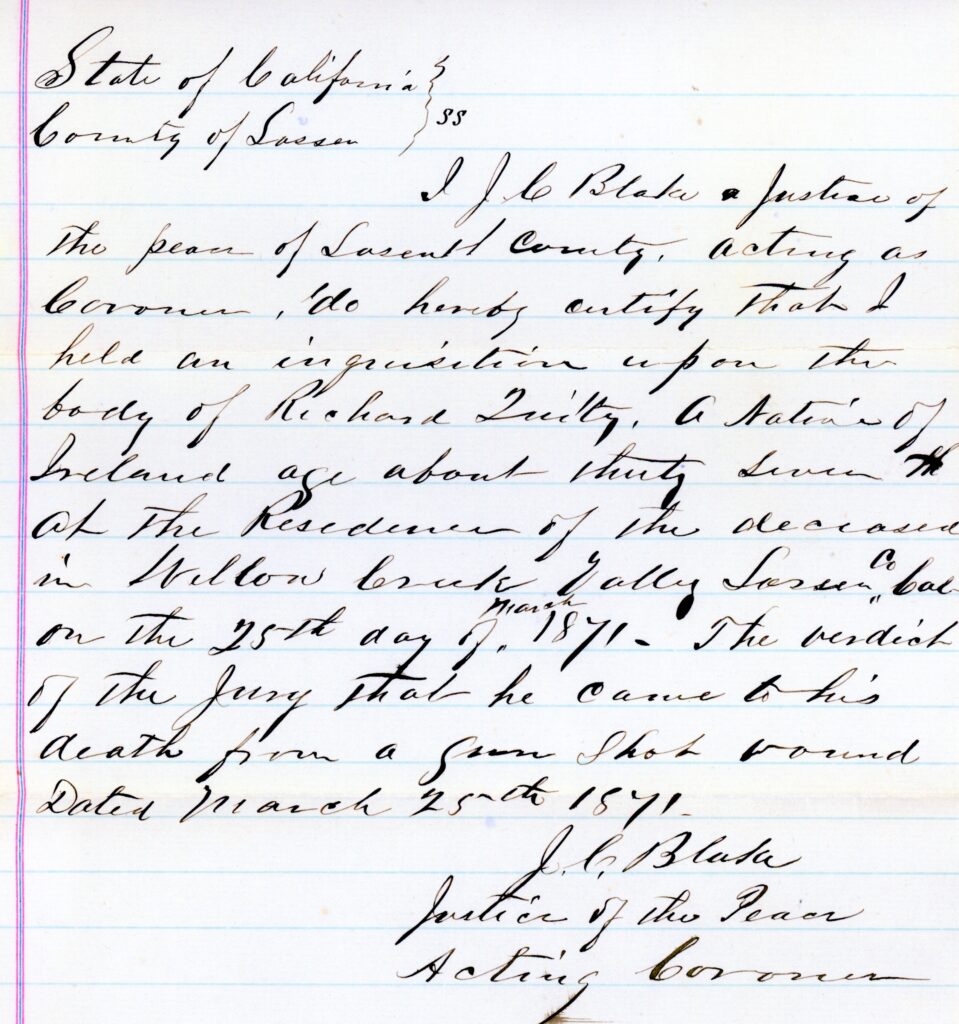
In March 1871, volunteers gathered to build a schoolhouse in Willow Creek Valley, a mile east of the Neuhaus (Murrer) ranch. It was during the final phase of construction when tragedy struck. On March 23, Richard Quilty, a 37 year-old Irishman, was shot to death in a related incident. During the morning a number of neighbors worked on the schoolhouse. One workman was John Bergstrom,
an employee of Quilty. As Bergstrom assistance was not needed, Quilty instructed him to leave the schoolhouse and build a bridge over the creek. Unknown to Bergstrom, the location of the bridge was on property occupied by Jacob Miller, but claimed by Quilty. At noon, Miller left the school for his home to have lunch. Miller encountered Bergstrom at work on the bridge. Miller demanded Bergstrom to stop work on the bridge, as it was located on as on his property. Bergstrom obliged and returned to other duties that Quilty hired him for.
Late in the afternoon, Bergstrom headed back to Quilty’s home. Along the way he encountered Quilty. Bergstrom relayed to Quilty about the encounter he had with Miller. Quilty responded “Well, we’ll go and see Miller about it.” They proceeded to Miller’s house. Quilty confronted Miller as to why he drove Bergstrom away. Miller responded that it was his land, and he was not going to have a bridge built there. A heated exchange ensued. Quilty in an excited moment responded to Miller, “You’re a liar, the land is not yours, and you cannot have it. Come out here and I will bust your head for you.” During the argument, Miller was inside the house, while Quilty stood near the door, and Miller’s wife stood in the threshold. Miller’s wife pushed Quilty back, and Quilty yelled to Bergstrom “He has got a gun.” At that instant, Miller fired his rifle striking Quilty in the stomach, causing him to stagger and fell to the ground. Miller rushed to the door exclaiming, “Don’t you call my wife a whore, you son of a bitch.” Quilty instructed Bergstrom to get Ben Neuhaus, which he did. When Bergstrom and Neuhaus arrived they found Quilty lying on the ground with Mrs. Miller sitting by his side with a pale of water bathing his face. She told Neuhaus she was sorry that Jake shot him, but Quilty was forcing his way into the house to kill her. Quilty’s only response was that he was dying and asked Neuhaus and Bergstrom to take him home. They did and Quilty died two hours later.
Two days later, the Grand Jury convened to determine what transpired. The Millers’ testimony and Bergstrom’s were similar, except Bergstrom stated Quilty never said anything disrespectful about Mrs. Miller. In conclusion, Jacob Miller was acquitted as it was deemed there was not sufficient evidence so that Miller should be tried for murder. Whatever the case may be the Millers sold out two years later and moved to Oregon.