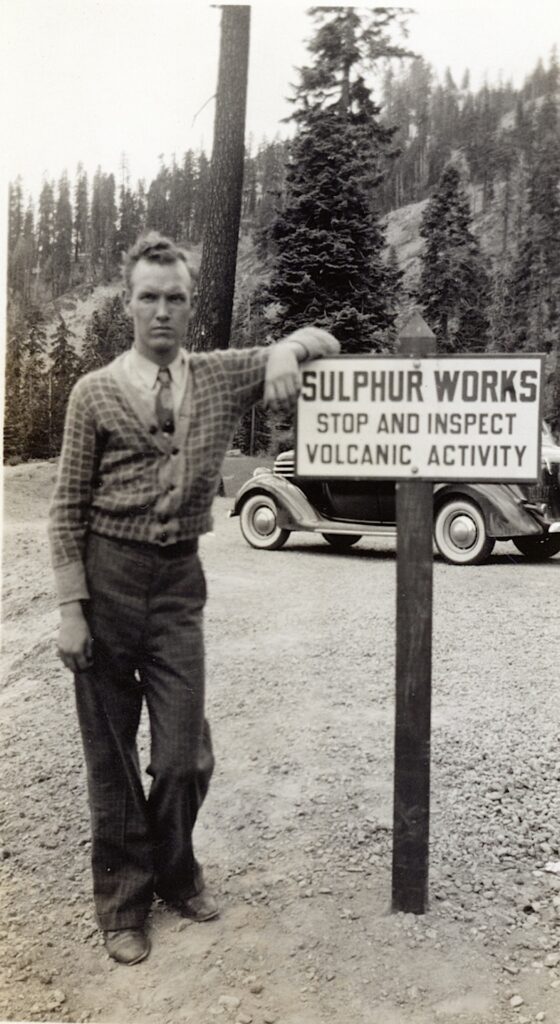
Supan’s Sulphur Works, 1937 is a featured photograph
Back by a somewhat popular demand are the calendars, which I thought last year was to be the last. We will see what next year brings. This may be one of the most eclectic mix of historic scenes that I have ever assembled. Some of these are: Baxter Creek Siphon (1936), boating on Honey Lake (1905), Willow Creek Flume (1926) and the abandoned Devil’s Corral Bridge (1925).
One has three options to purchase calendars:
1) Locally, you can purchase them at Margie’s Book Nook.
2) You can purchase direct online by clicking here
3) You can also email me to place your order, and it will be sent with an invoice.
Important Notice: There are only 50 calendars available, and once sold out that is it.
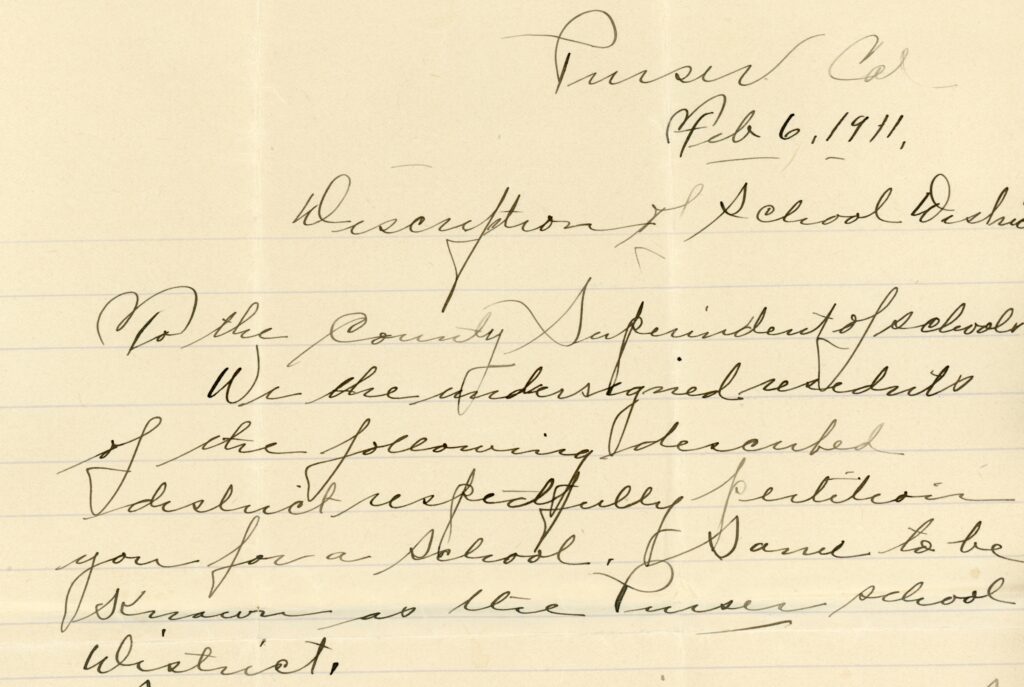
This is what some referred to as a “ghost” school. The circumstances are rather odd. In January/February 1911 W. Mylar, who had three school aged children circulated a petition to establish the Purser School District. It met all the criteria. In the proposed district boundary there were 22 children. They were also more than five miles from the nearest school. For reasons unknown Lassen County Board of Supervisors did not approve it. Three years later, a new petition, known as Caloreta School District, which was identical to Purser, was approved.
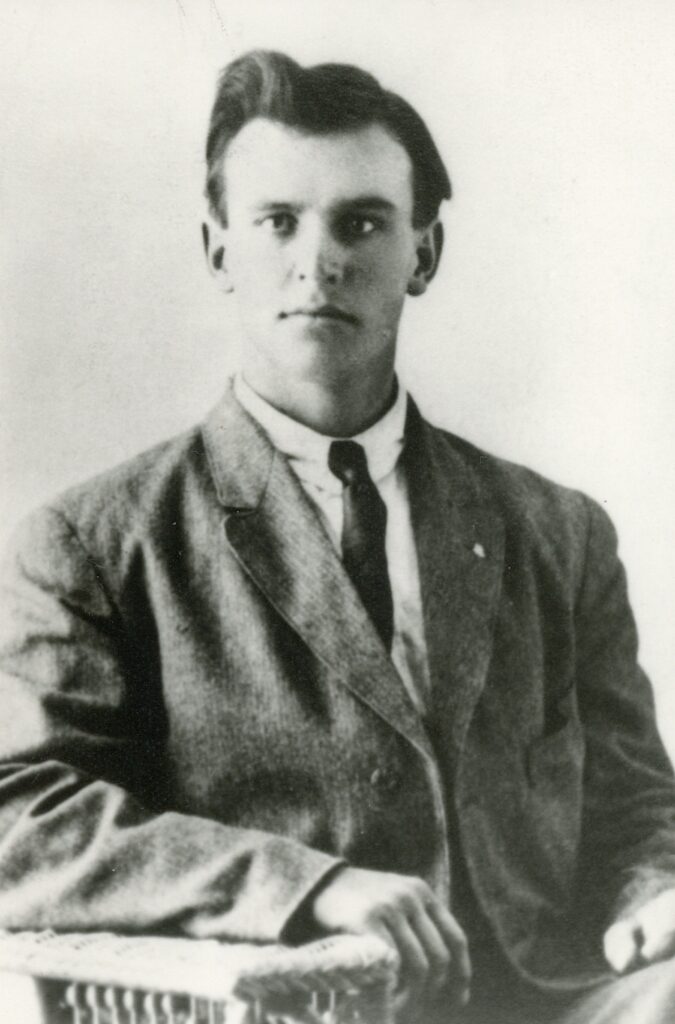
Purser would later become known as the railroad community of Wendel. That locale had many names in its early years. It was named after Edward T. Purser, a major player in irrigation projects of the Honey Lake Valley in the 1890s. I have large size professional photograph negative of him but not a print, but once with a positive scan I will write about him. A person has offered to scan negatives like this, but I have experienced issues on my part that have have stalled the hand off of such. Hopefully soon, another project to be completed during the forthcoming Thanksgiving holiday weekend.
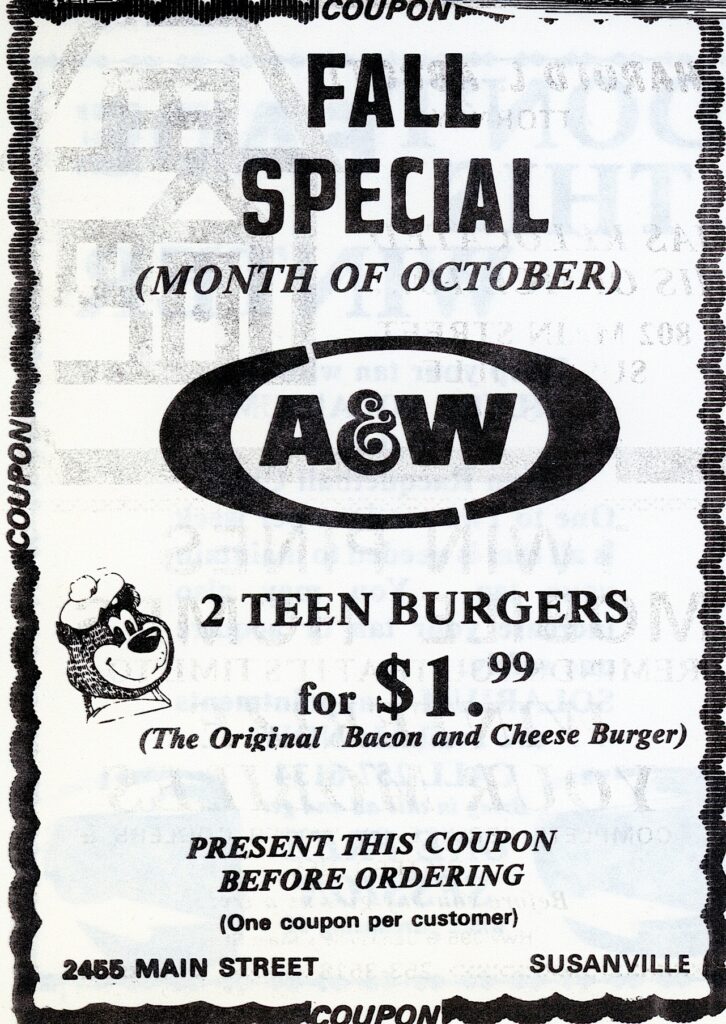
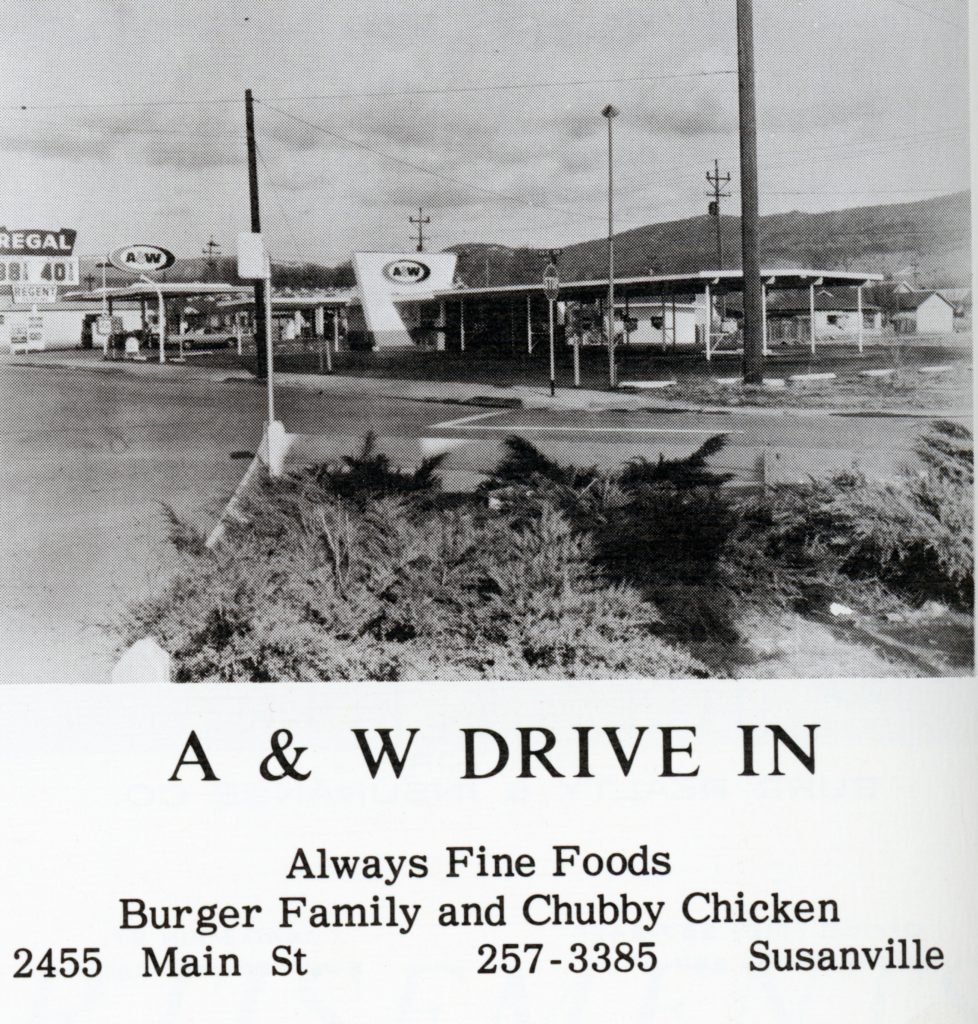
In 2019, I published an A&W advertisement, that a number of people emailed me about fond memories of the establishment. With that in mind, I thought I would do another. I am also including the advertisement from the past files.
1971 Advertisement in the Lassen Cougar Yearbook. Courtesy of Jim Chapman
A&W opened in 1961. I do not know when it closed. If anyone knows, please inform me of the same. A&W still exists, the nearest one is located as 1311 Baring Blvd, Sparks, Nevada. In the above ad, take note of Regal Gas Station gas prices.
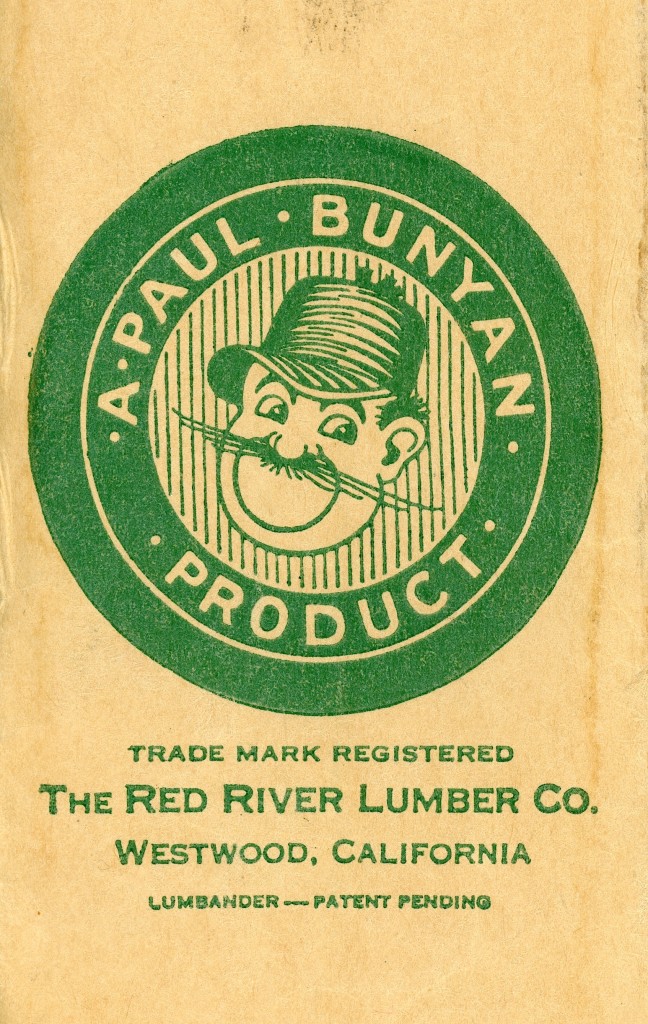
Packaging tape with the Paul Bunyan trademark.Courtesy of John Webb
In the logging camps in Canada and Northeastern United States as folklore would have it, tales of the mythical Paul Bunyan was born. Stories were passed around in the camps, no written account.
In 1900, W. B. “Bill” Laughead, a cousin to T.B. Walker, went to work in Red River Lumber Company’s logging camps at Akeley, Minnesota. There he undertook many jobs starting as a camp chore-cook and ending as a construction engineer. After eight years of working in the woods, he decided to move to Minneapolis working odd jobs and experimented with free-lance advertising work. It was at this time, Laughead drew the first known character drawing of Paul Bunyan, in part of an advertising campaign for Red River’s new California operation. Laughead created the company logo, of a circular design, with his Paul Bunyan’s face, accompanied on the outside with the words Paul Bunyan’s Pine and it became Red River’s registered trademark. The logo was placed on many products and even on its logging trucks. For a short time, Red River even bottled their own soda beverage, with the embossed bottles displaying the trademark. When the company expanded into other operations, they changed it to a Paul Bunyan Product.
In the 1940s, during the dissolution process of Red River, Kenneth Walker continued in the lumber business. In doing so, the trademark was transferred to him, since his own enterprise was the Paul Bunyan Lumber Company.
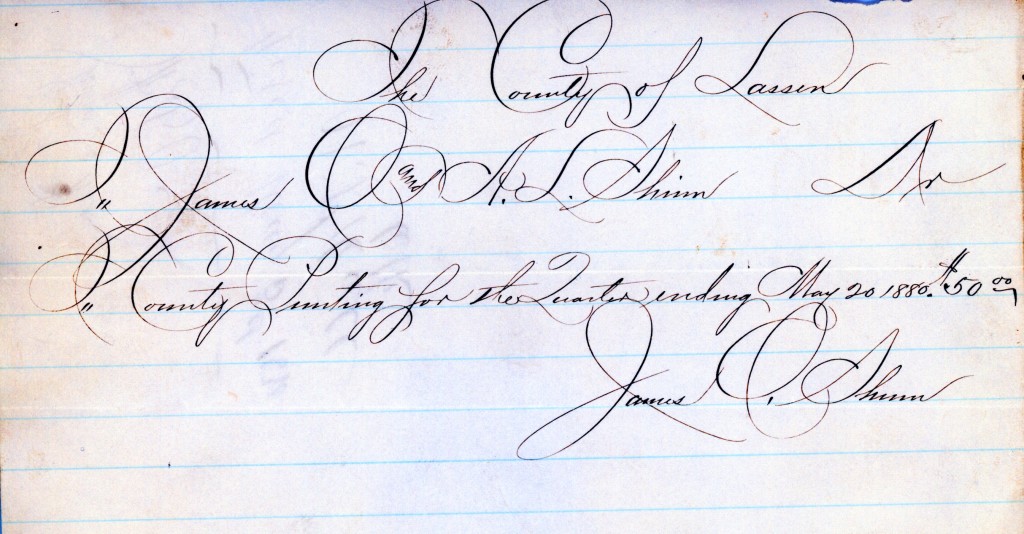
Shinn Brothers 1880 bill for printing services to Lassen County. James O. Shinn excelled in spencerian script, no doubt influenced by his mother, Louisa, being a school teacher. His two brothers,Al and Robert, who became attorneys had sloppy handwriting.
There has been for some time a debate brewing over whether cursive handwriting should be taught. Debate no more. One of the many bills California Governor Newsom signed into law in October was to bring back cursive writing in elementary schools. Seventeen other states have cursive writing as part of the education process.
It should be noted that by 1850, Spencerian Script had been widely adopted in schools as well as in the business community. With the advent of typewriters it began to fade away in the early 1900s. By the 1920s, schools began adopting the Palmer Method. It was considered more streamlined, less laborious and faster technique.
Of note, the Spencerian had some quirky traits, which one sees a lot in early documents of Lassen County. A double “s” such as Lassen, looks like a “p.” This was evident in the short-lived Lassen Post Office in the Willow Creek Valley that only operated from June 19, 1874, to July 14, 1875. Some records cite it as “Lapen,” due to the penmanship of Edward Bonyman, its first and only postmaster.
Become a supporter for just $5 a month to ensure quality history continues. Click here
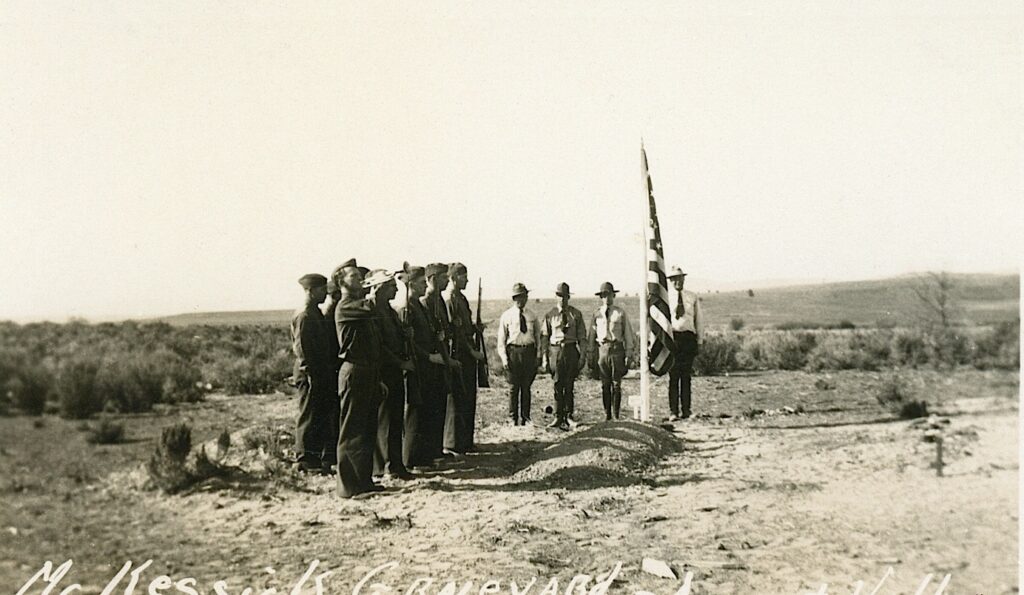
McKissick Cemetery, November 11, 1936—C.H. Bennett Collection
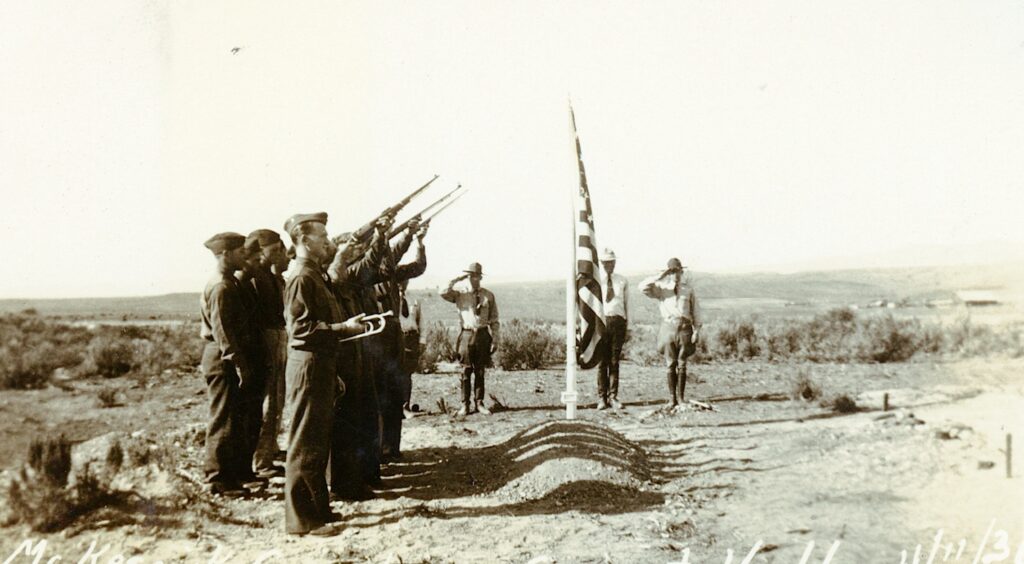
Company Clerk, C.H. Bennett of the Secret Valley CCC Camp captured this special service at the McKissick Cemetery in Secret Valley. While there is a photographic record of. the event, the details of what took place is not known.
They assembled at the grave of John Daniel McKissick, a World War I veteran who was buried there on March 17, 1936. McKissick was born on January 13, 1891 in Secret Valley, the eldest child of John Best* and Jennie Swain McKissick. The following is an excerpt from his obituary: “He was drafted in the infantry at the first call and his brother Wilbur Best McKissick enlisted in heavy artillery soon after he heard Johnny had been called. John was found on the battlefield of Argonne (France) by a first-aid nurse, lying among the dead, with a dead comrade laying across him, breathing but still bleeding from a shot over the heart and through the chest by an explosive shell or shrapnel which tore a large jagged hole through his left shoulder blade.
McKissick Cemetery, November 11, 1936—C.H. Bennett
”Aid was summoned and he was carried on a stretcher. to a hospital tent, where he remained until he was able to be removed across the Channel to a hospital in England, where he lay for six weeks.”
John Daniel McKissick—Donald T. Garate
John Daniel McKissick never fully recovered from his injuries. He would spend time on and off in hospitals and when he passed away he had been in the Veteran’s Hospital, Salt Lake City. for a long time
Tim
*John Best “Buster” McKissick has the distinction of being the World’s First Champion Cowboy.
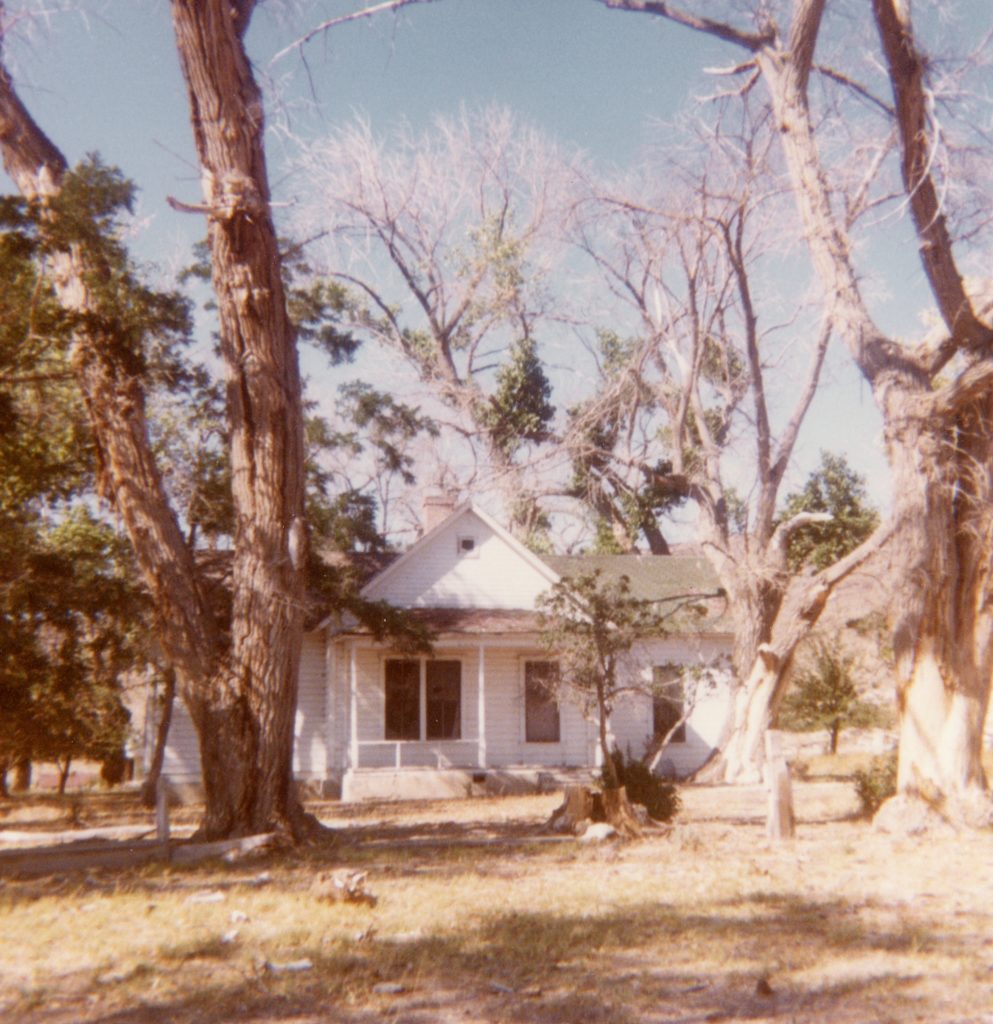
The Smoke Creek Ranch located near the California-Nevada border is one of the oldest ranches in Nevada. On May 30, 1857, T.T. Kingsbury claimed the property. In the 1860s, he followed by W.V. Kingsbury (no relation) who had a trading post there. Business was brisk because of not only located along the Noble Emigrant Trail, but there was also military encampment nearby.
Smoke Creek Ranch, September 29, 1979
Theodore Winters an early settler of Washoe Valley, Nevada acquired Smoke Creek as part of his ranching empire. In 1884, his son, George Winters purchased the Shinn Ranch located on the upper portion of Smoke Creek. One of the next owners were the Pon Brothers. Then there was Patrick Flanigan and Rees T. Jenkins outfit among others. In 1949, Albert Freeman, had the reservoir constructed on Smoke Creek that straddles the stateline, not that farm from the ranch house compound. Of course, I am always seeking information about this place as well as the Smoke Creek Desert in general.
It should be duly noted that this was the location of the Roop Post Office that operated from 1894 to1924, when operations were transferred to Wendel.
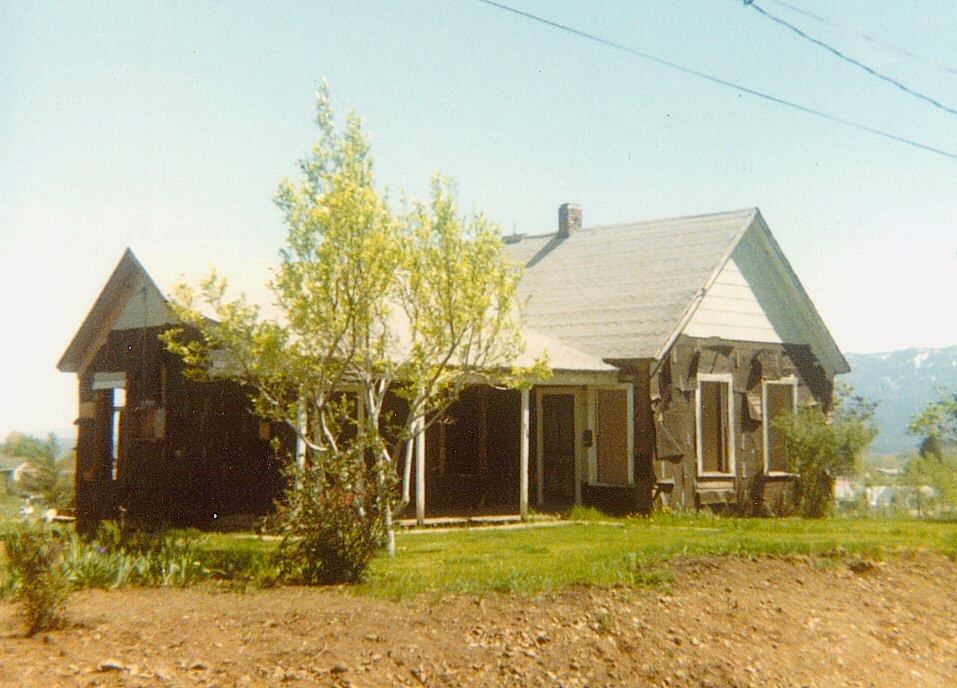
The Brashear Residence on the corner of South Lassen & Brashear Streets. Taken on June 11, 1979 when the house was being torn down.
In 1906, Brashear Street became the first new street inside the original town plat. There would be only three other streets inside the original city limits to be created. The others were Hill, Maple and Quarry..
William Brashear came to the Honey Lake Valley in 1863 and moved to Susanville where he purchased all of Block 32 and segments of Blocks 24 and 31, near the Lassen County Courthouse. These had never subdivided into lots. Creating the street was one matter, and the subdivision a different story. I will be doing a follow up, when I able to due a file transfer, using a one of the local library’s computer.
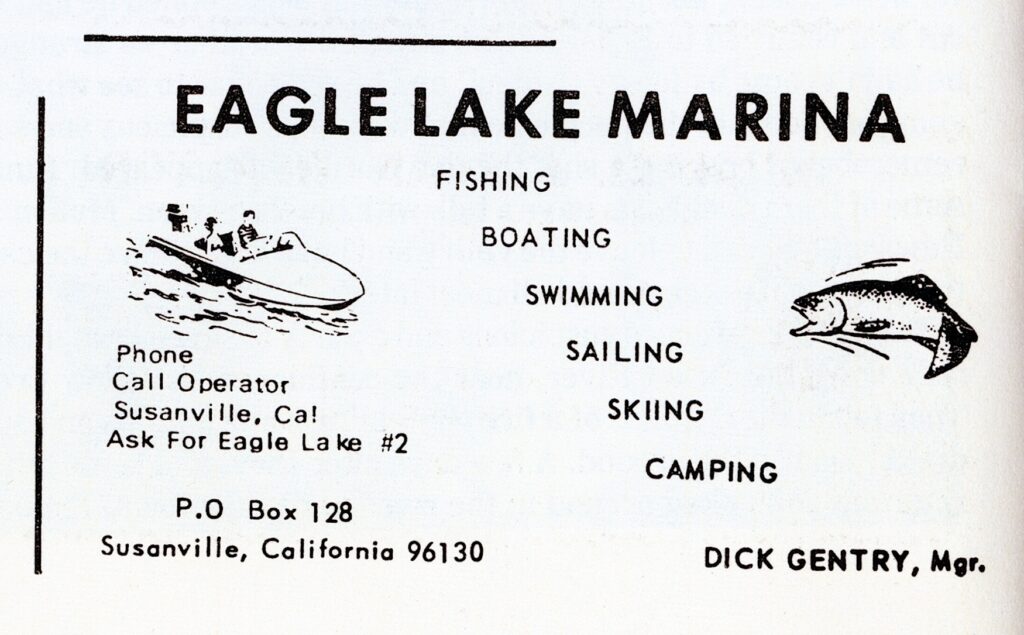
Gentry’s business card advertisement, High Sierra, 1972
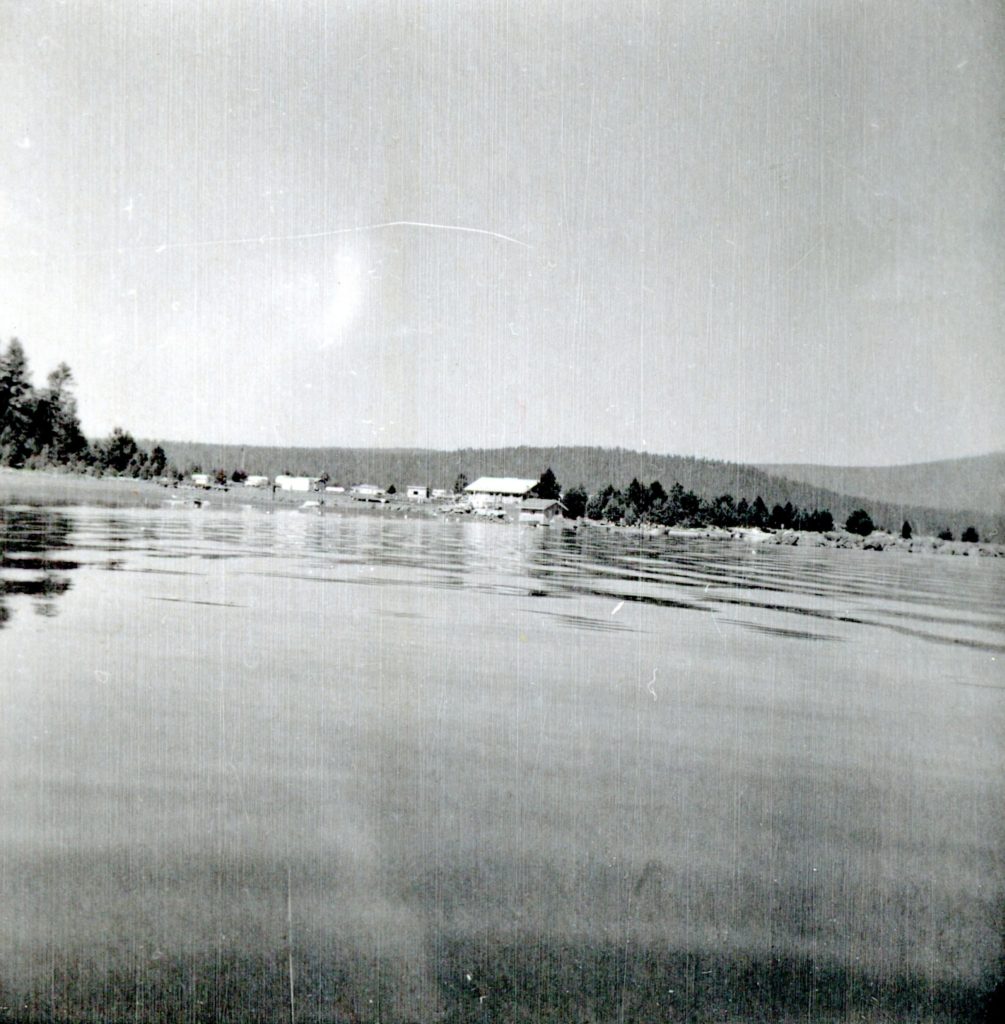
In the late 1950s, Lassen County officials working with the Lassen National Forest began implementation of development of campgrounds and a marina at the south shore of Eagle Lake. The county leased the property from the forest service for a marina and in was completed in 1961. The following year, the county sub-leased the marina operation to Richard “Dick” Gentry. In 1970, due to the rising level of the lake, the boat harbor was revamped. Upon completion it was named the William W. White boat harbor, for former Lassen County Planning Director who was an ardent supporter of the project. In an 1971 article in the Sacramento Bee, Gentry complained about the rising water levels of the lake and went on to the state that there was too much water in the lake.