A Strange Insurance Policy

LLB
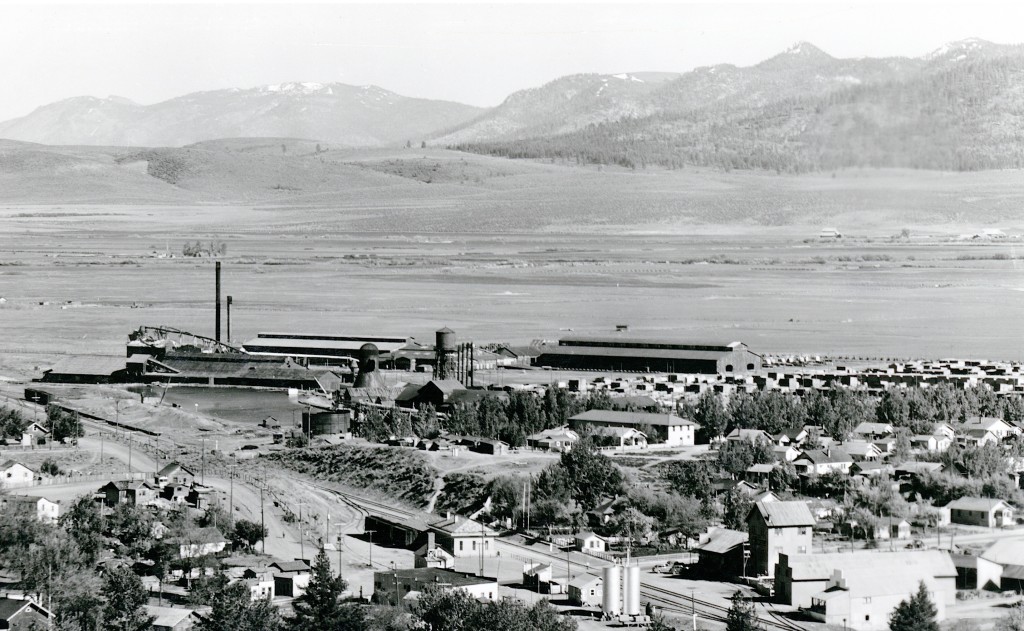
A 1930s view of Lassen Lumber & Box Company

In October 1917, C. Edgar Cotton of Spokane, Washington, R.D.. Baker of Pittsburg, Pennsylvania and Charles McGowan of Klamath Falls, Oregon, spent two weeks in the region inspecting Forest Service timberlands. They became acquainted with Susanville businessman, M.O. Folsom. Their initial contact with Folsom was in connection with possible mill sites.

This time around, Susanville was not going to let this be the kind of missed opportunity it had experienced with Red River Lumber Company and the Western Timber Treating Company. On October 26, 1917 a citizen’s meeting was held. with approximately seventy people in attendance. Assemblyman A.J. Mathews presided over the meeting and gave an outline of the situation. McGowan and Cotton had already examined proposed mill sites. The proposed to build a sawmill, box factory and planing mill at Susanville that would initially employee 250 men. This, of course, was contingent on the residents donating the property. The site they desired was the Winchester property, located just east of the Susanville Depot.

In a democratic manner, C.E. Emerson, Jules Alexander, M.O. Folsom, L.R. Cady and Russell Brownell were elected by ballot as the general operating committee. It was proposed to offer the company 40 acres, with water rights and an 8,000 cash bonus.. McGowan and Company, after all, had the option to build its plant in the vicinity of Westwood Junction to reduce the cost of transporting the logs to the mill.

It was not until the first week in March 1918 that the news was released to the community that McGowan and Cotton would establish its mill at Susanville. By the end of the month construction of the mill began.
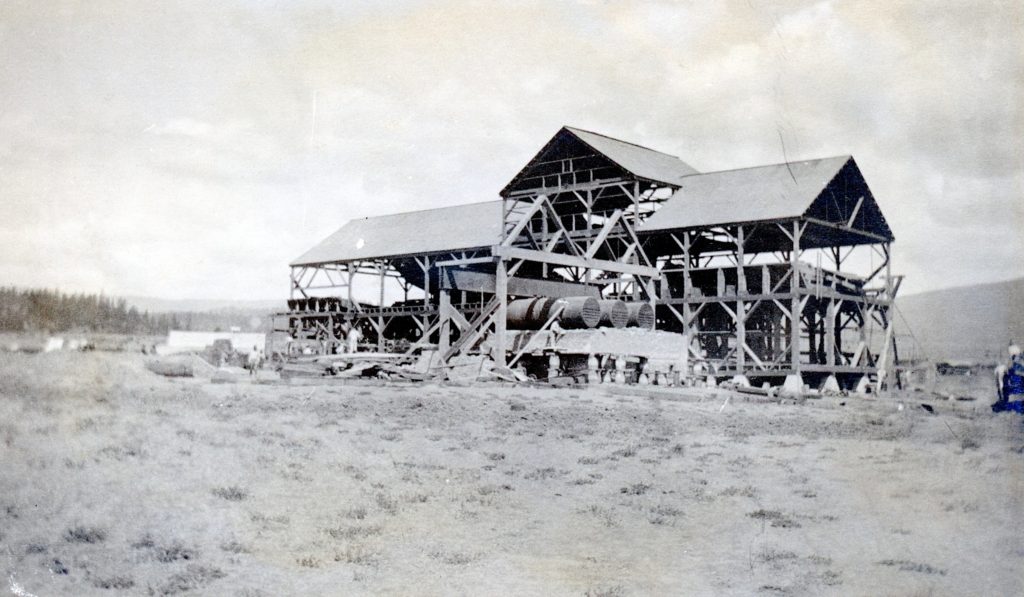
Lassen Lumber & Box Company’s mill under construction, 1918–Belle Dorsey

This new enterprise incorporated as the Lassen Lumber & Box Company. To protect the interest of the Citizen’s Committee, an agreement between the committee and Lassen Lumber was negotiated. The foremost provision was the company build a sawmill with a daily capacity of 70,000 board feet. In addition, if for some reason for mill should be destroyed fire before January 1, 1921, and the company did not rebuild, the property would revert back to the town.
Support

Last Call for 2024 Calendars

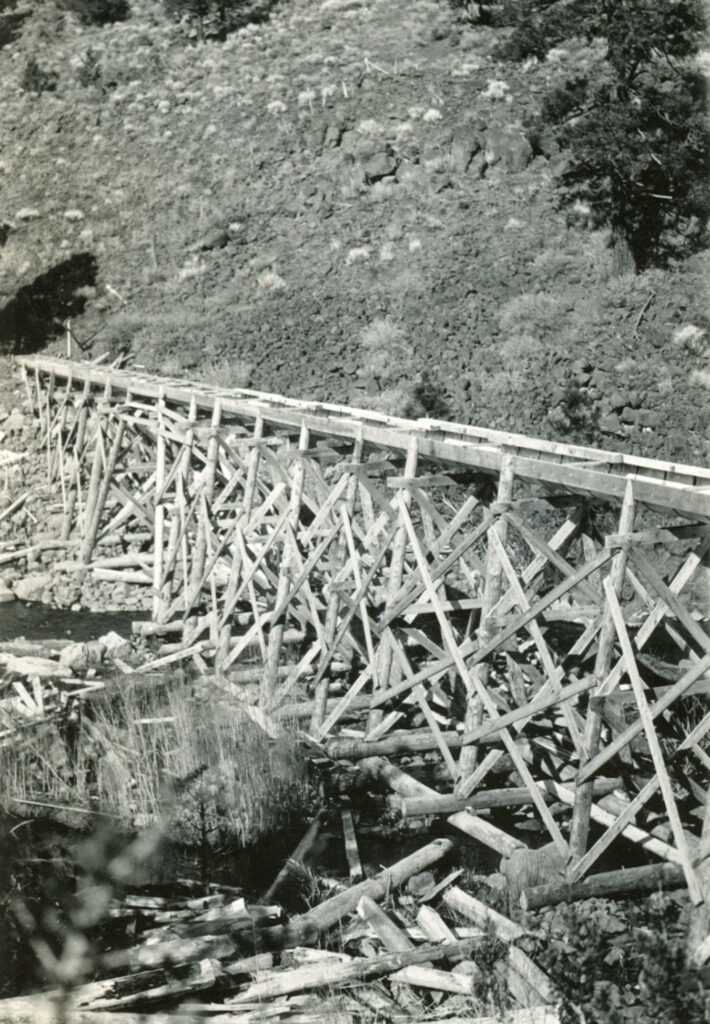
Willow Creek flume, 1925,  is a featured photograph.

Just a friendly reminder to buy your calendar, as inventory is low at this point. Margie’s Book Nook has ten, and I only have one available. This particular calendar features one of the most unique selection of historic photographs I have put together. As one person noted, “You really picked a nice variety of unknowns for us Lassen County amateur historians.”

Tim  

The Tax Man Cometh

With the first installment of county property taxes due shortly, let’s take a look back in time.  In the first year of Lassen County’s operation, 1864-65,  there was a total assessed valuation of $239,558 in land improvements and $439,301 in personal property. The County had an original tax rate of $1.25 on each $100 assessed value for County purposes, plus collected another $1.25 on each assessed value for State purposes. The total collection in taxes amounted to $16, 971.47 of which the County received $8,485.57.
In the County’s first year of operation, the District Attorney attempted to collect $958.95 in back taxes, which represented nearly eleven percent of the County’s budget. The District Attorney filed lawsuits ranging from A.H. Hardin who owed 90 cents in a special assessment levied by the Janesville School District  to $164.40, which Isaac Roop owed on his municipal Piute Creek water system.

Tim

You Asked-Susanville’s Compton Park

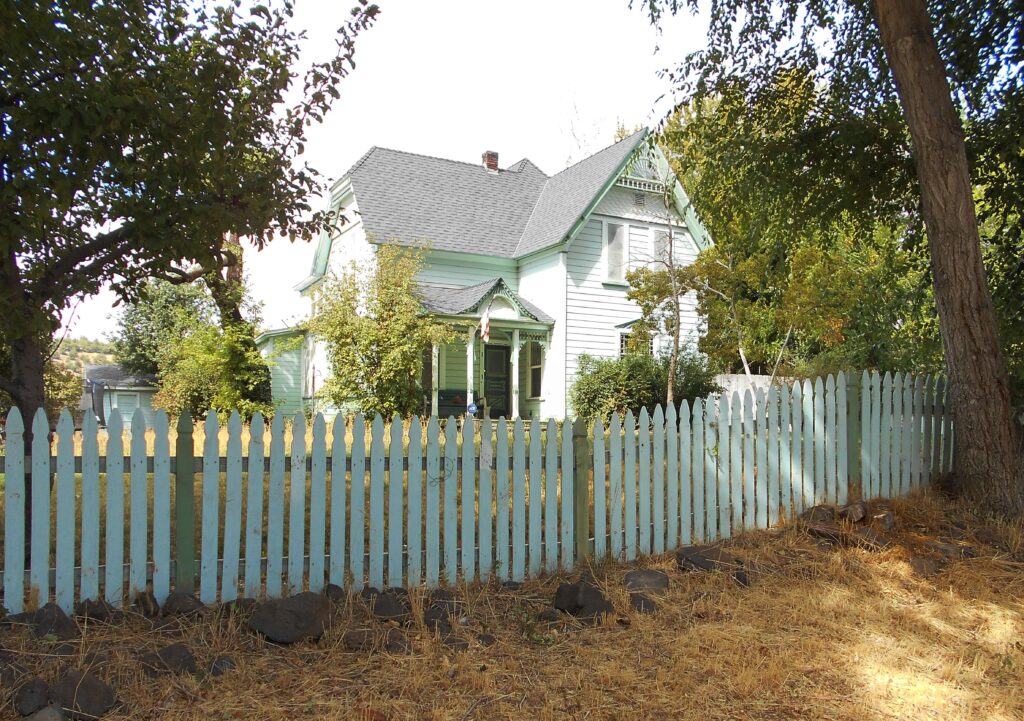
The former Compton House,North Weatherlow Street, Susanville—Jere Baker

Compton Park name implies it is a recreational facility, when in a fact it is a small housing tract. It is located along Chestnut and Weatherlow Streets. On November 1st, 1945 the Compton family took possession of the 110-acre Taylor Ranch, which comprised a region on North Weatherlow Street. It was soon after that, Claude Compton and his son James began to subdivide the property for homesites. It did garner attention, as it was the first subdivision in Susanville since 1922.  On January 15, 1946 the Compton Park subdivision was approved containing twenty-three lots.

 Tim

A Two Beer Limit

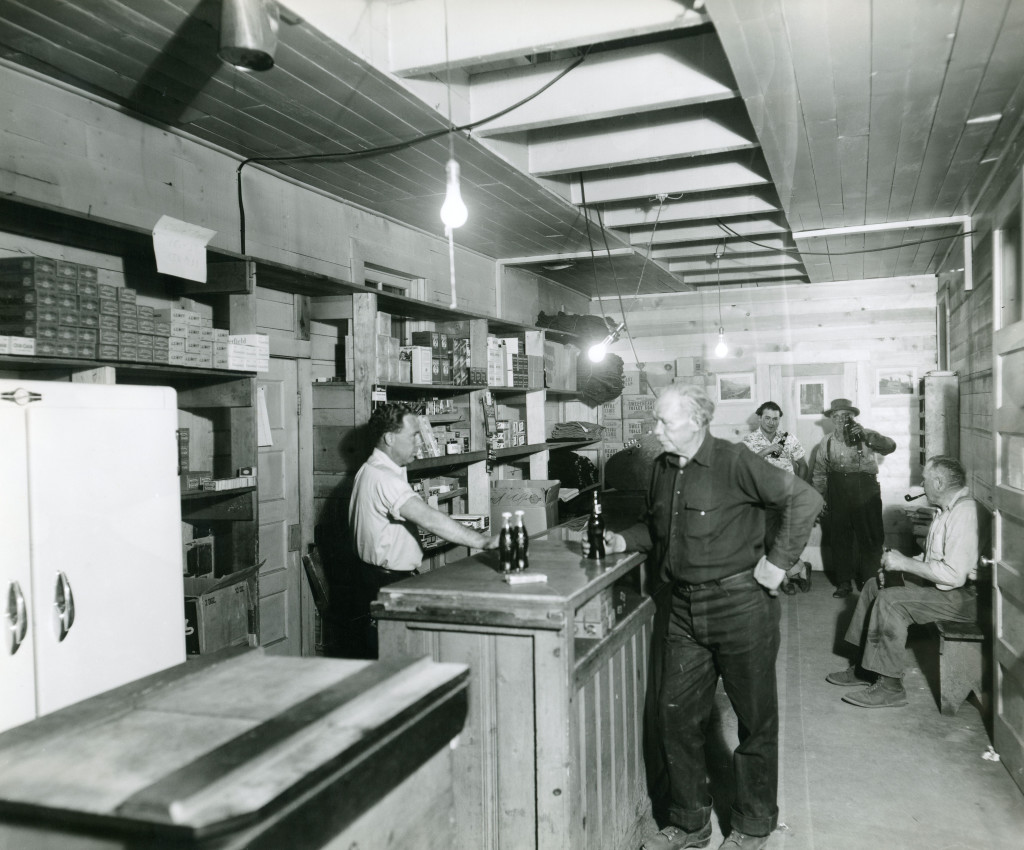
Fruit Growers Camp Harvey Commissary, 1947–FGS Company

While yesterday we explored Rev. Parsons’ attempt to make Susanville a “dry” town” the Fruit Growers Supply Company did something unusual in their logging camps after Prohibition. Fruit Growers in their logging camps did something radical—they served beer.  However, since it was known many loggers over indulged in alcoholic  beverages away from camp, Fruit Growers was well aware of that fact. However, Fruit Growers’ policy then understood the value of taking care of your employees, they reciprocated the same to their employer.. To prevent any kind of over indulgence, one could only have two beers. As a preventive measure, for some one to sneak passed that limit, one was served the two beers at the beginning. People who worked in those Fruit Growers logging camps that I interviewed stated there were no issues or associated problems with the beer. There were some that thought. it was a nice amenity and stated how well they were treated by the company.

Tim


Rev. Parsons’ Anti-Saloon Crusade

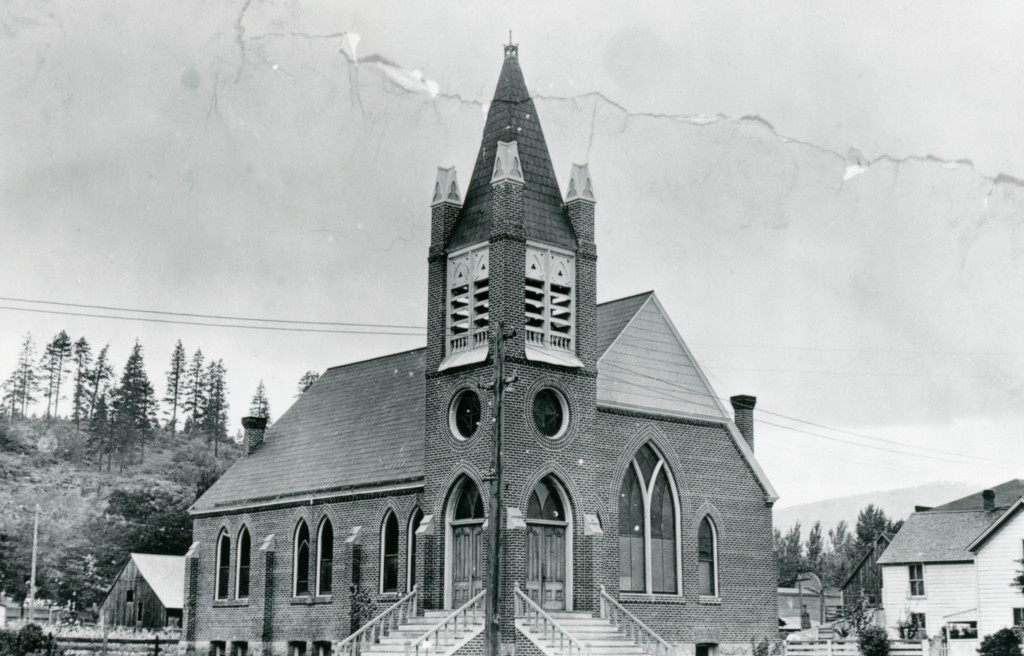
Methodist Church, 1905
Susanville’s Methodist Church, 1905

In January 1908, the Rev. N.M. Parsons of the Susanville Methodist Church began the first official prohibition movement in the town. The issue had informally been discussed since the early 1880s when there was a local chapter of the Women’s ChristianTemperance Union. Parson began his campaign by focusing on the social ills caused by alcohol. He circulated petitions to have the issue placed on the next municipal election ballot, scheduled for April 11, 1908. The  City Trustees accepted Parsons’ petitions and placed the matter before the voters. There was one stipulation: it would be an advisory measure as to whether saloons should be banned.

It was a widely debated topic. The 1908 budget for the town was $3,498. There were two main revenue sources. One was the property tax assessment and it generated $1,815. The other was the liquor licenses which provided $1,424 to the town’s treasury. The town was operating on very lean times, with no spare funds for civic improvements.

Once thse figures were revealed, Parsons’ ballot measure was doomed. After all, if the City lost the money generated from liquor licenses, the only alternative to make up for the loss would be to increase property taxes. That appeared to be the voter’s consensus. The issue generated the highest voter turnout to date with 157 votes cast. The results: 110 votes to remain “wet” and 47 “dry.”

Donate


Shaw Library Presents “Profiles”

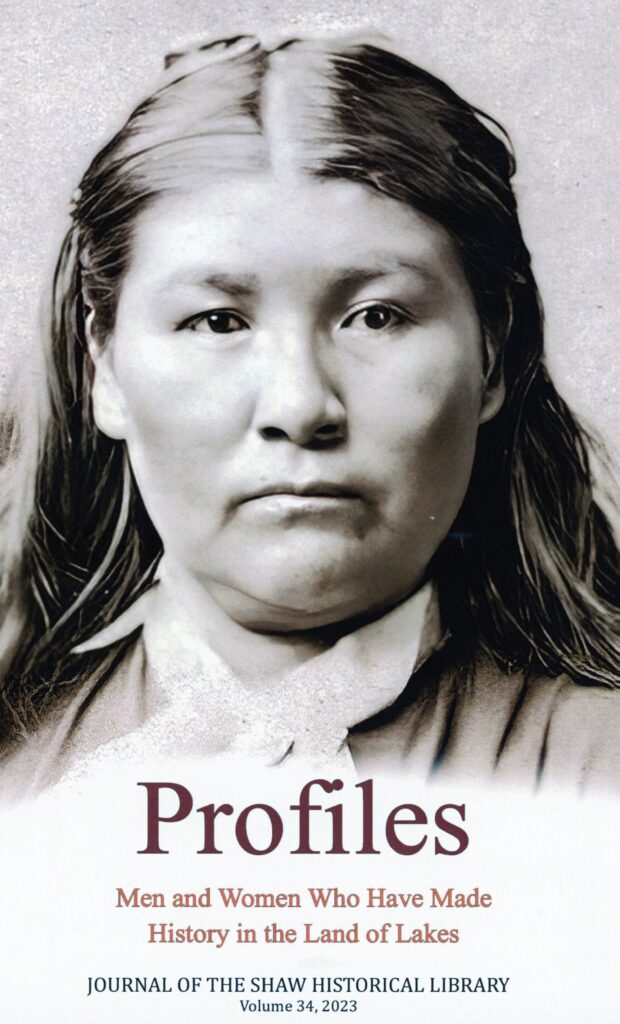
Cover of Journal No. 34 of the Shaw Historical Library.

Profiles: The Men and Women Who Have Made History in the Land of Lakes is the latest annual publication of the Shaw Library.  If you are not familiar with these publications they are quality books in both content and production.

I have not had an opportunity to read my copy yet. There is a biography on Isaac Roop, as well as Sarah Winnemucca, Reub Long and a host of others. These are great books, and I highly recommend them.

Copies of “Profiles” can be purchased in Susanville at Margie’s Book Nook or by contacting the Shaw Historical Library by email at shawlib@oit.edu or by calling 541-885-1686.

Tim

You Asked—McKissick Ranch, Secret Valley

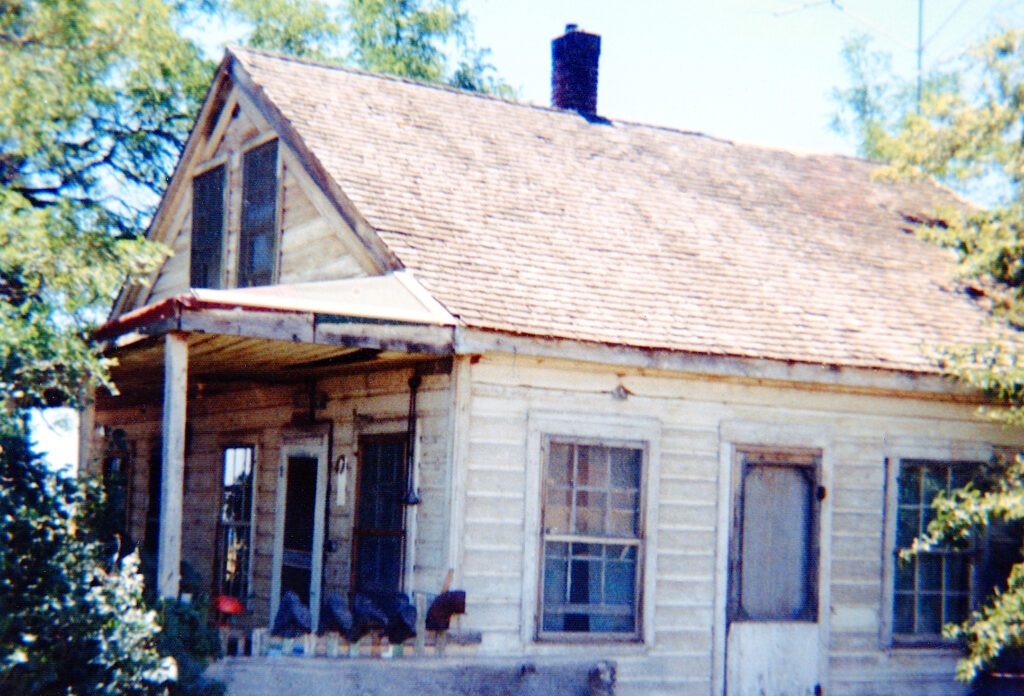
Daniel McKissick ranch house, SecretValley, 1975–Grant & Lena Trumbull

Alas, the photograph featured is not the one the inquiry was about, but another McKissick ranch house in the same vicinity.  The latter is distinct and can be seen along Highway 395, where a green meadow, with a tall stand of cottonwood trees surrounding an abandoned large two-story ranch house. In 1869/70 Daniel McKissick became the first permanent settler of Secret Valley. When the NCO Railroad was completed to Amedee, on the east side of Honey Lake, it created a lot of traffic for those headed north. The McKissick family established a stage stop/hotel to take advantage of the weary travelers. As time marches on, changes were on the horizon and by the the time the French family acquired it in 1925, the building had more or less been converted into a very large bunkhouse. Recently some one wrote a comment about it, and it appears below.

“The cottonwoods that previously lined both sides of the road approaching that old hotel are now gone. But the building remains, as evidenced by the following pictures and story assembled by creep girl who recently went there looking for ghosts for purposes of stimulation she apparently lacked. And I promise you, there were plenty of loud unseen forces at night upstairs at the time that me another cowboy lived downstairs in the 70’s working for a large cattle company.”

Notes From the Field: Abandoned Brothel of Secret Valley
https://www.atlasobscura.com/articles/notes-from-the-field-abandoned-brothel-of-secret-valley

Tim


It Is Not Always Quiet In the Cemetery

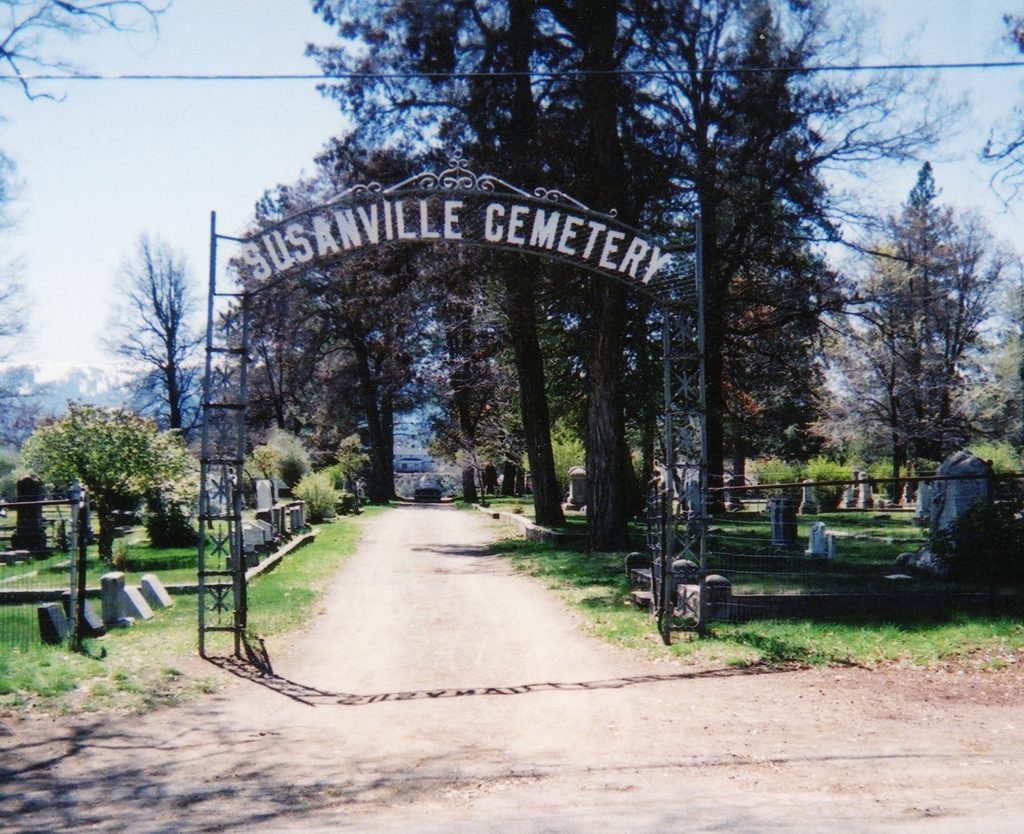
Susanville Cemetery entrance prior to the February 5, 2015 windstorm

Having spent considerable time in the local cemeteries, it is not always quiet resting place many would believe. It actually has a long history. Just because one is initially interrred there, does not mean its that person final resting place. When Fannie Knoch died in 1910 she was buried in the Susanville Cemetery. When her husband David Knoch passed away in 1911, his remains were taken to San Francisco where he was interred. He was not alone, for his wife’s grave was exhumed and transported with him.

In 1921, William S. Brashear filed a complaint with the Lassen County Board of Supervisors because in September of that year a non-family member was buried in his family plot. This I have learned is more common than you think. I received a call from Jack Rager’s family who upon arrival at the Lassen Cemetery were ready to intern his ashes in the family plot, only to find someone, with a headstone, was buried in his place. Then I had to deal with a good samaritan genealogist, who purchased and had placed a headstone for her relatives. It turns when the immediate family saw this, they were incensed, because while the family’s name were the same, they were not related. The headstone was removed, who knows whatever became of it.

Tim

Tuesday Tidbit – Biological Field Station News

An early brochure.

Some people might find this of interest. Chico State has transferred its interest in the Eagle Lake Biological Field Station on the east shore of the lake to the Susanville Indian Rancheria. Not sure what the Rancheria’s intent is. In the past, according to Bureau of Land Management policy it must be used for educational purposes, whether this applies to the Rancheria, I do not know.. When I was on the Lassen College board, I had brought up that the college should look into it, but that went nowhere.

Tim

Exploring Lassen County's Past