The Knoch Building’s Redo

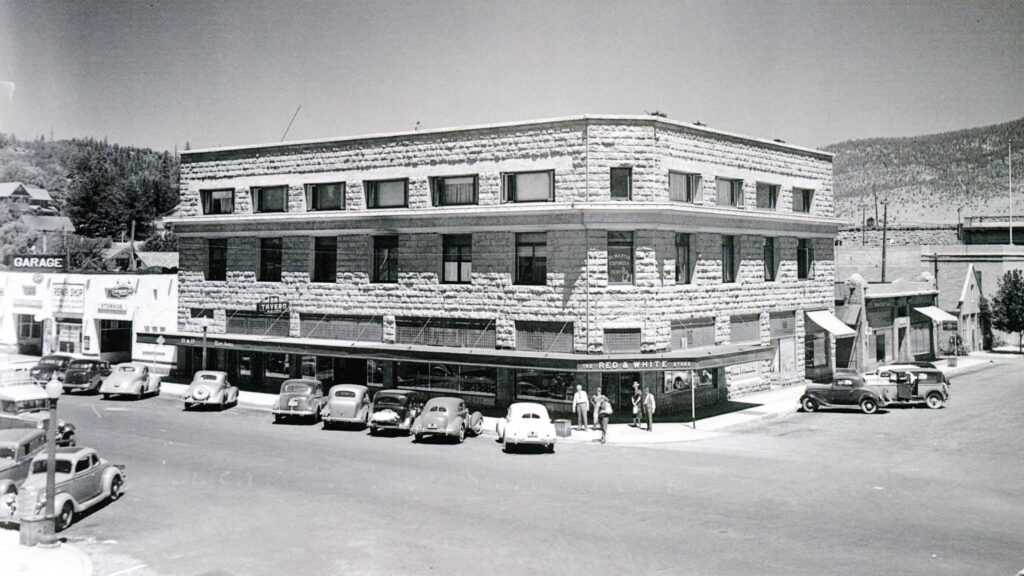
Knoch Building, circa 1940

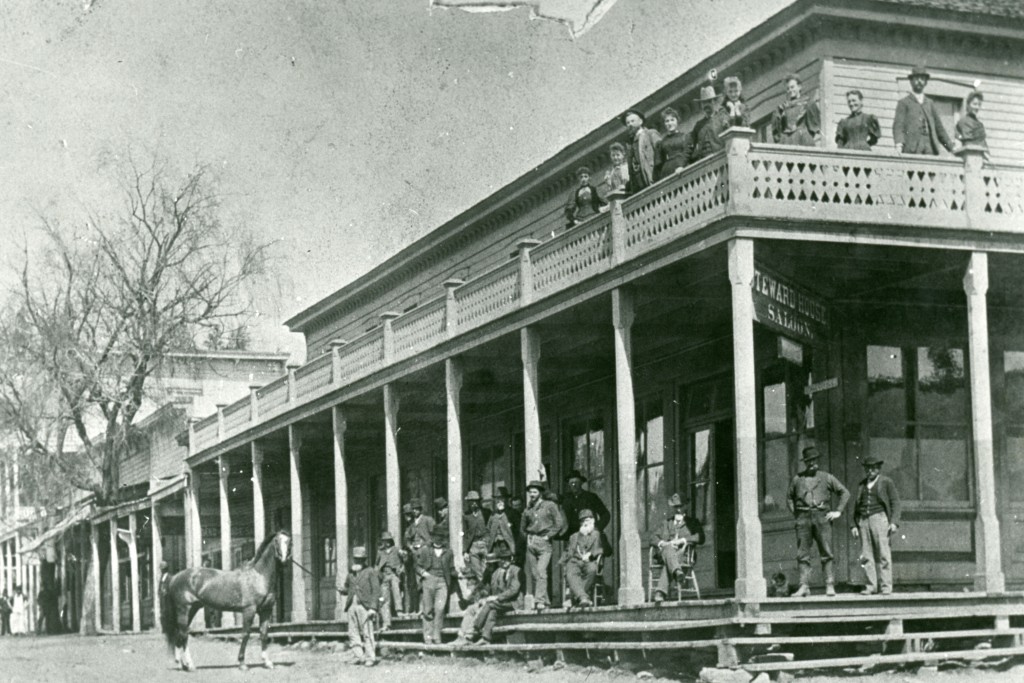
Susanville’s Knoch Building located at the corner of Main and North Lassen Streets has a long storied history. It was built in 1893 as a Masonic Hall, destroyed by fire in 1898 and subsequently rebuilt.

David Knoch who loaned the local Masons for the initial construction, would foreclose on that organization and took possession of the property and over time became known as the Knoch Building.

Knoch Building, circa 1900. Courtesy of Philip S. Hall

After Knoch’s passing in 1908, his son, Isaac “Ike” Knoch took possession of the building. With the arrival of the railroad to Susanville in 1913,  it brought tremendous growth to the region. In 1914, when Knoch proposed to add a third story to the building. He was told it could not be done. Well, as Knoch recalled years later, “That was all I needed the word can’t.” Work on the third story was to commence shortly after Labor Day 1914, However, with the Moose Lodge proposed a harvest festival in which Main Street would be shut down for several days, the work on the third floor was postponed. When the $34,000 project was completed, Susanville also had its first elevator.

Never miss a story support and subscribe here.

Before Spalding Tract

Jules Hurlbut’s homestead cabin., that eventually became Spalding Tract.  Courtesy of Orville Watkins

In 1914, John Spalding announced his intention to subdivide “his” ranch on the west side of Eagle Lake. However, truth be known it was not actually his. The property in question belonged to his brother-in-law, Jules Hurlbut. At the age of 8, Jules came to Lassen County with his parents, Timothy Judd and Caroline, along with his sister, Mira Eleanor. The family first located in Willow Creek Valley, where other family members resided, but would soon locate to Eagle Lake. In 1881, John Spalding married Mira E. Hurlbut.

Pine Creek
Pine Creek, circa 1914. It sholuld be noted that John Spalding’s original homestead was on the north side of Pine Creek. Courtesy of Wyn Wachhorst

In time, Jules homesteaded the property that is now Spalding Tract. During the 1880s, Albert Gallatin went on a buying spree acquiring the majority of private properties around the lake, including that of John Spalding. Jules Hurlbut held firm, and would not sell to Gallatin. A confirmed bachelor, Jules spent most of his life at Eagle Lake. In 1937, he retired to Susanville and died there in 1941. He is buried in the Susanville Cemetery, there is no marker for his grave.

Subscribe!

McKissick Cattle Company

The site of the McKissick Ranch, Madeline Plains, June 2004

Long Valley pioneer, Jacob McKissick created a large ranching empire in Lassen and Washoe counties. It would all come crashing down with his death in 1900. McKissick was a life-long bachelor, so there was a lot of speculation as to who would receive what. The bulk of his estate he left to his nephew, Benjamin Howard McKissick, who had a spent the greater portion of his life working for his uncle. Of course, this did not set well with other family members, and lawsuits were filed to contest the will. In 1903, Benjamin Howard McKissick could no longer handle the stress of these conflicts and committed suicide in a most painful way, by swallowing carbolic acid. This event, of course, created even more estate litigation.

On February 4, 1914, H.G. Humphrey, W.H. Moffat and J.L. Humphrey. incorporated as the McKissick Cattle Company. They slowly began purchasing many of the McKissick Estate properties. In 1926, J. L. Humphrey went solo, and part of the dissolution process he took possession of the McKissick Ranch in Secret Valley, and holdings at Amedee. Humphrey had two children—Jack and Lucille. Jack would inherit Amedee, Lucille  married Hugh French and received the Secret Valley property.

Support

Tuesday Tidbit—What Kind of Car?

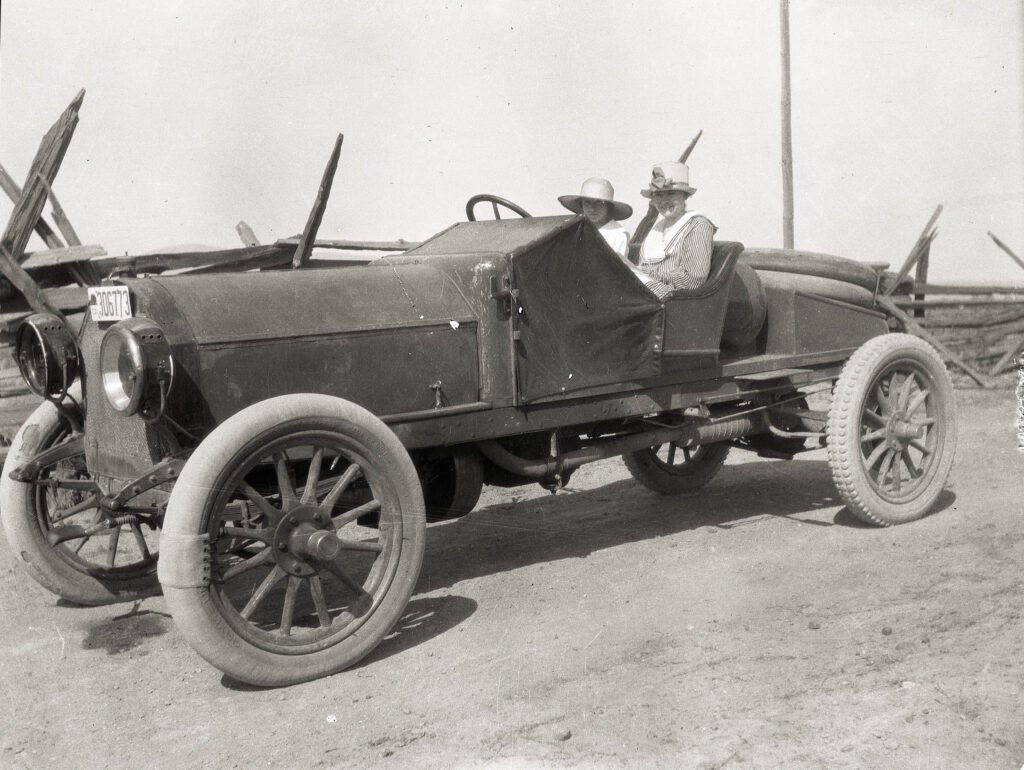
An early 1920s scene, Willow Creek Valley—Lola Tanner

Does any one have a clue as to what type of automobile this is? My grandmother, Lola Murrer (1899-1973) is on the left, but I do not know who the other person is. Lola’s first cousin, Alfred Talbott (1895-1966) was a master mechanic and for all I know he might have built this contraption.

Tim

Susanville’s Ash Street

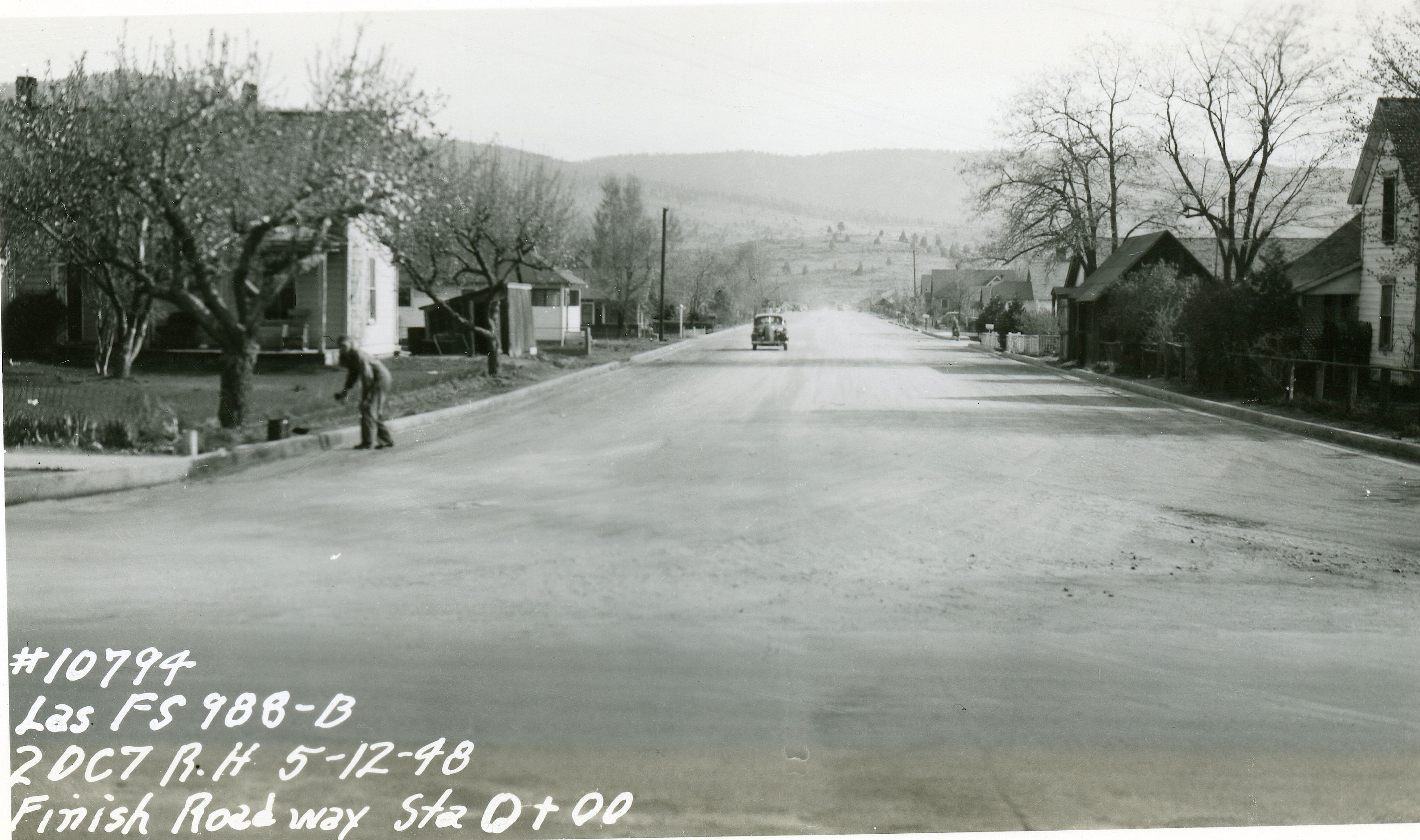
Ash Street, May 21, 1948

On January 16, 1911 M.O. Folsom unveiled his East Addition, Susanville subdivision containing 300 lots. Many of its north/south streets were named for trees, i.e., Ash, Cedar, Fir, Spruce. The east/west were numbered, i.e, First, Second, Third, Fourth and Fifth.

Ash Street, initially ended at Fifth Street. Travelers headed north either used Hall Street or Weatherlow Street to Chestnut. In 1947, Ash Street was incorporated into the Lassen-Modoc Joint Highway #14, the pre-cursor to State Highway 139. Ash Street was extended to connect the highway making for a straight route into Susanville.

Tim

A Little Known Dairy—Ramelli

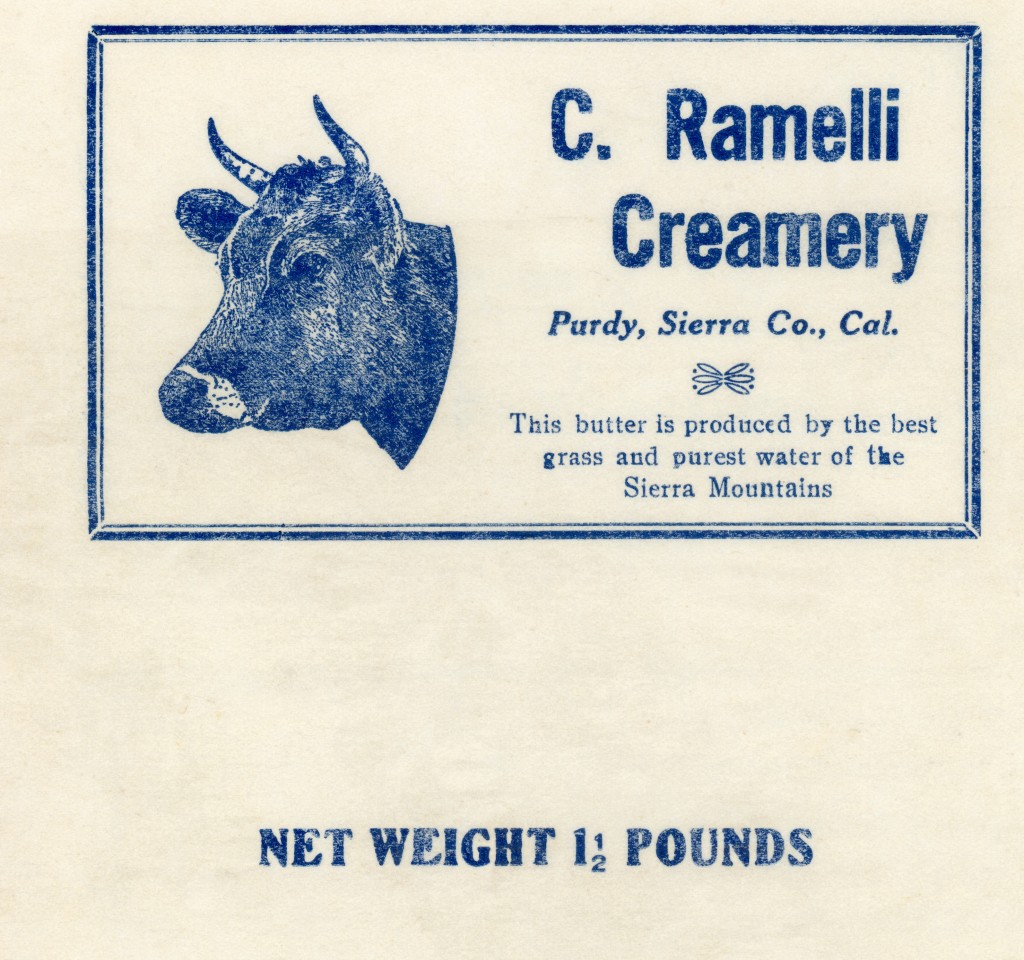
Ramelli butter wrapper. Courtesy of Eslie Cann

By the 1870s, Swiss Italians, mainly from province of Ticino were migrating to Northeastern California. A majority of whom found a new home in Sierra Valley, yet there was for a time a spill over in the Honey Lake Valley.

In 1887, Cesar A. Ramelli, was one of those migrants and he eventually located at Purdy, Long Valley, California. The area is best known to many as the region behind present day Bordertown, on the California-Nevada border. Rameilli established a dairy there. He later expanded and operated a second one at Bella Vista in the Truckee Meadows. With the assistance of his three sons, their dairy herd consisted of seventy-five cows. From that herd, butter and cheese were made. The cheese was made into blocks of 10, 20 to 25 pounds which was sold in the Reno stores.

Tim

Susanville’s Brannan House

Mike & Millie Brannan
Mike & Millie Brannan. Courtesy of Wally Barnett

Susanville’s first hotel, if you could call it such was Cutler Arnold’s story and half structure of hewn logs. For two years, beginning in the spring of 1857, it also housed the town’s only dining establishment, meals costing seventy-five cents.

As the town progressed so did the accommodations. In 1860, Emanuel “Mike” Brannan built a two-story hotel on the northeast corner of Main and Lassen streets. It was a transitional period, as the days of log structures were being placed with wooden framed ones. Brannan operated the hotel for the next four years, and due to some financial problems lost the hotel. Just as the Brannan House had replaced Arnold’s, Brannan’s was replaced by the superior Steward House in 1864.

Stewart House
Susanville’s Stewart House, 1881. It sometimes was used as a hospital. Courtesy of Dallas & Joyce Snider

The Brannan House slowly faded away entirely. Its second floor was converted into lodge hall for the Oddfellows. The first floor was used for a variety purposes including that of the post office and the government land office. In 1880, it was torn down and replaced by a new Oddfellows Hall, and that building was replaced with the current structure built in 1896..

Support this site, Subscribe today.

Fort Weatherlow and Other Musings

Roop's Fort
Roop’s Fort, 1940s

In June 1927, the Lassen Advocate reported how “Fort Weatherlow” was threatened by fire. The reporter new to the area, was not aware that while the historic structure located on Weatherlow Street, was known as Roop’s Fort.

Fast forward nearly a century later, though Susanville has no newspapers, there are some online news outlets. Some of these outlets are staffed by people new to the area. No problem with that. However, when they occasionally come up with new names for established landmarks, that make me cringe.

Tim

Fire Train Restrictions

fire train
Red River’s fire train, courtesy of Doug Luff

The Red River Lumber Company at its Westwood operation developed its own fire trains used to fight forest fires. Of course, Red River had its extensive railroad logging network. However, if Red River wanted to access the Southern Pacific’s railroad tracks between Westwood and Susanville there were protocols set by Southern Pacific. In 1936, a Southern Pacific Bulletin stated ”The fire train of the Red River Lumber Company may make the following speeds: Between Mason and Westwood Junction, 35 MPH’ Between Westwood Junction and Susanville, 25 MPH; and through all tunnels, 10 MPH.” I do not know what type of restrictions the Western Pacific imposed.

Tim

Exploring Lassen County's Past