Madeline Plains Changing Economy

Van Loan’s Hotel, Madeline, circa 1904.

Its never been easy to make a living on the Madeline Plains. By1920 many a homesteader’s dream was shattered and moved elsewhere to make a living.

As the old saying does, as one door closes, another opens. This was certainly the case for the Madeline Plains. The nation’s Prohibition brought opportunities for some. For the plains, its isolated location was not a hinderance for bootleggers. Far enough away from the eyes of law enforcement, but not too far to market is major product—jackass brandy.

For one person, Ira Evans, this did not sit well for him. Evan’s owned the two-story hotel in Madeline. He had difficulty in finding managers for the facility. The last one he hired, turned out to be a notorious  bootlegger. In 1929, enough was enough. Evans had the hotel dismantled. The salvaged lumber was taken to Alturas to build dormitory housing for the Pickering Lumber Company.

Subscribe

Red River’s Logging Camp 33

Camp 33
Camp 33

Red River Lumber Company operated numerous logging camps from 1913 through 1944 when it sold to Fruit Growers. The camps were assigned numbers, though in no particular order. The majority of the camps were short lived and only had a span of one to maybe three years. One of the more interesting camps was Camp 33, but referred to as Town Camp, as it was located less than a mile west of Westwood. What made it unique was that Red River’s company town of Westwood would experience from time to time a housing shortage for its employees. On occasion, this camp was used to house mill workers instead of loggers.

Tim


Susanville’s Halltown

The Hall residence, 1895. Today, the location is the 1600 block of Susanville’s Main Street, the current location of Grocery Outlet.

Wright Patrick Hall is known for many things, especially that as a long serving Lassen County Clerk, and also that as the Lassen County Treasurer/Tax Collector. He first came to Susanville in 1860, and then moved to Nevada for a brief stay before returning.  On May 22, 1877,  he  purchased 480 acres one half mile east of Susanville from Heiro K. Cornell for $700. In 1885, Hall began selling lots with Main Street frontage. In 1895, Hall hired surveyor William D. Minckler to plot 160 acres known as Halls Addition, but everyone called it Halltown. The bottom land of Piute Creek separated Halltown from Susanville. It was not until the 1920s that the two communities slowly grew together.

Support by subscribing.

St. Patrick’s Dinner-This Saturday

The church’s 1976 advertisement.

The Sacred Heart Church will hold its annual St. Patrick’s Dinner this Saturday, March 16 at Monsingor Moran Hall from 4 to 7. Costs: $20 for Adults; Children 6 to 10 $15 and those under six free.

This annual event started in 1917. The menu, of course, has evolved over the years. For decades the traditional corned beef and cabbage was never served. In 1974, Father William Storan was appointed the parish priest. In 1975, he requested that corned beef and cabbage be placed on the menu and that the church would slowly phase out spaghetti and roast beef.

Tim

Frank Heath’s Continued Journey

Frank Heath
Frank Heath and Gypsy Queen at Stacy, 1927–C.R. Caudle Collection

After Heath departed from Spanish Springs his next stop was at the McKissick Ranch in Secret Valley, managed by C. L. Hudgins for J.L. Humphrey owner of the ranch. Hudgins wife gave the following warning to Heath for his next destination, Wendel:

On finding we were to cross considerable real desert, Mrs. Hudgins warned me, in crossing the desert there was a plain trail, never to leave that trail in trying to cut across. The Hudgins knew all about that whole country, I may say, for hundreds of miles around. She told me that in leaving the trail many people got lost and frequently perished. First they would find themselves lost, got confused and get to weaving back and forth or traveling in a circle, and frequently never would get out of alive. Continue reading Frank Heath’s Continued Journey

An Interesting Journey—Frank Heath

Frank Heath 1336

Many an interesting character has passed through Lassen County over the years. In early 1927, was World War I veteran Frank Heath. He was on a mission to ride horseback through every state of the Union on a single horse. He left Washington, D.C. on April 1, 1925 on his horse he named the Gypsy Queen. In all he would travel 11,523 miles and on November 14, 1927 arrived back in Washington, D.C. Continue reading An Interesting Journey—Frank Heath

Musings

Upper Smoke Creek Tour

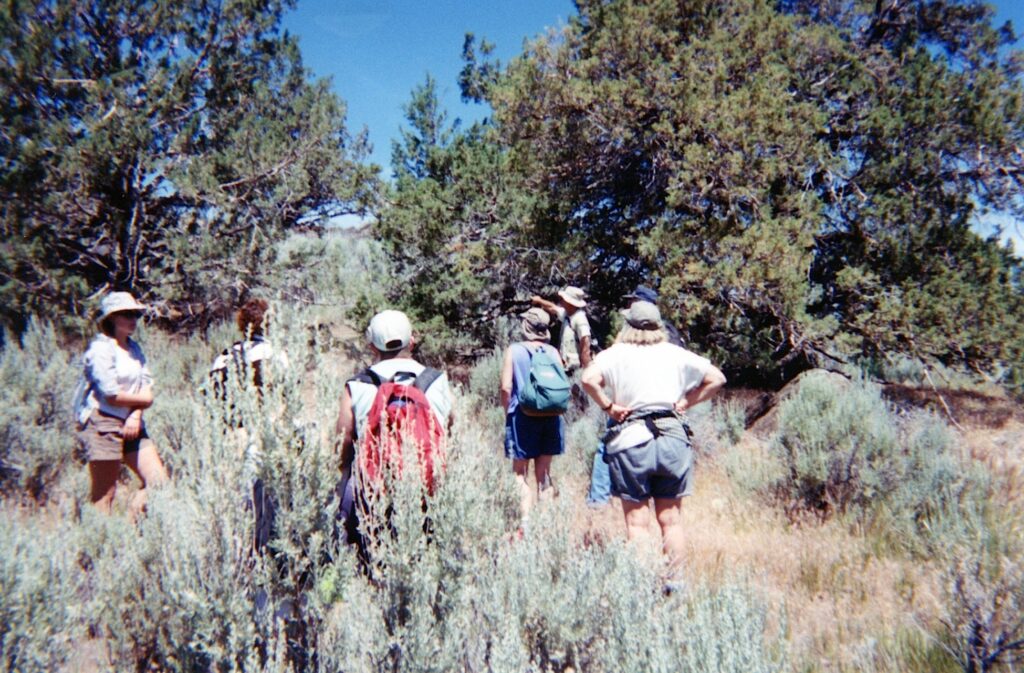
Years ago, the second week in May in California was designated as Archeology Week—now October is designated as Archeology Month. Back in 1992, BLM archeologist Don Manuel and myself, as a historian conducted a prehistoric/historic tour of the Smoke Creek Desert territory. It turned out to be widely popular and for a time several tours of different locations were held throughout the year. I recently came across a photograph of the Upper Smoke Creek Tour. These outings were rather popular.

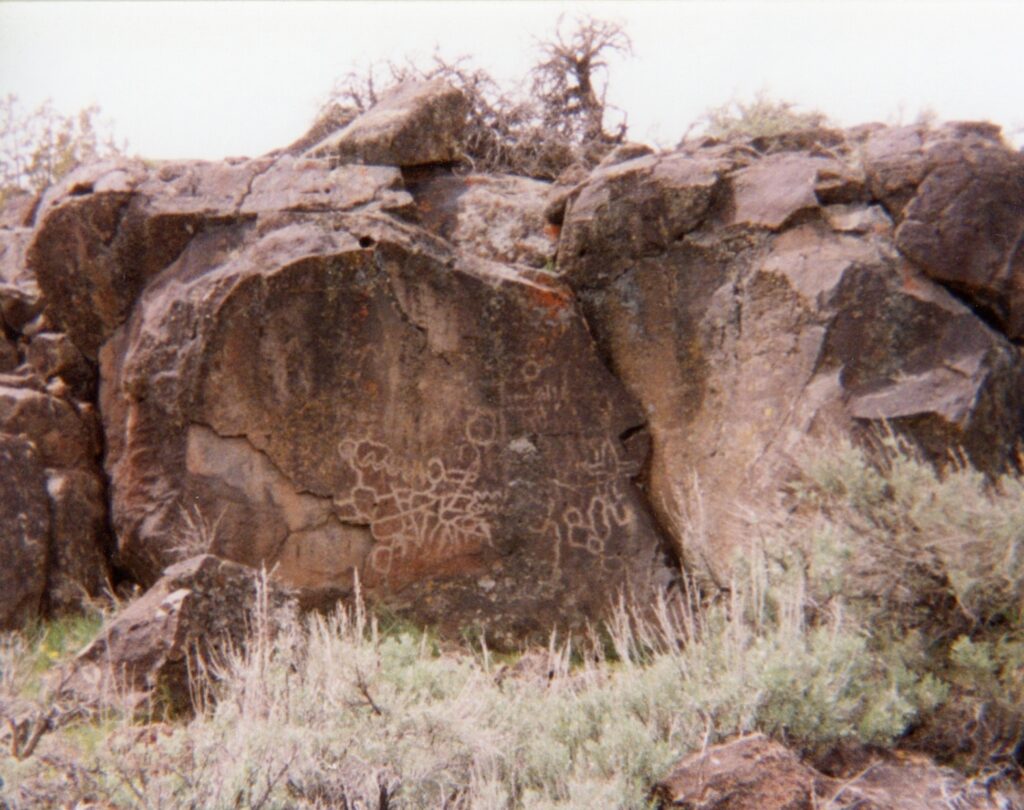
One of many petroglyphs observed along Upper Smoke Creek, 1993.

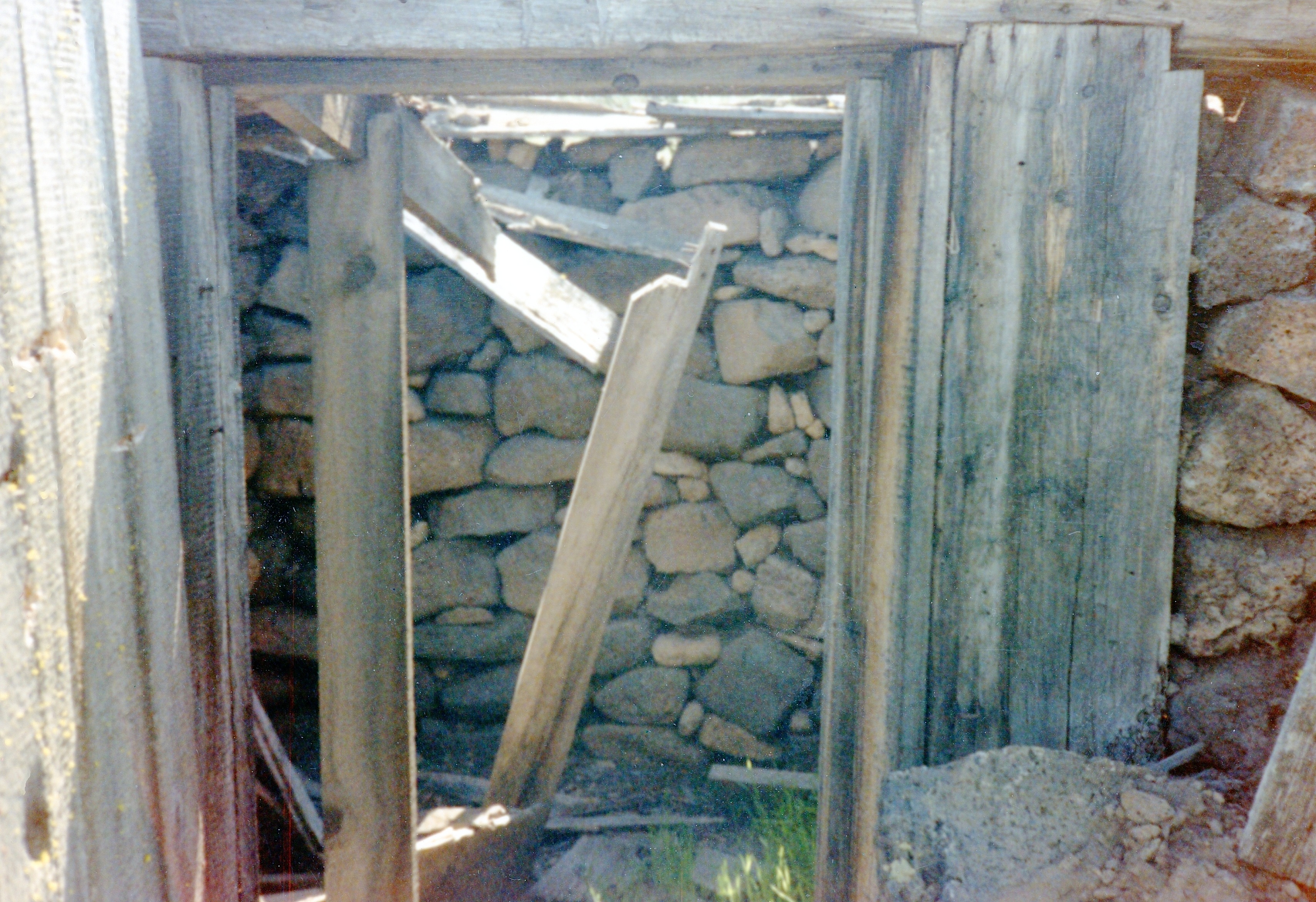
One of the more unusual tours was an east side Eagle Lake tour. Manuel did not partake in this one, and Stan Bales was the BLM representative. This tour included stops at the two Eagle Lake tunnels, as well as the the Eagle Lake Land & Irrigation Company tunnel works and pumping plant location.

Plenty to see at Tunnel Works No. 2

From time to time I receive inquiries as to whether the BLM tours will be resurrected. From what little interaction I have with BLM it seems doubtful. Though, I do inform those interested, that they need to contact BLM directly and may be, if the stars are in alignment the inquiry will connect with someone who cares.

Tim

Buffalo Meadows Salt Works

The salt works, January 1980.

First of all, it boggles my mind, how B.F. “Frank” Murphy and Marion “Comanche George” Lawrence discovered and claimed the salt marsh in the summer of 1864 in the Smoke Creek Desert. For most of its existence Murphy was the main operator of the Buffalo Salt Works. Two types of salt was produced. The first being table salt that was 99.8% pure. A lesser grade was sold to mining operators with a smelting plant that utilized the salt.  The salt was obtained from wells, the brine pumped into vats, and left to dry.  In 1888, it was reported that 200 tons of salt was produced annually.

Continue reading Buffalo Meadows Salt Works

Old Logging Movies

Westwood Theater. Courtesy of David Zoller

Red River Lumber Company was unusual in that it did not routinely have commercial films made of its operations, as their competitors did. It was deemed a good business practice to show prospective retail buyers, as well as investors, of one’s operation. In the 1930s, Red River officials debated the issue, particularly as it might be beneficial if forced to sell Westwood. On the other hand Red River’s neighbor the Fruit Growers Supply Company routinely had films made. For them it was important for the citrus growers to see what was involved with their investment.

In the summer of 1928 Caterpillar tractors sent a camera man to Westwood to film Red River Lumber Company’s entire operation–from the falling of trees to finished board. Caterpillar was interested in Red River’s operations. Red River’s skilled machinists were constantly making improvements to Caterpillar tractors. Among old time Red River employees there was the folklore that Red River had more patents on Caterpillar tractors than Caterpillar.  Whatever the case may be, in November 1928 the film made its debut at the Westwood Theater.

It would be interesting to know if the film exist in Caterpillar archives. After all, Fruit Growers had a 1925 film of their Lassen Operation in their archives, which I did a showing at the Susanville Depot many years ago.

Subscribe


Lassen County Cemetery Burial Records

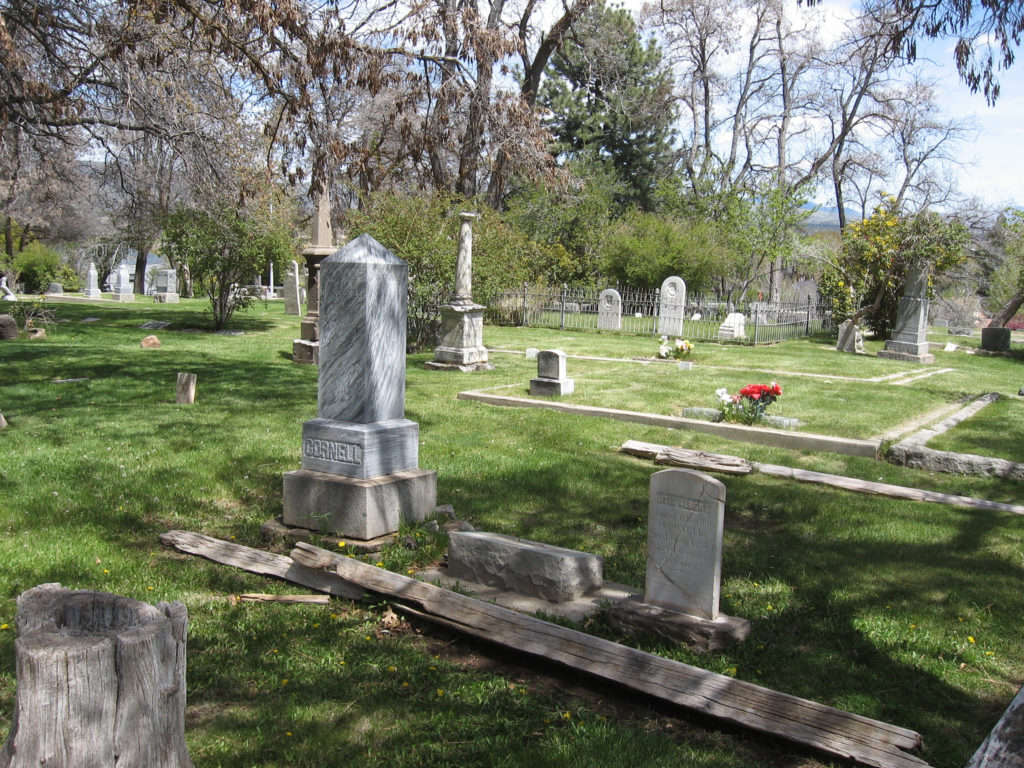
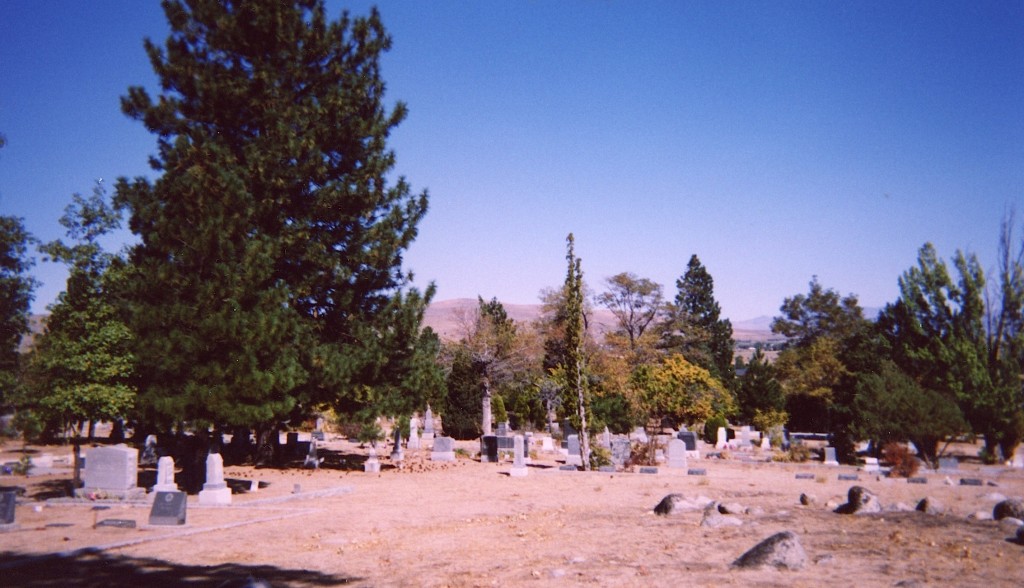
Cornell family plot, Susanville Cemetery, May 2, 2017

There was a recent inquiry about whether Lassen County, that maintains the Susanville Cemetery kept burial records. This falls under the common used term these days, its complicated.

There was a ledger of burials that the sexton kept at the Susanville Cemetery. This register was kept in a small combination tool storage shed, with a little work space for the sexton to maintain records. In 1970 or 1971, the sexton, a descendant of a prominent family, consumed one too many intoxicating beverages and accidentally caught the building on fire, and with it cemetery burial register was destroyed.

While the Lassen County Recorder’s Office has burial permit records that dates back to the 1890s, they only indicate the name of the cemetery, but no specifics as to the location, i.e. section and plot number.

Janesville Cemetery
Janesville Cemetery

Fortunately, I was able to copy the burial register for the Janesville Cemetery. While it dates back to the early 1900s, it is incomplete.  The Westwood Cemetery, not only did I do a headstone census, but I was able to examine all the burial records for the first fifty years, which some concise data can be found elsewhere on this site.

Tim

Exploring Lassen County's Past