The Doldrums of the Early 1900s

Susanville, 1910

Before there was the Great Depression of the 1930s, there was the 1893 Depression. The recovery from the latter was a slow process. Take for instance, the NCO Railroad remained stalled at Amedee for most of the 1890s. It was not until 1899 that the railroad finally began to extend its line northward to the Madeline Plains.

Standish, 1910–Prentice Holmes

The utopian community of Standish floundered since its beginning in 1897. While company officials stated their goal was to take a slow course, that  proved disastrous. In 1901, Associated Colonies the organizers/promoters of Standish went bankrupt.

On the surface in 1900-1901it looked like was Susanville booming. Four major brick buildings were constructed, but that was partially in response to recovery of a major fire in June 1900 that took a huge chunk of the town’s business district.

One area that looked promising were the proposed railroads. There was the Marysville- Susanville Railway, the Oregon Short Line to name two. While the so-called paper railroads never materialized, they did have surveyors in region, thus adding to speculations.

Tim

Susanville Water Tanks Revisited

A view of the water tanks from Inspiration Point, August 1936—C.H. Benneet Collection

Back in 2017, I briefly wrote about this topic. This time around, I have a better photograph. For nearly a century there were water tanks located at the base of Inspiration Point, that served as the town’s water supply. For those not familiar, the water source is Cady Springs located some three miles west in the Susan River Canyon.  One of the interesting features about these old tanks, and the above picture highlights, is the fact that there were no covers on the tanks and remained that way as late as the early 1970s. These tanks no longer exist, and all that remains is the cement foundations.

Tim

Sierra Theater Closes Its Doors

Sierra Theater, December 22, 1939–Hank Martinez

Earlier this month , the Sierra Theater closed its doors. Its future is uncertain. The Susanville Symphony Society would like to see it converted into a performing arts center. That group has a request before the City of Susanville to appropriate a portion of the unallocated American Rescue Plan Act funds. No decision has been made by City officials pending a review of the Society’s plans.

In 1934  the Liberty Theater was condemned as state inspectors deemed it unsafe. The building was demolished. T&D Enterprises owner of the facility announced a new theater would be built on the site of the old one, to be named Sierra Theater. Construction on the concrete re-inforced theater began in October, and the owners noted it was earthquake proof, the first of its kind in Susanville. On Friday, March 8, 1935 a grand opening was held for $75,000 theater. The first showing was appropriately a film named, “The Whole Town’s Talking.”

Never miss a story, click here.

The NCO “Skunk” Car

The NCO Skunk Car–Tom Armstrong

When I received this photograph from Tom Armstrong many years ago, I do not recall him providing any information. However, I could be wrong and it is buried deep in my NCO files I have a self imposed ban of examining. Another story, for another time.

After consulting with two individuals who are a lot more knowledgeable on NCO rolling stock and I hopefully relay their findings without error. Of course, if someone has more information or that I need to make a correction, please let me know.

The NCO purchased two Meister cars. They were converted into  touring cars. Alas, while I have seen photographs, I do not possess any. The images are rather impressive. It is my understanding, and I could be wrong, the NCO acquired them around 1920. Information about them is sparse. If anyone can enlighten more on this topic, we would be glad to hear from you.

Tim


Logging Reload Stations

The reload station at Camp 10, 1950

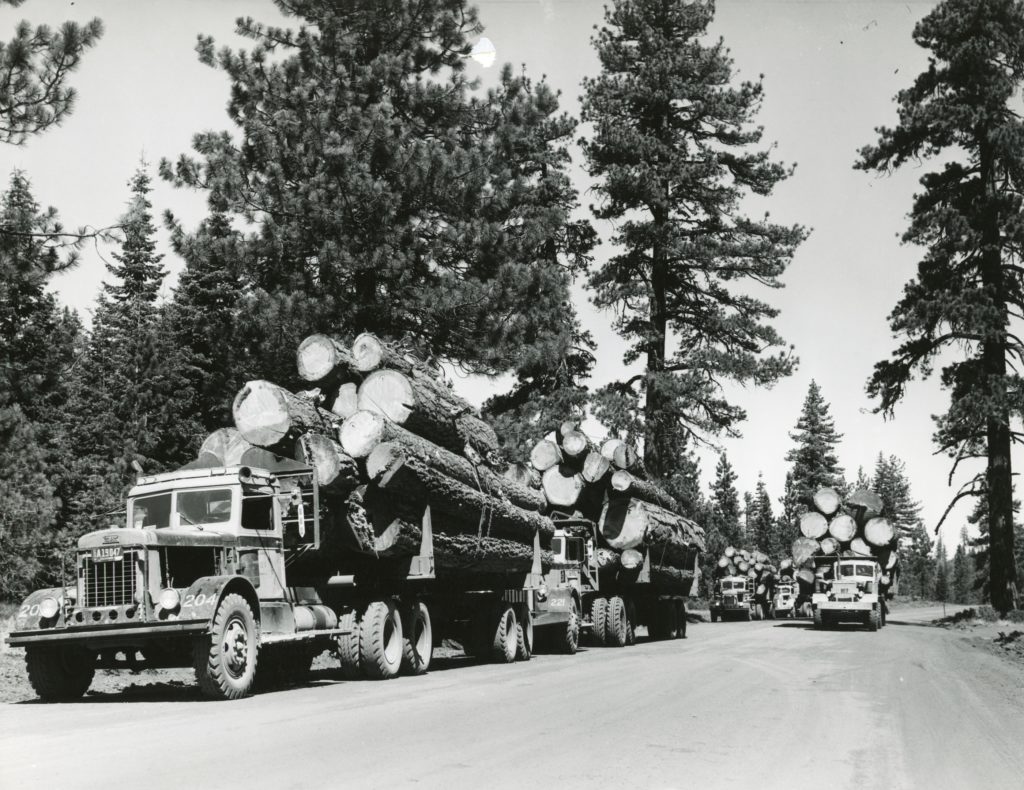
Many may not be aware that truck and railroad logging worked in tandem. Just like transition from horse logging to motorized tractors would take time, it was the same with trucks to be incorporated into logging operations. One of the benefits was trucks could access terrain to difficult for railroad operations. To get the most mileage for buck was the reload station. Trucks were used to log difficult terrain and then instead of driving all the way to mill, the destination was to the railroad’s reload station. The trucks were unloaded, then the logs reloaded onto railroad flat cars, thus an economical way to move volume of logs from the woods to the mill.

Support

World I & II Changed Logging

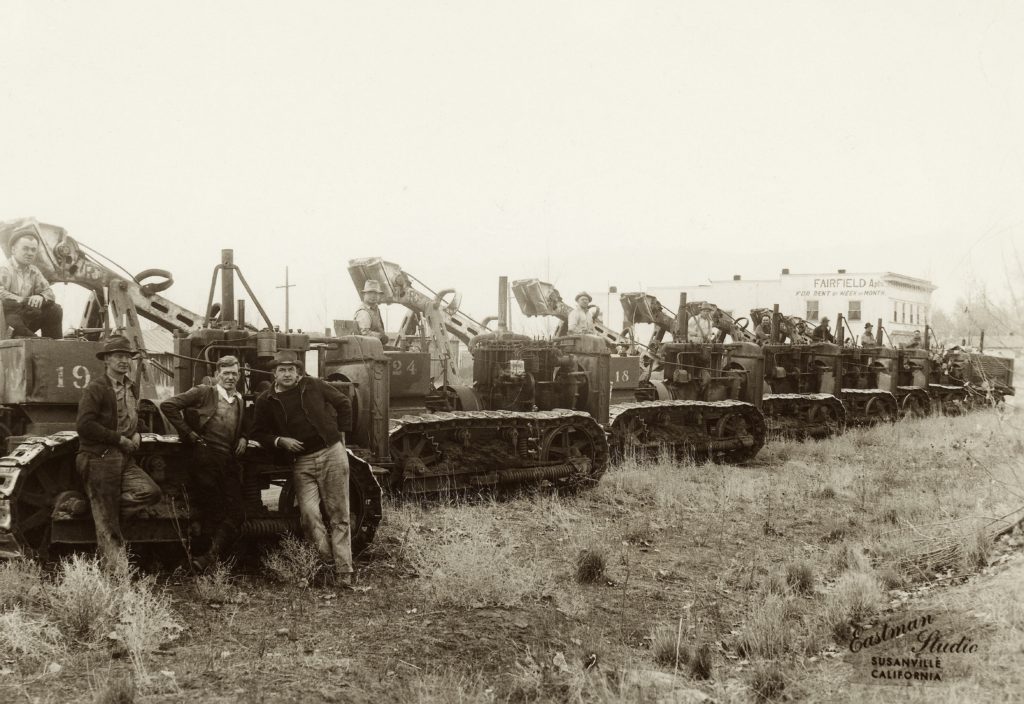
Fruit Growers Supply Company show casing their latest Caterpillar tractors, with the Fairfield Apartments in the backround.

Each of these wars had major impacts, not just isolated to the timber industry.

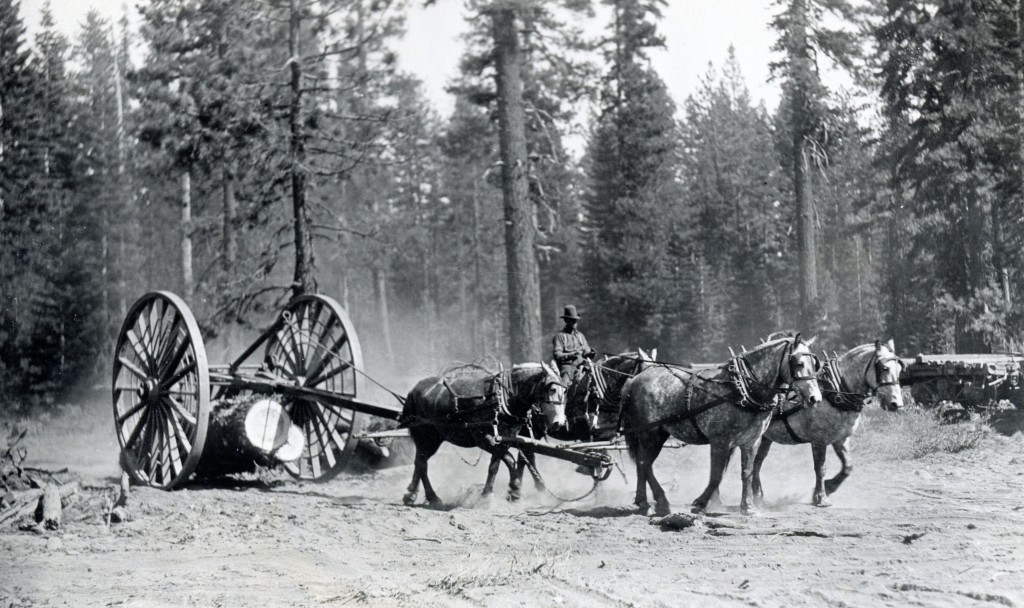
The development of tractors in World War I was significant. The modifications of the Holt Best Tractors made way for Caterpillar to incorporate these innovations. Within a decade after World War I, tractors basically had replaced horses using Big Wheels.

horse logging
Horse logging with big wheels, at Fruit Growers Camp B, north of McCoy Flat Reservoir.

In the 1930s witnessed the introduction of truck logging, albeit on a small scale. This was mainly done by small independent contractors, knowns as gyppos. The technology that made improvements for tractors, was now being done in World War II with large trucks to transport to move goods and logs was one of those commodities. .

Lunch time at Dow Butte, August 21, 1953. Courtesy of Hank Martinez

In the end, eventually, truck logging became more efficient than a railroad logging train. It was a slow integration with reload stations. More about that tomorrow, from a blast from the past column.

Subscribe


Beer Flows Again

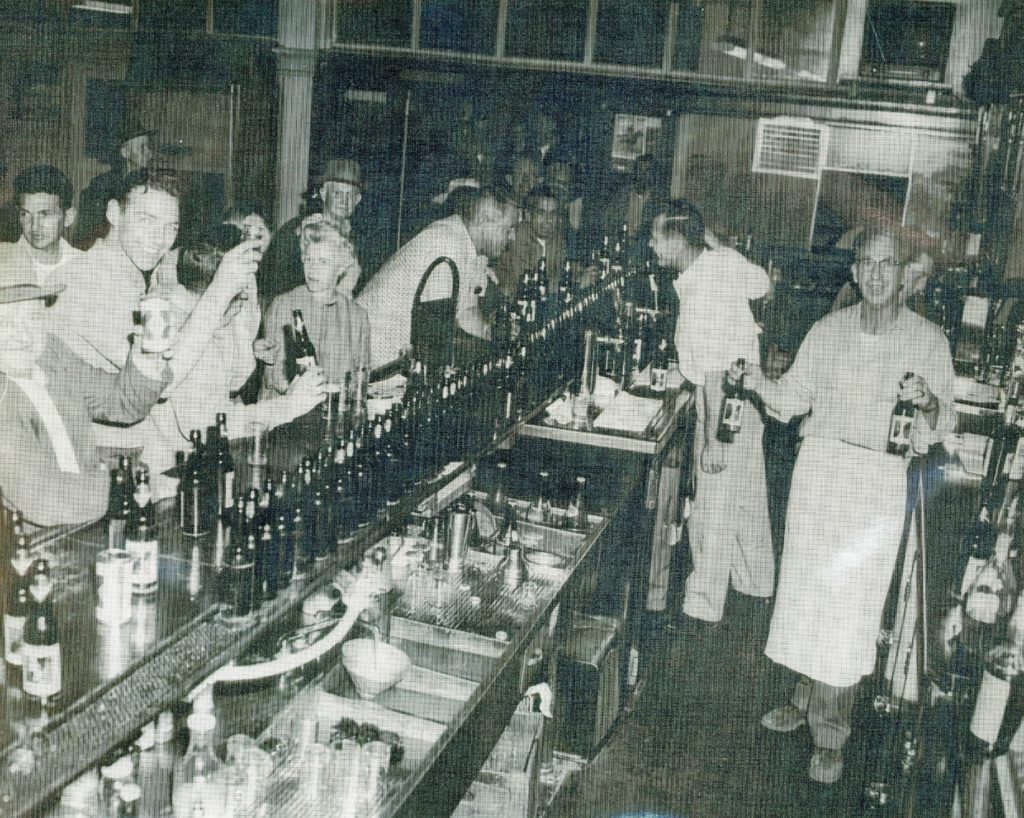
The Pioneer, in Susanville back in the day.

Yesterday, we explored how the taps ran dry on alcohol beverages. Even with the passage of the Volstead Act aka Prohibition, bootlegging was prevalent and the social experiment would eventually be doomed.

On April 7, 1933 beer was again was flowing in California as chipping away of the Volstead Act aka prohibition continued. There was a catch, however. Only establishments that served meals were eligible to serve beer. Many a former bar, installed lunch counters. In Susanville, it was debated what constituted a meal? Did a sandwich constitute a meal, to allow a person to drink beer all day if they wanted to? Whatever the case may be, that is why bar and restaurants go hand in hand.

Tim

Susanville Goes Dry Three Years In A Row

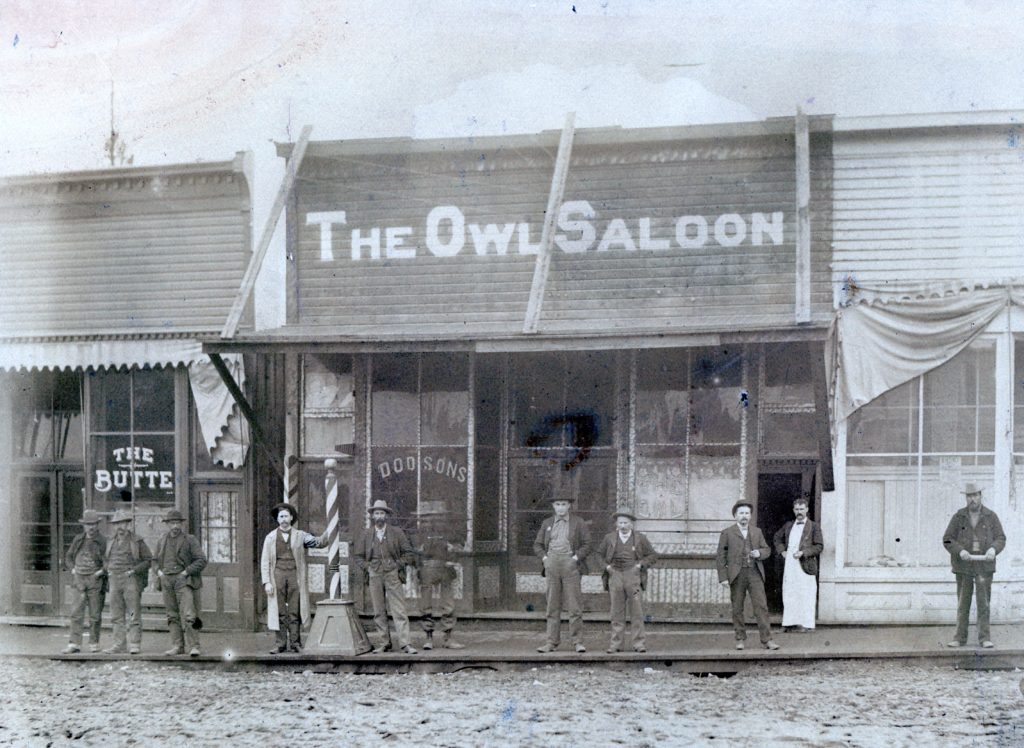
Susanville’s Owl Saloon circa 1907. Ironically, this establishment burned down only six weeks after Prohibition took effect in 1919. Courtesy of Del & Diane Poole

The temperance movement locally gained a foothold in the early 1880s, but never could gain any traction. In the late 1910s everything was about to change.

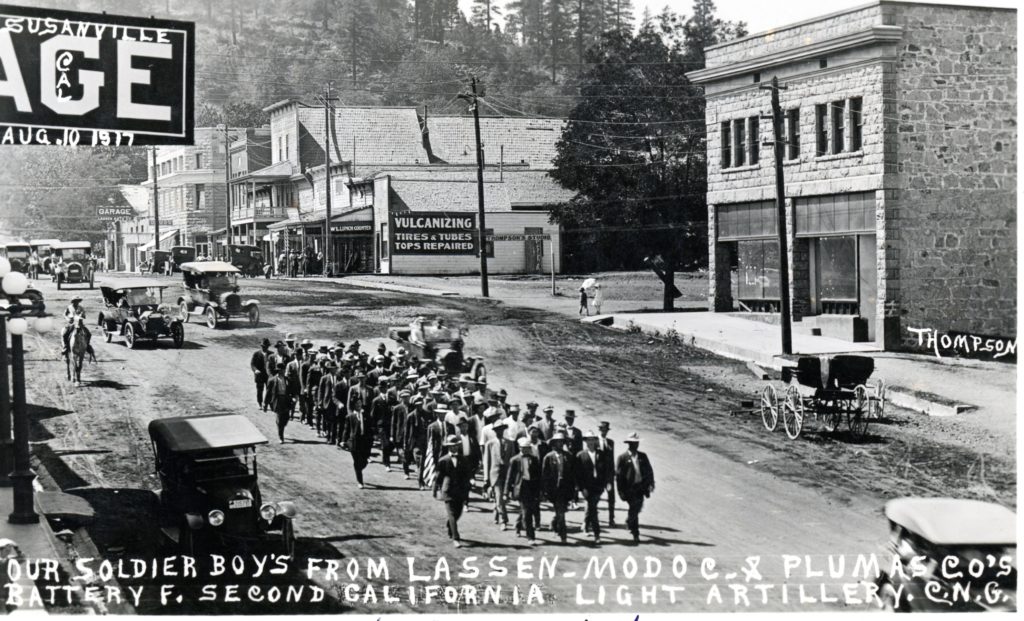
Lassen’s first draft of inductees,, August 10, 1917. D.M. Durst Collection

The first two times the town went dry were unusual circumstances. The first time was on August 7, 1917, at the request of the United States Army Draft Board. This was to accommodate the examining physicians. The doctors experienced a number of difficulties in examining inductees, since the majority of them arrived for physicals heavily intoxicated!

A year later the saloons were closed again, but this time by City of Susanville. The Spanish Influenza epidemic was the cause. There were over 300 cases of the flu in Susanville alone–roughly one-third of the population. The City held a special meeting on November 11, 1918, and it was voted three-to-two to close the saloons. The ban was effective immediately. On November 19, the City met again in special session to discuss the ban and it was lifted. It had been noted that there had been a decrease in flu cases

In 1919 witnessed the passage of the Volstead Act, also known as the Prohibition Act or the Eighteenth Amendment. June 30, 1919, was the last official day for the saloons to operate in Susanville. The Lassen Weekly Mail noted its observance; “The final obsequies for John Barleycorn in Susanville last Monday night was a very tame affair when compared with the scenes in other parts of the country. The saloons had disposed of practically  all their stock before Monday and the supply of liquid refreshments was not very plentiful at the close. The doors were closed promptly at 12 o’clock.”

The saloon business was big business in Susanville. The city treasury was hit hard. The closing of these businesses city lost one-quarter of its revenue from licensing fees.

To Support, Please Donate or Subscribe 

A Fruit Growers Relic

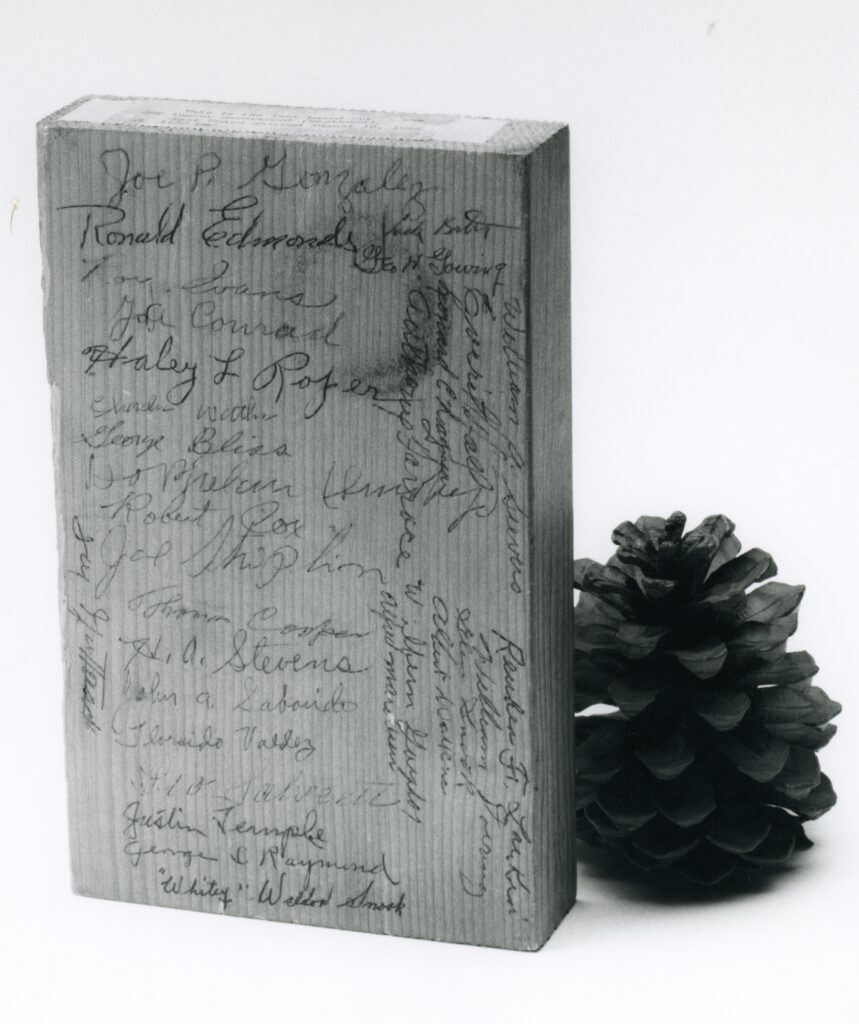
The last board milled at Westwood and signed by those last workers.

In January 1999, a relic of Westwood’s past was found in the old Community Center at Hilt. It was a piece of vertical grain Douglas Fir 5 1/2 inches wide, 9 inches high and 1 1/2 inches thick. It was the last board cut in the dry lumber department at Westwood in 1956, signed by the last workers. The board was put on display at Fruit Growers headquarters, then located at Sherman Oaks. Since Fruit Growers has moved from location there is not telling as what became of it.

The board was signed by Joe P. Gonzalez, Ronald Edmonds, Roy Evans, J.A. Conrad, Haley L. Roper, Charlie Watkins, George Bliss, D.O. “Smokey” Phelan, Robert Cox, Joe Stripling, Thomas Cooper, H.A. Stevens, John A. Saborido, Florida Valdez, Tio Salveltti, Justin Temple, George C. Raymond, “Whitey” Weldon Snook, Jack Bates, Geo. H. Gowing, Reuben F. Larkin, William Doeering, Glen Snook, Albert Watkins, Wilbern Taylor, Alfred Mardesen, Jay Guttered, William A. Sievers, Everett Hall, Leonard F. Lagnear and Anthony Farrace.

Tim

Exploring Lassen County's Past