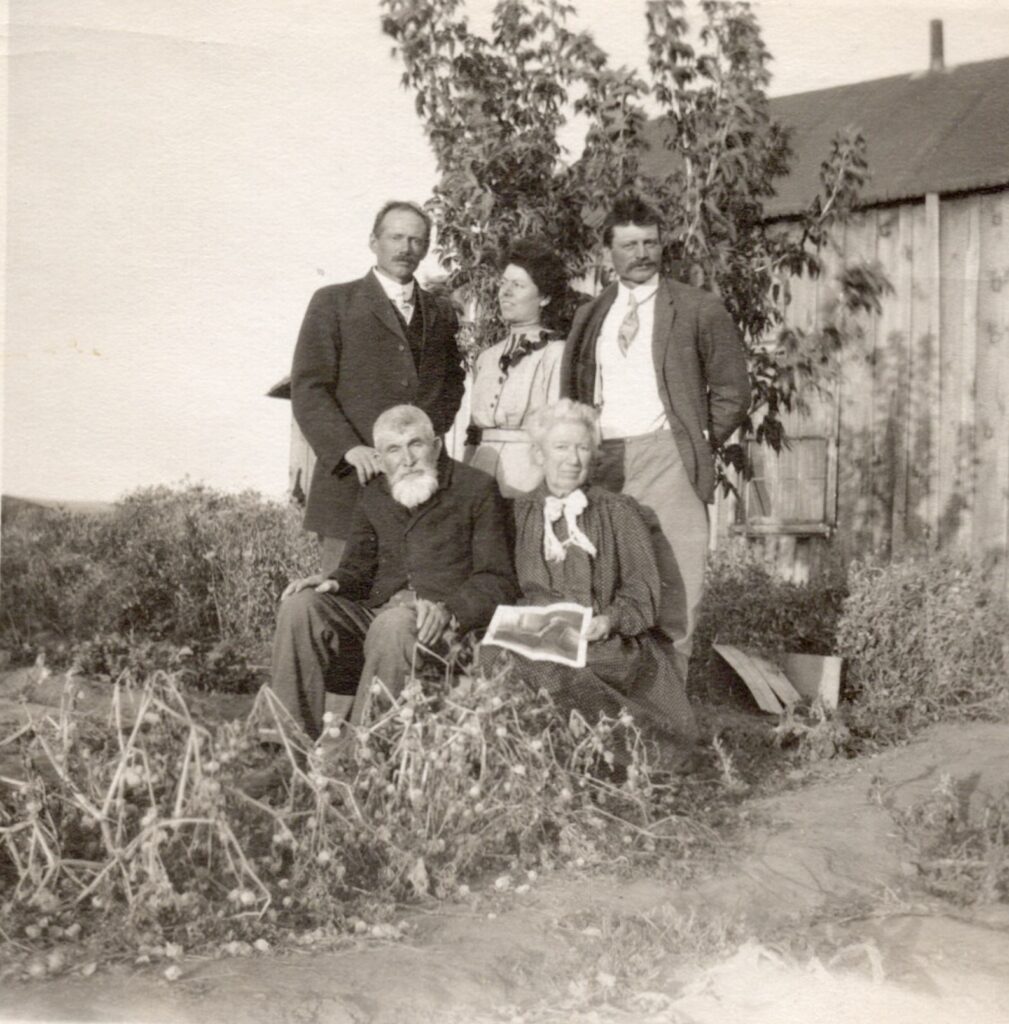
Caudle Famiily. Seated Alfred and Mary Caudle. Standing Carl, Mamie and Marvin Caudle Taken at Mamie Caudle’s homestead, June 1912.
In 1906, Marvin Caudle located on a homestead some ten miles east of Amedee. In time, his parents, brother and sister would locate there. This later became known as the community of Stacy. All five family members are buried in the nearby Honey Lake Cemetery.
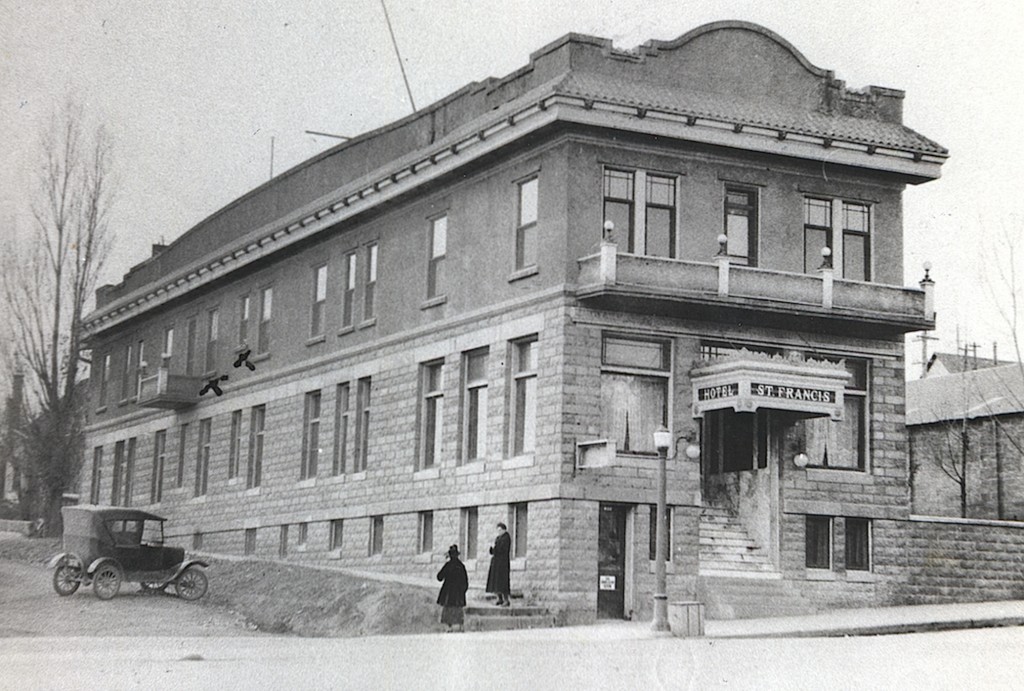
St. Francis Hotel, circa 1919. Courtesy of Art Almeda
For years, before the St. Francis was shuttered, the Round Up Room, the hotel’s bar, was a popular gathering place. When St. Francis opened it was denied a liquor license to operate a bar.
In the spring of 1914, St. Francis Hotel opened. Gus Steinhauser was hired as the manager. He applied for a liquor license from the City of Susanville. It did not go well. At the City of Council meeting of April 28, 1914, it was the first item on the agenda. Councilman Emerson made the motion to deny the license. Councilman Rankin seconded it and the application was denied.
The protest began. First was Isaac Knoch, followed by Steinhauser. Bot the gentleman stated a hotel bar was not your typical saloon. Steinhauser stated it would not pay him to open a dining room if he could not serve guests wines or liquors with the diner’s meals. It was an exercise in futility. At the conclusion, Councilman Rankin suggested to amend the liquor license ordinance to be limited to seven, and when those licenses lapsed, they could not be renewed. Eventually, the St. Francis prevailed and the liquor license issued.
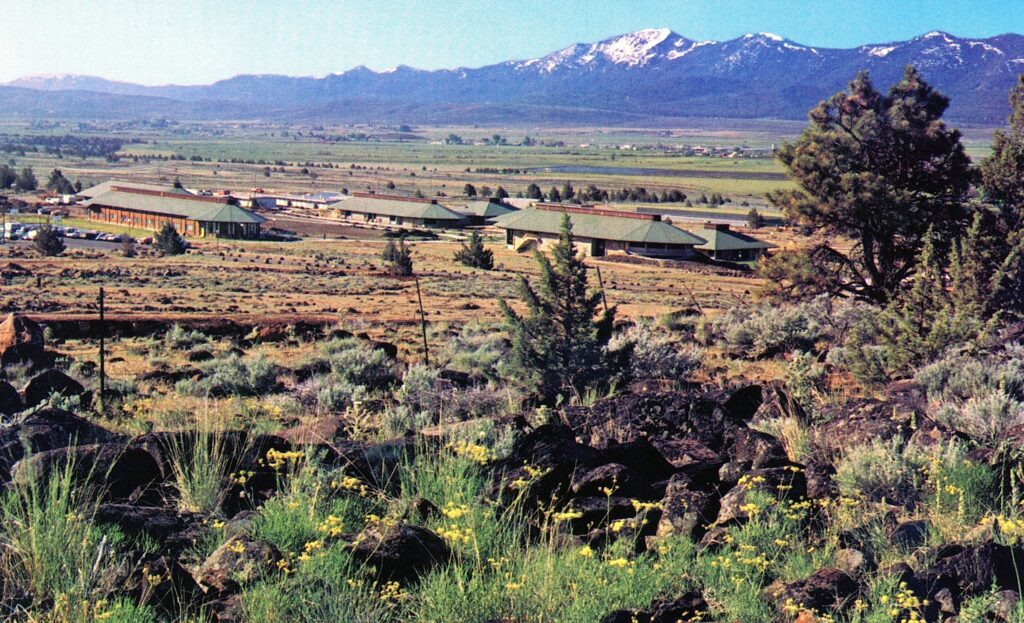
Lassen College campus adjacent to Highway 139 under construction
Over the next few weeks we will explore some Lassen College’s history as in May the institution will observe its centennial. Of course there will be features such as gunsmithing, forestry, Paul Bunyan Days, Willard Hill and groundbreaking for the new campus.
My family has had a long association with the college. My great aunt Olive Farwell Murrer was a member of the first graduating class of 1927. My Aunt Irene Bengoa Purdy Trout was a Lassen College graduate and later was elected a college board trustee. In the mid-1980s I taught a course in Research Techniques in Local History at the college. I also served on the college board from 2011-2020.
If you have a Lassen College story to share let me know.
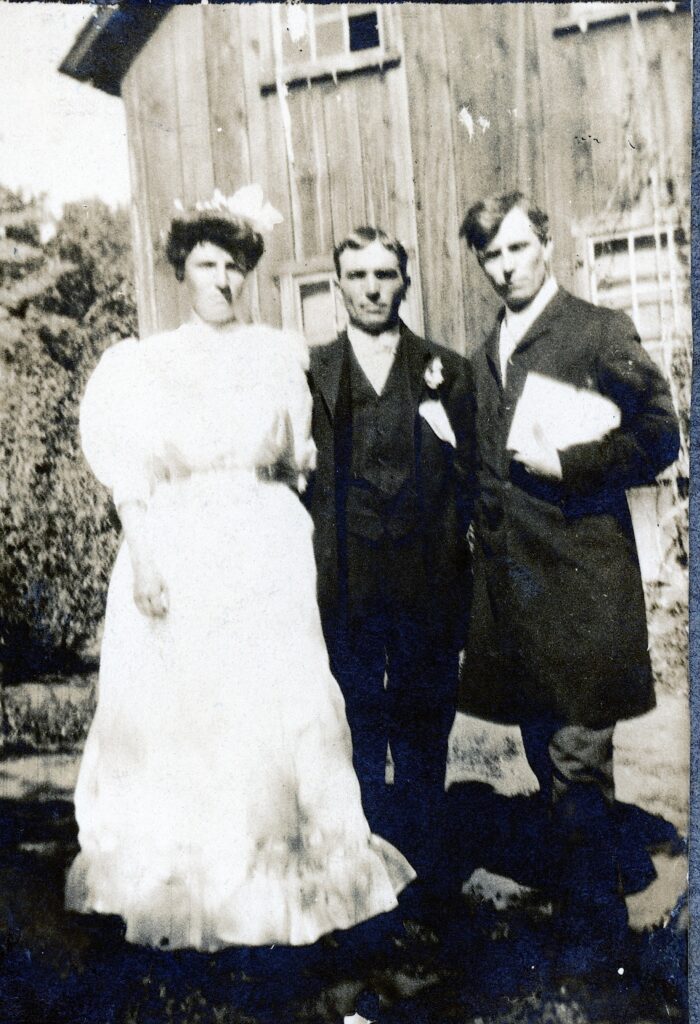
David and Theda (Williams) Fritter wedding portrait 1906.
Some years back, I received an unexpected call from the Eagle Lake Ranger District, Lassen National Forest. There are petroglyphs on the west side of Eagle Lake that are on the forest service land. Over century ago, two Eagle Lake residents, Dave Fritter and Charles Spalding etched their names along side of the petroglyphs. The forest service wanted who those two individuals were. I obliged.
There are petroglyphs on the east side of Eagle Lake. Personally, I have not observed them, but I have never done due diligence to locate them.
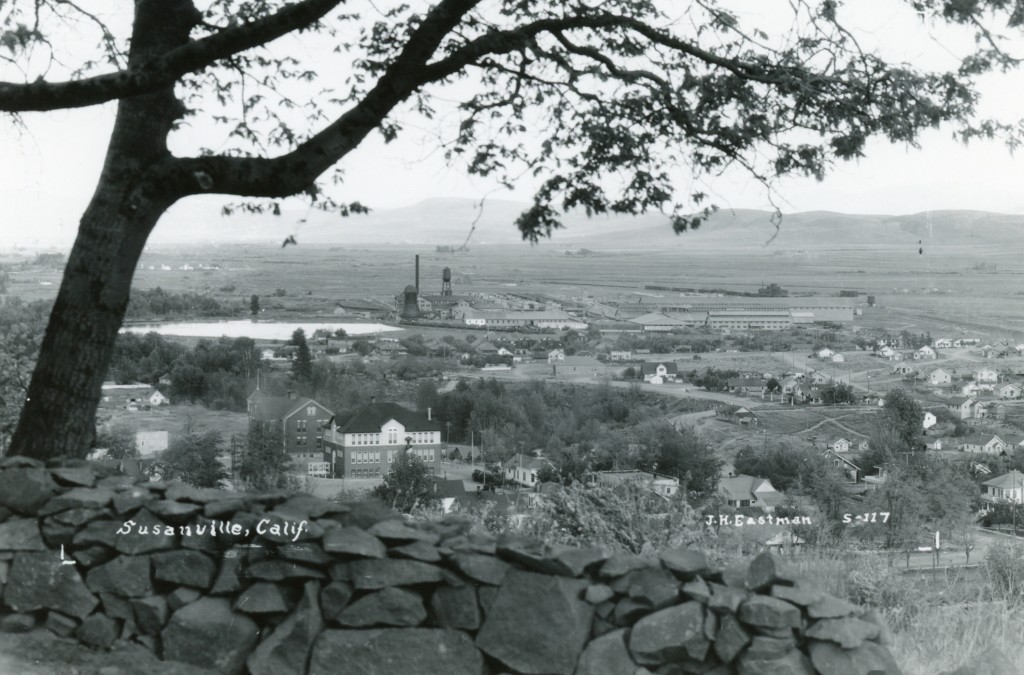
Closer to home, i.e. Susanville there are a handful of petroglyphs. Most on private property, but one site is owned by the City of Susanville.
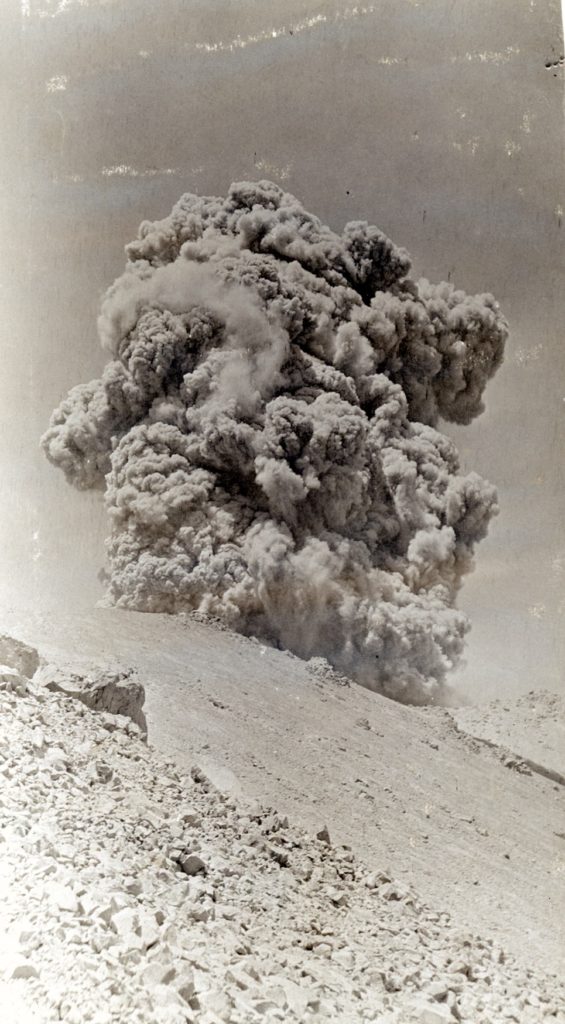
There was a lot hard work involved with the establishment of Lassen Volcanic National Park. If it was not for violent volcanic eruptions of Lassen Peak in 1914-15, the park might not have been established. In 1916, when President Woodrow Wilson signed the law to create Lassen, for the most part it was in name only. Congress only allowed an annual appropriation of $5,000 a year,. It should noted due World War I , Lassen never received a dime. To make matters worse the initial administration of Lassen was handled by Yosemite National Park officials.
Yet, Lassen Park advocates were a persistent bunch and they explored a variety of avenues. Take for instance in 1919, when former U.S. President Theodore Roosevelt died, consideration was given to rename Lassen after Roosevelt. Not only would it be a memorial in his honor, but it was considered a venue to overcome its financial dilemma with Congress. On the face it was a worthy idea, but it never happened. By the mid-1920s, Lassen overcame the appropriations barrier, barely.
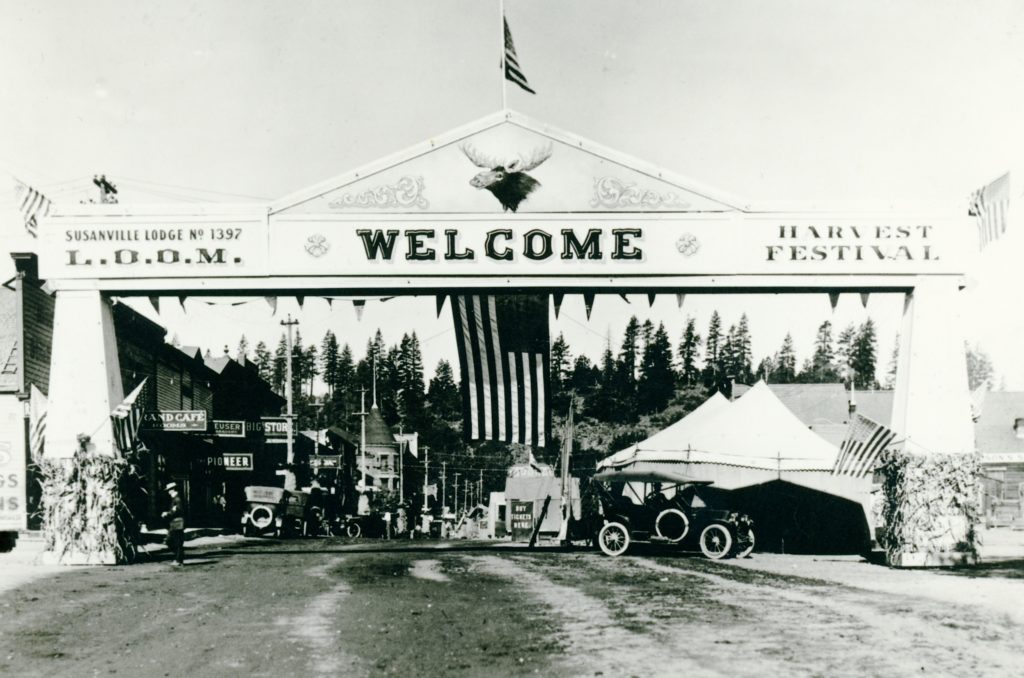
The arch was a temporary affair, and a windstorm two weeks later, blew it over.
Those who reside or have resided on the east slope of the Sierra Nevada know all too well that they are prone windstorms. Some areas worse than others.
On September 18, 1914, a particularly strong windstorm hit the region. One account reported that dust from Susanville’s Main Street was so bad, that occasionally one could not see buildings on other side of the street! Numerous reports of damage to Susanville businesses were reported, chief among them was large plate glass window that was recently installed in the Del Mar Building was shattered. Just over two weeks ago the local Moose Lodge sponsored a Harvest Festival and placed an arch at the intersection of Main and Gay. It was toppled.
Trees were uprooted and damage to fruit crops was extensive. A.H. Taylor, whose apple orchard on North Westherlow Street was a victim. He estimated 100 boxes worth of apples were blown off his trees.
On April 16, 1921, a grand celebration was held in Susanville for the Fruit Growers Supply Company new mill that was placed into the operation. In evening, a banquet was held for an assorted of company officials and local dignitaries. Fruit Growers General Manager Frank Hutchens stated how the Lassen would be operated. Fruit Growers would conduct selected tree harvesting, whereby 30 percent of the merchantable trees would remain as seed trees. Fruit Growers and the Lassen National Forest Service were working on a selective harvest plan that would allow to operation to continue in perpetuity. They estimated it would take between fifty to sixty years to log their holdings. By that time, the original logged areas would be ready for the second harvest of mature trees which again would take between fifty and sixty years to harvest, and the cycle could continue.
C.E. Emerson, a local merchant and rancher, told the crowd of his reforestation experience locally. Emerson recalled as a child, forty years ago, he helpd plant a tract of pine trees on the family ranch just south of Susanville on Diamond Mountain. Those seedlings, he said, had become a fine stand of pine timber, many of which were 22 to 24 inches in diameter.
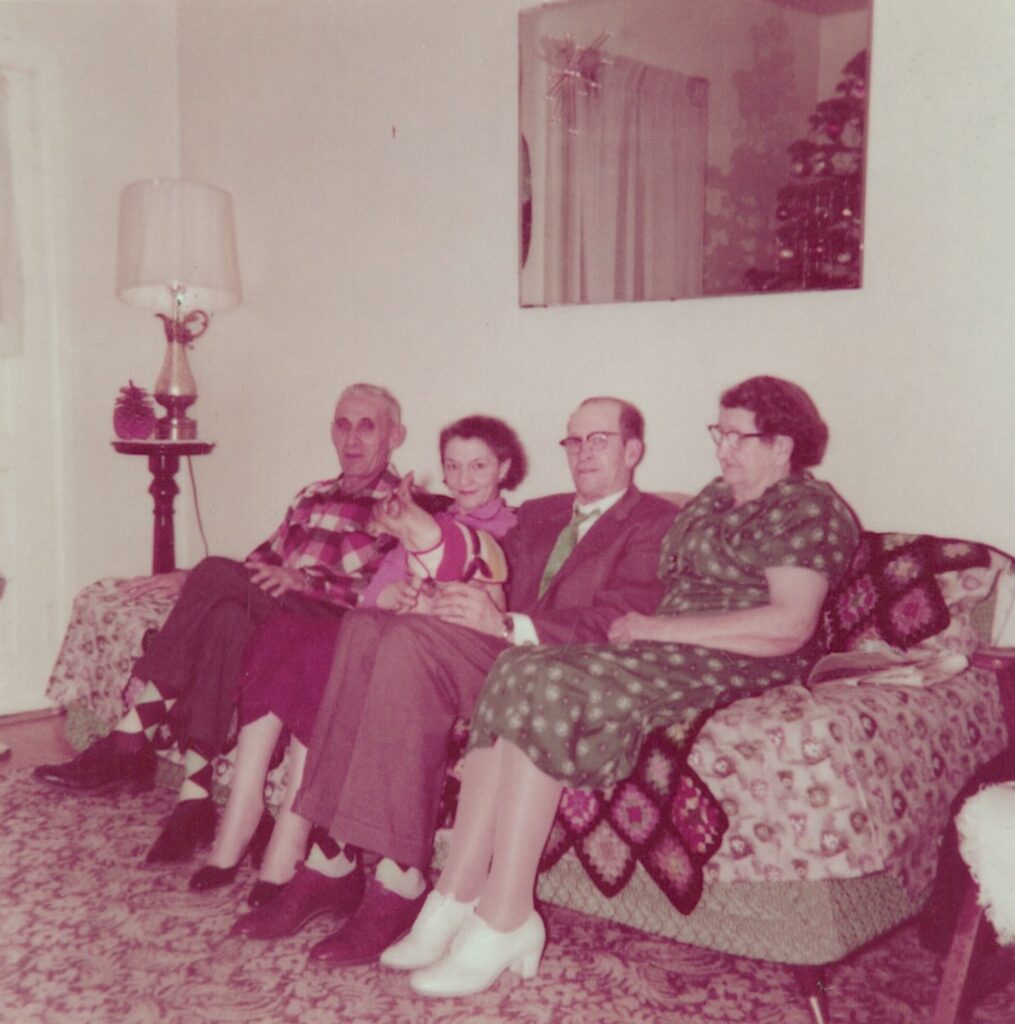
Left to Right: Ira Purdy, Kate Potter, Sam Potter, and Ruth “Ma” Potter, December 1957-Courtesy of Riki Jo Potter.
Last Friday, we explored Potter’s Maternity Home.I just happened to come across the other day a photograph that included Susanville’s best known midwife, Ruth “Ma” Potter.
A subscriber placed a question on the quarterly Ask Tim post about suggested reading materials of the Native American community. I am working on it. The title above is misleading. While it is designated of the California Indians series, volume five pertains to the settlement of Lassen and Modoc Counties. It should be noted Garland Publishing market was not mainstream in the sense was geared toward academia and libraries. Since I personally knew Davis, who at that time was the director of the California State Archives, he alerted me to its publication.
Davis, of course, devotes a chapter titled Indian Meets White. Davis provides one with some introspection in a tragic episode of history. He wrote: “The stakes of the contest were high. Retrospection is wide of the mark it does not note that, although both races were wrong, many times and more, each showed much willingness to work toward justice as it viewed in those days. Each felt its cause was right and each was determined to let nothing stand in the way of the maintenance of that right. The story is one of the head-on collision of two civilizations, and of the unending struggle for survival.”
On Sunday, April 20, 1924 the first Easter Sunrise Service were held in Susanville. Preparations began two weeks earlier for the non-demonitial service. Inspiration Point was the selected location. The event was organized by the Ladies Auxiliary of the American Legion. The women were ambitious. They persuaded the Lassen Lumber & Box Company to donate the materials and labor to construct a cross on the point at no cost. They employed the same maneuver with the Lassen Electric Company who adorned the cross with light bulbs. A week prior to service, in the evenings the cross was lit up and seen for miles around.
At five a.m. Easter Sunday some 300 people attended the service under very chilly conditions. The invocations were done by Father McCarthy (Catholic), Rev. Price (Methodist), Rev. Rowe (Baptist) and Captain Diez of the Salvation Army.