Mark W. Haviland. Courtesy of his great-grandson Allen
Mark W. Haviland was one of the many early Honey Lake Valley settlers of the 1850s who remained awhile, then moved on to the proverbial greener pastures. For him that was Paradise Valley, Nevada where he died in 1894. Continue reading Mark W. Haviland, An Early Honey Lake Settler→
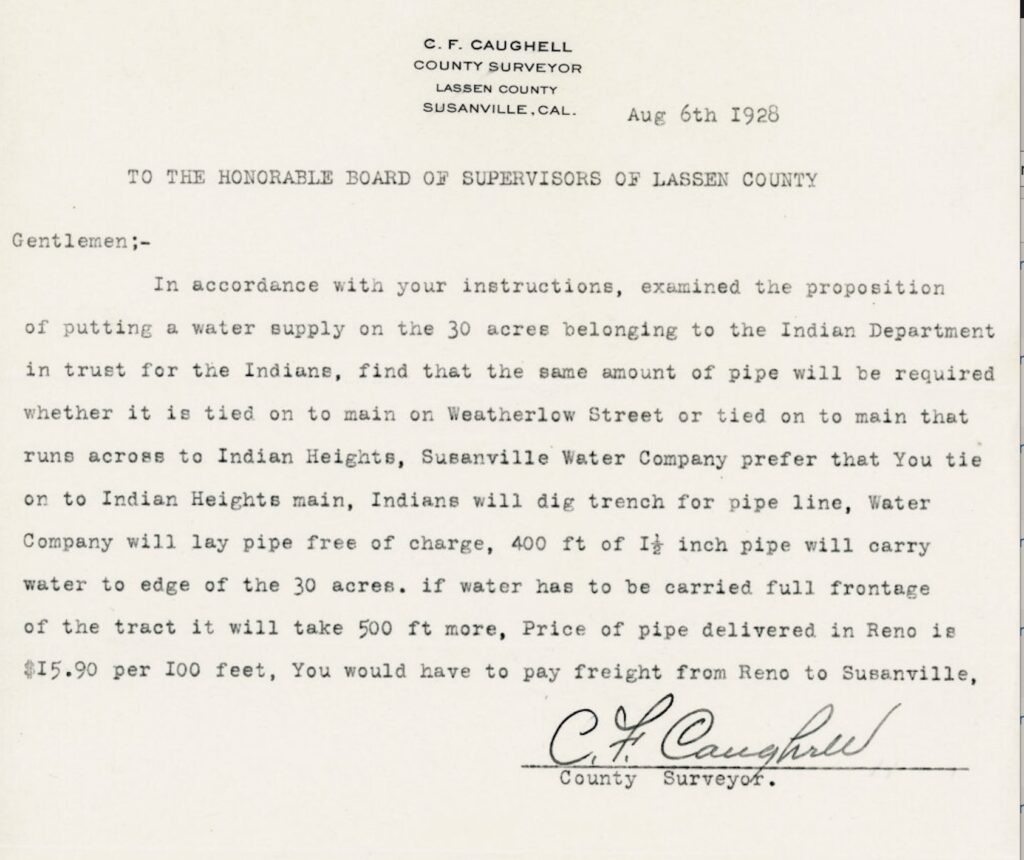
Notice of the pending water pipeline to the Rancheria.
This might be called a trifecta as the last two posts were about the Indian Heights Cemetery and the Indian Heights Subdivision. Adjoining the subdivision to the east is the Susanville Indian Rancheria. The thirty-acre Rancheria was created on August 15, 1923 to serve the Modoc, Paiute, Pit and Washo tribes.
There was a major hinderance that hampered development of the Rancheria, a lack of water. The. few early day hardy Indians obtained their drinking from a small spring located on the hillside above Chestnut Street and between Roop Street and Paiute Lane. Relief came to the Rancheria in 1928 when County of Lassen approved the expenditure to construct a water line to that place.
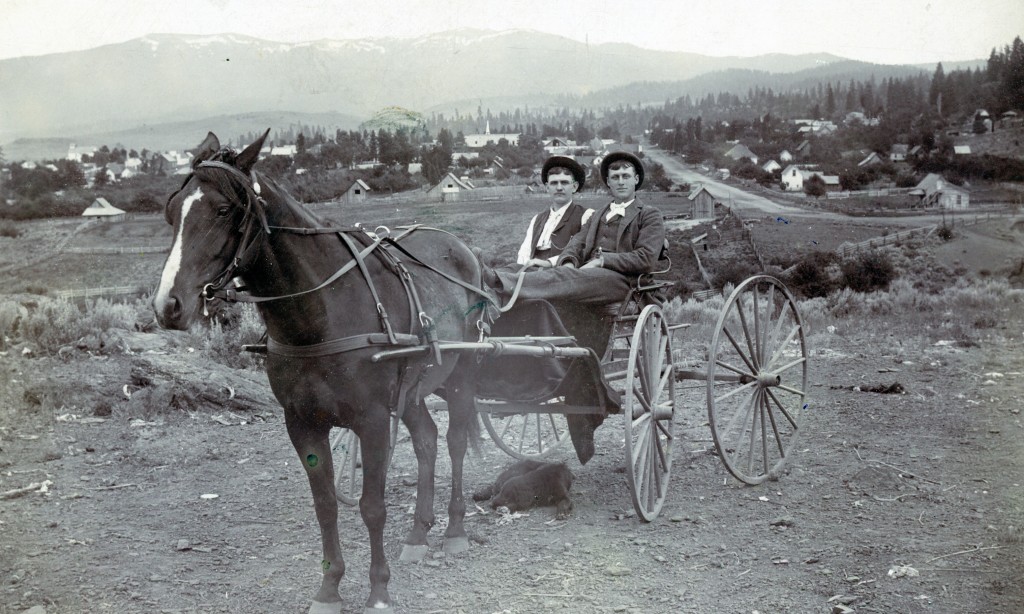
This would been one of the views from Indian Heights. Roop Street in the background from Rooster Hill. Seated, Frank League and Tom Long, circa 1895.
On March 12, 1912, it was formally announced of the construction of the Fernley & Lassen Railroad and Susanville would finally get the benefits of the iron horse. Of course, this set off land speculation and a flurry of subdivisions.
One of the early Susanville subdivision, was Indian Heights, and most peculiar one at that. This 78-acre parcel occupied a rocky hillside and was not even contingent to Susanville proper. This was conceived by Paul Riecker of Oroville, in the summer of 1912. He named it Indian Heights, because it was where the local Indian population chiefly lived. Rieckert offered lots for $100 and a down payment of $25. There were problems, a lack of streets and no water. Riecker disposed of it a year later to local resident Ralph Buckhout, who would end up with buyer’s remorse.
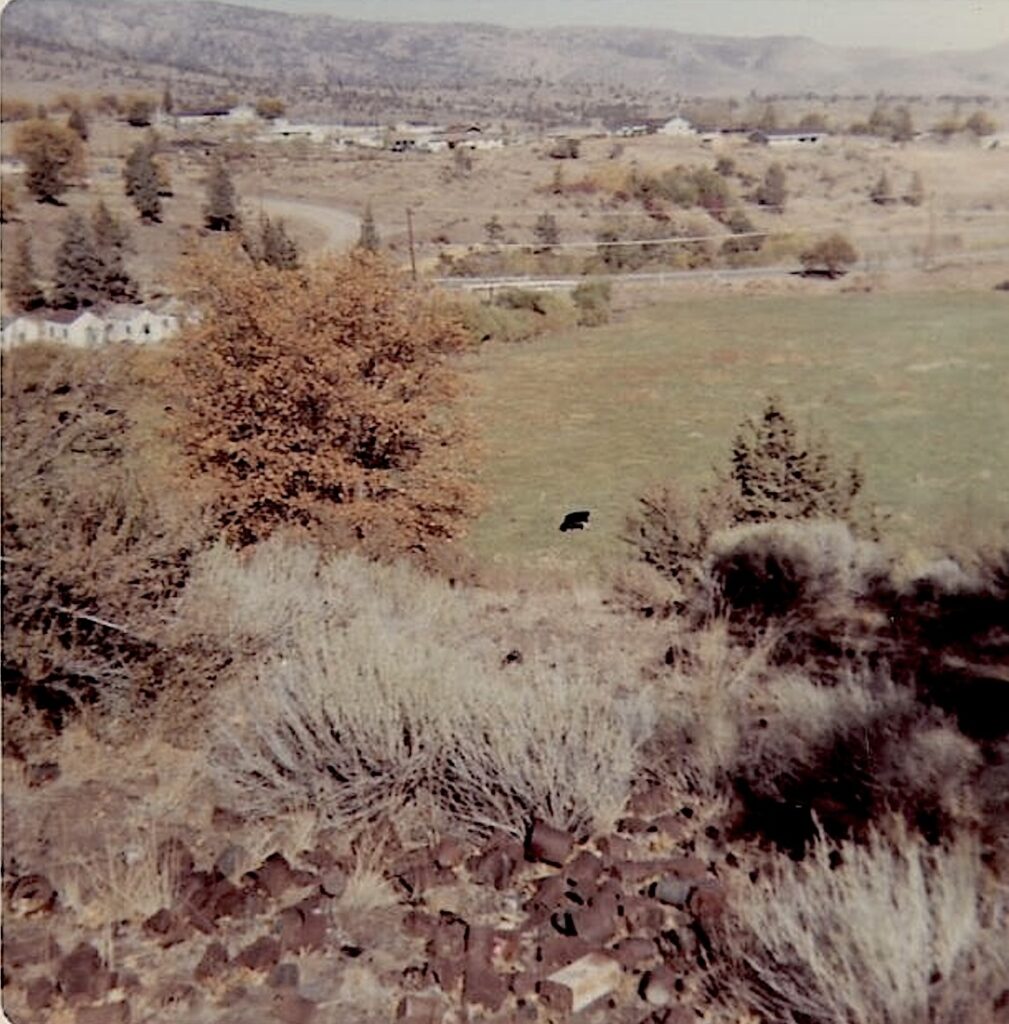
Indian Heights in the background, fall of 1968-Courtesy of Art Porter
It was not until the 1950s, that Indian Heights was developed. In 1953, W. Robert Jennings, a civil engineer for the State of California, re-surveyed it because he deemed it “mathematically impossible to contain this subdivision within lands of original boundary.” It was re-surveyed and renamed Northridge Heights. However, it did in keeping Indian Heights theme, kept intact three streets named for local tribes–Maidu, Paiute and Washo.
Many people do not realize that Susanville has three cemeteries–Indian Heights, Lassen and Susanville.
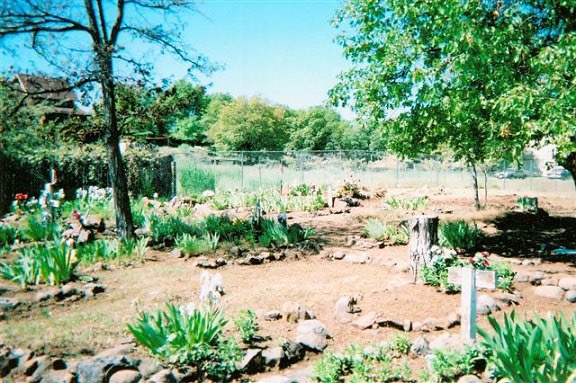
Indian Heights Cemetery located on Paiute Lane and is a Native American cemetery.,. The earliest known internment is for the wife of George Peconum who died on September 5, 1905 and buried there on September 6, 1905 . This makes its the second oldest cemetery, as Lassen Cemetery on Chestnut Street was not established until 1919.
This cemetery contains numerous graves that do not have the traditional type of Anglo headstone, and provides no indication of the internments. In addition, it should be noted that many Native Americans are buried in the nearby Lassen Cemetery ..
The cemetery was so named as it was in the Indian Heights Subdivision that was created in 1912. It should be noted that the half-acre parcel that the cemetery is located was owned for many years by Clifton and Betty Cramer. On June 6, 1975, the Cramer’s signed Quit Claim to the cemetery to the Bureau of Indian Affairs to hold into trust for the Susanville Indian Rancheria. It should noted that even the oldest of the Anglo cemeteries were located on private property, and that during the late 1890s the County of Lassen began negotiations to acquire them.
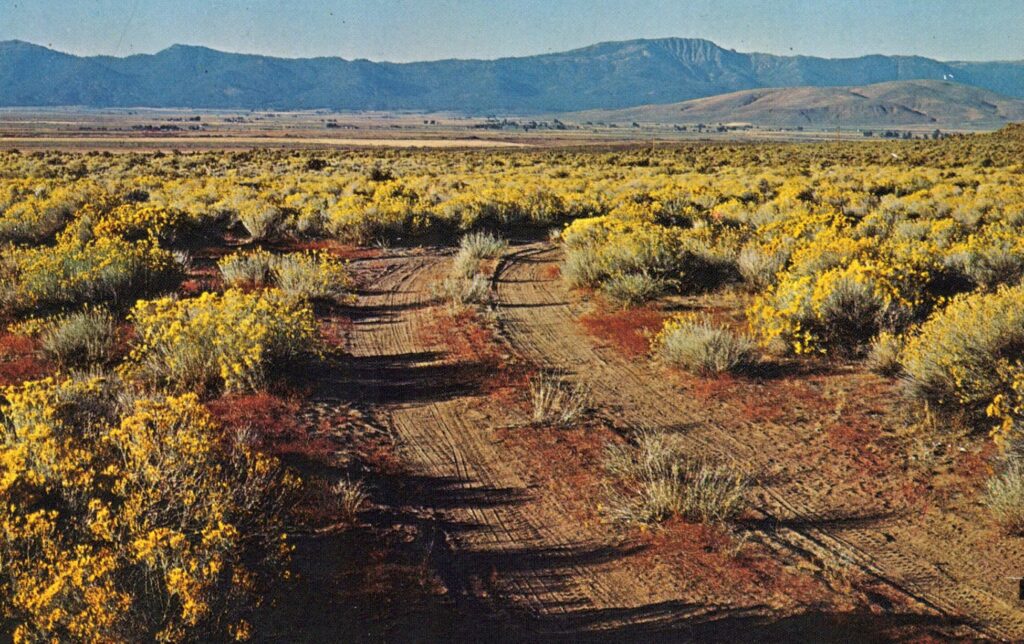
The above is an Eastman Studios postcard that I happen to like. September is one of my favorite months of the year. The weather is normally ideal, warm days and cool nights.
It also a harbinger of of upcoming fall colors. The most notable is when rabbit brush (Ericameria nauseosa) starts bloom. For me it is a visual delight. However, for others with allergies it is not pleasant experience.
It did not take much for the City of Susanville to abolish its Planning Commission. On May 21, 2025, the City Council passed a resolution to make a commission a relic of the past. The Council will now serve in that role.
For me, personally, it sends a mixed message. On the one hand the City is seeking ways for economic development, yet, by getting. rid of the commission on the face of it, the City is less optimistic for its future growth.
For the record the Planning Commission was established on June 13, 1921. The first members were L.R. Cady, C.E. Emerson, J.J. Woodward, F.H. Bangham and R.M. Cook.
The grave of Isaac N. Roop, Susanville Cemetery, circa 1966.
It was not until 1914 that Susanville founder had a proper monument to mark his grave, even though he passed away in 1869. It was through the efforts of Asa Fairfield, the local Masons and Native Sons to correct that. You can read about the dedication here.
This is just bit of trivia. The two pieces of gray granite weighing approximately four tons, were quarried near the Perkins ranch (Sella, 2025) on Gold Run. It was Susanville stone mason, Robert Brodie that did work and placed the monument on Roop’s grave. Less than two years later, Brodie was the lead stone mason for construction of the Lassen County Courthouse.
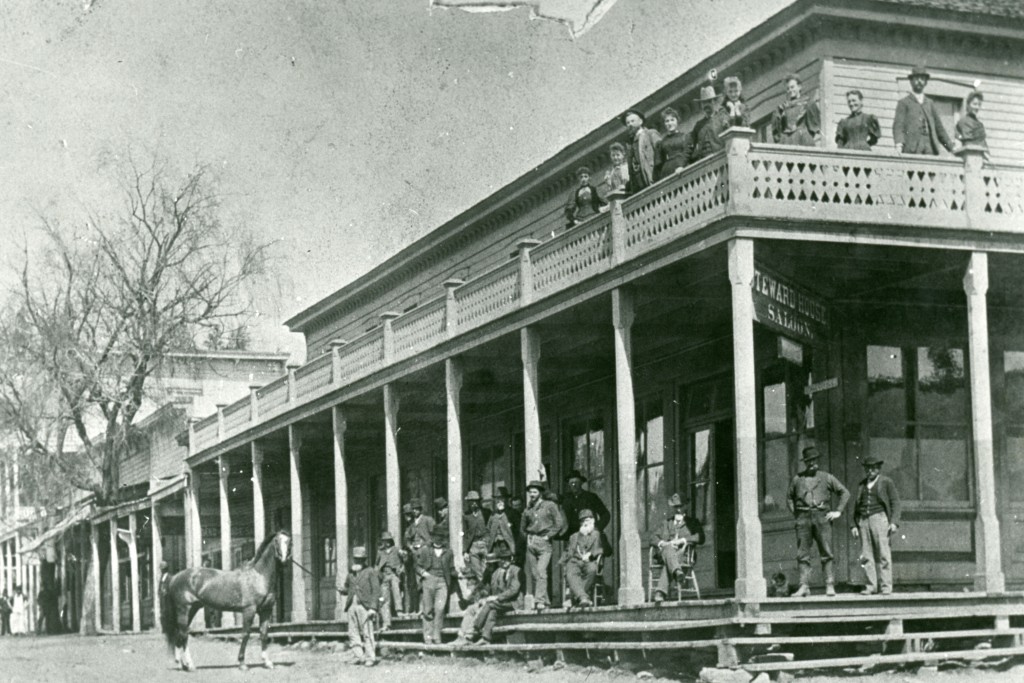
Susanville’s Steward House, 1881. Courtesy of Dallas & Joyce Snider
Old Susanville Boy Gets Write-up
The San Francisco Daily News of August 8, 1914 after decanting upon education and its application to the real affairs of life of some length, elects as an illustration an old Susanville boy, who has climbed in the commercial and social circles of San Francisco.
“Mr. Abraham Lincoln Peyser, president of S.N. Wood & Co., is as fine an illustration of the theories advanced alone could wish to meet.
Born in 1865 and brought up in Lassen County, 170 miles from a railroad, by all fair rules he should have been a grand rube performer; and far beat from the purpose of this chronicle to deny that once upon on a time he was–howbeit, this will an give an unneeded opportunity for the perpetration of his standard joke that Heaven lies about folks in their infancy, while everybody lies about them when especially successful in business.
“Coming well-heeled to San Francisco at 16 to attend college, he went broke seeing the sights, and remembering well the admonitory effectiveness of certain parental willow switches, he forthwith annexed a job in Loomis Plaza store and began that pursuit of knowledge which has resulted in landing him at the head of one the greatest mercantile establishments on the coast; making him one of the leading exemplars of highly ethical business methods; and at the same time producing that unusual combination–a thoroughly educated and polished man who never passed a day inside a college wall.”
Note: His father, Samuel Peyser came to Susanville in 1861 and was that town’s first Jewish merchant. In the 1880s he owned the Steward House Hotel in Susanville.
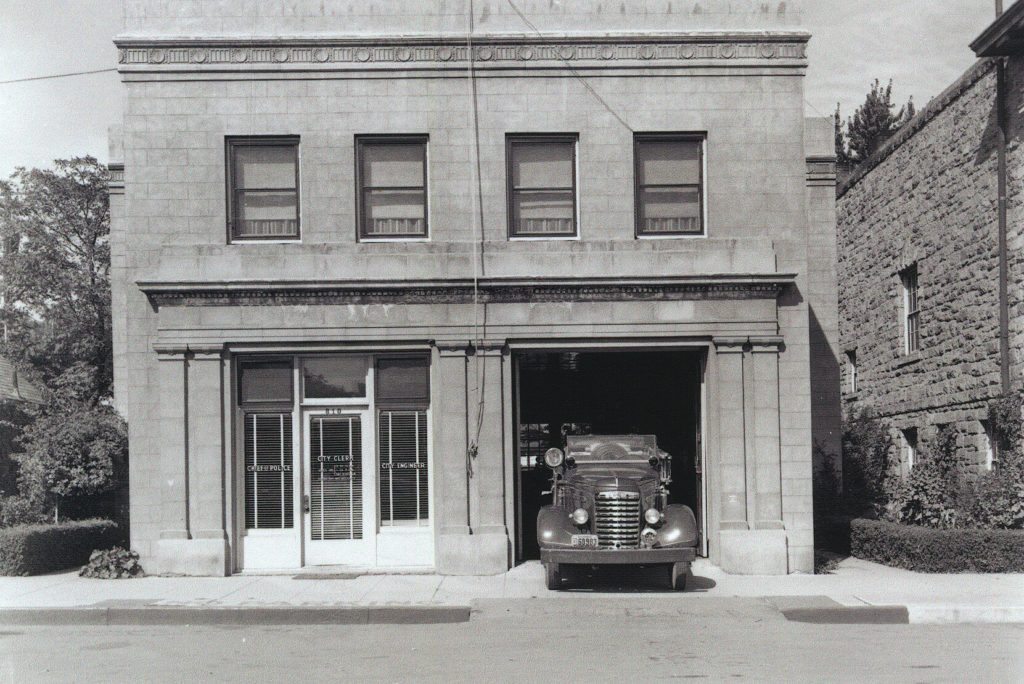
600 Nevada Street, Susanville, circa 1911. Courtesy of Dick & Helen Harrison
If you have been the following news lately, this marks of the twentieth anniversary Hurricane Katrina that devastated New Orleans. The City owned a vacant building at the corner of North Roop and Nevada Streets. The structure built in 1895, was converted into apartments in 1941. The City purchased the property in the early 2000s, and offered the apartments to refugees from Hurricane Katrina. Those individuals would be the buildings last occupants.
In 2008, the building was placed on the City of Susanville and Lassen County historic landmark register. The city would spend the next several years as to what to do with the structure. In the spring of 2014, the city had the building demolished.
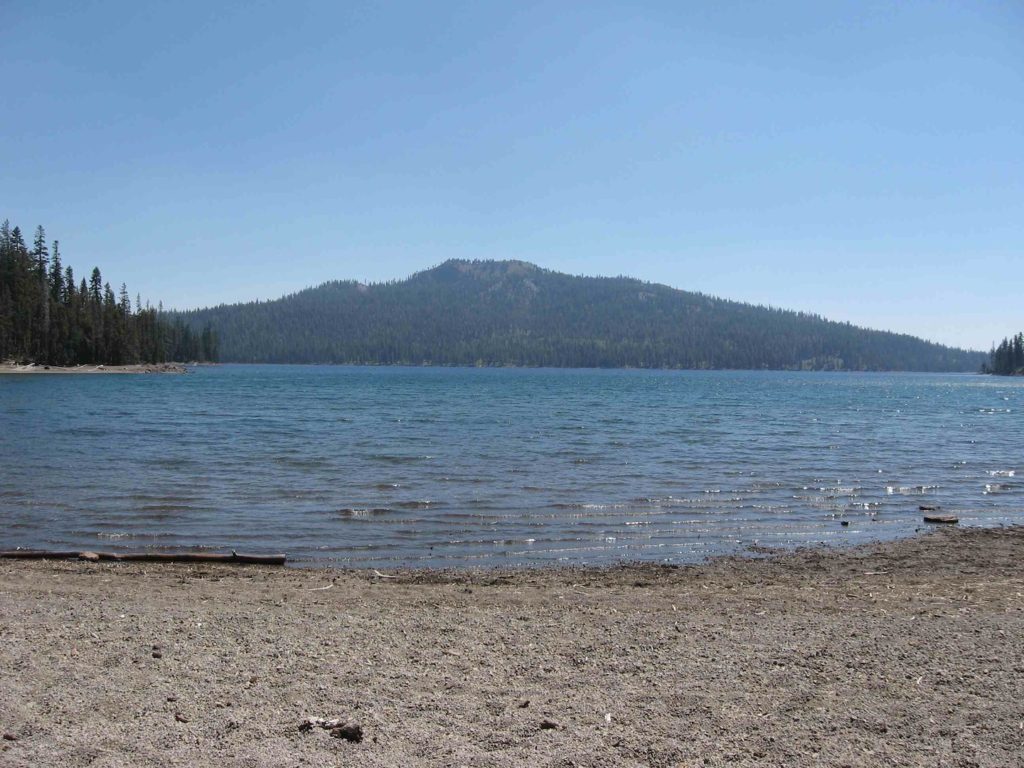
Juniper Lake, at an elevation of 6,753 feet, covers an area of some 592 acres, making it the largest lake in Lassen Volcanic National Park. Interestingly the lake has a maximum depth of 234 feet. In the 1870s, the California State Geological Survey named it Lake Louise, but others had applied Juniper to it, and the latter won out.
Early day visitors to the lake were few. Its remoteness, along with its heavy winter snowfalls, usually did not make it accessible until June. By October, as a general rule, the snow returned, again making the place inhospitable.
In 1889, a San Francisco speculator, Elbert Dodge, appeared on the scene and filed a 475-acre claim to the northwest shore of the lake. He did nothing with it, and another San Franciscan, J.P. Frenna, later acquired Dodge’s preemptive claim. The actual owner was the State of California, which designated it as school land. In 1892, Frenna purchased it from the state for the nominal fee of $1.25 per acre.
Juniper Lake has a long sordid story of summer home development, that never came to full fruition, due to its remoteness and short summer season. I understand that the Dixie Fire (2021) ravaged the area. I have not been back there or the Warner Valley, because I do not have go that far, to see the burn scars of that fire, and others.