Moon Valley

Moon Valley
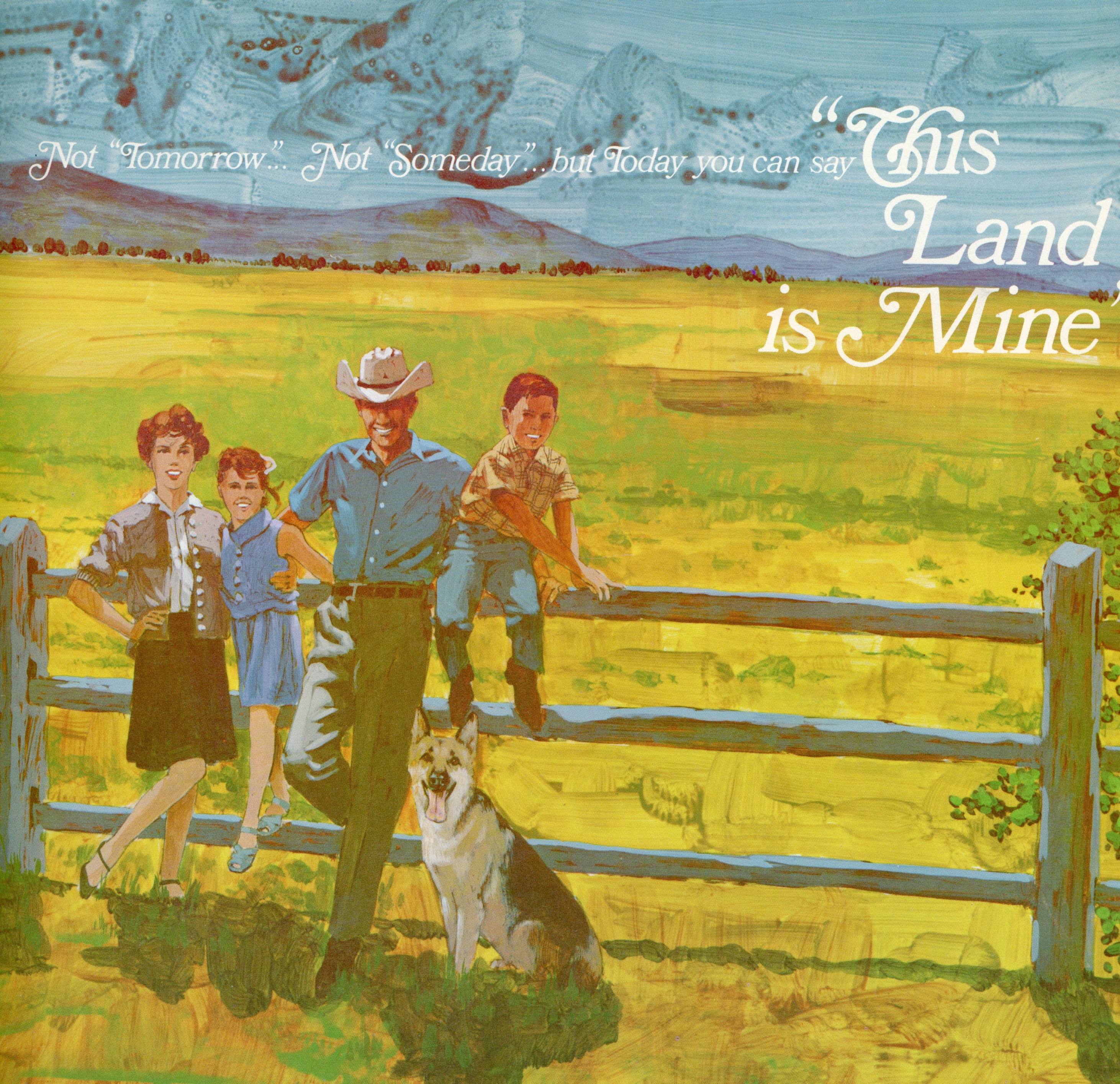
Cover of the Moon Valley brochure

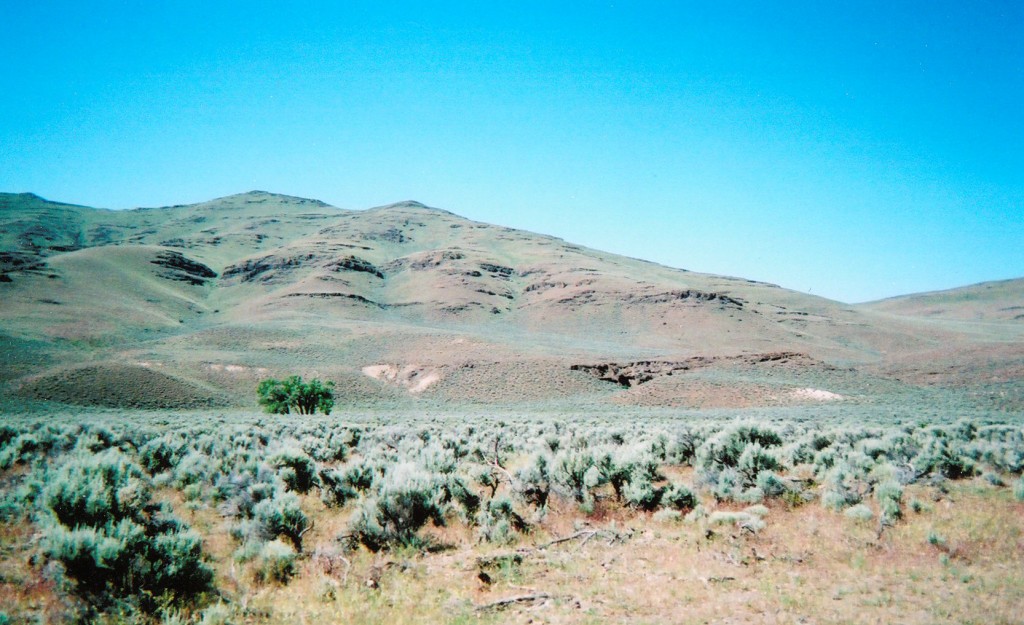
In 1968, the Occidental Petroleum Company purchased a large portion of the lands owned by the Rees T. Jenkins Land & Livestock Company. On the west side of the Madeline Plains, they subdivided thousands of acres into 20-acre parcels they named Moon Valley Ranch. The first unit was recorded on July 12, 1968. The Company’s advertising of the region made it too good to be true. “Now you get it all at Moon Valley Ranch: prime recreation land, within 4 miles of a 2,500 acre lake, in Northern California, the next recreational capital of the West and profitable investment property almost certain to appreciate as California’s recreation-hungry population continues to explode . . .And what a price now you can buy 20-acre parcels for less than $199 an acre–$150 down, $29 monthly.” Their portfolio expands on all the nearby wonderful recreational areas, such as skiing and golfing at Westwood, though they did not mention that Westwood was some seventy miles away. Also they did not disclose the fact that the golf course at Westwood was only proposed. The Company was correct in their advertisement that is was “The magnificent, away-from-it-all Moon Valley Ranch” to “land-that-time-forgot.”  Moon Valley Ranch is a perfect example why there are disclosure laws in the real estate industry today. Numerous folks still invest in that property, purchasing parcels site unseen, only to realize that they bought a lot on a sagebrush plain or a rocky hillside covered with juniper trees.

Don’t forget to look at the Subscribe feature.

Lassen County Militia

Militia Card
Tro Emerson’s Militia Card

Twice in Lassen County’s history there have local militia units of the California National Guard. The last time was during World War II. Initially, there was to be one large unit for Lassen and Modoc counties. That plan was neither feasible or practical and was dropped.

A new strategy was drafted. Inside each county, especially in large rural counties like Lassen, several local militia units would be formed. There duties were to protect the area in case of enemy invasion. Their involvement was confined to the boundaries of the county. Uniforms, guns and ammunition would be provided to each unit. They would also be trained in guerilla warfare. In Lassen County it fell upon the Farm Advisor (T.S. Brown) to organize these units.

On May 20 1942, the first organization meeting was held in Susanville. Local units were created for Susanville, Bieber, Doyle, Janesville and Standish. By the first of June, the Susanville Militia had 70 members. It became known as Thomas Tucker Militia—named after Thomas Tucker the first casualty from Susanville in World War I. Fortunately, this volunteer force never had to be activated. At the conclusion of the war, each individual’s enrollment in the militia was automatically cancelled.

Militoa card

Note: If you were not aware, you can click on the image to see a larger version.

Don’t forget to look at the Subscribe feature.

Lassen College

Lassen College
Lassen College on the Lassen Union High School campus.

Today marks the 90th anniversary of Lassen Junior College Initially, it was a separate department of Lassen Union High School and classes were held at the high school. In 1941, a separate facility was created. In 1946, with increased enrollment a new college building was built to the west of the high school. In 1965, the college separated from the high school to be known as Lassen Community College. In 1970, groundbreaking ceremonies were held for the initial construction of the current campus on Highway 139.

Don’t forget to look at the Subscribe feature.

Fun Times Ahead

Eagle Lake Trail
Let’s Go Exploring!

Dear Subscribers:  As promised I mentioned at least one, if not more special tours, as a special way to thank you for your support. While working on June posts, I  realized there is a unique annual natural/historic event that occurs in Lassen County during that month. While it is known internationally, very few people know of it locally. This year it just happens to fall on a weekend.  Once everything is put together, subscribers will be receiving an email with details.

In addition, you will receive a copy of J. H. Rudolph’s hard to find published account about this exotic feature . Those who reside too far away or have a previous engagement will still receive it.

For non-subscribers, you can still join in on the fun, as it is not too late,  by subscribing for as little as five dollars a month.

Brockman Ranch

Brockman Ranch
The barn is far to the left, as the Brockman Ranch appeared in 1903.

I realize that the Edsel Dealership was to be today’s topic, but a recent event prompted the change. On Wednesday afternoon, April 29, the old Brockman barn on Johnstonville Road went up on flames. In 1864, William Brockman and Jurgen Jensen were partners in a blacksmith shop in Susanville. A few years later they dissolved it. The two men located on nearby ranches on Johnstonville Road. After a 1947 suicide of a Brockman family member that occurred in the barn, the ranch after three generations of ownership was sold.

Don’t forget to look at the Subscribe feature.


Atlas Fredonyer

Fredonyer Summit
Ira and James Purdy posing at Fredonyer Summit, Christmas Eve, 1930

A lot has been written about Atlas Fredonyer early activities in the region. Among other things he filed a land claim in what would later become Susanville, since that town’s founder neglected to do so.

In 1862, Fredonyer was found guilty and sent to prison of a sexual assault charge involving his fifteen year old step-daughter, Sally. Many were of the opinion that Fredonyer did not commit a crime. A petition was circulated and California Governor Stanford pardoned Fredonyer the following year.

After his pardon, Fredonyer seemed to have disappeared, as he never returned back to this region. A few years ago, I finally found out what became of him. He surfaced in a most unusual way in 1880 in San Francisco. Fredonyer it should be noted used the title of “Doctor” to what extent of medical training he had, is not clear.  At this time he was suffering from bowel blockage. He attempted perform his own colonoscopy, which a bottle, which got lodged in the colon.  The heavy set Fredonyer was finally taken to St. Mary’s hospital. A colostomy was performed to remove the bottle.  He did not recover from the procedure and died in San Francisco on August 10, 1880.

Don’t forget to look at the Subscribe feature.


The Drought

Fire Antelope
Antelope Mountain Fire, 1926

As we enter our fourth year of drought, let us hope it does not last as long the 1917-1937 drought. The most severe was the winter of 1923-24. Susanville received less than five inches of precipitation this year. It was so dry that winter that in the middle of March, a one-inch snow fall at Susanville caused great excitement. There was even a greater commotion when eighteen inches of snow fell. It disappeared in a matter of hours. That was the extent of precipitation for the winter. Continue reading The Drought

Brand Project Update

Hulsman
Hulsman Ranch advertisement

Progress got stymied a bit, due to my knee injury. While my archives contain a wealth material, there is always research to do.

It was interesting to review Book A of Brands, Lassen County. The first brand recorded was for Thomas Watson on October 20, 1864.  The John Theodore brand JT was recorded on May 23, 1889 and never changed for over three generations and appears on the wall at the Pioneer. The same can be said for Hulsman Ranch brand though it was not recorded until 1917, when the State of California began enforcing the recording of brands.

Additional brands have also been included in the original list: George and Mayda Elledge, Hostetter & Johnson, Abner McKenzie and Coit Stone.


Camp Smoke Creek

Camp Smoke Creek
The camp was located near the cottonwood trees seen in the distance. It is located on private property and is now fenced off.

During the 1860s, the United States Military had a major presence in the region.

On November 9, 1862, Nevada Territorial Governor James W. Nye wrote to Brigadier General George Wright, Commander of the Department of the Pacific, and requested a Company of troops to protects the emigrants from the Indians along the Honey Lake-Humboldt Road. On November 14, 1862, the troops were dispatched. On December 15, 1862, Second Lt. Henry W. Williams arrived at Smoke Creek with twenty-five men and forty days of rations. On March 28, 1864, First Lt. Oscar Jewett, then in command, received orders from Fort Churchill to abandon the camp and to remove all valuable property from the camp as was possible. Continue reading Camp Smoke Creek

Leavitt City


Stock corrals at Leavitt, circa 1922.

In the fall of 1912, Benjamin H. Leavitt proposed the town on his original ranch. Leavitt wrote to his granddaughter, Edith Elledge, of his intentions: “I am going to cut the old ranch up into small tracts and sell it off in ten and twenty acre tracts . . . I am also building a road down from Rice’s Canyon, you know that is directly north of the town of Leavitt, to connect with all the northern trade clear out to Big Valley. The R.R. Co. have agreed to put their stock yards there. I have given them the land for the stock yards. I am also going to extend the road through the ranch to intercept the Janesville Road near Billey Indian. All the merchants of Janesville have agreed to order their good shipped to Leavitt which will make it one of the largest shipping points on the Fernley & Lassen.”

In addition, Leavitt offered railroad officials land if they would construct their roundhouse there. That proposition did not occur as Susanville’s business community convinced the railroad to locate that operation in their town. “The City” consisted of only the store, a few dwellings, and several large corrals that held livestock for shipment on the railroad.

Yet, years later, one could say a city of sorts of was built just north of Leavitt, the home of the California Conservation Center and High Desert State prisons.

Don’t forget to examine the Subscribe feature.

Exploring Lassen County's Past