Today, I did not receive a daily post notification, so I am conducting this test, since it will publish immediately. Thanks for your understanding.
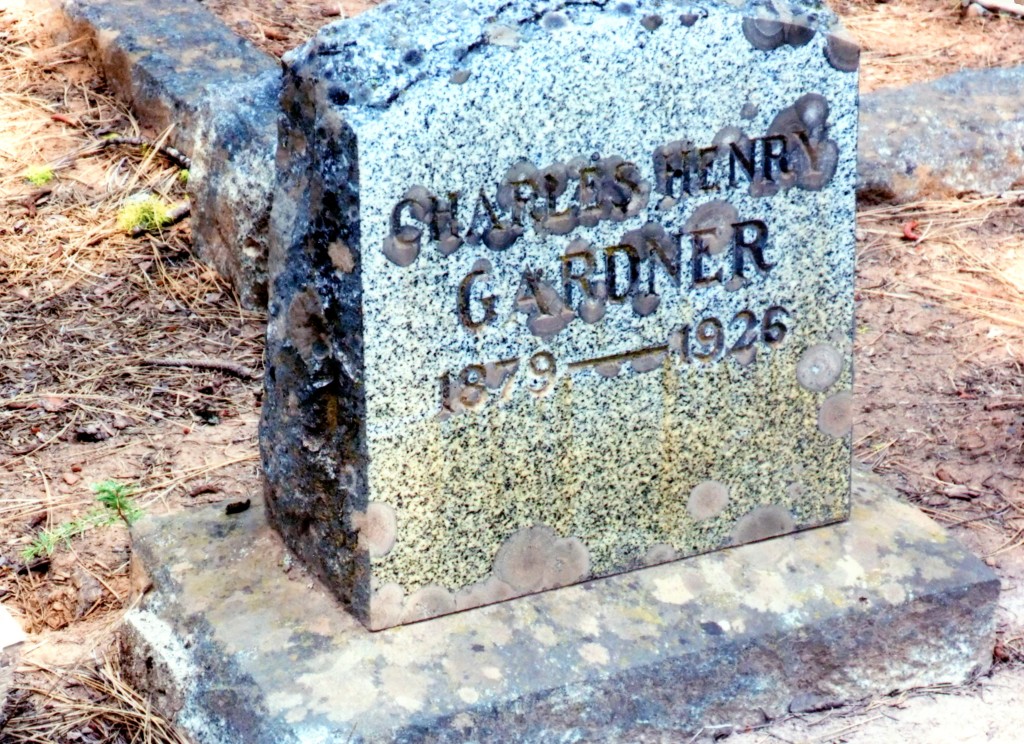
In August 2013, I conducted a Westwood Cemetery Tour. Since Westwood began as a company town of the Red River Lumber everyone worked together in a common goal.
With that in mind, in every operation, everyone plays an important role, as one cannot exist without the other. But before you can build a mill, you first need timber. That is where Charles Gardner, along with brother Irvine, better known as “Ippy.” The Gardner brothers, along with E.G. Scammon were part of the early California timber cruisers working under T.B. and Clinton Walker to not only examine timberlands, but also had the tedious jobs of going to a variety of county courthouses to examine land titles, so see who owned what parcel, values, taxes, etc. In a relatively short time frame of just over a decade Red River owned nearly 800,000 acres timberland in California making it the third largest landowner in California, only behind the railroads, who received their land for free from the government. Even after the Red River assembled its timberland, there was still plenty of work for the timber cruisers to do. Chief among them, was to plot out every year which sections of land that would be logged. As it was in the past, timber is still part of Red River’s heritage, now operating under Red River Forests, which is managed by Beaty & Associates.
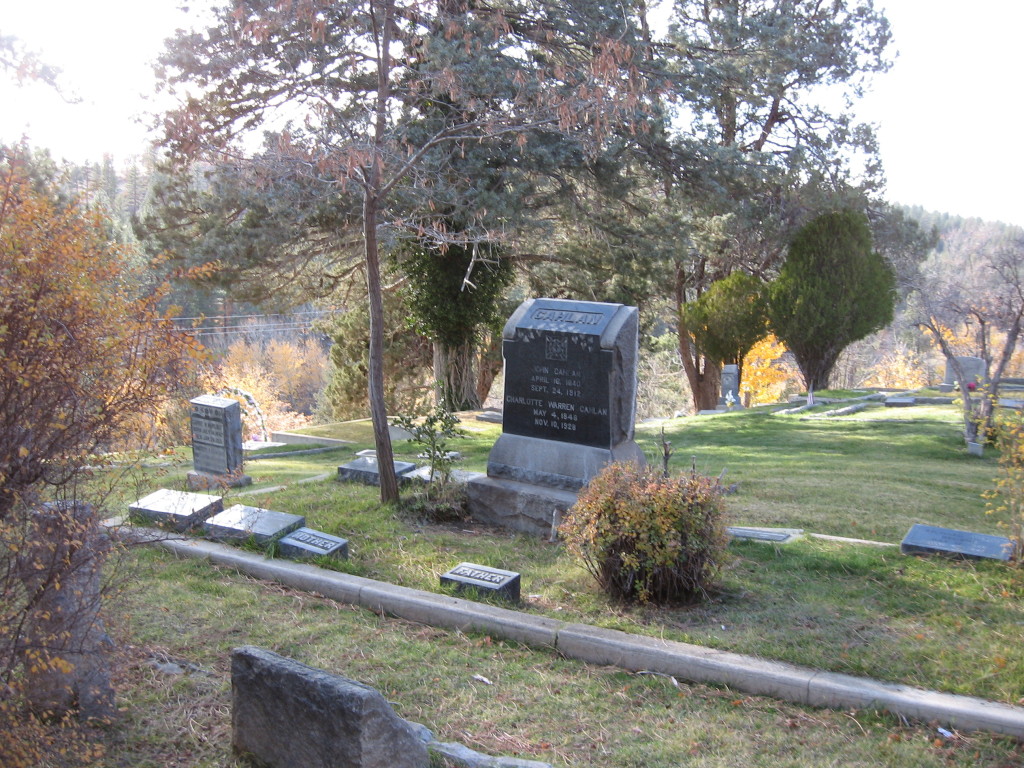
As spring is around the corner, many are probably antsy to get out and about. With that in mind, the Lassen Ale Works and I are proposing a special Susanville Cemetery Tour to visit those hardy pioneers who hailed from Ireland and played a role in our region’s history.
Among the graves to be visited is that of John Cahlan, president of the Bank of Lassen County. Richard and Margaret Thompson that involves a forbidden marriage, murder and a governor’s pardon. Jeremiah Wood the patriarch of the Wood family that has ranched for many generations in the region. Of course, there is the strange tale which Patrick Bagin who went for a final swim in Leavitt Lake with a sixty pound rock round tied around his neck.
Everything currently is in the preliminary planning stages. However, we would like to take an informal poll to see if the interest is there. Please either leave a comment or send me an email. Please take note this is a paid subscriber event. It only cost $5.00 a month to subscribe.

Without any fanfare this site was launched a year ago today. It was not completely assembled, since the following day the region was hit with a powerful windstorm and thus without power. In addition, my skills in doing the daily posts among other things was a bit of a challenge. Back in November, 2014 I had started doing on-line tutorials, but while some concepts I could grasp, others seemed part of the mystery of the universe. However, when push comes to shove, and its no longer academic, but hands on, I learned, and I am still learning, adding new features and materials.

Of course, while there is a ton of material available for free, it is not free for me. There are various costs involved in having a website like this, domain, hosting fees etc. If you read my daily blog, there is a link at the end, wherein for a mere five dollars a month you can subscribe and support. While the link provides the devil in the details, paid subscribers do receive some extra benefits, such as the daily notification on the topic du jour, participate in local tours and receive historical narratives such as the 1956 paper on the Eagle Lake Lava (Ice) Caves. Most importantly just sit back and enjoy.
While many are aware that Lassen County was dotted with numerous one-room schools, it applied to post offices, too. Some operated for decades, like Merrillville, some short-lived like Hazel, and there are a few ghost ones.
For many, it might be hard to believe that Grasshopper Valley, a sagebrush plain in north-central Lassen County, would even have enough population to support a settlement, let alone a post office. Grasshopper, it should be noted came to the forefront in the 1870s with mining activity at Hayden Hill. In 1883, John Calvin York purchased the 440 acre Madeline ranch and stage-stop in Grasshopper. Over the years it simply became known as Yorks.
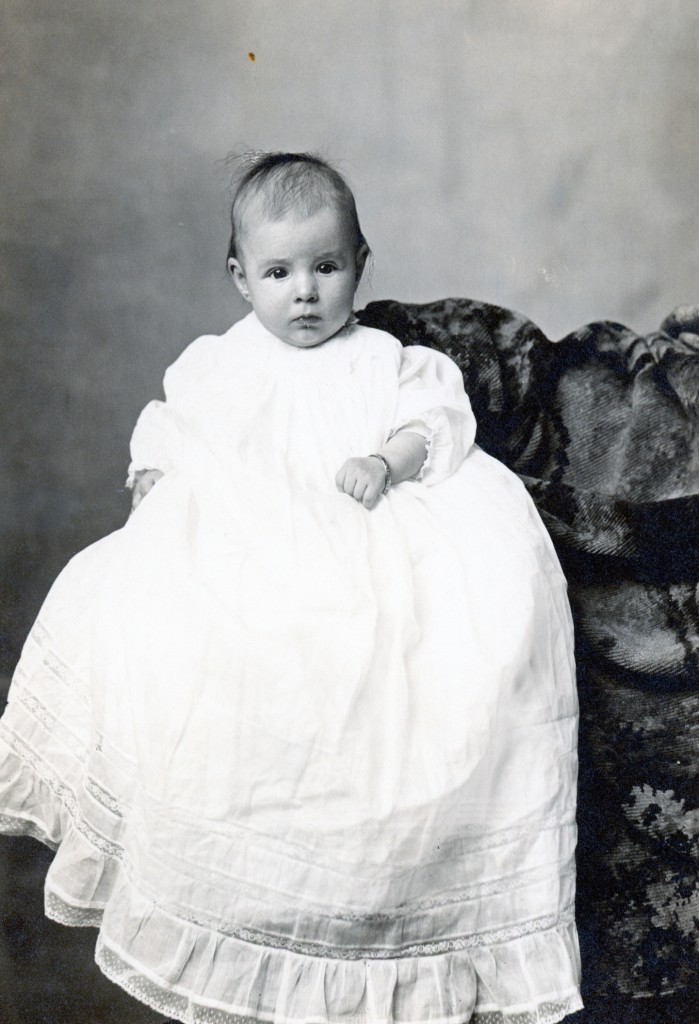
Very briefly, it became known as Hazel, when the family petitioned to have a post office established there. It was granted on May 14, 1895, but postal officials revoked it on July 9, 1895. The post-office was named for York’s latest addition to the family, his granddaughter, Hazel Mae York born there on February 14, 1895.

In 1910, George Wingfield established a summer residence south of Susanville, and more about that in a future article. He had a special interest in wildlife and established his own little preserve. That fall, he fenced off eighty acres for an elk and deer park. In 1914, he added four buffalo to his collection. This became a major attraction to local residents to view these creatures.
Wingfield also brought in such “exotic” species as peacocks and mammoth size frogs imported from New Orleans. He had two small lakes constructed on the property to plant with a wide variety of fish.

In 1923 Wingfield sold the property to the Lassen Lumber & Box Company who were primarily interested in the timberland he owned there. The buffalo were shipped to Wingfield Park in Reno where they were on display for many years. The fenced enclosure to keep the elk in was no longer maintained and the animals began to roam the region, with spottings from nearby Bald Mountain to Willow Creek Valley. The elk were poached by hunters over the years, and were wiped out by the early 1940s.
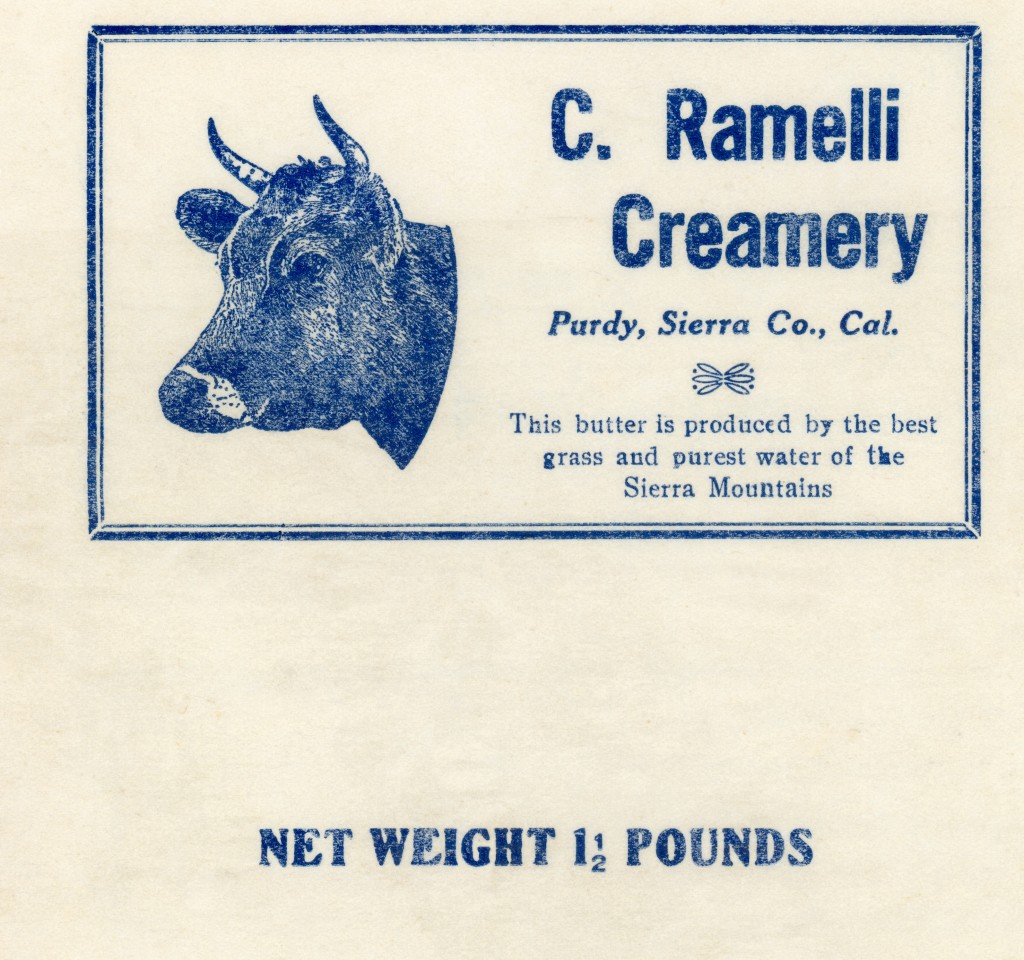
In 1887, Cesar A. Ramelli emigrated from Switzerland to the United States where he eventually located at Purdy, Long Valley, California. The area is best known to many as the region behind present day Bordertown. There, and later, with another location the Bella Vista in the Truckee Meadows, he along with his three sons, had seventy-five cows. From that herd, butter and cheese were made. The cheese was made into blocks of 10, 20 to 25 pounds which was sold in the Reno stores.
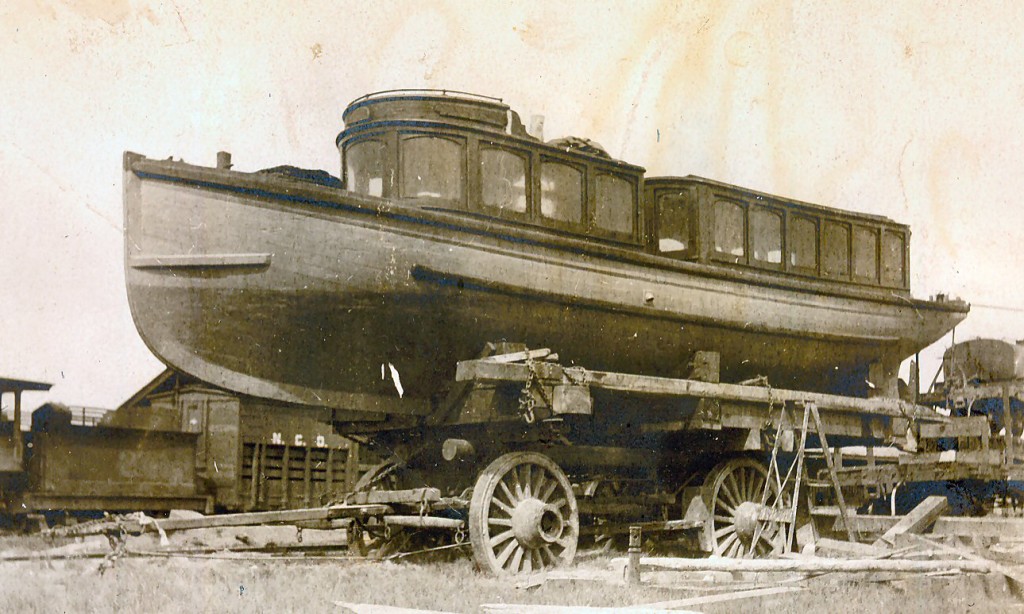
Well, it seems only fitting on the eve of the first anniversary of this web site, that a book of the month is featured. After all proceeds from book sales not only help support operations, but help finance future publications.
Sagebrush Reflections: The History of Amedee & Honey Lake my first book which made its debut back way back when in 1983, is remarkably still in print, barely. There were two boxes tucked away storage, but now down to one box, so about 60 copies are still available. This is the only concise work on the infamous Nevada-California-Oregon Railroad boomtown of Amedee located on the east shore of Honey Lake, but all the trappings of Honey Lake. A lot of things happened on Honey Lake, whether it contained water or not. So for a mere $12.00 you can buy this classic, before it goes out of print, and on Bookfinder.com they have a used copies for sale with price ranging from $20 to $3,000.
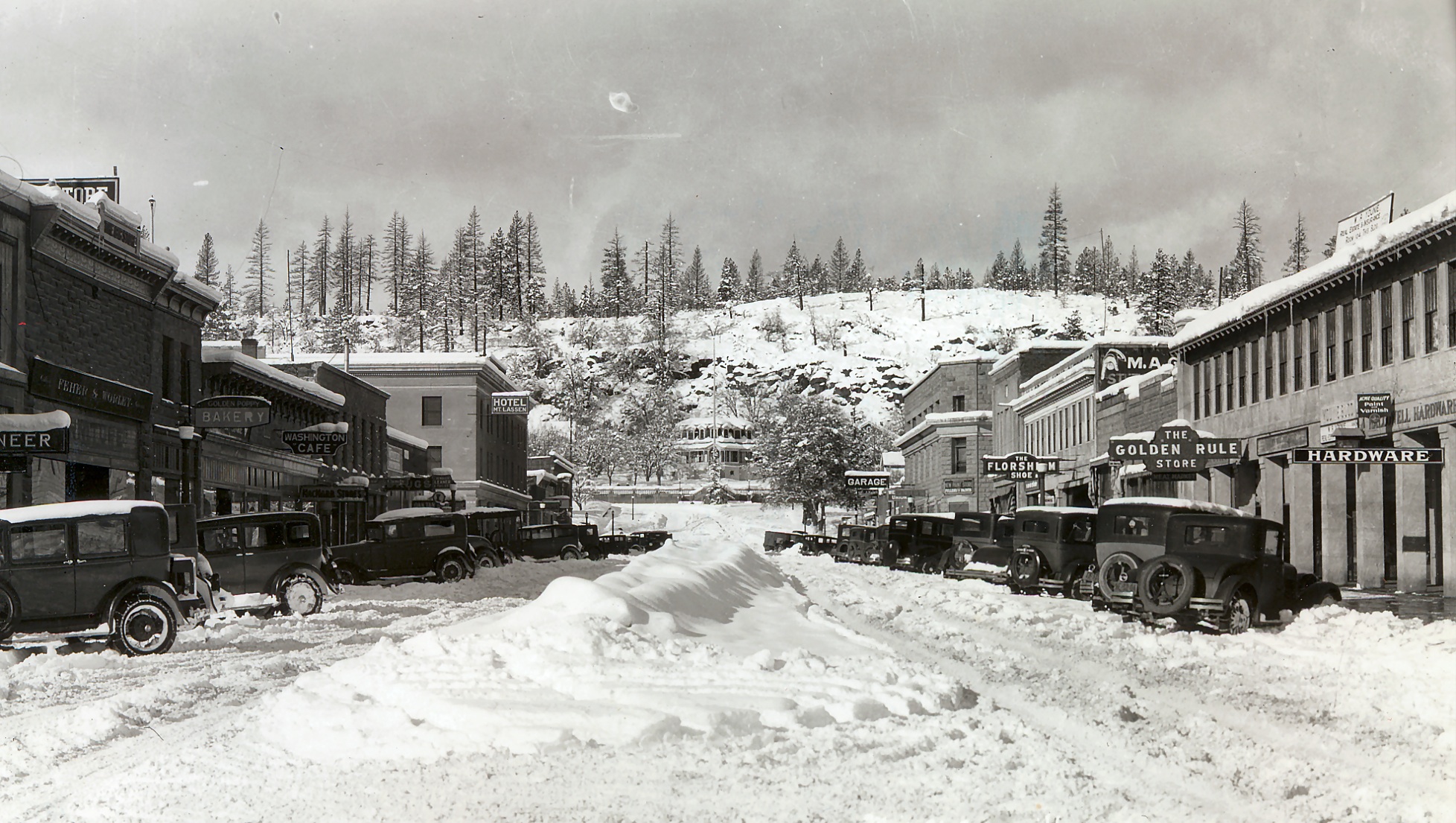
Here is February’s line-up. Of course, everything is subject to change. However, I have included three from Your Topic suggestions.
| Sagebrush Reflections | 2/1/16 |
| Ramelli Dairy | 2/2/16 |
| Lassen County’s First Zoo | 2/3/16 |
| Hazel Post Office | 2/4/16 |
| My first . . . | 2/5/16 |
| Roop vs. Worley Mountain | 2/6/16 |
| Election Season, 1910 | 2/7/16 |
| St. Patrick’s Cemetery Tour | 2/8/16 |
| The Meadows | 2/9/16 |
| Gerlach, Nevada | 2/10/16 |
| Wendel Store – Then and Now | 2/11/16 |
| Adin, 1879 – Revisited | 2/12/16 |
| Lassen College Gunsmithing Program | 2/13/16 |
| Isaac Roop’s Grave | 2/14/16 |
| Standish Water Company – Part II | 2/15/16 |
| Those Amazing Shinns | 2/16/16 |
| Charles Gardner, Timber Cruiser | 2/17/16 |
| Riverside Hospital | 2/18/16 |
| Tufa Formations | 2/19/16 |
| Smith Hotel | 2/20/16 |
| Herlong | 2/21/16 |
| Red River’s Livestock Brand | 2/22/16 |
| Bartlett Said, A Vagabond’s Journey | 2/23/16 |
| Sierra Theater | 2/24/16 |
| Wingfield’s Meadowbrook Ranch | 2/25/16 |
| Constantia School | 2/26/16 |
| Pioneer Barbershop | 2/27/16 |
| Menopause Manor | 2/28/16 |
| March Preview | 2/29/16 |
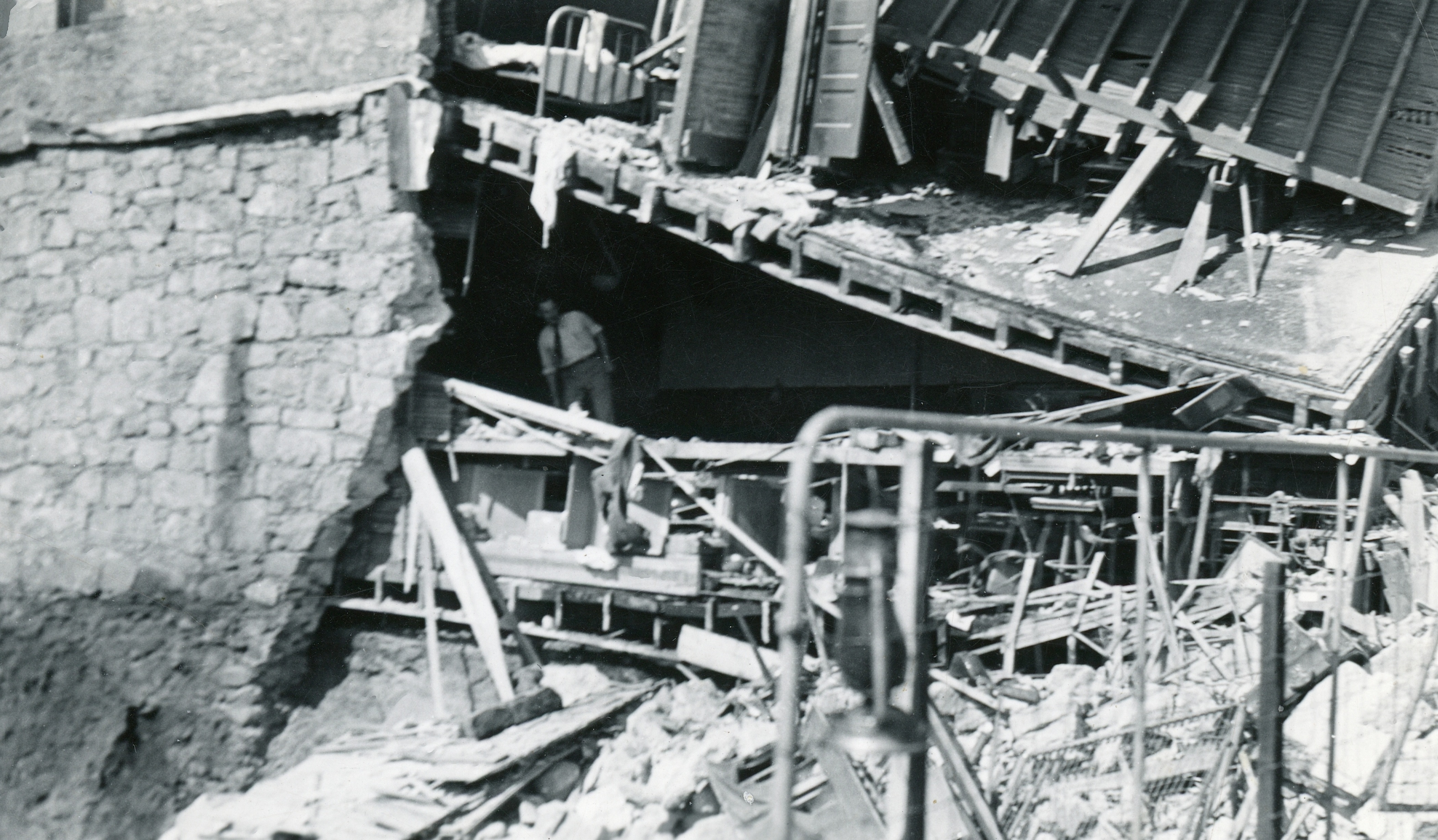
The restaurant business is a tough one that requires shear amount of work and dedication. When the Grand Cafe was first established in 1909, it would go through several owners during the next twelve years until it found some stability with the duo of Sam Vucanovich and Steve Sargent, former operators of the New Brunswick Cafe. In 1928, saw the addition of Helen Zalac, Steve’s new bride, and who became an iconic fixture of the Grand for over a half century. Continue reading The Grand Cafe & The Sargents