The 1964 TR4 Triumph at Tanner Ranch, Honey Lake Valley Valley, 2004.
Frank White passed away on January 15, 2016, a day after his birthday. He was a cherished family friend. His family moved here in 1954, his father Frank, to manage J.C. Penny. Many people may remember the The Smart Shop owned and operated by the family.
Some people are familiar with my Triumph, aka “shoebox” among other titles. Frank bought it in 1966, and I first drove it in 1976. I patiently waited for over 20 years, before he finally agreed to let met by it. However, Frank, being the the nice guy he was, allowed me to drive it over the years.
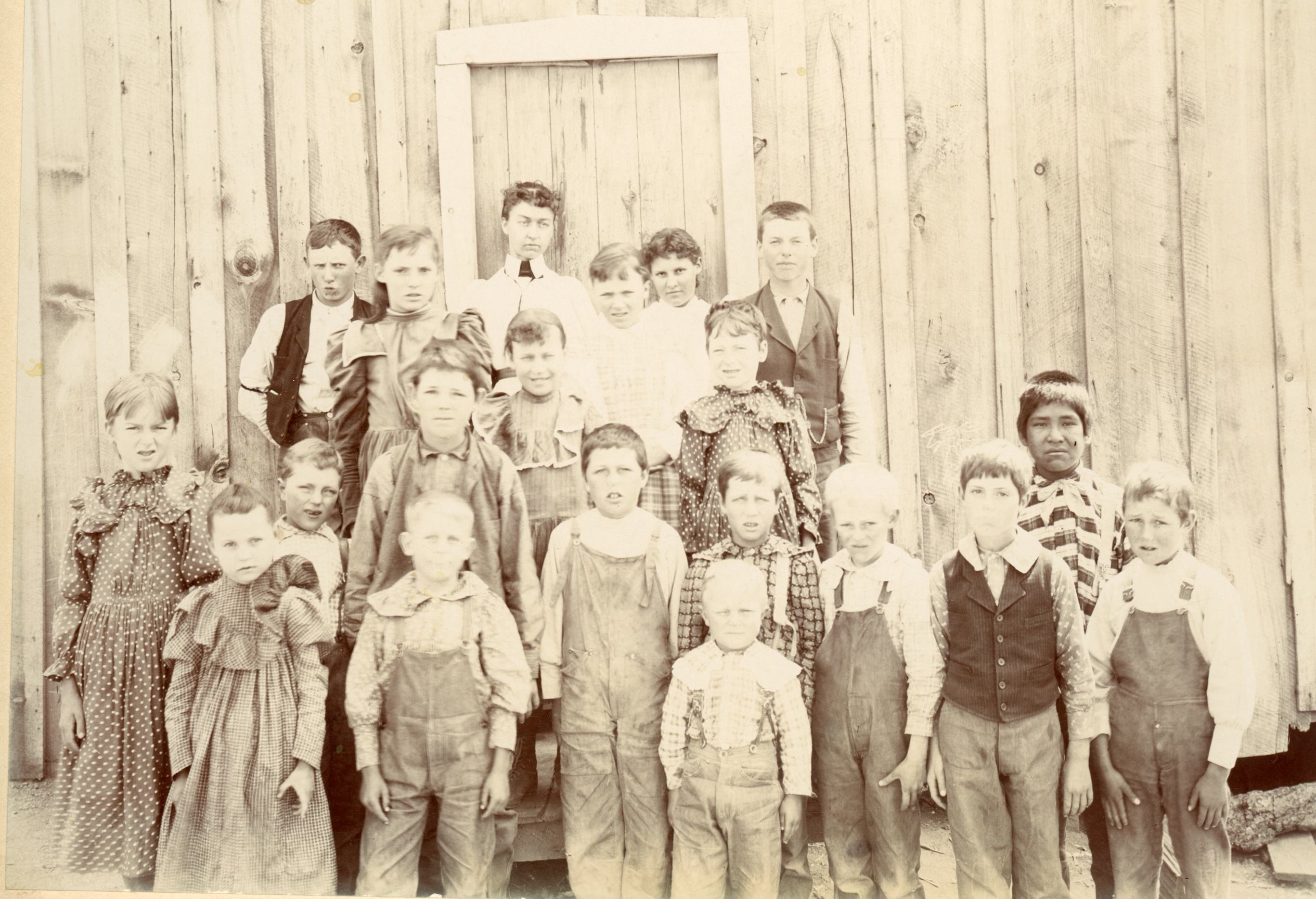
Hayden Hill School, 1894. Courtesy of Del & Diane Poole
Providing service’s to Lassen County’s largest mining community had its challenges. There were, of course, the boom and bust cycles, so its population was always in state of fluctuation. Due to its elevation and harsh winter conditions, many residents sought refuge elsewhere in the winter months.
Those factors influenced educational opportunities at Hayden Hill. In 1872, Perry Edris opened a private school on the Hill. It was not until 1878 that the public school was created. The school opened in the fall of 1878, with Ida Spalding as the teacher of fifteen students. The school remained in operation until 1925, when it closed for lack of students.
On June 1, 1931, the Board of Supervisors offered the schoolhouse for sale. Fred Bunselmeier and Lloyd Walsh purchased the two-story building for approximately $125.
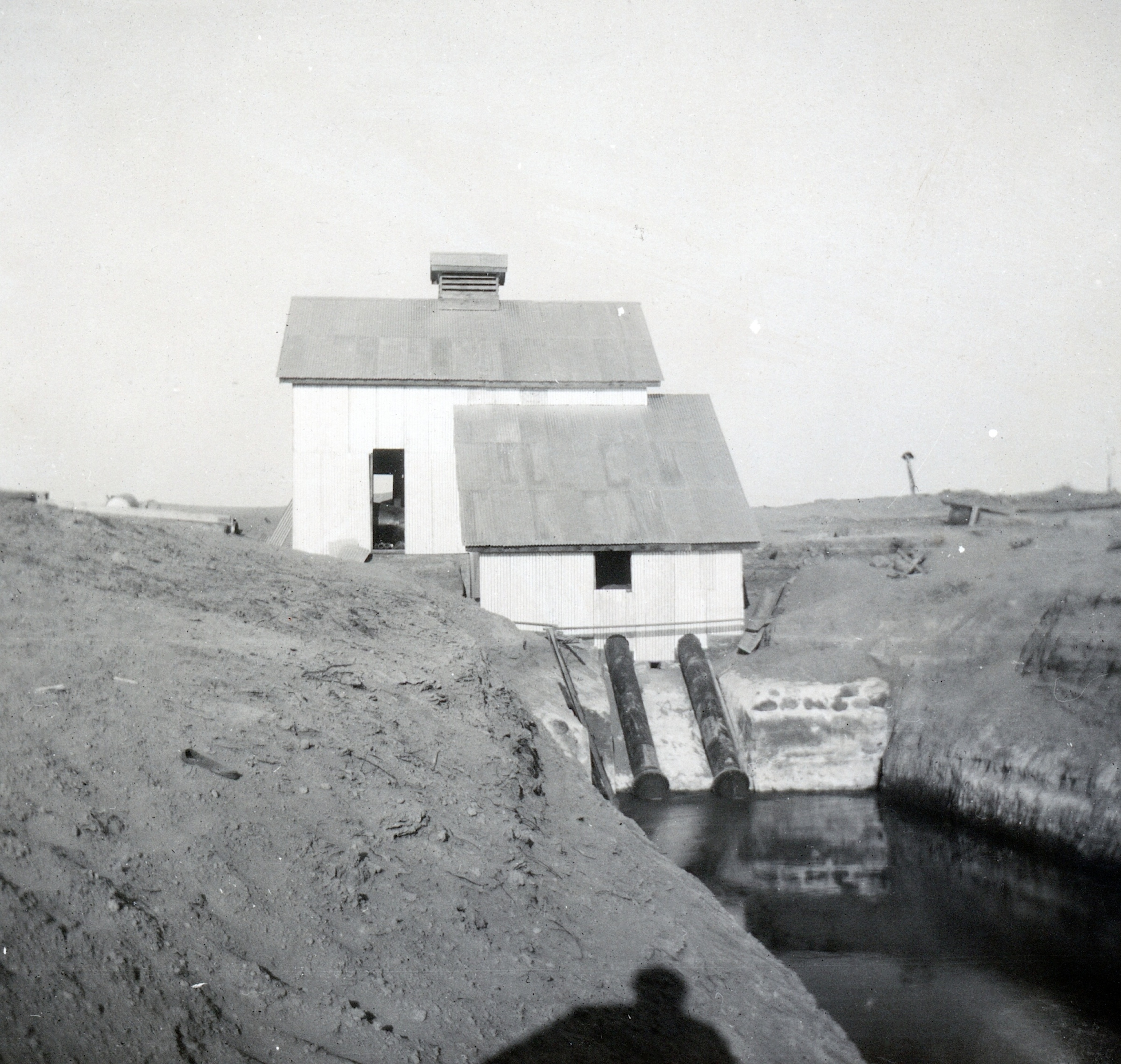
Standish Water Company’s pumping plant. C.R. Caudle collection
When Honey Lake is full it is an impressive body of water. There have been those over the years who thought it could be put towards a beneficial use. In 1878, Captain Charles Merrill came up with the first proposal to use water from the lake to irrigate the sagebrush lands on the lake’s eastern shore. Others, too, looked at lake’s potential for irrigation, but nothing materialized.
In the Standish district, two families who were joined by marriage—Hartson and Holmes—made plans to utilize the lake’s water for irrigation. In 1909, they formed the Standish Water Company. The Company was successful in attracting investors, one of whom was Carl Caudle. Caudle was a civil engineer, who had a homestead at Stacy on the east side of Honey Lake. Not only was Caudle instrumental in designing the project, he also invested $22,000.
In April 1910, construction began on a pumping plant on the east shore of Honey Lake, about two miles south of Amedee. A 150 horsepower Fairbanks Morse engine with a 24-inch centrifugal pump powered the pump house. Eleven miles of canals were constructed in an effort to irrigate 4,000 acres.
On October 4, 1910, on one of those beautiful falls days the region is noted for, set the mood for the inauguration of the pumping plant. During the morning people began arriving from around the Honey Lake Valley to partake in the festivities. Of course, the customary local dignitaries were on hand to provide their accolades. Shortly after noon, the visitors were instructed to assemble along the banks of the main canal to anxiously watch awaited event of pumping water into the main canal. At one o’clock the whistle blew from the engine house, and within moments water burst through the pipes to fill the canal.
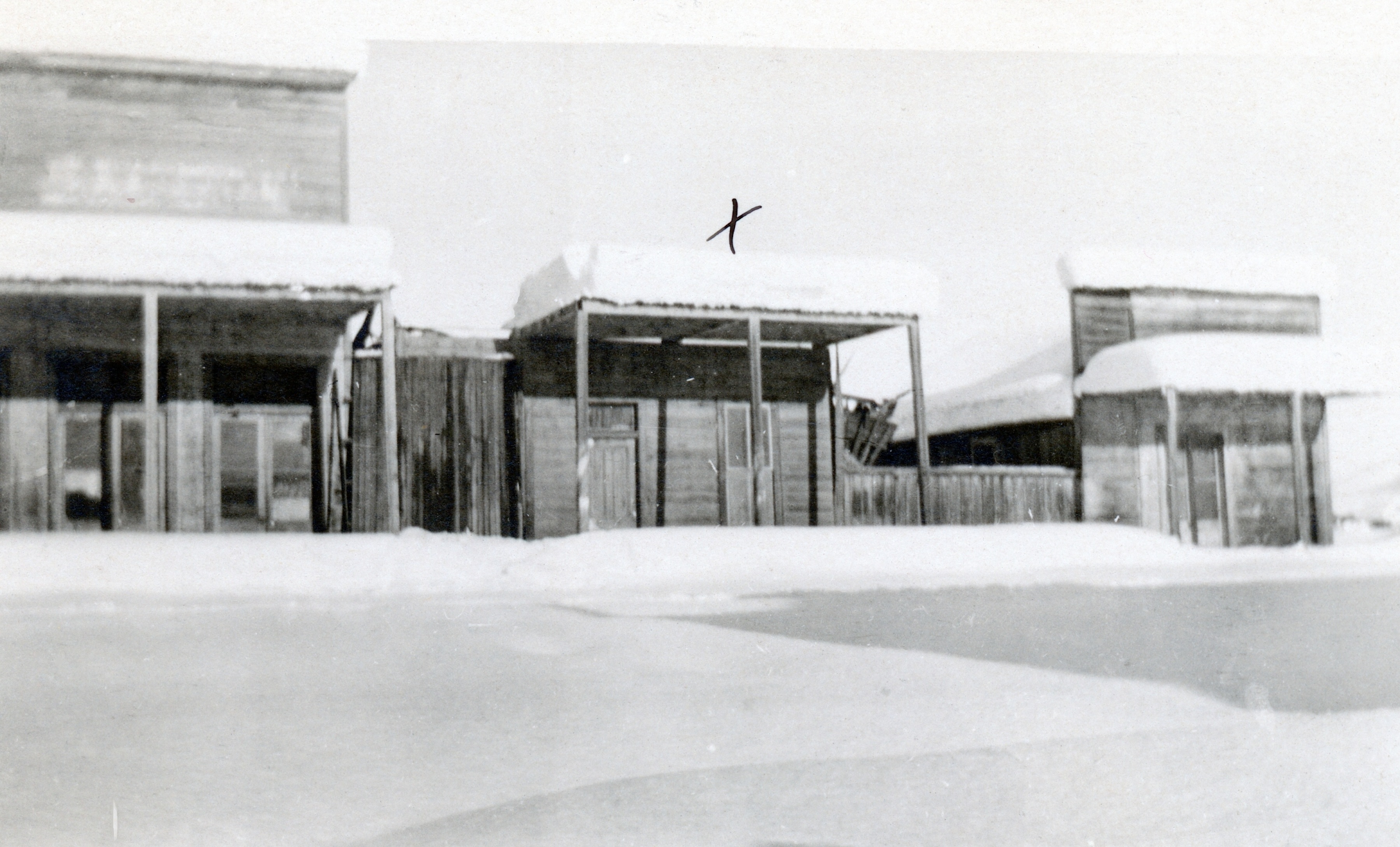
On the surface it appeared the Company was off to a successful start. In addition, Mother Nature contributed to their efforts, when a snowstorm in January 1911 dumped eight feet of snow there! Actually, the weather gods for the next several years were very kind to the east shore residents by providing higher than normal precipitation.
In the Company’s first year 1,000 acres had been planted with sugar beets, with a successful harvest. The following year was a success, too. This changed in 1913, in one of those bureaucratic snafus. The Standish Water Company sold water to individuals who were homesteading on federal lands. Once those individuals met the government’s requirements they could acquire the land for a nominal fee. Disputes occurred, usually from neighbors. In this particular instant, Thomas Philbin contested John Ramsey’s request for a final proof for his 160 acre homestead. The United States Government Land Office (GLO) investigated Philbin’s claim, which they dismissed. However, when it was learned Ramsey’s source of water supply was Honey Lake, it raised a concern.
On a quarterly basis, which began last July, I ask you the reader, is there something you would like to learn more about or maybe its something you heard but question its validity. So here is an opportunity to participate. I will do my best to answer any questions. It should be noted, it may take awhile for the answer to appear as a post. The primary reason, many of the daily posts are done nearly a month in advance. For instance, this item was composed on November 21. So by the time you read this, I am already working on posts in the middle of March. Whatever the case may be, I look forward to hearing from you. Of course, it should be noted that paid subscribers requests receive priority. In addition, you can always send an request at any time.
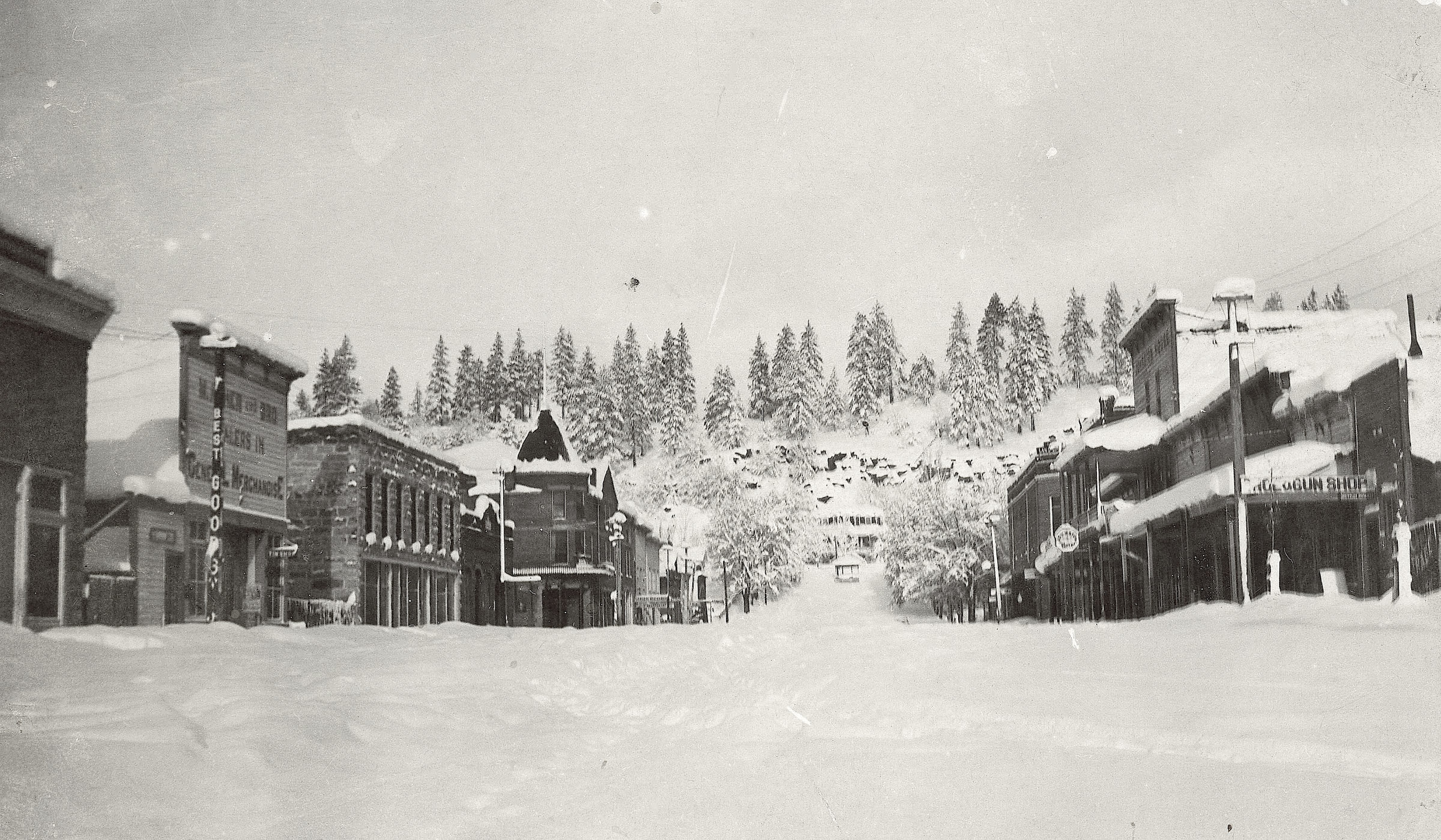
Amedee, January, 1911. The “x” indicates the town’s old dance hall. Courtesy of Madelyn Mapes Dahlstrom
While a few days ago we examined the winter of 1861-62, there are winters where one storm defines it. These are usually record breaking snowfalls, which nearly all the winter season’s precipitation is received. Continue reading The big snow of 1911→
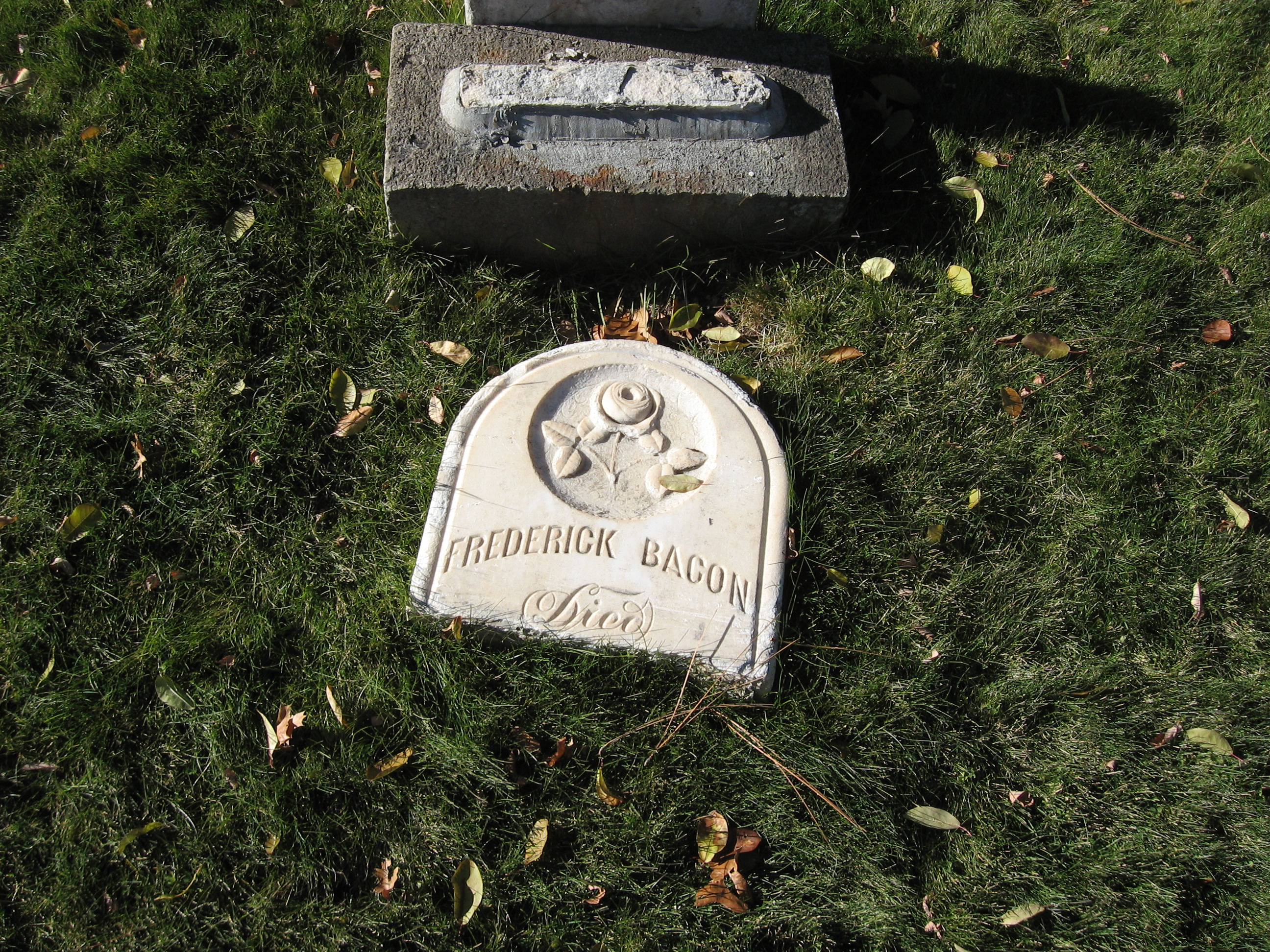
The vandalized headstone of Frederick Bacon, father of W.T. Bacon, Susanville Cemetery. November 21, 2015
Since I had been writing a lot lately about the High Rock Ranch and Springs, I could not resist to pass along the following story. On September 16, 1883 the Susanville correspondent to the Reno Evening Gazette passed along this bit of news:
“That Susanville possesses many advantages, no one who has visited this pretty town will deny. Among those advantages, are the facility with which business is executed here, especially in the line of divorce and matrimony. To illustrate the above, I cite a case that came off here last Friday in the Superior Court. Until that day, one W.T. Bacon was possessed of a wife who had borne him two children, the youngest being a few months old. His residence was at a place called High Rock. Sometime last February, a little unpleasantness occurred which W.T. Bacon did not relish. It seems one J.B. Roberts, being smitten with the female side of Bacon, being qualified, committed adultery with the male Bacon’s wife. Last Friday W.T. Bacon applied for a divorce from his wife, on the grounds of adultery. The woman waived all forms of law, and went to trial immediately. The man—Roberts—came forward and swore to the fact committing the adultery, and the divorce was immediately granted in the afternoon. In the evening between 7 and 8 o’clock, J.B. Roberts and Mrs. Harriet Bacon were united in marriage, the ex-husband being present at the ceremony, keeping the baby quiet during the exercises. Taking it as a whole, it was the largest Bacon transaction here during the week, and causes considerable comment on change.”
Main Street, Susanville, January 1907. To the left one can see the uncompleted Williams Spalding building.
In 1903, an ambitious young jeweler by the name of Joseph B. Williams arrived in Susanville and set up shop in the Emerson Hotel. Business was so good, that three years later, he decided to build a store of his own, just a few doors down from the Emerson in the 700 block. In March 1906, Andy Buchler started hauling stones from the local quarry. A month later, there was a change of plans. Local druggist, John B. Spalding bought the vacant lot on the west side of Williams. By summer, a new set of plans had been drawn for one large stone buildings for the Williams and Spalding properties. By October, the second story had been completed and work was at a frantic place to put a roof before the winter storms set in.
It was not until the spring of 1907, when the structure was completed and was commonly known as the Williams Building. After Williams departure in 1910, it gradually became known as the Spalding Building, home to the Spalding Drug Company that operated there until 1967, when after a century of business in Susanville closed its doors.
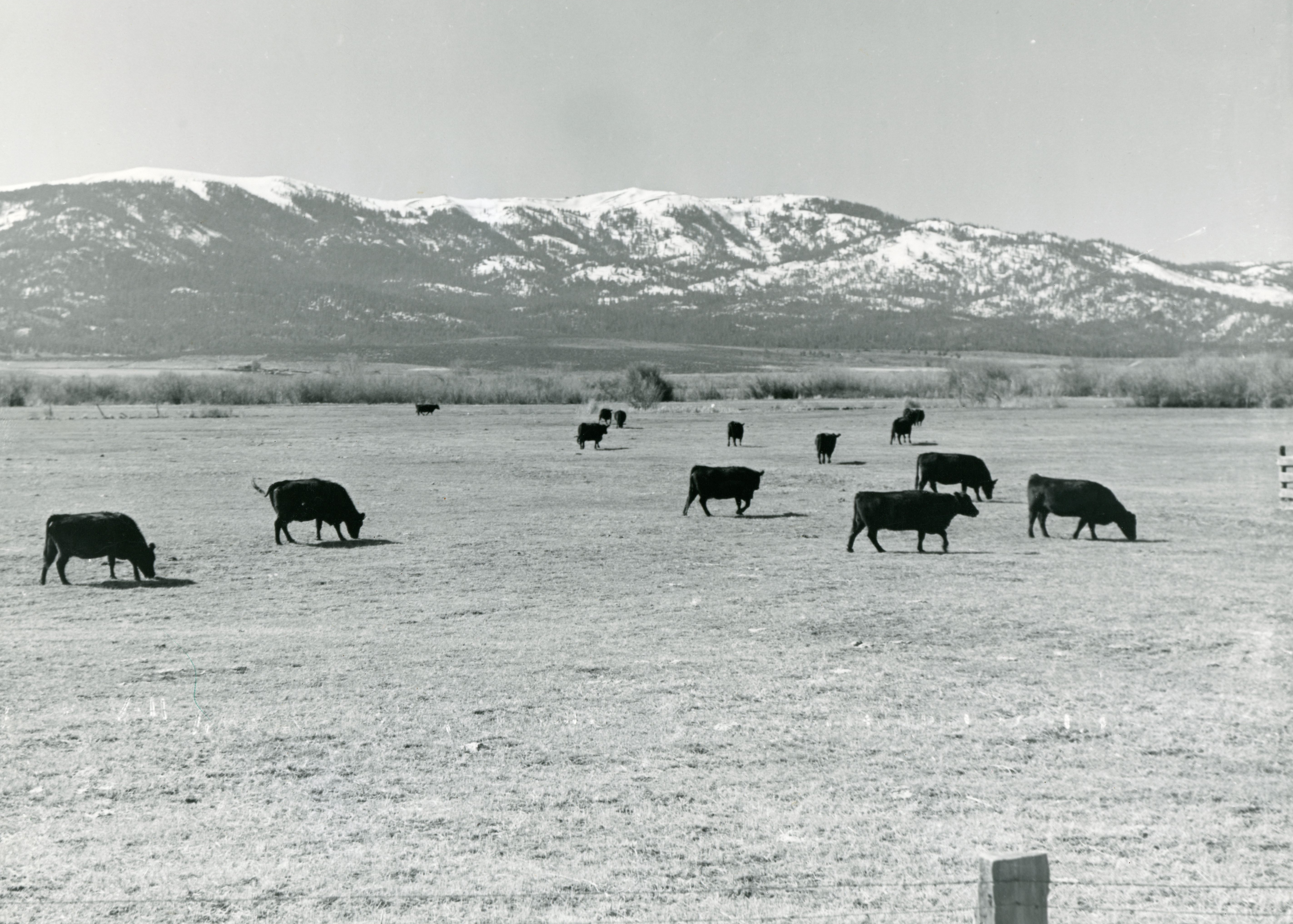
Can you imagine this pastoral scene between Susanville and Johnstonville, was once flooded with over three feet of water.
The winter of 1861-62, is one for the record books. Thankfully, the A.L. Tunison diaries provide a glimpse of what happened locally and elsewhere.
The previous two winters had been dry. By the end of November 1861 there was a foot of snow in the Honey Lake Valley. Then on December 8 and 9, heavy rains. On December 18, Tunison receives news of flood damage elsewhere and writes, “Good flood in Sacramento Valley. Water 15 feet deep in Sacramento City. Boats run on Main Street in Marysville. Great many cattle lost. Slide on Sierra Nevada Mountain at Washoe covered up a quartz mill, injured two men, killed another. Two bridges gone on the Truckee River.”Continue reading The Winter of 1861-62→
Long after the excitement of the gold rush, people were still lured to California. Numerous reports published back east extolled the health benefits of the golden state’s climate. In the spring of 1874, Iowa resident Sylvester Daniels ventured to the Honey Lake Valley to visit his sister, Polly Parks, and see if the change in climate might be beneficial to him. Like many in that era, Sylvester kept a journal. His journals were different in the sense, as he kept a record of his experiences so he could send them back to his fifteen-year-old daughter, Viroqua. Continue reading Sylvester Daniels→
First of all, coming from a family logging heritage, its still hard to fathom, that lumber mills no longer exist in Lassen County.
The two largest mills, Fruit Growers and Red River maintained two type of winter log decks. Usually, normal logging operations ceased in November. Yet, to keep the mills operating throughout the winter, required to have a substantial amount of harvested timber. There was the log deck at millpond, and then a second one out in the woods. The latter was not brought into the mill until spring, since the winter supply was nearly exhausted. The log decks in the woods provide enough ample supply during the transition, since it would take some time when the logging camps opened in the spring, to provide a steady supply to the mill.