Fun, Fun, Fun

Courtesy of Juen Chappuis

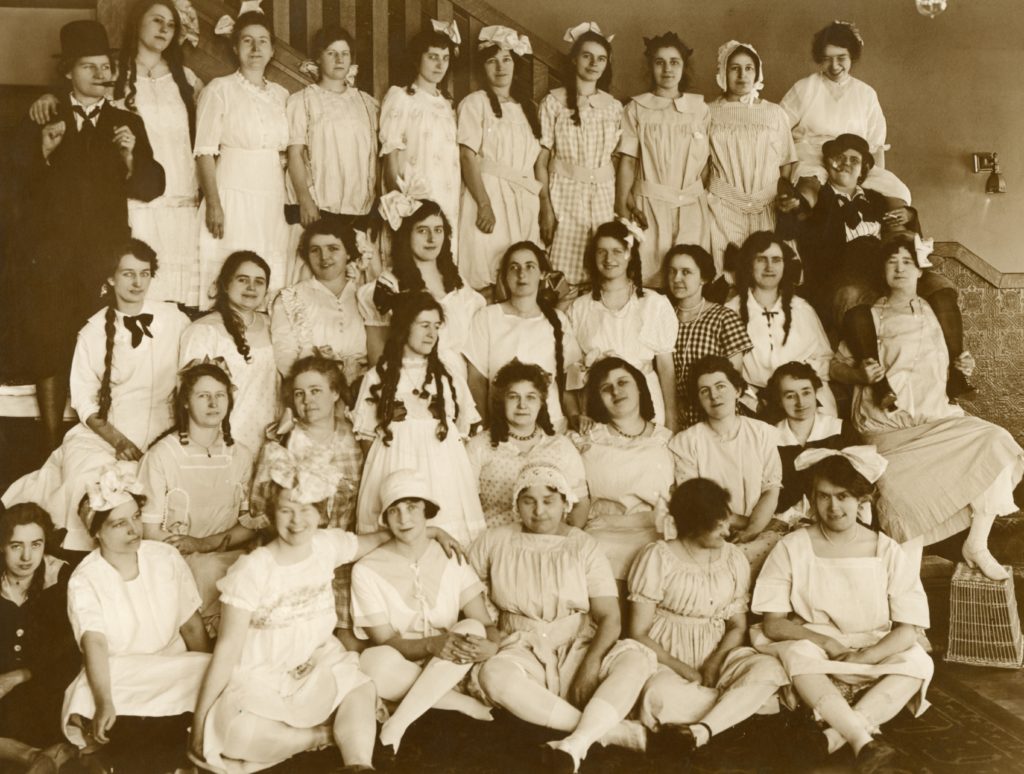
If you recall for Halloween last year, I posted a story about  Freak Parties.  Before television, folks did a pretty good of entertaining themselves with all kinds of parties.  These, of course, were quite the social event. Unfortunately, I do not know what the occasion for above photograph. It was taken at the residence of 700 Mill Street, Susanville. The following is a listing of those identified:

First Row: Unknown, Harriet Bangham, Gladys Emerson, Hazel Doyle, Unknown, Unknown and Unknown.

Second Row: Unknown, Anna Sharp, Eleanor Byrant, Lillian True Bangham, Sadie Jacobs, Unknown, Mrs. Church.

Third Row: Grace Bridges, Lucille Pierce Nash Mathews, Dudie Ramsey, Flora Neuhaus, Marie Emerson Hallowell, Unknown, Unknown, Unknown, Fannie Winchester.

Fourth Row: Unknown, Unknown, Unknown, Blanche Spalding Pardee, Unknown, Unknown, Kate Odette Pierce, Kitty Whipple, Jeanette Alexander Worley, Mrs. Trix Wren.
Never miss a story, click here to subscribe.

That old photograph

Courtesy of Lola L. Tanner

Back in 2002, I received a request from the Lassen County Administrative Office seeking a particular historic photograph. I submitted the above, and it was what they wanted. The scanned image was widely distributed. From that brought about my initial steps of moving information online.

Fast forward to September 2, 2015 during  my first visit to Reno Orthopedic to have the staples removed from my hip surgery. The various rooms and hallways are all adorned with historic photographs. In the room that I was in, had the same above picture.  It is the only other time I had seen it. The only thing I know about it, it was in one of my grandmother’s photograph albums.

Never miss a story, click here to subscribe.

Longville – Plumas County

Longville Hotel, circa 1915. Courtesy of Plumas County Museum

Humbug Valley is located a bit south and west of Lake Almanor. It is an interesting locale, and worth the trip if you have never been there.

In 1855, B.K. Ervine and William B. Long used the valley for stock-range. Two years later, gold was discovered and set off a flurry of mining operations. Long and his father-in-law,  Allen Wood, built a hotel there, and a sawmill mill, too, and thus the town of Longville came into existence.  In 1862, Long came to Susanville and purchased William Weatherlow’s ranch, known today as Susanville Ranch Park.

Longville continued to flourish, and then came along World War I and everything changed. Like so many places Longville would slowly become de-populated and residents never returned after the War. The Longville Post Office that had been in operation since 1861, closed in 1918.

Never miss a story click here to subscribe.

Lucerne School – Lassen County

Lucerne School, 1916. D.M. Durst Collection

On February 7, 1916, the Lucerne School District was established at a special meeting of the Lassen County Board of Supervisors. It, along with the Glade School District, were the two last rural school districts created in Lassen County. Shortly thereafter a school house was constructed about three miles north of Doyle. The school closed in 1925. At that time the Board of Supervisors authorized the sale of the building—asking price $50. But no buyers came forward. The school house was destroyed in a August 1926 forest fire that also destroyed the ranches of Arent, Downing and Wagner.

Never miss a story, click here to subscribe.

Westwood in the movies

Westwood Theater. Courtesy of David Zoller

The Red River Lumber Company was unusual in that it did not routinely have commercial films made of its operations, as their competitors did. It was deemed a good business practice to show prospective retail buyers, as well as investors, of one’s operation. In the 1930s, Red River officials debated the issue, particularly as it might be beneficial if forced to sell Westwood. On the other hand Red River’s neighbor the Fruit Growers Supply Company routinely had films made. For them it was important for the citrus growers to see what was involved with their investment.

In the summer of 1928 Caterpillar tractors sent a camera man to Westwood to film Red River Lumber Company’s entire operation–from the falling of trees to finished board. Caterpillar was interested in Red River’s operations. Red River’s skilled machinists were constantly making improvements to Caterpillar tractors. Among old time Red River employees there was the folklore that Red River had more patents on Caterpillar tractors than Caterpillar.  Whatever the case may be, in November 1928 the film made its debut at the Westwood Theater.

It would be interesting to know if the film exist in Caterpillar archives. After all, Fruit Growers had a 1925 film of their Lassen Operation in their archives.

Spread the word, encourage a friend to subscribe.

Standish’s Landmark Store

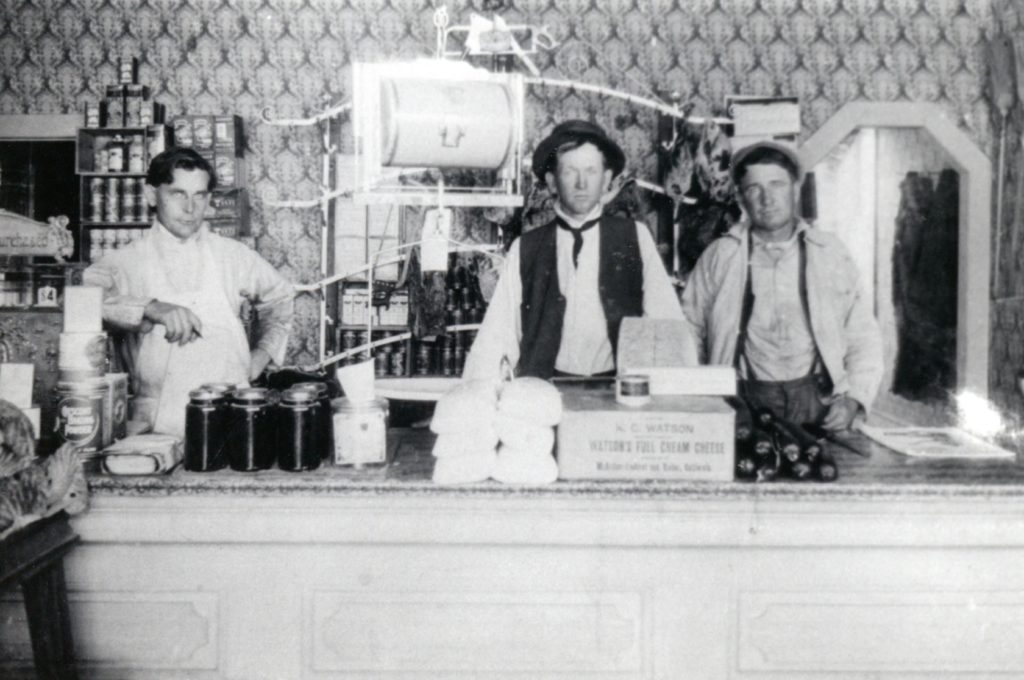
Emerson's Store, Left to Right, Bill Lewis, Jim Mapes, Todd Hemler, 1916. Courtesy of Prentice Holmes
Emerson’s Store, Left to Right, Bill Lewis, Jim Mapes, Todd Hemler, 1916. Courtesy of Prentice Holmes

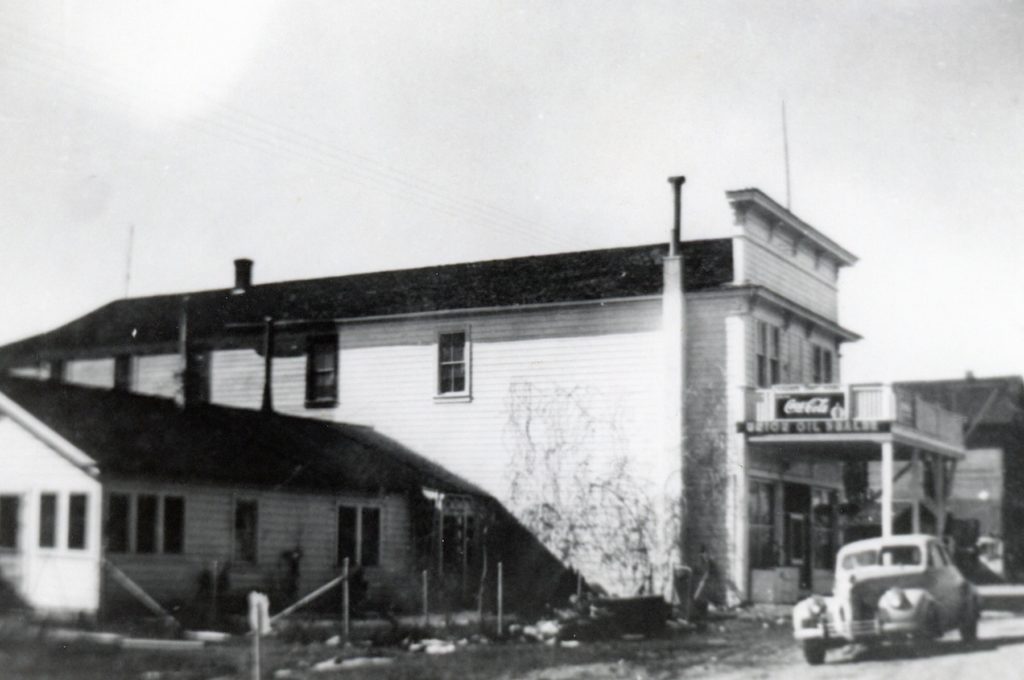
The building was originally a Forester’s Lodge. It was quite common in that era, to construct a two-story building. The second story used as a hall/lodge room, while the first floor was rented out for commercial interests to pay for the building, but maintenance as well. The building soon evolved into the Standish Hall Association.

The Standish store, no date. Courtesy of Camilla Moody.

Susanville merchant Charlie Emerson was quite the entreprenuer. Shortly after the lodge building was constructed, Emerson opened his second general merchandise at this location. In 1928, Bill Lewis took over Emerson’s and renamed it the Standish Supply Company.  Lewis was succeeded by Claude Heard. When Heard relocated to Litchfield, Neil Winchell took over the store, and it became Neil’s Mercantile. In one of those moments, its almost hard to believe but Neil’s has been closed for some thirty years now.

Never miss a story, click here to subscribe.


Scottini’s Arrastra Mill

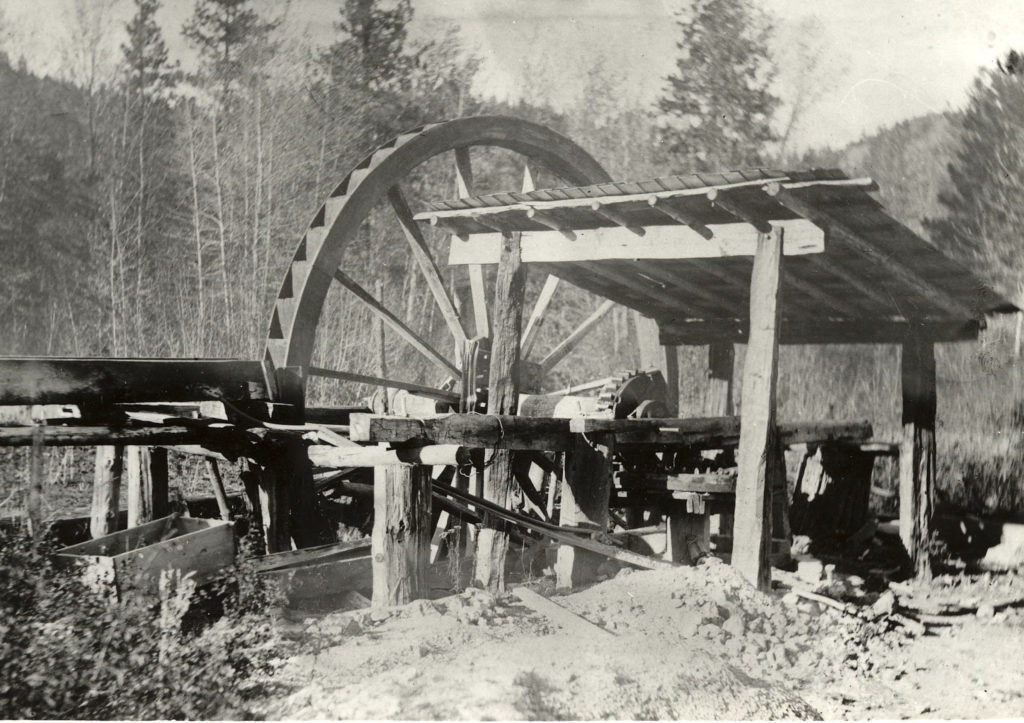
The arrastra mill, 1899. Courtesy of Mary Dale Folsom

Readers may recall last month’s post about the Scottini family.  Besides a dairy operation they were involved in gold mining. After all, Diamond Mountain being one of the most important mining districts in Lassen County, and only second to Hayden Hill.

As the majority of mining along Diamond Mountain was that of lode bearing quartz, equipment was needed to extract the gold from the quartz. A simple and inexpensive method was with a arrastra mill which would pulverize the rock. The Scottini mill was unique as it was powered by a water wheel, the water of course from Gold Run Creek.

After the Scottini’s left the area, the mill was abandoned, though L.D. McDow, James Branham and Henry Neff acquired the claim. They did not use this mill, and instead built one of their own. In 1965, George McDow stated “The remains of this (Scottini) arrastra lie buried by flood debris with only a few of the side timbers exposed above the ground.”

Never miss a story, click here to subscribe.

Walker’s Then & Now

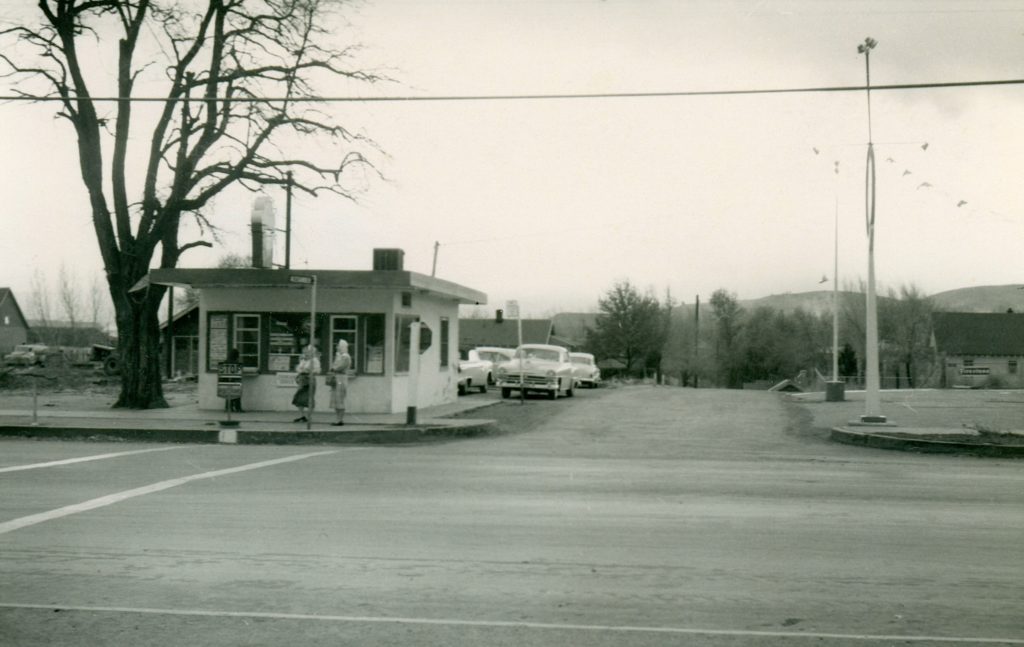
Walkers, 1958.
Walkers, 1958.

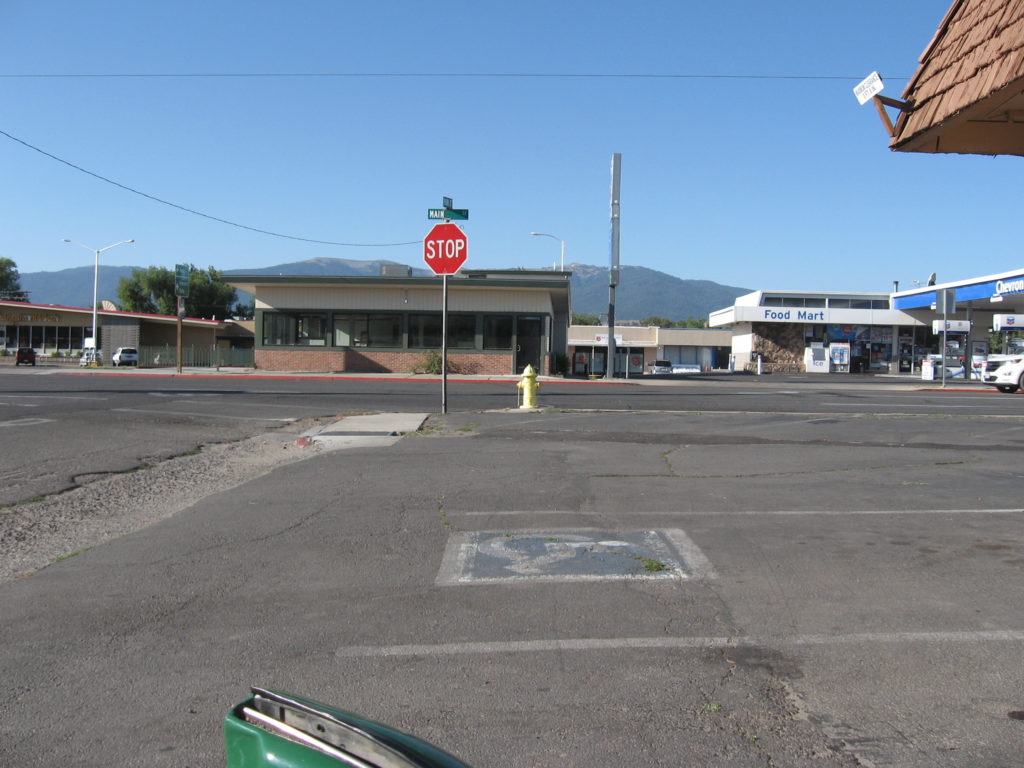
Walker’s was an iconic Susanville institution for nearly forty years. It first started as a small hamburger and shake stand on the corner of Main and Alexander Avenue.  It later expanded into a full-fledged restaurant that was popular with the locals and travelers, too. In the 1970s, the City of Susanville made a realignment to Alexander Avenue, and the gas station was moved next door.

August 6, 2016
August 6, 2016

For the past several years the  building has undergone extensive renovations. There is a lot of speculation what the former Walker’s is going to be reincarnated into. In due time, we will find out one day.

Never miss a story, click here to subscribe.


Durbin Nursery

Durbin Nursery. Courtesy of Dick & Helen Harrison

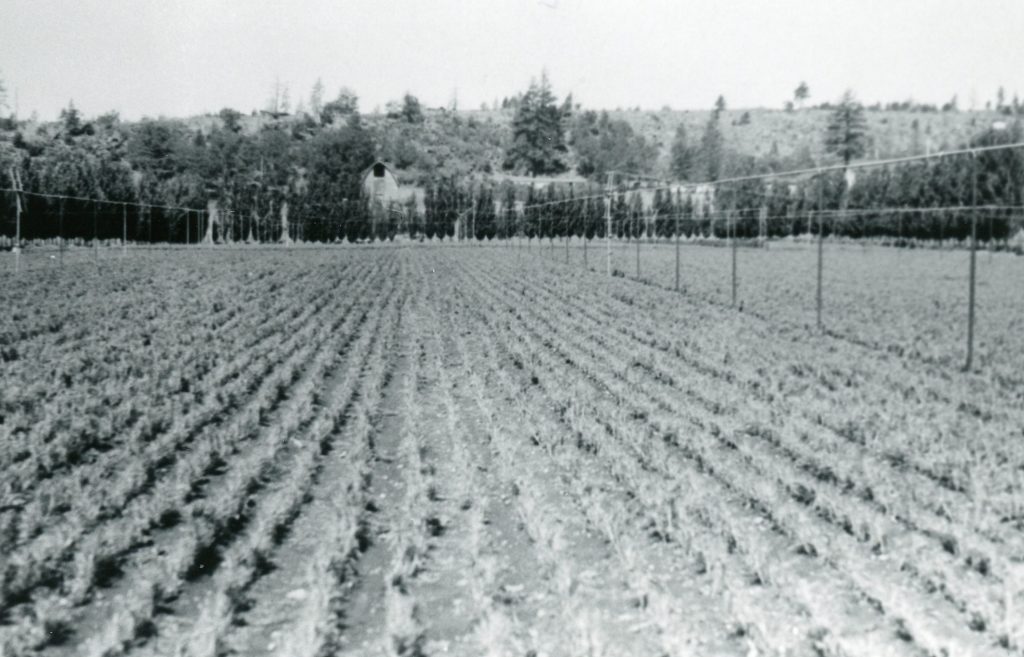
In 1928, the Lassen National Forest Service leased seven acres from Lassen County on Richmond Road for a tree nursery. It was originally named the Susanville Nursery. The name was changed in 1932, when  William G. Durbin, the Lassen National Forest Supervisor retired after ten years on the Lassen.  C.W. Corson, a recent graduate of the University of Minnesota has hired to be in charge of it.  It was their goal to raise 750,000 of pine seedlings over a five year period. In addition, experiments were done with cedar, fir and sequoia.

The first planting was done in 1930 to assist the reforestation of the  burn on Antelope Mountain west of Eagle Lake. In addition the nursery provided seedlings to the various national forest service throughout California. It was unique that it was only large Forest Service nursery in California. In 1936, after the establishment of Lassen College’s Forestry program many of those students worked at Durbin Nursery.

Unfortunately, I do not at this time, have a date when the nursery ceased operation, but it appears sometime in the early 1950s.  The property is best known today as Diamond View School.

Never miss a story, click here to subscribe.

Anna M. Stiles

Anna M. Stiles. Courtesy of Philip S. Hall

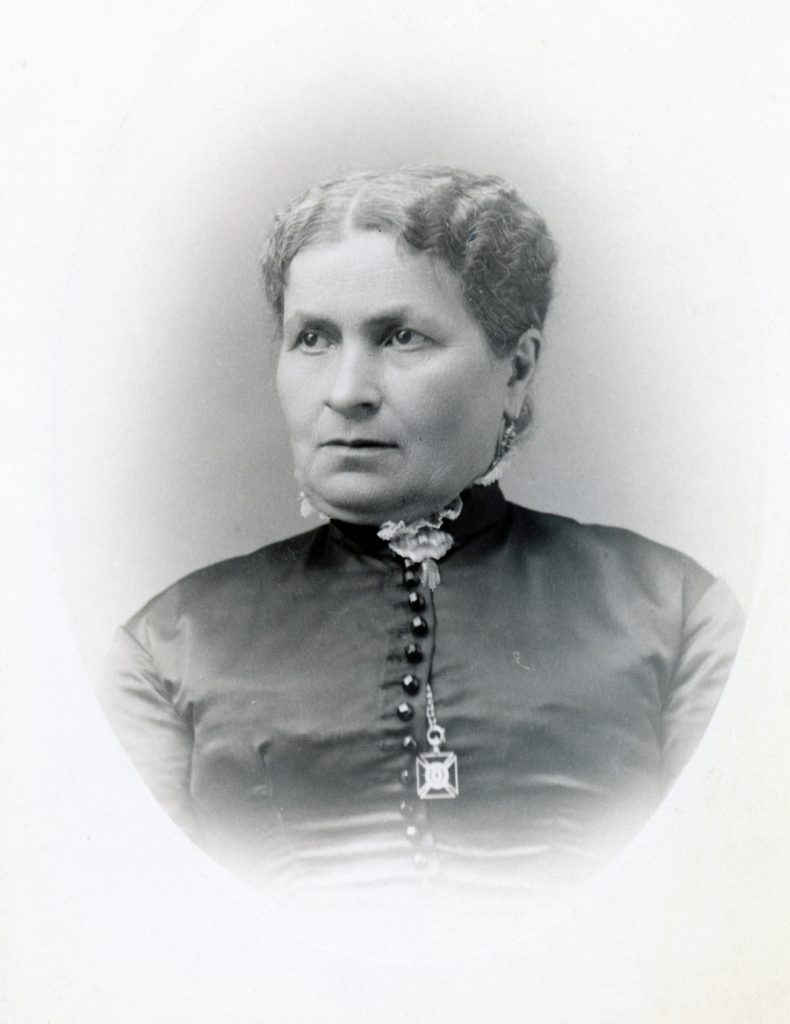
Born Anna Marie Goumaz on July 22, 1839 and  was a small minority of German Swiss immigrants to Lassen County. By the 1890s, a second wave arrived, but from the Canton Ticino, better known as Swiss Italians, but that is another story. In 1851, her parents along with nine children migrated to the United States finally locating in Illinois.  In 1863, Anna and her two brothers, Philip and Isadore decided to go west and found a new home in the Honey Lake Valley. On March 10, 1864, Anna married rancher Lyman C. Stiles. Continue reading Anna M. Stiles

Exploring Lassen County's Past